
For most home-studio buyers, I’d start with the beyerdynamic DT 700 PRO X: its 48-ohm design is easier to pair with everyday gear than high-impedance alternatives, while its studio-focused build makes it a strong all-round choice. The Audio-Technica ATH-M40x is a practical pick for flexible monitoring, and the Sennheiser HD 280 Pro stands out when passive isolation matters most. Choosing among closed-back studio headphones means balancing isolation, comfort, tonal character, source compatibility, and budget. Read on for how all 14 options compare and which tradeoffs matter for your setup.

Get audio and creator gear delivered free with Prime
- Fast, free delivery on millions of items
- Prime Video, Amazon Music and more included
- Member-only deals all year
Complete the kit


Key Takeaways
The DT 700 PRO X leads the roundup for buyers who want a studio-oriented closed-back pair without the source demands associated with the 250-ohm DT 770 PRO.
The DT 770 PRO models are not interchangeable: their 80-ohm and 250-ohm versions call for different source setups, and the DT 770 PRO X offers a separate 48-ohm alternative.
Isolation and versatility point to different picks: the HD 280 Pro prioritizes blocking outside sound, while the ATH-M40x offers a more flexible monitoring feature set.
Several entries are near-duplicates rather than distinct designs: the ATH-M20x appears in two colors, and the 80-ohm DT 770 PRO appears twice, so buyers should compare the actual version and connection details.
Low-cost options involve more compromises: the FIFINE H8, TASCAM TH-02, and OneOdio Pro-10 can suit basic monitoring or casual use, but the more established studio models offer clearer reasons to choose them for regular production work.
| Audio-Technica ATH-M20x Professional Studio Monitor Headphones |  | Best Entry-Level Tracking Pick | Driver size: 40 mm | Driver type: Dynamic | Frequency response: 15–20,000 Hz | VIEW LATEST PRICE | See Our Full Breakdown |
| beyerdynamic DT 770 PRO Closed-Back Studio Headphones, 80 Ohm, Black |  | Best for Long Recording Sessions | Design: Closed-back, over-ear | Impedance: 80 ohm | Connectivity: Wired | VIEW LATEST PRICE | See Our Full Breakdown |
| beyerdynamic DT 770 PRO 80 Ohm Closed-Back Studio Headphones, Black |  | Best for Repairable Studio Use | Design: Closed-back, over-ear | Driver type: Dynamic | Impedance: 80 ohms | VIEW LATEST PRICE | See Our Full Breakdown |
| Audio-Technica ATH-M20x Professional Studio Monitor Headphones, White |  | Best Color-Matched Studio Pick | Model: ATH-M20XWH | Color: White | Driver size: 40 mm | VIEW LATEST PRICE | See Our Full Breakdown |
| Audio-Technica ATH-M40x Professional Studio Monitor Headphones |  | Best for Flexible Monitoring | Driver size: 40 mm | Driver type: Dynamic | Frequency response: 15 Hz (upper limit not provided) | VIEW LATEST PRICE | See Our Full Breakdown |
| Sennheiser HD 280 Pro Closed-Back Studio Monitoring Headphones |  | Best for Noise Attenuation | Design: Closed-back, around-the-ear | Transducer: Dynamic | Connectivity: Wired | VIEW LATEST PRICE | See Our Full Breakdown |
| beyerdynamic DT 770 PRO 250 Ohm Closed-Back Studio Headphones, Black |  | Best for Amplified Studio Setups | Type: Closed-back dynamic headphones | Impedance: 250 ohms | Frequency response: 5 Hz (upper limit not specified in supplied data) | VIEW LATEST PRICE | See Our Full Breakdown |
| FIFINE H8 Wired Studio Monitor Headphones with Detachable Cables |  | Best for Cable Flexibility | Design: Closed-back, over-ear | Driver size: 50 mm | Frequency response: 20 Hz–20 kHz | VIEW LATEST PRICE | See Our Full Breakdown |
| Audio-Technica ATH-M50x Professional Studio Monitor Headphones | 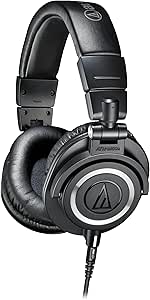 | Best for Studio and Everyday Versatility | Fit: Over-ear | Driver type and size: Dynamic, 45 mm | Frequency response: Up to 28,000 Hz | VIEW LATEST PRICE | See Our Full Breakdown |
| beyerdynamic DT 770 Pro X Closed-Back Studio Headphones, 48 Ohm |  | Best for Broad Device Compatibility | Design: Wired, over-ear, closed-back | Impedance: 48 ohms | Driver: 45 mm dynamic | VIEW LATEST PRICE | See Our Full Breakdown |
| beyerdynamic DT 700 PRO X Closed-Back Studio Headphones |  | Best for Versatile Studio Monitoring | Type: Closed-back, over-ear headphones | Driver: 45 mm STELLAR.45 dynamic | Impedance: 48 ohms | VIEW LATEST PRICE | See Our Full Breakdown |
| TASCAM TH-02 Wired Over-Ear Studio Monitor Headphones |  | Best for Compact, Casual Studio Use | Type: Wired, closed-back dynamic headphones | Fit: Over-ear | Driver size: 50 mm | VIEW LATEST PRICE | See Our Full Breakdown |
| Sony MDR-7506 Professional Over-Ear Studio Headphones | 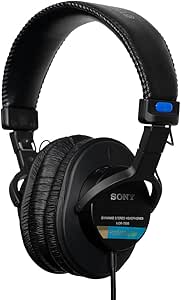 | Best for Lightweight, Packable Monitoring | Type: Wired over-ear studio headphones | Design: Closed-ear, foldable | Driver size: 40 mm | VIEW LATEST PRICE | See Our Full Breakdown |
| OneOdio Pro-10 Wired Over-Ear DJ Headphones, Black |  | Best for DJ-Style Single-Ear Monitoring | Design: Wired, over-ear | Driver: 50 mm dynamic with neodymium magnets | Impedance: 32 ohms | VIEW LATEST PRICE | See Our Full Breakdown |
| closed-back studio headphone | Frequency response | Impedance | Weight | Sensitivity |
|---|---|---|---|---|
| Audio-Technica ATH-M20x Profes | 15–20,000 Hz | 47 ohm | — | 96 dB |
| beyerdynamic DT 770 PRO Closed | — | 80 ohm | 9.5 ounces | — |
| beyerdynamic DT 770 PRO 80 Ohm | 5 Hz (upper limit not provided) | 80 ohms | — | 96 dB |
| Audio-Technica ATH-M20x Profes | 15–20 kHz | 47 ohm | 261 g | — |
| Audio-Technica ATH-M40x Profes | 15 Hz (upper limit not provided) | 35 ohm | 0.24 kg | 98 dB |
| Sennheiser HD 280 Pro Closed-B | 8–25,000 Hz | — | 220 g (7.8 oz) | — |
| beyerdynamic DT 770 PRO 250 Oh | 5 Hz (upper limit not specified in supplied data) | 250 ohms | 9.5 oz | 96 dB |
| FIFINE H8 Wired Studio Monitor | 20 Hz–20 kHz | — | 265 g | — |
| Audio-Technica ATH-M50x Profes | Up to 28,000 Hz | 38 ohms | — | 99 dB |
| beyerdynamic DT 770 Pro X Clos | 5 Hz–35,000 Hz | 48 ohms | 292 g | 97 dB |
| beyerdynamic DT 700 PRO X Clos | 5–40,000 Hz | 48 ohms | 12.3 oz | 100 dB |
| TASCAM TH-02 Wired Over-Ear St | 18 Hz–22 kHz | 32 ohms | 0.3 kg | 98 dB |
| Sony MDR-7506 Professional Ove | 10 Hz–20 kHz | — | 8 oz | — |
| OneOdio Pro-10 Wired Over-Ear | 40 kHz (lower limit not specified) | 32 ohms | 415 g | 110 dB |
More Details on Our Top Picks
Audio-Technica ATH-M20x Professional Studio Monitor Headphones
The ATH-M20x is a straightforward closed-back choice for home recording and basic monitoring, with circumaural earcups that help contain sound around a microphone. Its 40 mm drivers are tuned for stronger low-frequency performance, which can make bass easier to hear while tracking, though buyers seeking more explicitly accurate monitoring may prefer the ATH-M40x, which is described as tuned across an extended frequency range. Compared with the beyerdynamic DT 770 PRO 80 Ohm, this Audio-Technica model has a lower 47-ohm impedance, while the DT 770 PRO emphasizes replaceable components and velour pads. The M20x keeps things simple, but its fixed 9.8-foot cable limits flexibility and makes it less convenient to pack. I’d choose it for a stationary starter setup, not frequent travel.
Pros:- Circumaural earcups help reduce sound escaping into nearby microphones
- 40 mm drivers are tuned for enhanced low-frequency performance
- Single-sided cable exit keeps routing simple at a desk
- Includes a 6.3 mm adapter for connecting to studio equipment
Cons:- Fixed 9.8-foot cable cannot be swapped or detached
- Over-ear design is less compact to carry than the folding ATH-M40x
- Low-frequency emphasis may suit tracking better than buyers seeking the more accuracy-focused ATH-M40x
Best for: Home-recording beginners who need closed-back headphones for tracking and have a fixed desk or studio setup
Not ideal for: Mobile creators and frequent travelers who want a detachable cable or a more compact folding design
- Driver size:40 mm
- Driver type:Dynamic
- Frequency response:15–20,000 Hz
- Impedance:47 ohm
- Sensitivity:96 dB
- Cable:9.8 ft (2.99 m), fixed, single-sided
- Included adapter:6.3 mm
- Warranty:2 years on parts and labor
Our verdict“Choose the ATH-M20x for basic, stationary tracking on a simple budget-conscious studio setup; skip it if you need portability or a detachable cable.”
beyerdynamic DT 770 PRO Closed-Back Studio Headphones, 80 Ohm, Black
For recording sessions that run long, the DT 770 PRO 80 Ohm pairs closed-back isolation with breathable velour ear pads, a comfort-focused contrast to the ATH-M20x’s simpler over-ear setup. Its 3-meter cable gives plenty of reach from an interface or studio workstation, but that same length can become a nuisance when moving around. The 80-ohm rating makes it a stronger match for a studio interface or headphone amp than for low-powered portable sources; the ATH-M20x, at 47 ohms, is the less demanding listed option. Replaceable components also make this a more serviceable long-term studio tool than the M20x. I’d put it ahead for extended monitoring and upkeep, but not for a compact mobile kit or buyers who need a detachable cable.
Pros:- Closed-back construction helps limit sound leakage during recording
- Breathable velour pads are suited to extended listening sessions
- Replaceable components support servicing over time
- Includes a 3.5 mm connector and 6.35 mm adapter
Cons:- 80-ohm impedance is a less suitable match for some low-powered devices than the ATH-M20x
- The fixed 3-meter straight cable can be cumbersome away from a desk
- Wired operation restricts movement compared with wireless headphones
Best for: Vocalists, podcasters, and engineers who spend extended sessions monitoring from a studio interface or headphone amplifier
Not ideal for: Listeners using low-powered portable devices or anyone who needs a short, detachable cable for mobile work
- Design:Closed-back, over-ear
- Impedance:80 ohm
- Connectivity:Wired
- Cable:3 m straight cable
- Connector:3.5 mm with 6.35 mm adapter
- Ear pad material:Velour
- Weight:9.5 ounces
- Warranty:2 years
Our verdict“Pick the DT 770 PRO for long studio sessions, comfortable pads, and serviceability, provided your source can drive its 80-ohm load.”
beyerdynamic DT 770 PRO 80 Ohm Closed-Back Studio Headphones, Black
This DT 770 PRO listing suits buyers who put serviceability high on their studio checklist: the velour pads are replaceable, and the spring-steel headband is built for regular use. As with the other 80-ohm DT 770 PRO in this roundup, its passive isolation helps reduce sound bleed into recording microphones. The ATH-M40x is the more flexible pick for people who need folding earcups and detachable cables; this Beyerdynamic instead keeps a fixed 3-meter lead, which offers desk reach but cannot be swapped if a different length would work better. Its 80-ohm impedance also favors a capable interface or headphone amp, though the supplied details say it can work with many laptops. I’d favor this version for a durable, stationary recording setup, not a portable one.
Pros:- Passive isolation helps limit headphone bleed into microphones
- Replaceable velour ear pads support ongoing maintenance
- Spring-steel headband is designed for regular use
- Includes a 3-meter cable and 6.35 mm adapter
Cons:- Fixed cable cannot be detached or replaced with a different length
- 80-ohm impedance may benefit from an interface or headphone amplifier
- Less convenient to pack than the collapsible ATH-M40x
Best for: Studio owners and podcasters who want closed-back monitoring headphones with replaceable wear parts for regular use
Not ideal for: Creators who need a detachable cable, compact folding storage, or a simple match for low-output portable devices
- Design:Closed-back, over-ear
- Driver type:Dynamic
- Impedance:80 ohms
- Frequency response:5 Hz (upper limit not provided)
- Sensitivity:96 dB
- Cable:3 m fixed straight cable
- Connector:3.5 mm with 6.35 mm adapter
- Warranty:2 years
Our verdict“Choose this DT 770 PRO listing for a maintainable, fixed-studio monitoring setup, and choose the ATH-M40x if cable flexibility and folding storage matter more.”
Audio-Technica ATH-M20x Professional Studio Monitor Headphones, White
The white ATH-M20x offers the same basic closed-back tracking proposition as the black ATH-M20x: 40 mm drivers with enhanced low-frequency tuning, circumaural earcups, and a single-sided cable. Its white finish is the main distinction, making it a fit for buyers coordinating a visible desk or video setup rather than seeking a different monitoring feature set. Against the black ATH-M20x, the listed specs also give this version a weight of 261 g and a 3.5 mm jack, while the other listing specifies a 6.3 mm adapter. The ATH-M40x remains the more versatile Audio-Technica choice, adding folding earcups and detachable cables. This M20x keeps the setup uncomplicated, but its wired connection and non-water-resistant construction are poor matches for active or outdoor use.
Pros:- 40 mm dynamic drivers are tuned for enhanced low-frequency performance
- Circumaural fit helps isolate sound in louder recording environments
- Single-side cable exit simplifies routing around a desk
- 3.5 mm audio jack supports compatible devices
Cons:- White color is the main listed distinction from the black ATH-M20x, not a monitoring upgrade
- Wired connection limits use to devices with a compatible audio input
- Not water resistant and less portable than the folding ATH-M40x
Best for: Home creators who want an entry-level closed-back tracking headset in white to coordinate with a light-colored recording or video setup
Not ideal for: Buyers who need folding storage, detachable cables, water resistance, or more flexible studio monitoring than the ATH-M20x provides
- Model:ATH-M20XWH
- Color:White
- Driver size:40 mm
- Driver type:Dynamic
- Frequency response:15–20 kHz
- Impedance:47 ohm
- Weight:261 g
- Warranty:2 years
Our verdict“Choose the white ATH-M20x when its finish suits your setup and you need simple tracking headphones; choose the ATH-M40x for detachable cables and folding storage.”
Audio-Technica ATH-M40x Professional Studio Monitor Headphones
The ATH-M40x is the most adaptable Audio-Technica option here for a studio workflow that shifts between mixing, tracking, and DJ monitoring. Its detachable coiled and straight cables let you choose between extra reach and a less cumbersome connection, while 90-degree swiveling earcups support one-ear monitoring. Unlike the ATH-M20x, it also folds for storage, so it is easier to move between a desk and a portable kit. The listed 35-ohm impedance is lower than the 80-ohm DT 770 PRO’s, making the M40x the less demanding specification on paper for a wider range of sources. The tradeoff is that the supplied frequency-response figure is incomplete, with no upper limit, and the headphones remain wired. I’d choose these for flexibility, not for a fully wireless setup.
Pros:- Detachable coiled and straight cables suit different studio layouts
- 90-degree swiveling earcups support one-ear monitoring
- Collapsible design is easier to store and transport than the ATH-M20x
- 35-ohm impedance is lower than the 80-ohm DT 770 PRO listing
Cons:- Wired operation requires a cable connection at all times
- Provided frequency-response data gives no upper limit
- More moving parts and cable choices may be unnecessary for a fixed, basic tracking setup
Best for: Mobile engineers, DJs, and home producers who switch between one-ear monitoring, studio sessions, and packed storage
Not ideal for: Buyers who need wireless operation or want a clearly specified upper frequency-response limit before choosing monitoring headphones
- Driver size:40 mm
- Driver type:Dynamic
- Frequency response:15 Hz (upper limit not provided)
- Impedance:35 ohm
- Sensitivity:98 dB
- Cable options:1.2–3.0 m coiled cable and 3.0 m straight cable
- Earcup movement:90° swiveling
- Weight:0.24 kg
Our verdict“Pick the ATH-M40x if you need folding storage, cable options, and one-ear monitoring; the ATH-M20x is simpler for stationary tracking.”
Sennheiser HD 280 Pro Closed-Back Studio Monitoring Headphones
The HD 280 Pro is the strongest fit here when blocking outside sound matters more than a detachable cable. Its stated attenuation of up to 32 dB can help keep room noise out during tracking, while its linear monitoring focus suits listeners who want to hear a recording without a bass-forward pitch. Compared with the Audio-Technica ATH-M50x, it gives up the M50x’s detachable cable and 90-degree swivel for stronger stated noise attenuation and replaceable service parts.
The collapsible, swiveling earcups make storage easier, and the cable, pads, and headband padding can be replaced over time. The tradeoff is a fixed coiled cable that stretches only to 3 m, which can feel restrictive around a larger setup. I’d choose it for controlled tracking sessions, not for buyers who need a long, easily replaceable lead.
Pros:- Attenuates outside sound by up to 32 dB
- Replaceable cable, earpads, and headband padding support long-term maintenance
- Collapsible construction and swiveling earcups make storage more compact
- Includes a locking 6.3 mm adapter for studio equipment
Cons:- Fixed coiled cable limits movement and cannot be swapped out
- Cable extends to a maximum of 3 m
- Wired design offers no wireless option for casual listening
Best for: Vocalists and home-studio recordists who need strong passive attenuation and headphones with replaceable wear parts.
Not ideal for: Musicians who move around a large studio or need a detachable cable; its fixed coiled lead reaches 3 m at most.
- Design:Closed-back, around-the-ear
- Transducer:Dynamic
- Connectivity:Wired
- Noise attenuation:Up to 32 dB
- Frequency response:8–25,000 Hz
- Nominal impedance:64 ohms
- Cable:Single-sided coiled cable, 1–3 m
- Weight:220 g (7.8 oz)
Our verdict“Choose the HD 280 Pro if strong stated noise attenuation and replaceable parts matter more than cable flexibility.”
beyerdynamic DT 770 PRO 250 Ohm Closed-Back Studio Headphones, Black
The DT 770 PRO 250 Ohm is a better match for a dedicated interface or headphone amp than for casual plug-and-play use. Its 250-ohm impedance is the key dividing line: with suitable amplification, it is aimed at studio monitoring, and its closed-back construction supports tracking where some isolation is useful. Compared with the newer beyerdynamic DT 770 PRO X, this version asks for more capable amplification and has a fixed cable, while the PRO X is specified at 48 ohms and has a detachable lead.
Replaceable velour pads and an adjustable spring-steel headband make it a practical choice for long sessions. The tradeoffs are meaningful: the cable cannot be replaced independently, and less powerful devices may not drive it to a comfortable level. I’d shortlist it for a stationary studio rig, not for listeners who want broad device compatibility.
Pros:- Closed-back design provides passive isolation for tracking
- Replaceable velour earpads suit ongoing studio use
- Adjustable spring-steel headband
- Includes a 3-meter coiled cable and 1/4-inch adapter
Cons:- 250-ohm impedance may require a headphone amplifier or suitable interface
- Fixed cable cannot be detached or replaced separately
- Coiled cable can be cumbersome for mobile use
Best for: Studio users with an audio interface or headphone amplifier who want closed-back monitoring headphones with replaceable velour pads.
Not ideal for: People plugging headphones directly into low-powered phones or laptops, or anyone who needs a detachable cable.
- Type:Closed-back dynamic headphones
- Impedance:250 ohms
- Frequency response:5 Hz (upper limit not specified in supplied data)
- Sensitivity:96 dB
- Cable:Fixed coiled cable, 3 m
- Connector:3.5 mm jack; 1/4-inch adapter included
- Earpads:Replaceable grey velour
- Weight:9.5 oz
Our verdict“Pick this DT 770 PRO for a stationary, amplified studio setup, but choose the DT 770 PRO X for easier device matching and a detachable cable.”
FIFINE H8 Wired Studio Monitor Headphones with Detachable Cables
The FIFINE H8’s practical distinction is its two detachable coiled cables, supplied with 3.5 mm and 6.35 mm connections. That makes it easier to switch between common devices and studio gear than the fixed-cable Sennheiser HD 280 Pro or beyerdynamic DT 770 PRO 250 Ohm. Its closed-back, over-ear design and passive isolation suit recording and monitoring, though the supplied description only claims noise reduction rather than a specific attenuation level.
The adjustable headband, padded cushions, and 265 g weight support longer sessions, while the inline volume control adds a quick adjustment point. The tradeoff is that the data does not specify a replaceable ear cushion or a quantified isolation figure, so buyers seeking documented attenuation may prefer the HD 280 Pro. I’d choose the H8 for a straightforward, adaptable wired setup rather than demanding isolation claims.
Pros:- Includes two detachable coiled cables for different connections
- Supplied 3.5 mm and 6.35 mm plugs suit common devices and studio equipment
- Closed-back construction provides passive noise isolation
- Adjustable headband and padded cushions are designed for extended wear
Cons:- Isolation is described generally, without a quantified attenuation rating
- Wired connection still limits movement compared with wireless headphones
- Supplied data does not specify replaceable earpads
Best for: Newer home-studio users who switch between 3.5 mm devices and 6.35 mm studio connections and want detachable cable options.
Not ideal for: Recordists who need a stated noise-attenuation figure or strong isolation in a particularly noisy room.
- Design:Closed-back, over-ear
- Driver size:50 mm
- Frequency response:20 Hz–20 kHz
- Noise isolation:Passive
- Weight:265 g
- Cable:Detachable coiled cables, 9.8 ft
- Connectors:3.5 mm and 6.35 mm
- Controls:Inline volume control
Our verdict“Choose the H8 if you want detachable cable options and straightforward connections, but favor the HD 280 Pro when documented attenuation is the priority.”
Audio-Technica ATH-M50x Professional Studio Monitor Headphones
The ATH-M50x earns its place as the most flexible all-rounder in this group: its 38-ohm impedance is less demanding than the DT 770 PRO 250 Ohm, and its detachable cable makes it easier to adapt between studio and everyday setups. The 45 mm dynamic drivers are described as delivering deep, accurate bass across an extended range, which gives it a different emphasis from the Sennheiser HD 280 Pro’s stated linear monitoring focus. Its sound-isolating earcups also help keep it useful in recording environments.
90-degree swiveling earcups allow one-ear monitoring, a handy option for recording or cueing. That versatility comes with less emphasis on documented noise attenuation than the HD 280 Pro, and the over-ear form is not as compact as an in-ear option. I’d pick it when one pair needs to cover monitoring and general listening, rather than when maximum stated isolation is the deciding factor.
Pros:- Detachable cable supports easier replacement and setup changes
- 90-degree swiveling earcups enable one-ear monitoring
- 38-ohm impedance suits a wider range of devices than the 250-ohm DT 770 PRO
- Sound-isolating earcups and 45 mm drivers suit studio monitoring and general listening
Cons:- No quantified noise-attenuation rating is provided
- Over-ear design is less compact than in-ear headphones
- Not water resistant
Best for: Home-studio owners and listeners who want one closed-back pair for recording, one-ear monitoring, and everyday wired listening.
Not ideal for: Buyers whose main requirement is a published noise-attenuation figure or a particularly compact headphone design.
- Fit:Over-ear
- Driver type and size:Dynamic, 45 mm
- Frequency response:Up to 28,000 Hz
- Impedance:38 ohms
- Sensitivity:99 dB
- Cable:Detachable
- Earcup swivel:90 degrees
- Noise control:Sound isolation
Our verdict“Choose the ATH-M50x for a versatile closed-back pair with detachable cabling and one-ear monitoring, rather than for maximum documented isolation.”
beyerdynamic DT 770 Pro X Closed-Back Studio Headphones, 48 Ohm
The DT 770 PRO X keeps the closed-back studio-monitoring purpose of the DT 770 PRO 250 Ohm but is easier to pair with everyday sources. Its 48-ohm impedance is specified for laptops, phones, audio interfaces, and consoles without a dedicated headphone amplifier. That makes it the more adaptable of the two beyerdynamic options here; the older 250-ohm model is better reserved for a setup with suitable amplification. The detachable 3 m mini-XLR cable is another practical advantage over that model’s fixed lead.
Replaceable velour pads and passive isolation suit recording and routine studio use. At 292 g, it is heavier than the 220 g Sennheiser HD 280 Pro, and its supplied data gives no numeric attenuation figure. I’d choose it for a modern, mixed-device setup, but not if low weight or a published isolation measurement ranks above cable and source flexibility.
Pros:- 48-ohm impedance supports use with common devices without a dedicated headphone amplifier
- Detachable 3 m mini-XLR cable is easier to replace than the DT 770 PRO 250 Ohm’s fixed cable
- Replaceable velour earpads support maintenance
- Closed-back design provides passive sound isolation
Cons:- At 292 g, it weighs more than the Sennheiser HD 280 Pro
- No numeric noise-attenuation figure is supplied
- Wired connection restricts movement compared with wireless headphones
Best for: Musicians and editors who move between laptops, phones, consoles, and interfaces and want closed-back monitoring without a dedicated headphone amp.
Not ideal for: Buyers prioritizing the lightest option or a quantified noise-attenuation rating; the HD 280 Pro is lighter and lists attenuation up to 32 dB.
- Design:Wired, over-ear, closed-back
- Impedance:48 ohms
- Driver:45 mm dynamic
- Frequency response:5 Hz–35,000 Hz
- Sensitivity:97 dB
- Noise control:Passive sound isolation
- Cable:Detachable 3 m mini-XLR
- Weight:292 g
Our verdict“Pick the DT 770 PRO X if you need a closed-back studio headphone that works across common devices and has a detachable cable.”
beyerdynamic DT 700 PRO X Closed-Back Studio Headphones
The DT 700 PRO X is a strong fit for recording and monitoring across several kinds of gear. Its 48-ohm impedance is easier to pair with laptops and phones than high-impedance studio models, while the closed-back design helps limit sound leakage into microphones. Compared with the Sony MDR-7506, it offers a wider stated frequency range and two detachable cable lengths, giving it more flexibility at a desk or in a booth. The tradeoff is a heavier build than Sony’s listed 8-ounce design, and it remains a wired headphone with no water resistance. I’d choose it for a studio setup that needs one dependable pair for multiple sources, rather than for listeners who prioritize light travel or wireless convenience.
Pros:- 48-ohm impedance supports connection to many everyday devices without a dedicated headphone amplifier.
- Closed-back construction provides passive isolation for recording and monitoring.
- Detachable 1.8 m and 3 m cables accommodate different studio setups.
- Includes a 1/4-inch adapter for compatible studio equipment.
Cons:- Wired-only design restricts movement compared with wireless headphones.
- At 12.3 ounces, it weighs more than the listed Sony MDR-7506.
- Not water resistant.
Best for: Home-studio musicians and recording engineers who switch between laptops, phones, and audio interfaces and need closed-back monitoring.
Not ideal for: Listeners who want wireless freedom, a particularly lightweight travel pair, or headphones suited to wet environments.
- Type:Closed-back, over-ear headphones
- Driver:45 mm STELLAR.45 dynamic
- Impedance:48 ohms
- Frequency response:5–40,000 Hz
- Sensitivity:100 dB
- Connectivity:Wired; 3.5 mm jack with 1/4-inch adapter
- Included cables:Detachable 1.8 m and 3 m mini-XLR cables
- Weight:12.3 oz
Our verdict“Choose the DT 700 PRO X if you need adaptable closed-back monitoring for several audio sources and can accept a heavier wired design.”
TASCAM TH-02 Wired Over-Ear Studio Monitor Headphones
The TASCAM TH-02 keeps its appeal practical: it folds for storage, has a retractable cable, and includes an adapter for 6.3 mm inputs. Those details suit a beginner’s recording kit or a pair kept ready for podcast sessions, where easy packing matters more than replaceable cables or premium construction. Its 32-ohm impedance also makes it a straightforward match for common audio devices. Compared with the beyerdynamic DT 700 PRO X, the TASCAM is less studio-flexible because its cable is not listed as detachable and its frequency range is narrower. The plastic enclosure and wired-only connection are further limits. I’d pick it for basic monitoring and portability, but skip it if you need a more adaptable long-term studio workhorse.
Pros:- Foldable construction takes up less space in a bag or desk drawer.
- Retractable cable helps keep storage and setup tidy.
- Includes a 3.5 mm-to-6.3 mm adapter for compatible audio equipment.
- 32-ohm impedance suits common playback devices.
Cons:- The cable is not listed as detachable, limiting replacement options if it is damaged.
- Plastic enclosure offers a less substantial build than the DT 700 PRO X’s spring-steel and velour materials.
- Wired-only operation restricts movement.
Best for: First-time podcasters, students, and home listeners who want foldable closed-back headphones with an included studio adapter.
Not ideal for: Engineers seeking detachable cables, a more robust studio build, or wider stated frequency response than the DT 700 PRO X offers.
- Type:Wired, closed-back dynamic headphones
- Fit:Over-ear
- Driver size:50 mm
- Frequency response:18 Hz–22 kHz
- Impedance:32 ohms
- Sensitivity:98 dB
- Cable and connector:Retractable cable; 3.5 mm jack
- Included adapter:3.5 mm to 6.3 mm
- Weight:0.3 kg
Our verdict“Pick the TH-02 for basic recording or podcast monitoring when foldability and simple connectivity matter more than upgrade flexibility.”
Sony MDR-7506 Professional Over-Ear Studio Headphones
The Sony MDR-7506 makes a compelling choice for listeners who want a familiar wired monitoring format that folds down and comes with a soft case. At a listed 8 ounces, it is lighter than the beyerdynamic DT 700 PRO X, which may make it easier to carry between a home studio and recording location. Its closed-ear design helps reduce outside noise, and the included 1/4-inch adapter supports studio connections. The main compromise is the non-detachable 9.8-foot cord: it gives plenty of reach at a desk, but is less convenient to pack and harder to replace than the DT 700 PRO X’s detachable cables. I’d favor the Sony for portable wired monitoring, not for buyers who need a short, replaceable cable or wireless use.
Pros:- Listed weight of 8 ounces makes it lighter than the DT 700 PRO X.
- Foldable design and included soft case support storage and transport.
- Closed-ear construction helps reduce external noise.
- Includes a 1/4-inch adapter for compatible studio equipment.
Cons:- The 9.8-foot cord is non-detachable, making replacement and cable management less convenient.
- Wired connection limits use to devices with a compatible audio output.
- The listed frequency response ends at 20 kHz, below the DT 700 PRO X’s stated upper range.
Best for: Mobile musicians, students, and home-recording users who want lightweight closed-back monitoring with a storage case.
Not ideal for: Buyers who need a detachable or short cable, wireless operation, or the broader stated frequency range of the DT 700 PRO X.
- Type:Wired over-ear studio headphones
- Design:Closed-ear, foldable
- Driver size:40 mm
- Frequency response:10 Hz–20 kHz
- Cable:9.8 ft, non-detachable oxygen-free copper cord
- Connector:Gold-plated plug with 1/4-inch adapter
- Weight:8 oz
- Included accessories:Soft case and Unimatch plug
Our verdict“Choose the MDR-7506 if low carry weight and a folding design matter more to you than a detachable cable.”
OneOdio Pro-10 Wired Over-Ear DJ Headphones, Black
The OneOdio Pro-10 is the most DJ-oriented pick in this group. Its 90-degree swiveling ear cups let a DJ monitor with one ear while keeping the other free, a more specific use than the straightforward studio monitoring focus of the Sony MDR-7506. The 3.5 mm and 6.35 mm connections also suit a range of wired audio gear, and the shared audio port lets another pair connect for collaborative listening. Those conveniences come with compromises: at 415 g, it is heavier than the listed Sony, and the supplied data gives a frequency figure of 40 kHz without a lower limit, so it is harder to compare directly with models that list a full range. I’d choose it for hands-on DJ monitoring, not for buyers prioritizing low weight or a clearly specified frequency range.
Pros:- 90-degree swiveling ear cups support single-ear DJ monitoring.
- 3.5 mm and 6.35 mm audio connections suit a range of wired equipment.
- Shared audio port allows another pair to connect for listening together.
- Adjustable headband and padded ear cushions support a customizable fit.
Cons:- At 415 g, it is heavier than the listed Sony MDR-7506.
- Wired operation requires a device with a 3.5 mm or 6.35 mm audio jack.
- The supplied frequency-response figure of 40 kHz lacks a stated lower limit.
Best for: DJs and cue-based listeners who need swiveling ear cups for single-ear monitoring and connections for common audio jacks.
Not ideal for: Studio users who want lightweight headphones or a complete, directly comparable frequency-response range in the specifications.
- Design:Wired, over-ear
- Driver:50 mm dynamic with neodymium magnets
- Impedance:32 ohms
- Sensitivity:110 dB
- Frequency response:40 kHz (lower limit not specified)
- Connectivity:3.5 mm and 6.35 mm audio jacks
- Ear cup rotation:90° swiveling
- Weight:415 g
- Included items:Built-in media cable, protective case, and user manual
Our verdict“Choose the Pro-10 for DJ-style single-ear cueing and flexible jack connections, but look elsewhere if low weight or full frequency specifications are priorities.”
How We Picked
I compared these closed-back studio headphones by how well their design serves recording and monitoring: passive isolation, comfort for longer sessions, practical durability, and how readily each version can work with common audio sources. I also weighed useful workflow details such as replaceable or detachable cables, folding designs, and whether a model’s impedance might make an interface or headphone amp a better match. Features only mattered when they changed the buying decision.
The ranking favors versatility and fewer setup surprises, which puts the DT 700 PRO X near the top and keeps the ATH-M40x and HD 280 Pro prominent for their distinct strengths. The DT 770 PRO versions remain compelling when their sound and impedance suit the buyer’s equipment, but duplicate listings and different impedance variants should not be mistaken for separate headphone designs. Entry-level and DJ-oriented options rank lower for dedicated studio use because their broader compromises make them less dependable as all-purpose production choices.
| closed-back studio headphone | Design |
|---|---|
| Audio-Technica ATH-M20x Profes | — |
| beyerdynamic DT 770 PRO Closed | Closed-back, over-ear |
| beyerdynamic DT 770 PRO 80 Ohm | Closed-back, over-ear |
| Audio-Technica ATH-M20x Profes | — |
| Audio-Technica ATH-M40x Profes | — |
| Sennheiser HD 280 Pro Closed-B | Closed-back, around-the-ear |
| beyerdynamic DT 770 PRO 250 Oh | — |
| FIFINE H8 Wired Studio Monitor | Closed-back, over-ear |
| Audio-Technica ATH-M50x Profes | — |
| beyerdynamic DT 770 Pro X Clos | Wired, over-ear, closed-back |
| beyerdynamic DT 700 PRO X Clos | — |
| TASCAM TH-02 Wired Over-Ear St | — |
| Sony MDR-7506 Professional Ove | Closed-ear, foldable |
| OneOdio Pro-10 Wired Over-Ear | Wired, over-ear |
Factors to Consider When Choosing Closed-back Studio Headphones
Specs are only part of the choice. I’d match the headphones to the room, source, and task first, then decide which comforts or workflow features are worth prioritizing.
Match Isolation to the Recording Situation
Closed-back headphones help reduce sound leaking into a microphone, but no passive design makes a room silent. For vocal recording, prioritize a snug seal and stable fit, since gaps around glasses or hair can weaken both isolation and bass response. A tighter clamp may block more outside sound but can feel tiring during long sessions. If you mainly edit alone at low volume, maximum isolation may matter less than comfort and tonal consistency. Avoid choosing solely by a manufacturer’s isolation claim; seal depends on head shape, pads, and how the headphones sit.
Choose an Impedance Your Source Can Drive
Impedance is a compatibility clue, not a direct measure of sound quality. Higher-impedance headphones can require more voltage to reach useful listening levels, so a phone or basic laptop output may not be a reliable match. Check the output capability of your audio interface or headphone amp before choosing a 250-ohm model. A lower-impedance version is often the simpler route for portable and mixed-device use, though sensitivity and output level still matter. If you switch between equipment, favor a setup that gives you enough volume headroom without running the output at its limit.
Treat Comfort as a Session-Length Decision
Headband pressure, ear-pad depth, heat, and weight become more noticeable over a full recording or editing session than during a short audition. Over-ear cups can still touch the ears, so check the interior dimensions when possible rather than relying on the label alone. Softer pads may feel pleasant at first but can wear down or change the seal over time. If you wear glasses, the frame can break the pad seal and create pressure points, making a return policy or in-person fit check useful. For frequent long sessions, a comfortable fit is more valuable than a feature you rarely use.
Separate Tracking Needs From Mixing Needs
Closed-back headphones are especially useful for recording, monitoring, and work in shared spaces, but their presentation can differ from speakers or open-back headphones. A headphone mix that sounds balanced in isolation may not translate to car speakers, earbuds, or a room system. Use familiar reference tracks and check important decisions on another playback system before finalizing a mix. If your main job is tracking performers, prioritize isolation and low leakage; if it is critical mix work, give tonal familiarity and repeatable references greater weight. One pair can serve both tasks, but it may not be the best tool for every stage.
Look Beyond the Headphone to Cable and Pad Upkeep
Cables and ear pads are wear items, so their serviceability affects how well a pair fits into a working studio over time. A detachable cable can be replaced quickly if it fails, while a fixed cable may be simpler but can require repair if damaged. Check whether replacement pads are available and whether changing them is straightforward. Pad wear can affect comfort and the acoustic seal, so it may also change how familiar the headphones sound. Don’t pay extra for a modular feature unless it solves a real maintenance or workflow problem for you.
Compare Versions Before Buying a Duplicate Listing
Product names can hide meaningful differences—or no difference beyond color and listing details. In this roundup, the ATH-M20x appears in black and white, and the DT 770 PRO 80-ohm version is listed twice, so check the exact model, impedance, cable, and included accessories rather than assuming each listing is a separate design. A familiar model name may also cover a revised version with different connectivity or fit details. Confirm the seller’s stated specifications against the manufacturer’s product information. This small check can prevent paying attention to a title variation that does not change the headphones you receive.
Frequently Asked Questions
Should I choose the DT 770 PRO at 80 ohms or 250 ohms?
I’d start with the output you plan to use most. The 80-ohm version is generally the easier match for a wider range of interfaces and everyday devices, while the 250-ohm version is a better fit when you have a headphone output with enough voltage headroom. Neither impedance guarantees better sound on its own, and a weak source can make a higher-impedance pair frustratingly quiet. Check your interface specifications and leave room for peaks rather than judging compatibility by whether the headphones play at all. If you want an easier-to-drive beyerdynamic option in this lineup, compare the 48-ohm DT 770 PRO X.
Are the two ATH-M20x listings different headphones?
The listed distinction is color: one is the standard ATH-M20x and the other is the white ATH-M20x. I would not treat the color variation as an upgrade in monitoring performance. Check the exact listing for included accessories and product specifications, since retailers can package or describe versions differently. If your choice is between these two listings, base it on color, availability, and the details shown for the specific item. For a meaningful step up in feature flexibility within the Audio-Technica group, compare the ATH-M40x instead.
Can I use closed-back studio headphones for mixing as well as recording?
Yes, they can handle both, especially when you need to work quietly or avoid microphone bleed. The main limitation is that headphone playback can make stereo placement, bass balance, and tonal judgments differ from what you hear on speakers. I’d use familiar reference tracks and check important mixes on another playback system before calling them finished. Consistent listening levels also help prevent fatigue from distorting your judgments. If recording is your main task, give isolation priority; for mixing, put more weight on a response you know well and can interpret reliably.
Will a 48-ohm or 80-ohm model work directly with a laptop or phone?
It may, but impedance alone cannot predict volume or sound quality from a particular device. Output power, headphone sensitivity, connection type, and the device’s volume limits all play a part. A lower-impedance option is usually a less demanding starting point than a 250-ohm model, but you should still check whether your device has a headphone jack or needs an adapter. If you regularly move between a phone, laptop, and interface, choose a pair that reaches comfortable levels on your weakest source. Don’t assume an amplifier will improve sound if your current source already drives the headphones cleanly.
Which features matter most if I record vocals in a small room?
Start with a secure seal that limits headphone sound reaching the microphone, then look for a fit you can wear through repeated takes. Keep playback at the lowest useful level, since high headphone volume can increase leakage even with a well-sealed design. A replaceable cable is useful if it might be stepped on or pulled around a small recording space, but it matters less than fit and isolation. Check whether the cable length works with your recording position and whether it can be managed without crossing the performer’s path. For this lineup, the HD 280 Pro is a strong isolation-focused candidate, while the DT 700 PRO X offers a broader all-round studio option.
Conclusion
For one pair to cover regular studio work, I’d choose the beyerdynamic DT 700 PRO X as the best overall option, especially when straightforward source compatibility matters. The Audio-Technica ATH-M40x is my best value pick for buyers who want practical monitoring versatility, while the beyerdynamic DT 770 PRO family is the premium-leaning choice for listeners who prefer its fit and presentation and can select the right impedance for their equipment. For beginners, I’d favor the Sennheiser HD 280 Pro when recording isolation is the priority, or the ATH-M40x for a more flexible first studio pair. For specific needs, choose the HD 280 Pro for isolation, the 48-ohm DT 770 PRO X for easier pairing, and the FIFINE H8, TASCAM TH-02, or OneOdio Pro-10 only when their basic or DJ-oriented use better matches your budget and workflow. Check duplicate model listings and exact specifications before choosing.
Black Friday Picks

De'Longhi Rivelia Fully Automatic Espresso Machine with Milk Frother, Black
As an affiliate, we earn on qualifying purchases.