TL;DR

Get audio and creator gear delivered free with Prime
- Fast, free delivery on millions of items
- Prime Video, Amazon Music and more included
- Member-only deals all year
Softboxes give you soft, directional light with the most control; umbrellas spread broad light quickly but spill more; lanterns fill a room with nearly omnidirectional light. The softest result comes from a modifier that is large relative to your subject and placed close enough to cover it evenly, so choose by the scene you need to light rather than by shape alone.
A small softbox across the room can give you harder light than a big umbrella placed beside your subject. That’s because softness depends on apparent size and distance, while the modifier’s shape mainly affects where the light travels.
This guide compares softboxes, umbrellas, and lanterns in practical terms: how each spreads light, where it spills, and what it asks of your room and setup. You’ll leave with a simple way to choose a modifier for portraits, products, interviews, or a whole-room video setup—even if you’re building your kit one budget light at a time.
Use a softbox when you need soft light with direction and stronger spill control.
Use an umbrella for fast, broad coverage when light spilling onto nearby walls is acceptable.
Use a lantern to create wide ambient fill for video or interviews, and add a skirt or flags if it brightens too much of the room.
Softness depends on apparent size and distance; moving a source closer can help before you replace it.
Check reflections, background brightness, mounting compatibility, and wind exposure as part of the modifier choice.
FIELD GUIDE / LIGHTING MODIFIERS
Softbox vs Umbrella vs Lantern: Diffusion Shapes Compared
Choose by the scene you need to light. Softboxes keep light directional, umbrellas spread it quickly, and lanterns lift the room. The modifier’s size and distance from your subject shape softness just as much as its name does.
01 / QUICK COMPARISON
Which shape fits the scene?
Each modifier makes a different lighting job easier. Start with your subject, room, and tolerance for spill, then fine-tune position and distance.
| Modifier | Typical light | Control and spill | Good starting use |
|---|---|---|---|
| Softbox | Directional, even, defined shape | High control; grids and recessed fronts can limit spill | Portraits, products, interviews, controlled setups |
| Umbrella | Broad, soft, diffuse | Less control; often spills widely | Groups, events, quick portraits |
| Lantern | Broad, nearly omnidirectional | Low control unless skirted or carefully placed | Video, interviews, ambient room fill |
A small softbox across the room may look harder than a big umbrella beside your subject. Apparent size is the useful comparison.
02 / PICK YOUR PRIORITY
Three shapes, three practical strengths
Picture a talking head beside a bookshelf: a softbox can keep the wall darker, an umbrella may wash the shelves, and a lantern can lift the whole room.
Softbox
Enclosed sides and a front diffusion panel create a soft source with a clearer direction. Add a grid to keep light off walls or out of the lens.
Best for portraits, products, and controlled interviews
Umbrella
Opens quickly and covers a broad area. Shoot-through fabric passes light; reflective fabric bounces it toward the subject. Expect more room spill.
Best for groups, events, and quick setups
Lantern
Diffusion around most sides sends light across a space for an even ambient base. A skirt or flag can keep it off a wall, monitor, or camera.
Best for video, interviews, and ambient fill
03 / LIGHT BEHAVIOR
Coverage is a tradeoff
These visual scales describe typical tendencies, not measured output. Placement, diffusion layers, nearby surfaces, and the specific model can change the result.
Typical spill control
Grids, skirts, flags, and careful positioning can improve control with any setup.
Typical spread across the room
Broad spread is useful for groups or ambient fill, but can brighten backgrounds and reflective surfaces.
04 / THE SOFTNESS RULE
Move closer before buying bigger
A larger source close to the subject occupies more of their view, which generally creates softer light. Moving closer also increases brightness differences between near and far parts of a scene.
A modifier’s shape influences direction and reflections; size relative to the subject and distance influence softness.
Keep the wall darker
Place a softbox just outside the frame for a smooth highlight on a ceramic mug. Add a grid if light washes over the wall or bounces into the lens.
Lift the whole room
Hang a lantern over a cooking area when the host moves between counter and stove. Use a skirt or flag if it brightens a monitor, kettle, or nearby wall.
05 / A SIMPLE DECISION FLOW
Choose for the light you want
Use this quick path when choosing a modifier for a portrait, product, interview, or room-wide video setup.
06 / BEFORE YOU SET UP
Run a quick room check
Practical details can matter as much as the modifier’s shape, especially in a small room or a changing video setup.
Choose the modifier by the way you want light to spread
A softbox gives you a soft source with direction, an umbrella gives you broad light quickly, and a lantern spreads light across a space. That’s the useful shorthand when you’re standing in a small studio wondering which modifier to put on the light. None wins every time; the right choice depends on your subject, room, and tolerance for spill.
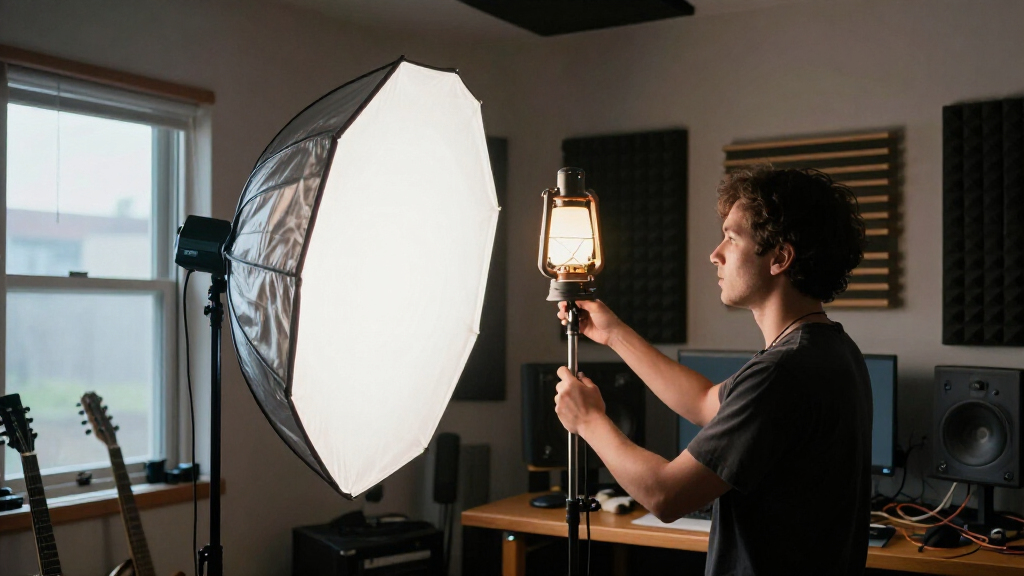
Say you’re filming a talking-head video beside a bookshelf. A softbox can light your face while keeping much of the wall darker. An umbrella can give you an easy, flattering wash, but it may brighten the shelves too. A lantern can lift the whole room, which looks natural when you want an ambient base, but makes it harder to keep light off that bookshelf.
| Modifier | Typical light | Control and spill | Good starting use |
|---|---|---|---|
| Softbox | Directional, even, defined shape | High control; grids can limit spill | Portraits, products, interviews |
| Umbrella | Broad, soft, diffuse | Less control; often spills widely | Groups, events, quick portraits |
| Lantern | Broad, nearly omnidirectional | Low control unless skirted or carefully placed | Video, interviews, ambient fill |
Think of a softbox like a window with curtains, an umbrella like a wide porch awning, and a lantern like a glowing paper globe. Those shapes make different jobs easier. For soft light with a clear direction, start with a softbox; for fast, broad coverage, try an umbrella; for room-filling light, reach for a lantern.
Popular right now

KitchenAid Classic Series 4.5-Quart Tilt-Head Stand Mixer, Onyx Black

KitchenAid Artisan 5-Qt Tilt-Head Stand Mixer – Dried Rose (KSM150PS)

Vitamix Propel Series 510 Professional-Grade Blender, 3 Programs, Black
As an affiliate, we earn on qualifying purchases.
Get soft, directional light with a softbox
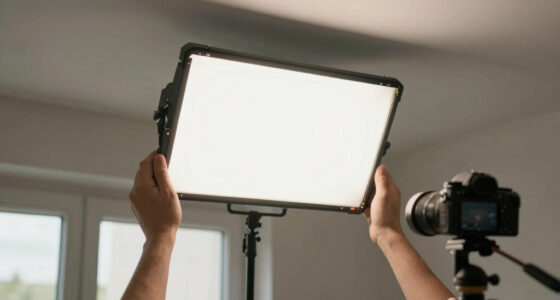
A softbox encloses the light and sends it through a diffusion panel, producing soft light that still comes from a fairly defined direction. It is a practical pick when you want the subject bright and the background under control. The front panel softens the source; the enclosure, recessed front, and optional grid help shape where that light goes.
Picture a small product shoot at a kitchen table: a ceramic mug, a white card opposite it, and a softbox just outside the frame. The mug gets a smooth highlight, while the wall behind it can stay a stop or two darker. Add a grid if light is washing over the wall or bouncing into the lens. That’s when control matters more than maximum coverage.
Softboxes come in rectangular, square, octagonal, and strip shapes. Their shape affects coverage and what you see in reflective surfaces: an octagon may make rounder catchlights in eyes, while a strip can create a long reflection along a bottle. The shape and size matter when those reflections are part of the image. A bigger softbox close to a person’s face usually looks softer than the same box placed far away, much like a nearby window fills more of your view than a distant one.
The tradeoff is setup and space. A large softbox can crowd a narrow room, and moving it close may make the nearest side of a group brighter than the far side. In a home office, a mid-sized box with a grid can be a useful one-light setup; for a two-person interview, back it up and watch for uneven exposure across both faces. Match the box to your room and frame, not just the portrait on its packaging.
Use an umbrella when speed and broad coverage matter
An umbrella is a fast way to spread light over a broad area, especially when you can tolerate spill. Shoot-through umbrellas let light pass through translucent fabric; reflective umbrellas bounce light from their interior toward the subject. Both can create soft illumination, but both generally send more light around the room than a softbox.
That makes an umbrella handy for a family portrait, a quick event setup, or a beginner learning where to place a key light. Imagine photographing five people in a living room: a broad umbrella can cover the group without demanding a huge modifier. You can open it, angle it, and get working quickly. But if the background contains a bright window or a glossy television, that same broad spread can make the room harder to control.
When comparing softbox vs umbrella, ask how much spill your shot can accept. A softbox is more like a beam aimed through an open doorway; an umbrella is more like light bouncing around a pale room. A reflective umbrella can give you a less contained beam, while a black-backed umbrella can reduce rearward spill. The result still depends on its size, position, and the reflective surfaces nearby.
Umbrellas are often inexpensive and portable, which can be enough for a compact kit. Their open shape can also be awkward in tight spaces and can catch wind outdoors. If you set one up on a stand outside, secure the stand and account for gusts; a big fabric surface can pull hard. For a small indoor headshot, aim it so the broadest part covers the face, then check whether light has also lifted the wall more than you want.
Fill a room with a lantern when one small pool of light feels wrong
A lantern is a rounded modifier that sends diffused light out through most or all of its sides. Use it when you want the room to feel gently lit, rather than when you need a narrow, controlled beam. That nearly omnidirectional spread gives video interviews and ambient fill a soft, natural base.
For example, imagine filming a cooking video in a kitchen with the camera moving between the counter and stove. A lantern hung above the work area can keep illumination fairly even as the host shifts position. You avoid the obvious hot spot that a tightly aimed light might create. The tradeoff shows up on the walls, cabinets, and shiny kettle: the lantern may lift everything around it, not only the person.
Some lanterns come with skirts that block light in selected directions. A skirt can keep light off the camera or a nearby wall, though it reduces how much of the room the modifier fills. You can also use flags—opaque panels placed between the light and an area you want to keep darker. In a small office, turning the lantern so its brightest spread points away from a monitor may fix distracting reflections without changing the whole setup.
Among diffusion shapes compared, the lantern is the broadest room-lighting tool of the three. That’s its strength and its limitation. If you want a dark background behind a speaker, use a softbox or control the lantern with a skirt and flags. If you want a soft ambient layer that makes a cramped room feel less contrasty, the lantern can do that job with less fuss than aiming several small lights around the set.
Make apparent size and distance do more work than the label
Apparent size is how large the light source looks from your subject’s position. In practical lighting, it tells you more about softness than the word softbox, umbrella, or lantern printed on the bag. A modifier looks larger when it is physically big, closer to the subject, or both; a larger apparent source tends to create broader, gentler shadows.
Put a small softbox ten feet from a face and it may look crisp, with a defined nose shadow. Move a larger softbox to three feet away and that shadow softens, while the eyes catch a bigger reflection. The same principle applies to umbrellas. So if your light looks too hard, try moving it closer before buying a new modifier—then check that the whole subject still fits inside the light’s coverage.
Distance also changes falloff, or how quickly brightness drops across a scene. A close source can make a person in the foreground much brighter than someone standing a few steps behind. For a two-person interview, a softbox pulled back may give more even exposure across both faces, even if you need to raise the light output. A lantern can bathe the wider space, but its spill may brighten the background too.
Diffusion costs some output, and the exact loss varies with fabric, layers, and light source. If you add another diffusion layer and the image gets dimmer, raise output if you can, move the light closer, or open the camera exposure if the scene allows it. To soften light by spreading it across a bigger surface, check the panel’s size and distance together. The practical test is simple: look at shadow edges, coverage, and brightness changes from near to far.
Compare catchlights, room spill, and setup before you pack
Before choosing among diffusion shapes, check what the modifier will reflect, where stray light will land, and how much room the setup needs. Those three questions often settle a softbox vs umbrella vs lantern decision faster than a spec sheet. Shape matters, but the room can change the result: a white wall bounces light, a glass tabletop shows reflections, and a low ceiling can return spill onto the subject.
Consider a creator filming product demos in a spare bedroom. A lantern may brighten the entire room and reflect in a glossy bottle; an umbrella may create a broad reflection in the bottle’s curved surface; a softbox can place a more controlled strip of light along the glass. If you’re photographing a person instead, that strip reflection becomes a catchlight in their glasses. The best shape depends on what the camera sees, not just on how the modifier looks from behind the light.
Use this quick check before you set up:
- Name the job: choose directional key light, broad group coverage, or room-filling ambience.
- Check your frame: note the background, reflective objects, and how much space sits outside the camera view.
- Set the apparent size: bring the modifier closer or choose a larger one if shadows look too crisp.
- Control spill: try a grid, lantern skirt, black-backed umbrella, flag, or a small change in angle.
- Recheck the whole scene: inspect the far side of a group, the background, and any shiny surfaces.
This order keeps you from solving the wrong problem. If a portrait is too hard, buying a lantern may add unwanted room fill; moving a softbox closer could be enough. If a whole room feels patchy, the lantern may be the cleaner fix.
Pick a first modifier that fits your real studio
Choose your first modifier by the work you do most and the space you can actually use. A budget umbrella is a sensible start for quick portraits or small groups; a mid-sized softbox gives you more control for portraits and products; a lantern suits video when you want a broad ambient base. A useful modifier is one you can set up safely and position well, not one that stays folded in a closet.
Suppose you record weekly interviews in a bedroom with a desk against the wall. A medium softbox with a grid can light your face while leaving the background less washed out. If you later film a second person, you may need to move it back or switch to a larger source for even coverage. By contrast, a creator shooting pop-up events may prefer an umbrella that opens fast and covers several people, even if the room gets brighter.
Check the mount, diffusion layers, and included accessories before buying. Some modifiers work with specific fixtures or mounting hardware, and grids or skirts may be sold separately. If you use continuous LED lights, confirm that the modifier is compatible and follow the light maker’s heat guidance. Not every fabric or mount suits every lamp.
There’s no recent design change that makes one shape universally superior. Quick-release frames, more size options, and compact LED-compatible modifiers give creators more ways to build a setup, but features vary by brand. For outdoor work, factor in wind: a large umbrella or softbox can act like a sail, so use a secure stand and consider whether you need another person to hold it. Cheap gear can be enough when it suits the job and you know its limits.
Frequently Asked Questions
Which modifier gives the softest light?
The softest light usually comes from the modifier that appears largest from the subject’s position and sits close enough to cover it evenly. A large softbox near a face can look softer than a small, distant lantern. Check both shadow edges and coverage when you compare setups.
Are umbrellas softer than softboxes?
Neither shape is inherently softer. Apparent size, distance, and diffusion determine softness, while umbrellas tend to spread light more widely and softboxes give you more control over spill. A close umbrella can be very soft; it may also brighten more of the room.
Which modifier should I use for portraits?
A softbox is a flexible portrait starting point when you want directional control and predictable spill. An umbrella works well when you need quick, broad light, while a lantern can add ambient fill. For example, use a gridded softbox if you want the portrait subject brighter than the background.
When should I use a lantern?
Use a lantern when you want soft light spread broadly across a space, such as an interview or video set where the subject moves around. Its wide spread can brighten walls and reflective objects, so use a skirt, flag, or careful placement when the background needs to stay darker.
Can I use these modifiers with continuous LED lights?
Often, yes, but check the mount and the light maker’s heat guidance first. Modifier compatibility varies, and not every fabric or mount suits every lamp. Confirm the parts fit securely before you power the light.
Do I need a grid or skirt?
No; they help when you need to keep light off a background, camera, or part of the room. A grid narrows a softbox’s spread, while a lantern skirt blocks light in selected directions. Both reduce coverage and can make positioning more demanding.
Conclusion
Pick the modifier that makes the light behave the way your shot needs: softbox for direction, umbrella for quick breadth, lantern for room fill. Then tune apparent size, distance, and spill before blaming the gear.
Start with one light, watch the shadows and reflections, and move the modifier until the scene feels right. Good lighting often begins with a small shift of a stand and a better look at the wall behind your subject.