
TL;DR
Jayden’s Blog reports that an AI-assisted effort ported Rockbox to the unbranded YP3 MP3 player, which has only 512 KiB of SRAM and undocumented hardware. The port plays audio and supports many formats, but memory limits remove or restrict features, and some technical details and broader testing remain unresolved.
Developer Jayden reports that an AI-assisted effort has brought Rockbox to an undocumented $9 YP3 MP3 player, a device with only 512 KiB of SRAM—far less memory than existing Rockbox targets. The custom firmware can boot and play audio, but its limited memory means several features are absent or scaled back.

Get audio and creator gear delivered free with Prime
- Fast, free delivery on millions of items
- Prime Video, Amazon Music and more included
- Member-only deals all year
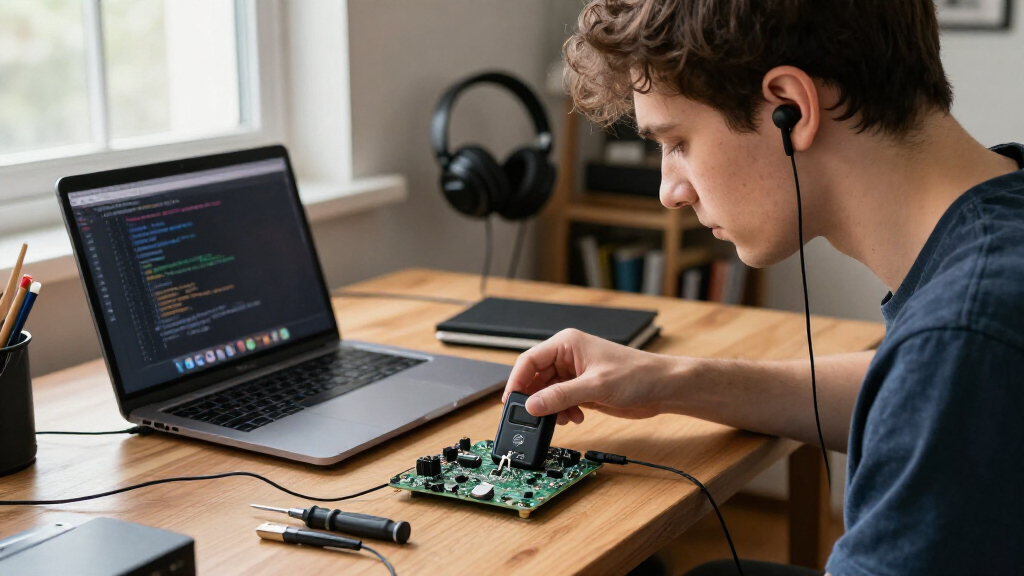
In a report published on Jayden’s Blog, the developer said an LLM helped reverse-engineer the YP3 and adapt Rockbox to its hardware. The first build took about a week to reach a booting, audio-playing state, followed by about a month of tuning and bug fixes. Jayden described being minimally involved in the initial effort, though the account does not provide a detailed breakdown of which tasks were completed by the model and which were handled by the developer.
The player identifies itself as yp3_2.0.43 in its About menu. Jayden describes its system-on-chip as a poorly documented Smartlink SL6801 or Jointbees part, with two Cortex-M4 cores, 2 MB of flash, a 128-by-160 color display and five buttons. The report says the processor can execute code directly from flash but has no cache, and that the two cores can stall in certain flash-execution conditions.
The port supports a broad set of audio formats, including MP3, AAC, Opus, Ogg Vorbis and FLAC, according to the report. But the player shares a 128 KiB arena between codecs and plugins, so launching a plugin stops music playback. It also lacks voice features, supports English only, and omits several audio-processing options and visual features. Database updates block playback, folder and playlist sizes are constrained, and large themes can prevent database menus from opening.
AI Tackles Tight Firmware Limits
The project is a practical example of using LLMs in embedded-device reverse engineering, where documentation may be absent and memory, processor behavior and recovery methods shape what software can run. Jayden’s account suggests an AI tool can help with tasks such as examining unfamiliar hardware and adapting an existing codebase, but it does not establish that the model worked independently: the developer supplied the device, tested builds and relied on prior community work.
The result also shows the limits of a successful port. Rockbox can run on the YP3, but the device’s 512 KiB memory budget forces compromises that affect playback, menus and plugins. For hobbyists, the report offers a possible path to extending the life of inexpensive players; for readers evaluating AI coding claims, it is a single project report rather than a controlled measure of reliability or general capability.
Popular right now

Roborock F25 GT Gen 2 Cordless Wet-Dry Vacuum Mop

Roborock F25 BX Cordless Wet/Dry Vacuum Cleaner

KitchenAid Classic Series 4.5-Quart Tilt-Head Stand Mixer, Onyx Black
As an affiliate, we earn on qualifying purchases.
A Recovery Path Enabled Testing
Rockbox is an open-source firmware project for supported portable music players. Jayden says the YP3 is sold under various unbranded or changing names through AliExpress and other marketplaces, making its exact identity and documentation difficult to establish. The author paid $9.71, including shipping, and says similar units have been offered wholesale for less.
A key part of the work came from another contributor, Ilya Kurdyukov. Jayden credits Kurdyukov with finding a way to enter the device’s ROM download mode using a button-and-USB sequence and writing a tool to read and write flash. That mode gives developers a recovery and testing route without soldering, provided the stock bootloader is retained, according to Jayden. The report also says the player’s Bluetooth stack is embedded in chip ROM; the AI-assisted port added a Rockbox Bluetooth hardware-abstraction layer that calls into it.
Jayden says the YP3 port prompted the creation of auto-rockbox, a reusable toolkit and set of skills for future ports. The developer reports that Claude then got Rockbox running on a different player, the TS47, in four hours. That timing and result are the author’s account, not an independently verified benchmark.
“trust me bro I can make it happen”
— Jayden, describing the AI-assisted attempt
Testing and Hardware Details Remain Open
The report does not include an independent review of the port, its source code, test results or the LLM’s full contribution. Jayden says the player is stable enough for use and that no hardware feature is known to be nonfunctional under Rockbox, but the available account does not specify the duration or breadth of testing behind that assessment.
The YP3’s manufacturer and exact chip identity also remain uncertain: the report describes the SoC as Smartlink SL6801 or Jointbees and says it has little or no public documentation. The article excerpt does not detail every limitation associated with flash execution or Bluetooth, and it does not establish whether every unit sold under similar listings uses identical hardware. The Bluetooth implementation and supported features would benefit from further testing across devices.
More Ports and Acceptance Tests
Jayden says the next step is broader acceptance testing of the YP3 build and further work on other inexpensive players. The developer also describes another, similar device with 4 MiB of PSRAM as booting and stable, though it still needs testing before a port is ready. The author says a stack of other MP3 players may be used for later attempts.
The project website and the auto-rockbox toolkit are available through links in Jayden’s report. The next useful evidence will be published build details, reproducible instructions, device-by-device compatibility information and reports from people testing the firmware beyond the original developer.
Key Questions
What is the YP3?
It is an inexpensive, unbranded MP3 player that identifies itself as yp3_2.0.43 in its About menu. Jayden says similar players are sold under different names, so listings may not all describe identical hardware.
What does the Rockbox port support?
According to Jayden, it boots and plays audio and supports formats including MP3, AAC, Opus, Vorbis and FLAC. Features are limited by memory: for example, starting a plugin stops music playback, and voice support and several audio effects are unavailable.
Did an LLM complete the port without human help?
No such conclusion is established by the report. Jayden says the developer was barely involved in the first attempt, but also supplied the player, tested the firmware and credited another contributor with developing the flash-reading and recovery tools.
Can the player be recovered if a firmware test fails?
Jayden says the device can enter a ROM download mode through a button-and-USB sequence, which allows flash access and recovery if the stock bootloader is kept. That claim comes from the developer’s report; users should follow the project’s specific instructions before attempting firmware changes.
What happens after the YP3 port?
Jayden says the YP3 needs further acceptance testing and reports that another similar player is booting and stable but not yet ready for release. The developer also plans to try the reusable toolkit on additional MP3 players.
Source: jayd.ml