
TL;DR

Get audio and creator gear delivered free — and shop member deals
- Fast, free delivery on millions of items
- Access to Prime Big Deal Days deals on October 6–7
- Prime Video, Amazon Music and more included
Egg crate foam is great for reducing echo inside a room but fails as a soundproofing material. It absorbs high frequencies but doesn’t block low-frequency noise or prevent sound transmission. Combining it with other barriers leads to better results.
Egg crate foam mainly absorbs high-frequency sounds inside a room, reducing echo and improving clarity.
It does not block or significantly reduce sound transmission—don’t rely on it for soundproofing.
For real soundproofing, combine dense barriers like mass-loaded vinyl or drywall with absorption treatments.
Use egg crate foam to treat echo-prone areas, not as the sole soundproofing solution.
Beware of myths: more foam doesn’t mean better soundproofing, and cheap foam often contains unnecessary chemicals.
What egg crate foam is really designed for (and what it’s not)
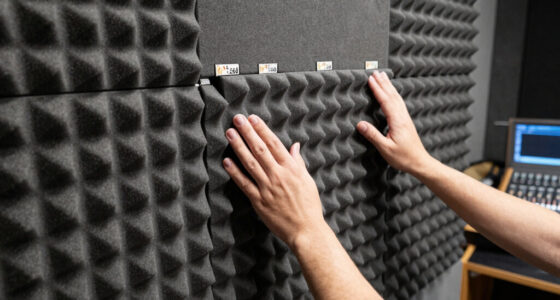
Egg crate foam’s distinctive ridged surface is meant to diffuse sound waves, not block them. Originally, it was created to reduce echo and reverberation in spaces like theaters or recording booths. It’s made of open-cell polyurethane that traps high-frequency sound waves, softening the harshness inside a room. But it’s not a barrier—just a sponge that absorbs some sound energy. It does not prevent sound from passing through walls or doors.
Imagine sticking a sponge in front of a speaker. It mutes the sound inside your room but doesn’t stop the noise from escaping. That’s what egg crate foam does best—interior acoustic treatment, not soundproofing.
As an affiliate, we earn on qualifying purchases.
Why egg crate foam can’t stop sound from getting in or out
Egg crate foam’s porous structure is designed to absorb high frequencies, like the sizzle of a cymbal or the ringing of a voice. But it does little against low-frequency sounds—think bass or street noise. The foam’s open cells let sound waves pass through easily, like a sieve. It adds no mass or density to block sound transmission.
To truly understand why foam fails at soundproofing, it’s essential to recognize that sound transmission depends heavily on the mass and rigidity of a barrier. Foam’s light, porous nature means it cannot provide the necessary weight or damping to prevent sound vibrations from passing through walls or ceilings. This is a fundamental physics principle: adding mass and damping materials significantly reduces sound transmission, whereas soft, lightweight foam does not. For instance, if your neighbor is playing loud music, egg crate foam inside your room won’t keep it out because the sound energy simply passes through the foam and the wall alike. It only makes your room sound less echoey. To effectively block sound, you need dense materials that add mass—like drywall, mass-loaded vinyl, or specialized barriers—because they convert sound energy into heat or dissipate it before entering your space.
As an affiliate, we earn on qualifying purchases.
Absorption vs. Soundproofing: What’s really happening
Many folks confuse absorption with soundproofing. Absorption reduces echo and makes your recordings clearer. Soundproofing keeps noise from escaping or entering. Egg crate foam excels at absorption but is useless for soundproofing.
Understanding this distinction is crucial because it affects how you design your acoustic environment. Absorption materials like foam reduce the reflections of sound waves within a room, leading to clearer sound and less muddiness. However, they do not create a barrier to prevent sound from passing through walls. Conversely, soundproofing involves adding mass and damping to walls, floors, and ceilings to prevent sound energy from transmitting. Relying solely on foam can give a false sense of security: your room may sound better, but it won’t keep loud noises outside or inside from leaking through. Therefore, effective soundproofing requires a combination of absorptive treatments and dense, heavy barriers that impede sound transmission at its source or exit points.
As an affiliate, we earn on qualifying purchases.
What you should actually use for real soundproofing
If your goal is to stop sound from escaping or coming in, you need materials that add mass. Here’s a quick comparison:
| Material | Effectiveness | Cost | Best For |
|---|---|---|---|
| Mass-loaded vinyl | High—blocks low and high frequencies | Moderate to expensive | Soundproofing walls |
| Double drywall | Very high—adds mass and damping | High—needs construction work | Room boundaries |
| Acoustic panels (dense) | Moderate—absorbs high frequencies | Affordable | Interior sound treatment |
| Egg crate foam | Low—primarily absorbs high frequencies | Cheap | Reducing echo inside a room |
For effective soundproofing, combining dense, heavy barriers like mass-loaded vinyl or double drywall with acoustic treatments ensures that sound energy is both blocked and absorbed. Relying solely on foam creates gaps in your soundproofing strategy because foam alone cannot provide the necessary mass to prevent sound transmission, especially at low frequencies. Recognizing the tradeoff between cost, complexity, and effectiveness helps you choose the right combination for your needs.
As an affiliate, we earn on qualifying purchases.
How to use egg crate foam effectively (and what to avoid)
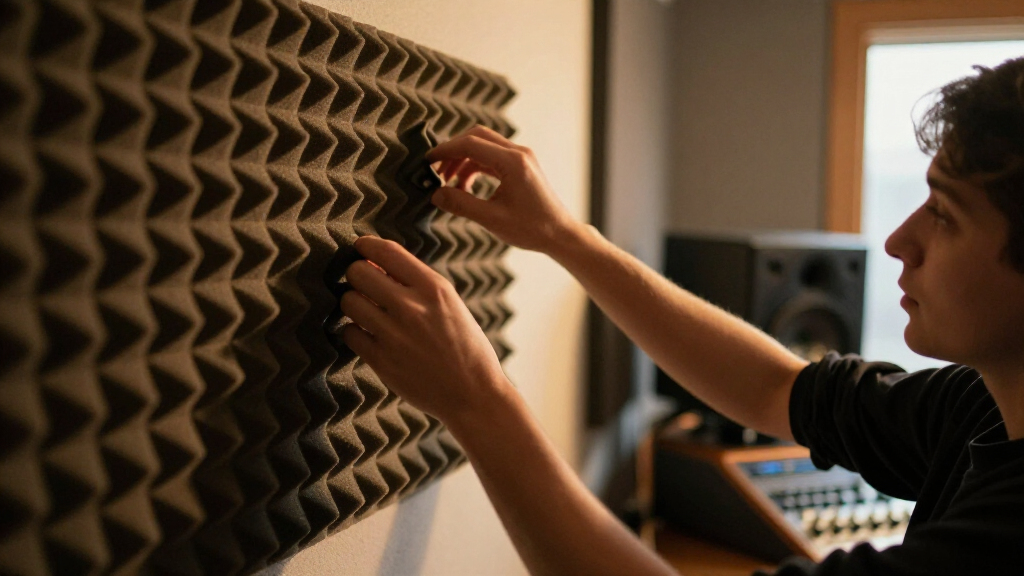
Want to improve your room’s sound without wasting money? Use egg crate foam as intended: inside the room to tame echo, not as a barrier. Place it on walls where sound bounces most, like behind your microphone or around your recording space.
Here’s a quick step-by-step:
- Identify echo-prone areas—corners, walls behind your setup.
- Attach foam panels directly to these surfaces.
- Avoid covering every inch—overdoing it won’t boost soundproofing.
- Combine with heavier materials if you need to block sound transmission.
Remember, foam isn’t magic. It’s a tool for better clarity, not noise barriers. Using foam strategically maximizes its benefits while avoiding wasted effort and expense.
The biggest myths about egg crate foam you should forget
Myth #1: Egg crate foam blocks all sound. Wrong. It only absorbs high frequencies and reduces echo. It does not create a barrier that prevents sound from passing through walls or doors, which is essential for true soundproofing. Believing otherwise can lead to ineffective soundproofing setups.
Myth #2: It’s a soundproof barrier. Nope. It’s porous and doesn’t add mass, so it fails at blocking sound transmission. Relying solely on foam can give a false sense of security, leaving your space vulnerable to noise leaks.
Myth #3: More foam equals better soundproofing. Not true—too much foam doesn’t improve sound blocking and can even make your room sound worse by over-damping or creating uneven acoustics. It’s about quality and placement, not quantity.
Myth #4: Cheap foam is just as good as expensive foam. Quality varies, but cheap foam often contains chemicals like flame retardants and doesn’t last long, potentially degrading your air quality or losing effectiveness over time. Investing in higher-quality foam ensures safer, longer-lasting results.
Frequently Asked Questions
Does egg crate foam block sound effectively?
No. It’s great for reducing echo and improving sound clarity inside a space but does little to block sound from passing through walls or doors.Can egg crate foam help my home studio sound better?
Absolutely. It’s excellent for taming reverberation and making your recordings clearer, but if you want to stop noise from escaping, you need additional soundproofing materials.What are better options for soundproofing?
Materials like mass-loaded vinyl, dense acoustic panels, or double drywall are far more effective at blocking sound transmission than foam alone.Why does egg crate foam seem to work at first but then fails?
It reduces echo and makes things sound clearer, but it doesn’t prevent sound from entering or leaving. Over time, that becomes obvious.Is egg crate foam safe or environmentally friendly?
Most are safe for indoor use, but some contain chemicals like flame retardants. Always check product specs before buying.Conclusion
Egg crate foam can make a room sound better—if you use it for what it’s made for. It’s a tool for controlling echo, not a magic shield against noise. If you want real silence, combine it with heavy, dense materials. Otherwise, you’re just chasing illusions.Evergreen bestsellers Picks
bestsellers
As an affiliate, we earn on qualifying purchases.