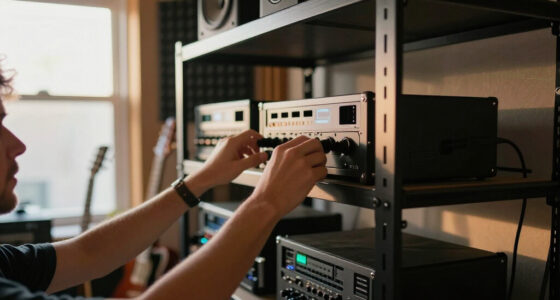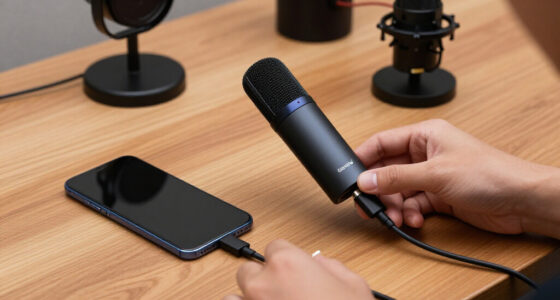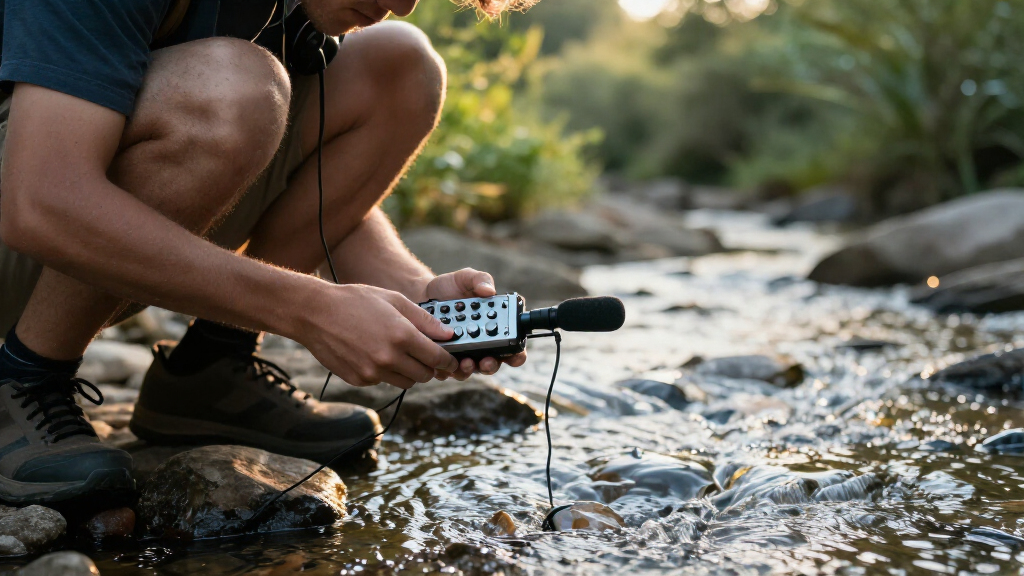

For most buyers, the Zoom H5studio is the strongest all-around portable field recorder here, with a more capable recording setup than the pocket-size H1 models. The TASCAM DR-40XP stands out for flexible four-channel recording, while the Zoom F3 suits field work where clean external-mic capture and a small recorder matter most. The main tradeoff is between a recorder’s built-in microphones and controls, the number of inputs and tracks it offers, and how much gear you want to carry. Compact models can simplify spontaneous recording, while larger or more specialized ones offer more ways to connect microphones and manage a session. Read on for the full breakdown and help matching each option to your recording needs.

Get audio and creator gear delivered free with Prime
- Fast, free delivery on millions of items
- Prime Video, Amazon Music and more included
- Member-only deals all year
Complete the kit


Key Takeaways
- The lineup splits between pocket recorders and expandable setups. The H1essential models prioritize simple stereo capture; the H5studio, DR-40XP, H4essential, and F3 offer more room for external microphones or multichannel workflows.
- 32-bit float appears across several picks, but it does not make every recorder equivalent. Microphone arrangement, inputs, track handling, and controls still shape what you can record and how easily you can manage it.
- The H1essential models are close in core purpose. Choose among the standalone recorder and bundles based on whether the included lavalier or accessory kit fits your recording plans.
- The H2essential and XV1-R bring stereo capture into sharper focus. Their microphone configurations make them alternatives to the simpler H1essential format when the sound around the recorder matters.
- The Zoom R4 is the outlier for multitrack work. Its four-track approach and USB audio interface suit layered recording better than a buyer who mainly needs a compact stereo recorder.
| Zoom H5studio Handy Recorder Bundle with Accessory Pack |  | Best for Adaptable Stereo Capture | Recording format: WAV | Recording capability: 32-bit float | Microphone: Detachable XY capsule | VIEW LATEST PRICE | See Our Full Breakdown |
| Xvive XV1-R Portable Stereo Audio Recorder with 32-Bit Float and X/Y Microphones |  | Best for Loud, Unpredictable Sound | Microphones: Built-in X/Y directional microphones | Maximum sound pressure level: 130 dB SPL | Maximum sample rate: 96 kHz | VIEW LATEST PRICE | See Our Full Breakdown |
| Zoom H1 XLR 2-Channel Handy Recorder |  | Best for External Microphones | Recording format: WAV | Recording resolution: 32-bit float / 96 kHz | Inputs: Two locking XLR/TRS combo inputs and 3.5 mm stereo input | VIEW LATEST PRICE | See Our Full Breakdown |
| Zoom H1essential Stereo Handy Recorder with 32-Bit Float Recording |  | Best for Simple Stereo Field Recording | Recording format: WAV | Recording capability: 32-bit float | Maximum sample rate: 96 kHz | VIEW LATEST PRICE | See Our Full Breakdown |
| TASCAM DR-40XP 4-Channel 32-Bit Float Portable Field Recorder and USB-C Audio Interface |  | Best for Multichannel Field Work | Recording channels: 4 | Recording formats: 32-bit float, 24-bit, and 16-bit WAV | Sample rates: 96 kHz, 48 kHz, and 44.1 kHz | VIEW LATEST PRICE | See Our Full Breakdown |
| Zoom H1essential 2-Track 32-Bit Float Portable Audio Recorder Bundle with APH-1e Accessories |  | Best Compact Starter Bundle | Recording format: WAV | Recording resolution: 32-bit float | Maximum sample rate: 96 kHz | VIEW LATEST PRICE | See Our Full Breakdown |
| Zoom H1essential Handy Recorder Bundle with Lavalier Microphone and Accessories |  | Best for Beginner Interviews | Recording: 32-bit float | Maximum sound pressure level: 120 dB SPL | Built-in microphones: X/Y stereo | VIEW LATEST PRICE | See Our Full Breakdown |
| Zoom H2essential Handheld Recorder |  | Best for Flexible Microphone Patterns | Microphones: Three built-in | Recording patterns: Nine selectable | Recording format: WAV | VIEW LATEST PRICE | See Our Full Breakdown |
| Zoom R4 Multi-Track Recorder with 32-Bit Float and USB Audio Interface |  | Best for Portable Multitrack Sessions | Recording tracks: Up to four | Audio format: WAV | Audio interface: 32-bit float, 2-in / 2-out | VIEW LATEST PRICE | See Our Full Breakdown |
| Zoom H4essential 4-Track Handheld Audio Recorder |  | Best for Hybrid Field Recording | Recording tracks: Four | Recording technology: 32-bit float | Maximum recording rate: 96 kHz | VIEW LATEST PRICE | See Our Full Breakdown |
| Zoom H1essential Portable Stereo Recorder | | Best for Lightweight Stereo Capture | Microphones: Built-in X/Y stereo | Recording: 32-bit float WAV | Connectivity: USB-C | VIEW LATEST PRICE | See Our Full Breakdown |
| Zoom F3 Professional Field Recorder |  | Best for External XLR Microphones | Channels: 2 | Inputs: 2 locking XLR/TRS | Recording: 32-bit float WAV | VIEW LATEST PRICE | See Our Full Breakdown |
| portable field recorder | Weight | Microphones | Storage |
|---|---|---|---|
| Zoom H5studio Handy Recorder B | — | — | Secure Digital card |
| Xvive XV1-R Portable Stereo Au | — | Built-in X/Y directional microphones | MicroSDHC up to 32 GB, MicroSD up to 32 GB, or MicroSDXC up to 128 GB |
| Zoom H1 XLR 2-Channel Handy Re | 6.4 ounces | — | — |
| Zoom H1essential Stereo Handy | 3.2 ounces | Built-in stereo X/Y | SD card |
| TASCAM DR-40XP 4-Channel 32-Bi | 6.1 ounces | Adjustable A-B or X-Y unidirectional condenser microphones | — |
| Zoom H1essential 2-Track 32-Bi | — | Stereo X/Y | — |
| Zoom H1essential Handy Recorde | — | — | — |
| Zoom H2essential Handheld Reco | 6.72 ounces | Three built-in | — |
| Zoom R4 Multi-Track Recorder w | 9.6 ounces | — | — |
| Zoom H4essential 4-Track Handh | 243 g | Built-in stereo | SD card, up to 1 TB |
| Zoom H1essential Portable Ster | 92 g | Built-in X/Y stereo | SD card, up to 1 TB |
| Zoom F3 Professional Field Rec | 8.48 oz | — | MicroSD, up to 512 GB |
More Details on Our Top Picks
Zoom H5studio Handy Recorder Bundle with Accessory Pack
The H5studio suits field recordists who want handheld stereo capture today and room to change microphone setups later. Its detachable XY capsule and external inputs make it more adaptable than the fixed-microphone Zoom H1essential, while 32-bit float WAV can help preserve sudden loud sounds without setting gain as carefully. The bundle also gets you started with a memory card and batteries, useful when packing for a location session. There are tradeoffs: the listed specs give no headphone jack, so monitoring options are limited, and this bundle is bulkier to pack than the lightweight H1essential. Choose it for modularity and a ready-to-go kit; skip it if headphone monitoring is central to your field workflow.
Pros:- 32-bit float recording helps handle unexpected changes in sound level
- Detachable XY capsule allows compatible microphone modules
- Rugged compact design is suited to location recording
- Bundle includes a 64GB microSDHC card and four AA batteries
Cons:- No headphone jack is listed for monitoring
- More gear to carry than a basic fixed-microphone handheld recorder
Best for: Field recordists who want a supplied starter kit and the option to swap compatible microphone capsules
Not ideal for: Recordists who need headphone monitoring while capturing audio or want the lightest recorder for a small kit
- Recording format:WAV
- Recording capability:32-bit float
- Microphone:Detachable XY capsule
- Microphone mode:Stereo
- Storage:Secure Digital card
- Digital recording time:120 hours
- Bundle contents:Recorder, accessory pack, 64GB microSDHC card, four AA batteries, and microfiber cloth
Our verdict“Choose the H5studio if adaptable capsule options and included field accessories matter more than headphone monitoring and a minimal kit.”
Xvive XV1-R Portable Stereo Audio Recorder with 32-Bit Float and X/Y Microphones
For close recording around loud sources, the XV1-R’s built-in X/Y microphones are rated to handle up to 130 dB SPL, more headroom than the Zoom H1essential’s 120 dB SPL rating. Both offer 32-bit float, but the Xvive adds pre-record and auto-record functions that can help catch a sound when the operator cannot react instantly. It also records AAC as well as WAV, giving users a compressed format option, and can work as a USB microphone with computers and mobile devices. The fixed microphones offer less flexibility than the Zoom H5studio’s detachable capsule, and there’s no headphone jack for monitoring. Its listed recording time is up to 12 hours, so extended outings may call for spare AA batteries.
Pros:- Built-in X/Y microphones rated up to 130 dB SPL
- 32-bit float and 24-bit PCM WAV recording up to 96 kHz
- Pre-record and auto-record can help capture unexpected sounds
- USB microphone compatibility with PC, Mac, iOS, and Android
Cons:- No headphone jack is listed
- Up to 12 hours of recording time may require spare AA batteries on long outings
- Fixed built-in microphones are less adaptable than the Zoom H5studio’s detachable capsule
Best for: Location recordists capturing loud events who want pre-record features and USB microphone compatibility
Not ideal for: Users who need headphone monitoring, modular microphones, or longer recording sessions without battery changes
- Microphones:Built-in X/Y directional microphones
- Maximum sound pressure level:130 dB SPL
- Maximum sample rate:96 kHz
- Recording formats:WAV (32-bit float or 24-bit PCM) and AAC
- Storage:MicroSDHC up to 32 GB, MicroSD up to 32 GB, or MicroSDXC up to 128 GB
- USB audio:USB Audio Class 2.0; fixed 48 kHz sample rate
- Battery and recording time:Two AA batteries; up to 12 hours
- Headphone jack:None
Our verdict“Pick the XV1-R for loud sources and automatic capture aids if you can work without headphone monitoring.”
Zoom H1 XLR 2-Channel Handy Recorder
The H1 XLR is the lineup’s compact pick for recordists who bring their own microphones or instruments. Its two locking XLR/TRS combo inputs give it a more direct path to professional sources than the built-in-microphone Zoom H1essential, and its 3.5 mm headphone output lets you monitor a take. 32-bit float recording at up to 96 kHz can reduce the pressure to set input gain perfectly before a changing field session. The tradeoff is that the H1 XLR is less of an all-in-one stereo recorder: its listed built-in microphone form factor is shotgun, unlike the H1essential’s stereo X/Y microphones. It also runs on two AA batteries, with a listed battery life of 10 hours.
Pros:- Two locking XLR/TRS combo inputs accept microphones and instruments
- 32-bit float WAV recording up to 96 kHz
- 3.5 mm headphone output supports monitoring
- SDXC card support up to 1 TB
Cons:- Two AA batteries provide a listed 10-hour battery life
- Built-in microphone form factor is listed as shotgun rather than stereo X/Y
Best for: Solo location sound recordists and musicians who need two locking inputs for external microphones or instruments
Not ideal for: Travelers who mainly want simple stereo ambience capture from built-in X/Y microphones
- Recording format:WAV
- Recording resolution:32-bit float / 96 kHz
- Inputs:Two locking XLR/TRS combo inputs and 3.5 mm stereo input
- Headphone output:3.5 mm
- Storage support:SDXC cards up to 1 TB
- Power and battery life:Two AA batteries; 10 hours
- Weight:6.4 ounces
- Recording time:18.5 hours
Our verdict“Choose the H1 XLR if external mic connections and headphone monitoring are more useful than built-in stereo ambience capture.”
Zoom H1essential Stereo Handy Recorder with 32-Bit Float Recording
The H1essential keeps portable recording straightforward: its built-in stereo X/Y microphones and 32-bit float capture suit people who want to point a recorder at a scene without choosing external mics or setting gain. It weighs just 3.2 ounces, making it easier to carry than the input-focused Zoom H1 XLR. The H1 XLR is the better fit when locking mic connections and headphone monitoring matter; the H1essential instead records to an SD card and can serve as a USB microphone. Audio guidance also supports visually impaired users. Its listed 120-minute digital recording time is a significant constraint for longer field sessions, and no headphone jack is listed, limiting monitoring during capture.
Pros:- Built-in X/Y microphones capture stereo without extra gear
- 32-bit float recording avoids manual gain setting
- Weighs 3.2 ounces
- Audio guidance supports visually impaired users
Cons:- Listed digital recording time is 120 minutes
- No headphone jack is listed
- Lacks the external XLR/TRS inputs available on the Zoom H1 XLR
Best for: Travelers, students, and visually impaired users who want a very light recorder for short stereo captures
Not ideal for: Field crews recording long sessions or anyone who needs headphone monitoring or external XLR microphones
- Recording format:WAV
- Recording capability:32-bit float
- Maximum sample rate:96 kHz
- Microphones:Built-in stereo X/Y
- Maximum sound pressure level:120 dB SPL
- Storage:SD card
- Weight:3.2 ounces
- Accessibility:Audio guidance function for visually impaired users
Our verdict“Choose the H1essential for light, simple stereo captures, provided its listed recording time fits your sessions.”
TASCAM DR-40XP 4-Channel 32-Bit Float Portable Field Recorder and USB-C Audio Interface
The DR-40XP makes the most sense when a field recording needs more than a stereo pair. It can record four channels, combining its adjustable A-B or X-Y microphones with two XLR/TRS inputs; that gives it a broader setup than the two-input Zoom H1 XLR. Its low-noise preamps and 32-bit float WAV support suit changing location levels, while USB-C operation also lets it serve as a 2-in/2-out interface. That flexibility adds setup decisions and may be unnecessary for someone who only wants quick stereo ambience; the lighter-feeling H1essential is simpler for that task. The DR-40XP also arrives without a microSD card or batteries, so field users need to supply both before heading out.
Pros:- Four-channel recording combines built-in microphones and external sources
- Two XLR/TRS inputs support external microphones and equipment
- Adjustable A-B or X-Y microphones adapt to the recording setup
- 2-in/2-out USB-C interface supports computer and compatible mobile workflows
Cons:- MicroSD card and batteries are not included
- Four-channel setup is more involved than a basic stereo recorder
Best for: Documentary crews and musicians recording built-in microphones alongside two external sources
Not ideal for: Casual recordists who want a minimal stereo recorder with storage and batteries included
- Recording channels:4
- Recording formats:32-bit float, 24-bit, and 16-bit WAV
- Sample rates:96 kHz, 48 kHz, and 44.1 kHz
- Inputs:Two XLR/TRS
- USB interface:2-in/2-out USB-C
- Microphones:Adjustable A-B or X-Y unidirectional condenser microphones
- Maximum SPL:125 dB
- Weight:6.1 ounces
Our verdict“Choose the DR-40XP when recording four sources or using it as a USB interface matters more than a ready-to-use kit.”
Zoom H1essential 2-Track 32-Bit Float Portable Audio Recorder Bundle with APH-1e Accessories
The H1essential bundle suits field recording when you want a small stereo recorder and the basic outdoor accessories in one kit. Its 32-bit float recording reduces the need to set gain before a take, while the X/Y microphones handle sound up to 120 dB SPL. Compared with the H2essential, it has fewer microphone patterns and no surround recording, but its simpler stereo setup is easier to pack and operate for interviews, ambience, or quick location notes. The included hairy windscreen and padded case help with outdoor use and transport. The tradeoff is that the bundle still requires a separate SD card, and its built-in microphone layout offers less flexibility than the H4essential’s XLR inputs.
Pros:- 32-bit float recording reduces the need to set gain manually
- Stereo X/Y microphones support levels up to 120 dB SPL
- Includes a furry windscreen, padded case, adapter, and USB-C cable
- Can function as a USB microphone with compatible devices
Cons:- SD card is required but not included
- Stereo-only microphone setup has fewer placement options than the H2essential
- No XLR inputs for connecting professional microphones
Best for: Traveling interviewers and location sound collectors who want a compact stereo recorder with a windscreen and protective case included.
Not ideal for: Recordists who need multiple mic inputs, surround patterns, or recording straight out of the box without buying an SD card.
- Recording format:WAV
- Recording resolution:32-bit float
- Maximum sample rate:96 kHz
- Microphones:Stereo X/Y
- Maximum sound pressure level:120 dB SPL
- Connectivity:USB-C
- Headphone jack:3.5 mm
- Included accessories:Hairy windscreen, padded shell case, AC adapter, USB-C cable
Our verdict“Choose this bundle for portable stereo recording with useful outdoor accessories, provided you can supply an SD card.”
Zoom H1essential Handy Recorder Bundle with Lavalier Microphone and Accessories
This H1essential kit gives new field recordists a more interview-ready starting point than the APH-1e bundle: it includes a 32GB microSDHC card, batteries, windscreen, and a lavalier microphone. The built-in X/Y mics capture room sound or two-person ambience, while the lav can put a speaker’s voice closer to the source. Like the H1essential APH-1e bundle, it records 32-bit float audio and handles up to 120 dB SPL; unlike that kit, it adds overdubbing, pre-record, and auto-record features. Its limits matter for growing setups: the supplied card is modest in capacity, and the listed microphone mode is mono. Buyers who need surround capture should look at the H2essential instead.
Pros:- 32-bit float recording avoids the need for careful gain setting
- Includes a lavalier microphone, 32GB card, furry windscreen, and four AAA batteries
- Built-in X/Y microphones capture sound up to 120 dB SPL
- Pre-record and auto-record features help catch unscripted moments
Cons:- Included 32GB card may fill quickly on longer recording days
- Listed microphone operation mode is mono
- No XLR inputs for larger external microphone setups
Best for: First-time interviewers who want a ready-to-start handheld recorder with a lavalier microphone, memory card, and batteries.
Not ideal for: Field producers who need larger included storage, multichannel microphone inputs, or the H2essential’s selectable surround patterns.
- Recording:32-bit float
- Maximum sound pressure level:120 dB SPL
- Built-in microphones:X/Y stereo
- Included storage:32GB microSDHC card
- Memory capacity support:Up to 1 TB
- Headphone jack:3.5 mm
- Microphone mode:Mono (listed)
- Included accessories:Lavalier condenser microphone, furry windscreen, four AAA batteries, cloth
Our verdict“Pick this kit for accessible interview recording with a lav and card included, but choose the H2essential for more recording patterns.”
Zoom H2essential Handheld Recorder
The H2essential earns its place for recordists who need to adapt microphone pickup to the scene. Its three built-in microphones and nine patterns cover mono, stereo, and surround recording, giving it more placement choices than the stereo-only H1essential models. That flexibility helps when a single recorder needs to handle a focused interview one day and a wider environmental soundscape the next. It records 32-bit float at up to 96 kHz and can act as a USB microphone while saving to an SD card. The added options make its controls and choices less straightforward than the H1essential’s simpler workflow. Two AA batteries are required, and Bluetooth timecode sync is useful only with compatible equipment, so it is not a full substitute for the H4essential’s XLR inputs.
Pros:- Three microphones and nine selectable patterns cover varied recording scenes
- 32-bit float recording at up to 96 kHz
- Can record to SD while functioning as a USB microphone
- Audible menus are available in seven languages
Cons:- Requires two AA batteries
- Pattern choices add complexity compared with the H1essential
- Bluetooth timecode sync depends on compatible units
Best for: Sound collectors and documentary makers who want one handheld recorder for mono, stereo, and surround field capture.
Not ideal for: Users who prefer a minimal stereo recorder, need XLR microphone connections, or lack compatible gear for Bluetooth timecode.
- Microphones:Three built-in
- Recording patterns:Nine selectable
- Recording format:WAV
- Maximum recording quality:32-bit float / 96 kHz
- Recording modes:Mono, stereo, and surround
- Storage support:Up to 2 TB
- Battery:Two AA batteries
- Average battery life:20 hours
- Weight:6.72 ounces
Our verdict“Choose the H2essential when adjustable pickup patterns and surround capture matter more than a simpler stereo workflow.”
Zoom R4 Multi-Track Recorder with 32-Bit Float and USB Audio Interface
The R4 is the pick for musicians who need to build a song or layered recording away from a computer. It records up to four tracks, lets you bounce mixes to free a track, and adds effects plus more than 80 rhythm patterns. That gives it a different purpose from the H2essential, which is better suited to capturing a scene with selectable built-in mic patterns. The R4 also has two XLR/TS combo inputs and works as a USB audio interface, making it more adaptable for instruments and external mics. Those connections and track tools add capability, but the two-input limit still constrains simultaneous sources. It weighs more than the H1essential models and needs four AA batteries when USB-C power is unavailable.
Pros:- Records and layers up to four tracks with track bouncing
- Two XLR/TS combo inputs accept external microphones or instruments
- Can serve as a USB audio interface with computers or smartphones
- Built-in stereo mic, effects, and over 80 rhythm patterns support standalone sessions
Cons:- Only two XLR/TS combo inputs limit simultaneous external sources
- Requires four AA batteries when USB-C power is unavailable
- Multitrack workflow is less direct for quick ambient capture than the H2essential
Best for: Songwriters and small field bands who want to record and layer a few sources without carrying a laptop.
Not ideal for: Ambient sound recordists who want multiple built-in pickup patterns, or groups needing more than two external inputs at once.
- Recording tracks:Up to four
- Audio format:WAV
- Audio interface:32-bit float, 2-in / 2-out
- Inputs:Two XLR/TS combo
- Built-in microphone:Stereo
- Rhythm patterns:More than 80
- Power:Four AA batteries or USB-C
- Storage capacity:Up to 1 TB
- Weight:9.6 ounces
Our verdict“Choose the R4 for portable songwriting and layered sessions; choose the H2essential for simpler environmental recording.”
Zoom H4essential 4-Track Handheld Audio Recorder
The H4essential bridges handheld ambience capture and external microphone work. Its built-in stereo mics cover quick location recordings, while two XLR/TRS inputs let you add microphones or other sources for interviews and live performance. Compared with the H1essential models, it supports four-track recording and more involved setups; compared with the R4, it is oriented toward field and production recording rather than rhythm-led songwriting. 32-bit float up to 96 kHz helps manage changing levels, and USB-C can support recording or streaming while the unit backs up to an SD card. The larger color display and spoken menu guidance can help with setup, but this is heavier and more complex than a basic stereo handheld. It also relies on two AA batteries and an SD card for direct backup.
Pros:- Four-track 32-bit float recording up to 96 kHz
- Built-in stereo microphones plus two XLR/TRS inputs
- USB-C recording and streaming can run alongside SD card backup
- Spoken menu guidance and a 2-inch color LCD support an accessible workflow
Cons:- Requires two AA batteries
- SD card is needed for direct device backup
- More setup and weight than the H1essential stereo recorders
Best for: Video crews, interviewers, and field musicians who need built-in stereo capture alongside two external mic inputs.
Not ideal for: Travelers who prioritize the smallest, simplest recorder or users who want a multitrack setup with more than two external inputs.
- Recording tracks:Four
- Recording technology:32-bit float
- Maximum recording rate:96 kHz
- Microphones:Built-in stereo
- Inputs:Two XLR/TRS
- Connectivity:USB-C
- Storage:SD card, up to 1 TB
- Power:Two AA batteries
- Weight:243 g
Our verdict“Pick the H4essential when a portable kit needs built-in stereo mics and two external inputs in the same recorder.”
Zoom H1essential Portable Stereo Recorder
The Zoom H1essential is a strong fit when I want a pocketable recorder that can capture a scene without extra microphones or cables. Its built-in X/Y stereo microphones give it an advantage over the Zoom F3, which needs external microphones, while 32-bit float WAV recording helps accommodate sudden changes in volume. At 92 g, it is much easier to carry for spontaneous interviews, location notes, and ambient sound. USB-C microphone mode also gives it a second role for computer or mobile recording. The tradeoff is a simpler two-microphone setup: it lacks the F3’s locking XLR/TRS inputs for professional external mics. I also need to bring two AAA batteries and an SD card, which is not specified as included.
Pros:- Built-in X/Y microphones capture stereo sound without extra gear
- 32-bit float recording helps manage unpredictable changes in loudness
- USB-C microphone mode supports recording with computers and mobile devices
- At 92 g, it is easy to carry for quick field recordings
Cons:- No XLR/TRS inputs for connecting professional external microphones
- Requires two AAA batteries, and the recording media is not specified as included
Best for: Solo creators, students, and travelers who want a very light recorder for stereo ambience, interviews, or camera audio without packing separate microphones.
Not ideal for: Sound recordists using external XLR microphones or needing secure locking connections; the Zoom F3 is better suited to that workflow.
- Microphones:Built-in X/Y stereo
- Recording:32-bit float WAV
- Connectivity:USB-C
- Storage:SD card, up to 1 TB
- Battery:2 AAA batteries; up to 10 hours
- Headphone jack:3.5 mm
- Weight:92 g
- Dimensions:5.38 × 2.12 × 1.14 in
Our verdict“Choose the H1essential for lightweight, self-contained stereo recording; choose the Zoom F3 when external XLR microphones matter more.”
Zoom F3 Professional Field Recorder
The Zoom F3 is the more production-focused choice in this pair: its two locking XLR/TRS inputs and low-noise preamps are built for external microphones that need dependable connections. Its 32-bit float recording with dual A/D converters helps capture quiet sources and sudden peaks without constant level adjustments. Compared with the self-contained Zoom H1essential, the F3 offers a more capable input path, but it does not include microphones or built-in stereo mics, so the full recording setup takes more planning. Its compact body can suit location work where a separate mic is already part of the kit. The practical tradeoffs are a two-channel limit, MicroSD storage up to 512 GB, and the need to supply two AA batteries when using it away from USB power.
Pros:- Two locking XLR/TRS inputs help keep microphone connections secure
- 32-bit float recording and dual A/D converters handle a wide range of levels
- Low-noise preamps support clean recordings with suitable external microphones
- Can run on two AA batteries or USB power
Cons:- Microphones are not included, so recording requires separate audio gear
- Limited to two channels and MicroSD cards up to 512 GB
- Requires two AA batteries for battery-powered use
Best for: Location sound recordists and documentary crews who already own XLR microphones and want a compact recorder with secure inputs and flexible power.
Not ideal for: Beginners or travelers seeking an all-in-one recorder for quick stereo capture; the Zoom H1essential includes microphones and is lighter to carry.
- Channels:2
- Inputs:2 locking XLR/TRS
- Recording:32-bit float WAV
- Storage:MicroSD, up to 512 GB
- Power:2 AA batteries or USB
- Digital recording time:73 hours
- Headphone jack:3.5 mm
- Weight:8.48 oz
- Dimensions:3.04 × 2.95 × 1.88 in
Our verdict“Pick the F3 if your field kit centers on external XLR microphones; choose the H1essential for simpler, lighter stereo capture.”
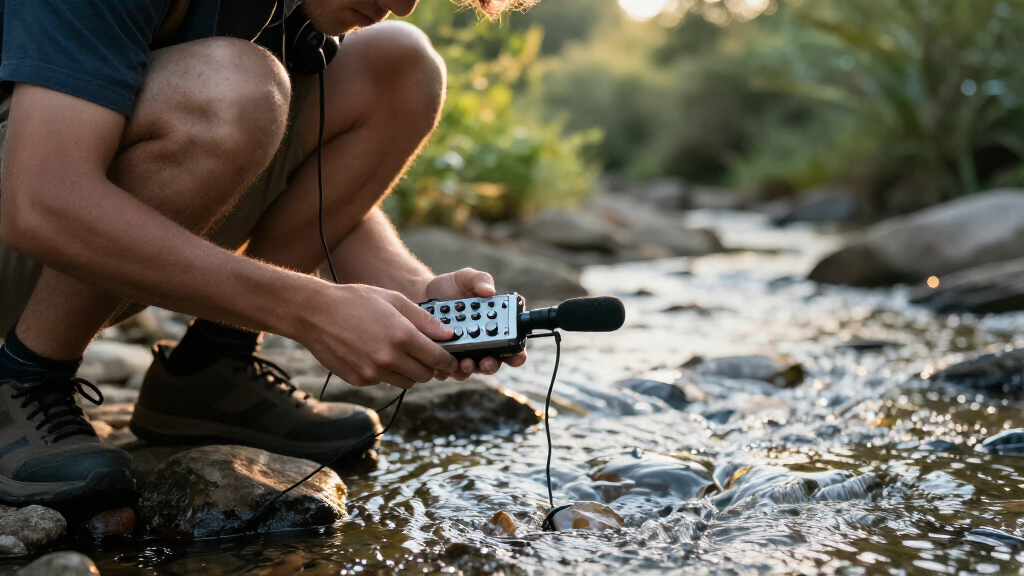
How We Picked
I ranked these portable field recorders by how well their features match common location-recording jobs: capturing interviews, ambience, music, and multiple microphone sources without adding unnecessary setup. I weighed recording format, built-in microphone configuration, input and track flexibility, portability, handling controls, and whether bundled accessories add practical value. A feature mattered most when it changed what a buyer could record or made a field workflow easier.
The ranking favors versatile recorders that can serve more than one field use, then gives specialized picks a clear place where their design fits a narrower need. The H5studio leads for its broader recording role, while the DR-40XP and F3 rank highly for distinct multichannel and external-microphone workflows. H1essential variants remain compelling for straightforward stereo capture, but bundles rank according to the usefulness of their included gear rather than implying a different core recorder. The R4 earns a specific role for multitrack sessions, though that focus makes it less suitable as a simple pocket recorder.
| portable field recorder | Storage |
|---|---|
| Zoom H5studio Handy Recorder B | Secure Digital card |
| Xvive XV1-R Portable Stereo Au | MicroSDHC up to 32 GB, MicroSD up to 32 GB, or MicroSDXC up to 128 GB |
| Zoom H1 XLR 2-Channel Handy Re | — |
| Zoom H1essential Stereo Handy | SD card |
| TASCAM DR-40XP 4-Channel 32-Bi | — |
| Zoom H1essential 2-Track 32-Bi | — |
| Zoom H1essential Handy Recorde | — |
| Zoom H2essential Handheld Reco | — |
| Zoom R4 Multi-Track Recorder w | — |
| Zoom H4essential 4-Track Handh | SD card, up to 1 TB |
| Zoom H1essential Portable Ster | SD card, up to 1 TB |
| Zoom F3 Professional Field Rec | MicroSD, up to 512 GB |
Factors to Consider When Choosing Portable Field Recorders
Before choosing a recorder, I would start with the recording situation rather than the feature list. A device that works well for a solo walk recording may be awkward for a two-person interview or a session with several microphones. These broader decisions can help narrow the field before comparing individual models.
Decide Whether Built-In Microphones Are Enough
Built-in microphones make it easier to capture a sound quickly, since there is less gear to connect and position. They suit ambience, travel notes, and spontaneous recordings where speed matters. For interviews or instruments, separate microphones can give you more control over placement and isolation. A common mistake is buying a recorder with extra inputs when you will never carry or connect external mics. The opposite mistake is relying on built-in microphones for a job that needs close, consistent voice capture. Think through the quietest or most demanding recording you expect to make, not just the easiest one.
Match Inputs and Tracks to the Session
Inputs determine how many external sources you can connect at once, while track handling affects how those sources are captured and organized. A stereo ambience recording has different needs from a two-person interview or a multitrack music session. Extra channels can save a session when sources need separate control, but they add setup choices and can make a compact workflow less simple. Count microphones and other sources you expect to record simultaneously, then leave room for one likely addition. Do not confuse a recorder’s maximum track count with the number of independent microphone inputs it provides. Check both before buying.
Treat 32-Bit Float as One Part of the Recording Chain
32-bit float can give you more flexibility when adjusting recorded levels later, which can help when a sound’s volume is hard to predict. It does not repair poor microphone placement, heavy background noise, or a recording that is distorted elsewhere in the signal chain. Buyers sometimes focus on bit depth and overlook the microphones, input options, or editing workflow that matter just as much. If you record unpredictable events, level flexibility can be useful. For planned interviews, careful placement and a suitable microphone may matter more. Choose the format alongside the rest of the capture setup.
Account for Handling, Wind, and Monitoring
Field recordings can be spoiled by wind, clothing noise, bumps, or a missed cue, even when the recorder has capable microphones. Consider where the device will sit, whether you will hold it, and how you will attach it to a bag, stand, or person. Headphone monitoring helps you catch problems during a session instead of discovering them during editing. Smaller recorders are easier to carry, but their controls and screen can be less comfortable to adjust quickly. Check how you plan to manage wind protection and mounting before assuming a recorder is ready for outdoor use. The accessories you need depend on the environment as much as the recorder.
Choose a Bundle Only for Accessories You Will Use
A bundle can save setup time when its microphone, cables, or protective accessories match your work. It can also leave you carrying pieces that do not fit your recording style. Compare each package against what you already own and what you will actually bring into the field. A lavalier is useful for close speech capture, while a general accessory pack may be more relevant if it contains practical mounting or protection gear. Bundles built around the same recorder do not necessarily improve its core recording capabilities. Make the included items part of the decision, but judge the recorder itself on its own design.
Frequently Asked Questions
Is 32-bit float worth prioritizing for field recording?
It can be useful when recording unpredictable sounds or when you cannot adjust levels easily during a take, because it gives more room to correct recorded levels later. It does not remove noise or fix poor microphone placement, so it is not a substitute for good capture technique. If your work involves planned interviews, a suitable microphone and monitoring may matter more than the format alone. Compare the recorder’s inputs and microphone setup alongside its recording format. That gives a clearer picture of whether 32-bit float addresses your actual challenge.
Should I buy a recorder with XLR inputs if I only record interviews?
XLR inputs can be useful when you plan to connect professional microphones, record multiple speakers, or add gear later. For a single speaker close to a lavalier or the recorder’s built-in microphones, they may add bulk and controls you do not need. Think about whether you need separate sources recorded at the same time, since that is where additional inputs can make a real difference. Also account for the cables and microphones those inputs require. If your interview setup is deliberately simple, a compact recorder and suitable mic may be easier to carry and operate.
Which of these recorders makes the most sense for a first-time buyer?
I would start with the H1essential family if your main goal is straightforward stereo recording and you do not yet need a multichannel setup. Its role is simpler than the H5studio, DR-40XP, or R4, which give you more recording options to manage. Choose a bundle only if its included lavalier or accessories suit the kind of recordings you plan to make. If you already know you need external microphones or several sources at once, stepping up to a recorder with more inputs can prevent an early replacement. Let your first real recording task guide that decision.
Do I need a separate recorder if I already have a phone that records audio?
A phone can handle quick voice notes and basic recordings, but a dedicated field recorder can offer purpose-built microphones, physical controls, and connections for external mics. Those features matter when you need more control over capture or want to record several sources. The gap depends on your task: a reference note does not call for the same setup as a location interview or music session. A recorder also means carrying and maintaining another device, plus any needed cables or protection. Buy one when its recording options solve a repeatable problem in your current workflow.
When should I choose the Zoom F3 or R4 over a handheld stereo recorder?
The F3 is a strong fit when your field setup centers on external microphones and you want a compact recorder built around that workflow. The R4 serves a different purpose: its multitrack approach is useful when you need to capture and manage layered sources. A handheld stereo recorder is often easier when you want a quick recording with built-in microphones and minimal setup. Before choosing a specialized model, list the sources you need to record at once and decide whether you want to assemble the session on the recorder. That can reveal whether the added workflow matches your work or just adds steps.
Conclusion
For one recorder to cover a broad range of field tasks, I recommend the Zoom H5studio as the best overall pick. Buyers who want flexible four-channel capture should look at the TASCAM DR-40XP, while the Zoom F3 is the best premium fit for external-microphone field work. For a simpler first recorder, choose an H1essential model; the lavalier bundle suits close speech, and the accessory bundle makes sense when its contents match your setup. The Zoom R4 is the specialized choice for multitrack sessions, while the H2essential and Xvive XV1-R deserve a closer look if stereo microphone configuration is central to your needs. Match the recorder to the sources you will capture, and let that decide how much flexibility you need to carry.