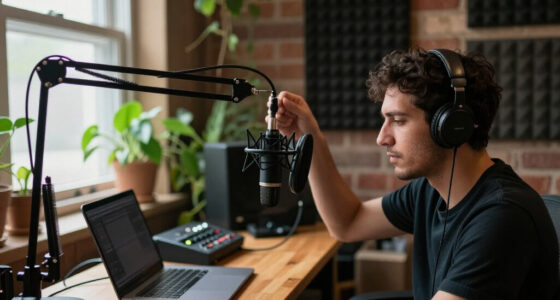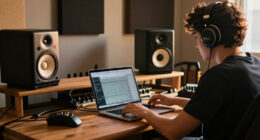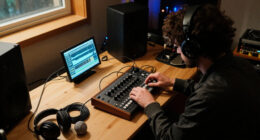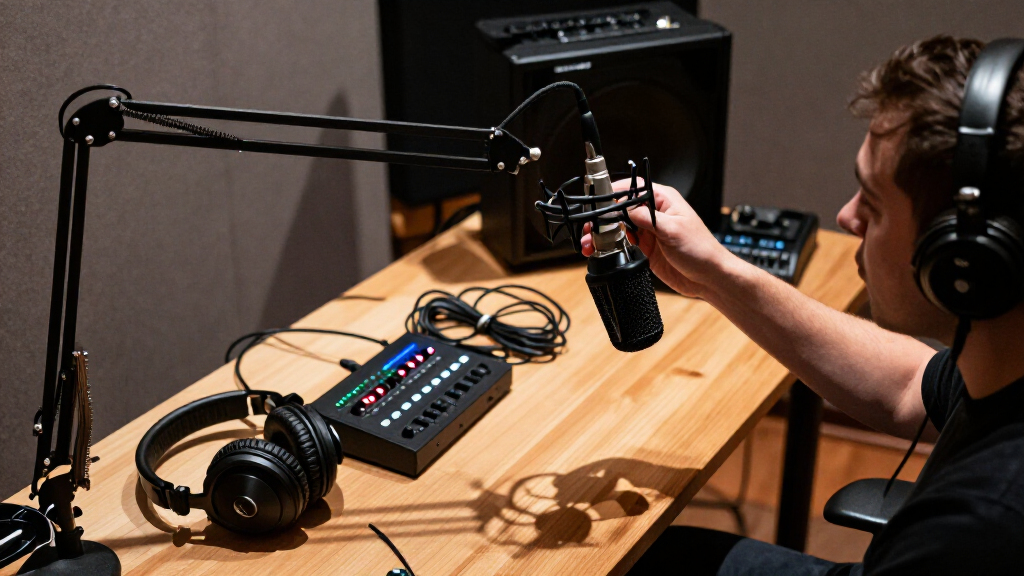

For most home studios, I’d start with the RØDE PodMic: its broadcast-focused design makes it a strong all-around choice when you want a dedicated XLR microphone. The Samson Q2U is a more flexible starting point, with USB and XLR connections for recording now and upgrading later, while the Shure SM7B suits buyers prioritizing a premium vocal setup. The main tradeoffs are connection type, how much gain your interface can provide, and whether you need a stand, arm, or extra controls in the box. A dynamic mic can help reduce pickup of room sound, but it will not fix a noisy room or poor mic placement by itself. Read on for the full comparison and guidance on choosing the right match for your space and workflow.

Get audio and creator gear delivered free with Prime
- Fast, free delivery on millions of items
- Prime Video, Amazon Music and more included
- Member-only deals all year
Complete the kit



Key Takeaways
- The RØDE PodMic is the dedicated XLR all-rounder in this group, while the Samson Q2U offers a more adaptable USB/XLR route for a first home-studio mic.
- USB/XLR models reduce commitment to one setup. The Q2U, MAONO HD300T, and several FIFINE options can connect directly to a computer or to an audio interface.
- The Shure SM7B is a premium choice, not an automatic upgrade for every room. Buyers need to account for its XLR-only setup and the gain needs of their recording chain.
- Included accessories can change the real value of a kit. Boom arms and cables are useful for getting started, but buyers should check whether the included support suits their desk and positioning needs.
- These 14 microphones serve different jobs. Handheld stage-style models such as the SM58 and Pyle PDMIC58 prioritize a different workflow from broadcast mics, USB/XLR podcast models, or the wireless MAONO PD200W.
| FIFINE AmpliGame AM8T USB/XLR Dynamic Gaming Microphone Kit with Boom Arm |  | Best Complete USB/XLR Kit | Connectivity: USB and XLR | Microphone type: Dynamic | Polar pattern: Unidirectional cardioid | VIEW LATEST PRICE | See Our Full Breakdown |
| Pyle PDMIC58 Dynamic Cardioid Handheld Microphone with 15 ft XLR Cable |  | Best Simple Handheld Pick | Microphone type: Dynamic handheld | Polar pattern: Unidirectional cardioid | Frequency response: 50 Hz–15 kHz | VIEW LATEST PRICE | See Our Full Breakdown |
| RØDE PodMic Cardioid Dynamic Broadcast Microphone | 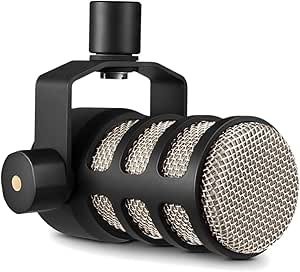 | Best Dedicated Podcast Mic | Connectivity: XLR | Microphone type: Dynamic | Polar pattern: Unidirectional cardioid | VIEW LATEST PRICE | See Our Full Breakdown |
| FIFINE AmpliGame AM8 USB/XLR Dynamic Microphone |  | Best Budget-Friendly Upgrade Path | Connectivity: USB and XLR | Microphone type: Dynamic | Polar pattern: Cardioid, unidirectional | VIEW LATEST PRICE | See Our Full Breakdown |
| Shure SM7B Dynamic Vocal Microphone |  | Best Premium Studio Vocal Mic | Connectivity: XLR | Microphone type: Dynamic | Polar pattern: Unidirectional cardioid | VIEW LATEST PRICE | See Our Full Breakdown |
| FIFINE AmpliTank K688CT USB/XLR Dynamic Podcast Microphone Kit with Boom Arm | 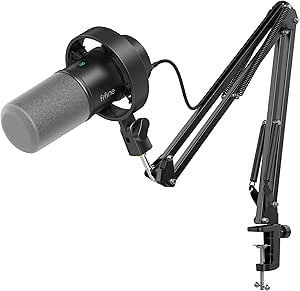 | Best Complete USB/XLR Kit | Microphone type: Dynamic | Connectivity: USB, XLR | Polar pattern: Cardioid (unidirectional) | VIEW LATEST PRICE | See Our Full Breakdown |
| MAONO HD300T USB/XLR Dynamic Podcast Microphone |  | Best for a Ready-to-Record Desktop Setup | Microphone type: Dynamic | Connectivity: USB and XLR | Polar pattern: Super cardioid | VIEW LATEST PRICE | See Our Full Breakdown |
| Samson Q2U USB/XLR Dynamic Microphone Podcasting Pack | 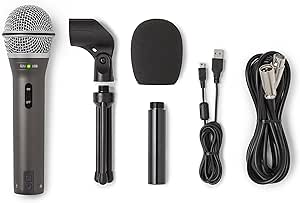 | Best Handheld Starter Pack | Microphone type: Dynamic handheld | Connectivity: USB-C and XLR | Polar pattern: Unidirectional | VIEW LATEST PRICE | See Our Full Breakdown |
| Shure SM58-LC Cardioid Dynamic Vocal Microphone |  | Best XLR Vocal Workhorse | Microphone type: Dynamic | Connectivity: XLR | Polar pattern: Cardioid (unidirectional) | VIEW LATEST PRICE | See Our Full Breakdown |
| FIFINE AmpliTank K688 Dynamic Microphone with XLR and USB |  | Best USB/XLR Upgrade Path | Microphone type: Dynamic | Connectivity: USB, XLR | Polar pattern: Unidirectional cardioid | VIEW LATEST PRICE | See Our Full Breakdown |
| MAONO PD200W Hybrid Wireless Podcast Microphone |  | Best for Two-Person Wireless Recording | Microphone type: Dynamic | Connectivity: Wireless, USB-C, XLR | Polar pattern: Unidirectional (cardioid) | VIEW LATEST PRICE | See Our Full Breakdown |
| FIFINE K669D XLR Dynamic Microphone |  | Best Starter XLR Pick | Microphone type: Dynamic | Connectivity: XLR | Polar pattern: Unidirectional | VIEW LATEST PRICE | See Our Full Breakdown |
| Shure MV7X XLR Dynamic Podcast and Recording Microphone |  | Best for Voice Isolation | Microphone type: Dynamic | Connectivity: XLR | Polar pattern: Unidirectional (cardioid) | VIEW LATEST PRICE | See Our Full Breakdown |
| Shure SM58S Dynamic Vocal Microphone with On/Off Switch |  | Best for Vocal Recording and Hands-On Muting | Microphone type: Dynamic | Connectivity: Wired XLR | Polar pattern: Cardioid (unidirectional) | VIEW LATEST PRICE | See Our Full Breakdown |
| dynamic microphones for home studio | Connectivity | Microphone type | Polar pattern | Signal-to-noise ratio |
|---|---|---|---|---|
| FIFINE AmpliGame AM8T USB/XLR | USB and XLR | Dynamic | Unidirectional cardioid | — |
| Pyle PDMIC58 Dynamic Cardioid | Wired XLR | Dynamic handheld | Unidirectional cardioid | — |
| RØDE PodMic Cardioid Dynamic B | XLR | Dynamic | Unidirectional cardioid | 78 dB |
| FIFINE AmpliGame AM8 USB/XLR D | USB and XLR | Dynamic | Cardioid, unidirectional | 80 dB |
| Shure SM7B Dynamic Vocal Micro | XLR | Dynamic | Unidirectional cardioid | — |
| FIFINE AmpliTank K688CT USB/XL | USB, XLR | Dynamic | Cardioid (unidirectional) | 80 dB |
| MAONO HD300T USB/XLR Dynamic P | USB and XLR | Dynamic | Super cardioid | 80 dB |
| Samson Q2U USB/XLR Dynamic Mic | USB-C and XLR | Dynamic handheld | Unidirectional | 70 dB |
| Shure SM58-LC Cardioid Dynamic | XLR | Dynamic | Cardioid (unidirectional) | 78 dB |
| FIFINE AmpliTank K688 Dynamic | USB, XLR | Dynamic | Unidirectional cardioid | 80 dB |
| MAONO PD200W Hybrid Wireless P | Wireless, USB-C, XLR | Dynamic | Unidirectional (cardioid) | 82 dB |
| FIFINE K669D XLR Dynamic Micro | XLR | Dynamic | Unidirectional | 70 dB |
| Shure MV7X XLR Dynamic Podcast | XLR | Dynamic | Unidirectional (cardioid) | 72 dB |
| Shure SM58S Dynamic Vocal Micr | Wired XLR | Dynamic | Cardioid (unidirectional) | — |
More Details on Our Top Picks
FIFINE AmpliGame AM8T USB/XLR Dynamic Gaming Microphone Kit with Boom Arm
The AM8T is the most ready-to-mount option here: its included metal boom arm and desk clamp make it easier to position close to your mouth than the standalone FIFINE AmpliGame AM8. USB gives home-studio beginners plug-and-play setup, onboard mute, gain, and headphone monitoring, while XLR leaves room to connect an interface later. Its cardioid pattern and 50 Hz–16 kHz response suit spoken voice, though this is a practical streaming mic rather than the more speech-focused RØDE PodMic or Shure SM7B. The tradeoff is desk fit: the clamp supports surfaces only up to 2 inches thick. XLR users also need to supply their own cable, and the RGB lighting may feel out of place in a restrained recording setup, though it can be turned off.
Pros:- USB and XLR connections support beginner setup and a later interface upgrade.
- Included adjustable boom arm and clamp provide close, flexible positioning.
- Onboard mute, gain, and headphone monitoring simplify recording and live use.
- RGB lighting can be turned off for a less distracting setup.
Cons:- XLR cable is not included, so XLR setup needs an additional cable.
- Desk clamp fits desktops only up to 2 inches thick.
- Its gaming-oriented feature set is less suited to buyers seeking a simple broadcast mic.
Best for: New streamers and podcasters who want a USB mic, onboard controls, and a boom arm in one home-studio setup, with the option to move to XLR later.
Not ideal for: Owners of desks thicker than 2 inches or buyers seeking a broadcast-focused XLR microphone without gaming-oriented lighting and accessories.
- Connectivity:USB and XLR
- Microphone type:Dynamic
- Polar pattern:Unidirectional cardioid
- Frequency response:50 Hz–16 kHz
- Included accessories:Boom arm, C-clamp, 8.2 ft USB-to-USB-C cable, and windscreen
- XLR cable:Not included
- Weight:2.6 lbs
- Desk clamp compatibility:Desktops up to 2 inches thick
Our verdict“Choose the AM8T if you want an all-in-one USB/XLR starter setup with a boom arm, but check your desk thickness before buying.”
Pyle PDMIC58 Dynamic Cardioid Handheld Microphone with 15 ft XLR Cable
The PDMIC58 is a straightforward, passive handheld XLR microphone for a home studio that also doubles as a rehearsal or vocal space. Its cardioid pattern is intended to help limit sound from off-axis sources, while the included 15-foot XLR-to-1/4-inch cable makes it easier to connect to compatible gear without sourcing a lead separately. Compared with the RØDE PodMic, this Pyle is less tailored to a fixed broadcast position and has a shorter stated frequency range; its advantage is a familiar handheld form and a bundled cable. The zinc alloy body and built-in pop filter add practical protection, but it lacks USB, onboard monitoring, and adjustable controls. The cable’s 1/4-inch end may also be unsuitable for interfaces that only accept XLR, so check your input connection before choosing it.
Pros:- Cardioid pickup pattern is suited to focusing on a close vocal source.
- Rugged zinc alloy body with steel mesh windscreen.
- Built-in pop filter helps manage vocal plosives.
- Includes a 15-foot XLR-to-1/4-inch cable and needs no batteries.
Cons:- Wired handheld design offers less positioning flexibility than a boom-mounted mic.
- The included cable terminates in 1/4 inch, which may not match an interface input.
- No USB connection, onboard gain control, or headphone monitoring.
Best for: Home-studio singers or presenters who want a basic handheld dynamic mic and have a mixer or recording input compatible with its included XLR-to-1/4-inch cable.
Not ideal for: Podcasters who need USB connection, direct headphone monitoring, or a fixed boom-mounted broadcast setup like the RØDE PodMic.
- Microphone type:Dynamic handheld
- Polar pattern:Unidirectional cardioid
- Frequency response:50 Hz–15 kHz
- Impedance:600 ohms
- Sensitivity:-54 dB
- Connectivity:Wired XLR
- Included cable:15 ft XLR-to-1/4-inch cable
- Power:Passive; no batteries required
Our verdict“Pick the PDMIC58 for a simple, cable-included handheld vocal mic if your recording gear accepts its 1/4-inch connection.”
RØDE PodMic Cardioid Dynamic Broadcast Microphone
The PodMic earns its place for home-studio speech recording through its broadcast-focused design, not through USB convenience. Its internal pop filter and shock mounting help reduce plosive bursts and vibration at a desk, while the metal body is built for regular use. Unlike the FIFINE AmpliGame AM8, it has no USB mode or onboard computer controls; it requires an XLR interface or mixer. That makes it a stronger fit for a studio already built around XLR, but a less immediate choice for a first-time recorder. Compared with the Shure SM7B, the PodMic offers a similarly speech-oriented, cardioid approach, but the supplied data does not specify an equivalent recommended gain figure. Buyers should still plan for an interface, cable, and suitable mic position rather than expecting a complete computer-ready kit.
Pros:- Broadcast-oriented sound profile is designed for spoken-word recording.
- Internal pop filter and shock mounting help control plosives and vibration.
- Durable metal enclosure.
- Integrated swing mount supports straightforward positioning on a compatible stand.
Cons:- XLR connection requires a separate interface or mixer for typical computer recording.
- No USB mode or onboard mute and monitoring controls.
- The supplied package details do not include an XLR cable or boom arm.
Best for: Podcasters and voiceover creators with an XLR interface or mixer who want a durable, speech-oriented microphone with built-in pop and vibration control.
Not ideal for: Beginners seeking direct USB connection, or buyers who want an all-in-one kit with a boom arm, cable, or computer controls.
- Connectivity:XLR
- Microphone type:Dynamic
- Polar pattern:Unidirectional cardioid
- Frequency range:20 Hz–20 kHz
- Impedance:150 ohms
- Signal-to-noise ratio:78 dB
- Enclosure material:Metal
- Included mount:Integrated swing mount
Our verdict“Choose the PodMic if you already have XLR recording gear and want a dedicated speech mic rather than a USB-ready starter kit.”
FIFINE AmpliGame AM8 USB/XLR Dynamic Microphone
The AM8 gives home-studio users a flexible starting point without bundling a boom arm: USB and XLR connectivity let it work directly with a computer now and an interface later. In USB mode, tap-to-mute, gain adjustment, headphone monitoring, and RGB lighting put everyday controls on the mic, making it more self-contained than the XLR-only RØDE PodMic. Those conveniences disappear in XLR mode, however, so it behaves more like a basic dynamic mic once connected to an interface. Its cardioid pattern and stated 50 Hz–16 kHz response fit close-up speech, but the recommended 2–6-inch recording distance means users need to keep it positioned near the speaker. Unlike the AM8T, this version does not list a boom arm in the supplied package details; buyers will need a compatible stand or arm.
Pros:- USB and XLR connections accommodate both direct computer use and interface-based recording.
- USB mode provides tap-to-mute, gain, headphone monitoring, and volume controls.
- Customizable USB-mode RGB lighting includes a memory function.
- 3/8-inch and 5/8-inch mount threads support common stands and arms.
Cons:- RGB lighting and onboard controls are unavailable in XLR mode.
- XLR cable is not included.
- Close 2–6-inch recording distance calls for consistent mic positioning.
Best for: Home-studio beginners who want USB controls now, plan to add an XLR interface later, and already own or will buy a microphone stand or boom arm.
Not ideal for: Buyers who need a boom arm included or expect USB controls and RGB lighting to remain available when using XLR.
- Connectivity:USB and XLR
- Microphone type:Dynamic
- Polar pattern:Cardioid, unidirectional
- Frequency response:50 Hz–16 kHz
- Signal-to-noise ratio:80 dB
- USB-mode controls:Tap-to-mute, headphone monitoring, gain, and monitoring volume
- Mount threads:3/8 in and 5/8 in
- Enclosure material:ABS plastic and metal
Our verdict“Choose the AM8 if you want USB convenience with an XLR upgrade path and can supply your own stand or boom arm.”
Shure SM7B Dynamic Vocal Microphone
The SM7B is the premium choice here for a home studio built around voice recording and capable XLR equipment. Its cardioid pickup pattern, shock isolation, and pop filtering are aimed at controlling unwanted room and handling noise, while the detachable windscreen offers another option for close vocal work. Compared with the USB/XLR FIFINE AM8, the SM7B has no plug-and-play computer mode or onboard controls; it asks for a suitable interface or mixer and careful gain planning. The stated recommendation of at least 60 dB of gain is the main system requirement, so a basic interface may not be a good match. Its metal construction and 50 Hz–20 kHz response suit a dedicated recording setup, but this is a less convenient choice for anyone who values bundled accessories or a quick, direct-to-computer connection.
Pros:- Cardioid pickup pattern and shock isolation help reduce unwanted room and handling noise.
- Built-in pop filtering and detachable windscreen support close vocal recording.
- Durable metal enclosure with electromagnetic shielding.
- Broad stated frequency response of 50 Hz–20 kHz.
Cons:- XLR connection requires an interface or mixer for typical computer use.
- At least 60 dB of gain is recommended, which can rule out some basic recording setups.
- No USB mode or onboard mute and monitoring controls.
Best for: Voiceover artists, podcasters, and streamers with an XLR interface or mixer capable of providing the recommended gain and a treated or noise-conscious recording space.
Not ideal for: USB-first beginners or owners of interfaces that cannot provide the recommended 60 dB of gain without added equipment.
- Connectivity:XLR
- Microphone type:Dynamic
- Polar pattern:Unidirectional cardioid
- Impedance:150 ohms
- Frequency response:50 Hz–20 kHz
- Recommended gain:At least 60 dB
- Power:Does not require phantom power
- Enclosure material:Metal
Our verdict“Choose the SM7B for a capable XLR home studio focused on vocals, but skip it if your interface cannot meet its gain needs.”
FIFINE AmpliTank K688CT USB/XLR Dynamic Podcast Microphone Kit with Boom Arm
The K688CT is my pick for a home studio that needs a microphone and desk mounting hardware in one package. Its USB and XLR connections let a beginner start recording directly to a computer and later add an audio interface, while the included boom arm, shock mount, and windscreen reduce the number of separate purchases and help keep desk bumps and plosives in check. Compared with the Samson Q2U, this kit is aimed more at a fixed desk setup than handheld or grab-and-go recording. Its cardioid pattern and 50 Hz–16 kHz range suit close-miked speech, but it still needs sensible placement in a noisy room. The main tradeoff is that mute, gain, and headphone controls work in USB mode only; XLR users need their own control hardware. Check desk thickness too: the clamp is specified for desks under 2 inches.
Pros:- USB and XLR connections support both computer recording and an interface-based setup.
- Included metal boom arm, shock mount, and windscreen make it a ready-to-mount desk package.
- USB mode includes tap-to-mute, gain adjustment, and headphone monitoring controls.
- Cardioid pickup is suited to focused, close-miked voice recording.
Cons:- Mute, gain, and headphone controls are unavailable over XLR.
- Desk clamp is specified for desks under 2 inches thick.
- A dynamic mic still benefits from close placement and a reasonably quiet recording position.
Best for: Home podcasters and streamers who want a USB starting point, a later XLR upgrade path, and a boom arm in the same kit.
Not ideal for: People with desks 2 inches thick or more, or XLR users who expect the microphone’s USB controls to remain available through an interface.
- Microphone type:Dynamic
- Connectivity:USB, XLR
- Polar pattern:Cardioid (unidirectional)
- Frequency range:50 Hz–16 kHz
- Signal-to-noise ratio:80 dB
- Maximum SPL:130 dB
- USB controls:Tap-to-mute, gain knob, headphone volume knob
- Included accessories:Metal boom arm, shock mount, windscreen
- Desk clamp capacity:Desks under 2 inches thick
Our verdict“Choose the K688CT if you want dual connectivity and a bundled boom-arm setup, and your desk fits its clamp.”
MAONO HD300T USB/XLR Dynamic Podcast Microphone
The HD300T suits a home studio where recording starts at a desk and the basic accessories need to arrive together. It includes a desktop stand, shock mount, pop filter, and both USB and XLR cables, so setup is more complete than with the FIFINE K688, which does not include a stand or XLR cable. Its USB connection adds zero-latency headphone monitoring, useful for hearing your voice without a distracting delay while recording. The stated supercardioid pattern is more directional than the cardioid pattern listed for the K688CT, which may help focus pickup, though careful mic positioning matters. The tradeoff is a desktop stand rather than a boom arm, which can take up desk space and offer less flexible positioning. Monitoring is specified for USB mode, so an XLR setup depends on the connected recording gear.
Pros:- Includes a desktop stand, shock mount, pop filter, and USB and XLR cables.
- USB mode provides zero-latency headphone monitoring and volume control.
- USB and XLR connections support both simple computer recording and interface use.
- Metal enclosure provides a sturdy build for a desk-based setup.
Cons:- The included desktop stand occupies desk space and is less adjustable than a boom arm.
- Zero-latency monitoring and its volume control are specified for USB mode.
- Requires a cable connection rather than offering a wireless recording option.
Best for: New podcasters and remote presenters who want a desktop stand, pop filter, cables, and direct USB monitoring in one package.
Not ideal for: Creators who need a boom arm to clear desk space or who plan to rely on the microphone’s headphone monitoring while connected by XLR.
- Microphone type:Dynamic
- Connectivity:USB and XLR
- Polar pattern:Super cardioid
- Frequency response:20 Hz–20 kHz
- Signal-to-noise ratio:80 dB
- Connector types:3.5 mm jack, USB-C, XLR
- USB monitoring:Zero-latency headphone monitoring with volume control
- Enclosure material:Metal
- Included accessories:Desktop stand, shock mount, pop filter, USB cable, XLR cable
Our verdict“Pick the HD300T for an accessory-rich desktop start with USB monitoring, but choose the K688CT if a boom arm matters more.”
Samson Q2U USB/XLR Dynamic Microphone Podcasting Pack
The Q2U is the most straightforward fit here for someone who wants a handheld USB/XLR microphone rather than a permanent boom-arm desk rig. Its pack includes a tripod stand and extension, mic clip, windscreen, and both USB-C and XLR cables, giving a new home-studio user the basic pieces for a compact desktop recording position. Compared with the MAONO HD300T, it is more clearly a handheld-first option; the HD300T includes a pop filter and shock mount for a fixed desktop arrangement. The Q2U’s metal enclosure and manageable 11.2-ounce weight also make it practical to move between a desk and other recording spots. The tradeoff is a more modest listed 50 Hz–15 kHz range and 70 dB signal-to-noise ratio than the K688CT’s stated figures. USB-C also requires a compatible computer interface.
Pros:- USB-C and XLR connectivity allow computer recording and later use with audio equipment.
- Pack includes a tripod stand, extension, mic clip, windscreen, and both connection cables.
- Metal enclosure and 11.2-ounce weight suit a handheld mic that may move between recording spots.
- Two-year warranty is specified.
Cons:- USB connection requires a computer with a USB-C interface.
- The listed frequency range and signal-to-noise ratio are more limited than those of the K688CT.
- Corded connections limit mobility during recording.
Best for: First-time podcasters or voice creators who want a portable-feeling handheld mic with both computer USB-C and XLR recording options.
Not ideal for: Buyers seeking a boom-arm kit, built-in USB monitoring controls, or a USB connection for a computer without USB-C.
- Microphone type:Dynamic handheld
- Connectivity:USB-C and XLR
- Polar pattern:Unidirectional
- Frequency range:50 Hz–15 kHz
- Signal-to-noise ratio:70 dB
- Enclosure material:Metal
- Weight:11.2 ounces
- Dimensions:10.05 × 7.5 × 2.55 inches
- Included accessories:Desktop tripod stand and extension, mic clip, windscreen, USB-C cable, XLR cable
Our verdict“Choose the Q2U if you want an approachable handheld USB-C/XLR starter pack rather than a boom-arm desk setup.”
Shure SM58-LC Cardioid Dynamic Vocal Microphone
The SM58-LC is the right pick when a home studio already has an audio interface and the priority is a durable, vocal-focused XLR microphone, not computer convenience. Its cardioid pattern helps concentrate pickup on the speaker, while the built-in pop filter addresses plosives and breath noise without requiring a separate pop screen at the capsule. Compared with the USB/XLR Samson Q2U, the SM58-LC gives up direct USB recording and bundled computer connection in favor of a simple XLR signal path and rugged metal construction. Its 50 Hz–15 kHz response and midrange presence boost are aimed at clear vocal presence, though that tonal character may not suit every voice. A stand, cable, and interface are not listed as included, and it offers no USB controls or direct headphone monitoring, so the recording chain needs to be supplied separately.
Pros:- Cardioid pickup helps focus on the vocalist and reduce background sound.
- Built-in pop filter helps reduce plosives, breath, and wind noise.
- Rugged metal construction suits regular handling and long-term studio use.
- Midrange presence boost is designed to help vocals stand out.
Cons:- XLR connection requires a compatible interface or other XLR recording equipment.
- No USB connection or direct headphone monitoring is specified.
- A cable and stand are not listed among the included items.
Best for: Home vocalists, podcasters, and voiceover creators who already own an XLR interface and want a rugged handheld mic with built-in plosive protection.
Not ideal for: USB-only beginners who need a computer-ready microphone, included mounting hardware, or direct headphone monitoring.
- Microphone type:Dynamic
- Connectivity:XLR
- Polar pattern:Cardioid (unidirectional)
- Form factor:Handheld
- Frequency response:50 Hz–15 kHz
- Signal-to-noise ratio:78 dB
- Enclosure material:Metal
- Weight:310 g
- Dimensions:10.31 × 4.92 × 3.31 inches
Our verdict“Choose the SM58-LC if you already have an XLR recording chain and want a durable, vocal-oriented handheld mic.”
FIFINE AmpliTank K688 Dynamic Microphone with XLR and USB
The FIFINE K688 is a flexible choice for a home studio that wants USB convenience now and XLR compatibility later, but already has—or plans to add—its own mounting hardware. Like the K688CT, it offers cardioid pickup, USB controls, and a 50 Hz–16 kHz range; unlike that kit, it does not include a boom arm. That distinction makes the K688 a better match for buyers who already own a stand or prefer to choose one separately, while the K688CT is the easier all-in-one desk package. USB mode provides tap-to-mute, gain control, headphone monitoring, and volume adjustment, but those controls are unavailable over XLR. The included shock mount and windscreen help with desk vibration and plosives, yet the mic is intended for close placement and the package omits an XLR cable.
Pros:- USB and XLR connections support both computer recording and interface-based upgrades.
- USB mode offers tap-to-mute, gain control, and headphone monitoring.
- Shock mount and windscreen are included to help with vibration and plosive noise.
- Metal body and 130 dB maximum SPL suit vocal recording with strong sound sources.
Cons:- Arm stand, mic stand, and XLR cable are not included.
- Mute, gain, and monitoring controls are available only over USB.
- Requires close placement for recording.
Best for: Home creators who want to begin with plug-and-play USB, keep an XLR upgrade path, and already own or plan to select a mic stand.
Not ideal for: Buyers who need a complete boom-arm kit, an included XLR cable, or hands-free recording from a distance.
- Microphone type:Dynamic
- Connectivity:USB, XLR
- Polar pattern:Unidirectional cardioid
- Frequency range:50 Hz–16 kHz
- Signal-to-noise ratio:80 dB
- Maximum SPL:130 dB
- Impedance:16 ohm
- Cable length:8.2 ft (2.5 m)
- Included accessories:Shock mount, windscreen, USB-C to USB-A cable, 5/8-inch to 3/8-inch adapter
Our verdict“Pick the K688 if you want flexible USB/XLR connectivity and already have a stand, while the K688CT makes more sense for a bundled boom arm.”
MAONO PD200W Hybrid Wireless Podcast Microphone
The PD200W is the most flexible choice here if your home studio needs to move beyond a single, fixed microphone setup. Wireless, USB-C, and XLR connections let you record at a desk, connect to an interface, or place the mic away from the computer; support for two wireless microphones on separate tracks also suits co-hosts. Compared with the XLR-only Shure MV7X, it asks less of a beginner’s recording setup, though some sound controls depend on the MaonoLink app. Its cardioid pickup and three-stage noise cancellation are useful in untreated rooms, but they cannot replace close mic placement or room treatment. The long stated battery life is appealing for mobile sessions, while camera and Lightning accessories are separate purchases.
Pros:- Wireless, USB-C, and XLR connections suit changing recording setups
- Can record two wireless microphones to separate tracks
- Cardioid pickup and three-stage noise cancellation help limit room distractions
- Up to 60 hours of battery life with RGB lighting off
Cons:- Some sound settings require the MaonoLink app
- Camera and Lightning accessories are sold separately
- Its 1.32 kg listed weight makes it less convenient to reposition than a lightweight handheld mic
Best for: Home-studio podcasters and streamers who record interviews or co-hosted shows and want wireless placement plus USB-C and XLR options.
Not ideal for: Buyers seeking a simple, app-free XLR microphone for a permanent desk setup, or anyone who needs included camera or Lightning connection accessories.
- Microphone type:Dynamic
- Connectivity:Wireless, USB-C, XLR
- Polar pattern:Unidirectional (cardioid)
- Signal-to-noise ratio:82 dB
- Maximum SPL:128 dB
- Wireless range:Up to 60 m
- Battery life:Up to 60 hours (RGB off)
- Weight:1.32 kg
Our verdict“Choose the PD200W if you want one adaptable microphone system for solo sessions and two-person wireless recording.”
FIFINE K669D XLR Dynamic Microphone
The FIFINE K669D is a straightforward entry into XLR recording: its metal body and included tripod stand give a new home-studio owner the basic hardware without a large, feature-heavy setup. The unidirectional pickup can help reduce sounds from behind the mic, and the stand’s shockproofing is useful on a desk where small bumps might otherwise reach the recording. Compared with the USB-C and wireless MAONO PD200W, this is a much simpler, XLR-only option, but it also needs an audio interface or mixer and a separately purchased XLR cable. That adds setup steps and extra equipment before recording can begin. Its listed 120 dB maximum SPL is lower than the PD200W’s 128 dB, so I’d favor it for spoken voice and basic vocals rather than sessions where higher sound levels matter.
Pros:- Metal body and durable grille
- Unidirectional pattern helps reduce background sound
- Included tripod stand has shockproofing
- Stand supports both 3/8-inch and 5/8-inch threads
Cons:- XLR cable is not included
- Requires an audio interface or mixer
- Listed maximum SPL is lower than the MAONO PD200W
Best for: First-time XLR users who already have, or plan to buy, an interface or mixer and want a metal-bodied mic with a desktop stand.
Not ideal for: USB-only beginners who want to plug directly into a computer, or buyers who need a cable included and want to record immediately.
- Microphone type:Dynamic
- Connectivity:XLR
- Polar pattern:Unidirectional
- Signal-to-noise ratio:70 dB
- Maximum SPL:120 dB
- Channels:1
- Body material:Metal
- Included items:Microphone, tripod stand, user manual
Our verdict“Pick the K669D for a basic, stand-included XLR setup if you already have the extra recording gear it requires.”
Shure MV7X XLR Dynamic Podcast and Recording Microphone
The Shure MV7X is a focused choice for spoken-word recording in a home studio where room noise and desk vibration are concerns. Its voice isolation design and integrated shock mount address two common distractions, while the adjustable yoke mount makes positioning easier than with the small tabletop tripod included with the FIFINE K669D. This remains an XLR-only microphone, though, so a compatible interface or mixer is part of the setup; unlike the MAONO PD200W, it offers no USB-C or wireless route for recording. Its all-metal construction suits a stationary studio rig, but the supplied information does not specify a cable or stand beyond the yoke mount and adapter. I’d rank it ahead of simpler starter mics for isolation-focused podcasting, but not for buyers who want plug-and-play connectivity.
Pros:- Voice isolation design helps reduce room distractions
- Integrated shock mount helps limit vibration
- All-metal construction
- Adjustable yoke mount and 3/8-inch adapter included
Cons:- XLR-only connection requires compatible recording equipment
- Less versatile than the MAONO PD200W, which also supports USB-C and wireless
- Supplied product details do not list a cable or desktop stand
Best for: Podcasters, streamers, and voice-recording creators with an XLR interface who need a mic designed to limit room noise and vibration.
Not ideal for: Computer users who want direct USB connection, or first-time buyers who do not own an interface or mixer and want a complete cable-and-stand setup.
- Microphone type:Dynamic
- Connectivity:XLR
- Polar pattern:Unidirectional (cardioid)
- Frequency response:50–16,000 Hz
- Signal-to-noise ratio:72 dB
- Audio sensitivity:38 dB
- Construction:All-metal
- Included adapter:3/8-inch
Our verdict“Choose the MV7X if voice isolation and sturdy XLR studio mounting matter more to you than USB or wireless convenience.”
Shure SM58S Dynamic Vocal Microphone with On/Off Switch
The Shure SM58S brings a familiar handheld vocal-mic format to a home studio, with a cardioid pattern and internal filtering intended to help control off-axis sound, plosives, and handling noise. Its built-in on/off switch gives performers or hosts a direct mute control without relying on software. Compared with the Shure MV7X, the SM58S is more naturally suited to handheld singing or a flexible rehearsal setup; the MV7X is the more purpose-built choice for fixed podcast mounting and voice isolation. The tradeoff is that the SM58S has a wired XLR connection and needs compatible audio gear, with no USB option listed. Its 50 Hz–15 kHz frequency range is specified, but this model’s supplied details do not include a stand or cable, so buyers should check their existing rig before choosing it for desk recording.
Pros:- Cardioid pickup helps reject off-axis sound
- Internal filtering helps reduce plosives and handling noise
- On/off switch provides direct muting
- Metal enclosure and hardened grille suit regular handling
Cons:- Wired XLR connection requires compatible audio equipment
- No USB connectivity is listed
- Supplied product details do not list an included stand or cable
Best for: Home-studio vocalists and hosts who want a rugged handheld microphone with a physical mute switch and already use XLR equipment.
Not ideal for: Creators seeking USB recording, a desk-ready podcast microphone, or a package that includes a stand and cable.
- Microphone type:Dynamic
- Connectivity:Wired XLR
- Polar pattern:Cardioid (unidirectional)
- Special feature:On/off switch
- Frequency range:50 Hz–15 kHz
- Impedance:150 ohm
- Enclosure material:Metal
- Weight:10.5 ounces
Our verdict“Choose the SM58S for handheld vocals and physical mute control if your home studio already has an XLR recording chain.”
How We Picked
I compared these dynamic microphones for home studios by looking at the decisions that shape day-to-day use: USB versus XLR connectivity, whether a computer can power the setup directly, the likely need for an audio interface, and the practical usefulness of included accessories. I also considered each mic’s stated design and intended role, from broadcast and podcast recording to handheld vocal use. A feature only counts as an advantage when it solves a real home-studio problem; a bundle, for example, can save setup steps but may not suit every desk or recording position.
The order favors useful performance across common home-studio workflows, followed by setup flexibility, ease of starting, and the limitations buyers should expect. Dedicated XLR models can make sense for an established interface setup, while USB/XLR choices have broader appeal for new or changing rigs. Premium placement does not mean every reader needs the most specialized mic, and low-cost or accessory-rich options are not treated as winners just for being easy to buy. I ranked each product for a distinct role so readers can compare the tradeoffs rather than assume one microphone suits every voice, room, and recording chain.
| dynamic microphones for home studio | Connectivity | Microphone type | Polar pattern | Enclosure material |
|---|---|---|---|---|
| FIFINE AmpliGame AM8T USB/XLR | USB and XLR | Dynamic | Unidirectional cardioid | — |
| Pyle PDMIC58 Dynamic Cardioid | Wired XLR | Dynamic handheld | Unidirectional cardioid | — |
| RØDE PodMic Cardioid Dynamic B | XLR | Dynamic | Unidirectional cardioid | Metal |
| FIFINE AmpliGame AM8 USB/XLR D | USB and XLR | Dynamic | Cardioid, unidirectional | ABS plastic and metal |
| Shure SM7B Dynamic Vocal Micro | XLR | Dynamic | Unidirectional cardioid | Metal |
| FIFINE AmpliTank K688CT USB/XL | USB, XLR | Dynamic | Cardioid (unidirectional) | — |
| MAONO HD300T USB/XLR Dynamic P | USB and XLR | Dynamic | Super cardioid | Metal |
| Samson Q2U USB/XLR Dynamic Mic | USB-C and XLR | Dynamic handheld | Unidirectional | Metal |
| Shure SM58-LC Cardioid Dynamic | XLR | Dynamic | Cardioid (unidirectional) | Metal |
| FIFINE AmpliTank K688 Dynamic | USB, XLR | Dynamic | Unidirectional cardioid | — |
| MAONO PD200W Hybrid Wireless P | Wireless, USB-C, XLR | Dynamic | Unidirectional (cardioid) | — |
| FIFINE K669D XLR Dynamic Micro | XLR | Dynamic | Unidirectional | — |
| Shure MV7X XLR Dynamic Podcast | XLR | Dynamic | Unidirectional (cardioid) | — |
| Shure SM58S Dynamic Vocal Micr | Wired XLR | Dynamic | Cardioid (unidirectional) | Metal |
Factors to Consider When Choosing Dynamic Microphones For Home Studios
Before choosing a mic, map it to the recording chain and habits you actually have. The biggest avoidable mistake is shopping by microphone alone while overlooking the interface, placement, desk, and recording style that determine whether it will be convenient to use.
Choose USB, XLR, or Both Based on Your Next Step
USB is the simplest route when you want to connect directly to a computer and record without adding an interface. XLR fits an interface-based setup and gives you a more conventional path to using other studio gear. A dual-output microphone can bridge both: start with USB, then use XLR if your recording setup grows. That flexibility matters most when you are unsure what your next setup will be, but it does not mean both connections are needed at once. Before buying, check that your preferred connection works with your computer, software, and any monitoring arrangement you already use.
Check Interface Gain Before Choosing an XLR Mic
With an XLR microphone, the interface or mixer is part of the purchase decision, not an afterthought. Some dynamic mics need substantial clean gain, and a weak or noisy input can lead to a quiet recording or hiss when the level is raised. Check your interface’s microphone preamp specifications and compare them with the requirements for the mic you are considering. A gain booster may be an option, but it adds another device, cable, and setup step. If you do not yet own an interface, a USB/XLR mic can make the first stage of a home setup simpler while leaving an upgrade path.
Treat Room Noise and Mic Technique as Separate Problems
A dynamic microphone can be a useful choice in a less-than-treated room, but it does not reject every reflection, fan, keyboard, or nearby conversation. Placement and distance still shape the recording: moving closer can make the voice more prominent, while moving farther away brings more room sound into the signal. A boom arm can help keep distance consistent, though a desk stand may be preferable for a compact or shared workspace. Before paying more for a microphone, identify the noise source and consider quieter computer settings, a better recording position, or basic room treatment. These changes can matter as much as moving between two microphones in the same category.
Budget for the Whole Recording Position
A microphone kit may include a boom arm or cable, but check what is actually supplied and whether it fits your desk. A heavy mic can need sturdier support than a lightweight starter arm, and a desk clamp may not suit thick or unusually shaped furniture. You may also need a pop filter, headphones, an interface, or an adapter depending on the chosen connection and your workflow. Bundled accessories can make recording easier on day one, but they should not outweigh the microphone’s fit for your voice and setup. Price the complete signal path and support gear before deciding that one bundle is the better value.
Match the Mic to Your Recording Style
Podcast narration, calls, voice-over, singing, and handheld performance place different demands on a microphone. A broadcast-style mic is designed for fixed-position speech, while a handheld stage-style model may be easier to carry, hold, and use for live vocals. Wireless operation can reduce cable clutter, but it brings charging, pairing, and signal-management questions that a wired mic avoids. For a shared studio, check whether the mic’s controls and connection method work for everyone who will use it. Choosing around the main task prevents paying for conveniences that stay unused or missing a feature that becomes part of every session.
Spend More for a Clear Reason
A higher-end mic makes sense when its sound, build, or workflow fits a real need in your recording chain. It is a weaker investment if the interface is unsuitable, the room is noisy, or the microphone will sit too far from the speaker. For a first home studio, reliable connection and easy positioning may matter more than a premium model. Established creators may value a dedicated XLR mic and a more tailored vocal setup, while frequent travelers might put more weight on portability or wireless operation. Decide what limitation you are trying to solve, then spend on the part of the chain that addresses it.
Frequently Asked Questions
Can I connect an XLR dynamic microphone directly to my laptop?
Usually not with a standard XLR cable alone, because most laptops do not have an XLR microphone input. You will generally need an audio interface or mixer that connects to the computer and provides an appropriate mic input. A USB/XLR microphone offers another route: use USB for direct computer connection or XLR with an interface. Check the included cables and connection details before ordering, since a microphone’s XLR socket does not mean an interface is included. Also confirm that your recording software recognizes the chosen USB device or interface.
Do I need a separate gain booster for a dynamic microphone?
Not necessarily; the answer depends on the microphone and the clean gain available from your interface or mixer. If your voice records at a healthy level without audible hiss, extra gain hardware may not help. If you must turn the preamp near its limit and the recording remains quiet or noisy, a booster may be worth researching. Check the interface specifications and microphone requirements before adding equipment, and remember that speaking closer to the mic can raise the recorded voice level. Gain boosters add cost and another connection to manage, so treat them as a fix for a demonstrated need rather than a default accessory.
Will a dynamic microphone stop my room echo from appearing in recordings?
No microphone can remove room echo after it enters the recording. A dynamic mic may help in some home setups because it is commonly used close to the speaker, which can make the direct voice more prominent relative to room sound. The result still depends on distance, direction, room reflections, and nearby noise. Try recording closer to the mic and away from hard reflective surfaces before buying acoustic products or changing microphones. If echo remains distracting, basic treatment near the recording position may address the source more directly than a new mic.
Is a USB/XLR microphone a better first purchase than an XLR-only model?
It can be a practical first purchase if you want to record by USB now but may move to an interface later. That flexibility can reduce the number of decisions you need to make at the start, though it does not guarantee that the microphone will suit every future studio setup. An XLR-only model can be a sensible choice if you already own a compatible interface and know you want an interface-based chain. Compare the controls, monitoring options, and included accessories as well as the connector. Choose the arrangement you will use regularly, rather than paying for a second connection simply because it is available.
Should I choose a wireless microphone for a home podcast?
Wireless makes sense when you need to move around, record away from the desk, or avoid a cable crossing a shared space. For a seated podcast or voice-over position, a wired microphone is often simpler because it does not require charging or wireless setup. Before choosing wireless, check how it connects to your recording device, how it handles monitoring, and what happens if the battery runs low during a session. Also consider whether the recording software supports the signal path you plan to use. The convenience is most valuable when mobility solves a real problem in your workflow.
Conclusion
For a dedicated broadcast-style setup, I’d choose the RØDE PodMic as best overall; buyers who want to start by USB and retain an XLR option should look at the Samson Q2U as best value. The Shure SM7B is my best premium pick for someone prepared to build an appropriate XLR chain, while the Q2U is also the best beginner choice for a straightforward start with room to grow. For a bundled desk setup, compare the FIFINE AM8T or K688CT; for a handheld vocal workflow, consider the SM58-LC or SM58S; and for a wireless use case, look at the MAONO PD200W. I’d make the final choice by matching the connection and form factor to the gear and recording position you already have.
Columbus Day / Indigenous Peoples' Day Picks
long weekend sales
As an affiliate, we earn on qualifying purchases.