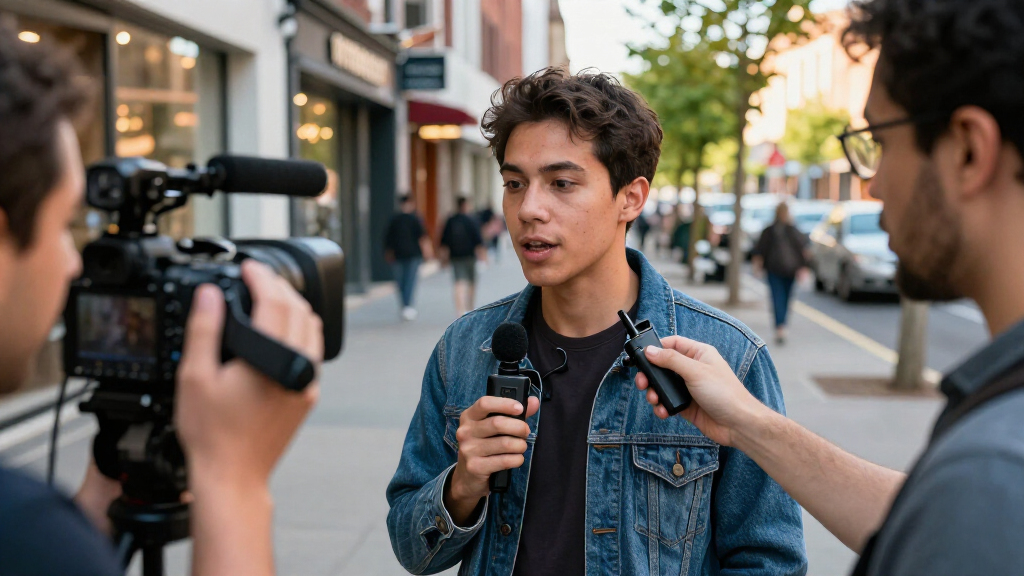

For most creators, the Hollyland Lark M2 is my best overall pick, pairing a compact setup with a two-transmitter kit for interviews and solo videos alike. The DJI Mic Mini stands out for creators who want a small, portable system, while the Shure BLX14/CVL suits presenters who need a more traditional wireless setup. The main tradeoffs are device compatibility, the number of microphones, and how much control your recording setup needs. Simple phone kits can be convenient, but they may offer fewer connection and monitoring options than more involved systems. Read on for the full breakdown, buying advice, and answers to common questions about choosing wireless lavalier microphones.

Get audio and creator gear delivered free with Prime
- Fast, free delivery on millions of items
- Prime Video, Amazon Music and more included
- Member-only deals all year
Complete the kit


Key Takeaways
The lineup splits into two main types: compact phone-focused kits for quick creator workflows and fuller wireless systems for presentations, cameras, or more involved setups.
Two transmitters change the use case. The DJI Mic Mini, Hollyland LARK A2, and several dual-mic kits can record two speakers without requiring a second wireless set.
Connector compatibility deserves an early check. USB-C and Lightning options appear across the roundup, but buyers should match the included receiver to their actual phone or tablet before choosing.
More included components do not always mean a better fit. TONOR and Shure systems suit users who want a more traditional microphone setup, while compact mobile kits favor speed and portability.
The premium choice depends on workflow, not just the product tier. The DJI Mic 3 is the lineup’s premium system pick, but a simpler phone kit may be easier to use for short-form content and everyday recording.
| TONOR UHF Wireless Microphone System with Headset and Lavalier Mics |  | Best for Presentations and Events | Wireless type: UHF | Stated range: Up to 200 ft (60 m), line of sight | Channels: 30 total; 15 per bodypack | VIEW LATEST PRICE | See Our Full Breakdown |
| Mini Mic Pro Wireless Lavalier Microphone for iPhone and Android | 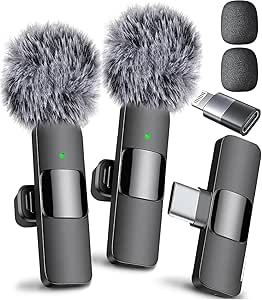 | Best for Simple Phone Recording | Microphone type: Omnidirectional lavalier | Connectors: Lightning and USB Type-C | Compatible devices: Android devices, laptops, smartphones, tablets, iPad, and iPhone | VIEW LATEST PRICE | See Our Full Breakdown |
| DJI Mic Mini Wireless Microphone Kit (2 Transmitters, Mobile Receiver) |  | Best for Long-Range Mobile Recording | Included transmitters: Two | Transmitter weight: 10 g each | Maximum transmission range: 300 m | VIEW LATEST PRICE | See Our Full Breakdown |
| Wireless Lavalier Microphone for iPhone and Android with 3 Noise Reduction Modes |  | Best for Noise-Control Flexibility | Wireless type: 2.4 GHz | Connectors: USB Type-C and Lightning adapters | Noise reduction: Three modes | VIEW LATEST PRICE | See Our Full Breakdown |
| Labstandard Dual Wireless Lavalier Microphone Set for iPhone, iPad, and USB-C Devices |  | Best for Two-Person Mobile Interviews | Microphone type: Two omnidirectional mini lavalier microphones | Connectivity: Bluetooth listed in specifications; description also refers to 2.4G transmission | Connectors: Lightning and USB Type-C | VIEW LATEST PRICE | See Our Full Breakdown |
| Hollyland Lark M2 Wireless Lavalier Microphone | 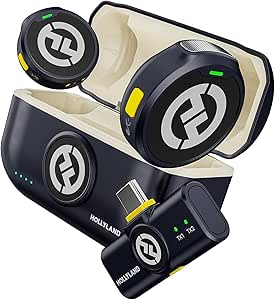 | Best for Long-Range Compact Recording | Audio format: 48 kHz/24-bit | Transmitter weight: 9 g | Wireless range: Up to 1,000 ft, line of sight | VIEW LATEST PRICE | See Our Full Breakdown |
| MAYBESTA Wireless Mini Lavalier Microphone for iPhone and Android |  | Best for Simple Two-Person Phone Recording | Model: WM356-1 | Microphone pattern: Omnidirectional | Connectors: Lightning, USB Type-C | VIEW LATEST PRICE | See Our Full Breakdown |
| Hollyland LARK A2 Wireless Microphone System with 2 Transmitters, 1 Receiver, and Charging Case |  | Best for Recording Safeguards and Long Shoots | Audio resolution: 48 kHz/24-bit | Wireless connection: 2.4 GHz | Wireless range: Up to 200 m (650 ft) | VIEW LATEST PRICE | See Our Full Breakdown |
| Shure BLX14/CVL Wireless Lavalier System, H9 Band (512–542 MHz) |  | Best for Presentations and Installed AV Setups | Frequency band: H9, 512–542 MHz | Wireless range: Up to 300 ft (100 m), line of sight | Battery life: Up to 14 hours | VIEW LATEST PRICE | See Our Full Breakdown |
| wedaniya Wireless Lavalier Microphone Set with USB-C and Lightning Receivers, 2 Pack |  | Best for Phone Monitoring and Sound Modes | Model: WM189 | Connectors: Lightning, USB Type-C | Included microphones: 2 transmitters | VIEW LATEST PRICE | See Our Full Breakdown |
| TONOR Wireless Microphone System with Handheld, Headset, and Lavalier Mics |  | Best for Events and Flexible Mic Choices | Microphone types: Handheld, headset, and lavalier | Included microphones: 2 handheld, 2 headset, and 2 lavalier | Wireless range: Up to 200 ft (60 m) | VIEW LATEST PRICE | See Our Full Breakdown |
| NPTCL Wireless Lavalier Microphone Set with USB-C and Lightning Adapters |  | Best Value for Two-Person Phone Recording | Microphone count: 2 | Microphone type: Lavalier | Pickup pattern: Omnidirectional | VIEW LATEST PRICE | See Our Full Breakdown |
| DJI Mic Mini Wireless Microphone (2 Transmitters, 1 Receiver, Charging Case) | 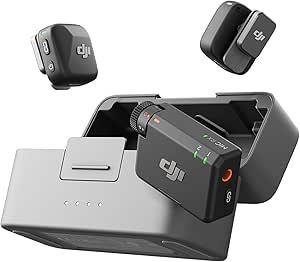 | Best Compact System for Long Shoots | Included system: 2 transmitters, 1 receiver, and charging case | Transmitter weight: 10 g | Sampling rate: 48 kHz | VIEW LATEST PRICE | See Our Full Breakdown |
| DJI Mic 3 Wireless Microphone System (2 Transmitters, 1 Receiver, Charging Case) |  | Best for Advanced, Expandable Recording | Included system: 2 transmitters, 1 receiver, charging case, and USB-C mobile phone adapter | Recording: 32-bit float internal recording | Timecode: Supported | VIEW LATEST PRICE | See Our Full Breakdown |
More Details on Our Top Picks
TONOR UHF Wireless Microphone System with Headset and Lavalier Mics
The TONOR is the strongest fit here when a lavalier needs to work with a venue sound system rather than plug directly into a phone. Its two bodypacks come with both lapel and headset microphones, so presenters can choose a discreet clip-on or a more stable placement near the mouth. Compared with the Mini Mic Pro, it offers a longer stated line-of-sight range and selectable UHF channels, but it needs a compatible 1/4-inch input instead of a mobile-device adapter. The rechargeable receiver suits portable setups, while the bodypacks rely on AA batteries that are not included. This is a practical choice for talks, classes, or small events; it is a poor match for creators who want a compact phone-first kit.
Pros:- Includes two bodypacks, two lapel mics, and two headset mics for flexible placement
- Offers up to 200 ft of stated line-of-sight range
- Thirty selectable channels provide options for managing wireless interference
- Rechargeable receiver supports portable use
Cons:- Each bodypack needs two AA batteries, which are not included
- Receiver uses a 1/4-inch jack, not direct USB-C or Lightning phone connections
- Its venue-oriented receiver and bodypacks are less compact than mobile lavalier kits
Best for: Presenters, instructors, and small event teams who need two wearable microphones connected to a mixer or speaker with a 1/4-inch input
Not ideal for: Phone-first creators and buyers without a compatible 1/4-inch microphone input, since this system is built around venue audio gear
- Wireless type:UHF
- Stated range:Up to 200 ft (60 m), line of sight
- Channels:30 total; 15 per bodypack
- Included microphones:Two headset microphones and two lapel microphones
- Transmitters:Two bodypacks
- Receiver:Rechargeable; 2–3 hours to charge, 6–8 hours of use
- Output connector:6.35 mm (1/4-inch) jack
- Bodypack power:Two AA batteries per bodypack; batteries not included
Our verdict“Choose the TONOR for two-person presentations using a compatible sound system, not for direct-to-phone recording.”
Mini Mic Pro Wireless Lavalier Microphone for iPhone and Android
The Mini Mic Pro prioritizes an easy start: its included USB-C and Lightning adapters connect to compatible devices without an app or Bluetooth setup. That makes it a more straightforward phone-first pick than the TONOR UHF system, which needs a 1/4-inch sound-system input and separate bodypack batteries. The package includes two lavalier microphones plus foam and dead cat covers, giving mobile creators useful options for reducing wind noise outdoors. Its up to 6-hour runtime is less suited to long recording days than the DJI Mic Mini’s stated 11.5 hours, and the product information is unclear about its battery requirement. Choose this kit for short interviews or social video where simple compatibility matters more than extended runtime or a clearly specified power setup.
Pros:- Includes both USB-C and Lightning adapters
- Connects without app installation or Bluetooth setup
- Comes with foam tips and dead cat wind covers
- Includes two lavalier microphones and clips
Cons:- Up to 6 hours of battery life may not cover a full recording day
- Battery requirement is unclear in the product information
- Does not provide the stated long-range operation of the TONOR UHF system
Best for: Mobile creators and interviewers who want a simple lavalier setup for compatible Lightning or USB-C phones, tablets, and laptops
Not ideal for: People recording long sessions without charging breaks, or buyers who need clear battery and power specifications before purchasing
- Microphone type:Omnidirectional lavalier
- Connectors:Lightning and USB Type-C
- Compatible devices:Android devices, laptops, smartphones, tablets, iPad, and iPhone
- Battery life:Up to 6 hours
- Weight:80 g
- Dimensions:3 x 0.5 x 0.25 inches
- Included microphones:Two lavalier microphones
- Included wind covers:Two foam tips and two dead cat covers
Our verdict“Pick the Mini Mic Pro for quick, short-form phone recording across Lightning and USB-C devices, provided its battery details meet your needs.”
DJI Mic Mini Wireless Microphone Kit (2 Transmitters, Mobile Receiver)
The DJI Mic Mini stands out for creators who need more freedom to move while recording: its stated 300 m maximum range is far beyond the Mini Mic Pro’s listed details, and each transmitter weighs just 10 g. Two noise-cancellation levels and automatic audio limiting give it more control over changing environments than a basic plug-and-play lavalier, while the 11.5-hour operating time is suited to longer shoots. The tradeoff is compatibility: the included mobile receiver connects through USB-C, and direct connection to OsmoAudio devices is limited to supported models. Unlike the TONOR, this is a compact mobile kit, not a receiver system for a venue’s 1/4-inch input. It also is not waterproof, so outdoor use calls for care around rain and splashes.
Pros:- Two transmitters weigh 10 g each
- Maximum stated transmission range is 300 m
- Offers Basic and Strong noise cancellation plus automatic audio limiting
- Up to 11.5 hours of stated operating time
Cons:- Not waterproof
- Mobile receiver connection is USB-C, limiting direct use with Lightning-only devices
- Osmo Mobile series connection requires a first-generation DJI OM Multifunctional Module
Best for: Mobile videographers and interviewers who need two lightweight transmitters, long-range movement, and noise-control options for compatible USB-C devices
Not ideal for: Lightning-only phone users, buyers needing a venue-style 1/4-inch receiver, or creators who need waterproof microphones
- Included transmitters:Two
- Transmitter weight:10 g each
- Maximum transmission range:300 m
- Maximum operating time:11.5 hours
- Noise cancellation:Two levels: Basic and Strong
- Polar pattern:Omnidirectional
- Connectivity:Bluetooth, Wi-Fi, and USB Type-C
- OsmoAudio format:48 kHz, 24-bit
Our verdict“Choose the DJI Mic Mini for lightweight two-person mobile shoots where extended range and runtime matter more than waterproofing or broad connector options.”
Wireless Lavalier Microphone for iPhone and Android with 3 Noise Reduction Modes
This kit is a strong match for phone creators who want to adjust noise processing without adding an app or Bluetooth setup. Its three noise reduction modes offer more choices than the DJI Mic Mini’s two cancellation levels, and the charging case supplies up to 30 hours of power across recharges, even though each microphone runs for up to six hours at a time. The included USB-C and Lightning receivers broaden device compatibility, but the kit is explicitly not for DSLR or action cameras—a key limit compared with equipment designed for a full camera rig. Its 130 ft stated range is ample for many interview setups, though the product notes that clear line of sight affects performance. Consider it for phone or computer recording, not demanding camera workflows.
Pros:- Three noise reduction modes, including AI noise cancellation
- USB-C and Lightning receivers connect with a broad range of compatible mobile devices
- Charging case provides up to 30 hours of power
- Supports two-person recording in mono mode
Cons:- Each microphone runs for up to 6 hours per charge
- Not compatible with DSLR or action cameras
- Wireless performance depends on maintaining a clear line of sight
Best for: Phone, tablet, and computer creators who want selectable noise reduction and a charging case for repeated short recording sessions
Not ideal for: DSLR and action-camera users, or anyone whose recording setup regularly runs beyond six hours between charging opportunities
- Wireless type:2.4 GHz
- Connectors:USB Type-C and Lightning adapters
- Noise reduction:Three modes
- Audio resolution:48 kHz/24-bit
- Wireless range:Up to 130 ft
- Microphone battery life:Up to 6 hours
- Charging case battery life:Up to 30 hours
- Latency:<35 ms
- Compatibility limit:Not compatible with DSLR or action cameras
Our verdict“Choose this kit for phone-based recording when noise-mode choice and a replenishing case matter more than camera compatibility.”
Labstandard Dual Wireless Lavalier Microphone Set for iPhone, iPad, and USB-C Devices
The Labstandard set focuses on a basic two-person use case: it includes two omnidirectional microphones and supports Lightning and USB-C devices, making it a possible fit for interviews, podcasts, or livestreams. Compared with the Mini Mic Pro, its listing calls out real-time audio syncing and a rechargeable Lightning adapter, while the Mini Mic Pro more clearly specifies plug-and-play setup and includes wind covers. There is a notable documentation wrinkle: the set is described as rechargeable and Bluetooth-connected, yet its specifications list two C batteries and the description refers to 2.4G transmission. That leaves the power and wireless details unclear compared with the more fully specified DJI Mic Mini. Its roughly six-hour runtime suits shorter sessions, but buyers who need dependable, clearly documented equipment may prefer another option.
Pros:- Includes two wireless microphones for interview or co-host recording
- Supports Lightning and USB-C devices
- Lists noise reduction and real-time audio syncing
- About 6 hours of stated battery life
Cons:- Power information conflicts: the set is described as rechargeable, while specifications list two C batteries
- Wireless information is inconsistent between Bluetooth and 2.4G transmission descriptions
- About 6 hours of battery life may be limiting for extended sessions
Best for: Two-person interviewers and podcasters using compatible Lightning or USB-C devices for sessions of around six hours or less
Not ideal for: Buyers who need unambiguous battery and wireless specifications, or creators requiring a clearly documented long-range system
- Microphone type:Two omnidirectional mini lavalier microphones
- Connectivity:Bluetooth listed in specifications; description also refers to 2.4G transmission
- Connectors:Lightning and USB Type-C
- Channels:2
- Battery life:About 6 hours
- Power information:Battery powered; specifications list two C batteries included
- Included accessories:Receiver, rechargeable Lightning adapter, USB-C charging cable, and user manual
- Item weight:0.05 kg
Our verdict“Consider the Labstandard for short two-person mobile recordings only if you are comfortable resolving its unclear power and connectivity details.”
Hollyland Lark M2 Wireless Lavalier Microphone
The Hollyland Lark M2 is a strong fit for creators who want a small, two-channel lavalier system without giving up room to move. Its 9 g transmitters are easy to wear, while the listed 1,000 ft line-of-sight range exceeds the LARK A2’s 650 ft rating. That reach is most useful for open, unobstructed recording; walls and other obstacles can reduce it. The charging case’s up-to-30-hour total runtime also suits shoots that stretch across a day, though it falls short of the LARK A2’s stated 42 hours. Adjustable noise cancellation gives you some control over background sound, but the supplied details don’t describe recording backup or clipping protection. I’d choose it over simpler phone kits when range and compactness matter more than extended case life or extra safeguards.
Pros:- Very light 9 g design is convenient for discreet clothing placement.
- Up to 1,000 ft line-of-sight range offers flexibility for open-space recording.
- Charging case raises stated total runtime to as much as 30 hours.
- Adjustable noise cancellation lets users tune background-noise reduction.
Cons:- The maximum range is a line-of-sight figure and may not reflect indoor use.
- Phone remote-recording controls depend on the connected device.
- The stated case runtime is shorter than the Hollyland LARK A2’s up-to-42-hour total.
Best for: Mobile video creators who need a lightweight two-microphone kit and often record at a distance in open spaces.
Not ideal for: Creators who record in obstructed locations, need verified remote phone controls, or want the LARK A2’s longer stated case runtime and safety-track features.
- Audio format:48 kHz/24-bit
- Transmitter weight:9 g
- Wireless range:Up to 1,000 ft, line of sight
- Battery life:Up to 10 hours continuous; up to 30 hours with charging case
- Channels:2
- Polar pattern:Omnidirectional
- Signal-to-noise ratio:70 dB
- Maximum sound pressure level:115 dB
- Connectivity:USB-C, USB, wireless
Our verdict“Choose the Lark M2 for lightweight recording and generous open-area range, but favor the LARK A2 if longer case life and clipping safeguards matter more.”
MAYBESTA Wireless Mini Lavalier Microphone for iPhone and Android
The MAYBESTA WM356-1 makes the most sense for phone users who want two clip-on microphones and a straightforward setup. Its receiver includes Lightning and USB-C connectors, giving it wider stated phone compatibility than the wedaniya set, which also offers both connector types but adds headphone monitoring and selectable audio modes. Automatic pairing and plug-and-play operation keep setup simple for interviews, calls, and casual video; the tradeoff is that the supplied information gives no battery-life or range figure, making it harder to plan longer shoots or greater distances. Both microphones use omnidirectional pickup, so they can capture voices naturally but may also pick up surrounding sound. I’d pick this over a more feature-rich kit when uncomplicated phone recording is the priority, not when detailed runtime information or monitoring matters.
Pros:- Includes Lightning and USB-C connectors for compatible devices.
- Two microphones support simple interviews and two-person videos.
- Automatic pairing and plug-and-play setup reduce setup steps.
- Noise reduction and included windscreens can help with common recording distractions.
Cons:- Battery life and wireless range are not specified in the supplied product data.
- The listed 2.4 GHz frequency may describe the wireless link rather than audio frequency response.
- No headphone monitoring feature is listed, unlike the wedaniya set.
Best for: Phone-based interviewers and casual video makers who need two microphones and use a mix of Lightning and USB-C devices.
Not ideal for: Creators planning long or distant recordings who need documented battery life, wireless range, or real-time headphone monitoring.
- Model:WM356-1
- Microphone pattern:Omnidirectional
- Connectors:Lightning, USB Type-C
- Channels:1
- Signal-to-noise ratio:80 dB
- Wireless frequency listed:2.4 GHz
- Included microphones:2
- Included components:1 receiver, 1 USB charging cable, 2 sponge tips, 2 microphones, 3 clips
Our verdict“Pick the MAYBESTA for uncomplicated two-person phone recording across Lightning and USB-C devices, but skip it if you need clear runtime or range specifications.”
Hollyland LARK A2 Wireless Microphone System with 2 Transmitters, 1 Receiver, and Charging Case
The Hollyland LARK A2 stands out for creators who value recording protection as much as wireless convenience. Its AI noise cancellation offers three levels, while AI Auto-Limit and a -6 dB safety track are designed to reduce the risk of clipped dialogue ruining a take. Those tools give it a more safeguard-focused profile than the Lark M2, whose supplied details emphasize compactness and longer listed line-of-sight reach instead. The A2’s case provides up to 42 hours of total battery life, but each transmitter is rated for up to 7 hours without AI Power Saving, so long sessions may need a charging break. Its 650 ft range is also shorter on paper than the M2’s 1,000 ft. I’d choose the A2 for protected, repeatable sessions rather than maximum range.
Pros:- Three adjustable AI noise-cancellation levels offer control over background reduction.
- AI Auto-Limit and a -6 dB safety track help protect speech recordings from clipping.
- Charging case provides up to 42 hours of total battery life.
- Two lightweight, pre-paired transmitters make setup more direct.
Cons:- Transmitter runtime is up to 7 hours without AI Power Saving.
- The listed 650 ft range depends on recording conditions and is shorter than the Lark M2’s stated reach.
- USB Type-C is the listed connector, so buyers should check that it suits their recording device.
Best for: Interviewers, educators, and mobile creators who want two transmitters, adjustable noise control, and safeguards against clipped speech.
Not ideal for: Users prioritizing the longest stated line-of-sight reach or uninterrupted sessions beyond the transmitter’s listed runtime.
- Audio resolution:48 kHz/24-bit
- Wireless connection:2.4 GHz
- Wireless range:Up to 200 m (650 ft)
- Transmitter battery life:Up to 7 hours; up to 9 hours with AI Power Saving
- Total battery life with case:Up to 42 hours
- Transmitter weight:8.5 g
- Microphone pattern:Omnidirectional
- Signal-to-noise ratio:≥68 dB
- Included components:2 transmitters, 1 receiver, charging case
Our verdict“Choose the LARK A2 when noise control, clipping protection, and extended case capacity outweigh the Lark M2’s longer stated range.”
Shure BLX14/CVL Wireless Lavalier System, H9 Band (512–542 MHz)
The Shure BLX14/CVL is built around a different kind of lavalier workflow from compact phone kits: it pairs a bodypack transmitter with a dedicated receiver and a unidirectional CVL microphone. That format suits a presenter moving around a room, especially where a receiver can stay in place and multiple compatible systems may be coordinated. Compared with the LARK A2 or Lark M2, it is less pocket-friendly and its 300 ft line-of-sight range is more modest, but it offers up to 14 hours on two AA batteries and supports up to 12 compatible systems per band. The H9 frequency band is not universally available, so local rules and spectrum conditions need checking before purchase. I’d favor this for speech-focused venues, not quick phone videos.
Pros:- Dedicated receiver and bodypack suit presentations and room-based sound systems.
- Up to 14 hours of operation from two AA batteries.
- Unidirectional lavalier pickup is aimed at speech-focused use.
- Supports up to 12 compatible systems per band for coordinated setups.
Cons:- H9 band availability depends on local regulations and spectrum conditions.
- The 300 ft range is a line-of-sight figure and may be shorter in real venues.
- Receiver-based equipment is bulkier than the compact Hollyland phone-oriented systems.
Best for: Presenters, teachers, and worship or conference teams using a compatible receiver-based AV setup.
Not ideal for: Phone-first creators seeking a small USB-C recording kit, or buyers whose location does not permit or support the H9 frequency band.
- Frequency band:H9, 512–542 MHz
- Wireless range:Up to 300 ft (100 m), line of sight
- Battery life:Up to 14 hours
- Power source:Two AA batteries, included
- Microphone pattern:Unidirectional
- Included components:BLX4 receiver, BLX1 bodypack transmitter, CVL microphone, clip, windscreen, power supply, user guide
- Signal-to-noise ratio:60 dB
- Weight:2.8 lb
Our verdict“Choose the Shure BLX14/CVL for speech in a compatible venue-based AV system, not for the smallest or simplest mobile recording setup.”
wedaniya Wireless Lavalier Microphone Set with USB-C and Lightning Receivers, 2 Pack
The wedaniya WM189 is aimed at phone and tablet creators who want more control while recording than a basic plug-and-play kit provides. It includes USB-C and Lightning receivers, real-time headphone monitoring, and Standard, Reverb, and Mute modes, a useful combination for checking a take and changing its character without relying on a separate app. Its stated six-hour recording time is more informative than the MAYBESTA WM356-1’s unspecified runtime, though it remains shorter than the Hollyland systems’ listed case-supported totals. The set includes two transmitters plus deadcat and sponge covers, but the product data also says an AA battery is required, so buyers should confirm how that applies to the receiver and included power arrangement. I’d choose it for monitored phone recording, not long sessions.
Pros:- Includes USB-C and Lightning receivers for compatible devices.
- Real-time headphone monitoring lets users check audio while recording.
- Standard, Reverb, and Mute modes add simple recording controls.
- Two transmitters and both deadcat and sponge covers support different recording conditions.
Cons:- Stated recording time is up to 6 hours, shorter than the Hollyland systems’ case-supported total runtimes.
- Product information says an AA battery is required, which may complicate expectations around charging.
- The supplied frequency listing does not clarify whether 4.8 GHz refers to the wireless link or another specification.
Best for: Mobile interviewers and social video creators who need two microphones, both common phone connector types, and headphone monitoring.
Not ideal for: Creators recording beyond six hours at a stretch or anyone who wants a clearly documented all-in-one battery arrangement before buying.
- Model:WM189
- Connectors:Lightning, USB Type-C
- Included microphones:2 transmitters
- Recording time:Up to 6 hours
- Charging time:1 hour
- Modes:Standard, Reverb, Mute
- Signal-to-noise ratio:70 dB
- Included accessories:Portable bag, receiver, 2 deadcat covers, 2 sponge covers
Our verdict“Pick the wedaniya WM189 for monitored, mode-selectable phone recording with two mics, but look elsewhere for longer sessions or clearer power details.”
TONOR Wireless Microphone System with Handheld, Headset, and Lavalier Mics
The TONOR TW362 suits events where a lavalier is only one of several microphone needs: the package also includes two handheld microphones and two headset microphones, all paired with a receiver for connection to sound equipment. That makes it more adaptable for a presentation that shifts into audience questions or karaoke than the NPTCL Wireless Lavalier Microphone Set, which is built around two phone-connected lavaliers. TONOR also lists a range of up to 200 ft and automatic pairing, useful when speakers need room to move. The tradeoff is a more involved, battery-powered setup: AA batteries are not included, and the channel details conflict between the per-mic listing and the stated total. I’d choose it for a venue with a mixer or powered speaker, not for a creator seeking a compact phone-only kit.
Pros:- Includes two lavalier, two headset, and two handheld microphones for varied event formats.
- Automatic pairing reduces setup steps between the microphones and receiver.
- Stated range of up to 200 ft supports movement around a room or venue.
- Connects with mixers, amplifiers, karaoke machines, and powered speakers.
Cons:- Microphones and bodypacks require AA batteries, which are not included.
- Channel information is inconsistent, listing 10 per microphone and bodypack alongside 20 in the specifications.
- The receiver-and-sound-system setup is less convenient for direct smartphone recording than compact mobile lavalier kits.
Best for: Event organizers, presenters, and karaoke hosts who need lavalier, headset, and handheld mic options for a sound system.
Not ideal for: Solo mobile creators who want a small phone-connected kit and do not need a receiver-based event system or multiple mic styles.
- Microphone types:Handheld, headset, and lavalier
- Included microphones:2 handheld, 2 headset, and 2 lavalier
- Wireless range:Up to 200 ft (60 m)
- Polar pattern:Unidirectional
- Signal-to-noise ratio:60 dB
- Connectivity:XLR and Aux
- Power:2 AA batteries per microphone or bodypack; batteries not included
- Included connection cable:6.35 mm audio cable
Our verdict“Choose the TONOR if your events need several microphone styles and a receiver for venue audio; skip it for simple phone recording.”
NPTCL Wireless Lavalier Microphone Set with USB-C and Lightning Adapters
The NPTCL set is the straightforward choice for recording two people on a compatible phone or tablet: it supplies two clip-on microphones, plug-and-play pairing, and both USB-C and Lightning adapters. Compared with the TONOR TW362, it gives up venue-style connections and handheld options in favor of a smaller, phone-first workflow. Its charging case is rated for up to 24 hours of total usage, which can help cover a day of short interviews, though each microphone is listed for only up to six hours per charge. The omnidirectional pickup can capture voices without precise mic positioning, but it may also pick up more surrounding sound than a tightly aimed setup. I’d shortlist it for paired interviews and social video, while long uninterrupted shoots call for more frequent charging breaks.
Pros:- Two microphones let two people record at once.
- USB-C and Lightning adapters support compatible devices with either connector.
- Plug-and-play pairing avoids app-based setup.
- Charging case is listed for up to 24 hours of total usage.
Cons:- Each microphone is rated for up to six hours per charge, limiting long continuous sessions.
- Lightning use depends on the included adapter.
- Omnidirectional pickup may capture unwanted room noise along with voices.
Best for: Two-person interviewers and social-video creators recording directly to USB-C or Lightning phones and tablets.
Not ideal for: People recording long sessions without charging breaks, or users who need a receiver for cameras and venue audio equipment.
- Microphone count:2
- Microphone type:Lavalier
- Pickup pattern:Omnidirectional
- Connector:USB Type-C
- Included adapters:USB-C and Lightning
- Wireless range:Up to 70 ft
- Battery life per microphone:Up to 6 hours
- Total usage with charging case:Up to 24 hours
- Signal-to-noise ratio:80 dB
Our verdict“Pick the NPTCL for simple two-person phone interviews, but choose a system with longer per-charge runtime for extended recording sessions.”
DJI Mic Mini Wireless Microphone (2 Transmitters, 1 Receiver, Charging Case)
For creators who want a discreet two-person setup, the DJI Mic Mini pairs two 10 g transmitters with a receiver and charging case. Its small wearables are a clear contrast with the more equipment-heavy TONOR TW362, which is aimed at events and includes handheld mics as well as lavaliers. DJI’s listed 48 kHz audio, two noise-cancellation levels, and automatic limiting give creators useful tools for adjusting to changing environments and reducing clipping risk. The stated 400 m transmission range and up to 48 hours with the case also make it a strong fit for mobile production. Those figures do not remove practical limits: range depends on conditions, the system is not waterproof, and direct connection to Osmo Mobile devices requires a first-generation DJI OM Multifunctional Module. I’d favor it for compact camera or phone shoots, not wet-weather work.
Pros:- Each transmitter weighs 10 g, making it discreet and light to wear.
- Charging case is rated for up to 48 hours of battery life.
- Two noise-cancellation levels let users adjust for different surroundings.
- Automatic audio limiting helps reduce the risk of clipped recordings.
Cons:- The system is not waterproof.
- Direct connection to Osmo Mobile devices requires the first-generation DJI OM Multifunctional Module.
- The compact lavalier-focused kit does not provide the TONOR TW362’s handheld and headset microphone options.
Best for: Mobile videographers and interviewers who want two lightweight transmitters, long case-supported runtime, and camera or smartphone compatibility.
Not ideal for: Creators recording in rain or around water, and Osmo Mobile users without the specified first-generation multifunctional module.
- Included system:2 transmitters, 1 receiver, and charging case
- Transmitter weight:10 g
- Sampling rate:48 kHz
- Maximum transmission range:Up to 400 m
- Battery life with charging case:Up to 48 hours
- Noise cancellation:2 levels: Basic and Strong
- Connectivity:Bluetooth, DJI OsmoAudio, and USB Type-C
- Compatible devices:Cameras, smartphones, and supported DJI OsmoAudio devices
- Water resistance:Not waterproof
Our verdict“Choose the Mic Mini for a lightweight, long-running two-person production kit, unless water resistance or broad event mic options matter more.”
DJI Mic 3 Wireless Microphone System (2 Transmitters, 1 Receiver, Charging Case)
The DJI Mic 3 is the most production-oriented option here, adding 32-bit float internal recording, timecode, adaptive gain control, and support for up to four transmitters with four-channel output. Those tools matter when a recording may need more flexible recovery and synchronization in post; the NPTCL set, by comparison, favors uncomplicated two-person phone recording over advanced production control. DJI also lists two noise-cancellation levels and dual-band anti-interference transmission, aimed at more demanding recording environments. The tradeoff is added system complexity and a shorter stated case-supported runtime than the Mic Mini: up to 28 hours versus the Mini’s up to 48. The product data also lists four C batteries, an unclear requirement for this system, so I would verify power details before buying. This is a better fit for multi-person productions than casual clips.
Pros:- 32-bit float internal recording can preserve more flexibility when adjusting audio levels in post.
- Timecode supports synchronization in multi-device production workflows.
- Supports up to four transmitters and four-channel output for expandable setups.
- Adaptive gain control and two noise-cancellation levels offer audio-management options.
Cons:- Up to 28 hours of battery life with the case is less than the Mic Mini’s listed 48 hours.
- The listed requirement for four C batteries is unclear for this system.
- Connecting to Osmo Mobile series products requires the first-generation DJI OM Multifunctional Module.
Best for: Podcast, interview, and livestream producers who need internal recording, timecode, and room to expand beyond two transmitters.
Not ideal for: Casual phone-video creators who want the simplest setup, or buyers unwilling to verify the unclear battery information before purchase.
- Included system:2 transmitters, 1 receiver, charging case, and USB-C mobile phone adapter
- Recording:32-bit float internal recording
- Timecode:Supported
- Maximum transmitters:4
- Channels:4-channel output
- Noise cancellation:2 levels
- Connectivity:Bluetooth and Wi-Fi
- Connector types:3.5 mm jack and USB Type-C
- Battery life:Up to 28 hours
Our verdict“Choose the Mic 3 for expandable productions that benefit from internal 32-bit float recording and timecode, not for basic plug-and-play clips.”

How We Picked
I compared these 14 wireless lavalier microphones by how well their designs suit real recording situations: solo phone videos, two-person interviews, presentations, and camera-based production. I considered the receiver and connector setup, number of transmitters, included microphone options, portability, and the complexity of getting a recording started. I also weighed whether a system’s extra components add useful flexibility or simply make it a less convenient choice for a buyer who only needs a phone mic.
The ranking favors options with a clear, practical advantage for their intended user, rather than treating every feature as equally valuable. Compact mobile kits rank well for easy everyday use; dual-transmitter systems earn credit for interviews; and traditional systems rank higher for buyers who need a broader presentation setup. I also account for tradeoffs: a specialized or larger system can be a poor match for a mobile-first creator, while a small plug-in kit may not offer the connection choices or setup flexibility some users require.
Factors to Consider When Choosing Wireless Lavalier Microphones
Before choosing a wireless lavalier microphone, I would start with the recording situation rather than the feature list. A kit that clips into a phone and starts quickly can be a better purchase for casual video than a more elaborate system built for a camera or live presentation. These factors help narrow the options before you compare individual models.
Match the Receiver to Your Recording Device
Wireless performance cannot help if the receiver does not connect cleanly to the device you record on. Check whether your phone or tablet uses USB-C, Lightning, or another input, and confirm that the receiver supports that exact connection. If you record on more than one device, look for a kit with adapters or a receiver arrangement that works across your routine. A connector that fits physically is not always proof that the recording app will accept it, so check device and app compatibility before buying. Avoid assuming that a wireless system designed for phones will plug straight into a camera or computer without an appropriate connection. This small check can prevent a convenient-looking kit from becoming an adapter project.
Decide Whether You Need One or Two Transmitters
A single transmitter is a sensible choice for solo narration, tutorials, and walk-and-talk clips. Two transmitters make interviews and shared presentations easier because both speakers can wear a microphone at once. They also introduce more pieces to charge, store, and keep track of, so extra channels are useful only when your recording actually needs them. If you sometimes record with a guest, a two-mic kit can be more practical than buying a second system later. For a solo creator who rarely records another person, a compact one-mic setup may be faster to use. Think about the largest group you record regularly, not just the biggest possible use case.
Choose Portability or Setup Flexibility
Small phone-oriented kits are appealing when you record on the move and want fewer components in your bag. Larger systems can provide a broader range of microphone and receiver arrangements, which may suit presentations, fixed recording spaces, or camera workflows. The tradeoff is setup time: extra hardware can add useful options but also adds steps before recording. Decide whether you value quick plug-in use or the ability to adapt the setup to different jobs. If you work across phone, camera, and live sound, write down each connection you need before picking a system. A compact kit is not automatically better, and a more involved kit is not automatically more capable for your particular device.
Treat Noise Reduction as a Tool, Not a Fix
Noise-reduction modes can help reduce unwanted background sound, but they cannot make every location quiet or repair poor microphone placement. Strong processing may also change the sound of a voice, so a feature that helps outdoors may be less desirable in a controlled room. For interviews, choose a quiet spot when possible and keep the microphone positioned consistently on each speaker. Wind, clothing rub, and distant traffic are different problems; one setting may not address all of them. If a product highlights multiple reduction modes, consider whether you can switch them easily and whether your recording conditions call for them. Good placement and a suitable room remain more dependable than relying on a setting alone.
Check What Is Included for Your Workflow
Compare the complete kit, not just the transmitter count. The receiver type, charging case, included microphone choices, adapters, and storage accessories all affect how ready a system is for your routine. A charging case can help mobile users keep components together, while a system with headset and lavalier options may suit presenters who change how they wear a microphone. Extra accessories are useful only if they match your device and working style. Also check whether the included pieces can be replaced or expanded if your setup changes. A short checklist of what you already own can help you avoid paying in complexity for accessories you will not use.
Prioritize Reliable Recording Over Feature Count
A long feature list is less useful than a system you can connect and operate consistently. Consider how clearly the kit communicates connection status, how easily you can place and secure the microphone, and whether the controls make sense before a recording begins. For important interviews or presentations, plan a quick sound check and keep a backup recording option available when practical. A wireless link can be convenient, but it adds another connection to the recording chain. Buyers making casual social clips may value speed most, while people recording paid work may prefer a setup with more control and a clear routine. Pick the level of complexity you can manage reliably, rather than buying features you are unlikely to use.
Frequently Asked Questions
Can I use one of these wireless lavalier microphones with both my phone and camera?
Possibly, but do not assume a phone receiver will connect directly to a camera. Check the included receiver connections and whether the system supports your camera’s audio input, or whether a suitable adapter is needed. Phone-oriented kits often prioritize compact plug-in receivers, while systems such as the Shure BLX14/CVL are aimed at a more traditional wireless workflow. If you plan to alternate devices, confirm compatibility for each one before purchase. A system that works with your phone alone may not cover your whole setup.
Should I choose a two-transmitter kit if I usually record alone?
Not necessarily. A second transmitter is valuable when you regularly record interviews, co-hosted videos, or presentations with another speaker, but it also adds equipment to manage and charge. If your content is almost always solo, a smaller kit may be simpler to carry and set up. Consider whether guest recordings happen often enough to justify having a second mic ready. You can also compare the two-transmitter kit’s receiver and connection options against a simpler model before deciding.
Are plug-in wireless microphone kits a good choice for beginners?
They can be, especially when the receiver matches the phone and the kit is intended for straightforward mobile recording. A simple connection can reduce setup steps, but beginners still need to check that the recording app receives the microphone signal. Before recording something important, make a short test clip and listen back through headphones. Learn how to position the mic and keep it from rubbing against clothing, since those problems are not fixed by wireless transmission. If you plan to grow into camera or presentation work, choose with those future connections in mind.
Do noise-reduction modes make a lavalier microphone suitable for loud places?
They can help with some steady background noise, but they are not a substitute for a quieter location or close microphone placement. Busy streets, wind, nearby conversations, and clothing noise each affect a recording differently. If you record outdoors, test the microphone in the actual setting and listen for voice changes as well as background reduction. A mode that sounds cleaner in one environment may make speech less natural in another. For predictable results, combine any processing option with good placement and a practical recording location.
When is a traditional wireless system a better choice than a compact phone kit?
A traditional system is a better fit when you need a more presentation-oriented setup, want alternate microphone styles, or record in a workflow beyond direct phone capture. The TONOR and Shure options in this roundup speak to buyers who may value headset or lavalier choices and a fuller system layout. Compact phone kits are usually more convenient for quick creator videos and mobile interviews. The right choice depends on where the receiver needs to connect and how the microphone will be worn. List your devices and recording situations first, then choose the system style that covers them without adding unnecessary steps.
Conclusion
For a balanced creator setup, my best overall pick is the Hollyland Lark M2, while the DJI Mic Mini is a strong match for buyers who put portability and mobile use first. The best premium choice is the DJI Mic 3 for users seeking a more advanced wireless system, and the best beginner direction is a straightforward phone-compatible kit such as the Mini Mic Pro, provided its connector matches your device. For value-minded buyers, compare the simpler dual-microphone sets, including the Labstandard, wedaniya, and NPTCL options, against your actual connection needs rather than choosing by accessory count. Presenters who want a more traditional setup should look closely at the Shure BLX14/CVL or the TONOR systems; buyers who record two people should favor a kit with two transmitters. My final rule is simple: choose for your device and recording format first, then pay for extra flexibility only when you will use it.