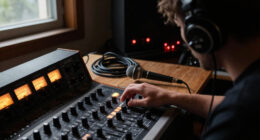
Studio monitor headphones help you hear detail for recording, editing, and mixing, but the right choice depends on isolation, comfort, and how you’ll use them. I’d start with the Sony MDR-7506 as the best overall pick for its practical closed-back design and studio-focused reputation. The beyerdynamic DT 770 Pro 80 Ohm stands out for private tracking and isolation, while the Audio-Technica ATH-M40x offers a flexible alternative for home studios. Open-back and semi-open designs trade isolation for a more spacious presentation, and closed-back models can feel warmer or more confined. Read on for the full breakdown and help matching a pair to your setup.

Get audio and creator gear delivered free with Prime
- Fast, free delivery on millions of items
- Prime Video, Amazon Music and more included
- Member-only deals all year
Complete the kit


Key Takeaways
- The Sony MDR-7506 earns the best overall position for a straightforward closed-back studio role, while the DT 770 Pro 80 Ohm is a stronger fit when isolation and tracking comfort matter more.
- The ATH-M40x is the lineup’s practical all-rounder: it offers a removable cable and folding design without requiring buyers to move to the ATH-M50x.
- The DT 990 Pro and AKG K240 Studio make different compromises from the closed-back majority: their open or semi-open construction favors a less sealed listening experience but leaks sound and offers little isolation.
- Several entries overlap closely, including two listings for the beyerdynamic DT 770 Pro 80 Ohm; buyers should compare the exact model and included accessories rather than assume the separate listings represent different tuning.
- Budget-friendly choices such as the TASCAM TH-02 and OneOdio Pro-10 can suit basic listening or entry-level work, but buyers should weigh their simpler design against more established studio-oriented options.
| OneOdio Pro-10 Wired Over-Ear DJ Headphones, Black |  | Best for Single-Ear Monitoring | Driver size: 50 mm | Driver type: Dynamic | Impedance: 32 ohms | VIEW LATEST PRICE | See Our Full Breakdown |
| FIFINE H8 Wired Studio Monitor Headphones with Detachable Cables |  | Best Value for a Flexible Studio Setup | Driver size: 50 mm | Frequency response: 20 Hz–20 kHz | Design: Closed-back, over-ear | VIEW LATEST PRICE | See Our Full Breakdown |
| Sony MDR-M1 Professional Reference Closed-Back Monitor Headphones | 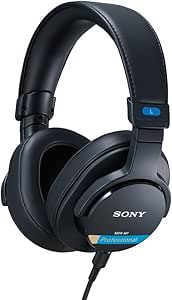 | Best Lightweight Reference Pick | Frequency response: 5 Hz–80 kHz | Impedance: 50 ohms | Design: Closed-back, over-ear | VIEW LATEST PRICE | See Our Full Breakdown |
| Sony MDR-7506 Professional Wired Over-Ear Headphones | 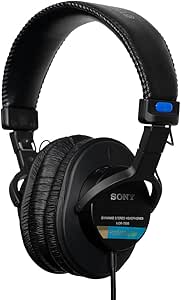 | Best for Portable, Familiar Studio Monitoring | Driver size: 40 mm | Frequency response: 10 Hz–20 kHz | Design: Closed-ear, foldable | VIEW LATEST PRICE | See Our Full Breakdown |
| Audio-Technica ATH-M40x Professional Studio Monitor Headphones |  | Best for Flexible Tracking and Mixing | Driver size: 40 mm | Driver type: Dynamic | Frequency response: 15 Hz (upper limit not provided) | VIEW LATEST PRICE | See Our Full Breakdown |
| beyerdynamic DT 990 Pro 250 Ohm Open-Back Studio Headphones |  | Best for Spacious Mixing | Design: Wired, open-back dynamic, over-ear | Impedance: 250 ohms | Frequency response: 5 Hz–35,000 Hz | VIEW LATEST PRICE | See Our Full Breakdown |
| Audio-Technica ATH-M50x Professional Studio Monitor Headphones, Black | 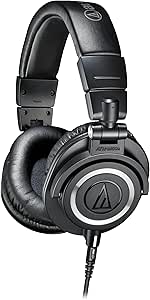 | Best for Versatile Studio and Everyday Use | Design: Wired, over-ear, sound-isolating | Driver type and size: Dynamic, 45 mm | Impedance: 38 ohms | VIEW LATEST PRICE | See Our Full Breakdown |
| beyerdynamic DT 770 Pro 80 Ohm Closed-Back Studio Headphones |  | Best for Recording and Podcasting | Design: Closed-back, over-ear dynamic | Impedance: 80 ohms | Sensitivity: 96 dB | VIEW LATEST PRICE | See Our Full Breakdown |
| Shure SRH440A Over-Ear Wired Studio Headphones |  | Best for Portable Studio Work | Design: Wired, closed-back, over-ear | Cable: Detachable locking cable | Included adapter: Threaded 6.35 mm adapter | VIEW LATEST PRICE | See Our Full Breakdown |
| beyerdynamic DT 770 PRO Closed-Back Studio Headphones, 80 Ohm, Black |  | Best for Serviceable Studio Durability | Design: Closed-back, over-ear | Impedance: 80 ohms | Cable: Fixed 3 m single-sided straight cable | VIEW LATEST PRICE | See Our Full Breakdown |
| Yamaha HPH-MT5 Monitor Headphones, White |  | Best for Lightweight, Balanced Monitoring | Design: Closed-back, circumaural | Driver size: 40 mm | Frequency response: 20 Hz–20 kHz | VIEW LATEST PRICE | See Our Full Breakdown |
| Audio-Technica ATH-M30x Professional Studio Monitor Headphones |  | Best for Portable Tracking | Design: Closed-back, over-ear | Driver size: 40 mm | Driver magnets: Rare earth | VIEW LATEST PRICE | See Our Full Breakdown |
| Sennheiser HD 280 Pro Closed-Back Studio Monitoring Headphones |  | Best for Isolation and Serviceability | Type: Dynamic, closed-back stereo headphones | Fit: Around-the-ear | Noise attenuation: Up to 32 dB | VIEW LATEST PRICE | See Our Full Breakdown |
| TASCAM TH-02 Wired Over-Ear Studio Headphones |  | Best for Straightforward Studio Setup | Type: Wired, closed-back dynamic headphones | Fit: Over-ear | Driver size: 50 mm | VIEW LATEST PRICE | See Our Full Breakdown |
| AKG K240 Studio Semi-Open Over-Ear Wired Headphones | 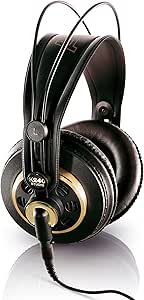 | Best for More Open Monitoring | Type: Wired, semi-open over-ear headphones | Transducer size: 30 mm | Cable length: 3 m (9.9 ft) | VIEW LATEST PRICE | See Our Full Breakdown |
| studio monitor headphone | Weight | Frequency response | Design | Impedance |
|---|---|---|---|---|
| OneOdio Pro-10 Wired Over-Ear | 415 g | — | — | 32 ohms |
| FIFINE H8 Wired Studio Monitor | 265 g | 20 Hz–20 kHz | Closed-back, over-ear | — |
| Sony MDR-M1 Professional Refer | Approximately 216 g | 5 Hz–80 kHz | Closed-back, over-ear | 50 ohms |
| Sony MDR-7506 Professional Wir | 8 oz | 10 Hz–20 kHz | Closed-ear, foldable | — |
| Audio-Technica ATH-M40x Profes | 0.24 kg | 15 Hz (upper limit not provided) | — | 35 ohms |
| beyerdynamic DT 990 Pro 250 Oh | 0.4 kg | 5 Hz–35,000 Hz | Wired, open-back dynamic, over-ear | 250 ohms |
| Audio-Technica ATH-M50x Profes | — | Up to 28,000 Hz | Wired, over-ear, sound-isolating | 38 ohms |
| beyerdynamic DT 770 Pro 80 Ohm | 9.5 ounces | 5 Hz lower limit listed | Closed-back, over-ear dynamic | 80 ohms |
| Shure SRH440A Over-Ear Wired S | — | — | Wired, closed-back, over-ear | — |
| beyerdynamic DT 770 PRO Closed | 9.5 ounces | — | Closed-back, over-ear | 80 ohms |
| Yamaha HPH-MT5 Monitor Headpho | 250 g | 20 Hz–20 kHz | Closed-back, circumaural | — |
| Audio-Technica ATH-M30x Profes | — | — | Closed-back, over-ear | 38 ohms |
| Sennheiser HD 280 Pro Closed-B | 220 g | 8–25,000 Hz | — | — |
| TASCAM TH-02 Wired Over-Ear St | 0.3 kg | 18 Hz–22 kHz | — | 32 ohms |
| AKG K240 Studio Semi-Open Over | — | — | — | — |
More Details on Our Top Picks
OneOdio Pro-10 Wired Over-Ear DJ Headphones, Black
The OneOdio Pro-10 is the clearest fit here for DJ-style cueing and monitoring one channel at a time. Its 90-degree swiveling ear cups make that practical, while the 50 mm drivers and sound-isolating cushions suit general tracking and playback. Compared with the Audio-Technica ATH-M40x, it adds a shared audio port for connecting another pair, but its listed specs give less detail about frequency response, so I’d choose the ATH-M40x if tuning information matters more to your workflow. The Pro-10 accepts both 3.5 mm and 6.35 mm jacks, which is handy across consumer devices and studio gear. The tradeoff is its 415 g weight, and the cable-only design leaves no wireless option; its isolation is passive, not active noise cancellation.
Pros:- 90-degree swiveling ear cups support single-ear monitoring.
- 3.5 mm and 6.35 mm jack compatibility suits varied audio equipment.
- Shared audio port lets another pair connect for collaborative listening.
- Padded cushions and adjustable headband are designed for extended wear.
Cons:- At 415 g, it is substantially heavier than the Sony MDR-M1.
- Wired-only operation restricts movement.
- No frequency-response range is supplied, limiting spec-based comparison for critical mixing.
Best for: DJs and home producers who need swiveling cups for one-ear cueing and compatibility with both standard and studio-size headphone jacks.
Not ideal for: Mixers who want detailed published frequency-response data or a lighter headset for long sessions; at 415 g, it is heavier than the Sony MDR-M1.
- Driver size:50 mm
- Driver type:Dynamic
- Impedance:32 ohms
- Sensitivity:110 dB
- Connectivity:3.5 mm and 6.35 mm audio jacks
- Ear cup rotation:90 degrees
- Weight:415 g
- Warranty:2 years
Our verdict“Choose the OneOdio Pro-10 for affordable-feeling DJ practicality and one-ear monitoring, not for a lightweight or fully documented reference setup.”
FIFINE H8 Wired Studio Monitor Headphones with Detachable Cables
The FIFINE H8 makes a practical case for a home recording setup: it includes two detachable coiled cables, one with a 3.5 mm plug and one with a 6.35 mm plug, so switching between a computer and an interface is straightforward. Its closed-back design and passive isolation help limit sound bleed while tracking, and the 20 Hz–20 kHz range gives buyers a clearly stated audio window. Compared with the Sony MDR-7506, the H8’s replaceable cables are easier to adapt if a lead is damaged, while the Sony folds for compact storage. The FIFINE also has an inline volume control, but the supplied data doesn’t establish a particularly neutral tuning. Its passive isolation reduces some room noise, not all of it, and it remains tethered during use.
Pros:- Two detachable coiled cables provide 3.5 mm and 6.35 mm connections.
- Closed-back construction offers passive isolation for recording sessions.
- Inline volume control allows quick level adjustments.
- At 265 g, it is lighter than the OneOdio Pro-10.
Cons:- Passive isolation cannot eliminate surrounding noise.
- Wired operation limits movement away from the connected device.
- A one-year warranty is shorter than the two-year coverage listed for the OneOdio Pro-10.
Best for: Home-recording beginners who need a closed-back headset with interchangeable cables for a computer, microphone, or audio interface.
Not ideal for: Mobile listeners who need wireless freedom, or mixers seeking a reference model with stronger documentation of its tonal character.
- Driver size:50 mm
- Frequency response:20 Hz–20 kHz
- Design:Closed-back, over-ear
- Noise isolation:Passive
- Weight:265 g
- Cable type:Detachable coiled cables
- Cable length:9.8 ft
- Connectors:3.5 mm and 6.35 mm
- Warranty:1 year
Our verdict“Pick the FIFINE H8 for a flexible, cable-equipped entry studio setup, especially if you value replaceable leads over foldable storage.”
Sony MDR-M1 Professional Reference Closed-Back Monitor Headphones
Among these closed-back options, the Sony MDR-M1 stands out for combining a broad stated 5 Hz–80 kHz frequency response with a notably light 216 g build. That low weight can make long editing or monitoring sessions easier to tolerate than the heavier OneOdio Pro-10, while its thick earpads add comfort. Two detachable cables and a screw-in adapter also make it adaptable between 3.5 mm and 6.3 mm equipment. Compared with the Sony MDR-7506, the MDR-M1 offers a wider published response and detachable cables, whereas the MDR-7506 folds for travel and includes a storage case. The M1 is still a closed-back model, so it won’t provide the more open presentation some listeners want, and its one-year warranty is modest for a professional-oriented headset.
Pros:- Wide 5 Hz–80 kHz stated frequency response.
- Approximately 216 g weight helps reduce headset burden during long sessions.
- Two detachable cables support flexible studio connections.
- Screw-in adapter supports 3.5 mm and 6.3 mm stereo jacks.
Cons:- Closed-back construction does not suit listeners seeking an open-back presentation.
- No storage case is listed among the included items.
- One-year warranty is shorter than the coverage listed for the OneOdio Pro-10 and ATH-M40x.
Best for: Audio editors and producers who want a light closed-back reference headphone with detachable cables and broad published frequency coverage.
Not ideal for: Listeners who prefer an open-back soundstage, or buyers who prioritize a foldable design and included case for frequent travel.
- Frequency response:5 Hz–80 kHz
- Impedance:50 ohms
- Design:Closed-back, over-ear
- Weight:Approximately 216 g
- Included cables:2 detachable cables
- Connector compatibility:3.5 mm and 6.3 mm stereo jacks
- Color:Black
- Warranty:1 year
Our verdict“Choose the MDR-M1 if low weight and detachable cables matter more than foldability or an open-back listening experience.”
Sony MDR-7506 Professional Wired Over-Ear Headphones
The Sony MDR-7506 is a straightforward choice for listeners who want a closed-ear monitor that can fold into a bag between sessions. Its 10 Hz–20 kHz response covers the stated range of the FIFINE H8, but Sony pairs it with a non-detachable 9.8-foot cable, making this less convenient to replace or swap than the H8’s detachable leads. The long cord is useful when working at a console or across a studio desk; it is less welcome when moving around. At 8 oz, the MDR-7506 is lighter than the OneOdio Pro-10, and the included soft case supports travel. The fixed cable remains the main compromise, while its closed-ear isolation means it isn’t the pick for anyone seeking an open-back presentation.
Pros:- Foldable design and included soft case simplify storage and transport.
- 9.8-foot cable offers reach across a desk or studio setup.
- Closed-ear construction helps reduce external noise.
- Includes a plug adapter for 1/4-inch and 1/8-inch compatibility.
Cons:- Non-detachable cable is harder to replace than the FIFINE H8’s detachable leads.
- Long wired connection can restrict movement.
- Closed-ear design won’t satisfy listeners seeking an open-back presentation.
Best for: Studio users and field editors who want a foldable closed-back monitor with a long cable and a soft case for transport.
Not ideal for: People who need a replaceable cable, short untethered movement, or an open-back headphone for spacious listening.
- Driver size:40 mm
- Frequency response:10 Hz–20 kHz
- Design:Closed-ear, foldable
- Cord length:9.8 ft
- Cord:Non-detachable oxygen-free copper
- Connectors:Gold-plated plug; 1/4-inch and 1/8-inch compatibility with adapter
- Weight:8 oz
- Included accessories:Soft case, Unimatch plug
Our verdict“The MDR-7506 suits portable studio work where folding storage and a long cable outweigh the convenience of a detachable lead.”
Audio-Technica ATH-M40x Professional Studio Monitor Headphones
The Audio-Technica ATH-M40x earns its place through a useful combination of monitoring-oriented tuning, 90-degree swiveling ear cups, and two detachable cables. Those swivels support one-ear checks like the OneOdio Pro-10, but the ATH-M40x also includes both a coiled and straight lead, giving producers a better fit for different recording positions. Its collapsible build helps with transport, and circumaural cups provide isolation for tracking. The supplied frequency-response spec lists only 15 Hz, with no upper limit, so buyers can’t make a complete range comparison against the Sony MDR-M1 or FIFINE H8 from the provided data. Its closed, sound-isolating design also sacrifices the open presentation available from models such as the DT 990 Pro. It is a versatile studio tool, not a choice for open-back listening.
Pros:- Monitoring-oriented tuning is suited to tracking and mixing work.
- 90-degree swiveling cups allow one-ear monitoring.
- Includes detachable coiled and straight cables for different setups.
- Collapsible design and 0.24 kg weight support portability.
Cons:- Listed frequency response is incomplete, with no upper limit supplied.
- Closed, isolating earcups are less suited to listeners seeking an open-back sound.
- Wired listening still tethers the user to the source.
Best for: Producers and DJs who switch between tracking, one-ear monitoring, and mobile sessions and want both coiled and straight detachable cables.
Not ideal for: Buyers who need a complete published frequency-response range or prefer the spacious feel of open-back headphones.
- Driver size:40 mm
- Driver type:Dynamic
- Frequency response:15 Hz (upper limit not provided)
- Impedance:35 ohms
- Sensitivity:98 dB
- Earcup design:Circumaural
- Swiveling earcups:90 degrees
- Cables included:1.2–3.0 m coiled cable and 3.0 m straight cable
- Weight:0.24 kg
Our verdict“Choose the ATH-M40x for versatile studio duties and cable flexibility, but look elsewhere if complete frequency-response specifications or open-back listening are priorities.”
beyerdynamic DT 990 Pro 250 Ohm Open-Back Studio Headphones
The DT 990 Pro 250 Ohm is the open-back choice here for listeners who want a broad stereo presentation while editing or mixing in a quiet room. Its open construction can make left-to-right placement feel less confined than the closed-back DT 770 Pro, but it also lets music escape into the room and does little to block outside noise. That makes it a poor fit for recording beside a live microphone or monitoring in shared spaces. The 250-ohm impedance favors a capable interface or headphone amp; it is less convenient for direct connection to low-powered devices than the 80-ohm DT 770 Pro. Replaceable velour pads and an adjustable spring-steel headband suit longer sessions, while the fixed coiled cable is sturdy but less flexible than a detachable lead.
Pros:- Open-back design creates a spacious stereo image for mixing and monitoring.
- Replaceable velour ear pads and adjustable spring-steel headband suit extended sessions.
- Includes a 3 m coiled cable and 1/4-inch adapter.
- Wide stated frequency response of 5 Hz to 35,000 Hz.
Cons:- Sound leaks out and outside noise passes in, limiting recording and shared-room use.
- The 250-ohm impedance may need an audio interface or headphone amplifier for adequate output.
- Fixed coiled cable cannot be detached.
Best for: Mixers working in a quiet home or studio room with an interface or headphone amplifier who value an open, spacious stereo image.
Not ideal for: Vocalists recording near a microphone, people working in shared or noisy rooms, and listeners who need headphones to run loudly from a phone without an amp.
- Design:Wired, open-back dynamic, over-ear
- Impedance:250 ohms
- Frequency response:5 Hz–35,000 Hz
- Sensitivity:96 dB
- Cable:Fixed 3 m coiled cable
- Connections:3.5 mm plug with 6.35 mm adapter
- Ear pads:Replaceable grey velour
- Weight:0.4 kg
Our verdict“Choose the DT 990 Pro for spacious, open-back mixing in a quiet room, provided your source can drive its 250-ohm load.”
Audio-Technica ATH-M50x Professional Studio Monitor Headphones, Black
The ATH-M50x is a flexible closed-back pick for people who move between tracking, editing, and everyday listening. Its sound-isolating earcups make it more practical for noisy rooms and microphone work than the open-back DT 990 Pro, while the 38-ohm impedance is less demanding than that model’s 250-ohm load. The 45 mm dynamic drivers are specified for clear sound with deep bass, a useful combination for checking low-end material as well as monitoring. Swiveling cups support one-ear listening, and the detachable cable is easier to replace or pack than the fixed leads on the DT 770 Pro models. The tradeoff is a less airy presentation than an open-back design, and its full-size over-ear build is not especially compact. It also lacks water resistance, so it is best kept to studio and indoor use.
Pros:- Sound-isolating earcups help in noisy environments and during recording.
- 45 mm dynamic drivers are designed for clarity and deep bass.
- 90-degree swiveling earcups support one-ear monitoring.
- Detachable cable is replaceable and convenient for transport.
Cons:- Closed-back presentation is less open than the DT 990 Pro for spacious mixing.
- Full-size over-ear construction takes up more space than compact headphones.
- Not water resistant.
Best for: Home-studio creators and mobile DJs who need one isolating wired headphone for tracking, one-ear monitoring, and general listening.
Not ideal for: Mixers who prioritize an open, spacious presentation, or commuters seeking a compact, water-resistant headphone.
- Design:Wired, over-ear, sound-isolating
- Driver type and size:Dynamic, 45 mm
- Impedance:38 ohms
- Frequency response:Up to 28,000 Hz
- Sensitivity:99 dB
- Earcup rotation:90 degrees
- Cable:Detachable
- Warranty:2 years on parts and labor
Our verdict“Pick the ATH-M50x if you want an adaptable closed-back studio headphone with isolation, swiveling cups, and a detachable cable.”
beyerdynamic DT 770 Pro 80 Ohm Closed-Back Studio Headphones
For recording and podcast work, the DT 770 Pro 80 Ohm puts isolation ahead of the broad, open presentation of the DT 990 Pro. Its closed-back design helps limit headphone sound reaching a microphone, while the velour pads and spring-steel headband are suited to repeat sessions. The 80-ohm impedance is also a less demanding match for many studio setups than the DT 990 Pro’s 250 ohms, though the product data still recommends an interface or headphone amp for best performance. This version has a fixed 3 m straight cable, unlike the detachable lead on the ATH-M50x, so cable replacement is less convenient. Buyers should also note that the listed frequency-response specification gives only a lower figure, 5 Hz, without an upper limit. It is a focused tracking tool, not the pick for cable flexibility or an open-air mix feel.
Pros:- Closed-back passive isolation helps reduce headphone bleed into microphones.
- Replaceable velour ear pads and spring-steel headband are suited to regular use.
- Includes a 3 m straight cable and 1/4-inch adapter.
- 80-ohm impedance is less demanding than the DT 990 Pro’s 250-ohm design.
Cons:- Fixed cable cannot be detached or easily swapped.
- An interface or headphone amplifier is recommended for best performance.
- Provided frequency-response data lists only the 5 Hz lower figure.
Best for: Podcasters, vocalists, and home-studio recordists who need closed-back isolation and use a computer, interface, or headphone amp.
Not ideal for: People who need a detachable cable, prefer an open-back soundstage, or want fully specified frequency-response figures for comparison.
- Design:Closed-back, over-ear dynamic
- Impedance:80 ohms
- Sensitivity:96 dB
- Frequency response:5 Hz lower limit listed
- Cable:Fixed 3 m straight cable
- Connector:3.5 mm plug with 6.35 mm adapter
- Ear pads:Velour
- Weight:9.5 ounces
Our verdict“Choose this DT 770 Pro for isolated tracking and podcasting, but skip it if a detachable cable or open-back presentation matters most.”
Shure SRH440A Over-Ear Wired Studio Headphones
The Shure SRH440A suits creators who want a closed-back monitoring headphone that is easier to pack away than the studio-focused beyerdynamic DT 770 Pro. Its collapsible design, lightweight construction, and detachable locking cable make it practical for moving between a home setup and other listening locations. Shure describes its sound as balanced and detailed, supporting monitoring and critical listening without making portability the only priority. Like the DT 770 Pro, its closed cups help contain sound during recording; unlike that model, its cable detaches, though the locking connection adds a step when removing it. The tradeoff shared by closed-back headphones is less breathability than the DT 990 Pro’s open design, which may become noticeable in long sessions. The supplied data does not give driver size, impedance, or frequency-response figures, so spec-by-spec comparison is limited.
Pros:- Closed-back design helps reduce ambient noise and contain sound.
- Collapsible build and lightweight construction support portability.
- Detachable locking cable and included threaded 1/4-inch adapter suit studio connections.
- Cushioned earcups and adjustable headband support a personal fit.
Cons:- Closed-back cups may feel less breathable during long sessions than the DT 990 Pro.
- Wired connection limits freedom of movement compared with wireless headphones.
- Supplied product data omits driver size, impedance, and frequency-response figures.
Best for: Mobile producers and students who need a collapsible wired headphone with isolation and a detachable cable for studio and everyday listening.
Not ideal for: Buyers who need detailed published driver or impedance specifications, or mixers who prefer the more open feel of the DT 990 Pro.
- Design:Wired, closed-back, over-ear
- Cable:Detachable locking cable
- Included adapter:Threaded 6.35 mm adapter
- Fit features:Adjustable headband and cushioned earcups
- Portability:Collapsible design
- Intended uses:Recording, monitoring, mixing, and critical listening
- Warranty:2-year limited warranty
Our verdict“Choose the SRH440A if portability, closed-back isolation, and a detachable locking cable matter more than open-back spaciousness or detailed published specs.”
beyerdynamic DT 770 PRO Closed-Back Studio Headphones, 80 Ohm, Black
This DT 770 PRO 80 Ohm shares the core closed-back tracking role of the other DT 770 Pro in this lineup, so the meaningful distinction in the supplied descriptions is its emphasis on replaceable components and included storage bag. That serviceability can appeal to studios that want to maintain gear over time rather than replace a whole headphone when a wearable part needs attention. Like the ATH-M50x, it isolates better than the open-back DT 990 Pro, but its 3 m single-sided cable is fixed, whereas the Audio-Technica’s cable detaches. The velour pads are designed for extended wear, and the 80-ohm impedance is aimed at studio use rather than specifically mobile gear. Choose it for a wired workstation setup; its cable length and fixed connection make it less convenient for movement and quick swaps.
Pros:- Closed-back construction helps limit headphone bleed during recording.
- Replaceable pads, headband, and drivers support servicing.
- Velour ear pads are designed for extended listening sessions.
- Includes a 3 m cable, 1/4-inch adapter, and drawstring storage bag.
Cons:- Fixed 3 m cable can restrict movement and cannot be swapped like the ATH-M50x cable.
- 80-ohm impedance is aimed at studio use rather than specifically mobile gear.
- Closed-back design does not provide the open presentation of the DT 990 Pro.
Best for: Studio owners and frequent users who value a serviceable closed-back headphone with replaceable parts for regular workstation use.
Not ideal for: Mobile listeners who need a short or detachable cable, or buyers looking for an open-back soundstage like the DT 990 Pro.
- Design:Closed-back, over-ear
- Impedance:80 ohms
- Cable:Fixed 3 m single-sided straight cable
- Connector:3.5 mm plug with gold-plated 6.35 mm adapter
- Ear pads:Velour
- Weight:9.5 ounces
- Included accessories:Drawstring storage bag and 1/4-inch screw-on adapter
- Country of manufacture:Germany
Our verdict“Choose this DT 770 PRO for a serviceable, closed-back workstation headphone, especially if replaceable components matter more than a detachable cable.”
Yamaha HPH-MT5 Monitor Headphones, White
The Yamaha HPH-MT5 suits buyers who want closed-back isolation and a source-faithful presentation without a heavier studio headset. Its 250 g weight makes it the lightest option in this group by the supplied specifications, a practical advantage for long editing or tracking sessions. Compared with the Sennheiser HD 280 Pro, it has a straight rather than coiled cable and a simpler portability setup, while the Sennheiser offers specified noise attenuation and replaceable wear parts. The detachable 3 m cable and included bag make the Yamaha easier to pack and maintain, but that cable can feel cumbersome at a desk or in a compact recording space. I’d choose it for balanced monitoring and lighter wear, not for buyers who need the strongest documented isolation or a short cable.
Pros:- Balanced, source-faithful sound suits monitoring and personal listening.
- Closed-back circumaural design helps limit outside sound.
- At 250 g, the listed weight favors extended wear.
- Detachable cable and included carrying bag support transport and replacement.
Cons:- The 3 m straight cable may crowd a compact desk or recording position.
- No replaceable earpads or headband padding are listed, unlike the Sennheiser HD 280 Pro.
Best for: Home-studio editors and musicians who want lightweight, closed-back headphones for long sessions and occasional transport.
Not ideal for: Recordists who need specified high noise attenuation or anyone who finds a 3 m cable unwieldy in a small workspace.
- Design:Closed-back, circumaural
- Driver size:40 mm
- Frequency response:20 Hz–20 kHz
- Weight:250 g
- Cable:Detachable, straight, 3 m
- Connector:Gold-plated stereo mini-plug
- Included accessory:Gold-plated 6.3 mm stereo adapter
- Carrying accessory:Carrying bag
Our verdict“Choose the HPH-MT5 if lightweight, balanced closed-back monitoring matters more than a shorter cable or specified high isolation.”
Audio-Technica ATH-M30x Professional Studio Monitor Headphones
The ATH-M30x is a practical pick for recording setups that move between rooms or locations. Its collapsible build and carrying pouch make it easier to pack than the Yamaha HPH-MT5, while the stated clear mid-range definition gives vocal and instrument detail a clear role in tracking and field recording. Contoured closed-back earcups provide passive isolation, which can help keep outside sound from competing during takes, though they do not offer active noise cancellation. The single-sided cable also keeps the lead routed from one side rather than trailing from both cups. Compared with the more serviceable Sennheiser HD 280 Pro, the ATH-M30x has fewer replaceable parts listed, so it is less compelling for buyers prioritizing long-term component replacement. Its over-ear shape also takes more space than compact headphones.
Pros:- Clear mid-range tuning helps reveal vocal and instrument details during tracking.
- Contoured closed-back earcups provide passive isolation.
- Collapsible design and carrying pouch make transport easier.
- Single-sided cable keeps the lead on one side.
Cons:- Passive isolation is not active noise cancellation.
- Over-ear construction is bulkier to carry than compact earbuds.
- Fewer replaceable components are specified than on the Sennheiser HD 280 Pro.
Best for: Musicians and field recordists who need foldable, isolating wired headphones with clear midrange detail for tracking.
Not ideal for: Buyers seeking active noise cancellation, compact earbuds, or a model with listed replaceable cable and padding.
- Design:Closed-back, over-ear
- Driver size:40 mm
- Driver magnets:Rare earth
- Voice coils:Copper-clad aluminum wire
- Impedance:38 ohms
- Cable:Single-sided
- Portability:Collapsible
- Warranty:2 years on parts and labor
Our verdict“Pick the ATH-M30x for portable tracking and midrange-focused monitoring, but skip it if active cancellation or replaceable wear parts are priorities.”
Sennheiser HD 280 Pro Closed-Back Studio Monitoring Headphones
For recording in noisy rooms, the Sennheiser HD 280 Pro has the clearest case in this group: its closed-back design is rated to reduce ambient sound by up to 32 dB. That documented attenuation sets it apart from the Yamaha HPH-MT5, whose description promises isolation but gives no attenuation figure. The Sennheiser also has a coiled cable that can extend from 1 to 3 m and replaceable cable, earpads, and headband padding—useful if the headphones will see frequent studio duty. Its 64-ohm impedance and wired connection make it less flexible for casual movement than the 32-ohm TASCAM TH-02, and the cable still restricts range. I’d favor it for tracking and long-term studio upkeep, not for anyone who needs wireless freedom or a straight, lightweight lead.
Pros:- Rated to reduce ambient noise by up to 32 dB.
- Replaceable cable, earpads, and headband padding can extend service life.
- Collapsible, rotating earcups aid storage and monitoring flexibility.
- Locking 6.3 mm adapter supports connection to studio and home stereo equipment.
Cons:- Wired construction limits movement during recording.
- Coiled cable extends to a maximum of 3 m and may feel restrictive.
- At 64 ohms, it is less flexible than the 32-ohm TASCAM TH-02 across playback setups.
Best for: Studio engineers and musicians tracking near loud instruments who value strong passive isolation and replaceable wear components.
Not ideal for: Listeners who need wireless movement, a straight cable, or a lower-impedance option for varied playback gear.
- Type:Dynamic, closed-back stereo headphones
- Fit:Around-the-ear
- Noise attenuation:Up to 32 dB
- Frequency response:8–25,000 Hz
- Nominal impedance:64 ohms
- Sound pressure level:102 dB
- Cable:Single-sided coiled, 1–3 m
- Replaceable parts:Cable, earpads, and headband padding
- Weight:220 g
Our verdict“Choose the HD 280 Pro for isolation and replaceable parts; look elsewhere if you need a straight cable or freedom to move.”
TASCAM TH-02 Wired Over-Ear Studio Headphones
The TASCAM TH-02 keeps its appeal simple: a closed-back wired design, foldable construction, and a supplied 1/4-inch adapter cover the basics for a home recording setup. Its 32-ohm impedance is lower than the Sennheiser HD 280 Pro’s 64 ohms, making the TASCAM the more approachable match on paper for a wider range of everyday playback devices. The sound is described as having rich bass and crisp highs, so it may suit monitoring that benefits from an emphatic low end, but that description is less explicitly source-faithful than the balanced tuning claimed for the Yamaha HPH-MT5. The plastic enclosure and 300 g weight also make it a less convincing choice for buyers focused on light wear or a more robust-feeling build. Foldability helps with packing, but it remains wired and not water resistant.
Pros:- Closed-back design suits monitoring where some isolation is useful.
- 32-ohm impedance offers a straightforward match for varied playback devices.
- Foldable construction helps with storage and transport.
- Includes a 3.5 mm to 6.3 mm adapter for studio equipment.
Cons:- At 300 g, it is heavier than the listed Yamaha HPH-MT5 and Sennheiser HD 280 Pro.
- Rich bass and crisp highs are less explicitly neutral than the Yamaha’s source-faithful tuning.
- Plastic enclosure is not water resistant.
Best for: New home-studio users who want foldable closed-back headphones and an included adapter for common audio connections.
Not ideal for: Mixers seeking explicitly balanced, source-faithful tuning or users who need water resistance and a lightweight set.
- Type:Wired, closed-back dynamic headphones
- Fit:Over-ear
- Driver size:50 mm
- Frequency response:18 Hz–22 kHz
- Impedance:32 ohms
- Sensitivity:98 dB
- Weight:0.3 kg
- Connectivity:3.5 mm audio jack; 3.5 mm to 6.3 mm adapter included
Our verdict“The TH-02 is a sensible starter set for a basic wired studio, but source-focused mixers may prefer the Yamaha HPH-MT5.”
AKG K240 Studio Semi-Open Over-Ear Wired Headphones
The AKG K240 Studio is the standout choice here for buyers who prefer a semi-open presentation over the isolation of closed-back models. Its semi-open construction can make it a better fit for stationary listening and monitoring where an enclosed feel is not the goal, but it also allows sound to leak—unlike the closed-back Yamaha HPH-MT5 or Audio-Technica ATH-M30x. The self-adjusting headband and circumaural pads are designed for longer sessions, while the 3 m cable and screw-on 1/4-inch adapter cover common studio connections. Its 30 mm transducers are smaller by listed diameter than the 40 mm drivers in those closed-back alternatives, though driver size alone does not determine sound quality. I’d pick the AKG for an open-feeling workspace, not for vocal tracking near a microphone or any situation that demands strong isolation.
Pros:- Semi-open design offers an alternative to the more enclosed feel of closed-back models.
- Self-adjusting headband and circumaural pads are designed for extended wear.
- Includes a screw-on 1/4-inch adapter for studio connections.
- Three-meter cable provides reach around a stationary workstation.
Cons:- Semi-open construction can leak sound and does not provide the isolation of the Yamaha HPH-MT5.
- Wired connection limits movement.
- The 3 m cable may be cumbersome in a compact setup.
Best for: Stationary studio listeners who prefer semi-open headphones and need a comfortable fit for extended monitoring sessions.
Not ideal for: Vocalists recording near a microphone or anyone working in a noisy space who needs closed-back isolation and minimal sound leakage.
- Type:Wired, semi-open over-ear headphones
- Transducer size:30 mm
- Cable length:3 m (9.9 ft)
- Connector:1/8-inch stereo connector
- Adapter:Screw-on 1/4-inch adapter
- Headband:Self-adjusting
- Ear pads:Circumaural
Our verdict“Choose the K240 Studio for comfortable, semi-open monitoring in a quiet space, not for isolated tracking or microphone-side recording.”
How We Picked
I ranked these studio monitor headphones by how well their design fits recording, editing, and mixing—not by how many features appear on a spec sheet. I weighed closed-back isolation against open and semi-open presentation, then considered whether the headphones are likely to suit long sessions through their fit, weight, and practical cable setup. I also considered versatility: removable cables, folding designs, and compatibility with common studio sources can make a meaningful difference in day-to-day use.
The order favors models with a clear studio role and useful balance of performance, usability, and build. The Sony MDR-7506 leads as a broadly practical closed-back reference option; models such as the DT 770 Pro 80 Ohm rank highly for tracking and isolation, while the ATH-M40x offers a compelling mix of flexibility and studio utility. Open-back, semi-open, and entry-level headphones appear lower not because they lack value, but because their narrower fit or compromises make them less suitable as a single pair for the widest range of studio tasks.
Factors to Consider When Choosing Studio Monitor Headphones
Before choosing a pair, decide which studio problem you need the headphones to solve. A tracking pair needs to limit click-track bleed; a mixing pair needs a presentation you can interpret consistently; and a shared home-studio pair may need to work from a laptop or interface without extra equipment. These tradeoffs matter more than a long feature list.
Choose Isolation Based on Your Recording Setup
Closed-back headphones are usually the safer choice when you record vocals or instruments near a microphone, since they reduce sound escaping from the earcups. They can also help in a noisy room, though they may feel warmer during long sessions. Open-back and semi-open models allow more sound to pass through, which can make them a poor match for live microphones or shared spaces. A common mistake is buying open-back headphones for tracking because they sound spacious during casual listening. If you plan to use one pair for both recording and editing, choose isolation first and accept that you may want speakers or another reference for mix decisions.
Treat Headphone Impedance as a Source-Matching Question
Impedance alone does not tell you how loud or suitable a headphone will be; sensitivity and the output of your device matter too. A model with a higher impedance may need more voltage from an interface or headphone amplifier to reach a comfortable level. Before buying, check the headphone output specifications for your audio interface, mixer, or portable device and leave room for clean volume peaks. Buyers often assume a familiar studio headphone will work identically from a phone, interface, and console, but output strength can vary. If you move between several sources, favor a setup that can drive the headphones reliably rather than focusing on a single impedance number.
Do Not Confuse Detailed Sound With Mix Accuracy
Monitor headphones are not automatically neutral, and a revealing presentation does not guarantee that every mix decision will translate. Headphones remove room acoustics but also present left and right channels separately in a way that differs from speakers. Bass emphasis, treble peaks, and a sealed-in feeling can all lead you to make compensating changes that do not travel well to other systems. Use familiar reference tracks and check important mixes on more than one playback source. If your room is untreated or you cannot use speakers, choose headphones you can learn over time instead of chasing a claim of perfect flatness.
Prioritize Fit and Replaceable Parts for Long Sessions
Comfort is part of studio performance: pressure, heat, or a poor seal can make long editing sessions tiring and change how consistently you hear bass. Headband force and earcup depth vary, so product dimensions and removable pads are worth checking before a purchase. A detachable cable can be easier to replace or route than a permanently attached one, while folding earcups help with storage but do not guarantee a lighter fit. Buyers often focus on sound and overlook whether glasses, hair, or head shape will affect the seal. If you work for hours at a time, favor serviceable construction and a fit you can tolerate over extra features you will rarely use.
Pay for the Role You Need, Not the Most Expensive Pair
A premium model is worthwhile only when its strengths match your work. For basic tracking and editing, a reliable closed-back pair may be more useful than an open-back model that cannot isolate a microphone. Paying more can make sense for better comfort, a stronger build, or a presentation that suits careful listening, but it will not fix an untreated room or replace good monitoring habits. Entry-level pairs can be sensible for a spare station, practice, or casual recording; the tradeoff may be fewer refinements in fit, cable design, or overall consistency. Decide whether you need one dependable generalist, a dedicated tracking pair, or a second reference before stretching your budget.
Frequently Asked Questions
Can I use studio monitor headphones for mixing without studio speakers?
Yes, you can make mixes on headphones, especially when room noise or space makes speakers impractical. The main limitation is that headphones present stereo and bass differently from speakers, so panning and low-end decisions may not translate as expected. Use reference tracks you know well and check finished work on several playback systems. Avoid treating a headphone’s “monitor” label as proof that its response is perfectly neutral. If possible, use speakers for final checks even when most of your work happens on headphones.
Should I choose open-back or closed-back headphones for recording vocals?
Closed-back headphones are usually the better vocal-tracking choice because they limit click-track and backing-track leakage into the microphone. Open-back designs let more sound escape, which can become audible in a sensitive vocal recording. They may be comfortable for editing or listening in a quiet room, but that does not make them ideal for recording. If you want one pair for both tracking and general studio work, isolation is typically the more practical compromise. For a dedicated mixing pair, an open or semi-open model can still make sense if leakage is not a concern.
Do I need a headphone amplifier for 250-ohm studio headphones?
Not automatically, but a 250-ohm model may be harder to drive loudly from some phones, laptops, and interface outputs. Check the output capability of the specific device you plan to use and whether it can reach your normal listening level without distortion. A headphone amplifier can help when an existing output is too quiet or lacks clean headroom, but it will not improve a mix simply by being added. The 80-ohm DT 770 Pro listing is a more flexible place to start for buyers using several common sources. Confirm the exact impedance before ordering, since product families can include multiple versions.
Are the two beyerdynamic DT 770 Pro 80 Ohm listings different headphones?
The roundup includes two listings described as the DT 770 Pro, 80 Ohm, so the names alone do not indicate a meaningful difference in sound or intended use. Check the full model description, color, cable details, and included accessories on the specific listing before choosing. Do not assume that a separate listing means a different tuning or upgrade. If the specifications match, decide based on the version’s stated contents and compatibility with your setup. This check also helps avoid confusing the 80-ohm model with other impedance versions in the DT 770 family.
Is a detachable cable worth prioritizing on studio headphones?
A detachable cable can be useful if you work in a busy space, travel with your headphones, or want to replace a damaged lead without servicing the whole unit. It can also make cable routing easier when the original length or connector does not suit your setup. A fixed cable is not automatically a poor choice; it can be simple and dependable if it fits your workspace. Compare cable length and connector type with your interface and desk before deciding. For a studio pair that will see frequent use, replaceability is a practical advantage, but it should not outweigh fit or the isolation your work requires.
Conclusion
For one dependable pair to cover common studio tasks, I’d choose the Sony MDR-7506 as best overall. The Audio-Technica ATH-M40x is my best value-style pick for buyers who want a flexible closed-back design, while the beyerdynamic DT 770 Pro 80 Ohm is the better match for tracking and isolation. For beginners, I’d start with the MDR-7506 or ATH-M30x and prioritize a comfortable fit and a source that can drive them well. Buyers seeking a more open listening experience can look at the DT 990 Pro or AKG K240 Studio, while those wanting a more premium reference option should compare the Sony MDR-M1 with their specific needs and budget. The best choice is the one whose isolation, fit, and source compatibility match the work you actually do.
Black Friday Picks

KitchenAid Classic Series 4.5-Quart Tilt-Head Stand Mixer, Onyx Black
As an affiliate, we earn on qualifying purchases.