
Studio monitor speaker stands solve one of the biggest accuracy problems in home studios: getting your monitors off the desk and into the proper listening position. My top pick is the Rockville RVSM1, which balances a wide height range, solid metal construction, and a fair price better than anything else in this lineup. If budget is the priority, the AxcessAbles adjustable stands deliver surprising stability for the money, while the Heavy-Duty Tripod Stands with an 80 lb capacity and 29″–53″ range suit larger monitors and taller rooms. The main tradeoffs you’ll face here are floor space versus desk-clamp designs, height range versus stability at full extension, and cheap tripods versus premium wide-base stands. Keep reading for the full breakdown of all seven options.

Get audio and creator gear delivered free with Prime
- Fast, free delivery on millions of items
- Prime Video, Amazon Music and more included
- Member-only deals all year
Complete the kit


Key Takeaways
- Height range varied more than any other spec: picks spanned 26″–42″ (AxcessAbles) up to 29″–53″ (Heavy-Duty Tripod), and matching the range to seated versus standing listening position mattered more than brand or price.
- Every Vondynote model in this roundup competed on adjustability and included extras like cable management, but the three versions overlapped heavily — only one earned a clear recommendation.
- 80 lb weight capacity appeared on several budget models, but real-world stability at full extension, not the printed rating, separated the Rockville RVSM1 and the tripods from the lighter-duty floor stands.
- Tripod-style stands (Heavy-Duty, PERLESMITH) won on carpet and uneven floors thanks to adjustable leg feet, while flat-base stands like the AxcessAbles felt steadier on hard, level surfaces.
- The PERLESMITH was the only pick clearly aimed at surround-sound and multimedia setups rather than nearfield mixing, making it easy to rule out for pure studio work despite its strong build.




| studio monitor speaker stand | Height Range | Material |
|---|---|---|
| Rockville RVSM1 Black Pair Adj | 33 to 45 inches | Steel, EVA foam |
| AxcessAbles Studio Monitor Spe | 26 to 42 inches | Steel alloy |
| PERLESMITH Universal Speaker S | 33.3" to 45.1" | Steel |
| Vondynote Pair Studio Monitor | 31" to 50" | — |
| Vondynote Pair Studio Monitor | 32.6" to 50.9" | Metal with foam pads |
| Heavy-Duty Studio Monitor Stan | 29" to 53" | Powder-coated steel |
| Vondynote Studio Monitor Stand | 33" to 51" | Metal with EVA anti-skid pads |
More Details on Our Top Picks
Rockville RVSM1 Black Pair Adjustable Height Studio Monitor Speaker Stands
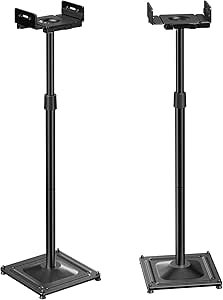
The Rockville RVSM1 earns the top spot because it balances the three things that matter most in a monitor stand: load capacity, vibration control, and height flexibility. Its 80 lb steel build handles full-size nearfields without wobble, and the EVA foam platform does real acoustic work by decoupling the cabinet from the stand — something the AxcessAbles pair skips entirely. Compared with the Vondynote 31-50″ model, the RVSM1 has a shorter maximum height (45″ vs 50″), so taller listeners may want that extra reach. The tradeoff is portability: this is a heavy, tripod-based design that stays put, and the included pole mount only helps if your speakers have a 35mm socket. For a permanent home-studio position, though, that heft reads as stability rather than inconvenience.
Pros:- EVA foam pads absorb cabinet vibration for cleaner low-end reproduction
- 80 lb capacity accommodates most nearfield and midfield monitors
- Tripod base with rubber feet stays planted on carpet or hardwood
- Doubles as a 35mm pole mount when the tray is removed
Cons:- Steel construction makes repositioning a two-handed chore
- No isolation from the price of extra accessories — no case or transport options included
Best for: Producers with medium-to-large monitors in a fixed home studio who want vibration isolation without buying separate isolation pads
Not ideal for: Anyone who rearranges their room often or needs stands above 45 inches — the weight and height ceiling will frustrate both
- Height Range:33 to 45 inches
- Support Weight:80 lbs
- Platform Dimensions:9.05 x 9.45 inches
- Base Size:17.7 x 17.7 inches
- Material:Steel, EVA foam
- Mount Compatibility:35mm pole mountable speakers (with tray removed)
Our verdict“The safest all-around pick for a permanent studio setup where stability and vibration damping outrank portability.”
AxcessAbles Studio Monitor Speaker Stands Pair, Adjustable Height 26-42 inches, 80 lb Capacity, Metal Construction
For buyers who want big-stand capacity at a small-stand price, the AxcessAbles pair is the value play. You get the same 80 lb rating as the Rockville RVSM1 but typically for less money, plus floor-aware extras: non-skid pads for hard floors and optional spikes for carpet — a pairing few budget stands offer. The compromises are honest ones. There’s no vibration isolation, so if your desk-adjacent floor carries bass rumble, you’ll want to add isolation pads separately. The 26″ minimum height is actually lower than most rivals, which helps seated mixing positions, but the 42″ ceiling falls short of the Vondynote models that stretch past 50″. Assembly directions are terse, so budget twenty patient minutes on setup day.
Pros:- 80 lb per-stand capacity rivals pricier options at a lower price
- Includes both non-skid pads and carpet spikes for any floor type
- Low 26-inch minimum suits seated desk setups
- Triangle base keeps footprint modest in tight rooms
Cons:- No vibration-dampening padding between speaker and tray
- Height tops out at 42 inches, short of the 50-inch class
Best for: Budget-conscious home recordists with heavy monitors who mainly mix seated and want carpet spikes included
Not ideal for: Anyone chasing acoustic cleanliness — no built-in isolation means floor-borne vibration passes straight into the cabinet
- Material:Steel alloy
- Height Range:26 to 42 inches
- Weight Capacity:80 lbs per stand
- Top Tray Dimensions:9 x 9 inches
- Base Dimensions:18 x 18 inches
- Included Accessories:Non-skid pads, optional spikes
Our verdict“The most capacity per dollar here, as long as you accept adding your own isolation pads.”
PERLESMITH Universal Speaker Stands for Surround Sound – Height Adjustable from 33.3″ to 45.1″, Pair Black
The PERLESMITH stands play a different game than everything else in this lineup: they’re built for 11 lb bookshelf and satellite speakers, not chunky studio monitors. That lower ceiling buys you two things the heavier stands can’t match — genuinely easy assembly and the best cable management here, with a routed hole and hook-and-loop straps that keep runs invisible. Put a 60 lb monitor on these and they’ll be genuinely unsafe; the AxcessAbles or Rockville RVSM1 are the right call for that job. But for small-format monitors, desktop surround channels, or a hybrid studio/theater room, the lighter weight makes repositioning a one-handed task. Just note the clamp-style fit: speakers between 4.5″ and 9″ wide with flat sides work; rounded cabinets don’t.
Pros:- Best-in-group cable management with routing hole and straps
- Quick, tool-light assembly compared with steel tripod stands
- Height range matches full-size stands despite the light build
- Non-slip foot pads protect hardwood floors
Cons:- 11 lb maximum load excludes most true studio monitors
- Won’t secure round or irregularly shaped speaker cabinets
Best for: Home theater owners and producers using compact satellite or small bookshelf speakers who value tidy cabling
Not ideal for: Studio owners with proper nearfield monitors — the 11 lb limit rules out nearly every serious studio cabinet
- Height Range:33.3″ to 45.1″
- Maximum Load:11 lbs per speaker
- Width Compatibility:4.5″ to 9″
- Material:Steel
- Cable Management:Cable hole and hook & loop straps
- Base Type:Wide base with non-slip foot pads
Our verdict“Buy these for small speakers and clean cabling; buy something heavier the moment your monitors pass 11 pounds.”
Vondynote Pair Studio Monitor Stands 31-50 inches Floor Monitor Speaker Stands
When your listening position is standing-height or your monitors need to clear a console, the Vondynote 31-50″ stands stretch higher than the Rockville RVSM1 (45″) or AxcessAbles (42″) while still carrying 77 lbs per pair. The built-in carry handle on the square base is a genuinely useful touch the other stands lack — useful for mobile rigs and multi-use rooms. You still get EVA vibration pads, matching Rockville’s decoupling advantage over AxcessAbles. The weak point is transparency: the manufacturer doesn’t publish the frame material, and the 2mm pad thickness is thinner than what serious isolation products use. Treat the damping as a bonus, not a substitute for proper isolation pads. Instructions are thin, so expect to work from the photos.
Pros:- 50-inch maximum height leads this group for tall listening positions
- Carry handle makes these the most portable heavy-duty option
- Hidden cable management keeps a dual-purpose room looking clean
- 77 lb capacity supports midsize midfield monitors
Cons:- Frame material undisclosed, making durability hard to judge
- 2mm EVA pads offer lighter damping than dedicated isolation solutions
Best for: Tall listeners, standing workstations, or anyone whose monitors must clear 45 inches while carrying serious weight
Not ideal for: Spec-driven buyers who want documented materials and build details before purchasing
- Height Range:31″ to 50″
- Maximum Load:77 lbs / 35 kg
- Top Plate Size:9″ x 9″
- Pad Thickness:2mm EVA pads
- Base Type:Square base with carry handle
- Cable Management:Hidden cable routing
Our verdict“The reach champion for tall setups, with just enough damping and portability to justify a spot over shorter rivals.”
Vondynote Pair Studio Monitor Stands, Adjustable Height Floor Speaker Stands
The newest Vondynote pair takes the strongest spec sheet in this roundup: 88 lb capacity, a 32.6″ to 50.9″ height range that beats even its sibling Vondynote 31-50″ model, and interchangeable feet so you can swap between rubber and metal tips depending on floor type — a feature only AxcessAbles partially matches with its spike set. The lifetime warranty signals real confidence in the metal-and-foam construction, which matters given the other Vondynote’s unspecified materials. The tradeoffs are modest but real: assembly takes real effort compared with the tool-light PERLESMITH stands, and the triangular base, while stable, is less forgiving on uneven floors than a three-point tripod that self-levels. If you want one pair that outlasts several studio upgrades, this is the one that reads as an investment.
Pros:- 88 lb load rating is the highest in this lineup
- Widest height range at 32.6″ to 50.9″
- Interchangeable rubber and metal feet adapt to any flooring
- Lifetime warranty backs the metal construction
Cons:- Assembly is more involved than lighter stands in the group
- Triangular base can rock slightly on very uneven surfaces
Best for: Long-term studio owners who want maximum height, top-tier capacity, and a lifetime warranty in one purchase
Not ideal for: Frequent room re-arrangers who value quick setup — assembly effort and rigid base make moves tedious
- Height Range:32.6″ to 50.9″
- Support Weight:88 lbs
- Top Plate Dimensions:9 x 9 inches
- Base Type:Triangular with interchangeable feet
- Material:Metal with foam pads
- Quantity:Pair (2 stands)
- Warranty:Lifetime
Our verdict“The buy-once option for a serious, permanent studio that wants the tallest and strongest stands here.”
Heavy-Duty Studio Monitor Stands (Pair) – Adjustable Height 29″ to 53″ – 80lb Capacity Tripod Speaker Stands with Non-Slip Pads
Most stands in this roundup cap out around 80 lbs per pair, but this model is rated for 80 lbs per stand, which changes the math entirely if you run larger monitors or PA cabs. The 29″ to 53″ height range is also the tallest here — considerably more reach than the AxcessAbles 26″–42″ stands — making it easier to position tweeters at ear level from a standing position or in a live setting. Compared with the Vondynote cable-management pair, the tripod base trades floor tidiness for raw stability: a 35″ footprint that keeps heavy loads planted. The vibration isolation pads are a genuine plus for mixing clarity, though they matter less on carpeted rooms.
The tradeoff is bulk. That wide tripod base dominates a compact studio, and some PA speakers need the platforms removed entirely to mount. This is a workhorse, not furniture.
Pros:- 80 lb capacity per stand handles speakers most competitors can’t
- Widest height range in the lineup (29″–53″) for precise ear-level placement
- Vibration isolation pads tighten up low-end clarity
- Reinforced powder-coated steel survives gig transport
Cons:- 35″ tripod base is too sprawling for tight studio spaces
- Platforms must be removed for some PA speaker mounts
- No cable management, so wiring runs visibly down the legs
Best for: Producers and live sound engineers running heavier monitors or PA speakers who need tall, rock-solid elevation
Not ideal for: Small bedroom studios — the 35″ tripod footprint eats floor space the Vondynote 13.5″ base leaves free
- Height Range:29″ to 53″
- Weight Capacity:80 lbs per stand
- Platform Size:9″ x 9″ (23 x 23cm)
- Maximum Base Width:35″
- Material:Powder-coated steel
- Vibration Isolation:Yes, non-slip rubber pads
- Included:Pair of stands, non-slip pads
Our verdict“Buy this if your speakers are heavier or taller demands than typical desktop-class monitors — skip it for compact home studios.”
Vondynote Studio Monitor Stands (Pair) with Cable Management, Adjustable Height 33″-51″, Sturdy Metal Base, Rubber and Metal Feet
Where most stands in this guide treat cables as an afterthought, this Vondynote pair puts built-in cable management front and center — a small detail that keeps signal runs off the floor and away from foot traffic. Its compact 13.5″ square base is the real differentiator against the heavy-duty tripod stands above, which spread to 35″: this fits neatly beside a desk or behind a console without becoming an obstacle. The 88 lb load rating edges out most rivals here, and the swappable rubber/metal feet are smarter than they sound — rubber grips hardwood, metal spikes couple into carpet, something the PERLESMITH surround stands don’t offer at all.
Be realistic about mobility, though. These are weighted and stay put, so frequently reconfiguring a room means hauling some heft. The 51″ ceiling is also shorter than the tripod pair’s 53″.
Pros:- Integrated cable management keeps the setup visually clean
- Compact 13.5″ base fits where tripods can’t
- Dual rubber/metal feet suit both hardwood and carpet
- 88 lb capacity outlifts every other stand in this roundup
Cons:- Heavy to reposition once placed
- Height tops out at 51″, two inches short of the tripod stands
- No vibration isolation pads for decoupling
Best for: Home and project studio owners with a fixed setup who value a tidy, organized room on any floor surface
Not ideal for: Mobile DJs or anyone regularly tearing down — the solid metal build makes frequent relocation a chore
- Height Range:33″ to 51″
- Load Capacity:88 lbs
- Platform Size:9″ x 9″
- Base Dimensions:13.5″ x 13.5″
- Material:Metal with EVA anti-skid pads
- Cable Management:Yes
- Feet Options:Rubber for hard floors, metal for soft surfaces
Our verdict“This is the pick for a set-and-forget studio where clean cabling and floor-space efficiency matter more than portability.”
How We Picked
I ranked these stands on four factors that directly affect mixing accuracy and everyday usability. Height range and adjustability came first: monitors need to reach tweeter-to-ear height whether you sit or stand, so stands with limited or awkward adjustment steps scored lower. Stability under load came second — a stand that wobbles at full extension transfers vibration into your monitors and eventually tips, so base design, foot material, and real-world rigidity outweighed printed weight ratings. Build quality and floor compatibility formed the third criterion, since rubber and metal feet, cable management, and tripod versus flat-base designs determine how well a stand works on your actual floor.
The fourth factor was value relative to intended use. A $60 pair that holds bookshelf monitors rock-steady beats a $100 pair with gimmicks, but heavier monitors justify spending more. I also flagged redundancy: with three Vondynote models on the list, I separated them by distinct strengths rather than letting similar products crowd the ranking. Products appear in the order that best serves the most common setup — a small home studio with 5″–8″ monitors on a hard floor.
| studio monitor speaker stand | Material |
|---|---|
| Rockville RVSM1 Black Pair Adj | Steel, EVA foam |
| AxcessAbles Studio Monitor Spe | Steel alloy |
| PERLESMITH Universal Speaker S | Steel |
| Vondynote Pair Studio Monitor | — |
| Vondynote Pair Studio Monitor | Metal with foam pads |
| Heavy-Duty Studio Monitor Stan | Powder-coated steel |
| Vondynote Studio Monitor Stand | Metal with EVA anti-skid pads |
Factors to Consider When Choosing Studio Monitor Speaker Stands
Before picking a pair of stands, it helps to understand what actually changes your monitoring accuracy — and where buyers most often waste money. These are the factors I weighed most heavily, plus the mistakes I’d avoid.Height Range and Your Listening Position
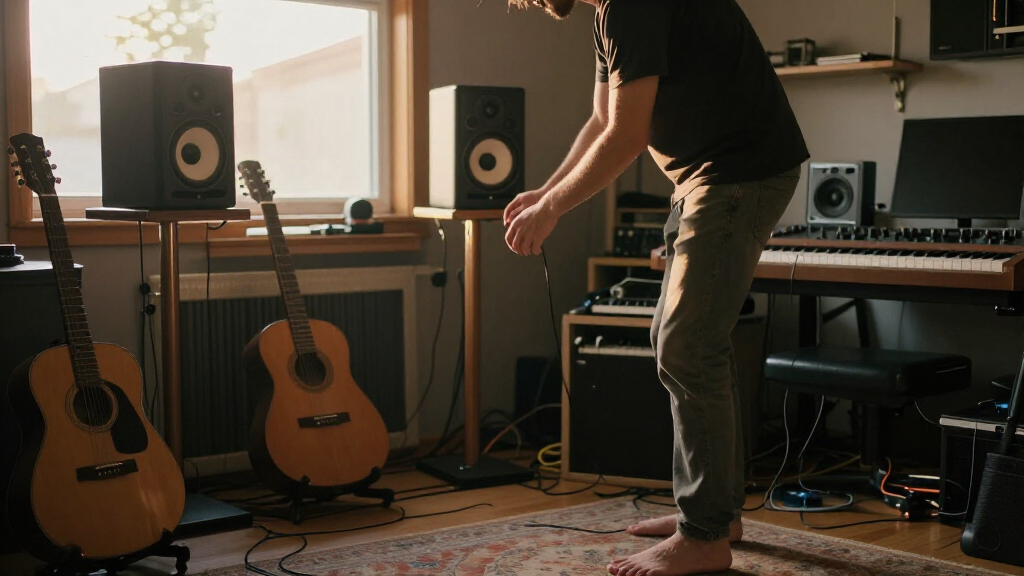
The single most common mistake is buying stands tall enough for standing work when you always sit — or the reverse. Tweeters should sit at ear level, which for a seated mix position typically means stands extended to roughly 36″–42″, while standing desks push that requirement past 48″. Pay attention to adjustment increments too: friction-lock and pin-style stands adjust smoothly, while cheap threaded collars can slip under monitor weight over months of use. If you switch between sitting and standing, only the tallest-ranging options in this roundup — the 29″–53″ tripods — will cover both positions. Buying the wrong range isn’t just inconvenient; it quietly degrades every mix you make because your ears hear a skewed frequency balance off-axis.
Weight Capacity Versus Real Stability
Manufacturers love printing big weight ratings, but an 80 lb capacity tells you almost nothing about whether a stand wobbles with a 20 lb monitor at full height. Stability depends on base geometry, column diameter, and how the extension locks — a wide tripod with rubber feet outperforms a narrow flat base with the same rating. Match capacity to your monitors with generous headroom: an 8″ monitor plus isolation pad can weigh 25–30 lbs, which stresses budget stands designed around bookshelf speakers. Also check whether the top plate includes padding or mounting holes, because a bare metal plate invites vibration and sliding. When in doubt, choose the sturdier stand at the same price — you can always add isolation pads later, but you can’t fix a flexing column.
Tripod Versus Flat Base — and Your Floor
This is the factor most buyers ignore until the stands arrive. Tripod stands handle carpet, uneven floors, and heavy monitors better because their legs spread the load and often feature adjustable or spiked feet. Flat-base stands look cleaner in a small studio and tuck closer to walls, but they demand a level, hard surface to feel planted. Models with both rubber and metal feet, like the taller Vondynote option, give you flexibility if you move studios or change flooring. Also consider foot traffic: tripod legs create a trip hazard and a wider footprint, which matters in tight bedrooms or shared spaces. There’s no universally better design — the right choice depends entirely on the room the stands will live in.
Cable Management and Vibration Control
Cable management sounds like a luxury until you have four cables dangling against hollow metal columns that rattle at 60 Hz. Internal cable channels or routed clips keep signal clean and quiet, and they’re worth paying a small premium for if your stands sit near microphones. On the vibration side, remember that stands mechanically couple your monitors to the floor, which transmits bass into the room and into neighboring spaces. Budget for isolation pads or decoupling feet separately — almost no stand in this price range includes meaningful decoupling. Foam pads under the top plate are the cheapest fix; isolation platforms are the upgrade path. Neither replaces a stable stand, so treat isolation as a supplement, not a substitute.
When to Spend More — and When Not To
In this category, more money mostly buys heavier steel, wider bases, and better hardware, not better sound by itself. Spend more when you run 8″ or larger monitors, work in a standing position, or place stands on carpet — those scenarios expose cheap stands immediately. Save money when you use small 5″ monitors on a hard floor in a fixed seated position, because even the budget picks here will hold them steady. The dead zone is the middle: a moderately priced stand with mediocre engineering often performs no better than the budget option while costing nearly as much as a genuinely heavy-duty one. One final trap — pairs are standard, so if a listing prices a single stand, double-check before comparing, because several near-identical listings in this market differ only in whether you get one or two.
Frequently Asked Questions
How tall should studio monitor stands be for a seated mix position?
For most seated setups, aim for the tweeter at ear level, which usually means stands extended to around 36″–42″ depending on your chair height and torso. Measure from the floor to your ears while seated in your actual mixing chair before ordering, because guessing is how stands end up permanently too short. If you use a standing desk or alternate positions, you’ll need a model reaching at least 48″–50″, which narrows this lineup to the taller tripods and the 33″–51″ Vondynote. Keep in mind that stands get less stable near maximum extension, so buying a stand whose ideal height sits in the middle of its range beats one running at its limit.
Are tripod monitor stands or flat-base stands better for a home studio?
It depends mainly on your floor and space. Tripods win on carpet and uneven surfaces because the legs distribute weight and adjustable feet compensate for slope, but they eat floor space and create leg-level trip hazards in small rooms. Flat-base stands sit closer to walls, look tidier, and feel excellent on level hardwood or concrete, but they can rock on anything imperfect. If your studio doubles as a bedroom or living space, the footprint difference matters more than most buyers expect. For heavy 8″ monitors, lean tripod regardless of floor, since flat bases at tall extensions flex more under top-heavy loads.
Do I still need isolation pads if I buy decent stands?
Usually yes. Stands address height and stability, but they still mechanically couple your monitors to the floor, transmitting low-frequency vibration that muddies bass response and annoys neighbors. None of the budget and mid-range stands in this roundup include real decoupling — the rubber pads on top plates help slightly but aren’t acoustic treatment. A pair of foam isolation pads or a decoupling platform under each monitor tightens up low-end definition for a modest cost. Think of it as a two-part system: the stand positions the monitor correctly, and the pad controls what vibration reaches the structure.
What weight capacity do I actually need for my monitors?
Take your monitor’s published weight, add the weight of any isolation pad, then double it — that’s the minimum capacity I’d accept. A typical 5″ monitor weighs 10–14 lbs per unit, while 8″ models run 20–30 lbs, and heavier monitors stress stands most at full extension, not at the printed rating. Capacity ratings also assume a centered load, so an off-center monitor or a bumped stand effectively reduces the margin. In this lineup, the 80 lb tripod models handle large monitors comfortably, while the lighter flat-base options suit bookshelf-sized monitors. Don’t pay extra for 80 lb capacity if you’re mounting 12 lb monitors, though — spend the difference on stability instead.
Why are there so many similar Vondynote stands, and which one should I pick?
Vondynote sells several overlapping models that differ mainly in height range, base design, and included cable management, which is why three appear in this comparison. The 33″–51″ version with cable management and dual rubber/metal feet is the most versatile pick — it covers standing positions and works on both carpet and hard floors. The shorter floor models make sense only if you’re certain you’ll always mix seated and want to save a little money. Choosing between them comes down to one question: will you ever stand? If yes, take the taller model; if no, the shorter ones do the same job for less. Don’t pay for the middle configuration, since it splits the difference without excelling at either use case.
Conclusion
Matching the stand to your room and monitors matters more than any single brand here. For best overall, the Rockville RVSM1 hits the sweet spot of height range, build quality, and price for typical 5″–7″ monitor setups. For best value, the AxcessAbles pair holds smaller monitors steadily at a budget price and is the obvious first pair for a beginner bedroom studio. For best premium/heavy-duty use, the Heavy-Duty Tripod Stands with their 29″–53″ range and 80 lb capacity are the pick for large monitors, tall rooms, and carpeted floors. For standing setups and cable discipline, the Vondynote 33″–51″ with cable management is the smarter buy among its three sibling models. Finally, if your priority is actually home theater or surround sound rather than mixing, the PERLESMITH fits that job better than any studio-focused option here — but pure studio users should skip it. Whatever you choose, add isolation pads down the road; your low end will thank you.
Halloween Picks
halloween
As an affiliate, we earn on qualifying purchases.