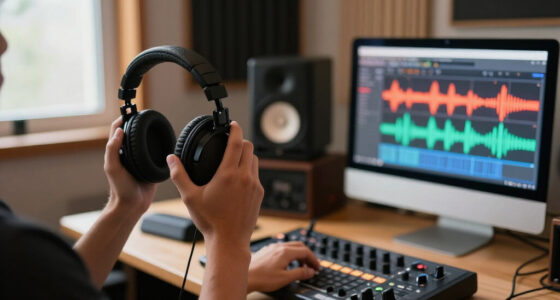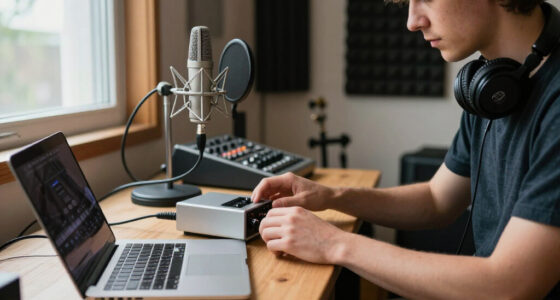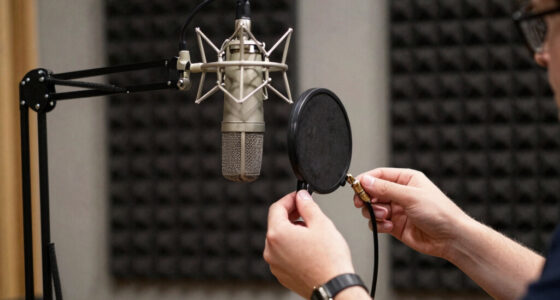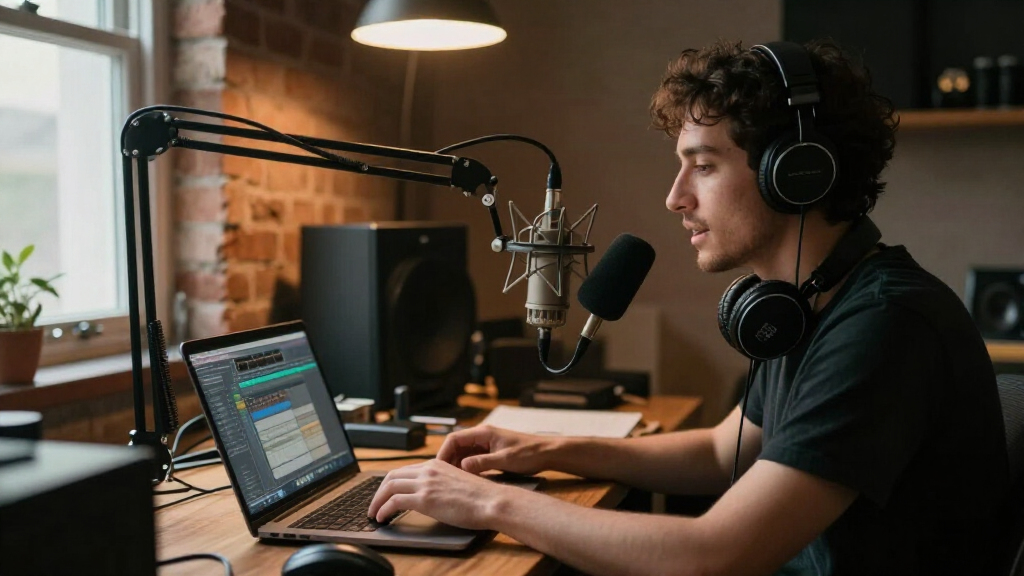

Choosing the right studio microphone for creators comes down to one tradeoff: convenience versus sound quality. USB mics like the Blue Yeti plug straight into your computer and work in minutes, while XLR microphones like the RØDE NT1 Signature Series and Audio-Technica AT2035 need an audio interface but deliver noticeably cleaner, more professional sound. For most creators, the Blue Yeti stands out as the best overall pick because it balances plug-and-play simplicity with versatile pickup patterns and reliable sound for streaming, podcasting, and voiceover work. Hybrid options like the MAONO PD200W and FIFINE AM8 split the difference, offering both USB and XLR outputs so you can start simple and upgrade later without buying a new mic. Room noise is the other big factor — if you record in an untreated space, a dynamic mic will serve you better than a sensitive condenser. Keep reading for the full breakdown of all twelve microphones, including who each one is for and who should skip it.

Get audio and creator gear delivered free with Prime
- Fast, free delivery on millions of items
- Prime Video, Amazon Music and more included
- Member-only deals all year
Complete the kit

Key Takeaways
- Hybrid USB/XLR models (MAONO PD200W, FIFINE AM8, Tonor) dominate the middle of this lineup because they let creators upgrade to an interface later without replacing the microphone itself.
- Condenser mics like the RØDE NT1 and AT2035 sound superior in treated rooms but punish untreated spaces by picking up keyboard clicks, fans, and room echo — a pattern that repeated across every condenser in the comparison.
- The FIFINE K669B proves a usable creator mic can cost under $40, but its fixed stand and limited gain make it a starting point rather than a long-term tool.
- The three Blue Yeti color variants are functionally identical, so the decision between Blackout, Midnight Blue, and Silver comes down purely to price at checkout.
- Kit bundles (FIFINE AM8T, AmpliTank K688CT, and the isolation shield bundle) offer better per-piece value than buying accessories separately, but the included boom arms and filters vary in quality.
| Logitech Blue Yeti USB Microphone (Blackout) | 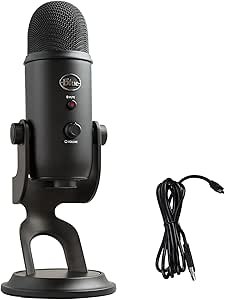 | Best Overall | Pickup Patterns: Cardioid, Omni, Bidirectional, Stereo | Connectivity: USB | Software: Blue VO!CE via Logitech G HUB | VIEW LATEST PRICE | See Our Full Breakdown |
| RØDE NT1 Signature Series Studio Condenser Microphone |  | Best Premium | Connectivity: XLR | Polar Pattern: Cardioid (unidirectional) | Form Factor: Large diaphragm condenser | VIEW LATEST PRICE | See Our Full Breakdown |
| MAONO PD200W Hybrid Wireless Podcast Microphone |  | Best for Flexible Setups | Connectivity: Wireless, USB-C, XLR | Polar Pattern: Cardioid (unidirectional) | Capsule Type: Dynamic | VIEW LATEST PRICE | See Our Full Breakdown |
| FIFINE K669B USB Condenser Microphone |  | Best Value | Connectivity: USB (USB-A and USB-C via included cable) | Polar Pattern: Cardioid (unidirectional) | Form Factor: Desktop condenser | VIEW LATEST PRICE | See Our Full Breakdown |
| Tonor Dynamic Podcast Microphone (XLR/USB) |  | Best for Growing Creators | Outputs: USB and XLR | Polar Pattern: Cardioid | Audio Modes: Bass roll-off, Vocal clarity, Mid-range emphasis | VIEW LATEST PRICE | See Our Full Breakdown |
| FIFINE AmpliGame AM8 USB/XLR Dynamic Microphone |  | Best RGB Streaming Mic | Frequency Response: 50Hz-16KHz | Connection Types: USB, XLR | RGB Lighting: Yes, 3 modes and over 10 colors | VIEW LATEST PRICE | See Our Full Breakdown |
| FIFINE AmpliTank K688CT Podcast Microphone Kit |  | Best Complete Starter Kit | Connectivity: USB and XLR | Microphone Type: Dynamic | Polar Pattern: Cardioid | VIEW LATEST PRICE | See Our Full Breakdown |
| Logitech Blue Yeti USB Microphone (Midnight Blue) |  | Best for Recording Flexibility | Pickup Patterns: Cardioid, Omni, Bidirectional, Stereo | Software: Blue VO!CE effects | Connectivity: USB | VIEW LATEST PRICE | See Our Full Breakdown |
| Audio-Technica AT2035 Cardioid Condenser Microphone |  | Best Pro Studio Upgrade | Connectivity: XLR | Polar Pattern: Cardioid (unidirectional) | Diaphragm: Large diaphragm | VIEW LATEST PRICE | See Our Full Breakdown |
| Upgraded Studio Recording Microphone with Isolation Shield & Pop Filter |  | Best Budget Home Studio Bundle | Polar Pattern: Cardioid | Diaphragm Size: 16mm | Sampling Rate: 192kHz/24Bit | VIEW LATEST PRICE | See Our Full Breakdown |
| Logitech Blue Yeti USB Microphone – Silver |  | Most Versatile Pickup Patterns | Pickup Patterns: Cardioid, Omnidirectional, Bidirectional, Stereo | Microphone Type: Condenser | Connectivity: USB | VIEW LATEST PRICE | See Our Full Breakdown |
| FIFINE AmpliGame AM8T XLR/USB Dynamic Microphone Set |  | Best Streamer Starter Kit | Microphone Type: Dynamic | Polar Pattern: Cardioid | Connectivity: USB-C and XLR | VIEW LATEST PRICE | See Our Full Breakdown |
| studio microphone for creator | Connectivity | Polar Pattern |
|---|---|---|
| Logitech Blue Yeti USB Microph | USB | — |
| RØDE NT1 Signature Series Stud | XLR | Cardioid (unidirectional) |
| MAONO PD200W Hybrid Wireless P | Wireless, USB-C, XLR | Cardioid (unidirectional) |
| FIFINE K669B USB Condenser Mic | USB (USB-A and USB-C via included cable) | Cardioid (unidirectional) |
| Tonor Dynamic Podcast Micropho | — | Cardioid |
| FIFINE AmpliGame AM8 USB/XLR D | — | — |
| FIFINE AmpliTank K688CT Podcas | USB and XLR | Cardioid |
| Logitech Blue Yeti USB Microph | USB | — |
| Audio-Technica AT2035 Cardioid | XLR | Cardioid (unidirectional) |
| Upgraded Studio Recording Micr | USB | Cardioid |
| Logitech Blue Yeti USB Microph | USB | — |
| FIFINE AmpliGame AM8T XLR/USB | USB-C and XLR | Cardioid |
More Details on Our Top Picks
Logitech Blue Yeti USB Microphone (Blackout)
The Blue Yeti remains the default choice for creators because it does almost everything a growing channel demands without extra hardware. Its four pickup patterns — cardioid, omni, bidirectional, and stereo — mean one mic handles solo voiceover, two-person interviews, and room recordings, flexibility that neither the Tonor Dynamic Podcast Mic nor the FIFINE K669B can match. Onboard gain, mute, and headphone volume put real control at your fingertips instead of buried in software. The tradeoff is size: the Yeti is bulky on a small desk, and unlocking its full potential means installing Logitech G HUB, which some users find clunky. For creators who want one mic that grows with them, though, this versatility is worth the footprint.
Pros:- Four pickup patterns cover nearly every recording scenario
- Full onboard control of gain, mute, and monitoring
- Blue VO!CE software adds broadcast-style voice effects
- True plug-and-play setup on PC and Mac
Cons:- Full feature set depends on the G HUB software
- Large footprint crowds small desks
Best for: Streamers and podcasters who want one versatile mic for solo recording, interviews, and multi-person setups
Not ideal for: Minimal desk setups or mobile creators — the size and desktop stand demand dedicated space
- Pickup Patterns:Cardioid, Omni, Bidirectional, Stereo
- Connectivity:USB
- Software:Blue VO!CE via Logitech G HUB
- Onboard Controls:Headphone volume, pattern selection, mute, gain
- Stand:Adjustable desktop stand
- Compatibility:PC, Mac
Our verdict“The safest all-around pick for creators who want maximum versatility from a single USB microphone.”
RØDE NT1 Signature Series Studio Condenser Microphone
This option stands out for creators who have outgrown USB audio entirely. The NT1 Signature Series delivers an exceptionally low 4 dB self-noise, which matters when you’re recording quiet vocal passages or voice-overs where hiss becomes obvious after compression — something the Blue Yeti can’t approach. The bundled shock mount, pop filter, and XLR cable soften the sticker shock, since you’d otherwise buy all three separately. The real tradeoff is the XLR-only design: you’ll need an audio interface or mixer before this mic makes a sound, adding cost and setup complexity that plug-and-play options like the MAONO PD200W avoid. Compared with similar condensers at this price, its warmth and clarity make it better suited to singers and serious voice-over work than desk streaming.
Pros:- Industry-leading 4 dB self-noise for clean, detailed recordings
- Complete kit with shock mount, pop filter, and XLR cable
- Warm, natural tone suited to vocals and instruments
- Professional-grade build for long-term studio use
Cons:- Requires an audio interface or mixer to function
- Premium price with no USB fallback
Best for: Musicians and voice-over artists upgrading to a professional XLR signal chain
Not ideal for: Beginners or anyone without an audio interface — it simply won’t connect to a computer directly
- Connectivity:XLR
- Polar Pattern:Cardioid (unidirectional)
- Form Factor:Large diaphragm condenser
- Self-Noise:4 dBA
- Signal-to-Noise Ratio:78 dB
- Included Accessories:Shock mount, pop filter, XLR cable
Our verdict“The upgrade pick for creators building a permanent studio around pristine vocal capture.”
MAONO PD200W Hybrid Wireless Podcast Microphone
If your content happens away from a desk — walking sets, interview shows, field recording — the PD200W is the only mic in this lineup that cuts the cord entirely. Its triple connectivity (wireless, USB, XLR) means you can start on USB today, move to a 60m wireless range tomorrow, and graduate to an XLR mixer later without buying a new mic, a flexibility the RØDE NT1 can’t offer in reverse. Dual-mic support makes two-person podcasts genuinely simple compared with splitting one condenser between speakers. The tradeoffs are real: it runs on a replaceable C battery, and deeper customization lives inside the MaonoLink app rather than on hardware. As a dynamic mic it also rejects room noise better than the Yeti, making it better suited to untreated spaces.
Pros:- Wireless, USB, and XLR modes in a single microphone
- Up to 60 hours of battery life with a stable 60m wireless range
- Dual-mic support simplifies two-person shows
- Dynamic capsule with noise reduction handles untreated rooms well
Cons:- Runs on a replaceable C battery rather than internal rechargeable cells
- Full customization requires the MaonoLink app
Best for: Podcasters and interview-style creators who need wireless freedom plus a path to XLR
Not ideal for: Studio-only vocal recordists — a condenser like the RØDE NT1 captures finer detail in a treated room
- Connectivity:Wireless, USB-C, XLR
- Polar Pattern:Cardioid (unidirectional)
- Capsule Type:Dynamic
- Wireless Range:Up to 60m
- Battery Life:Up to 60 hours (C battery)
- Signal-to-Noise Ratio:82 dB
- Software:MaonoLink app
Our verdict“The pick for creators whose recording setups move around and who want USB convenience now with XLR headroom later.”
FIFINE K669B USB Condenser Microphone
For creators just starting out, the K669B proves you don’t need to spend much to sound dramatically better than a headset mic. At a fraction of the Blue Yeti’s price, it delivers clear cardioid capture, a metal body, a handy volume knob, and genuine plug-and-play simplicity on PC, Mac, and PlayStation. What you give up is versatility: there’s one pickup pattern, no onboard mute, no software effects suite, and its 16 dB self-noise becomes audible if you crank gain in post-production. Unlike the Tonor Dynamic, there’s no XLR output for future upgrades, so this is a one-way ticket. But for budget streaming, meetings, and first recordings, the sound-to-price ratio here is hard to argue with — it’s the smart entry point, not the destination.
Pros:- Exceptionally low price for genuinely clear vocal capture
- Solid metal construction feels far more durable than the cost suggests
- Plug-and-play on PC, Mac, and PS4/PS5
- Physical volume knob for quick adjustments mid-recording
Cons:- USB-only with no upgrade path to XLR
- Higher self-noise shows up in quiet, processed recordings
Best for: First-time streamers and home-office users who want a big audio upgrade on a tight budget
Not ideal for: Creators planning an XLR upgrade path or recording in noisy rooms — it lacks outputs and room rejection
- Connectivity:USB (USB-A and USB-C via included cable)
- Polar Pattern:Cardioid (unidirectional)
- Form Factor:Desktop condenser
- Frequency Response:20 Hz – 20 kHz
- Signal-to-Noise Ratio:78 dB
- Self-Noise:16 dB
- Compatibility:Laptop, desktop, PS4/PS5
Our verdict“The best cheap way to start sounding professional, as long as you accept its one-pattern, USB-only limits.”
Tonor Dynamic Podcast Microphone (XLR/USB)
This model makes the most sense for the creator in the middle: past the FIFINE K669B budget stage but not ready to commit to an interface-and-condenser rig like the RØDE NT1. Its dual USB and XLR outputs mean you can record over USB today and plug into a mixer later without replacing anything. The standout feature is the trio of EQ modes — bass roll-off, vocal clarity, and mid-range emphasis — plus AI noise reduction, which shape your sound at the mic instead of in editing software. As a dynamic capsule it naturally rejects room noise better than the Yeti’s condenser, a real advantage in untreated bedrooms. Note that no XLR cable is included, so factor that into the true cost of upgrading, and Xbox users are left out entirely.
Pros:- Dual USB and XLR outputs protect your investment as your setup grows
- Three onboard EQ modes plus AI noise reduction tune audio without software
- Dynamic capsule performs well in untreated, noisy rooms
- Direct headphone monitoring with independent volume control
Cons:- XLR cable not included, adding hidden cost to an upgrade
- No Xbox compatibility
Best for: Intermediate creators who want sound shaping today and an XLR upgrade path tomorrow
Not ideal for: Xbox gamers or buyers wanting everything in the box — no XLR cable is included
- Outputs:USB and XLR
- Polar Pattern:Cardioid
- Audio Modes:Bass roll-off, Vocal clarity, Mid-range emphasis
- Noise Reduction:AI noise reduction
- Headphone Jack:3.5mm with volume control
- Compatibility:Computers, PS4, PS5 (USB); sound cards (XLR)
Our verdict“A smart middle-ground mic for creators who want built-in sound shaping and room to grow into an XLR chain.”
FIFINE AmpliGame AM8 USB/XLR Dynamic Microphone
For streamers who want their setup to look as good as it sounds, this option delivers dual USB and XLR connectivity at a budget-friendly price. The tap-to-mute with LED indicator is genuinely useful mid-broadcast, and the built-in headphone jack lets you monitor audio without extra hardware. Compared with the Blue Yeti, the dynamic capsule here rejects keyboard clatter and room echo far better, which matters if you stream in an untreated bedroom rather than a studio. The tradeoff is honesty about its hybrid design: the RGB lighting and touch controls go dark when you switch to XLR, so the fancier features only exist in USB mode. It also skips the boom arm that the FIFINE AmpliTank K688CT includes, so budget for mounting separately.
Pros:- Dual USB and XLR connectivity gives you room to grow into an interface later
- Dynamic capsule rejects background noise better than condenser rivals like the Blue Yeti
- Tap-to-mute with LED indicator is practical for live streaming
- Built-in headphone jack for zero-latency monitoring
Cons:- RGB lighting and some controls are disabled in XLR mode
- No boom arm or XLR cable included, unlike the AmpliTank kit
Best for: Gamers and streamers who want dynamic-mic noise rejection plus visual flair without spending on a full kit
Not ideal for: Creators planning to jump straight to an XLR audio interface — the RGB and touch features are USB-only, and no XLR cable is included
- Frequency Response:50Hz-16KHz
- Connection Types:USB, XLR
- RGB Lighting:Yes, 3 modes and over 10 colors
- Mute Function:Tap-to-mute with LED indicator
- Built-in Headphone Jack:Yes
- Mounting Thread:3/8” and 5/8” metal threads
- Included Accessories:Noise-canceling windscreen
Our verdict“A smart pick for style-conscious streamers who want a dynamic mic today and XLR flexibility tomorrow, as long as they know the fun features are USB-only.”
FIFINE AmpliTank K688CT Podcast Microphone Kit
This is the everything-in-the-box option: microphone, boom arm, shock mount, and windscreen arrive together, which removes the guesswork that trips up most first-time podcasters. Compared with the AmpliGame AM8 from the same brand, the AmpliTank trades RGB lighting for a sturdier mounting ecosystem, making it the more serious choice for recording rather than performing. The 130dB max SPL handling means it will not distort even with loud, expressive voices up close. Like the AM8, though, its function keys die in XLR mode, so gain adjustments on an interface route require physical reach-around adjustments. Input volume also needs careful tuning out of the box — plug it in carelessly and you will wonder why you sound quiet.
Pros:- Complete kit with boom arm, shock mount, and windscreen included
- 130dB SPL handling keeps loud vocals distortion-free
- Dual USB and XLR connectivity supports a gradual upgrade path
- Dynamic capsule with shock mount minimizes desk thumps and vibrations
Cons:- Onboard function keys are disabled when using XLR
- Requires careful input gain adjustment to sound its best
Best for: New podcasters and streamers who want a boom arm, shock mount, and mic in one purchase instead of piecing together a setup
Not ideal for: Interface-based creators who need onboard controls — the function keys only work over USB, and fine gain control requires fiddling
- Connectivity:USB and XLR
- Microphone Type:Dynamic
- Polar Pattern:Cardioid
- Maximum SPL:130dB
- Included Accessories:Boom arm, shock mount, windscreen
- Compatibility:Computers and audio interfaces
Our verdict“The most convenient one-click entry point into podcasting, ideal for anyone who would rather start recording this week than research boom arms.”
Logitech Blue Yeti USB Microphone (Midnight Blue)
The Yeti’s four selectable pickup patterns set it apart from everything else in this lineup — no other pick here can record an omni room, a two-person interview, and a solo narration without changing hardware. That flexibility is why it remains the default creators’ mic. Paired with Blue VO!CE software effects, you get broadcast-style voice processing without buying plugins. The catch is physics: as a large condenser, it picks up everything, from fridge hum to mechanical keyboards, which is exactly what dynamic options like the FIFINE AmpliTank are built to avoid. It is also physically large and the included desktop stand eats real estate — most buyers end up adding a boom arm anyway, which erodes its value advantage.
Pros:- Four pickup patterns cover solo, interview, stereo, and room recording in one mic
- Blue VO!CE software adds polished voice effects for free
- Plug-and-play USB setup with full onboard gain, mute, and monitoring controls
Cons:- Condenser design is highly sensitive to background noise
- Bulky body and desktop stand consume serious desk space, often requiring an added boom arm
Best for: Creators who record varied formats — interviews, multi-person podcasts, field-style captures — and work in a quiet, treated space
Not ideal for: Streamers in noisy rooms or shared households — the condenser capsule captures every background sound a dynamic mic would ignore
- Pickup Patterns:Cardioid, Omni, Bidirectional, Stereo
- Software:Blue VO!CE effects
- Connectivity:USB
- Onboard Controls:Headphone volume, pattern selection, mute, mic gain
- Included Accessories:Desktop stand
- Color:Midnight Blue
Our verdict“Still the most versatile USB mic for multi-format creators, provided your recording space is quiet enough to let that condenser shine.”
Audio-Technica AT2035 Cardioid Condenser Microphone
This is the pick for creators who have outgrown USB entirely. The large-diaphragm condenser design produces a warmth and detail that USB mics in this roundup, including the Blue Yeti, approximate but never quite match — and the included custom shock mount alone would cost real money separately. The switchable high-pass filter and 10dB pad translate directly into cleaner recordings, taming rumble and handling loud sources without distortion. The tradeoff is infrastructure: it needs phantom power and an XLR interface, so the true cost is mic plus interface plus cable. If you already own or plan to buy an interface like the ones the FIFINE AM8 teases, this is the natural endpoint of that upgrade path.
Pros:- Large-diaphragm condenser delivers noticeably richer, more natural vocals than USB rivals
- Switchable high-pass filter and pad handle everything from whispered VO to loud sources
- Custom shock mount and protective pouch included
- Built to professional durability standards with metal construction
Cons:- XLR only — requires an audio interface with phantom power, adding to total cost
- Higher price than entry-level options before you even buy the interface
Best for: Serious podcasters and vocalists who already own an audio interface and want genuine studio-grade sound for the long term
Not ideal for: Beginners and plug-and-play streamers — no USB option, and the phantom power requirement means extra hardware and cost
- Connectivity:XLR
- Polar Pattern:Cardioid (unidirectional)
- Diaphragm:Large diaphragm
- Audio Sensitivity:33 dB
- Signal-to-Noise Ratio:70 dB
- Self Noise:10 dB
- Power Source:48V phantom power required
- Includes:Protective pouch, custom shock mount
Our verdict“The definitive next step once you are committed to an interface-based studio, offering sound quality USB mics in this list cannot reach.”
Upgraded Studio Recording Microphone with Isolation Shield & Pop Filter
What makes this bundle interesting is not the mic — it is the 27.5-inch foldable isolation shield, which attacks the single biggest problem in home recording: untreated room reflections. No other product here includes acoustic treatment of any kind, so if your recordings sound echoey, this solves it in one purchase. The mic itself records at 192kHz/24-bit over USB with plug-and-play simplicity across PC, phone, and laptop. Compared with the Blue Yeti, you give up pickup pattern flexibility and brand pedigree, but gain a treated recording environment. The limitation is hard USB lock-in: there is no XLR path whatsoever, so when you eventually upgrade interfaces, this entire kit becomes redundant rather than transferable.
Pros:- Foldable isolation shield meaningfully reduces room reflections and echo
- 192kHz/24-bit recording quality exceeds typical budget USB mics
- Works plug-and-play with PC, laptop, and even smartphones
- Complete bundle with pop filter and accessories covers most recording scenarios
Cons:- USB-only with no XLR option, capping its long-term upgrade potential
- The isolation shield is bulky and dominates smaller desks or spaces
Best for: Home recordists in echoey, untreated rooms who want acoustic isolation and a full accessory bundle on a tight budget
Not ideal for: Creators planning an XLR upgrade path — the USB-only design means nothing here carries forward to an interface-based studio
- Polar Pattern:Cardioid
- Diaphragm Size:16mm
- Sampling Rate:192kHz/24Bit
- Frequency Response:30Hz-16kHz
- Connectivity:USB
- Isolation Shield Size:27.55in x 10.23in
- Color Options:Black, Rose Gold, White
- Weight:4.1 lbs
Our verdict“A smart buy for anyone whose recordings suffer from bad room acoustics, as long as USB-only connectivity matches your long-term plans.”
Logitech Blue Yeti USB Microphone – Silver
The Blue Yeti earns its place as the most versatile all-rounder for creators who don’t know exactly what they’ll be recording next month. Its four switchable pickup patterns — cardioid, omni, bidirectional, and stereo — mean one mic can handle a solo podcast, a two-person interview, room ambience, or acoustic instruments without buying extra gear. Compared with the FIFINE AmpliGame AM8T, which locks you into a single cardioid pattern, the Yeti trades that simplicity for genuine flexibility. The onboard headphone jack and gain dial also put zero-latency monitoring at your fingertips, and Blue VO!CE effects add broadcast-style processing for free. The catch: it’s a condenser mic, so it happily captures your keyboard, fan, and echoey room. And while other silver-colored Yetis in this roundup share the same hardware, this version’s desktop stand is bulky and there’s no XLR escape hatch when you eventually outgrow USB.
Pros:- Four pickup patterns cover solo, interview, room, and stereo recording
- Blue VO!CE software adds broadcast-quality voice effects at no extra cost
- Onboard gain control and zero-latency headphone monitoring
- True plug-and-play on both PC and Mac with no drivers needed
Cons:- Condenser capsule is unforgiving in untreated or noisy rooms
- Full feature set requires installing Logitech G HUB software
- Bulky desktop stand eats desk space and USB-only output caps future upgrades
Best for: Multi-format creators who record solo podcasts, interviews, and music in a treated or quiet room and want one mic for everything
Not ideal for: Streamers in untreated, noisy rooms — the condenser capsule will pick up every fan, click, and background sound a dynamic mic would ignore
- Pickup Patterns:Cardioid, Omnidirectional, Bidirectional, Stereo
- Microphone Type:Condenser
- Connectivity:USB
- Software:Blue VO!CE via Logitech G HUB
- Included Stand:Desktop tripod stand
- Compatibility:PC and Mac
Our verdict“Buy the Yeti if your recording style changes week to week; skip it if you stream in a noisy, untreated room.”
FIFINE AmpliGame AM8T XLR/USB Dynamic Microphone Set
The FIFINE AmpliGame AM8T is the rare budget kit that anticipates a creator’s entire upgrade path. Because it offers both USB and XLR outputs, you can start plug-and-play today and later move to an audio interface without replacing the mic — a flexibility the FIFINE K669B, which is USB-only, simply can’t match. The dynamic cardioid capsule also does what the Blue Yeti can’t in a typical bedroom setup: it rejects keyboard clatter and room echo, which is why so many streamers favor dynamics. FIFINE includes a boom arm, clamp, and USB-C cable in the box, where most competitors make you buy the arm separately, and the mute tap plus gain dial sit right on the mic body. Tradeoffs are real, though — there’s no XLR cable included, the clamp only fits desks under 2 inches thick, and a single cardioid pattern means no interview or stereo modes.
Pros:- Dual USB and XLR outputs protect your investment as your setup grows
- Dynamic capsule naturally rejects keyboard noise and room echo
- Boom arm, clamp, and USB-C cable included — a complete kit at the price others charge for a mic alone
- On-mic mute button and gain control keep adjustments instant mid-stream
Cons:- XLR cable not included, adding an extra purchase for interface users
- Desk clamp only fits desktops up to 2 inches thick
- Software and gain configuration can feel fiddly for first-time users
Best for: New streamers and podcasters on a budget who want a dynamic mic, boom arm, and a built-in XLR upgrade path in one box
Not ideal for: Creators who need multi-person or stereo recording — the fixed cardioid pattern only captures sound from the front
- Microphone Type:Dynamic
- Polar Pattern:Cardioid
- Connectivity:USB-C and XLR
- Sensitivity:-50dB
- Included Accessories:Boom arm stand, desk C-clamp, USB-C cable, user manual
- Desk Clamp Compatibility:Desktop thickness up to 2 inches
- RGB Lighting:Yes
- Adjustability:Microphone angle adjustment supported
Our verdict“The smartest first microphone for streamers who want room-noise rejection today and an XLR upgrade path tomorrow.”

How We Picked
I evaluated each microphone against five criteria that matter most to creators: sound quality for voice, ease of setup, versatility across content types, build quality, and value relative to total cost of ownership. Sound quality was judged on how each mic handles spoken voice — the dominant use case for streamers, podcasters, and YouTubers — rather than music recording alone. Setup ease weighed whether a mic works immediately over USB or requires an interface, preamp, and gain staging knowledge.
Versatility considered whether a mic supports multiple connection types, onboard monitoring, and controls like gain dials and mute buttons. Total cost of ownership mattered too: an XLR mic’s real price includes an interface and cables, which changes the value math against USB competitors. The ranking favors mics that grow with a creator’s setup — hybrids and well-equipped kits rank above one-trick options, and untreated-room-friendly dynamics rank above condensers for typical home studios.
| studio microphone for creator | Connectivity | Polar Pattern |
|---|---|---|
| Logitech Blue Yeti USB Microph | USB | — |
| RØDE NT1 Signature Series Stud | XLR | Cardioid (unidirectional) |
| MAONO PD200W Hybrid Wireless P | Wireless, USB-C, XLR | Cardioid (unidirectional) |
| FIFINE K669B USB Condenser Mic | USB (USB-A and USB-C via included cable) | Cardioid (unidirectional) |
| Tonor Dynamic Podcast Micropho | — | Cardioid |
| FIFINE AmpliGame AM8 USB/XLR D | — | — |
| FIFINE AmpliTank K688CT Podcas | USB and XLR | Cardioid |
| Logitech Blue Yeti USB Microph | USB | — |
| Audio-Technica AT2035 Cardioid | XLR | Cardioid (unidirectional) |
| Upgraded Studio Recording Micr | USB | Cardioid |
| Logitech Blue Yeti USB Microph | USB | — |
| FIFINE AmpliGame AM8T XLR/USB | USB-C and XLR | Cardioid |
Factors to Consider When Choosing Studio Microphone For Creators
Before picking a microphone from this list, it helps to understand the bigger picture — connection types, room acoustics, and the hidden costs that don’t appear on the product page. These are the factors that separate a satisfying purchase from an expensive mistake.USB, XLR, or Hybrid: The Decision That Shapes Everything Else
The single biggest choice is how the microphone connects, because it determines your total cost and upgrade path. USB mics are ready the moment you plug them in, which makes them ideal for beginners and anyone who records away from a desk setup. XLR mics require an audio interface (typically $100–$200 extra) but unlock professional preamps, hardware monitoring, and compatibility with mixers used in podcast studios. Hybrid mics with both outputs are the pragmatic middle path — start on USB today, add an interface next year, and keep the same mic throughout. The common mistake here is buying a cheap XLR mic without budgeting for the interface, then discovering the mic sounds thin running through an underpowered preamp. If you can only afford one purchase this year, a hybrid or USB mic is almost always the safer call.
Dynamic vs. Condenser: Your Room Decides for You
Many buyers assume condenser mics are simply ‘better’ because studios use them, but that logic only holds in acoustically treated rooms. Condensers capture fine detail and airiness, yet they also capture refrigerators, air conditioning, keyboard clacks, and echo from bare walls. Dynamic mics are less sensitive, which means they reject room noise and force that broadcast-quality ‘close-up’ sound when you speak right into them. If you record in a bedroom, dorm, or shared apartment, a dynamic mic will sound cleaner with zero acoustic treatment. Creators with foam panels, carpets, and quiet HVAC can absolutely justify a condenser like the NT1 or AT2035. The mistake to avoid: buying a sensitive condenser for a noisy space and fighting background hum in every editing session.
The Real Cost of Ownership Beyond the Mic
Sticker price rarely reflects what you’ll actually spend. An XLR microphone needs an interface, an XLR cable, and often a boom arm to position it correctly. Bundled kits look like upsells but frequently undercut the cost of buying a decent boom arm, shock mount, and pop filter separately — this is why kit options rank well in this roundup. Budget another $40–$80 for acoustic treatment (foam panels, a thick rug, curtains) if you’re buying a condenser. Headphone monitoring matters too: mics with a built-in headphone jack let you hear yourself latency-free, which prevents the common beginner problem of drifting volume mid-recording. Before checkout, tally the complete setup cost, not just the microphone price.
Onboard Controls: Small Features That Change Daily Use
Features that seem minor on a spec sheet become daily frustrations or conveniences. A hardware mute button is invaluable for streamers who need to silence coughs and doorbells instantly — software muting always lags a beat. A gain dial on the mic itself saves you from digging into settings every time you change distance or speaking volume. A headphone volume knob with direct monitoring prevents latency-driven echo in your own ears. Touch-sensitive mutes and RGB lighting are nice-to-haves, but tactile buttons work better when your hands are busy. Compare the Yeti’s full control set against the FIFINE K669B’s single gain knob and you’ll see why control layout affects rank as much as raw sound quality.
Matching the Mic to Your Content Type
Voice work is not one-size-fits-all. Streamers benefit from dynamic mics with tap-to-mute because they sit close and need fast control during live sessions. Podcasters recording multiple people should think about how many mic inputs their interface supports and whether they’ll ever need a mixer. Voiceover and music creators get more from condensers, since nuance and tonal detail carry the performance. Mobile or roving creators should look at wireless-capable options like the MAONO PD200W, which frees you from the desk entirely. Buying a mic designed for your actual format — rather than the most popular one on the market — is the difference between equipment you use daily and equipment you replace in six months.
When to Pay More (and When Not To)
The law of diminishing returns hits microphones hard. Moving from a $35 mic to a $100 mic yields an obvious, audible improvement; moving from $100 to $300 yields a subtler one that mostly matters once your room and editing skills catch up. Pay more when you have a treated space, an interface with clean preamps, and an audience large enough that audio quality directly affects retention. Don’t pay more if you’re still figuring out your content format — a solid hybrid mic under $100 will outlast your beginner phase and hold resale value. Another trap: premium XLR bundles that include mediocre accessories. Sometimes a mid-range mic with a great boom arm beats a great mic on a wobbly desk stand. Spend where it changes what you hear, not where it just changes the box it comes in.
Frequently Asked Questions
Do I need an audio interface, or is USB enough for creator work?
For most solo creators — streamers, YouTubers, and podcasters recording one voice — a good USB or hybrid mic is genuinely enough, and audiences will not hear the difference on compressed platforms like YouTube or Twitch. An interface becomes worthwhile when you want to run multiple microphones at once, use professional preamps, record music instruments, or integrate with a hardware mixer for live podcast production. Hybrid mics like the FIFINE AM8 or MAONO PD200W are the smart hedge: use USB now, add an interface when your needs genuinely outgrow it. What you shouldn’t do is buy a cheap XLR mic and plug it into a low-quality interface — the preamp will introduce noise that erases the sound advantage you paid for. Let your workflow, not marketing, make this call.
Why does my Blue Yeti pick up so much background noise?
The Yeti is a condenser mic with multiple pickup patterns, and on the default cardioid or stereo settings it captures a wide slice of your room along with your voice. Speak within 4–6 inches of the capsule, switch to cardioid mode (not omnidirectional or bidirectional), and turn the onboard gain down — most noise complaints trace back to gain set high while sitting a foot away. Adding a boom arm reduces desk vibration and keyboard rumble dramatically, more effectively than a pop filter does. If your space is genuinely loud — fans, street noise, hard floors — a dynamic mic like the Tonor or FIFINE AM8 will reject that environment far better than any settings tweak on a condenser. The mic isn’t broken; it’s just built for quieter rooms than most people have.
Are the different Blue Yeti color versions actually different microphones?
No — the Blackout, Midnight Blue, and Silver Yeti models in this roundup are identical in capsule, circuitry, pickup patterns, and controls. The only differences are cosmetic, and occasionally the price, since color availability shifts with stock. If you’re comparing them side by side while shopping, the right move is simply to buy whichever color is cheapest or matches your setup, because you are getting the same microphone either way. This matters for the ranking too: the Yeti earns its spot on merit once, not three times. The money you save choosing a discounted color is better spent on a boom arm or acoustic foam, both of which will improve your sound more than any colorway ever could.
Is a microphone kit with a boom arm and pop filter worth it over buying separately?
Kits usually win on pure economics — a bundle like the FIFINE AM8T or AmpliTank K688CT typically costs less than the mic plus a separately purchased boom arm and filter. The tradeoff is consistency: bundled accessories are decent but rarely great, so a kit boom arm may sag under a heavier mic or transmit desk bumps that a premium arm would isolate. If you’re starting from zero, a kit is almost always the right first purchase because it gets you a complete, functional setup in one order. If you already own a solid boom arm and shock mount, buying the mic alone and skipping redundant accessories makes more sense. Check exactly what’s included before assuming a kit covers everything — some skip the shock mount or ship a short USB cable that limits placement.
Can I really get broadcast-quality sound in an untreated bedroom?
Yes, but the microphone type does most of the work, not your room. A dynamic mic used close-up — 2 to 4 inches from your mouth — naturally ignores the echo and background noise that plague untreated spaces, which is why radio stations historically used dynamics in imperfect booths. Add cheap physical treatment like a thick rug, curtains, and recording facing a closet full of clothes, and a $70–$100 dynamic mic can sound remarkably close to studio quality. An isolation shield can help a condenser, but it only treats sound hitting the capsule, not the reflections behind and beside you, so it’s a partial fix. The realistic upgrade path is: dynamic mic first, acoustic treatment second, condenser last — reversing that order is the most common (and most expensive) mistake creators make.
Conclusion
After comparing all twelve microphones, the right choice depends less on specs and more on your room, your workflow, and where you are in your creator journey. Best overall goes to the Blue Yeti — its pattern selection, onboard controls, and dependable sound make it the safest single purchase for the widest range of creators. Best value is the FIFINE AM8, which packs USB/XLR flexibility and a mute button into a price that undercuts mics with half its feature set. Best premium belongs to the RØDE NT1 Signature Series, which rewards treated rooms and an interface with genuinely professional-grade voice capture.
For beginners, the FIFINE K669B gets you recording for under $40, while the Tonor dynamic mic is the better beginner pick if your space is noisy. For specific needs: the MAONO PD200W for creators who want wireless freedom, the AmpliTank K688CT and AM8T for anyone who wants a complete kit in one box, and the AT2035 for vocal and music work beyond spoken content. Whatever you pick, remember that mic placement and a quiet room will shape your sound more than the last $100 of your budget — buy the microphone that fits how you actually record, and upgrade your space before you upgrade your gear.
Fall Picks
fall essentials
As an affiliate, we earn on qualifying purchases.