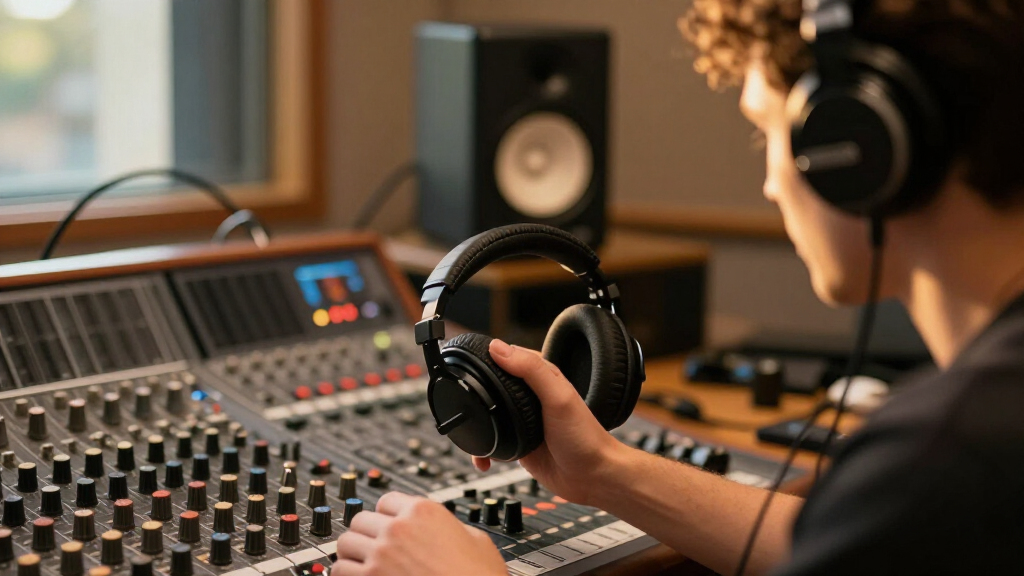
Wireless studio headphones have to solve a problem regular Bluetooth headphones don’t: they need to sound accurate enough for mixing while cutting the cable. The AIAIAI TMA-2 Studio Wireless takes the top spot because it was designed for exactly this job, with a modular build and a tuning aimed at producers rather than casual listeners. The Audio-Technica ATH-M50XBT2 is the strongest all-rounder for anyone who already trusts the wired M50x sound, while the OneOdio Studio Max 2 stands out on the budget end thanks to 9ms low-latency wireless that keeps timing tight during tracking. The main tradeoffs in this category come down to latency versus convenience, Bluetooth coloration versus flat response, and whether a wired mode is included as a fallback for critical mixing. Read on for the full breakdown of all nine models.

Get audio and creator gear delivered free — and shop member deals
- Fast, free delivery on millions of items
- Access to Prime Big Deal Days deals on October 6–7
- Prime Video, Amazon Music and more included
Complete the kit


Key Takeaways
- True studio-grade accuracy remains rare in wireless models; only the AIAIAI TMA-2 Studio and ATH-M50XBT2 carry a tuning that translates reliably to a mixdown.
- Latency was the biggest differentiator at the budget end — the OneOdio Studio Max 2’s 9ms low-latency mode makes it far more usable for tracking than standard Bluetooth rivals.
- Every serious pick here includes a wired option, and that fallback matters more than any wireless feature when it’s time to finalize a mix.
- The Beats Studio Pro is the most consumer-flavored of the nine: great for reference listening on the move, weakest for neutral mixing decisions.
- The two OneOdio A70 variants (Silver and Black) are identical apart from color, so the choice between them is purely cosmetic — sizing up to the Studio Max line buys real studio features.
| AIAIAI TMA-2 Studio Wireless Over-Ear Headphones (Black) |  | Best Overall | Brand: AIAIAI | Model: TMA-2 Studio Wireless | Form Factor: Over-ear | VIEW LATEST PRICE | See Our Full Breakdown |
| OneOdio A70 Bluetooth Over-Ear Headphones, Hi-Res Wired DJ Studio – Silver |  | Best Wired-First Hybrid | Driver: 40mm neodymium | Material: Aluminum fascia | Wireless Playtime: 72 hours | VIEW LATEST PRICE | See Our Full Breakdown |
| OneOdio Studio Max 1 Wireless DJ & Wired Studio Headphones |  | Best Battery Life | Driver Size: 50mm | Latency: 20ms | Bluetooth: 5.3 | VIEW LATEST PRICE | See Our Full Breakdown |
| Audio-Technica ATH-M20xBT Wireless Over-Ear Headphones, Black |  | Best for Neutral Monitoring | Brand: Audio-Technica | Model: ATH-M20xBT | Color: Black | VIEW LATEST PRICE | See Our Full Breakdown |
| OneOdio A70 Bluetooth Over-Ear Headphones, Hi-Res Wired DJ Studio – Black | 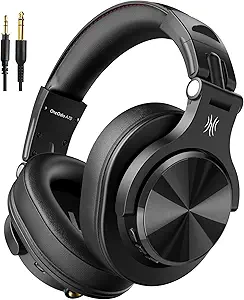 | Best Budget Starter Pair | Model: A70 | Color: Black | Connection: Bluetooth and wired (3.5mm/6.35mm) | VIEW LATEST PRICE | See Our Full Breakdown |
| PUPGSIS 2.4GHz Wireless DJ Headphones, Black |  | Best Budget Triple-Mode Pick | Connection Modes: 2.4GHz Wireless, Bluetooth 5.3, AUX Wired | Latency: 20ms (2.4G mode) | Battery Life: 60H Bluetooth / 30H 2.4G dongle | VIEW LATEST PRICE | See Our Full Breakdown |
| Audio-Technica ATH-M50XBT2 Wireless Headphones, Black |  | Best Trusted Studio Sound | Driver Size: 45mm with dedicated amplifier | Battery Life: Up to 50 hours | Rapid Charge: 3 hours use from 10-minute charge | VIEW LATEST PRICE | See Our Full Breakdown |
| OneOdio Studio Max 2 Wireless DJ Headphones with 9ms Low Latency and LDAC |  | Best Overall for Wireless DJ Work | Latency: 9ms (RapidWill+ 3.0) | Audio Codecs: LDAC Hi-Res | Driver Size: 45mm high-flux | VIEW LATEST PRICE | See Our Full Breakdown |
| Beats Studio Pro Wireless Over-Ear Headphones – Black | 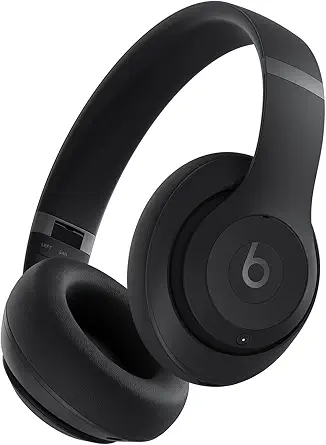 | Best for ANC and Cross-Platform Comfort | Battery Life: Up to 40 hours | Fast Fuel Charging: 10-minute charge provides up to 4 hours playback | Noise Cancelling: ANC with Transparency mode | VIEW LATEST PRICE | See Our Full Breakdown |
| wireless studio headphone | Battery Life | Design |
|---|---|---|
| AIAIAI TMA-2 Studio Wireless O | 20+ hours | — |
| OneOdio A70 Bluetooth Over-Ear | — | — |
| OneOdio Studio Max 1 Wireless | 120 hours (Bluetooth), 50 hours (dongle) | 180° rotating ear cups, foldable, adjustable metal headband |
| Audio-Technica ATH-M20xBT Wire | — | Circumaural |
| OneOdio A70 Bluetooth Over-Ear | Up to 72 hours (wireless) | Over-ear, foldable, rotatable |
| PUPGSIS 2.4GHz Wireless DJ Hea | 60H Bluetooth / 30H 2.4G dongle | — |
| Audio-Technica ATH-M50XBT2 Wir | Up to 50 hours | — |
| OneOdio Studio Max 2 Wireless | 120 hours | Over-ear, 180° swivel earcups, memory foam |
| Beats Studio Pro Wireless Over | Up to 40 hours | Over-ear with UltraPlush cushions |
More Details on Our Top Picks
AIAIAI TMA-2 Studio Wireless Over-Ear Headphones (Black)
For a roundup about wireless studio headphones, the TMA-2 Studio Wireless is the model that takes the brief most seriously. Its W+ Link connection keeps latency under 10ms, which is close enough to a cable that tracking and mixing decisions stay honest — something the AIAIAI achieves more cleanly than the OneOdio Studio Max 1, which needs a dongle to hit its 20ms figure. Compared with the Audio-Technica ATH-M20xBT, the tradeoffs are clear: you give up the M-series’s familiar neutral tuning for a more detailed, frequency-separated presentation that you can reshape through the AIAIAI app EQ. Memory foam cushions and a padded headband make long sessions survivable, and the detachable cable means a dead battery never ends a session. The catch is that W+ Link may demand a transmitter your setup doesn’t include, and the app requirement annoys anyone who wants plug-and-play.
Pros:- Ultra-low latency under 10ms via W+ Link for cable-like wireless monitoring
- 20+ hours of playback with a detachable cable as a permanent wired backup
- Memory foam cushions and padded headband comfortable for long sessions
- Balanced, detailed sound with EQ customization through the AIAIAI app
Cons:- EQ customization requires the AIAIAI app rather than onboard controls
- W+ Link may require a compatible transmitter not included in all setups
Best for: Producers and engineers who want cable-like wireless latency for tracking and mixing without abandoning a wired fallback
Not ideal for: Buyers who want everything in the box — the W+ Link transmitter isn’t guaranteed to be part of every setup, adding potential cost and complexity
- Brand:AIAIAI
- Model:TMA-2 Studio Wireless
- Form Factor:Over-ear
- Connectivity:W+ Link, Bluetooth, detachable cable
- Latency:Under 10ms (W+ Link)
- Battery Life:20+ hours
- Ear Cushions:Memory foam with PU leather
- EQ App:AIAIAI app
Our verdict“If wireless latency has kept you tethered to a cable, this is the pair that finally earns its place in a studio.”
OneOdio A70 Bluetooth Over-Ear Headphones, Hi-Res Wired DJ Studio – Silver
Where the AIAIAI TMA-2 leads with wireless sophistication, the A70 in Silver flips the priority: it behaves like a wired DJ headphone that happens to have Bluetooth. The included 6.35mm and 3.5mm cables plus a jack lock mean it plugs straight into mixers and interfaces with a rock-solid connection, and the 72-hour wireless battery exists mostly as insurance. Its 40mm neodymium drivers lean bass-forward — a tuning that suits cueing tracks in a booth more than critical mixing, where the Audio-Technica ATH-M20xBT’s cleaner mid-range is the safer tool. The audio sharing feature is a genuine differentiator, letting a second person plug in without an adapter hunt. Be aware that modern phones and laptops without headphone jacks will send you digging for dongles.
Pros:- 72 hours of wireless playtime plus unlimited wired use
- 6.35mm and 3.5mm cables included with a jack lock for stable connections
- Hi-Res sound with powerful bass from 40mm neodymium drivers
- Audio sharing feature lets multiple people listen together
Cons:- Wired connection may require adapters for some modern devices
- Bulky over-ear design that isn’t built for commuting or travel
Best for: DJs and home studio owners anchored to mixers, interfaces, and 6.35mm gear who still want occasional Bluetooth freedom
Not ideal for: Users of jack-less phones and laptops — the wired mode that defines this headphone demands adapters on modern devices
- Driver:40mm neodymium
- Material:Aluminum fascia
- Wireless Playtime:72 hours
- Connectivity:Bluetooth, 6.35mm to 3.5mm cable, 3.5mm to 3.5mm cable
- Color:Silver
- Included Cables:6.35mm-to-3.5mm and 3.5mm-to-3.5mm audio cables
Our verdict“A wired-first workhorse with Bluetooth as a bonus — ideal when the booth or desk, not the battery, defines your workflow.”
OneOdio Studio Max 1 Wireless DJ & Wired Studio Headphones
The Studio Max 1 competes directly with the A70, and the differences matter: 50mm drivers instead of 40mm, Bluetooth 5.3 with LDAC certification, and a staggering 120 hours of playback — nearly double the A70’s already generous figure. The 20ms low-latency transmitter brings it closer to the AIAIAI TMA-2’s wireless performance, though you’re carrying an extra dongle to get it, where the AIAIAI’s W+ Link feels more integrated. Rotating ear cups and a foldable metal headband make it a natural fit for DJ booths, and the 5-minute quick charge erases battery anxiety entirely. The honest weakness is isolation: passive sealing only, no ANC, so loud environments will bleed in, and anyone comparing it to the ath-m50xBT2’s sealed monitoring character should temper expectations.
Pros:- Exceptional 120-hour Bluetooth battery with 5-minute quick charge yielding 5 hours
- 20ms low latency well suited to DJ mixing and gaming
- Hi-Res Audio and LDAC support with large 50mm drivers
- Foldable design with 180° rotating ear cups and a travel case included
Cons:- 20ms latency depends on a transmitter dongle, an extra accessory to keep track of
- Noise isolation relies on passive cushion sealing rather than active cancellation
Best for: DJs, gamers, and long-session producers who want maximum runtime, LDAC quality, and low latency without daily charging
Not ideal for: Anyone monitoring in loud rooms — passive isolation without ANC lets ambient noise into the mix decisions
- Driver Size:50mm
- Latency:20ms
- Bluetooth:5.3
- Battery Life:120 hours (Bluetooth), 50 hours (dongle)
- Quick Charge:5 minutes = 5 hours
- Audio Certifications:Hi-Res Audio, LDAC, LC3 decoding
- Wired Connections:3.5mm/6.35mm cables, screw-in adapter
- Microphone:Dual-mic ENC
- Design:180° rotating ear cups, foldable, adjustable metal headband
Our verdict“The endurance champion of this lineup — best for people whose sessions outlast everyone else’s battery.”
Audio-Technica ATH-M20xBT Wireless Over-Ear Headphones, Black
This is the pick for buyers who care about tuning first, features second. The ATH-M20xBT inherits the M-series’s mid-range-focused, honest presentation, which makes it a better reference for mixing decisions than the bass-tilted OneOdio A70 or the v-shaped character of consumer models like the Beats Studio Pro. Its circumaural design contours around the ears for genuinely strong passive isolation — enough that I’d rank it above the Studio Max 1 for blocking out room noise without any DSP tricks. The collapsible build makes it a reasonable commuter option too. The frustration is transparency: no official battery or charging figures, which is a real problem when every competitor here publishes runtime specs you can plan sessions around. Compared with its sibling, the ATH-M50XBT2 offers fuller detail retrieval, but at a steep step up in cost.
Pros:- Circumaural design delivers excellent passive sound isolation
- Detailed audio with strong mid-range definition suited to mixing
- Collapsible design makes it portable enough for travel
- Quality 40mm drivers with rare earth magnets
Cons:- No battery life or charging details provided by the manufacturer
- Feature set is bare-bones next to app-driven rivals like the AIAIAI TMA-2
Best for: Mixing-focused producers and podcasters who want a trustworthy neutral reference with strong passive isolation at a moderate price
Not ideal for: Buyers who need predictable runtime — the absence of official battery and charging specs makes session planning a gamble
- Brand:Audio-Technica
- Model:ATH-M20xBT
- Color:Black
- Type:Wireless over-ear
- Driver Size:40mm
- Design:Circumaural
- Portability:Collapsible
Our verdict“The safest tuning reference in this batch — choose it when honest mids matter more than spec-sheet extras.”
OneOdio A70 Bluetooth Over-Ear Headphones, Hi-Res Wired DJ Studio – Black
This is essentially the same A70 hardware as the Silver model, so the buying question is simpler than it looks: if the core package — 72-hour battery, dual-mode wired/wireless operation, 40mm neodymium drivers — fits your needs, color becomes the deciding factor. I’d steer beginners here rather than toward the Studio Max 1, because the included 3.5mm and 6.35mm cables teach you the wired workflow every studio eventually demands, without paying for LDAC or a latency dongle you may never use. Memory cotton and protein leather cushions hold up through long learning sessions, and the built-in HD mic with noise reduction covers calls and voice notes. The tradeoffs are the same as its Silver twin: bass-forward tuning flatters rather than reveals, and jack-less devices will require adapters. It’s a gateway pair, not a final destination — the Audio-Technica ATH-M20xBT is the more honest listener once skills develop.
Pros:- Dual wired/wireless operation means it never runs out of power when cabled
- Up to 72 hours of wireless battery life
- Comfortable memory cotton and protein leather cushions for long sessions
- Audio sharing plus a built-in HD mic for calls and collaboration
Cons:- Wired mode requires carrying the included cables everywhere
- Bulky over-ear build with bass-forward tuning that isn’t neutral enough for final mix decisions
Best for: First-time producers and hobbyist DJs building a starter setup on a tight budget who want wired and wireless in one purchase
Not ideal for: Anyone whose mixing has outgrown beginner gear — the bass-boosted tuning colors decisions where a neutral monitor belongs
- Model:A70
- Color:Black
- Connection:Bluetooth and wired (3.5mm/6.35mm)
- Battery Life:Up to 72 hours (wireless)
- Drivers:40mm neodymium
- Ear Cushions:Memory cotton, protein leather
- Microphone:Built-in HD with noise reduction
- Design:Over-ear, foldable, rotatable
Our verdict“The cheapest credible entry point into wireless studio work — buy it to learn, upgrade when your ears demand neutrality.”
PUPGSIS 2.4GHz Wireless DJ Headphones, Black
Most affordable triple-mode headphones try to hide a weak wireless link behind marketing copy, but this option puts latency front and center with a claimed 20ms over its 2.4GHz dongle — fast enough for cueing tracks without the audio arriving late to your ears. Where the OneOdio Studio Max 2 pushes that figure down to 9ms and adds LDAC, the PUPGSIS counters with a simpler, cheaper package that still covers the three connections DJs actually use: dongle, Bluetooth 5.3, and wired 3.5mm/6.35mm. The 50mm drivers and 20Hz–40kHz response are respectable on paper, though an unbranded manufacturer means sound tuning is less predictable than Audio-Technica’s proven house signature. The 180° rotating cups make single-ear monitoring genuinely workable, and folding construction helps with gig transport.
Pros:- Three connection modes (2.4G dongle, Bluetooth 5.3, wired AUX) cover every DJ scenario
- 20ms latency in 2.4G mode keeps cueing tight without perceptible lag
- 60-hour Bluetooth battery life outlasts multi-day gig schedules
- Rotating ear cups and foldable frame suit booth and travel use
Cons:- Battery drops to 30 hours when using the low-latency 2.4G dongle
- Unbranded manufacturer means uncertain long-term durability and support
Best for: Aspiring DJs and home producers who want dongle-based low latency and pro-jack wired backup without paying premium-brand prices
Not ideal for: Buyers who prioritize brand pedigree and consistent tuning — the unknown manufacturer makes long-term support and unit-to-unit quality a gamble
- Connection Modes:2.4GHz Wireless, Bluetooth 5.3, AUX Wired
- Latency:20ms (2.4G mode)
- Battery Life:60H Bluetooth / 30H 2.4G dongle
- Drivers:50mm dynamic
- Frequency Response:20Hz–40kHz
- Ports:3.5mm & 6.35mm jacks
- Ear Cups:180° rotating, foldable design
Our verdict“A sensible budget entry point for DJs who need dongle-based low latency and pro jacks but can live without a big-name badge.”
Audio-Technica ATH-M50XBT2 Wireless Headphones, Black
This model earns its place on reputation earned over a decade: it carries the tuning of the wired ATH-M50x, arguably the most widely used monitoring headphone in project studios, into a wireless chassis with a dedicated headphone amplifier driving the 45mm drivers. Compared with the PUPGSIS or the OneOdio options, you give up the 2.4GHz dongle mode and pro-sized 6.35mm jack, but you gain consistency — the bass is deep but honest, the mids forward in the way mix decisions require. Multipoint pairing lets a producer bounce between a laptop and a phone without re-pairing, and the 10-minute rapid charge returning 3 hours of playback is genuinely useful before a session. The absence of ANC is the main gap; these isolate passively, not actively.
Pros:- Proven M50x tuning translated faithfully to wireless with a dedicated amp
- 50-hour battery life handles a full work week of listening
- Rapid charge delivers 3 hours of use from 10 minutes
- Multipoint pairing keeps two devices connected at once
Cons:- No active noise cancellation — passive isolation only
- No 2.4GHz low-latency mode or 6.35mm jack for pro DJ gear
Best for: Producers and engineers who already trust the M50x sound signature and want it untethered for everyday studio and mobile listening
Not ideal for: DJs who need a 2.4GHz dongle for lag-free cueing or a 6.35mm jack for mixer connections — this is Bluetooth-and-3.5mm only
- Driver Size:45mm with dedicated amplifier
- Battery Life:Up to 50 hours
- Rapid Charge:3 hours use from 10-minute charge
- Bluetooth:Multipoint pairing (2 devices)
- Microphones:Dual mics with beamforming
- Color:Black
Our verdict“The safest choice for anyone who wants familiar, mix-trusted studio sound without wires — as long as ANC and DJ-specific connectivity aren’t requirements.”
OneOdio Studio Max 2 Wireless DJ Headphones with 9ms Low Latency and LDAC
Of everything in this roundup, this model is the most complete answer to the wireless studio brief. Its 9ms latency over RapidWill+ 3.0 is effectively imperceptible — half the figure the PUPGSIS manages and comfortably tight enough for beatmatching — while LDAC support pushes wireless listening into hi-res territory the ATH-M50XBT2 can’t reach over Bluetooth. Add 120 hours of battery, a five-minute charge yielding nine hours, and both 3.5mm and 6.35mm wired fallbacks, and the spec sheet outclasses nearly everything here. The tradeoffs are real, though: this is the price positioned at the top of the OneOdio range, above the Studio Max 1 and A70, and the large over-ear frame with memory foam cups feels built for the booth rather than a commute bag.
Pros:- Class-leading 9ms latency for real-time DJ monitoring and gaming
- Hi-Res LDAC codec with 45mm high-flux drivers for detailed playback
- 120-hour battery with 9 hours from a 5-minute charge
- Full connectivity triangle: 2.4G, Bluetooth 6.0, and dual wired jacks
Cons:- Premium feature set commands the highest cost in the OneOdio lineup
- Bulky over-ear design is awkward for casual portable use
Best for: Working DJs and hybrid producer-performers who need genuinely lag-free wireless monitoring, hi-res listening, and days of battery between charges
Not ideal for: Casual listeners wanting compact everyday headphones for commuting — the size and DJ-focused feature set are overkill
- Latency:9ms (RapidWill+ 3.0)
- Audio Codecs:LDAC Hi-Res
- Driver Size:45mm high-flux
- Frequency Response:20Hz–40kHz
- Connectivity:2.4G wireless, Bluetooth 6.0, wired 3.5mm/6.35mm
- Battery Life:120 hours
- Fast Charging:9 hours playback from 5-minute charge
- Design:Over-ear, 180° swivel earcups, memory foam
Our verdict“If wireless DJ monitoring with no audible lag is the priority and budget allows, this is the pick the rest of the list is measured against.”
Beats Studio Pro Wireless Over-Ear Headphones – Black
This is the only option in the lineup with active noise cancellation, and that alone defines who it’s for: producers who work in untreated rooms, travel between spaces, or want one pair that handles the commute and the session. Its spatial audio with dynamic head tracking and USB-C lossless mode push it toward consumption rather than flat monitoring, which separates it sharply from the Audio-Technica ATH-M50XBT2 — Beats tunes for excitement, Audio-Technica tunes for accuracy, and mixing decisions made on these will reflect that coloration. The one-touch pairing for both Apple and Android plus a 3.5mm wired fallback give it flexibility the DJ-focused options don’t aim for. At 40 hours of battery it trails the Studio Max 2’s 120, and getting lossless audio requires the USB-C cable rather than any Bluetooth codec.
Pros:- Active noise cancellation with Transparency mode, unique in this roundup
- USB-C lossless audio for a true high-quality wired path
- One-touch pairing across both Apple and Android ecosystems
- UltraPlush cushions and 40-hour battery suit all-day wear
Cons:- Lossless wired listening only works over USB-C, not Bluetooth
- Tuned consumer sound signature is not a neutral studio reference
- No water resistance rating for gym or outdoor use
Best for: Cross-platform creators who want ANC for noisy environments, polished consumer comfort, and occasional wired lossless listening in a single stylish pair
Not ideal for: Engineers needing a flat reference for mixing — the tuned, bass-forward signature and spatial-audio bias make it a poor monitoring tool
- Battery Life:Up to 40 hours
- Fast Fuel Charging:10-minute charge provides up to 4 hours playback
- Noise Cancelling:ANC with Transparency mode
- Audio Features:Spatial audio with dynamic head tracking, USB-C lossless
- Connectivity:Class 1 Bluetooth, one-touch pairing
- Wired Option:3.5mm audio cable
- Design:Over-ear with UltraPlush cushions
Our verdict“The right pick when noise cancelling and everyday polish matter more than a flat monitoring signature — everyone else should stay with the studio-tuned options above.”
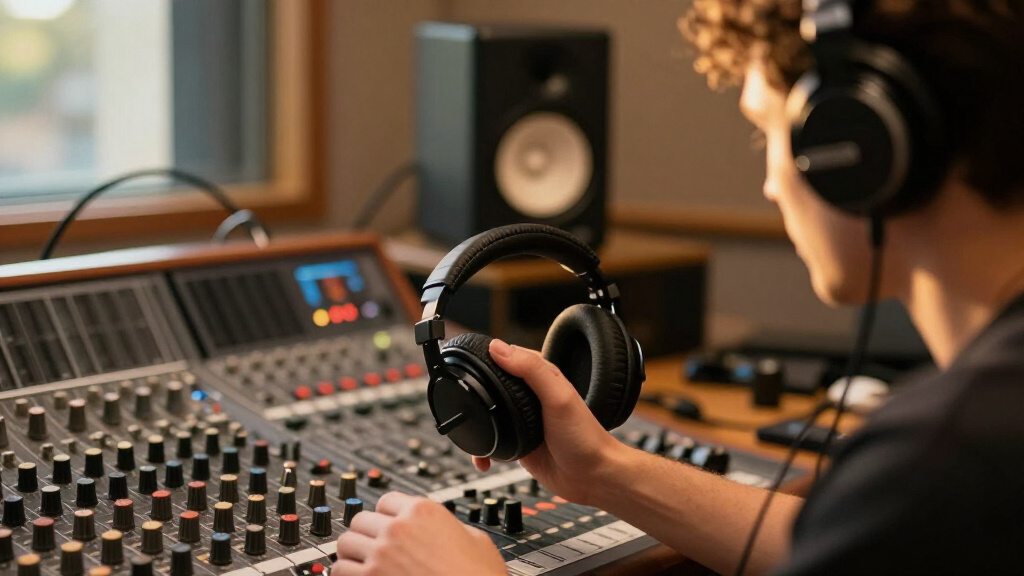
How We Picked
I ranked these nine models against what actually determines whether wireless headphones work in a studio: sound accuracy first, latency second, and flexibility third. Accuracy meant judging whether the tuning is flat enough to trust for mixing decisions, or whether it flatters the music in ways that will betray you on other systems. Latency separated the models that can be used while tracking or playing virtual instruments from those that only work for playback and casual editing. I also weighed wired fallback options, comfort across long sessions, build durability, and battery life, since a studio headphone that dies mid-session or pinches after an hour fails regardless of how it sounds.
The ranking logic follows use case rather than raw specs. Models purpose-built for production, like the AIAIAI TMA-2 Studio Wireless and the Audio-Technica ATH-M50XBT2, sit at the top because their tunings and feature sets were designed around mixing workflows. Mid-tier picks earn their place by solving a specific problem well — the OneOdio Studio Max 2 for latency, the ATH-M20xBT for affordability with a trusted brand tuning. Budget and consumer-leaning models rank lower not because they’re bad headphones, but because they ask the buyer to compromise on the core promise of studio accuracy.
Factors to Consider When Choosing Wireless Studio Headphones
Choosing wireless studio headphones involves tradeoffs that don’t exist in the wired world. Before picking from the nine models above, it helps to understand what you’re actually giving up — and gaining — when you cut the cable in a production environment.Latency: The Dealbreaker Most Buyers Underestimate
Standard Bluetooth adds anywhere from 100 to 300ms of delay, which is enough to make playing a software synth or recording a vocal take feel broken. If you plan to track or perform while wireless, you need a model with a dedicated low-latency mode — a 2.4GHz connection or an aptX-style codec — that brings delay below 30ms. The PUPGSIS 2.4GHz model and the OneOdio Studio Max 2 exist precisely for this reason. If your wireless use is limited to editing, podcast consumption, and rough mixes, latency matters far less and you can prioritize sound quality instead. A common mistake is assuming every ‘studio’ wireless headphone is low-latency; most aren’t. Check the spec sheet for an explicit latency figure before buying.
Frequency Response: Neutral Beats Impressive
The biggest trap in this category is buying headphones that sound exciting rather than honest. Consumer-tuned models boost bass and sparkle the highs, which makes music feel great in the moment but leads to mixes that sound thin or harsh everywhere else. Studio headphones aim for a relatively flat response so that what you hear approximates what’s actually in the recording. Audio-Technica’s M-series tuning and the AIAIAI Studio preset are built around this philosophy, which is why those models rank highly here. If you already own a pair of bass-forward consumer headphones, resist the urge to buy something similar for production — the transition to a neutral tuning feels unfamiliar for a week, then becomes the reference you can’t work without.
Wired Fallback: Your Safety Net for Final Mixes
Even the best Bluetooth codec alters the signal slightly, and many producers still refuse to make final mix decisions over a wireless connection. That’s why a passive wired mode — usable with the battery dead — is one of the most valuable features in this category. It effectively buys you two headphones in one: wireless freedom for tracking, editing, and mobile reference listening, plus a cabled connection for critical work. Models like the ATH-M50XBT2 and the entire OneOdio line include this, and it should be a hard requirement if you mix professionally. Also check the cable: a coiled or lengthy straight cable plus a 3.5mm-to-6.35mm adapter determines whether the wired mode actually works at your desk or interface.
Codec Support and Why It Matters for Detail
Bluetooth codecs determine how much audio detail survives the wireless trip. Basic SBC is fine for podcast monitoring but compresses in ways you can hear on dense mixes. AAC is better for Apple devices, while LDAC and aptX variants push closer to lossless-quality transmission. The Studio Max 2’s LDAC support is a genuine advantage here for critical listening on Android sources. One caveat: your source device must support the codec too, so a pair with LDAC gains you nothing on an iPhone. Codec support should influence your ranking only after accuracy and latency — a well-tuned headphone over SBC still beats a hyped one over LDAC.
Comfort and Isolation for Long Sessions
Studio sessions routinely run three or four hours, and a headphone that clamps too tightly or has shallow earpads becomes unusable long before the battery dies. Look for generous earcup depth, replaceable pads, and clamp pressure that’s firm without pinching — over-ear designs with memory foam tend to hold up best. Closed-back designs, which describe every model in this roundup, also provide the passive isolation you need when recording vocals or drums in the same room as your monitors. Replacement parts are an underrated factor: the AIAIAI modular system lets you swap pads, headbands, and drivers separately, which extends the product’s life well past what a sealed consumer headphone can offer. If you wear glasses, prioritize larger cups, since arm pressure against the pad creates leaky isolation and fatigue.
When to Pay More — and When Not To
The step up from budget wireless models to the AIAIAI and ATH-M50XBT2 tier buys you a trustworthy tuning, better build materials, and longer support life — worthwhile if music is more than a hobby. But if you’re a beginner or a DJ who mostly needs reliable playback and a wired fallback for booth monitoring, the sub-premium models cover that job without the premium price. Where I’d tell people not to save money: latency features and codec support, because those can’t be upgraded later and directly limit what workflows the headphones can handle. Where extra spend often goes to waste: active noise cancellation and app-based EQ presets, which matter for commuters more than producers. Match the tier to how you’ll actually use the headphones 80 percent of the time, not the aspirational 20 percent.
Frequently Asked Questions
Can wireless headphones really be used for mixing, or only for rough work?
For rough mixes, editing, and reference listening, modern wireless studio headphones are fully capable — the ATH-M50XBT2 and AIAIAI TMA-2 Studio both deliver tuning accurate enough to make solid balance and EQ decisions. The catch is that every Bluetooth codec slightly alters the signal, and a dead battery means no headphones at all, which is why most engineers still switch to a wired connection for the final pass. That’s why I treated a passive wired mode as a near-mandatory feature in this roundup. The practical workflow most producers land on is wireless for tracking, editing, and mobility, then plugging in for the mixdown. If you only ever mix at a desk, a dedicated wired studio headphone remains the more focused tool.
Is low latency only important if I’m recording myself?
Latency matters whenever the sound you hear must stay in sync with something you’re doing in real time — playing virtual instruments, recording vocals or guitar, or DJing with software. If your wireless headphones are purely for playback and editing, a 200ms delay is invisible because nothing depends on timing. The PUPGSIS 2.4GHz model and the OneOdio Studio Max 2 with its 9ms mode exist for the sync-dependent crowd. One thing people overlook: latency also affects monitoring during podcast or voiceover recording, where hearing yourself delayed is genuinely disorienting. If there’s any chance you’ll record while listening, treat low latency as a requirement rather than a bonus.
The OneOdio A70 comes in Silver and Black — are they different headphones?
No, they’re the same headphone in two finishes, so this is purely an aesthetic and occasionally a price-fluctuation decision. The specs, tuning, and accessories are identical, which is why I grouped them together conceptually rather than treating them as separate contenders. If you’re choosing between them, buy whichever color you prefer or whichever listing is cheaper at the moment. The more meaningful decision is between the A70 and the Studio Max line: the A70 is the value play for wired-priority users who want Bluetooth as a convenience, while the Studio Max 2 adds low latency and LDAC for genuinely wireless-first workflows.
Why do the Beats Studio Pro rank lower than cheaper options here?
It’s not about quality — the Beats Studio Pro are well-built, feature-rich headphones that outclass several picks here for travel and everyday listening. The issue is tuning intent: their consumer-oriented signature with boosted bass and sculpted highs flatters music rather than revealing it, which works against mix translation. A mix balanced on a bass-heavy headphone tends to come out bass-light everywhere else. In this specific category, a $60 OneOdio with an honest tuning is arguably a better studio tool than a premium headphone with a hyped one. If you want one pair that handles both production and daily commuting and you’ll lean on other references for mix decisions, the Beats case gets stronger.
Do I need LDAC or aptX codecs, or is basic Bluetooth fine for studio work?
It depends on your source device and how critical your listening is. LDAC and aptX transmit more audio detail, which helps when you’re evaluating subtle reverb tails or compression artifacts wirelessly — the Studio Max 2’s LDAC support is a real edge for Android users. However, iPhones don’t support these codecs, so paying extra for LDAC gains nothing on an iOS device. Basic SBC Bluetooth is adequate for tracking, editing, and general monitoring, and every serious model here includes a wired mode that bypasses codec limitations anyway. My advice: prioritize tuning accuracy and latency first, treat codecs as a tiebreaker, and confirm your phone or interface actually supports the codec before it sways your decision.
Conclusion
The right pick depends on what ‘studio’ means in your workflow. For the best overall choice, the AIAIAI TMA-2 Studio Wireless pairs a producer-focused tuning with a modular, repairable design that outlasts everything else here. The Audio-Technica ATH-M50XBT2 is the strongest premium all-rounder for anyone who wants the trusted M50x sound with wireless freedom and a proper wired fallback. For best value, the OneOdio Studio Max 2 delivers low latency and LDAC at a price that undercuts everything with comparable specs, while the Audio-Technica ATH-M20xBT is the smartest beginner entry point thanks to a legitimate brand tuning at an entry-level cost. For specific needs: the PUPGSIS 2.4GHz model for latency-sensitive tracking, the OneOdio A70 for DJs who live in wired mode and want Bluetooth occasionally, and the Beats Studio Pro if your studio time doubles as commute and travel time. Whatever you choose, treat the wired connection as your final checkpoint — wireless gets you freedom, but the cable is still where accuracy lives.
Fall Picks
fall essentials
As an affiliate, we earn on qualifying purchases.





![Amazing Graze [Stan Kelly]](https://artzartz.com/wp-content/uploads/2026/10/amazing-graze-stan-kelly-featured-260x140.jpg)