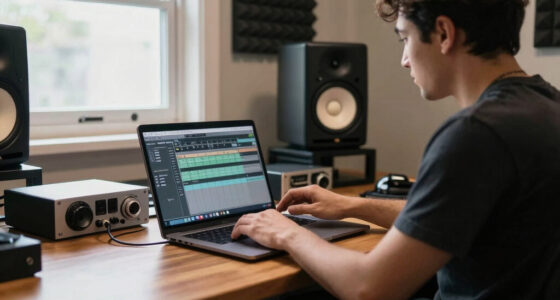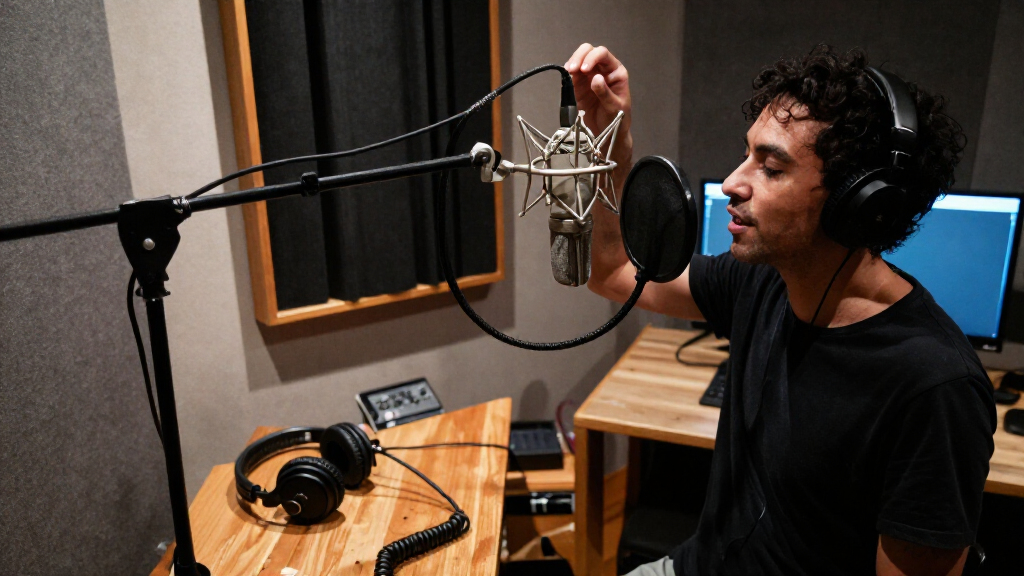

Choosing a studio condenser microphone is less about finding a universally better diaphragm size than matching the mic to the source and recording style. Large-diaphragm condensers are often chosen for close vocals, voiceover and solo sources, where their character and range of features can suit a finished, prominent sound. Small-diaphragm condensers are often preferred when accurate detail, consistent pickup and stereo recording matter more, as with acoustic instruments, piano or ensembles.

Get audio and creator gear delivered free with Prime
- Fast, free delivery on millions of items
- Prime Video, Amazon Music and more included
- Member-only deals all year

RØDE NT1 Signature Series Studio Condenser Microphone, Black
- ✔ Connectivity: XLR
- ✔ Capsule: HF6 1-inch true condenser
- ✔ Polar pattern: Cardioid, unidirectional

Audio-Technica AT2020 Cardioid Condenser XLR Studio Microphone
- ✔ Microphone type: Condenser
- ✔ Connectivity: Wired XLR, 3-pin XLRM output
- ✔ Polar pattern: Cardioid, unidirectional

Mackie EM-91C Large-Diaphragm Condenser Microphone
- ✔ Connectivity: XLR
- ✔ Capsule type: Large-diaphragm condenser
- ✔ Polar pattern: Cardioid, unidirectional
The main tradeoff is flexibility and vocal-friendly character versus precision and natural instrument capture. Either type can record many sources, and design, polar pattern, room acoustics and placement matter as much as diaphragm size. Choose a large-diaphragm mic for a versatile first studio microphone centered on vocals; choose a small-diaphragm pair when detailed instrument recording is the priority.
At a Glance
| Criteria | Large-diaphragm condenser microphones | Small-diaphragm condenser microphones | Winner |
|---|---|---|---|
| Vocal and spoken-word recording | Often favored for close, prominent vocals and voiceover; individual models vary in tone and pattern options. | Can record vocals clearly, though the sound may be less colored or forgiving depending on the model and placement. | A |
| Acoustic instrument detail | Can sound full and flattering on guitars or piano, though placement and model choice matter. | Typically strong at capturing pick attack, string detail, piano and ensembles naturally. | B |
| Transient response and consistency | Can emphasize body and character; response varies substantially by design. | Often valued for fast transient detail and consistent off-axis response; model design remains decisive. | B |
| Stereo and ensemble recording | Usable in stereo, but bulk and matched-pair availability can be drawbacks for some setups. | Compact bodies and matched pairs make stereo techniques practical. | B |
| Room and placement flexibility | Often useful close to a solo source; room coloration and proximity effect still need attention. | Small form can ease positioning; sensitive detail can reveal room noise and reflections. | Depends |
| Features and setup | Many models offer multiple patterns, pads and filters; check the specific mic. | Often straightforward, with features varying by model; stereo use may require a second mic. | A |
| Value for intended use | Strong value for vocal-centered home studios and single-mic setups. | Strong value when instrument detail or stereo capture is central to the work. | Depends |
RØDE NT1 Signature Series Studio Condenser Microphone, Black
The RØDE NT1 Signature Series is the strongest all-around fit here for recording voices and instruments when a quiet signal is a priority. Its listed 4 dB self-noise gives us a clear reason to favor it for softer performances or detailed takes where microphone noise can become more noticeable. The 1-inch HF6 capsule and cardioid pattern also position it squarely for close-miked studio work. As with the other two picks, cardioid pickup is not room treatment: reflections and background noise still depend on the space and mic placement.Its included SM6 shock mount with pop filter, 6 m XLR cable, and dust cover make the package more ready to assemble than the AT2020, whose accessories are a stand mount, adapter, and pouch. The Mackie also supplies a shock mount and cable, but the RØDE adds a pop filter and has the clearer stated noise specification. We should still account for the essentials it cannot provide: this is an XLR microphone, so a compatible interface or preamp is required. Buyers wanting a direct USB connection, or who only need a basic mic without bundled studio accessories, should look elsewhere. Its low-noise advantage and more complete vocal kit put it first in this comparison.
Pros:
- Listed 4 dB self-noise suits quiet and detailed recording.
- Cardioid pattern focuses pickup toward the source.
- Package includes an SM6 shock mount with pop filter and a 6 m XLR cable.
- Designed to handle high sound-pressure levels.
Cons:
- Requires compatible XLR recording equipment, such as an audio interface.
- Corded XLR connection limits use to compatible setups.
Best for: Home and project-studio recordists who want a low-noise XLR condenser for vocals, voice-over, streaming, or instruments and value a bundled pop filter and shock mount.
Not ideal for: Buyers who need a USB microphone, do not have compatible XLR recording equipment, or want a wireless or battery-powered setup.
Bottom line: We rank the NT1 Signature first for its stated low self-noise and the most complete vocal-oriented accessory bundle in this group.
“We rank the NT1 Signature first for its stated low self-noise and the most complete vocal-oriented accessory bundle in this group.”
Audio-Technica AT2020 Cardioid Condenser XLR Studio Microphone
The Audio-Technica AT2020 makes sense for a project studio that needs a flexible wired condenser for varied sources. Its low-mass diaphragm is designed for extended frequency and transient response, while its stated high SPL handling and wide dynamic range support recording sources that are louder or more forceful than a spoken vocal. That versatility earns it a distinct place beside the RØDE, whose strongest stated case is lower self-noise and a more vocal-ready accessory package.The AT2020 has a metal enclosure and comes with a stand mount, threaded adapter, and protective pouch, giving us useful mounting basics without the RØDE’s bundled pop filter or shock mount. The supplied information lists a 74 dB signal-to-noise ratio but does not provide a self-noise figure, so we cannot compare it directly with the NT1 Signature’s 4 dB claim on that measure. It also requires phantom power through a wired XLR setup. That is normal for this kind of studio condenser, but it is a real compatibility check for a first-time buyer. Compared with the Mackie, the AT2020 has more specific information about diaphragm design and recording versatility; it is the better fit for an equipped project room, while the RØDE is more compelling when quiet capture and vocal accessories lead the decision.
Pros:
- Low-mass diaphragm is designed for extended frequency and transient response.
- High SPL handling and wide dynamic range suit varied recording sources.
- Metal enclosure with stand mount, adapter, and protective pouch included.
- Cardioid pattern helps reduce pickup from the sides and rear.
Cons:
- Requires phantom power and compatible XLR equipment.
- No shock mount or pop filter is listed among the included accessories.
- The supplied information gives no self-noise figure for direct comparison with the RØDE.
Best for: Project-studio users with phantom power who want an XLR condenser for vocals, instruments, and other sources that may demand broad dynamic range or high SPL handling.
Not ideal for: New recordists without phantom-power-capable gear, or buyers who want a bundled shock mount and pop filter for vocal recording.
Bottom line: We recommend the AT2020 for equipped project studios that prioritize source versatility over the RØDE’s stated lower self-noise and fuller vocal accessory kit.
“We recommend the AT2020 for equipped project studios that prioritize source versatility over the RØDE’s stated lower self-noise and fuller vocal accessory kit.”
Mackie EM-91C Large-Diaphragm Condenser Microphone
The Mackie EM-91C is the most straightforward bundle in this comparison for a buyer who wants a large-diaphragm studio condenser with a shock mount and XLR cable included. Its cardioid pattern is intended to reduce ambient pickup, and the microphone is described for vocals and instruments in home or studio recording. That makes it a reasonable entry on a shortlist for a basic XLR setup. Compared with the AT2020, it includes a shock mount and cable, while the Audio-Technica listing gives more detail about diaphragm behavior and high-SPL use.There is less supplied evidence to distinguish the Mackie’s sound performance: unlike the RØDE, it has no listed self-noise figure, and its specifications do not describe a capsule beyond large-diaphragm condenser. Its stainless-steel enclosure is a useful construction detail, but it does not establish how the mic will sound in a particular room or with a particular voice. The listing also creates a practical uncertainty: it names one AAA battery as required while also describing the power source as corded electric. We should verify the power requirement before building a setup around it. The NT1 Signature is easier to justify for low-noise recording, and the AT2020 is better documented for flexible source handling; Mackie is best considered when the included mount and cable suit the buyer’s needs and its power details can be confirmed.
Pros:
- Large-diaphragm condenser design for studio vocals and instruments.
- Cardioid pickup helps reduce ambient sound around the microphone.
- Includes a shock mount and XLR cable.
- Stainless-steel enclosure is listed.
Cons:
- Product information conflicts on whether it requires an AAA battery or corded power.
- No self-noise figure is supplied for comparison with the RØDE.
- Requires compatible XLR recording equipment.
Best for: A home-studio buyer looking for a basic large-diaphragm XLR microphone supplied with a shock mount and cable, who can confirm the power requirements before use.
Not ideal for: Recordists who need clearly documented power requirements, a stated self-noise figure, or detailed capsule and performance specifications.
Bottom line: We see the EM-91C as a basic bundled option, but its unclear power information and thinner performance specifications place it behind the RØDE and AT2020.
“We see the EM-91C as a basic bundled option, but its unclear power information and thinner performance specifications place it behind the RØDE and AT2020.”
As an Amazon Associate we earn from qualifying purchases.
Key Differences
The clearest practical split is the source each type tends to serve best. Large-diaphragm models are common vocal choices because many provide useful pattern selection and can give a solo voice a substantial, close sound. That is a tendency, not a guarantee: a bright, resonant room or a microphone whose tone clashes with the singer can make a supposedly flattering choice sound worse. A small-diaphragm condenser can record a voice successfully, especially when a natural, less colored presentation is wanted.
Small-diaphragm condensers have the advantage when accurate detail, repeatable placement and stereo capture are priorities. Their compact shape is convenient around instruments, and matched pairs suit piano, acoustic guitar and ensemble recording. The tradeoff is that a revealing microphone also captures room reflections, handling noise and performance flaws. Large-diaphragm microphones can work well on instruments too, but their larger bodies may complicate placement and their tone may color the source more.
For value, buy for the recordings you make most. A single large-diaphragm model is usually the more useful first purchase for a vocal-led home studio. Paying for a small-diaphragm pair makes sense when stereo instrument work is a regular need; otherwise, a second mic and room improvements may be better investments than diaphragm size alone.
Detailed Comparison
Vocal and spoken-word recording (Large-diaphragm condenser microphones wins — moderate)
Large-diaphragm condensers win for the typical close-miked vocal setup, a moderate advantage for a vocal-led studio rather than a rule for every voice. Their common pattern choices and varied tonal character can help shape a solo performance. Small-diaphragm models remain capable, but their more restrained size and presentation may not deliver the same sense of weight some singers want. Audition against the actual voice and room where possible.
Acoustic instrument detail (Small-diaphragm condenser microphones wins — moderate)
Small-diaphragm condensers win by a moderate margin for detailed acoustic capture. They are often selected for string attack, piano and ensemble work, where natural detail matters more than adding vocal-style body. Large-diaphragm models can provide a pleasing, fuller sound on solo instruments, so the choice depends on whether the goal is precision or coloration.
Transient response and consistency (Small-diaphragm condenser microphones wins — moderate)
Small-diaphragm condensers generally win for crisp transient detail and consistent pickup around the mic, a moderate advantage in sources with fast attacks or multiple performers. Large-diaphragm designs can sound more colored or emphasize particular parts of a source. Those are broad design tendencies; capsule, circuit and polar pattern make individual models vary.
Stereo and ensemble recording (Small-diaphragm condenser microphones wins — major)
Small-diaphragm condensers win by a major practical margin for common stereo techniques. Their compact bodies are easier to place close together or around instruments, and matched pairs are widely used for this work. A large-diaphragm pair can produce excellent results, but size and pair matching can make positioning less convenient or more expensive.
Room and placement flexibility (moderate difference)
This is a draw overall, with the winner depending on the room and source. Small-diaphragm mics are physically easier to position in tight spaces, but their detailed capture can make reflections and noise obvious. Large-diaphragm mics are often used close to solo sources, though proximity effect and room coloration still matter. Neither type fixes a poor room; placement and acoustic treatment matter more.
Features and setup (Large-diaphragm condenser microphones wins — minor)
Large-diaphragm models win by a minor margin because many offer selectable polar patterns, pads and low-cut filters that help adapt one microphone to several situations. Features differ by model, and some small-diaphragm options offer them too. Check the specifications rather than assuming a feature comes with a diaphragm size.
Value for intended use (moderate difference)
Neither type wins for everyone. A single large-diaphragm condenser usually provides better value for a new, vocal-centered studio because it covers singing, speech and occasional instruments. A small-diaphragm pair is better value for someone regularly recording stereo instruments or ensembles. Paying for capabilities that rarely match the work does not improve the recording.
Large-diaphragm condenser microphones: Pros and Cons
Pros:
- Well suited to close vocals and spoken word.
- Many models provide multiple polar patterns and useful filters.
- A practical single-mic starting point for a vocal-led studio.
Cons:
- Larger body can make close or stereo placement awkward.
- Some models color sources in ways that do not suit every voice or instrument.
- Room reflections and proximity effect can still cause problems.
Small-diaphragm condenser microphones: Pros and Cons
Pros:
- Strong choice for detailed acoustic instruments and ensembles.
- Compact shape makes positioning and stereo techniques easier.
- Often captures transients and off-axis sound consistently.
Cons:
- May not provide the full vocal character some singers prefer.
- Sensitive detail can expose room reflections, noise and performance flaws.
- Stereo work commonly calls for a second matched microphone.
Who Should Choose What
Choose Large-diaphragm condenser microphones if:
- Vocals, podcasts or voiceover are your main recording work.
- You want one flexible studio condenser and value pattern choices.
- You record solo sources close up and prefer a full, characterful presentation.
Choose Small-diaphragm condenser microphones if:
- Acoustic instruments, piano or ensembles are frequent sources.
- You want a compact matched pair for stereo recording.
- You prioritize natural detail and precise placement over added coloration.
Skip both if: Skip both if the recording space is noisy or highly reflective and you cannot manage its acoustics; address the room or choose a microphone suited to that environment first.
Value for Money
Pay more for a small-diaphragm pair only when stereo instrument or ensemble recording will be part of your regular work. The pair adds capabilities that a single mic cannot reproduce in common stereo setups. For a singer, voiceover artist or home studio buying its first condenser, a well-chosen large-diaphragm model is usually the stronger value because it serves the main job and can handle occasional instruments. Neither category is automatically more expensive or higher quality: compare the particular models, included features, noise performance and whether a pair is needed.
Final Verdict
For most vocal-led home studios buying one condenser microphone, choose a large-diaphragm model. It is the more practical starting point for singing and spoken word, with broad usefulness across solo sources. Choose small-diaphragm condensers if detailed acoustic instrument recording or stereo work is your main goal; a matched pair is especially useful there. The deciding factor is the source you record most: vocals favor A, instrument detail and stereo capture favor B.
Frequently Asked Questions
Can a small-diaphragm condenser record vocals?
Yes. It can capture clear vocals, especially when a natural presentation is wanted. The result depends on the singer, microphone model, placement and room; diaphragm size alone does not determine vocal quality.
Are large-diaphragm condensers better for singing?
They are a common and versatile choice for singing, but they are not universally better. A mic that suits the singer’s tone and the recording room matters more than size.
Should I buy one microphone or a matched pair?
Start with one large-diaphragm condenser if you mainly record vocals or voiceover. Choose a matched small-diaphragm pair if stereo instruments or ensembles are a routine requirement.
Which type is better for acoustic guitar?
Small-diaphragm models often capture pick attack and string detail naturally. A large-diaphragm model can give a solo guitar a fuller character. Try placement and model choices with the sound you want.