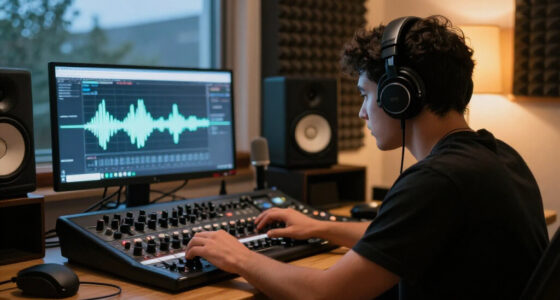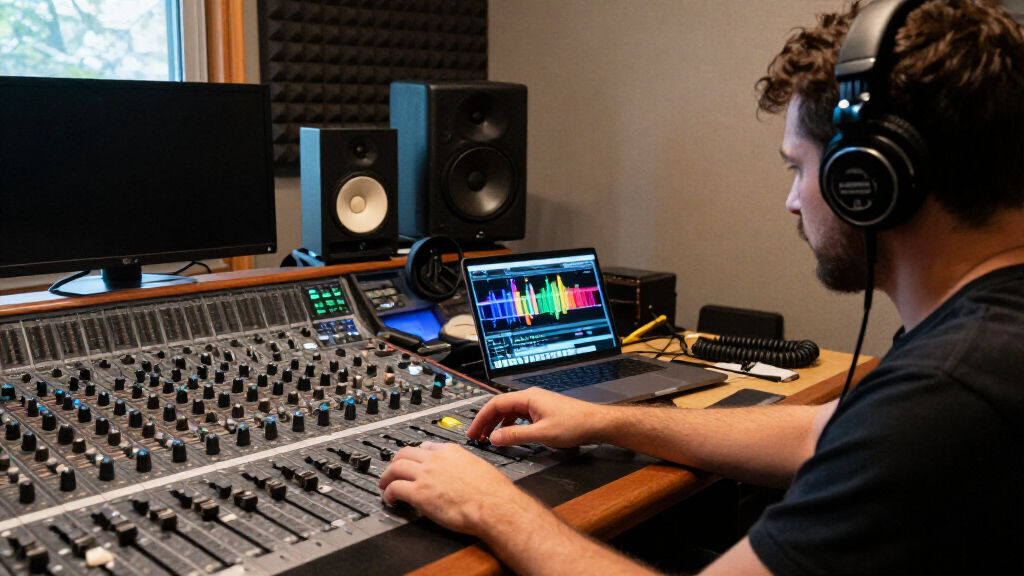

Creators choosing between the Sony MDR-7506 and Audio-Technica ATH-M50x are deciding whether to prioritize a light, affordable studio workhorse or a more versatile closed-back headphone. Both are popular for recording, editing, and general production, but neither should be treated as a perfectly neutral reference: each has a distinctive sound, and headphone response varies with fit and listener.

Get audio and creator gear delivered free with Prime
- Fast, free delivery on millions of items
- Prime Video, Amazon Music and more included
- Member-only deals all year
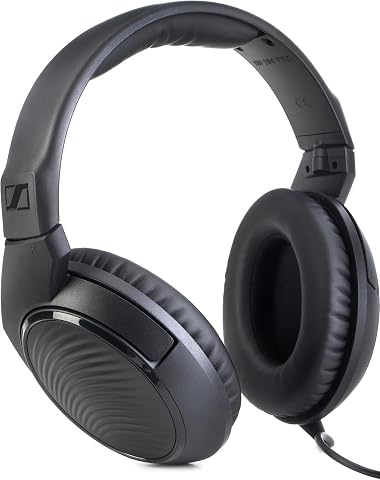
Sennheiser HD 200 PRO Over-Ear Studio Headphones
- ✔ Design: Closed, around-ear
- ✔ Connection: Wired
- ✔ Impedance: 32 ohms

Philips Fidelio X3 Open-Back Over-Ear Headphones
- ✔ Design: Open-back, over-ear
- ✔ Driver size: 50 mm
- ✔ Frequency response: 5–40,000 Hz

Beats Studio Pro Wireless Over-Ear Headphones, Khaki
- ✔ Form factor: Over-ear
- ✔ Connectivity: Bluetooth, USB-C, 3.5 mm audio cable
- ✔ Noise control: Active noise cancellation and Transparency mode
The MDR-7506 is the better fit for long editing sessions, tight budgets, and creators who value a familiar monitoring reference. The ATH-M50x makes more sense when recording in noisy spaces, moving between studio and everyday listening, or needing a detachable cable. The main tradeoff is straightforward: Sony keeps things lighter and cheaper; Audio-Technica offers more isolation and practical flexibility at a higher price.
At a Glance
| Criteria | Sony MDR-7506 | Audio-Technica ATH-M50x | Winner |
|---|---|---|---|
| Monitoring character | Bright, detailed presentation that can expose hiss and editing artifacts | Emphasized bass and treble; engaging but not fully neutral | Depends |
| Isolation for recording | Closed-back design offers useful but not exceptional isolation | Generally stronger isolation for tracking near microphones | B |
| Comfort over long sessions | Lighter frame; fit and clamp pressure still vary by listener | More substantial fit; some users find clamp or weight fatiguing | A |
| Portability and cable design | Folds, but has a permanently attached coiled cable | Folds and includes detachable cable options, depending on package | B |
| Build and serviceability | Long-running professional model with replaceable parts available | Sturdy construction and replaceable cable improve practical serviceability | B |
| Price and value | Usually the less expensive choice | Costs more; worthwhile when its isolation and cable flexibility matter | A |
Sennheiser HD 200 PRO Over-Ear Studio Headphones
The Sennheiser HD 200 PRO is the most straightforward match for creators who need a headphone designed around monitoring. Its closed, around-ear construction helps reduce ambient noise and contains more sound than the open-back Fidelio X3, making it easier to concentrate in a shared workspace. A 2-meter single-sided cable and included 6.3 mm adapter also make it simple to connect to typical studio gear without hunting for an accessory.Compared with Beats Studio Pro, the HD 200 PRO gives up wireless freedom, active noise cancellation, and quick switching between wired and Bluetooth use. In return, it keeps the workflow simple: no battery to manage and no wireless mode to select. Its description highlights detailed stereo sound and punchy bass, but creators should still check mixes on other speakers and headphones rather than assuming any single model will translate perfectly. The plastic enclosure and wired-only design feel utilitarian, and the stated passive noise reduction is not equivalent to electronic cancellation.For recording or editing near other people, this is the safest recommendation of the three. It is less suitable for creators who need to walk around, monitor an open soundstage, or use ANC during travel. Against the Philips, the Sennheiser trades spaciousness for practical isolation; against Beats, it prioritizes a studio-oriented wired setup over all-purpose convenience.
Pros:
- Closed around-ear design helps reduce ambient sound
- Includes a 6.3 mm adapter for studio equipment
- Single-sided 2-meter cable is practical at a desk
- No battery charging is needed
Cons:
- Wired connection limits movement
- Plastic construction has a basic, utilitarian feel
- Passive isolation does not provide active noise cancellation
Best for: Creators who want a simple wired headphone for editing, monitoring, and use with a studio interface.
Not ideal for: Anyone who needs wireless movement, active noise cancellation, water resistance, or an open-back presentation.
Bottom line: We recommend the HD 200 PRO for creators who value straightforward, closed-back wired monitoring over wireless convenience.
“We recommend the HD 200 PRO for creators who value straightforward, closed-back wired monitoring over wireless convenience.”
Philips Fidelio X3 Open-Back Over-Ear Headphones
When the room is quiet and we want a more open listening presentation, the Philips Fidelio X3 fills a different role from the Sennheiser. Its open-back design lets air and sound pass through the earcups, creating a spacious impression that can make long editing and listening sessions feel less enclosed. The 50 mm multi-layer diaphragms are described as balancing detailed highs, smooth mids, and impactful bass, while the package includes both balanced and unbalanced cables.Those strengths come with an important environmental tradeoff: sound leaks in and out. That makes the X3 a poor companion for a noisy workspace, recording beside a live microphone, or sharing a room with someone who needs quiet. The closed-back HD 200 PRO is the more practical tool for those situations. Beats Studio Pro also offers ANC and Transparency mode, giving it more control over outside sound, although that versatility serves a different, more mobile use case.The X3 is wired, with a 3-meter cable that gives us room to move around a desk but not the freedom of Bluetooth. Its included cable options and adapter are useful for creators with different playback equipment, though buyers should confirm that their setup supports the connection they intend to use. We would choose it for critical, relaxed listening in a controlled room, not as a one-headphone solution for every recording or commute.
Pros:
- Open-back construction creates a spacious listening presentation
- 50 mm multi-layer diaphragms are tuned for detailed highs and smooth mids
- Balanced and unbalanced cables are included
- Includes a 3.5 mm to 6.3 mm adapter and cable clip
Cons:
- Sound passes through the open-back earcups in both directions
- Wired connection restricts movement compared with Beats Studio Pro
- Its 3-meter cable may be cumbersome outside a desk setup
Best for: Creators who edit or listen in a quiet room and prefer an open, spacious headphone presentation.
Not ideal for: People working in noisy or shared spaces, recording near a microphone, or needing wireless mobility.
Bottom line: We would choose the Fidelio X3 for spacious listening in a quiet studio, provided sound leakage will not disrupt the work or people nearby.
“We would choose the Fidelio X3 for spacious listening in a quiet studio, provided sound leakage will not disrupt the work or people nearby.”
Beats Studio Pro Wireless Over-Ear Headphones, Khaki
The Beats Studio Pro is the pick for creators whose headphones need to move between a desk, a commute, and everyday listening. It combines Bluetooth, active noise cancellation, and Transparency mode with USB-C audio and an included 3.5 mm cable. That range gives it more flexibility than either wired model: we can listen wirelessly, tune out ambient noise, or connect by cable when the workflow calls for it.For production work, the wired options matter more than the personalized spatial audio feature. USB-C lossless audio and the analog cable give creators ways to listen without relying only on Bluetooth, while ANC can help with concentration in a noisy setting. Still, the supplied details do not establish that its sound is a neutral reference for mixing. The HD 200 PRO is the more direct studio-monitoring recommendation, and the Fidelio X3 offers an open-back alternative for a quiet room. Beats instead wins on convenience across contexts.Battery life is listed as up to 40 hours, with a 10-minute charge providing up to four hours of playback. We should plan around charging for wireless use, even though wired listening is available. The over-ear build may feel bulky for some, and a wireless feature set adds complexity that creators who only work at a desk may not need. Choose it if one headphone must cover both creative work and mobile listening; skip it if your priority is a dedicated wired monitor or open-back sound.
Pros:
- Bluetooth, USB-C audio, and included 3.5 mm cable offer multiple connection options
- ANC and Transparency mode adapt listening to different environments
- Up to 40 hours of stated battery life and fast charging
- Personalized spatial audio with dynamic head tracking
Cons:
- Wireless use requires keeping the battery charged
- Over-ear design may feel bulky to some listeners
- Spatial audio and ANC do not establish it as a neutral mix reference
Best for: Creators who want ANC-equipped wireless headphones for travel and everyday use, with wired options for desk listening.
Not ideal for: Mix-focused buyers seeking a clearly established neutral monitor, or anyone who wants a lightweight, wired-only setup.
Bottom line: We recommend Beats Studio Pro when wireless mobility and noise control matter as much as listening at a creator’s desk.
“We recommend Beats Studio Pro when wireless mobility and noise control matter as much as listening at a creator’s desk.”
As an Amazon Associate we earn from qualifying purchases.
Key Differences
The most consequential difference is how the headphones serve a recording setup. The ATH-M50x typically blocks more outside sound, which can help a vocalist or podcaster hear a cue mix without turning it up as much. That also reduces the chance of playback leaking into a nearby microphone. The MDR-7506 remains useful for tracking, but its isolation is less of a selling point. Both are closed-back designs, and neither can eliminate leakage or replace good microphone placement.
For editing and general production, the Sony’s lighter feel and bright, revealing character are appealing, especially when checking dialogue, noise, and small details. The M50x’s more pronounced bass and treble can make music enjoyable, but creators should cross-check tonal choices on speakers or another reference. Both models can support competent work; familiarity with a headphone’s response matters more than treating either as an objectively flat monitor.
Practical ownership also separates them. Sony is typically cheaper and lighter, while Audio-Technica’s detachable cable is easier to replace and more convenient when packing or changing cable lengths. If the price gap is modest and the headphones will travel or see regular tracking duty, the M50x’s flexibility can justify the extra cost. If they will stay at a desk and budget or weight matters most, the MDR-7506 is the stronger value.
Detailed Comparison
Monitoring character (moderate difference)
The MDR-7506 leans bright and can make hiss, sibilance, and small editing flaws stand out. That can be useful when cleaning dialogue, though its tonal balance may make extended listening fatiguing and can encourage overly dark mixes. The ATH-M50x has more prominent bass and treble, making playback lively but less dependable as a sole tonal reference. This is a moderate, preference-dependent difference: choose Sony for detail-led checks, or Audio-Technica if you want a more entertaining sound and will cross-check mix decisions elsewhere.
Isolation for recording (Audio-Technica ATH-M50x wins — moderate)
The ATH-M50x generally seals out more ambient sound and helps keep cue playback contained during vocal recording. The MDR-7506 is also closed-back and works for tracking, but less isolation can matter in a noisy room or with a sensitive microphone nearby. The advantage is moderate rather than absolute; head shape, pad condition, and volume all affect results. The M50x wins for creators who record near their headphones, while the Sony is adequate for quieter setups.
Comfort over long sessions (Sony MDR-7506 wins — moderate)
The Sony’s lower weight gives it an advantage for extended editing, though its pads and fit will not suit everyone. The M50x feels more substantial and its clamp can be tiring for some listeners, particularly during long sessions. Comfort is personal and pad wear changes the fit, so this is a moderate advantage rather than a universal rule. Creators who work for hours at a time should favor the lighter Sony if it fits their head comfortably.
Portability and cable design (Audio-Technica ATH-M50x wins — moderate)
Both fold for storage, but the M50x’s detachable cable is simpler to pack, replace, or swap for a different length. The Sony’s permanently attached coiled cable is durable in a fixed studio position but can tug or take up space when used on the move. The practical gap is moderate for mobile creators and minor for a desk setup. Audio-Technica wins if the headphones travel or cable replacement matters.
Build and serviceability (Audio-Technica ATH-M50x wins — minor)
Both are established models with replacement pads available, and both can last with careful handling. The M50x’s detachable cable removes a common failure point from the headphone itself and makes routine replacement easier. Sony’s attached cable is a tradeoff for users who prefer a fixed studio connection. This is a minor-to-moderate ownership advantage: the M50x wins for easier cable service, while neither model should be considered indestructible.
Price and value (Sony MDR-7506 wins — moderate)
The MDR-7506 is usually less expensive and provides capable monitoring without requiring a large initial outlay. The M50x’s premium buys practical isolation, a detachable cable, and a more flexible package rather than a guaranteed leap in mix accuracy. The value difference is moderate and depends on workflow: Sony is the better buy for editing at a desk, while the extra spend on Audio-Technica makes sense when tracking, travel, or cable flexibility are regular needs.
Sony MDR-7506: Pros and Cons
Pros:
- Usually costs less
- Lightweight for extended editing
- Bright presentation can reveal noise and detail
- Long-running model with broad availability of replacement parts
Cons:
- Attached coiled cable is less convenient to replace or pack
- Less isolation than the M50x for some recording situations
- Bright sound is not a neutral reference and can fatigue some listeners
Audio-Technica ATH-M50x: Pros and Cons
Pros:
- Stronger isolation for cue monitoring in many setups
- Detachable cable improves flexibility and replacement
- Folding design suits travel and storage
- Lively sound works well for casual listening
Cons:
- Usually costs more
- Heavier, tighter fit can bother some users
- Bass and treble emphasis can mislead tonal decisions if used as the only reference
Who Should Choose What
Choose Sony MDR-7506 if:
- You want an affordable pair for editing, dialogue cleanup, or a home studio desk.
- Low weight matters during long sessions.
- You prefer a fixed cable and can work in a relatively quiet room.
Choose Audio-Technica ATH-M50x if:
- You record vocals or podcasts and need better isolation from room noise and headphone spill.
- You travel with your headphones or want a cable that can be replaced easily.
- You also want closed-back headphones for everyday music listening.
Skip both if: You need a truly flat, calibrated mix reference, open-back listening, wireless operation, or the most reliable translation across systems; compare calibrated headphones, studio monitors, or models designed for those needs.
Value for Money
The Sony is the better value for creators who primarily edit at a desk: it costs less, weighs less, and covers core monitoring tasks well. Paying more for the ATH-M50x is worthwhile when its stronger isolation and detachable cable solve recurring problems, such as tracking in a shared room or carrying gear between locations. The added price does not automatically buy more accurate mixes. If those practical advantages will go unused, keep the difference and choose the MDR-7506.
Final Verdict
For most budget-conscious creators who need a wired studio headphone for editing and general monitoring, choose the Sony MDR-7506. It is lighter, less expensive, and revealing enough for detail checks, provided you learn its bright balance and cross-check tonal decisions. Choose the Audio-Technica ATH-M50x if isolation, travel, or cable replacement matters more than minimum weight and cost. The biggest deciding factor is workflow: fixed desk editing favors Sony, while frequent recording and movement favor Audio-Technica.
Frequently Asked Questions
Which is better for recording vocals?
The ATH-M50x generally has the edge because its stronger isolation can help reduce cue-mix spill into a microphone. The MDR-7506 can still work well in a quiet room with sensible playback levels and microphone placement.
Are either of these accurate enough for mixing?
Both can support editing and production, but neither should be treated as perfectly neutral. Learn how your chosen model presents sound, then check important tonal decisions on speakers or another familiar reference.
Is the ATH-M50x worth paying more for?
Yes if you regularly record in noisy spaces, travel, or value a detachable cable. For stationary editing on a budget, its premium is harder to justify and the MDR-7506 is the better value.
Which one is more comfortable for long sessions?
The MDR-7506’s lighter weight gives it an advantage for many users, but comfort depends on fit, head shape, and pad condition. Try them on if possible, especially if you are sensitive to clamp pressure.
Black Friday Picks

KitchenAid Classic Series 4.5-Quart Tilt-Head Stand Mixer, Onyx Black
As an affiliate, we earn on qualifying purchases.