
TL;DR

Get audio and creator gear delivered free with Prime
- Fast, free delivery on millions of items
- Prime Video, Amazon Music and more included
- Member-only deals all year
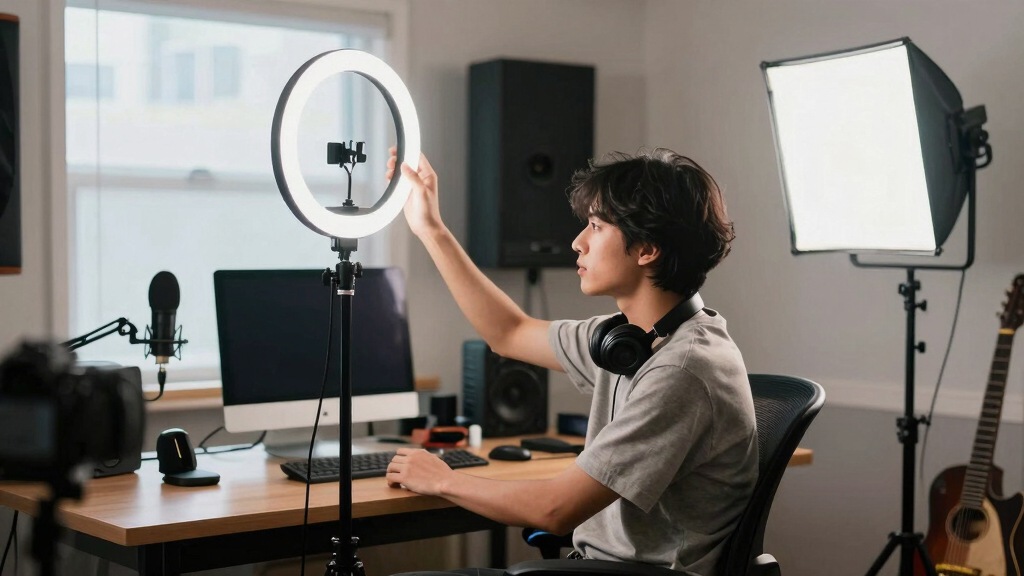
A ring light is perfect for soft, flattering frontal lighting suited for beauty and close-up videos. A key light panel provides more control, power, and versatility for professional or larger setups. Many creators combine both for best results.
A ring light is ideal for close-up, face-flattering illumination, especially for beauty and streaming where softness matters.
Key light panels offer more control, power, and versatility—better for professional videos, interviews, and scenes needing shadow shaping.
Many creators combine both lights to get a balanced, cinematic look—face glow plus background depth.
LED technology has advanced to include app control, RGB colors, and high CRI, making both options more adaptable and efficient.
Choose size and features based on your setup: smaller for portability, larger for professional control.
Ring Light vs Key Light Panel
A ring light delivers quick, flattering frontal illumination. A key light panel brings power, direction and deliberate shadow control. The right choice depends less on which is “better” and more on the picture you want to create.
Two shapes. Two distinct visual languages.
The fixture’s shape determines how light wraps around a face, where shadows fall and how much of the scene you can deliberately sculpt.
The Ring Light
A circular LED source that surrounds the lens with even illumination. It softens facial shadows and creates the familiar halo catchlight in the eyes.
- Fast desk or tripod setup
- Flattering for close-up faces
- Compact, light and affordable
- Limited shadow and direction control
The Key Light Panel
A rectangular LED fixture that can act as a broad soft source or a defined directional beam. Positioning and modifiers give it far greater creative range.
- Shapes contrast and facial depth
- Works across larger scenes
- Accepts diffusion and barn doors
- Heavier, costlier and slower to rig
The big differences at a glance.
A ring light optimizes simplicity. A panel optimizes choice—angle, softness, intensity, spread and shadow are all easier to tune.
| Feature | Ring Light | Key Light Panel |
|---|---|---|
| Facial softness | ✓Excellent, even glow | ✓Excellent with diffusion |
| Shadow shaping | ✗Limited by frontal design | ✓Precise angle and contrast |
| Portability | ✓Small and lightweight | ~Stand and rig often needed |
| Scene coverage | ~Best for close-ups | ✓Faces, products and rooms |
| Typical controls | ~Brightness and temperature | ✓Angle, modifiers, RGB, DMX |
| Entry cost | ✓About $30–$100 | ~Hundreds to thousands |
| Best fit | ✓Beauty, streaming, vlogs | ✓Interviews, products, film |
Brightness tells only half the story.
Output matters when lighting a large space, but accurate color, adjustable temperature and control over spill can make a lower-powered fixture more useful.
Relative maximum output
Illustrative comparison using the cited entry-level ring and professional panel figures.
A panel may deliver roughly 12.5× the cited output—but a close-up creator may never need that extra power.
Modern LED essentials
Prioritize these specifications before paying for effects or accessories.
Follow the picture you want to make.
Start with subject and space, then choose the simplest fixture that can produce your intended look without forcing a costly upgrade later.
Frame the subject
Mostly head-and-shoulders? A ring light is often enough.
Choose the mood
Want shaped shadows and contrast? Move toward a panel.
Measure the space
Small desk setups favor a ring. Wider scenes benefit from panel power.
Check mobility
Travel often? Choose compact or battery-powered fixtures with high CRI.
The creator sweet spot: use both
Place a 12-inch ring light near the camera for flattering face light, then use a 1×1 panel off-axis for background separation, rim light or controlled depth.
Choose by content—not hype.
The practical winner changes with the job. Match the light to your framing, workflow and desired degree of control.
Ring wins
Even frontal light flatters skin and reveals detail. A 12–18 inch model is the usual sweet spot.
Ring wins
Fast setup, a small footprint and direct face illumination suit compact streaming stations.
Panel wins
Off-axis placement creates facial dimension while modifiers control softness and spill.
Panel wins
Directional control helps manage texture, reflections and color—especially on shiny surfaces.
Ring wins
Compact construction and quick mounting reduce friction when filming in changing locations.
Combine both
Use one source for flattering fill and the other for contrast, separation or background depth.
Light for intention, not just illumination.
A ring light makes a face glow quickly. A key panel lets you decide where the glow ends and the shadows begin. That creative control—not raw brightness—is what separates a lit image from a designed one.
What is a Ring Light and Why Creators Love It
A ring light is a circular LED lamp that creates a soft, even glow around your face. It produces that signature halo of light—perfect for beauty shots and close-ups. Think of it like a magic mirror that makes your skin look flawless, with catchlights in the eyes that add a lively sparkle.
For example, a beauty vlogger uses a 12-inch ring light to illuminate her face evenly, avoiding harsh shadows. It’s lightweight, portable, and easy to set up on a desk or tripod, making it a favorite among influencers and streamers who need quick, flattering illumination.
professional ring light for beauty and streaming
As an affiliate, we earn on qualifying purchases.
As an affiliate, we earn on qualifying purchases.
What is a Key Light Panel and Why It’s a Creator’s Power Tool
A key light panel is a rectangular, often larger, LED fixture that offers more control over your lighting. It can produce either a soft, diffused glow or a sharp, directional beam. This flexibility allows you to shape your lighting to match your scene’s mood, highlight specific features, or create depth through shadows. The ability to modify the light’s shape and intensity means you can craft precise lighting setups that enhance the visual storytelling—whether you’re aiming for a cinematic look or a professional interview setup. Think of it as the difference between painting with a broad brush and fine-tuning with a pencil—control over shadows, highlights, and texture is much greater.
For instance, a filmmaker might position a 1×1-foot panel with barn doors to precisely sculpt light on a subject’s face, creating a three-dimensional look with defined shadows. This control allows for cinematic storytelling and professional-quality results. However, this comes with tradeoffs: the panel is heavier, more expensive, and requires a more complex setup. Choosing a key light panel means prioritizing versatility and control over portability, which is essential in professional environments but may be overkill for casual creators.
adjustable LED key light panel for video
As an affiliate, we earn on qualifying purchases.
As an affiliate, we earn on qualifying purchases.
The Big Differences: Light Quality, Size, and Control
| Feature | Ring Light | Key Light Panel |
|---|---|---|
| Light Quality | Soft, circular, flattering | Directional, adjustable, versatile |
| Size & Portability | Small, lightweight, portable | Larger, heavier, less portable |
| Adjustability | Brightness, color temp only | Brightness, angle, modifiers, color |
| Best For | Beauty, streaming, close-up | Professional video, interviews, products |
RGB color LED panel light for photography
As an affiliate, we earn on qualifying purchases.
As an affiliate, we earn on qualifying purchases.
Recent Tech Trends Making Lights Smarter and Better
LED tech keeps evolving. Today’s lights feature high CRI (90+), ensuring colors pop naturally. Many are app-controlled, letting you tweak brightness and color from your phone. RGB modes now let you add vibrant colors, perfect for creative effects or matching ambient lighting.
Battery-powered models are on the rise, letting you shoot outdoors or away from outlets. Hybrid fixtures combine the best of both worlds, offering a versatile tool for a variety of shoots. These advances mean your lighting can be more precise, portable, and creative than ever before.
portable ring light for close-up videos
As an affiliate, we earn on qualifying purchases.
As an affiliate, we earn on qualifying purchases.
How Bright and Color-Accurate Are These Lights?
Both ring lights and key panels now reach high CRI ratings—above 90—meaning colors look true to life. Brightness varies: entry-level ring lights might max out at 800 lumens, enough for close-up shots, while professional key panels can hit 10,000 lumens, suitable for large or outdoor setups.
For example, if you’re filming a product with shiny surfaces, you want a light with high CRI and adjustable color temp. That way, you avoid color casts and get accurate, vibrant images every time. The tradeoff is that higher brightness levels and color accuracy often come at increased cost and power consumption, so balancing your needs and budget is key.
What Do Creators Usually Ask About These Lights?
- Which is better for YouTube videos? It depends on your style. For face-focused content, a ring light is quick and flattering. For cinematic quality or larger scenes, a key panel offers more control.
- Can I use both together? Absolutely! Many creators combine a ring light for face illumination and a key panel to shape the background or add depth.
- What size should I buy? For casual streaming, 12 inches is enough. For bigger setups, go bigger or add multiple lights.
- Are LED lights safe and energy-efficient? Yes, modern LEDs produce minimal heat, use less power, and last longer.
- How to pick the right color temp? Look for adjustable lights from around 3200K to 5600K to match your environment or aesthetic goals.
Which Light Should You Pick? Your Call, Based on Your Needs
Pick a ring light if your focus is on face, beauty, or quick content creation. It’s like having a personal spotlight that makes your face glow. But if you want cinematic depth, professional look, or control over shadows and background, a key light panel is your best bet.
Many creators find that combining both gives the best of both worlds—face flattering light plus background control. For example, use a 12-inch ring light for your face and a 1×1 panel for background or rim lighting. It’s a simple setup that elevates your videos instantly.
Frequently Asked Questions
Can I use a ring light and a key panel together without issues?
Yes, combining both is common. Use the ring light for your face and the panel to shape the background or add depth. Just balance their intensity to avoid overexposure or shadows.
Is a bigger ring light always better?
Not necessarily. Larger ring lights produce softer light and cover more area but can be bulkier and more expensive. For most creators, a 12-18 inch ring light hits the sweet spot for size and performance.
How important is color temperature adjustment?
Very important. Being able to match your ambient light or create a specific mood makes your shots look more natural and professional. Look for lights that cover a range from 3200K (warm) to 5600K (daylight).
Are LED lights safe for prolonged use?
Absolutely. Modern LEDs produce minimal heat, are energy-efficient, and designed for long-term use. They’re a safe choice for your studio or desk setup.
Conclusion
Picking the right light boils down to your content style and setup. Want quick, flattering face light? A ring light is your friend. Need control and power? A key panel has your back. Often, using both creates a studio-quality look that makes your videos stand out.
Remember: lighting isn’t just about brightness; it’s about shaping how your audience sees you. Invest wisely, and your content will glow—literally.
Fall Picks
fall essentials
As an affiliate, we earn on qualifying purchases.