
TL;DR

Get audio and creator gear delivered free with Prime
- Fast, free delivery on millions of items
- Prime Video, Amazon Music and more included
- Member-only deals all year
Paper backdrops are cheap and easy but fragile; fabric backdrops are durable and versatile but pricier; collapsible backdrops balance portability with convenience. Choose based on your shoot style and budget.
Imagine standing in your makeshift studio, wondering if that crinkled paper backdrop will hold up for your next shot or if a collapsible one will fold at the worst moment. Behind every great photo is a backdrop that fits the shoot—without breaking the bank or adding stress. You want something that looks good, works well, and lasts long enough to make your setup effortless.
This quick guide cuts through the hype and reveals the real strengths and weaknesses of three popular options: paper, fabric, and collapsible backdrops. Whether you’re shooting portraits, product shots, or content on the go, knowing what each material offers helps you make smarter choices—and save money in the process.
Paper backdrops are budget-friendly but fragile—best for single-use projects or quick setups.
Fabric backdrops are durable and versatile, suitable for frequent use and long-term investment.
Collapsible backdrops excel in portability and speed, ideal for mobile shoots and on-the-fly setups.
High-resolution printing has made paper backdrops more vibrant and customizable than ever.
Proper storage and handling extend the lifespan of fabric and collapsible backdrops, saving you money long-term.
What Makes a Backdrop Material Pop? The Basics You Need to Know
When choosing a backdrop, it’s all about the details—texture, durability, ease of setup, and how it responds to your environment. Paper backdrops are thin, lightweight sheets that come pre-printed or blank. They’re perfect for quick setups but can tear or wrinkle easily, which can compromise the final image quality. Fabric backdrops are made from woven textiles—think smooth cotton or polyester blends—that resist wrinkles and can be washed or steamed, offering a more polished look over time. Collapsible backdrops are usually fabric or vinyl mounted on a sturdy frame that folds down into a compact case, making them ideal for mobile shoots. The choice impacts not just setup but also the consistency and professional appearance of your results.
As an affiliate, we earn on qualifying purchases.
Paper Backdrops: Cheap, Colorful, But Fragile
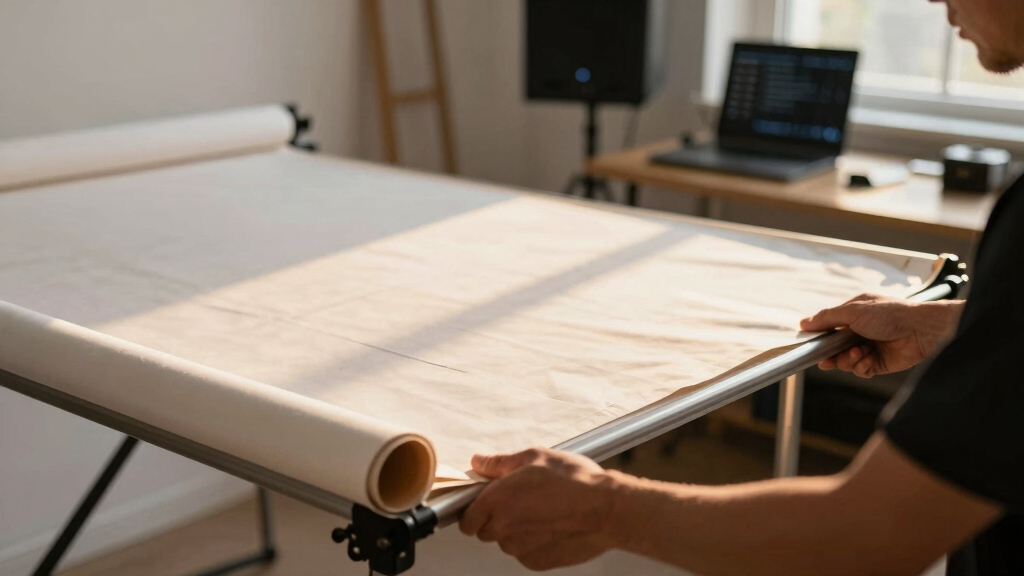
Paper backdrops are like the disposable plates of the photography world—affordable, colorful, and quick to set up. They’re often used in studios for temporary projects or events where the backdrop only needs to last a few hours. Their vibrant colors, achieved through high-resolution printing, can mimic complex scenes or abstract designs, offering a wide creative palette without extra cost. However, their fragility means that even slight mishandling, such as a gust of wind or accidental snag, can cause tears or wrinkles, which may require costly replacements or time-consuming touch-ups. Moisture is another enemy—humidity or spills can warp or stain the surface, diminishing the visual appeal and requiring reapplication or replacement. This fragility means paper backdrops are best suited for controlled environments or short-term projects where convenience outweighs longevity. The tradeoff is clear: affordability and quick setup at the expense of durability and reusability, making them ideal for one-off shoots but less suitable for daily or long-term use.
As an affiliate, we earn on qualifying purchases.
Fabric Backdrops: Durable, Reusable, and Versatile
Fabric backdrops are the backbone of many professional studios because they combine longevity with visual flexibility. Made from materials like muslin, canvas, or polyester, they are designed to withstand repeated use, making them a cost-effective choice over time. The durability means they resist tears, stains, and fading, which is crucial when you’re working on tight schedules or multiple shoots. Their resistance to wrinkles can be a double-edged sword; while they tend to hold their shape if properly stored, wrinkles can be distracting in high-quality images, so steaming or ironing is often necessary to maintain a smooth appearance. Their versatility extends beyond durability—fabric backdrops can be dyed, painted, or treated with coatings to achieve different finishes, from matte to glossy, enhancing creative control. Proper maintenance, like hanging or rolling them carefully, ensures they remain in top condition and continue to provide a professional backdrop for repeated use. In essence, the investment in a quality fabric backdrop pays off by offering a reliable, long-term solution that adapts to various styles and environments, making it a staple for serious creators.
As an affiliate, we earn on qualifying purchases.
Collapsible Backdrops: Portable, Fast, and Perfect for On-the-Go
Collapsible backdrops are designed for maximum portability without sacrificing visual quality. Made of fabric or vinyl stretched over a sturdy, foldable frame, they can be quickly erected and collapsed, transforming complex setups into seconds. This convenience is invaluable for photographers and content creators who often shoot at multiple locations or need to set up and break down rapidly. When folded, they fit into a compact case, making transportation and storage straightforward. Their versatility allows for a variety of designs and sizes, enabling quick changes between backgrounds. However, the tradeoff often comes in durability and pattern options—some may have visible seams or limited designs, and the materials can wear over time if not handled properly. Proper folding techniques and careful storage can extend their lifespan, but they generally don’t match the longevity of fixed fabric backdrops. Their strengths lie in flexibility and speed, making them ideal for on-the-move workflows, live events, or spontaneous shoots where time and space are limited.
As an affiliate, we earn on qualifying purchases.
Comparison Table: Paper, Fabric, and Collapsible Backdrops at a Glance
| Feature | Paper | Fabric | Collapsible |
|---|---|---|---|
| Cost | Low | Moderate to high | Varies, often moderate |
| Durability | Fragile, single-use | High, reusable | Moderate, depends on material |
| Setup Time | Quick | Moderate (requires hanging/ironing) | Very quick (pop-up style) |
| Portability | Lightweight, easy to carry | Heavier, needs storage space | Excellent, folds into small case |
| Best Use | Temporary, one-time projects | Studio work, frequent use | On-the-move, flexible shoots |
| Appearance | Printed or plain, smooth | Textured, matte or shiny | Printed or plain, smooth surface |
Which Backdrop Material Fits Your Shooting Style? Get It Right
Choosing the right backdrop depends on your workflow. If you shoot once or twice a year, paper might be enough—cheap, quick, and colorful. For regular studio work where durability matters, fabric is your best bet because it offers a balance of resilience and flexibility that can handle frequent use without significant wear. If you’re often on location or need to move fast between setups, collapsible backdrops are the most practical, providing quick deployment and easy transport. The decision ultimately hinges on understanding these tradeoffs: paper is ideal for short-term, low-frequency projects; fabric offers long-term reliability for ongoing work; collapsibles excel in mobility but may lack the same longevity. Matching your shooting style with the material’s strengths ensures your photos look professional while minimizing hassle and cost.
How to Care for and Store Your Backdrop
Proper care extends the life of your backdrop. For paper, storing it flat or rolled in a cool, dry place prevents tears and wrinkles. Avoid humidity and sharp objects—these can cause permanent damage that diminishes visual quality and may force early replacement. For fabric backdrops, hanging or rolling them minimizes wrinkles and creases, which are crucial for maintaining a clean, professional look in photos. Spot cleaning with a damp cloth or gentle washing can remove stains, but always follow manufacturer instructions to prevent fabric damage. Ironing or steaming should be done carefully—testing on a small area first—to avoid scorching or warping. Collapsible backdrops require careful folding—techniques that prevent creases and tears—and should be stored in a dry, climate-controlled environment. Regular inspection for stains, fading, or seam wear helps extend their usefulness, ensuring they remain a reliable part of your creative toolkit for years to come.
Frequently Asked Questions
Can I use fabric backdrops outdoors?
Yes, fabric backdrops are suitable for outdoor shoots. Choose weather-resistant materials and secure them properly to prevent wind damage. Always check the fabric’s care instructions after exposure to moisture or dirt, as prolonged outdoor exposure can lead to fading or mildew if not properly maintained.
How often should I replace my paper backdrop?
It depends on usage and handling. For occasional projects, a paper backdrop can last several shoots if handled carefully, but frequent use or mishandling will accelerate wear. Typically, expect to replace it every few months for consistent quality, especially if tears or wrinkles become unavoidable. Regular inspection helps determine when replacement is necessary to maintain professional results.
Are collapsible backdrops suitable for high-resolution photography?
Absolutely. When made from high-quality printed vinyl or fabric, collapsible backdrops provide a smooth, sharp surface that can support detailed, high-resolution images. To optimize image quality, choose options with matte or non-reflective finishes to avoid glare. Proper lighting and placement further enhance clarity, making them a practical choice for professional-grade photography on the go.
What’s the best way to store a fabric backdrop?
Hang it on a sturdy hook or roller to prevent creases and wrinkles that can develop from folding. If space is limited, carefully roll the backdrop with the print facing inward to avoid creases, and store in a cool, dry environment. Regularly inspect for stains or fading, and clean as recommended by the manufacturer. Proper storage minimizes stress on the material, prolonging its aesthetic and functional life, and ensures it’s ready for your next shoot.
Conclusion
Choosing the right backdrop material is about matching your style, budget, and workflow. Whether you need the flexibility of a collapsible, the durability of fabric, or the affordability of paper, understanding each one’s strengths helps you shoot smarter, not harder.
Invest a little time in caring for your backdrops, and they’ll serve you well for years—saving money and stress in the long run. Your perfect background is out there; it just depends on what’s most important for your creative journey.
Halloween Picks
halloween
As an affiliate, we earn on qualifying purchases.