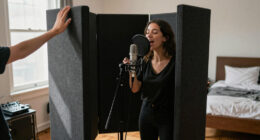
Studio headphones for creators need to do one thing consumer headphones deliberately avoid: tell you the truth. The Sony MDR7506 takes the top spot here because its midrange clarity and proven durability make it the safest all-around choice for editing, mixing, and voice work. Close behind, the Audio-Technica ATH-M50X offers a more modern, bass-tilted tuning with swappable ear pads and a foldable design, while the AKG K240 Studio remains the value pick for anyone tracking vocals or recording instruments at home. The core tradeoff in this category is closed-back isolation versus open-back accuracy, followed by budget: usable monitoring starts around $30, but the last 10% of neutrality can cost four times as much. Read on for the full breakdown of all thirteen models and which one fits your workflow.

Get audio and creator gear delivered free with Prime
- Fast, free delivery on millions of items
- Prime Video, Amazon Music and more included
- Member-only deals all year
Complete the kit


Key Takeaways
- The Sony MDR7506 won on consistency: nearly every competitor either boosts bass (M50X, OneOdio A71) or thins it out (HD 280 Pro), while the 7506 stays close enough to neutral for confident mix decisions.
- Impedance was the biggest hidden trap in the lineup — the Beyerdynamic DT 990 Pro at 250 ohms needs an audio interface or headphone amp, while the TASCAM TH-02 and ATH-M20x run fine straight off a phone or laptop.
- Only one open-back model (DT 990 Pro) and one semi-open model (AKG K240) made the cut, and both are poor choices for recording vocals because their sound leaks into the microphone — every other pick is closed-back for a reason.
- Detachable cables separated the long-term keepers from the disposables: the M50X, SRH440A, and K240 let you replace a broken cable cheaply, whereas the MDR7506, M40x, and M30x hardwire it, meaning cable damage ends the headphone.
- Under $50, the practical floor, the TASCAM TH-02 and OneOdio A71 both deliver usable monitoring, but they cut corners in pad quality and treble smoothness — creators who mix daily will outgrow them within months.
| Audio-Technica ATH-M50X Professional Studio Monitor Headphones |  | Best Overall | Driver Size: 45 mm | Type: Closed-back professional monitor headphones | Ear Cup Design: Circumaural, 90-degree swiveling earcups | VIEW LATEST PRICE | See Our Full Breakdown |
| Audio-Technica ATH-M40x Professional Studio Monitor Headphones |  | Best Value | Driver Size: 40 mm | Design: Circumaural, closed-back | Swiveling Earcups: 90 degrees | VIEW LATEST PRICE | See Our Full Breakdown |
| Sennheiser HD 280 Pro Headphones |  | Best Noise Isolation | Type: Closed-back, closed-ear headphones | Noise Attenuation: Up to 32 dB | Cord Length: 3.3 to 9.8 feet (coiled) | VIEW LATEST PRICE | See Our Full Breakdown |
| Audio-Technica ATH-M30x Professional Studio Monitor Headphones |  | Best for Portable Field Work | Driver Size: 40 mm | Magnet Type: Rare earth | Voice Coils: Copper-clad aluminum wire | VIEW LATEST PRICE | See Our Full Breakdown |
| OneOdio A71 Hi-Res Wired Over-Ear Studio Headphones |  | Best Budget Pick for Beginners | Driver Size: 40 mm | Connectivity: 3.5mm and 6.35mm, wired | Cable: Coiled cord, 6.6–9.8 ft | VIEW LATEST PRICE | See Our Full Breakdown |
| Sennheiser HD 480 PRO Professional Closed-Back Studio Headphones, Black | 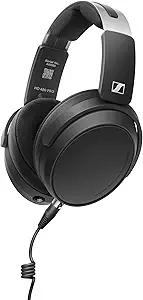 | Best Modern All-Rounder | Brand: Sennheiser | Model Number: 700499 | Design: Closed-back, over-ear | VIEW LATEST PRICE | See Our Full Breakdown |
| Shure SRH440A Over-Ear Wired Studio Headphones for Recording |  | Best for Critical Mixing on a Budget | Design: Over-ear, closed-back | Connectivity: Wired, detachable locking cable | Frequency Response: Extended | VIEW LATEST PRICE | See Our Full Breakdown |
| AKG K240 Studio Semi-Open Studio Headphones | 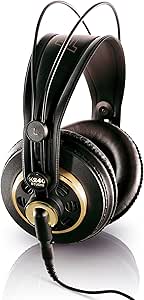 | Best Semi-Open Soundstage | Design: Semi-open, over-ear | Transducer Size: 30 mm XXL | Diaphragm: Varimotion | VIEW LATEST PRICE | See Our Full Breakdown |
| Audio-Technica ATH-M20x Professional Studio Monitor Headphones, White |  | Best Budget Isolation | Driver Size: 40 mm | Design: Circumaural (over-ear) | Driver Tech: Rare earth magnets, copper-clad aluminum wire voice coils | VIEW LATEST PRICE | See Our Full Breakdown |
| TASCAM TH-02 Professional Studio Monitor Headphones, Wired, Over Ear |  | Best Ultra-Budget Starter Pair | Brand: Tascam | Model Number: TH02 | Type: Over-ear, closed-back monitor headphones | VIEW LATEST PRICE | See Our Full Breakdown |
| beyerdynamic DT 270 Pro Closed-Back Wired Studio Headphones, Black | 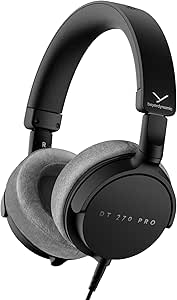 | Best for Vocal Tracking and Podcasting | Type: Closed-back, over-ear | Connectivity: Wired | Cable Length: 3 meters | VIEW LATEST PRICE | See Our Full Breakdown |
| Sony MDR7506 Professional Large Diaphragm Headphones |  | Best Industry-Standard Workhorse | Driver Size: 40mm | Frequency Response: 10Hz – 20kHz | Design: Closed-ear, foldable | VIEW LATEST PRICE | See Our Full Breakdown |
| Beyerdynamic DT 990 Pro (250 Ohm) Open-Back Studio Headphones, Black |  | Best for Mixing and Mastering | Type: Open-back dynamic | Impedance: 250 ohms | Frequency Response: 5Hz – 35kHz | VIEW LATEST PRICE | See Our Full Breakdown |
| studio headphones for creator | Design | Connectivity |
|---|---|---|
| Audio-Technica ATH-M50X Profes | — | Wired, detachable cable |
| Audio-Technica ATH-M40x Profes | Circumaural, closed-back | Wired |
| Sennheiser HD 280 Pro Headphon | Collapsible | Wired |
| Audio-Technica ATH-M30x Profes | Circumaural, closed-back, foldable | — |
| OneOdio A71 Hi-Res Wired Over- | Over-ear, swiveling earcups | 3.5mm and 6.35mm, wired |
| Sennheiser HD 480 PRO Professi | Closed-back, over-ear | Detachable cable, dual L/R jacks |
| Shure SRH440A Over-Ear Wired S | Over-ear, closed-back | Wired, detachable locking cable |
| AKG K240 Studio Semi-Open Stud | Semi-open, over-ear | Stereo 1/8" connector, 1/4" adapter |
| Audio-Technica ATH-M20x Profes | Circumaural (over-ear) | — |
| TASCAM TH-02 Professional Stud | Foldable | Wired |
| beyerdynamic DT 270 Pro Closed | — | Wired |
| Sony MDR7506 Professional Larg | Closed-ear, foldable | — |
| Beyerdynamic DT 990 Pro | — | — |
More Details on Our Top Picks
Audio-Technica ATH-M50X Professional Studio Monitor Headphones
The ATH-M50X earns the top spot because it strikes the balance creators actually need: honest sound with energy. Compared with the flatter ATH-M40X, the M50X adds a touch of low-end weight and larger 45mm drivers, which makes long mixing sessions more engaging without hiding flaws in a track. The detachable cable is a quiet advantage — a snapped cord means a $15 replacement, not a dead headphone, something the ATH-M30x can’t offer. Sound isolation is strong enough for tracking vocals next to a noisy computer. The tradeoff is real, though: these cost noticeably more than every other closed-back here, and the clamping force plus bulky earcups make them awkward as a daily commuter headphone. For a single pair that handles mixing, tracking, and editing, this is the pick.
Pros:- Excellent clarity with deep, accurate bass that doesn’t mask mixing problems
- Detachable cable extends the headphone’s lifespan
- Strong passive isolation for tracking in untreated rooms
- Durable build that survives daily studio handling
Cons:- Higher price than most closed-back alternatives in this lineup
- Bulky and clamp-heavy, uncomfortable for portable or glasses-wearing listeners
- Slightly colored low end compared with truly flat monitors
Best for: Creators who want one pair for mixing, tracking, and critical listening without buying separate headphones
Not ideal for: Buyers on a tight budget or anyone wanting a portable everyday headphone — the price and bulk favor desk use
- Driver Size:45 mm
- Type:Closed-back professional monitor headphones
- Ear Cup Design:Circumaural, 90-degree swiveling earcups
- Connectivity:Wired, detachable cable
- Color:Black
- Warranty:2 years
Our verdict“If you can only buy one pair of studio headphones for the next five years, this is the safest money you’ll spend.”
Audio-Technica ATH-M40x Professional Studio Monitor Headphones
Think of the ATH-M40x as the M50X’s more disciplined sibling. Where the M50X flatters slightly, the M40X aims for a flatter, more neutral response, which is arguably better for beginners learning to trust their ears — mixes translate more predictably to speakers and earbuds. At a meaningfully lower price, it keeps the features that matter for creators: detachable coiled and straight cables, 90-degree swiveling earcups for one-ear DJ monitoring, and pro-grade padding. Compared with the budget OneOdio A71, the M40x wins on build quality and long-term reliability, though the OneOdio undercuts it hard on price. The compromise is comfort over marathon sessions — the earpads are thinner than the M50X’s, and the clamp can fatigue after a few hours. Still, for accuracy-per-dollar, nothing else here comes close.
Pros:- Flat frequency response that makes mixes translate accurately
- Detachable cables in both coiled and straight versions
- Swiveling earcups for single-ear monitoring
- Cheaper than the M50X while sharing the same platform
Cons:- Thinner earpads and firmer clamp cause fatigue in long sessions
- Bulkier than ideal for travel use
- Less low-end presence than the M50X, which some creators miss
Best for: Home studio owners and podcasters who want neutral reference sound at a mid-range price
Not ideal for: Bass-hungry listeners or casual music fans — the flat tuning sounds clinical without EQ
- Driver Size:40 mm
- Design:Circumaural, closed-back
- Swiveling Earcups:90 degrees
- Cable Type:Detachable coiled and straight cables
- Connectivity:Wired
- Material:Pro-grade ear pads and headband
Our verdict“The smart middle ground: nearly M50X accuracy for creators who’d rather spend the difference on an audio interface or mic.”
Sennheiser HD 280 Pro Headphones
The HD 280 Pro earns its place through one standout spec: up to 32 dB of passive noise attenuation, the best isolation in this batch. That matters for creators recording in shared apartments or editing near loud equipment — the ATH-M50X isolates well, but the 280 Pro blocks more bleed, which also means less headphone leakage into your vocal mic. The sound leans warm and natural rather than brutally analytical, making long editing sessions pleasant. Another creator-friendly detail: earpads, headband padding, and the cord are all replaceable, so this is a buy-once purchase. Against the ATH-M40x, it trades a bit of treble detail for that isolation and warmth. The catch is fit — the clamp is tight by design, and listeners with larger heads will feel it within an hour.
Pros:- Class-leading 32 dB passive noise attenuation
- Warm, natural sound that stays comfortable for long edit sessions
- Fully replaceable earpads, padding, and cord
- Collapsible design for transport between studios
Cons:- Tight clamping force causes discomfort for some users
- Wired only with a long cord that’s awkward outside the studio
- Slightly less treble detail than the ATH-M40x
Best for: Vocalists recording with a live mic and creators working in noisy or shared spaces
Not ideal for: Listeners with larger heads or anyone who finds a firm clamp painful during long sessions
- Type:Closed-back, closed-ear headphones
- Noise Attenuation:Up to 32 dB
- Cord Length:3.3 to 9.8 feet (coiled)
- Design:Collapsible
- Replaceable Parts:Earpads, headband padding, audio cord
- Connectivity:Wired
Our verdict“The isolation specialist — buy it when bleed and background noise are your biggest enemies.”
Audio-Technica ATH-M30x Professional Studio Monitor Headphones
The ATH-M30x fills a gap the bigger Audio-Technicas leave open: portability. It’s the lightest way into the M-series sound, with a foldable, collapsible frame and single-sided cable exit that won’t tangle in a gear bag — a real advantage for location recording, field interviews, and video shoots where the M50X feels oversized. Sonically, the emphasis is on mid-range clarity, which suits podcast editing and dialogue work better than bass-heavy music production. Compared with the HD 280 Pro, it’s more comfortable to wear for extended periods but isolates far less, so it’s a poor choice for tracking vocals. The biggest frustration is the fixed, non-detachable cable — damage it and the headphones are effectively done, a risk the M40x eliminates for a modest price bump.
Pros:- Foldable, travel-friendly design with single-sided cable exit
- Detailed mid-range clarity well suited to dialogue and podcasts
- Durable build with comfortable ear cups for long sessions
- Affordable entry into the Audio-Technica M-series lineup
Cons:- Non-detachable cable — a broken cord ends the headphone’s life
- Noticeably weaker noise isolation than the HD 280 Pro
- Clamp can feel tight for users with larger heads
Best for: Field recordists, run-and-gun videographers, and podcasters who need studio sound in a bag
Not ideal for: Vocal tracking in loud rooms — weak isolation and non-replaceable cables limit studio longevity
- Driver Size:40 mm
- Magnet Type:Rare earth
- Voice Coils:Copper-clad aluminum wire
- Design:Circumaural, closed-back, foldable
- Cable Exit:Single side, fixed
- Warranty:2 years
Our verdict“A sensible pick for creators whose studio travels with them — just know the cable is a single point of failure.”
OneOdio A71 Hi-Res Wired Over-Ear Studio Headphones
For creators who haven’t confirmed this hobby will stick, the OneOdio A71 is the lowest-risk entry point here. It covers the creator basics: swiveling earcups for single-ear DJ monitoring, both 3.5mm and 6.35mm plugs for connecting to interfaces, controllers, or phones, and a shared audio port that lets a second person plug in directly — genuinely useful for co-editing or client previews without a splitter. The 40mm drivers deliver hi-res-tuned sound that’s enjoyable, but against the ATH-M40x the honesty gap shows: bass is boosted rather than reference-flat, so mixes made solely on these can sound thin elsewhere. The long coiled cord (up to 9.8 ft) is great at a desk and a nuisance anywhere else. As a first studio headphone or a backup pair, the value is hard to argue with.
Pros:- Includes both 3.5mm and 6.35mm connections plus a coiled cord
- Shared audio port for daisy-chaining a second listener
- Swiveling earcups support one-ear DJ monitoring
- Comfortable padded cushions and adjustable headband at a low price
Cons:- Sound signature is bass-forward rather than reference-neutral
- Coiled cord and bulky build make it impractical for portable use
- Build and driver refinement trail the Audio-Technica options
Best for: Beginner DJs, podcasters, and student producers who want functional studio headphones under a tight budget
Not ideal for: Anyone doing final mix decisions — the boosted low end isn’t trustworthy as a sole reference
- Driver Size:40 mm
- Connectivity:3.5mm and 6.35mm, wired
- Cable:Coiled cord, 6.6–9.8 ft
- Features:Single-ear monitoring, shared audio port, noise isolation
- Design:Over-ear, swiveling earcups
- Color:Black
Our verdict“A capable starter pair that gets you creating for very little money — upgrade when your ears outgrow it.”
Sennheiser HD 480 PRO Professional Closed-Back Studio Headphones, Black
Sennheiser’s HD 480 PRO sits in a sweet spot that most of this lineup misses: it pairs the closed-back isolation of the HD 280 Pro with a more contemporary tuning and comfort package aimed squarely at creators who move between desk and mobile rigs. The detachable cable with dual L/R jacks means a damaged cord doesn’t end the headphone’s life — a real advantage over fixed-cable rivals like the Sony MDR7506. This pick makes the most sense for producers and podcasters who want one pair for tracking, mixing, and laptop editing without swapping gear. The tradeoff is a coiled cable that can tug at the jack when you lean back, and the closed-back clamp that gets warm during marathon sessions. Compared with the Shure SRH440A below, it leans more comfortable but slightly less ruthlessly neutral.
Pros:- Accurate, full-spectrum sound with detailed German-engineered drivers
- Detachable dual-jack cable extends the product’s lifespan
- Comfortable for long studio sessions
- Effective closed-back noise control for tracking vocals
Cons:- Coiled 3-meter cable can pull and tug during desk work
- No wireless option at this price point
- Weight undisclosed, and clamp force may fatigue some users
Best for: Producers and podcasters who want one versatile closed-back pair for tracking, mixing, and mobile work
Not ideal for: Buyers who want wireless convenience or a flat analytical reference — this is a comfort-first all-rounder, not a surgical tool
- Brand:Sennheiser
- Model Number:700499
- Design:Closed-back, over-ear
- Connectivity:Detachable cable, dual L/R jacks
- Included:3-meter coiled cable, protective case, recording ear pads
- Warranty:24 months
- Color:Black
Our verdict“The one-pair solution for creators who want Sennheiser comfort and detail across studio and mobile setups without the neutral-as-a-brick character of mixing specialists.”
Shure SRH440A Over-Ear Wired Studio Headphones for Recording
Where the Sennheiser HD 480 PRO balances comfort and versatility, the Shure SRH440A goes narrow and deep: its transparent, unflattering tuning exposes mix problems rather than hiding them, which is exactly what you want when deciding whether a vocal sits right. The detachable locking cable is a smarter design than the plain pull-out cables on the ATH-M20x — it won’t unplug mid-take when a singer steps away from the mic. Compared with the pricier ATH-M40x, the SRH440A holds its own on midrange honesty while costing less, though it’s bulkier and less foldable for transport. The honest tradeoff: these are working tools, not listening pleasures. Bass is presented flat rather than fun, so casual listening on commutes will feel dry, and there’s no ANC for noisy cafés.
Pros:- Accurate, transparent sound that reveals mixing flaws
- Detachable locking cable stays secure during recording takes
- Comfortable adjustable headband and cushioned earcups for long sessions
- Works cleanly with both interfaces and portable devices
Cons:- Bulky design is impractical for portable or casual use
- No active noise cancellation
- Flat bass response disappoints anyone seeking entertainment value
Best for: Home studio owners and mixing engineers who need trustworthy, neutral reference sound under professional-model pricing
Not ideal for: Casual listeners and commuters — the bulky frame and dry tuning make these feel like homework without a desk
- Design:Over-ear, closed-back
- Connectivity:Wired, detachable locking cable
- Frequency Response:Extended
- Impedance:Optimized for various audio interfaces
- Compatibility:Professional studio gear, laptops, portable devices
- Included Accessories:Threaded 1/4″ (6.3 mm) adapter
Our verdict“The mixing truth-teller of the mid-range tier — buy it to make decisions, not to enjoy playlists.”
AKG K240 Studio Semi-Open Studio Headphones
This option stands out for something no closed-back pick in this roundup can offer: an open, airy soundstage that makes the Shure SRH440A and HD 480 PRO sound boxed-in by comparison. That spatial honesty is why the K240 Studio has survived decades in professional rooms — instruments sit in believable positions, which helps when judging reverb tails and panning. The Varimotion 30mm XXL drivers deliver wide dynamics with solid bass, though nothing like the low-end punch of the ATH-M20x. The catch is the semi-open design leaks sound both ways: your mic will pick up the backing track during vocal takes, and a loud room will bleed in. Compared with the fully open Beyerdynamic DT 990 Pro, the K240 plays nicer with modest interfaces thanks to its lower impedance, but it still demands a proper over-ear seal to sound its best.
Pros:- Wide, open soundstage that closed-back rivals can’t match
- Exceptional dynamic range with clear highs and solid bass
- Versatile connectivity with 1/8″ plug, 1/4″ adapter, and long 9.9-ft cable
- Decades-proven professional standard for mixing
Cons:- Sound leakage in both directions disqualifies it for tracking
- Requires a proper fit to deliver full performance
- Not practical for portable or on-the-go use
Best for: Mixing and mastering work in quiet treated rooms where soundstage and reverb judgment matter more than isolation
Not ideal for: Vocal tracking and podcast recording — the semi-open design bleeds click tracks and backing audio straight into your microphone
- Design:Semi-open, over-ear
- Transducer Size:30 mm XXL
- Diaphragm:Varimotion
- Connectivity:Stereo 1/8″ connector, 1/4″ adapter
- Cable Length:9.9 feet
- Use Cases:Studio mixing, podcasting, Hi-Fi listening
- Build:Durable, professional standard
Our verdict“A studio classic for quiet-room mixing where spatial accuracy trumps isolation — just don’t put a singer in the same room with it.”
Audio-Technica ATH-M20x Professional Studio Monitor Headphones, White
If the entry point were judged purely on blocking out room noise, the ATH-M20x would beat both the TASCAM TH-02 and the OneOdio A71 — its tight circumaural seal and 40mm drivers tuned for enhanced low end make it the strongest cheap option for tracking drums or monitoring in untreated bedrooms. The rare earth magnets and copper-clad voice coils punch above the price bracket, though the tuning flatters bass more than the flatter ATH-M30x step-up — pleasant for beat-making, slightly misleading for final mixes. Compared with the TH-02, you get better isolation and a more secure feel, but you lose the foldable frame and pay a bit more. This model is better suited to creators building a first home studio than anyone editing on a train: the fixed cable and single-sided exit mean a breakage retires the whole pair.
Pros:- Excellent passive sound isolation for loud environments
- Enhanced low-frequency performance suited to beat-making and tracking
- Comfortable circumaural fit at an entry price
- Quality components (rare earth magnets, CCAW voice coils) rare at this tier
Cons:- Bass-forward tuning can mislead mix-balance decisions
- Fixed cable — damage means replacing the headphones
- Can feel heavy during long sessions
Best for: Beginning producers and podcasters in noisy spaces who need strong passive isolation without spending M40x money
Not ideal for: Final mixing decisions — the boosted low end flatters mixes and fixed-cable construction limits longevity and portability
- Driver Size:40 mm
- Design:Circumaural (over-ear)
- Driver Tech:Rare earth magnets, copper-clad aluminum wire voice coils
- Tuning:Enhanced low-frequency performance
- Cable Exit:Single-side
- Color:White
Our verdict“The cheapest credible isolation in this lineup — a smart first tracking headphone, as long as you double-check bass levels on monitors.”
TASCAM TH-02 Professional Studio Monitor Headphones, Wired, Over Ear
At the very bottom of the price ladder, the TASCAM TH-02 answers a different question than everything above it: what’s the least you can spend and still get usable studio monitoring? The answer is surprisingly capable — rich bass and clear highs that outclass generic consumer earbuds — but the gap to the ATH-M20x is real, with weaker isolation and a lighter build that feels disposable next to the Shure SRH440A’s locking-cable construction. Its ace is the foldable frame and 300g weight, making it the easiest pick here to toss in a backpack for location podcasting or DJ sets, and the included 1/4″ adapter plugs straight into mixers and interfaces. The tradeoffs are what you’d expect at this price: the padding flattens over months, and isolation depends heavily on getting a consistent ear-pad seal.
Pros:- Foldable, lightweight design travels easily to sessions and gigs
- Comfortable padded headband and ear pads for the price
- Rich bass and clear highs suitable for basic monitoring
- Includes 1/4″ adapter for mixers and interfaces
Cons:- Build quality feels lightweight and less durable than higher-tier rivals
- Sound isolation depends heavily on ear pad fit and degrades as pads wear
- Wired only, with no detachable cable option
Best for: First-time podcasters, students, and DJs who need a functional, packable monitoring pair for under modest budgets
Not ideal for: Anyone mixing professionally — the uneven isolation and lightweight build won’t survive daily studio abuse or deliver trustworthy balances
- Brand:Tascam
- Model Number:TH02
- Type:Over-ear, closed-back monitor headphones
- Design:Foldable
- Connectivity:Wired
- Included Accessories:1/4 inch (6.3mm) adapter
- Weight:0.3 kg
- Warranty:1 year
Our verdict“The cheapest legitimate entry into studio monitoring — buy it to start creating today, upgrade when your ears outgrow it.”
beyerdynamic DT 270 Pro Closed-Back Wired Studio Headphones, Black
For creators who record vocals or host podcasts, noise isolation matters more than anything else — and that’s exactly where the DT 270 Pro earns its spot. The closed-back design keeps your backing track from bleeding into the microphone, something open-back models like the Beyerdynamic DT 990 Pro simply cannot do. Compared with the Sony MDR7506, this model trades a bit of the Sony’s exposed treble detail for a smoother, less fatiguing presentation that’s easier to live with during long sessions. The zero-latency wired monitoring is the practical payoff: what you hear lines up with what you say, with no Bluetooth delay to throw off your timing. The tradeoff is a plain, utilitarian design with no detachable cable or folding hinge — this is a workhorse, not a travel companion.
Pros:- Strong closed-back isolation prevents mic bleed during vocal takes
- Comfortable ear pads hold up through multi-hour sessions
- Zero-latency wired monitoring keeps timing accurate
- Approachable entry price for genuine studio-grade hardware
Cons:- Wired-only design restricts mobility around the studio
- Basic build with no detachable cable or foldability
- Sound tuning prioritizes utility over excitement
Best for: Podcasters and home recording artists who need strong isolation and zero latency while tracking vocals
Not ideal for: Creators who want a versatile everyday pair for mobile devices — the wired-only, fixed design limits flexibility
- Type:Closed-back, over-ear
- Connectivity:Wired
- Cable Length:3 meters
- Weight:6.8 ounces
- Key Features:Noise isolation, comfortable fit, zero-latency monitoring
- Warranty:2 years
Our verdict“If your primary job is recording your own voice without bleed or lag, this is the focused tool for it.”
Sony MDR7506 Professional Large Diaphragm Headphones
Ask any working audio engineer which headphones live in every studio drawer, and the MDR7506 will come up. Its reputation rests on a forward, detailed midrange that exposes flaws — harsh sibilance, muddy lows — which smoother-tuned models like the beyerdynamic DT 270 Pro can gloss over. That honesty makes it a better editing and QC tool, though slightly less relaxing for casual listening. Compared with the Audio-Technica ATH-M50x, the Sony is lighter and folds down smaller, but its non-detachable coiled cord is the notable weakness: damage the cable and you’re repairing or replacing the whole unit. Still, with a rugged metal frame, a 9.8-foot cord that reaches across a control room, and included 1/4-inch and 1/8-inch connectivity, it’s built for daily professional abuse at a price that leaves room in the budget for a second pair.
Pros:- Detailed, revealing sound that surfaces mix problems
- Rugged construction survives years of daily professional use
- Folds flat with a soft case for transport
- Long 9.8-foot cord covers studio and field setups
Cons:- Non-detachable cord means a cable fault can end the headphone’s life
- Somewhat bulky on the head for small frames
- Frequent adapter use needed for 1/8-inch jacks
Best for: Video editors, field recordists, and engineers who want a proven, brutally honest monitoring tool they can toss in a bag
Not ideal for: Creators who hate cable management — the fixed coiled cord and adapter dance get tedious with portable gear
- Driver Size:40mm
- Frequency Response:10Hz – 20kHz
- Design:Closed-ear, foldable
- Cord Length:9.8 feet, oxygen-free copper
- Connector:Gold-plated 1/4-inch with 1/8-inch adapter
- Included:Soft carrying case
Our verdict“The safest all-around bet in this lineup — a studio standard that doubles as a reliable editing reference.”
Beyerdynamic DT 990 Pro (250 Ohm) Open-Back Studio Headphones, Black
When the job shifts from recording to mixing and mastering, the rules change: you no longer need isolation, you need accuracy and space. The DT 990 Pro’s open-back design delivers a wide, natural stereo image that closed models like the Sony MDR7506 or Sennheiser HD 280 Pro can’t match — panning decisions and reverb tails simply make more sense here. Its 250-ohm impedance is the catch and the point: plugged straight into a phone or laptop it will sound thin and quiet, but paired with a headphone amp or audio interface it opens up with extended 5Hz–35kHz response and a spacious, analytical character. The velour pads keep marathon mixing sessions comfortable where the MDR7506’s pleather gets warm. Budget for an amp, accept that sound leaks both ways, and you get one of the most trusted mixing references under $200.
Pros:- Open-back design creates a wide, natural stereo image for mixing
- Extended 5Hz–35kHz frequency response reveals detail
- Velour ear pads stay comfortable through long sessions
- German-built construction with a proven professional pedigree
Cons:- Requires a headphone amp or interface for adequate volume
- Open-back design leaks sound in and out — no privacy or isolation
- Fixed coiled cable limits flexibility
Best for: Mixing engineers and producers who already own an audio interface or headphone amp and want an accurate open-back reference
Not ideal for: Anyone recording vocals nearby or monitoring on the go — the open back leaks sound and the 250-ohm impedance starves portable devices
- Type:Open-back dynamic
- Impedance:250 ohms
- Frequency Response:5Hz – 35kHz
- Cable:Fixed 3m coiled cable
- Connector:1/4-inch
- Ear Pads:Soft velour
- Origin:Made in Germany
Our verdict“The clear mixing and mastering pick — provided you have the amplification to feed it and a quiet room to work in.”

How We Picked
I ranked these thirteen models against what actually matters in a creator’s workflow: tonal neutrality (can you trust what you hear when balancing vocals, dialogue, or a mix), comfort over long sessions (clamping force and pad material, since editing runs are measured in hours), build and repairability (replaceable pads and cables), isolation (how well they block room noise and prevent bleed into a mic), and value at the actual street price, not the launch price. Specs like driver size and frequency response numbers were treated skeptically — two headphones with identical claimed ranges can sound completely different, so tuning balance and real-world usability carried more weight than datasheets.
The ranking logic follows use case, not price. A $100 pair that nails a creator’s daily needs (Sony MDR7506) beats a $170 pair with a flattering but skewed signature, and a $30 pair earns a place if it honestly serves beginners. Models were compared directly against their closest neighbors — the M40x against the M50X, the SRH440A against the HD 280 Pro, the TH-02 against the A71 — because most buyers are choosing between two or three of these, not all thirteen.
Factors to Consider When Choosing Studio Headphones For Creators
Before matching a model to your setup, it helps to understand the decisions that shape every headphone in this category. These six factors explain why two similarly priced pairs can serve completely different creators.Closed-Back vs. Open-Back: Match the Design to Your Room
Closed-back headphones seal the ear cup, which blocks room noise and keeps your monitoring from bleeding into a microphone — that’s why twelve of the thirteen picks here are closed. Open-back designs like the Beyerdynamic DT 990 Pro trade isolation for a wider, more natural soundstage, which helps with mixing depth and panning decisions. The mistake I see most often is a podcaster buying open-backs for voice recording: the backing track leaks into the mic and creates unusable takes. A practical compromise is keeping closed-backs for tracking and adding open-backs later purely for mix checks. If you can only own one pair, closed-back is the safer default unless you exclusively mix in a quiet room.
Impedance and What You’ll Plug Into
Impedance determines whether your headphones actually reach usable volume on your gear. Low-impedance models (roughly 16–60 ohms) like the TASCAM TH-02 or OneOdio A71 run happily from a phone, laptop, or camera adapter. High-impedance models — the DT 990 Pro at 250 ohms is the standout example — need an audio interface with a strong headphone output or a dedicated amp to sound their best. Plugging 250-ohm headphones directly into a phone produces quiet, limp audio that misleads you into thinking the mix is weak. Check your interface’s headphone output specs before buying anything above 80 ohms; this single detail causes more returns than any other in this category.
Neutral Tuning vs. Flattering Sound
Consumer headphones are tuned to sell music — boosted bass, smoothed-over treble. Studio headphones are tuned to expose problems: harsh sibilance, muddy low mids, unbalanced levels. The catch is that accurate and enjoyable are often at odds, which is why the bass-forward ATH-M50X is beloved by producers who want energy during long sessions, while the flatter HD 280 Pro suits engineers making precision calls. A common beginner mistake is buying the most “fun” sounding pair and then wondering why mixes sound thin on speakers. If you also consume media on these headphones, a mildly tilted tuning is a reasonable compromise — just know what you’re trading away.
Comfort Is a Technical Spec, Not a Luxury
Clamp force, pad material, and weight decide whether you can wear headphones through a four-hour edit. Tight clamp helps isolation (the HD 280 Pro clamps firmly for that reason) but causes fatigue and even headaches on larger heads. Pleather pads sweat in warm rooms; velour pads breathe but leak sound. Weight above 300 grams becomes noticeable during long voice sessions, especially for glasses wearers. My advice: budget $20–40 for replacement pads from day one, because stock pads on nearly every sub-$100 model flatten and crack within a year or two, and fresh pads often transform both comfort and bass response. Also check whether the pads are user-replaceable at all — glued pads shorten a headphone’s lifespan dramatically.
Cables, Connectors, and Repairability
Cables are the first thing to fail on wired headphones, so connector design predicts lifespan better than driver specs. Detachable cables — found on the M50X, SRH440A, and K240 Studio — turn a $15 mishap into a $15 fix. Hardwired cables on the MDR7506, M40x, and most budget models mean cable damage ends the product, though Sony’s coiled cable is at least tough and field-repairable for the handy. Also consider connector format: 3.5mm with a screw-on 6.3mm adapter (Audio-Technica’s approach) is the most versatile, while fixed 6.3mm plugs require an adapter for mobile devices and cameras. Coiled cables resist tangles at a desk but drag on portable recorders.
Where to Spend and Where to Save
The honest price-performance curve in this category bends hard around $100. Below $50 (TH-02, A71, M20x) you get functional monitoring with rough edges; between $90 and $170 (MDR7506, M50X, SRH440A, HD 280 Pro) you get tools professionals genuinely use; above that (DT 270 Pro, DT 990 Pro) you pay for specialized strengths rather than across-the-board improvements. My rule: beginners and content creators on a budget lose little by staying under $100, while anyone monetizing their audio work should skip straight to the proven mid-tier. Avoid the middle trap of spending $60 on a slightly better budget pair — that money is better saved toward the $99–$169 tier. And buy pads and a stand alongside whatever you choose; both extend the investment.
Frequently Asked Questions
Can I use one pair of headphones for both recording and mixing, or do I need two?
One pair can absolutely cover both jobs, and most creators start exactly that way — but the choice matters. For recording vocals or instruments, you need a closed-back design so the backing track doesn’t bleed into the microphone; the Sony MDR7506 and HD 280 Pro are the workhorses here. For mixing, an open-back pair like the DT 990 Pro gives a more honest sense of space and stereo placement, but it’s unusable for tracking because it leaks sound in both directions. If your budget allows two pairs, a closed-back under $100 plus an open-back for mix checks is the classic studio combo. If you’re buying one, go closed-back — you can always cross-check mixes on speakers, earbuds, or a car stereo for free.
Do I need a headphone amp for studio headphones?
Only if the impedance is high. Most models in this roundup sit between 32 and 65 ohms, which any laptop, phone, or audio interface can drive to comfortable volume. The exception is the Beyerdynamic DT 990 Pro at 250 ohms: plugged into a phone it sounds quiet and dynamically flat, and you’ll unknowingly make bad mixing decisions on quiet playback. Any audio interface with a decent headphone output — most interfaces in the $100–200 range qualify — will drive it properly. If you record on the go with a portable recorder or camera adapter, stick to low-impedance models like the TASCAM TH-02, OneOdio A71, or the Audio-Technica M-series.
Is the ATH-M50X really worth the extra money over the ATH-M40x or M30x?
It depends on what the extra features are worth to you, because the sound gap is smaller than the price gap suggests. The M40X is actually tuned flatter than the M50X, which many engineers prefer for mixing accuracy — the M50X lifts the bass and adds energy that producers enjoy but that slightly colors judgment on low-end balance. What you’re really paying for on the M50X is detachable cables, 90-degree swiveling ear cups, and folding for transport, all of which extend its usable life considerably. The M30x gives up the detachable cable and some refinement but remains the best pure-value option for fixed setups. My honest take: buy the M40X for accuracy on a desk, the M50X if you travel or want one pair to last a decade, and the M30x if $79 is the ceiling.
How long do studio headphones last, and which parts should I expect to replace?
A well-built pair from this list should survive five to ten years of regular use — the Sony MDR7506 has famously outlived entire studios — but almost never with its original parts. Ear pads are the first casualty: the stock pleather on nearly every model here starts flaking within one to three years, so budget $20–35 for replacement pads (many MDR7506 and ATH-M50X owners upgrade to aftermarket pads and consider it an improvement). The second point of failure is the cable, which is why detachable-cable designs like the Shure SRH440A rank higher for long-term value despite similar sound quality to hardwired rivals. Headband padding wears next, especially if you hang the headphones on a stand by the band. Treat these as maintenance items rather than defects, and even a budget pair can serve years longer than expected.
Which of these headphones work best for podcasting and voiceover specifically?
Voice work has a specific priority list: isolation, midrange clarity, and comfort during long sessions, in that order. The HD 280 Pro leads for isolation — its tight seal blocks HVAC hum and room reflections, helping you self-monitor your own voice cleanly. The Sony MDR7506 is the industry default for a reason: its pronounced midrange presence exposes mouth clicks, plosives, and sibilance before your listeners hear them. The Shure SRH440A is a strong alternative with a detachable cable and slightly more forgiving fit for long wear. Skip open-back and semi-open models entirely for voice work, and be wary of bass-heavy budget pairs like the OneOdio A71, which can mask the low-mid muddiness that makes speech sound boxed-in.
Conclusion
After comparing all thirteen models, the right choice comes down to what you record and what you plug into. Best overall goes to the Sony MDR7506 — after decades in professional studios, it remains the most dependable all-purpose tool for editing, mixing, and voice work, provided you can live with its coiled hardwired cable. Best value is a split decision: the TASCAM TH-02 wins on sheer price for beginners, while the Audio-Technica ATH-M40X is the smarter spend if you can stretch, delivering flatter tuning than its pricier sibling. Best premium belongs to the Beyerdynamic DT 990 Pro for mixing depth and detail — but only with an amp or capable interface — with the DT 270 Pro as the pick for demanding studio tracking. Best for beginners is the OneOdio A71 or ATH-M20x, both forgiving, affordable, and easy to drive from anything. For specific needs: podcasters and voiceover artists should grab the HD 280 Pro or SRH440A for isolation, home studio vocalists can’t beat the AKG K240 Studio, and producers wanting one durable travel-ready pair should pay up for the ATH-M50X. Whatever you choose, add replacement pads to the order — future you will thank you.
Halloween Picks

Star Wars Yoda and R2-D2 Inflatable Halloween Decor, 6 ft with LEDs, Indoor/Outdoor

Haunted Hill Farm 2-Ft. Zombie Raccoon Halloween Animatronic

12-Foot Inflatable Pumpkin Halloween Archway with LED Lights
As an affiliate, we earn on qualifying purchases.