
TL;DR

Get audio and creator gear delivered free with Prime
- Fast, free delivery on millions of items
- Prime Video, Amazon Music and more included
- Member-only deals all year
Choosing a pad controller for finger drumming depends on feel, sensitivity, and build quality. Recent innovations like mesh pads and wireless tech expand creative options. Match specs with your style for better performance.
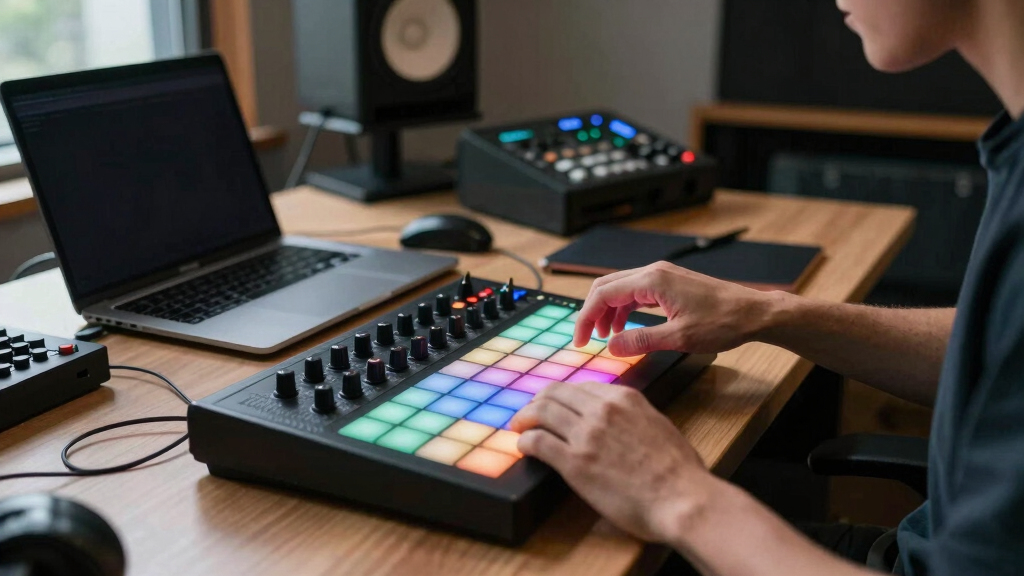
Finger drumming isn’t just about hitting pads. It’s about feeling the sound, controlling nuance, and making every beat resonate. Your pad controller is the bridge between your fingertips and your music. Picking the right one can transform your performances from flat to fiery.
But with dozens of options and specs that seem to blur together, how do you know what really matters? This guide breaks down the must-know features—so you can choose a pad controller that fits your style, your setup, and your budget. Let’s dive into what makes a pad controller truly tick.
Mesh pads provide a natural, responsive feel that improves finger drumming performance.
A higher number of pads allows for more complex patterns, but choose based on your workflow and portability needs.
Sensitivity, low latency, and build quality are non-negotiables for expressive, reliable performance.
Connectivity versatility—USB, MIDI, CV—expands your creative options.
Recent innovations like hybrid controls and wireless tech open new creative channels, but consider your environment and budget.
Pad Controllers: The Specs That Matter
Feel, sensitivity, response and build quality determine whether a controller becomes an extension of your hands—or a barrier between your fingers and the beat.
Choose for expression, not feature count.
The best controller is the one that captures light taps, hard accents and every ghost note between them—without interrupting your timing.
What are your fingers hitting?
Pad material shapes rebound, fatigue, consistency and dynamic control. Mesh favors acoustic-like nuance; rubber favors rugged repeatability; silicone occupies the middle ground.
Mesh
Soft, lively rebound with strong sensitivity to subtle changes in touch. A natural fit for ghost notes and dynamic performance, but typically pricier and less rugged.
Rubber
Firm, predictable and built for repetition. Excellent for consistent triggering, touring and value-focused setups, though the harder surface can reduce fine dynamic detail.
Silicone
Softer than rubber and usually comfortable for long sessions. It balances touch and resilience, although response can feel less precise than a high-quality mesh surface.
How many pads do you need?
More pads expand immediate access to samples, scenes and layered kits. Fewer pads reduce size, setup time and cognitive load. Match the grid to what you perform—not what looks impressive.
Compact practice, one-shots and simple loops.
More voices without sacrificing portability.
Full drum layouts, banks and pattern work.
Scenes, clips, full kits and live improvisation.
Choose 8–16 pads for portability and focused drumming. Choose larger grids when you need many sounds available at once or want to perform complete arrangements without changing banks.
Response makes the groove believable.
Sensitivity captures intention. Low latency preserves timing. Adjustable velocity curves connect the two by translating your personal touch into a usable dynamic response.
Response spectrum
Lower total system latency feels more immediate. The controller, connection, driver, software and audio buffer all influence the result.
Test before you commit
Three surfaces, three trade-offs.
Use this matrix as a shortlist—not a substitute for playing. Sensor design, pad size, firmware and velocity settings can make two controllers with the same material feel very different.
| Specification | Mesh | Rubber | Silicone |
|---|---|---|---|
| Natural rebound | ✓ Excellent | ~ Firm | ✓ Soft |
| Dynamic nuance | ✓ High | ~ Moderate | ~ Good |
| Touring durability | ~ Variable | ✓ High | ✓ Good |
| Budget friendly | ✗ Less often | ✓ Yes | ~ Mid-range |
| Best fit | Expressive performance | Reliable repetition | Comfortable balance |
Build beyond the laptop.
USB MIDI is the standard route into music software. Traditional MIDI and CV/Gate expand hardware integration, while wireless connections increase freedom but may add uncertainty in critical live environments.
USB MIDI
Simple DAW control, common compatibility and often bus-powered operation.
MIDI Out
Direct control of drum machines, samplers and external synthesizers.
CV / Gate
Trigger and control analog or modular instruments without a computer.
Wireless
Untethered movement, with latency and interference to assess before live use.
From fingertip to finished beat.
Every stage affects the next. A responsive surface captures the gesture; accurate sensing converts it; a stable connection preserves timing; software maps it; sound completes the performance.
Spend where performance lives.
Hybrid controls, RGB feedback and wireless technology can unlock new workflows. They matter after the fundamentals are right: dependable pads, accurate dynamics, tight response and construction that suits your environment.
What types of pads give you the best finger drumming feel?
Pad type is the soul of your finger drumming experience. Mesh pads mimic real drum heads, offering a soft, natural feel and high sensitivity. Rubber pads are tough, budget-friendly, and respond reliably. Silicone pads sit somewhere in between — softer than rubber, but less precise than mesh.
Imagine hitting a mesh pad—like striking a real drumhead, each strike feels alive, with a slight bounce and nuanced response that can mimic the dynamics of acoustic drums. Rubber pads, on the other hand, tend to have a firmer, more consistent response that doesn’t vary much with touch, which can be advantageous for precise, repeatable triggers but may lack the expressive nuance. Silicone pads often strike a balance but may not capture the full range of dynamics.
Recent trends favor mesh pads because they respond more like real drums, which is crucial for expressive finger drumming. Mesh pads allow for velocity-sensitive playing, meaning softer touches produce softer sounds, and harder hits yield louder ones. This dynamic range is vital for musical expression, as it lets you convey emotion and nuance. However, they can be more fragile and pricier. Rubber pads are durable and cost-effective but may limit expressiveness due to their less sensitive surface. Choosing between them involves a tradeoff: do you prioritize nuanced control or durability and cost? Your style and performance context will guide this choice.
mesh pad controller for finger drumming
As an affiliate, we earn on qualifying purchases.
As an affiliate, we earn on qualifying purchases.
How many pads do you really need for finger drumming?
More pads mean more options at your fingertips. A setup with 16 to 64 pads allows complex patterns, layered sounds, and live improvisation. Smaller controllers with 8 or 12 pads suit quick triggers and simpler loops.
But the number of pads directly influences your creative flexibility. For instance, a 64-pad grid enables you to trigger entire kits, assign different sounds to each pad, and perform complex live sets without switching banks. This can be a game-changer for professional performers who need rapid access to multiple sounds. Conversely, a smaller setup with 8-16 pads is more portable, easier to learn, and suitable for quick improvisation or practice. It’s about balancing your workflow—if you aim for intricate compositions and live performance, more pads are beneficial. If your focus is on simplicity and portability, fewer pads might be better.
Furthermore, consider how you plan to arrange your workflow. Do you prefer a grid for pattern programming, or do you need a handful of pads for triggering specific samples? Your choice impacts not just your creative potential but also your setup’s ergonomics and ease of use. Larger controllers may require more space and setup time, but they unlock more expressive possibilities. Smaller controllers are more portable but might limit your scope. The key is to match the number of pads to your style, performance needs, and environment.
USB MIDI pad controller with high sensitivity
As an affiliate, we earn on qualifying purchases.
As an affiliate, we earn on qualifying purchases.
What makes sensitivity and response so critical—and how to tell if your pads deliver?
Finger drumming thrives on responsiveness. High sensitivity means your pads detect even the lightest touch, giving you control over dynamics. Low latency ensures your sounds trigger instantly, keeping your groove tight. These factors are essential because they directly influence how naturally and expressively you can play. If your pads are unresponsive or slow, your performance can feel stiff or disconnected, making it difficult to convey subtle musical nuances.
Why does this matter? Because music is often about dynamics—playing softly for subtlety or hard for impact. If your controller can’t respond to these variations, your expressiveness is compromised. Additionally, low latency is critical for live performance, where even milliseconds matter. A delay between your hit and the sound can disrupt your timing and energy.
To evaluate responsiveness, look for features like adjustable velocity curves. These allow you to fine-tune how your pads respond to different touch intensities, aligning hardware sensitivity with your playing style. Mesh pads, for example, typically respond within 1-2 milliseconds, enabling very expressive playing. Rubber pads might have slightly higher latency but can be more forgiving, especially for players who prefer a firmer hit. Ultimately, the importance of sensitivity and response cannot be overstated—they are the foundation of expressive, dynamic finger drumming. Investing in high-quality pads ensures your performance feels natural and inspiring, rather than limited by hardware.
wireless pad controller for music production
As an affiliate, we earn on qualifying purchases.
As an affiliate, we earn on qualifying purchases.
Frequently Asked Questions
What is the best pad controller for beginners?
Devices like the Akai MPD218 or Novation Launchpad Mini offer affordability, simplicity, and reliable performance—perfect for starting your finger drumming journey without breaking the bank.
How do I choose between rubber, silicone, or mesh pads?
Mesh pads give the most natural feel and sensitivity, ideal for expressive playing. Rubber pads are more durable and budget-friendly, while silicone offers a softer touch but less responsiveness. Consider your playing style and environment.
Are wireless pad controllers reliable for live shows?
Wireless controllers are improving but can still face latency and interference issues. Wired connections generally offer more stability during live performances, making them the safer choice for critical gigs.
Can I use pad controllers with any DAW?
Most pad controllers are MIDI-compatible and work with major DAWs like Ableton Live, FL Studio, Logic Pro, and others. Check compatibility, but generally, they’re widely supported.
What features should I prioritize for finger drumming?
Focus on high sensitivity, low latency, durability, and enough pads to match your style. Features like customizable velocity curves and RGB lighting can also enhance your expressive control.
multi-pad MIDI controller for finger drumming
As an affiliate, we earn on qualifying purchases.
As an affiliate, we earn on qualifying purchases.
Conclusion
Your finger drumming setup should feel like an extension of your hands—responsive, durable, and tailored to your style. Prioritize key specs like pad feel, sensitivity, and connectivity to unlock more expressive power from your gear.
As technology advances, the options keep growing. Choosing the right controller isn’t about chasing the latest feature—it’s about finding what makes your fingers sing. So, pick smart, play loud, and let your beats flow.
Halloween Picks
halloween
As an affiliate, we earn on qualifying purchases.