TL;DR

Get audio and creator gear delivered free with Prime
- Fast, free delivery on millions of items
- Prime Video, Amazon Music and more included
- Member-only deals all year
In untreated rooms, dynamic mics tend to reject room echo and ambient noise better, making them a safer choice. Condensers capture more detail but can pick up unwanted reflections unless you add some room treatment or strategic placement. New tech and accessories are making condensers more usable in rough spaces, but for simplicity and noise rejection, dynamic mics often win.
Ever set up a mic in a room full of echoes and wondered why your voice sounds like it’s bouncing around a canyon? You’re not alone. Untreated rooms—those spaces without acoustic panels or foam—can turn simple recordings into a muddy mess. But here’s the thing: your choice of microphone can make a huge difference.
Whether you’re podcasting, recording vocals, or capturing instruments at home, understanding how dynamic and condenser mics behave in these rough environments can save you time, money, and frustration. This guide cuts through the noise—literally—to show you which mic type works best in untreated rooms, what recent tech is changing the game, and how to get decent sound without turning your space into a studio.
Dynamic microphones naturally reject room reflections, making them ideal for untreated spaces.
Condenser microphones capture more detail but need some acoustic treatment or placement tricks to avoid picking up echoes.
Recent tech improvements—like directional patterns and software tools—are making condensers more practical in rough environments.
Close-miking and reflection filters are your best friends when recording in untreated rooms, regardless of mic type.
Choosing the right mic depends on your environment, budget, and what you prioritize—detail or durability.
What’s the real difference between dynamic and condenser mics?
Dynamic mics are the tough guys. Built with a moving coil and a magnet, they’re rugged, handle loud sounds, and don’t mind rough environments. Think of them as the workhorse of microphones—perfect for live gigs and rough-and-tumble recordings.
Condenser mics, on the other hand, are the detail-oriented artists. Using a capacitor to capture sound, they’re sensitive, with a wider frequency range. They excel at capturing vocals and instruments with richness but are more fragile and need power—either phantom or batteries.
best dynamic microphone for untreated rooms
As an affiliate, we earn on qualifying purchases.
As an affiliate, we earn on qualifying purchases.
Why does room acoustics matter more with condensers?
In untreated spaces, the walls, ceilings, and even furniture bounce sound around. Condenser microphones are like sponges—they soak up every detail, including unwanted echoes. This means your vocals or guitar will pick up a lot of room reverb, making them sound distant or muddy.
Dynamic mics, with their limited high-frequency response, naturally cut through some of that chaos. They tend to ignore reverb and ambient noise, giving a cleaner, more direct sound even amid reflections.
For example, record a singer in a bedroom with bare walls. A condenser might pick up every echo, while a dynamic mic focuses on the voice, rejecting some of the room’s chaos.
Understanding this difference is crucial because it determines whether your microphone will amplify the environmental imperfections or help you work around them. If you want a clear, focused recording in a messy space, the choice of mic influences your entire workflow and the final sound quality.
condenser microphone with reflection filter
As an affiliate, we earn on qualifying purchases.
As an affiliate, we earn on qualifying purchases.
How recent tech is changing the game for untreated spaces
Newer microphones and gear are making life easier for home recordists. Digital condensers with built-in noise gates or software room correction tools help tame reflections by dynamically reducing background noise and reverb. Directional polar patterns—like supercardioid or hypercardioid—are designed to reject off-axis sound, which means less room noise and reflections are picked up.
Some dynamic mics now feature broader frequency responses, narrowing the gap with condensers in capturing details, which means they can be more versatile than ever. Additionally, portable acoustic shields and reflection filters are affordable and easy to set up, acting as physical barriers that absorb or deflect sound waves, significantly reducing room echo.
For instance, a recent digital condenser with a supercardioid pattern and onboard noise suppression can record vocals in a room with minimal treatment, delivering clear, professional-sounding results. These innovations mean that even in untreated spaces, you can achieve quality recordings without extensive acoustic modifications.
In essence, technological advancements are shifting the landscape, making it feasible to use condensers effectively in environments that previously would have been problematic. This reduces the need for costly room treatments, democratizing high-quality recording for hobbyists and small studios.
microphone accessories for home recording
As an affiliate, we earn on qualifying purchases.
As an affiliate, we earn on qualifying purchases.
What should you consider before choosing a mic in an untreated room?
Here are some practical points:
- Budget: Dynamic mics are cheaper, tougher, and more forgiving. They are often the best choice for beginners or those on a tight budget because they require less careful placement and room considerations.
- Application: For loud sources or environments prone to noise and echo, dynamic mics provide a safety net—they’re less likely to pick up unwanted sound and distort under high SPLs.
- Detail: Condensers offer richer, more nuanced sound, but that richness can also mean capturing unwanted room reflections. If you’re not prepared to manage these reflections or add acoustic treatment, your recordings may sound muddy or distant.
- Room treatment: Adding a few reflection filters or portable panels can dramatically improve condenser recordings by absorbing or diffusing sound waves. This is often a worthwhile investment if you want to leverage a condenser’s full potential in a less-than-ideal environment.
- Portability & durability: Dynamic mics are robust, making them ideal for mobile setups or environments where equipment might be bumped or jostled. They’re often the better choice for on-location recordings or for users who need reliable gear that can withstand rough handling.
Understanding these tradeoffs helps you align your gear choice with your recording environment and your goals, avoiding frustration and subpar results.
As an affiliate, we earn on qualifying purchases.
Can I really record well with a condenser in a messy room?
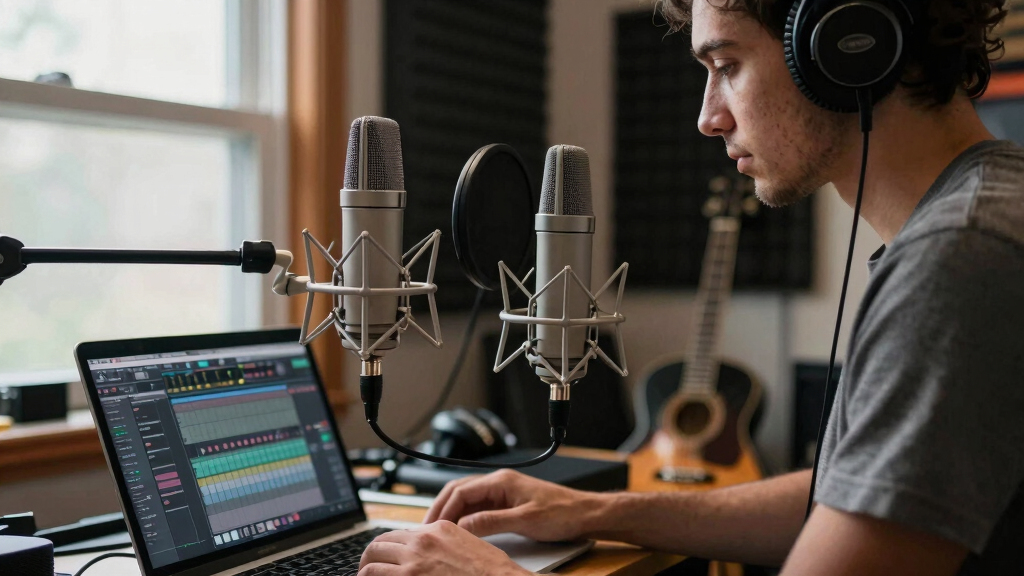
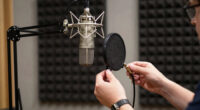
Absolutely, but it requires strategic setup. Using a reflection filter or a portable acoustic panel behind the mic can significantly cut down on room reverb by absorbing sound waves before they reach the microphone. Close-miking—placing the mic close to your voice or instrument—further isolates the sound source, reducing the amount of reflected sound that gets captured.
For example, a podcaster recording in a small, untreated bedroom can place a reflection filter around the mic and sit close to it. This setup helps focus the recording on the source, minimizing echo and reverberation that would otherwise muddy the sound. Additionally, employing software tools like noise gates or room correction plugins can further suppress residual reverb and background noise, cleaning up the final audio.
While these techniques don’t eliminate all environmental issues, they make it possible to achieve professional-sounding recordings in less-than-ideal spaces. The key is understanding that with proper placement, physical barriers, and software assistance, condensers can still produce excellent results even without dedicated acoustic treatment.
Which mic type is better for your specific situation?
It depends on your priorities. If you want durability, affordability, and less fuss, go for a dynamic mic. They’re less sensitive to environmental noise and can handle rougher conditions, making them ideal for beginners or mobile setups. If you’re aiming for capturing intricate details and your environment allows for some basic acoustic management, a condenser can deliver a richer, more nuanced sound.
In a nutshell, for home recordings where space is noisy or echoey, a dynamic mic often wins because it naturally rejects room reflections and ambient noise. But if you’re willing to add some simple acoustic fixes—like reflection filters or portable panels—a condenser can produce stunning clarity and detail, even in less-than-ideal spaces. The choice ultimately hinges on balancing your environment’s constraints with your desired sound quality and workflow.
Frequently Asked Questions
Can I record professional-quality vocals with a condenser in an untreated room?
Yes, but you’ll get the best results by using reflection filters and close-miking to minimize room noise. Adding some portable acoustic panels or software room correction can also help.Are dynamic mics better for noisy environments?
Generally, yes. Dynamic mics are less sensitive to ambient noise and echoes, making them ideal for recording in untreated or noisy spaces.Will a condenser mic ruin my recording if my room is echo-prone?
Not necessarily. With proper placement, a reflection filter, and software tools, you can get good results. Just be aware that condensers naturally pick up more of the room’s character.Is it worth investing in expensive condenser mics if my room is untreated?
It depends on your goals. Higher-end condensers can still produce excellent sound, but adding some basic acoustic treatment or filters usually yields better results without a big investment.Conclusion
In the end, your choice boils down to environment and purpose. If you’re in a space full of echoes and want straightforward, reliable sound, a dynamic mic is your best bet. But if you’re willing to add a little room to your setup—like a reflection filter—a condenser can deliver stunning clarity.
Remember, gear is just part of the story. Smart placement, simple acoustic fixes, and modern tech can turn even a rough room into a decent recording space. Sometimes, it’s not about the gear—you just need to know how to use it.
Halloween Picks
halloween
As an affiliate, we earn on qualifying purchases.