
TL;DR

Get audio and creator gear delivered free with Prime
- Fast, free delivery on millions of items
- Prime Video, Amazon Music and more included
- Member-only deals all year
Most dynamic microphones require 40-60 dB of preamp gain. Using the right amount ensures a strong signal without noise. Quality preamps make a big difference in clarity.
Imagine recording your podcast and hearing a faint hiss creeping into your voice. That’s often a sign your preamp isn’t providing enough gain or perhaps is pushing your gear into noisy territory.
Knowing exactly how much preamp gain your dynamic microphone needs can save you hours of frustration and costly gear upgrades. This isn’t about guesswork — it’s about precision, real-world numbers, and understanding your gear’s limits.
Most dynamic mics need 40-60 dB of preamp gain for clear recordings.
Higher quality preamps reduce noise and provide cleaner sound at high gain levels.
Always set gain while speaking naturally to find your optimal level.
External gain boosters can help if your interface lacks enough built-in gain.
Avoid turning gain too high — it can introduce hiss and distortion.
How Much Gain Does a Dynamic Mic Actually Need?
Dynamic microphones generally need **around 40 to 60 dB** of preamp gain. For example, a Shure SM58, a staple in live and podcast settings, often requires about **45 dB** to reach a strong, clear level without noise.
Think of it like turning up the volume on a quiet radio station — you want enough boost to hear every word, but not so much that static comes through. If your preamp can’t provide that, your recordings will be thin or noisy.
In real-world terms, if your interface or mixer offers **only 35 dB** of gain, you’ll struggle unless you add external boosters. Most standard audio interfaces and mixers today provide **up to 60 dB**, which covers the needs of most dynamic mics.
Understanding why these gain levels matter is crucial: too little gain results in weak, muffled audio that lacks presence and clarity, making your voice sound distant or thin. Too much gain, especially with low-quality preamps, can introduce noise and distortion, which distracts listeners and diminishes professionalism. Therefore, selecting the right gain setting involves balancing enough volume without compromising sound quality. This tradeoff is central to achieving a natural, clean vocal sound that captures your voice authentically.
As an affiliate, we earn on qualifying purchases.
Why Your Preamp’s Quality Matters More Than You Think
Higher gain isn’t just about volume — it’s about clarity. A cheap preamp with lots of gain can introduce **hiss and background noise** that ruins your recording. Even if you turn up the gain, poor quality gear makes your voice sound gritty and unprofessional.
For example, a studio-grade preamp like a Neve or API can deliver **up to 70 dB** of clean gain. That’s enough to boost a quiet dynamic mic without adding noise. Conversely, a budget interface might produce a noticeable hiss at 50 dB of gain.
The implication is that investing in a high-quality preamp can significantly improve your sound quality, especially when working with dynamic mics that require more gain. Low-quality preamps often have higher noise floors, which means they add unwanted background noise as you turn up the gain. This noise can mask your voice and make editing more difficult, ultimately reducing the overall professionalism of your recordings. The tradeoff is clear: opting for a better preamp reduces noise, enhances clarity, and provides more headroom for dynamic mics—ensuring your recordings stay clean even at higher gain levels. It’s a worthwhile investment if you aim for broadcast-quality sound or professional podcasts.
As an affiliate, we earn on qualifying purchases.
Understanding Gain Staging and Practical Application
Proper gain staging is essential to achieve the best sound quality. Start by setting your preamp gain so that your voice peaks around -6 dB to -3 dB on your meters during normal speaking. This headroom prevents clipping while ensuring your signal is strong enough for processing.
Next, listen carefully—your ears are your best tool. If your voice sounds thin or distant, increase the gain gradually until it sounds full and clear without introducing noise. Conversely, if you notice hissing or distortion, reduce the gain slightly.
Action step: Record a short test clip at various gain settings, then listen to the playback. Choose the setting where your voice sounds natural and free of noise. This method helps you develop an intuitive sense of appropriate gain levels tailored to your voice and environment.
In addition, consider environmental factors. In a noisy room, you might need more gain to compensate for background sounds, but be cautious—adding noise can be mitigated by using soundproofing or directional microphones. External gain boosters, like inline preamps or mic activators, can help you reach ideal levels without overloading your interface’s built-in preamp.
Remember: consistent gain staging across your setup ensures clarity and reduces editing time, giving your podcast a professional polish from start to finish.
As an affiliate, we earn on qualifying purchases.
How to Troubleshoot and Optimize Your Gain Settings
If you’re experiencing issues with your gain, start by checking your equipment’s specifications. Confirm the maximum gain your preamp can deliver and compare it to your mic’s output level. Use your audio interface or mixer’s gain control as your primary adjustment tool.
Next, perform a simple test: speak naturally into your microphone at a comfortable volume and gradually increase gain until your voice peaks around -6 dB. Avoid turning the gain to maximum, as this often introduces unnecessary noise. If you notice persistent hiss or distortion, consider upgrading your preamp or adding external gain boosters designed specifically for low-output microphones.
Finally, evaluate your environment. Reduce background noise with soundproofing or directional mics, which can allow you to use less gain overall. Regularly testing and adjusting your gain settings ensures your recordings are consistently clear and professional, saving you time in editing and improving listener experience.
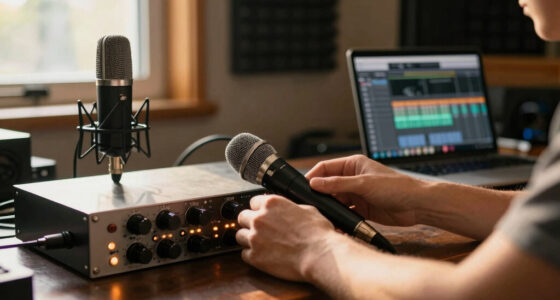
studio-grade preamp for microphones
As an affiliate, we earn on qualifying purchases.
As an affiliate, we earn on qualifying purchases.
Frequently Asked Questions
How do I know if my preamp has enough gain for my dynamic microphone?
Check your preamp’s maximum gain rating and compare it to your mic’s output level. Most dynamic mics need 40-50 dB. Aim to set your gain so your voice peaks around -6 dB without clipping or noise.
Can I use a dynamic mic with a low-gain preamp?
If your preamp offers less than 40 dB of gain, you might struggle to get a strong signal. Consider adding an external mic booster or choosing a preamp with higher gain to avoid weak recordings. Remember, insufficient gain can lead to a faint, distant sound that’s hard to work with during editing, reducing overall audio quality and clarity.
Will increasing preamp gain hurt my sound quality?
It can if your preamp is noisy. Higher gain on a budget preamp often introduces hiss. Use the lowest gain needed for a clean, strong signal, and upgrade your preamp if noise becomes an issue. Proper gain staging is essential—too much gain on a low-quality preamp amplifies noise, while a high-quality preamp maintains clarity even at higher gain levels.
Are there specific preamps recommended for dynamic microphones?
Yes. Popular options include the Focusrite Scarlett series, PreSonus Audiobox, and high-end preamps like those from Neve or API. Choose based on your budget and need for noise-free gain. Investing in a reputable preamp can make a significant difference, especially when working with lower-output dynamic mics, ensuring your recordings stay clean and professional.
How does environment affect gain setting for a dynamic mic?
If you record in a noisy room, you’ll want more gain to compensate for background sounds. In a quiet space, less gain is needed, reducing noise risk. Adjust your gain based on your environment and voice loudness. Recognizing the impact of ambient noise helps you set the right gain—too high in a noisy environment can amplify unwanted sounds, while too low in a quiet space can make your voice faint and difficult to hear clearly.
Conclusion
Getting the right amount of preamp gain is about knowing your gear and your voice. Too little, and your recordings sound weak. Too much, and noise takes over.
For podcast creators, the goal is simple: aim for that sweet spot—usually 40-50 dB for most dynamic mics—and trust your ears. Good gain staging makes your voice clear, professional, and engaging. Don’t settle for hiss — your audience deserves crystal-clear sound that feels like you’re talking right into their ears.
Halloween Picks
halloween
As an affiliate, we earn on qualifying purchases.