TL;DR

Get audio and creator gear delivered free with Prime
- Fast, free delivery on millions of items
- Prime Video, Amazon Music and more included
- Member-only deals all year
Onboard DSP microphones can make your podcast sound clearer by reducing noise, but over-processing can distort your natural sound. In high-fidelity recording, raw signals often deliver better quality, especially if you plan to edit or process audio later.
Imagine speaking into a microphone that promises perfect clarity—no background noise, crisp voice, effortless setup. Sounds great, right? But sometimes, what seems like a help actually hurts your sound. You might find your audio becomes overly processed, muffled, or unnatural. That’s the tricky part about onboard DSP mics. They’re designed to fix problems instantly, but push them too far, and they start to distort your original voice.
This guide walks through when onboard DSP processing adds real value and when it’s better to stick with raw signals. You’ll learn how to spot processing that’s helping versus hurting, so you can make smarter choices for your podcast or streaming setup.
Onboard DSP mics are great for quick, noise-reduced sound in live or noisy situations, but over-processing can distort your voice.
Raw signals provide maximum fidelity and flexibility for editing, ideal for high-quality recordings and critical audio work.
Use DSP features sparingly—test both modes before recording to find what sounds best for your environment and goals.
Latency from onboard processing can affect live applications; consider your setup’s timing needs.
The best choice depends on your environment, workflow, and whether you prioritize convenience or pure sound.
Onboard DSP Mics vs Raw Signal: When Processing Hurts
A cleaner signal is not always a better signal. Onboard processing can suppress noise and simplify live production—but aggressive filtering may trade away vocal texture, timing, and the freedom to repair audio later.
Two paths from the same voice
The microphone capsule starts with the performance. What happens next determines whether you receive a ready-to-use signal or an untouched foundation for later decisions.
Onboard DSP microphone
Audio is altered inside the microphone using tools such as noise reduction, automatic gain, echo cancellation, beamforming, EQ, and compression. The result can be fast and clear, but some decisions may be permanently embedded.
Raw microphone signal
Audio travels from the capsule to the recorder or interface with minimal alteration. Room noise and imperfections remain, but so do breaths, transients, tonal detail, and the ability to shape the recording non-destructively.
Helpful cleanup can cross into audible damage
DSP is most useful when it improves intelligibility without drawing attention to itself. Once the processing becomes obvious, the cure may be competing with the performance.
Noise under control
Moderate suppression can reduce steady fan noise, room rumble, or distractions when live delivery leaves no opportunity for a later repair pass.
Texture disappears
Aggressive filtering may remove breath, consonant detail, warmth, or room cues along with the unwanted background sound.
Artifacts take over
Metallic edges, pumping, hollow tone, clipped word endings, phase effects, and robotic modulation signal that processing has gone too far.
Choose for the job, not the feature list
Neither signal path wins everywhere. The practical choice depends on the room, delivery format, monitoring needs, editing workflow, and cost of a mistake.
| Feature | Onboard DSP microphone | Raw signal | Decision cue |
|---|---|---|---|
| Setup speed | ✓Fast, with fewer external tools | ~Needs routing, processing, or editing | DSP suits rapid deployment |
| Noisy rooms | ✓Immediate suppression can improve clarity | ~Noise remains available for later repair | Fix the room first when possible |
| Natural tone | ~Depends on algorithm and intensity | ✓Preserves the captured character | Raw favors authenticity |
| Edit flexibility | ✗Some changes may be irreversible | ✓Maximum control in post-production | Raw is the safer archive |
| Live timing | ~Processing may add latency | ✓Minimal processing delay | Monitor the full signal chain |
| Cost profile | ~Integrated features can raise price | ~Basic mic may cost less; tools add up | Compare the complete workflow |
What each path optimizes
These qualitative bars summarize the relative strengths described across common production scenarios. They are decision signals, not laboratory measurements.
Make the choice audible
Use a controlled comparison instead of trusting marketing labels. Keep every variable fixed except the processing mode, then listen for both improvement and loss.
Match the setup
Same mic position, gain, script, room, and delivery.
Capture raw
Record an untouched reference with healthy headroom.
Enable DSP
Start conservatively and document every setting.
Level-match
Compare at equal loudness on headphones and speakers.
Choose by goal
Keep DSP only when the gain exceeds the audible cost.
Use DSP sparingly. Preserve an exit route.
Modern AI-assisted processing can be remarkably effective, and hybrid microphones increasingly offer adjustable or bypassable DSP. The safest workflow still protects access to an unprocessed version whenever the recording matters.
Choose onboard DSP when…
- The environment is noisy or changes unpredictably.
- The audio must sound usable immediately.
- Speech intelligibility outranks tonal nuance.
- The workflow has little time or skill for post-production.
- You have tested latency through the complete monitoring path.
Choose raw signal when…
- The room is controlled and the recording can be edited.
- Natural vocal texture and emotional detail are essential.
- You need freedom to revise EQ, dynamics, or noise reduction.
- The capture is intended for premium, archival, or critical use.
- You cannot risk permanent artifacts or masked information.
If DSP makes the room less noticeable while keeping the voice fully believable, it is helping. If you hear the algorithm, reduce it—or record raw.
What exactly are onboard DSP mics and raw signals?
Onboard DSP mics pack digital signal processing directly into the microphone. They can filter out noise, focus on your voice, and even cancel echoes in real time. Think of it like a tiny audio engineer inside your mic, constantly adjusting to give you cleaner sound without extra gear.
On the flip side, a raw signal is just that—your microphone’s unfiltered, unprocessed audio. It’s the pure, original sound captured right from the capsule, waiting for you to edit or process later.
Understanding this distinction is crucial because it affects how you handle your audio. While DSP can instantly improve clarity in challenging environments, relying solely on raw signals means you must be prepared for post-production work. The choice impacts your workflow, the quality of your final product, and your ability to troubleshoot issues. For example, if your environment is noisy, DSP might save you time, but if you want pristine fidelity for professional editing, raw signals give you a blank slate to work with.
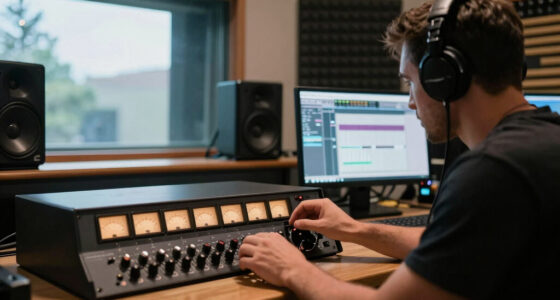
USB podcast microphone with noise reduction
As an affiliate, we earn on qualifying purchases.
As an affiliate, we earn on qualifying purchases.
How onboard DSP can help—and when it can actually hurt
Onboard DSP microphones excel at quickly reducing background noise, echo, and other unwanted sounds, making them invaluable in live scenarios or environments where setup time is limited. They effectively act as real-time audio editors, helping you produce clearer sound instantly. This can be a game-changer for live streaming, remote calls, or noisy recording spaces, where immediate feedback is essential and post-production options are limited.
However, the tradeoff lies in the quality and authenticity of the sound. Excessive or aggressive processing can introduce artifacts—unintended distortions, unnatural tonal shifts, or robotic qualities—that compromise the natural warmth and nuance of your voice. For instance, if your DSP mic aggressively suppresses ambient noise, it might also remove subtle vocal textures or introduce a metallic sheen, making your voice sound less human. Over-filtering can also cause phase issues, leading to a hollow or muffled sound, which might be less noticeable in real-time but problematic in post-production or critical listening.
Research indicates that these artifacts can be more than just a minor annoyance—they can distort the emotional impact and clarity of your message. In scenarios where authenticity and detail are paramount, such as voice-over work or musical recordings, relying heavily on onboard DSP can be detrimental. The key takeaway is that while DSP can be a powerful tool, overusing it risks undermining the very qualities that make your voice engaging and natural. The balance between noise reduction and preserving voice integrity is delicate—understanding this helps you make informed choices that serve your specific needs.
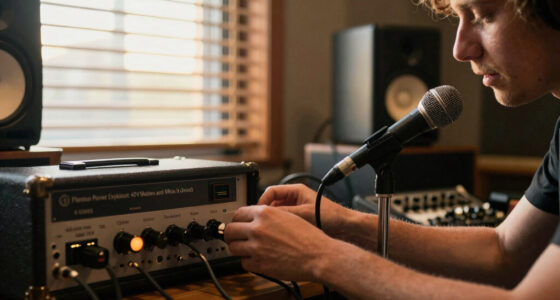
high fidelity XLR microphone for recording
As an affiliate, we earn on qualifying purchases.
As an affiliate, we earn on qualifying purchases.
When to stick with raw signals and why
If your goal is maximum fidelity—say, recording a podcast episode meant for high-quality distribution or music production—raw signals are often the best choice because they preserve the full spectrum of your voice’s nuances. This unprocessed audio serves as a flexible foundation for detailed editing, EQ adjustments, and noise reduction without the risk of introducing artifacts from built-in processing. For example, a vocalist recording in a controlled environment benefits from raw capture, allowing post-production engineers to craft the perfect sound tailored to the project’s needs.
Moreover, raw signals are critical when authenticity is non-negotiable. In sound design or forensic audio analysis, every breath, inflection, and subtle tonal shift must be preserved without the influence of onboard filters that might mask or alter these details. This fidelity ensures that the final product reflects reality as closely as possible, which is essential in professional contexts.
While onboard DSP offers convenience, it often masks issues—like background noise or room acoustics—that are better addressed through proper environment control or external gear. Relying solely on onboard processing might lead to a false sense of quality, especially if the processing introduces artifacts or removes desirable vocal characteristics. When the highest quality and control are required, choosing raw signals is the most reliable approach, even if it demands more effort during post-production.
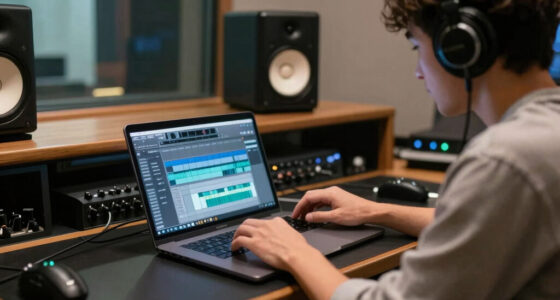
audio interface for raw signal recording
As an affiliate, we earn on qualifying purchases.
As an affiliate, we earn on qualifying purchases.
Quick comparison: Onboard DSP mics vs raw signals
| Feature | Onboard DSP Microphones | Raw Signal |
|---|---|---|
| Ease of setup | High—less external gear needed | Lower—requires external processing or post-production |
| Sound quality | Enhanced in noisy environments, but may introduce artifacts or unnatural tones | Pure, uncolored sound; offers maximum control in editing |
| Flexibility | Limited—processing options are built-in and fixed or preset | High—full control over tone, effects, and noise reduction in post |
| Cost | Typically more expensive due to integrated processing features | Cheaper, with basic models available; external gear adds cost | Latency | Can introduce delay due to real-time processing, affecting timing | Minimal—direct from mic to recorder or interface, ideal for live timing |
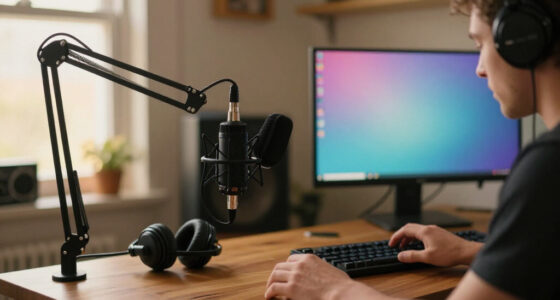
microphone with onboard DSP processing
As an affiliate, we earn on qualifying purchases.
As an affiliate, we earn on qualifying purchases.
How to decide: Should you use onboard DSP or raw signal?
Making the right choice depends on your specific needs and environment. Here’s a practical approach:
- Assess your environment: Is it noisy or controlled? If noisy, onboard DSP can be a quick fix, but consider the long-term impact on sound quality.
- Determine your primary goal: Do you prioritize convenience and fast setup? Onboard DSP offers immediate benefits. If you need pristine, customizable audio, raw signals provide greater flexibility.
- Examine your gear: Can you disable DSP features on your microphone? If so, test recordings with both settings to compare results.
- Listen critically: Record the same segment using both modes. Does the processed sound meet your expectations, or do you prefer the natural tone of raw audio?
- Consider your workflow: If you do extensive editing, raw signals help preserve detail. For quick, live content, onboard DSP simplifies the process without sacrificing too much quality.
Understanding these factors helps you optimize your setup based on your environment, technical skills, and end goals. Sometimes, experimenting with both options is the best way to discover what truly works for your voice and context.
The real takeaway: Processing isn’t always better
While processing can be a quick fix for many issues, it’s a double-edged sword. Overusing noise reduction or filters can strip away the natural qualities of your voice, leaving it sounding artificial, distant, or overly smooth. Sometimes, the best solution is a controlled environment combined with a good-quality microphone—no processing required.
Remember, a polished but overly processed sound might seem professional at first, but it often sacrifices authenticity and emotional connection. The warmth, breaths, and subtle tonal variations are what make a voice compelling. Over-processing risks erasing these vital elements, making your audio sound sterile or robotic.
The key is moderation: use onboard DSP lightly or turn it off when purity and character are paramount. Trust your ears—if the processed sound feels unnatural or muffled, it’s time to back off. Sometimes, embracing the unfiltered, natural sound is what engages your audience most effectively. Less is often more when it comes to authentic audio quality.
Frequently Asked Questions
When should I pick a microphone with onboard DSP over a raw signal mic?
If you often record in noisy environments or need quick, clean audio without extra gear, onboard DSP can save the day. For studio-quality recordings where you want full control, raw signals are better.
Can I turn off onboard DSP if I don’t like the processing?
Many modern microphones and interfaces let you disable onboard processing or adjust its level. Check your gear’s settings or user manual to see if you can fine-tune or turn off DSP effects.
Does processing always improve sound quality?
No. Over-processing can create artifacts or make your voice sound unnatural. The best results come from minimal processing or carefully calibrated filters that enhance, not distort.
How much latency does onboard DSP add, and does it matter?
DSP can introduce a few milliseconds of delay, which might be noticeable in live performances or real-time conversations. Choose gear with low-latency processing if timing is critical.
Are onboard DSP microphones more expensive?
Typically, yes, because of the extra hardware and software complexity. But prices vary widely, so weigh the benefits against your budget and needs.
Conclusion
Choosing between onboard DSP mics and raw signals isn’t about which is better—it’s about what fits your workflow and goals. For quick, noise-free recordings, DSP can be a blessing. But if you cherish authenticity and control, raw signals are your best shot.
Remember, processing is a tool—use it wisely. Sometimes, the simplest setup yields the most genuine, compelling voice. Trust your ears, experiment, and don’t be afraid to turn off the filters when purity matters most.
Halloween Picks
halloween
As an affiliate, we earn on qualifying purchases.