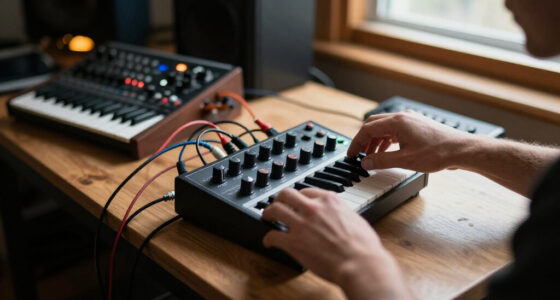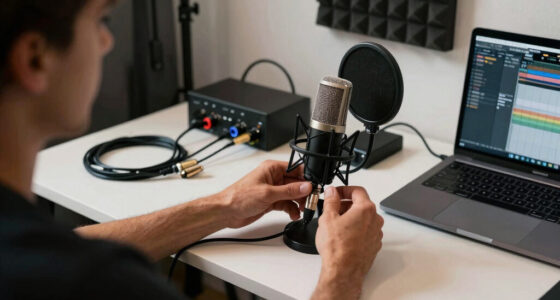

Finding the best midi keyboard for Ableton can be challenging, as many models cater to different needs and budgets. The Akai Professional MPK Mini IV stands out as the top overall pick thanks to its portability and versatile controls. The Native Instruments Komplete Kontrol M32 offers seamless software integration, making it ideal for producers who value workflow. Meanwhile, the Novation Launchkey 61 MK4 excels in control surface features for more advanced Ableton users. The main tradeoffs involve balancing features like key count, build quality, and price. Continue reading for a detailed comparison to find the best fit for your music setup.
Listen free for 30 days with Audible
Thousands of audiobooks and originals — cancel anytime.
Start your free trialAs an affiliate, we earn on qualifying purchases.
Complete the kit


Key Takeaways
- The top picks balance key count, build quality, and software compatibility for Ableton workflows.
- Portability is prioritized in smaller models like the Akai MPK Mini IV, but they may lack advanced controls.
- Larger controllers like the Novation Launchkey 61 MK4 offer more knobs and pads but are less portable.
- Price often correlates with feature set; premium models provide comprehensive control surfaces, while budget options focus on basics.
- Software integration varies, with some controllers including bundled Ableton-specific features, streamlining production.
| Akai Professional MPK Mini IV 25-Key USB-C MIDI Keyboard Controller, Black |  | Best Overall for Portability and Versatile Production | Keys: 25 mini velocity-sensitive keys | Connectivity: USB-C, full-size MIDI Out | Pads: 8 pressure- and velocity-sensitive MPC pads | VIEW LATEST PRICE | See Our Full Breakdown |
| Akai Professional APC Key 25 MK2 25-Key USB MIDI Keyboard Controller |  | Best for Seamless Ableton Control in a Compact Package | Number of Keys: 25 | Pad Matrix: 5×8 RGB pads | Included Software: Ableton Live Lite, Hybrid 3, Mini Grand, Velvet | VIEW LATEST PRICE | See Our Full Breakdown |
| Akai Professional MPK Mini Play MK3 25-Key USB MIDI Keyboard Controller |  | Best for On-the-Go Music Making with Built-in Speakers | Number of Keys: 25 | Built-in Speaker: Yes | Connectivity: USB, Battery-powered | VIEW LATEST PRICE | See Our Full Breakdown |
| Akai Professional MPK Mini Plus 37-Key USB MIDI Keyboard Controller, White |  | Best for Full Octave Performance with Versatile Connectivity | Number of Keys: 37 | Connectivity: USB, CV/Gate, MIDI I/O | Built-in Sequencer: 64-step | VIEW LATEST PRICE | See Our Full Breakdown |
| Native Instruments Komplete Kontrol M32 Controller Keyboard |  | Best Compact MIDI Controller with Extensive Software Bundle | Number of Keys: 32 | Display: OLED | Connectivity: USB 2.0 | VIEW LATEST PRICE | See Our Full Breakdown |
| Arturia KeyLab Essential mk3 — 49-Key USB MIDI Keyboard Controller with Analog Lab V Software Included |  | Best Overall for Versatile Production and Advanced Features | Number of Keys: 49 | Connectivity: USB | Included Software: Analog Lab V, UVI Model D, NI The Gentleman, Loopcloud, Melodics | VIEW LATEST PRICE | See Our Full Breakdown |
| Nektar SE61 USB MIDI Controller Keyboard |  | Best for Compact, Budget-Friendly DAW Integration | Number of Keys: 61 | Connectivity: USB | Compatibility: Mac, PC, iOS | VIEW LATEST PRICE | See Our Full Breakdown |
| Arturia MiniLab 3 Universal MIDI Controller, White |  | Best for Portability and Creative Flexibility | Color: White | Number of Pads: 8 | Number of Faders: 4 | VIEW LATEST PRICE | See Our Full Breakdown |
| 25-Key MIDI Keyboard Controller Portable USB MIDI Controller with Arpeggiator, Velocity Sensitive Keys, Beat Maker for Beginners |  | Best for Beginners and On-the-Go Creators | Number of Keys: 25 | Power Source: USB-C | Connectivity: USB-C, 3.5mm TRS, Bluetooth MIDI | VIEW LATEST PRICE | See Our Full Breakdown |
| Novation Launchkey 61 MK4 USB MIDI Keyboard Controller |  | Best for Creative Performance and Deep Integration | Number of Keys: 61 | Pads: 16 FSR pads with polyphonic aftertouch | Included Software: Ableton Live Lite, Cubase LE, various sound libraries | VIEW LATEST PRICE | See Our Full Breakdown |
| midi keyboards for ableton user | Connectivity | Included Software | Number of Keys |
|---|---|---|---|
| Akai Professional MPK Mini IV | USB-C, full-size MIDI Out | Ableton Live Lite 12, Splice, Melodics trial | — |
| Akai Professional APC Key 25 M | USB powered | Ableton Live Lite, Hybrid 3, Mini Grand, Velvet | 25 |
| Akai Professional MPK Mini Pla | USB, Battery-powered | MPC Beats, software instruments | 25 |
| Akai Professional MPK Mini Plu | USB, CV/Gate, MIDI I/O | MPC Beats | 37 |
| Native Instruments Komplete Ko | USB 2.0 | Komplete Kontrol software suite | 32 |
| Arturia KeyLab Essential mk3 | USB | Analog Lab V, UVI Model D, NI The Gentleman, Loopcloud, Melodics | 49 |
| Nektar SE61 USB MIDI Controlle | USB | Bigwig Studio 8-track DAW | 61 |
| Arturia MiniLab 3 Universal MI | — | — | — |
| 25-Key MIDI Keyboard Controlle | USB-C, 3.5mm TRS, Bluetooth MIDI | — | 25 |
| Novation Launchkey 61 MK4 USB | — | Ableton Live Lite, Cubase LE, various sound libraries | 61 |
More Details on Our Top Picks
Akai Professional MPK Mini IV 25-Key USB-C MIDI Keyboard Controller, Black
The Akai MPK Mini IV stands out for its compact size combined with a surprisingly comprehensive feature set, making it ideal for Ableton users who need mobility without sacrificing control. Compared to the Akai APC Key 25 MK2, it offers a more versatile virtual instrument library and a full-color display, enhancing live and studio workflows. However, the limited 25 keys may restrict more complex arrangements, and the reliance on USB-C could be a barrier for some older setups. Its lightweight design and RGB MPC pads make it perfect for travel, though advanced producers might find the feature set somewhat basic for deep production needs.
Pros:- Compact, lightweight, and durable for easy transport
- Includes extensive virtual instrument library and DAW templates
- Intuitive controls with real-time knobs and RGB feedback
Cons:- Limited keys for complex or layered performances
- Requires USB-C connection, which may need adapters for some devices
Best for: Ableton users who prioritize portability and all-in-one control for live performances and mobile production.
Not ideal for: Producers needing extensive keyboard range or advanced performance features, as the 25 keys limit complex harmonic arrangements.
- Keys:25 mini velocity-sensitive keys
- Connectivity:USB-C, full-size MIDI Out
- Pads:8 pressure- and velocity-sensitive MPC pads
- Knobs:8 assignable 360° knobs
- Display:Full-color screen
- Included Software:Ableton Live Lite 12, Splice, Melodics trial
Our verdict“This pick makes the most sense for mobile musicians and Ableton users who want portability without sacrificing essential control features.”
Akai Professional APC Key 25 MK2 25-Key USB MIDI Keyboard Controller
The APC Key 25 MK2 is designed for Ableton Live integration, offering hands-on control with its RGB pad matrix and dedicated controls, making it easier to launch clips, control parameters, and navigate projects. Unlike the Akai MPK Mini IV, it emphasizes clip launching and scene management, which are vital for live Ableton sessions. Its 25 keys, however, limit melodic complexity, and the absence of a built-in stand or larger keyboard might hinder extensive performance setups. This device is perfect for users who want dedicated Ableton integration, though it may fall short for those needing a broader keyboard range or additional features for advanced production.
Pros:- Seamless Ableton Live integration with dedicated controls
- Bright RGB pads for visual clip launching and scene control
- Includes Ableton Live Lite and several virtual instruments
Cons:- Limited to 2 octaves, restricting melodic range
- No built-in stand or extensive performance controls
Best for: Ableton users who focus on live clip launching and scene control within a compact MIDI controller.
Not ideal for: Producers requiring a full-size keyboard or advanced MIDI editing, since it only has 2 octaves and basic controls.
- Number of Keys:25
- Pad Matrix:5×8 RGB pads
- Included Software:Ableton Live Lite, Hybrid 3, Mini Grand, Velvet
- Connectivity:USB powered
- Controls:8 rotary knobs, 4 arrow buttons
Our verdict“This controller suits Ableton users seeking tight integration and clip control in a small form factor, but not those needing wider keys or advanced features.”
Akai Professional MPK Mini Play MK3 25-Key USB MIDI Keyboard Controller
The MPK Mini Play MK3 combines portability with standalone functionality, thanks to its built-in speakers, making it stand out from typical MIDI controllers like the Akai MPK Mini IV. While the built-in speaker offers immediate sound output, it limits the device’s use as a pure MIDI controller, and the 25 keys may restrict melodic complexity. Its versatile controls, including drum pads and an arpeggiator, make it suitable for beat makers and songwriters who want to produce music without a computer. However, the lack of a dedicated display and the need to purchase batteries can be drawbacks for users seeking complete control and convenience.
Pros:- Built-in speakers for instant playback
- Versatile controls including arpeggiator and drum pads
- NKS support for seamless integration with Native Instruments sound libraries
Cons:- Batteries sold separately, adding extra cost
- Limited to 25 keys, not ideal for complex performances
- No display for editing parameters directly
Best for: Musicians and producers who want a portable, standalone device with sound on the go, especially for sketching ideas without a laptop.
Not ideal for: Advanced producers or keyboardists needing extensive keyboard range and detailed editing capabilities, as the 25 keys limit performance complexity.
- Number of Keys:25
- Built-in Speaker:Yes
- Connectivity:USB, Battery-powered
- Included Software:MPC Beats, software instruments
- Pad Type:Velocity sensitive backlit MPC pads
Our verdict“This is a great choice for mobile musicians and beat makers who need a compact, standalone device with sound capabilities, but not for those requiring full keyboard control.”
Akai Professional MPK Mini Plus 37-Key USB MIDI Keyboard Controller, White
The MPK Mini Plus extends the range with 37 keys, making it more suitable for melodic and harmonic work compared to the smaller MPK Mini IV. Its full octave performance, combined with advanced connectivity options like CV/Gate and MIDI I/O, makes it stand out for producers who want both studio and standalone capabilities. The built-in sequencer and DAW control add to its flexibility, but the absence of built-in speakers or a display may limit its standalone use. This model is ideal for users who want a portable keyboard with extensive connectivity and sequencing features, though the smaller 3-octave range might restrict more complex arrangements.
Pros:- Full octave 37-key keyboard suitable for melodic playing
- Multiple connectivity options including CV/Gate and MIDI I/O
- Includes MPC Beats software and free Splice subscription
Cons:- No built-in speakers or display for standalone use
- Limited to 3 octaves, which may restrict performance range
Best for: Ableton users who need a portable, full-octave keyboard with advanced connectivity for hybrid studio and live setups.
Not ideal for: Producers requiring a larger 49-key or 61-key controller for complex melodic or harmonic work, as the 37 keys may be limiting.
- Number of Keys:37
- Connectivity:USB, CV/Gate, MIDI I/O
- Built-in Sequencer:64-step
- Pads:8 RGB MPC pads
- Included Software:MPC Beats
Our verdict“This controller works well for Ableton users wanting a portable, full-octave experience with advanced connectivity, but not for those needing a larger keyboard or standalone sound system.”
Native Instruments Komplete Kontrol M32 Controller Keyboard
The Komplete Kontrol M32 is a compact 32-key MIDI controller that emphasizes software integration, with an OLED display and touch-sensitive knobs that facilitate real-time sound tweaking. It is particularly appealing for Ableton users who want deep software control combined with portability. Compared to the Akai MPK Mini IV, it offers a more streamlined interface for sound manipulation but fewer physical controls for hands-on performance. Its limited 32 keys may not satisfy those needing extensive melodic range, and its reliance on USB power can be a constraint for mobile setups that lack USB ports.
Pros:- Compact, lightweight, and portable design
- Includes a comprehensive software bundle with synths, effects, and Ableton Live Lite
- Touch-sensitive knobs for detailed sound editing
Cons:- Limited number of keys for complex melodic work
- Requires USB connection for power and operation
Best for: Ableton users who prioritize software control and portability, especially those using Native Instruments or similar software bundles.
Not ideal for: Producers requiring a larger keyboard for complex arrangements or extensive live performance controls, as the 32 keys are somewhat limited.
- Number of Keys:32
- Display:OLED
- Connectivity:USB 2.0
- Power:Bus powered
- Included Software:Komplete Kontrol software suite
Our verdict“This controller fits well for Ableton users seeking a portable, software-focused MIDI keyboard with advanced sound control features, but not for those needing a full-range keyboard.”
Arturia KeyLab Essential mk3 — 49-Key USB MIDI Keyboard Controller with Analog Lab V Software Included
The Arturia KeyLab Essential mk3 stands out as the most complete option in this lineup, combining a solid 49-key controller with intuitive controls like RGB-backlit pads and a bright LCD screen. It surpasses smaller controllers like the 25-key MIDI controllers in its expressive potential and dedicated features such as Scale Mode, Chord Mode, and an Arpeggiator, making it a flexible choice for both beginners and seasoned producers. While its 49 keys might limit some players used to larger boards, its software bundle—including Analog Lab V—adds a professional edge. Compared with the Novation Launchkey 61 MK4, it offers more hands-on control and a more comprehensive software package, though at a higher price.
This pick makes the most sense for users seeking a balance of features, software versatility, and tactile control in Ableton environments.
Pros:- Intuitive controls with RGB-backlit pads and a bright LCD screen
- Versatile software bundle including Analog Lab V and virtual instruments
- Advanced features like Scale Mode, Chord Mode, and Arpeggiator
Cons:- Limited to 49 keys, which may restrict some playing styles
- Requires familiarity with DAWs for full functionality
Best for: Intermediate to professional Ableton users who want a versatile controller with advanced features and comprehensive software
Not ideal for: Beginners or players needing more than 49 keys for complex arrangements, as the limited range may hinder larger compositions
- Number of Keys:49
- Connectivity:USB
- Included Software:Analog Lab V, UVI Model D, NI The Gentleman, Loopcloud, Melodics
- Display:2.5-inch LCD screen
- Pads:RGB-backlit, velocity and pressure sensitive
Our verdict“Ideal for producers seeking a feature-rich, mid-sized controller that excels in Ableton workflows.”
Nektar SE61 USB MIDI Controller Keyboard
The Nektar SE61 offers a straightforward 61-key MIDI experience that emphasizes deep DAW integration, making it a strong choice for Ableton users who want more keys without extra bulk. Unlike the Arturia KeyLab Essential mk3, it focuses on essential controls and tight DAW compatibility, but its basic build quality may not withstand heavy touring or rough handling. The inclusion of Bigwig Studio 8-track DAW provides excellent value for producers who want an all-in-one solution. Compared with the Launchkey 61 MK4, the SE61 is more affordable, though it lacks the premium feel and extensive features of Novation’s offering.
This controller makes sense for musicians who prioritize seamless DAW integration and portability over high-end build or extra features.
Pros:- Excellent DAW integration for popular software including Ableton Live
- Compact and portable design for easy transport
- Includes Bigwig Studio 8-track DAW for immediate music creation
Cons:- Basic build quality may not suit aggressive touring
- Limited physical controls beyond basic MIDI functions
Best for: Home studio producers and Ableton users seeking a reliable, portable 61-key controller with solid DAW support
Not ideal for: Touring musicians or heavy users needing rugged construction or extensive performance controls
- Number of Keys:61
- Connectivity:USB
- Compatibility:Mac, PC, iOS
- Included Software:Bigwig Studio 8-track DAW
Our verdict“Best suited for budget-conscious producers who want a simple, effective MIDI controller with strong Ableton support.”
Arturia MiniLab 3 Universal MIDI Controller, White
The Arturia MiniLab 3 packs a lot into a tiny footprint, making it perfect for musicians who need portability without sacrificing control. Its velocity-sensitive keys, 8 drum pads, and 4 faders provide enough tactile options for crafting beats and controlling virtual instruments in Ableton. Compared with larger controllers like the Launchkey 61 MK4, it offers less in terms of keys, but its compact size is ideal for mobile setups or tight studio spaces. Its seamless integration with multiple DAWs makes it versatile, but the lack of detailed software info and potential learning curve for newcomers might slow initial progress.
This choice is well-suited for producers who prioritize mobility and simplicity, especially those working across different locations or setups.
Pros:- Compact and portable design for easy transport
- Responsive velocity-sensitive keys and multiple controls
- Easy to integrate into various workflows and setups
Cons:- Limited information on software compatibility and included tools
- Potential learning curve for beginners unfamiliar with MIDI controllers
Best for: Traveling musicians and producers who need a versatile, space-saving MIDI controller for Ableton and other DAWs
Not ideal for: Producers requiring extensive keys or advanced performance features for complex compositions
- Color:White
- Number of Pads:8
- Number of Faders:4
- Key Type:Velocity-sensitive keys
Our verdict“Perfect for mobile producers who want a reliable controller that fits into small spaces and supports Ableton workstations.”
25-Key MIDI Keyboard Controller Portable USB MIDI Controller with Arpeggiator, Velocity Sensitive Keys, Beat Maker for Beginners
This 25-key MIDI controller emphasizes portability and ease of use, making it ideal for musicians who want quick access to essential controls on the move. Its arpeggiator and velocity-sensitive keys make it suitable for creating melodies and beats without overwhelming complexity. While it’s a great entry point, the limited 25 keys could restrict more ambitious compositions, especially compared to the 49- or 61-key options from Arturia or Novation. Its USB-C power and broad system compatibility ensure plug-and-play functionality with Ableton and other DAWs, but users should be aware that it’s not designed for intricate, multi-layered arrangements.
This controller makes the most sense for beginners or those needing a compact, versatile device for spontaneous music creation.
Pros:- Highly portable with a compact 25-key design
- Includes arpeggiator and octave controls for dynamic melodies
- Broad compatibility with Mac, PC, iOS, and DAWs like Ableton
Cons:- Limited to 25 keys, which may restrict musical complexity
- Requires USB-C connection, possibly needing adapters
Best for: Beginners and mobile producers seeking a simple, portable MIDI controller for Ableton Live and quick songwriting sessions
Not ideal for: Advanced producers or composers who require more than 25 keys for complex arrangements or layered performances
- Number of Keys:25
- Power Source:USB-C
- Connectivity:USB-C, 3.5mm TRS, Bluetooth MIDI
- Features:Arpeggiator, velocity-sensitive keys, octave buttons
Our verdict“Best suited for beginners who need an easy-to-use, portable controller for Ableton or spontaneous ideas.”
Novation Launchkey 61 MK4 USB MIDI Keyboard Controller
The Novation Launchkey 61 MK4 combines high-quality keybeds with 16 FSR pads designed for drumming and clip launching, making it a standout for Ableton Live users who want both expressive control and performance features. Its deep integration with Ableton, along with tools like Scale Mode and chord triggers, provides a creative edge that surpasses many standard controllers like the Arturia KeyLab Essential mk3. Although its 61 keys are ideal for most compositions, the advanced pads and software bundle—including Ableton Live Lite—make it more suitable for users who actively perform or produce complex arrangements. Its complexity might overwhelm beginners, but for experienced producers, it offers a powerful platform for creative experimentation.
This model makes the most sense for Ableton users seeking a controller that balances performance pads with versatile keys and comprehensive software support.
Pros:- Seamless integration with major DAWs including Ableton Live
- 16 FSR pads with polyphonic aftertouch ideal for drumming and clip launching
- Includes a rich software bundle and sound libraries
Cons:- May be too complex for new users unfamiliar with advanced DAW features
- Limited to 61 keys, which might restrict some performances
Best for: Intermediate to advanced Ableton producers who want a combination of performance pads and deep DAW integration
Not ideal for: Beginners or users who primarily need a simple, straightforward MIDI controller without performance pads or advanced features
- Number of Keys:61
- Pads:16 FSR pads with polyphonic aftertouch
- Included Software:Ableton Live Lite, Cubase LE, various sound libraries
- Compatibility:Ableton, Logic, FL Studio, Cubase
Our verdict“Perfect for producers who want a versatile controller blending performance pads with deep Ableton integration and software support.”

How We Picked
These products were evaluated based on their compatibility with Ableton Live, build quality, key feel, control options, and overall value. We prioritized models that integrate seamlessly with Ableton’s workflow, offering features like dedicated knobs, pads, and transport controls. The ranking also considers portability, ease of use for different skill levels, and price-to-feature ratio. Our goal was to identify controllers that deliver reliable performance without unnecessary complexity, ensuring they suit a range of users from beginners to advanced producers.Factors to Consider When Choosing Best Midi Keyboards For Ableton Users
Choosing the best midi keyboard for Ableton involves more than just counting keys. It’s essential to consider how the controller’s features align with your workflow, your experience level, and your production environment. A well-designed controller can significantly speed up your creative process, but a mismatch can lead to frustration. In this guide, I’ll cover key factors that influence your decision, helping you avoid common pitfalls and make an informed choice.Size and Portability
Size matters when it comes to fitting your setup and mobility needs. Smaller controllers like the Akai MPK Mini IV are ideal for producers who work on the go or have limited space, but they often sacrifice controls like faders or extensive pads. Larger controllers such as the Novation Launchkey 61 MK4 provide more hands-on control, which can improve workflow for complex projects, but they are less portable and require more desk space. Consider your typical workspace and whether you’ll need to transport your controller frequently.
Key Count and Feel
The number of keys directly impacts your playing style and arrangement options. 25-key models are compact, suitable for sketching melodies or controlling Ableton’s scenes, but they limit expressive playing. 49 or 61 keys give more range and dynamic control, better for detailed performance and composition. The key feel—velocity-sensitive and weighted keys—also influences playability; more expensive controllers tend to mimic real piano feel, which benefits serious pianists or those seeking expressive control.
Control Features
Look beyond keys—many MIDI controllers include knobs, faders, pads, and buttons designed for hands-on DAW control. Features like dedicated transport controls, drum pads, and assignable knobs can significantly streamline your Ableton workflow. However, more controls often mean a higher price and complexity, so assess what you genuinely need to avoid unnecessary clutter. Some controllers include customizable mappings, which can be a game-changer for advanced users.
Software Compatibility and Bundles
Most midi controllers integrate with Ableton Live, but some come bundled with software or templates tailored for Ableton, reducing setup time and enhancing functionality. Native Instruments, for example, offers controllers with deep Ableton integration, including preset mappings and control surfaces. Always check what software is included and whether the controller supports automation, mapping, and plug-in control, as these features can add significant value and improve your workflow.
Budget and Long-term Value
Price varies widely, but spending more often means better build quality, more controls, and longer-lasting hardware. Budget models may suffice for beginners or casual users, but they can lack durability or advanced features needed for professional production. Consider your long-term needs and whether investing in a more capable controller now can save you money and frustration later. Think about firmware updates, warranty, and support when evaluating the value proposition.
Frequently Asked Questions
Can I use these midi controllers with other DAWs besides Ableton?
Yes, most midi controllers listed here are compatible with a variety of digital audio workstations like FL Studio, Logic Pro, and Cubase. However, their integration level varies; controllers with dedicated Ableton features might not map as seamlessly to other DAWs, requiring manual MIDI mapping. Check the controller’s specifications for compatibility and whether it offers templates or presets for your preferred software. This flexibility can give you more versatility as you explore different production environments.
Is it better to choose a smaller or larger midi keyboard for Ableton?
The decision depends on your workflow and space constraints. Smaller controllers, such as 25-key models, are highly portable and good for sketching ideas quickly, but they limit your range for playing complex parts. Larger controllers, like 61-key models, provide more expressive playing and control options, which can enhance detailed arrangements and live performance. Consider how you’ll use the controller most—if portability and simplicity matter, go smaller; if extensive controls and playing range are priorities, opt for larger models.
Do I need weighted keys for Ableton production?
Weighted keys are mainly beneficial for pianists or those who want an authentic piano feel. For Ableton production, velocity-sensitive keys are often sufficient, especially if you’re focusing on electronic music or sequencing. Weighted keys can add to the cost and weight of the controller, but they may not significantly improve workflow unless you also perform on a real piano. Assess your playing style and whether the extra realism aligns with your production needs.
Are bundles with software worth the extra cost?
Bundles that include Ableton templates, instruments, or software synths can provide immediate value, especially for beginners or those new to production. They often streamline setup and give you starting points for your projects. However, evaluate whether the included software aligns with your music style and whether the bundle’s cost justifies the added features. In some cases, buying a controller separately and selecting your software gives more flexibility and long-term value.
How important is build quality in choosing a midi controller for Ableton?
Durability and build quality matter if you plan to use the controller frequently or take it on the road. A sturdy metal chassis and quality keys reduce the risk of damage and ensure consistent performance over time. Cheaper plastic models may feel less robust and could suffer from wear and tear, which might lead to reliability issues. Investing in a well-built controller can be more cost-effective over the long run, especially if you’re serious about music production.
Conclusion
For those starting out or working in limited space, the Akai MPK Mini IV offers a compact yet capable solution. If you’re looking for a controller with extensive control options and a larger keybed, the Novation Launchkey 61 MK4 is the best choice. Budget-conscious buyers will find value in the Arturia MiniLab 3 or Nektar SE61. For professionals seeking deep Ableton integration, the Native Instruments Komplete Kontrol M32 delivers seamless workflow enhancements. Ultimately, your pick should align with your experience level, production environment, and creative goals.
As an affiliate, we earn on qualifying purchases.Grilling season Picks
grills