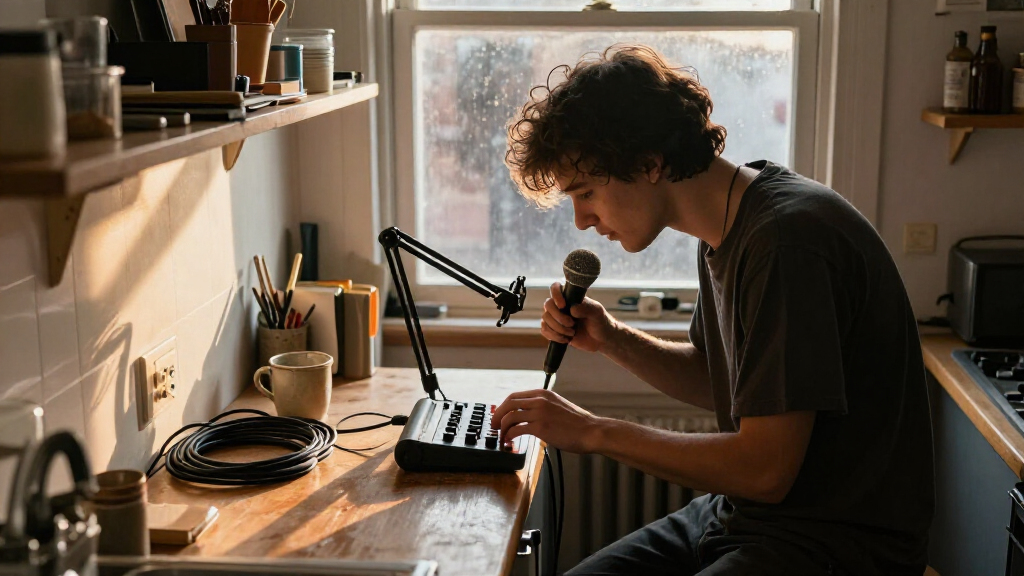

For most mobile podcasters, I’d start with the Zoom PodTrak P4next: its four mic inputs and AI noise reduction suit small in-person shows that need a dedicated podcast workflow. The Zoom H4 Essential is a more flexible pick for creators who also record music or field audio, while the PodTrak P2 keeps a two-mic USB setup compact. The main tradeoff is between podcast-focused controls and broader recording flexibility, with input count, mic type, and monitoring needs shaping the choice. More inputs can help a growing panel, but they add setup complexity and do not automatically improve sound. Read on for the full breakdown and recommendations by recording style.

Get audio and creator gear delivered free — and shop member deals
- Fast, free delivery on millions of items
- Access to Prime Big Deal Days deals on October 6–7
- Prime Video, Amazon Music and more included
Complete the kit


Key Takeaways
- The P4next is the strongest fit for small in-person shows in this lineup, pairing four XLR inputs with podcast-oriented controls and AI noise reduction.
- The P2 favors a simpler two-mic USB workflow; it suits compact remote or co-host setups but does not replace an XLR-input recorder for conventional mic rigs.
- The H4 Essential and H6 Essential serve broader recording needs than the PodTrak models, which makes them more adaptable for field audio and music as well as podcasts.
- The F3 is the specialized choice for clean field capture, while its two inputs make it less suited to a multi-person table without extra equipment.
- Several products overlap closely: the H1 Essential, H1essential bundle, and H2 Essential prioritize portable stereo capture, while the H1 XLR shifts toward two XLR sources.
| Zoom H4 Essential Handheld Recorder |  | Best for Flexible Solo Recording | Tracks: 4 | Built-in microphones: Stereo | External inputs: 2 XLR/TRS | VIEW LATEST PRICE | See Our Full Breakdown |
| Zoom PodTrak P4next Podcast Recorder with 4 Inputs and AI Noise Reduction |  | Best for Remote Guest Shows | XLR inputs: 4 | Microphone gain: Up to +70 dB | Headphone outputs: 4, with separate volume controls | VIEW LATEST PRICE | See Our Full Breakdown |
| Zoom H1 XLR 2-Channel Recorder |  | Best Compact Recorder for Two External Mics | Channels: 2 | Recording format: 32-bit float | Maximum sample rate: 96 kHz | VIEW LATEST PRICE | See Our Full Breakdown |
| Zoom PodTrak P4 Portable Multitrack Podcast Recorder Bundle with Two ZDM-1 Podcast Packs |  | Best Complete Starter Kit for Two Hosts | Microphone inputs: 4 high-gain XLR inputs with +48V phantom power | Headphone outputs: 4 independent outputs | Sound pads: 4 | VIEW LATEST PRICE | See Our Full Breakdown |
| Zoom H1essential Handy Recorder Bundle with Case, Windscreens, and Tripod |  | Best Compact Outdoor Podcast Kit | Recording format: 32-bit float | Maximum sample rate: 96 kHz | Built-in microphones: X/Y stereo | VIEW LATEST PRICE | See Our Full Breakdown |
| Zoom F3 Professional Field Recorder |  | Best for Level-Safe XLR Field Recording | Recording format: 32-bit float | Inputs: 2 locking XLR | Preamps: Ultra-low-noise | VIEW LATEST PRICE | See Our Full Breakdown |
| Zoom PodTrak P2 Podcast Recorder with 2 USB Microphone Inputs and AI Noise Reduction |  | Best for Two USB-Mic Hosts | Microphone inputs: 2 USB | Headphone outputs: 2 | Remote guest support: Phone or computer connection with Mix-Minus | VIEW LATEST PRICE | See Our Full Breakdown |
| Zoom PodTrak P4 Podcast Recorder with 4 XLR Mic Inputs |  | Best for Portable Panel Podcasts | Microphone inputs: 4 XLR inputs with phantom power | Headphone outputs: 4 with individual volume control | Sound pads: 4 programmable | VIEW LATEST PRICE | See Our Full Breakdown |
| Zoom H6 Essential Handheld Recorder |  | Best for Flexible Field Interviews | Recording: 6-track, 32-bit float | Built-in microphones: X/Y stereo microphones | Maximum SPL: 135 dB SPL | VIEW LATEST PRICE | See Our Full Breakdown |
| Zoom H2 Essential Handheld Recorder |  | Best Compact Recorder for Pattern Choices | Microphones: 3 built-in microphones | Recording patterns: 9 selectable patterns | Maximum recording quality: 32-bit float / 96 kHz | VIEW LATEST PRICE | See Our Full Breakdown |
| Zoom H1 Essential Stereo Recorder |  | Best Compact Stereo Recorder | Connectivity: USB-C | Recording: Stereo | Podcast use: Supported | VIEW LATEST PRICE | See Our Full Breakdown |
More Details on Our Top Picks
Zoom H4 Essential Handheld Recorder
The Zoom H4 Essential suits a podcaster who wants one portable recorder for solo narration, interviews, and occasional external microphones. Its built-in stereo mics let you capture a quick conversation without extra gear, while the two XLR/TRS inputs make it more adaptable than the two-channel Zoom H1 XLR when recording multiple sources alongside its onboard mics. USB-C can connect it to a phone, tablet, or computer while it saves a backup to an SD card, which helps when a session needs both a live connection and a local copy. That flexibility comes with more setup choices than a simple handheld recorder, and it is less tailored to a seated four-person show than the PodTrak P4. Spoken menu guidance is a useful accessibility feature, though buyers should check which workflow best fits their recording setup.
Pros:- Built-in stereo microphones support quick, gear-light recordings
- Two XLR/TRS inputs add flexibility for external microphones and instruments
- USB-C connection can be used while recording to an SD card
- Spoken menu guidance supports accessible operation
Cons:- Two external inputs are limiting for larger in-person podcast groups
- Its range of recording uses and connections may require more setup choices than a simple handheld recorder
Best for: Solo podcasters and interviewers who want built-in stereo mics plus the option to connect external microphones or instruments
Not ideal for: Shows with several in-person hosts who need four XLR microphone inputs and separate headphone feeds
- Tracks:4
- Built-in microphones:Stereo
- External inputs:2 XLR/TRS
- Connectivity:USB-C
- Storage:SD card
- Menu accessibility:Spoken menu guidance
Our verdict“Choose the H4 Essential for flexible solo and interview recording; pick the PodTrak P4 if your regular show needs four microphone inputs and guest headphone feeds.”
Zoom PodTrak P4next Podcast Recorder with 4 Inputs and AI Noise Reduction
For a podcast that mixes a local panel with a caller, the Zoom PodTrak P4next combines four XLR inputs with multitrack recording for as many as four in-person participants plus a call-in guest. That makes it a more direct fit for a recurring group show than the Zoom H4 Essential, whose two external inputs better suit smaller sessions. AI noise reduction, tone enhancement, and compression can help even out voices when the room or microphones vary, while four headphone outputs with separate volume controls let each participant set a comfortable listening level. It can also send audio directly into phone video. The tradeoff is a more specialized group setup, and the supplied information does not specify recording formats, storage capacity, or details of phone compatibility. Buyers who want a small recorder for solo field interviews may find its extra inputs unnecessary.
Pros:- Four XLR inputs support a multi-microphone in-person panel
- Multitrack recording accommodates four local speakers and a call-in guest
- Four headphone outputs have separate volume controls
- AI noise reduction, tone enhancement, and compression offer tools for balancing voices
Cons:- Four inputs may be more equipment than a solo or two-person show needs
- The supplied product details do not specify recording formats or storage capacity
- Phone connection compatibility details are not provided
Best for: Podcast teams recording up to four in-person speakers plus a remote caller who need separate headphone volume controls
Not ideal for: Solo interviewers seeking a compact handheld recorder with built-in microphones for location recording
- XLR inputs:4
- Microphone gain:Up to +70 dB
- Headphone outputs:4, with separate volume controls
- Recording:Multitrack for up to four in-person speakers plus a call-in guest
- Audio features:AI noise reduction, tone enhancement, and compression
- Phone video connection:Captures audio directly into phone video
Our verdict“Choose the P4next for a multi-person show with remote guests and individual headphone controls; choose the H4 Essential for a simpler handheld interview setup.”
Zoom H1 XLR 2-Channel Recorder
The Zoom H1 XLR is a focused choice for a two-person interview or podcast where each speaker has an external microphone. Its two XLR/TRS combo inputs and 32-bit float recording at up to 96 kHz give it a different emphasis from the H4 Essential: it records two channels and adds a 3.5 mm stereo input, while the H4 offers four tracks and built-in stereo microphones. That makes the H1 XLR appealing when you want a small recorder built around connected mics, rather than an all-purpose handheld with onboard stereo capture. The OLED waveform display provides a visual reference during recording, and SDXC support up to 1 TB gives room for longer sessions. Its two-channel ceiling is a real limit for group shows; the PodTrak P4 is better suited when four XLR mics and separate headphone feeds matter.
Pros:- 32-bit float recording at up to 96 kHz
- Two XLR/TRS combo inputs accommodate external microphones or instruments
- OLED waveform display provides a visual recording reference
- Supports SDXC cards up to 1 TB
Cons:- Two-channel recording limits its usefulness for multi-person panels
- Unlike the H4 Essential, the listed details do not include built-in stereo microphones
Best for: Two-person interviewers who record with external XLR microphones and want a compact recorder with 32-bit float capture
Not ideal for: Podcast teams that need more than two recorded channels or four microphone inputs for a group discussion
- Channels:2
- Recording format:32-bit float
- Maximum sample rate:96 kHz
- Inputs:2 XLR/TRS combo inputs; 3.5 mm stereo input
- Headphone output:3.5 mm
- Display:OLED waveform display
- Storage support:SDXC cards up to 1 TB
Our verdict“Choose the H1 XLR for a compact two-mic interview rig; choose the PodTrak P4 when your podcast has more speakers to record.”
Zoom PodTrak P4 Portable Multitrack Podcast Recorder Bundle with Two ZDM-1 Podcast Packs
This bundle turns the Zoom PodTrak P4 into a practical starting point for two hosts: it includes two ZDM-1 microphone packs with headphones, stands, cables, and accessories, while leaving two of the recorder’s four XLR inputs available for later guests or cohosts. Four independent headphone outputs, sound pads, and remote call-in support with mix-minus make it better equipped for a seated show than the handheld Zoom H4 Essential. The bundle’s strength is having the core mic gear and podcast connections together, not being the smallest recorder for field interviews. It still tops out at four microphones, and portable use depends on AA batteries or another supported power method. Compared with the P4next, this listing specifies call-in connections and bundled microphones, while the P4next highlights AI audio tools and phone video capture.
Pros:- Includes two ZDM-1 microphone packs with headphones, stands, and cables
- Four XLR inputs and independent headphone outputs support a growing in-person panel
- TRRS and USB call-in options include mix-minus to reduce echo
- Sound pads, limiters, and low-cut filters support podcast production
Cons:- The recorder supports a maximum of four microphones
- Portable operation may require ongoing AA battery replacements
- The bundled microphones and accessories make the kit less compact than a handheld recorder
Best for: Two-host beginners who want recorder, microphones, headphones, stands, and cables for a multi-person podcast setup
Not ideal for: Mobile interviewers who prioritize a compact handheld recorder with built-in microphones over a multi-piece podcast kit
- Microphone inputs:4 high-gain XLR inputs with +48V phantom power
- Headphone outputs:4 independent outputs
- Sound pads:4
- Remote call-ins:TRRS and USB; simultaneous call-ins
- Audio features:Built-in limiters, low-cut filters, and mix-minus
- Power:Includes 2 AA batteries; multiple powering methods
- Bundle contents:2 Zoom ZDM-1 Podcast Mic Packs
- Headphone jack:3.5 mm
Our verdict“Choose this bundle to start a two-host podcast with room to add guests; choose the H4 Essential for lighter solo recording away from a desk.”
Zoom H1essential Handy Recorder Bundle with Case, Windscreens, and Tripod
The Zoom H1essential bundle is aimed at podcasters who record interviews outdoors or move between locations and want the small accessories ready in the same kit. Its built-in X/Y stereo microphones and 32-bit float recording support quick setups without manual gain adjustment, while the furry and foam windscreens help address changing recording environments. The flexible tripod and EVA case add useful placement and carrying options; together, though, they make the bundle bulkier than the recorder alone. Compared with the H1 XLR, this model captures stereo through its onboard mics rather than offering two XLR/TRS combo inputs for external microphones. USB-C also lets it work as a USB mic with compatible devices. Its 96 kHz maximum sample rate and handheld stereo focus make it less suited to a multi-host studio show than the PodTrak P4.
Pros:- 32-bit float recording helps guard against clipping without manual gain adjustment
- Built-in X/Y stereo microphones allow quick location recording
- Includes a case, furry and foam windscreens, and a flexible tripod
- Can work as a USB microphone with compatible PC, Mac, iOS, and Android devices
Cons:- Maximum listed sample rate is 96 kHz
- Included accessories add bulk compared with the recorder alone
- Does not provide the four XLR inputs and headphone feeds of the PodTrak P4
Best for: Mobile solo podcasters and interviewers who use built-in stereo mics and need wind protection and a tripod for location recording
Not ideal for: Hosts building a multi-microphone podcast with XLR inputs, separate headphone feeds, and remote call-ins
- Recording format:32-bit float
- Maximum sample rate:96 kHz
- Built-in microphones:X/Y stereo
- Maximum sound pressure level:120 dB SPL
- Storage:SD card
- USB connectivity:USB-C
- Bundle contents:Recorder, EVA case, furry windscreen, foam windscreen, flexible tripod
- USB microphone compatibility:PC, Mac, iOS, and Android
- Accessibility:Audio guidance function for visually impaired users
Our verdict“Choose this bundle for compact stereo interviews in changing locations; choose the PodTrak P4 for a multi-microphone podcast recorded with seated guests.”
Zoom F3 Professional Field Recorder
The Zoom F3 suits podcasters who record interviews or narration on location with XLR microphones and want room for sudden changes in volume. Its 32-bit float recording reduces the need to ride gain during a take, while the dual locking inputs help keep cables connected as a compact field setup moves around. Compared with the Zoom H6 Essential, the F3 is more focused on two external microphones and a straightforward recorder workflow; the H6 offers built-in X/Y mics and more input flexibility for varied recording setups. That focus is also the tradeoff: the F3 has no built-in microphones listed and only two inputs, so it is less suited to spontaneous ambient capture or a growing panel. Choose it for controlled, portable XLR recording, rather than an all-in-one recorder.
Pros:- 32-bit float recording accommodates a wide range of input levels
- Dual locking XLR inputs help prevent accidental cable disconnects
- Ultra-low-noise preamps support clean recordings with suitable microphones
- Standalone and USB workflows offer flexibility between field and computer use
Cons:- Two XLR inputs limit its fit for multi-person panels
- No built-in microphones are specified for quick ambient or solo recording
Best for: Location podcasters using one or two XLR microphones who want to capture unpredictable speech levels without constant gain adjustment
Not ideal for: Solo creators who want built-in microphones, or panel hosts who need more than two microphone inputs
- Recording format:32-bit float
- Inputs:2 locking XLR
- Preamps:Ultra-low-noise
- Workflows:Standalone or USB
- Power:Flexible power options
- Intended uses:Field recording for filmmakers and musicians
Our verdict“Choose the F3 for portable two-mic XLR sessions with variable levels; choose the H6 Essential if you also want built-in mics and more inputs.”
Zoom PodTrak P2 Podcast Recorder with 2 USB Microphone Inputs and AI Noise Reduction
For a two-person show built around USB microphones, the PodTrak P2 avoids the XLR-mic setup that the PodTrak P4 is designed around. It has two USB microphone inputs, two headphone outputs, and Mix-Minus for bringing in a phone or computer guest with reduced echo. Separate SD tracks can be saved while streaming, giving editors individual voices to work with after the session. AI noise reduction and voice tools add processing options, though the supplied details do not specify how much adjustment each tool allows. The portable power choices are useful for recording away from an outlet, but AA battery life is listed at up to four hours, so longer sessions may call for USB or AC power. Choose the P2 for a compact digital-mic workflow; skip it if your show depends on XLR microphones or more than two hosts.
Pros:- Accepts two USB microphones for a simple two-host setup
- Two headphone outputs let both hosts monitor
- Mix-Minus supports phone or computer guests with reduced echo
- Records separate tracks to SD while streaming
Cons:- Two USB microphone inputs do not suit a larger in-person panel
- AA battery life is listed at up to four hours
- USB-mic focus differs from the P4’s four XLR input setup
Best for: Two-host shows using USB microphones that need headphones for both speakers and occasional remote guests
Not ideal for: Panel producers with XLR microphones, or hosts who need longer battery sessions than the listed four hours
- Microphone inputs:2 USB
- Headphone outputs:2
- Remote guest support:Phone or computer connection with Mix-Minus
- Audio processing:AI Noise Reduction, tone shaping, compressor, and de-esser
- Recording:Separate tracks to SD card
- Streaming:Can stream to a smartphone or computer while recording
- Battery life:Up to 4 hours on 4 AA batteries
- Power options:4 AA batteries, USB bus power, or AC adapter
Our verdict“Pick the P2 for a portable two-person USB-microphone show with remote calls; choose the PodTrak P4 for XLR mics and a larger panel.”
Zoom PodTrak P4 Podcast Recorder with 4 XLR Mic Inputs
The PodTrak P4 is the panel-oriented choice here: four XLR inputs with phantom power and four headphone outputs with individual volume controls let each person use a mic and set a comfortable listening level. Multitrack recording and programmable sound pads support a more produced show, while Mix-Minus handles remote interviews. Compared with the two-input PodTrak P2, the P4 accommodates a larger in-person group and conventional XLR mics; the P2 makes more sense for two USB-mic hosts. The P4 also works as a 2-in/2-out USB interface, but that mode is narrower than its standalone multitrack role. Its listed battery runtime is up to 3.5 hours on two AA batteries, which makes it less appealing for long sessions away from external power. It fits compact, planned panel recordings better than casual one-person capture.
Pros:- Four XLR inputs with phantom power support common podcast microphones
- Four headphone outputs have individual volume controls
- Multitrack recording keeps sources available for editing
- Mix-Minus and programmable sound pads support remote interviews and show cues
Cons:- Battery life is listed at up to 3.5 hours on two AA batteries
- USB interface mode is limited to 2-in/2-out
- Four-mic panel features may be unnecessary for a solo host
Best for: Small podcast teams recording up to four XLR-mic participants who need separate headphone levels and remote-call support
Not ideal for: Solo mobile recordists seeking built-in microphones, or creators needing extended battery-powered recording
- Microphone inputs:4 XLR inputs with phantom power
- Headphone outputs:4 with individual volume control
- Sound pads:4 programmable
- Recording:Multitrack recording for all inputs and sound pads
- Remote interviews:Mix-Minus via TRRS jack and USB
- USB interface:2-in/2-out audio interface mode
- Power:2 AA batteries
- Battery life:Up to 3.5 hours
Our verdict“Choose the P4 for a portable four-person XLR podcast setup; the P2 is a better fit for two hosts using USB microphones.”
Zoom H6 Essential Handheld Recorder
The H6 Essential covers more kinds of portable recording than a dedicated podcast mixer: its built-in X/Y microphones can capture a quick interview or room sound, while four XLR/TRS combo inputs let a crew add external mics. With six-track, 32-bit float recording, it can keep several sources on separate tracks and reduce the pressure to set exact levels before a take. Compared with the Zoom F3, the H6 is the more self-contained choice thanks to its built-in mics and extra inputs; the F3 is more focused on two locking XLR connections. The H6 also works as a USB interface, and spoken menu guidance supports accessible operation. Its flexibility comes with a more involved setup than a simple two-mic recorder, and optional capsules add extra purchasing and packing decisions. Pick it for varied interview and field assignments, not just a fixed two-person desk show.
Pros:- 32-bit float recording across up to six tracks eases level-setting demands
- Built-in X/Y mics and four combo inputs cover varied field setups
- Can record to SD while serving as a USB audio interface
- Spoken menu guidance supports accessible operation
Cons:- Additional microphone capsules are optional
- Six-track capacity may be more setup than a basic two-host show needs
- Built-in microphones and multiple inputs make it less specialized as a podcast mixer than the PodTrak P4
Best for: Mobile interviewers and small production teams switching between built-in stereo capture and several external microphones
Not ideal for: Podcasters who only need a simple two-person USB-mic setup or want a dedicated mixer-style workflow
- Recording:6-track, 32-bit float
- Built-in microphones:X/Y stereo microphones
- Maximum SPL:135 dB SPL
- Inputs:4 XLR/TRS combo inputs
- Mic capsules:Interchangeable capsule system
- Connectivity:USB audio interface for PC, Mac, iOS, and Android
- Storage:SD card recording
- Accessibility:Spoken audio menu guidance
Our verdict“Choose the H6 Essential for field interviews that alternate between built-in mics and multiple external sources; choose the P4 for a more direct panel-podcast workflow.”
Zoom H2 Essential Handheld Recorder
The H2 Essential is the compact, self-contained pick for podcasters who want to change how a built-in microphone captures a space without carrying external mics. Its three microphones and nine selectable recording patterns offer more ways to adapt pickup to a solo voice, conversation, or surrounding sound than the H6 Essential’s built-in X/Y pair alone. It also records to SD while working as a USB microphone, so the same small recorder can support a computer session or a standalone capture. Unlike the Zoom F3, it does not provide listed XLR inputs for connecting dedicated podcast mics, making it less suitable for a mic-based desk setup. Bluetooth timecode can synchronize compatible H2 Essential units, but it is not a general-purpose wireless mic feature. Audible navigation in seven languages adds practical accessibility. Choose it for lightweight solo or ambient recording; skip it for multi-mic interviews.
Pros:- Three built-in microphones and nine patterns adapt capture to different situations
- 32-bit float recording reduces the need for manual gain adjustments
- Can record to SD while functioning as a USB microphone
- Audible menu navigation is available in seven languages
Cons:- No XLR microphone inputs are listed for connecting dedicated podcast mics
- Bluetooth timecode syncing requires compatible H2 Essential units
- Does not offer the H6 Essential’s four combo inputs for multi-mic sessions
Best for: Solo podcasters and mobile storytellers who want built-in microphone pattern choices and a compact recorder
Not ideal for: Interview hosts who need multiple XLR microphones or remote-call mixing in the recorder
- Microphones:3 built-in microphones
- Recording patterns:9 selectable patterns
- Maximum recording quality:32-bit float / 96 kHz
- Connectivity:USB and Bluetooth
- Storage:SD card
- USB recording:Can function as a USB microphone while recording to SD
- Timecode:Wireless Bluetooth syncing with compatible H2 Essential units
- Accessibility:Audible menu navigation in seven languages
Our verdict“Choose the H2 Essential for compact solo recording with built-in mic pattern options; choose the H6 Essential for multi-mic interviews.”
Zoom H1 Essential Stereo Recorder
The Zoom H1 Essential suits podcasters who want a small recorder for interviews, ambient sound, and spoken audio without carrying a multichannel setup. Its stereo recording captures a broader scene than a single-channel workflow, while USB-C lets it serve as a microphone for calls, livestreams, and desktop or mobile recording. Compared with the Zoom H4 Essential, this is the simpler pick for portable stereo capture; the H4 is a better fit when a project calls for more involved recording options. The tradeoff is that the supplied details do not specify battery life or storage capacity, so I can’t judge how well it fits long sessions away from other gear. Choose it for flexible, grab-and-go recording, not a fully specified field kit.
Pros:- Portable format suits recording interviews and ambient sound on the go
- Stereo recording captures more than a single-channel voice track
- USB-C supports use as a microphone for calls, livestreams, and recording
- Useful across podcasts, music, voiceovers, and other recording tasks
Cons:- Battery life is not specified in the provided product details
- Storage capacity is not specified, making session planning harder
- Stereo-focused description offers less guidance for multichannel podcast setups than the H4 Essential
Best for: Solo podcasters and interviewers who want a portable stereo recorder that can also connect to a computer or mobile device over USB-C
Not ideal for: Podcasters planning long sessions away from power or with large recordings who need confirmed battery life and storage capacity
- Connectivity:USB-C
- Recording:Stereo
- Podcast use:Supported
- Interview recording:Supported
- Music recording:Supported
- Voiceover recording:Supported
- Ambient sound recording:Supported
- USB microphone uses:Livestreams, calls, and recording on desktop or mobile devices
Our verdict“Choose the H1 Essential for portable stereo recording and USB-C flexibility; choose a more fully specified or multichannel recorder for longer, more demanding sessions.”

How We Picked
I ranked these recorders by how well their inputs, controls, and recording formats match real portable podcast setups. I gave the most weight to handling the expected number and type of microphones, straightforward monitoring, and whether a device can support a session without extra gear. Portability matters, but a small recorder is only a good podcast pick if it fits the show’s recording method.
The P4next leads for a typical small in-person podcast because it combines four XLR inputs with podcast-focused operation. The P4 remains a direct alternative for buyers who want four XLR inputs without the newer model’s stated AI noise reduction, while the P2 is ranked for compact USB-mic setups. Handheld recorders rank higher when their flexibility can outweigh less podcast-specific controls; the F3 is placed for its narrower field-recording role, and the H1, H2, and H1 XLR models are aimed at simpler or more specialized capture. I considered bundle accessories as a convenience, not as a substitute for the recorder’s core capabilities.
Factors to Consider When Choosing Portable Podcast Recorders
Before choosing a model, I’d map the recorder to the session you actually expect to run. A portable device can record a solo voice memo, a two-person interview, or a four-mic roundtable, but those jobs call for different inputs and monitoring. These broader decisions can help avoid buying around a headline feature that does not fit your setup.
Count microphones, not people
Start with the number of separate microphones you need to record at once, then identify their connectors. Two hosts may share one stereo microphone, while a three-person panel may need three independently connected mics for easier editing. Check whether your microphones are XLR or USB before choosing, since those connections are not interchangeable without suitable hardware. Leave a spare input if you often add a guest, but do not pay in complexity for channels you have no plan to use. A recorder with fewer inputs can still be the better choice if it fits your actual microphones and session format.
Decide how much control you need over each voice
Separate mic tracks let you adjust each speaker’s level and clean up interruptions during editing. A mixed stereo recording can be quicker to manage, but it gives you less room to correct one loud or quiet participant afterward. Think about your editing habits as well as your recording setup: a solo creator may prefer a simple mix, while a panel producer may value individual tracks. Confirm how the recorder handles multitrack files and how you will transfer them to your editing software. Avoid assuming that more recorded channels always mean an easier session; they also create more files and decisions after recording.
Match the recorder to your microphone type
USB microphones can simplify a small setup, especially when portability and quick connection matter more than changing microphones. XLR microphones give you a broader choice of studio-style gear, but the recorder needs compatible inputs and may require more cables and setup time. Built-in microphones are handy for ambient sound, quick interviews, and capturing a room, though they place more importance on mic placement and background noise. Check what power or adapters your microphones require before traveling. A mismatch between recorder inputs and microphones can lead to extra gear that reduces the convenience you wanted.
Plan for the recording environment
A quiet room, a busy event floor, and an outdoor interview each create different recording problems. Noise reduction can help with some unwanted background sound, but it cannot make a poorly placed microphone or a noisy room behave like a treated studio. For field work, consider wind protection, handling noise, battery availability, and how securely you can position the recorder. For a table recording, headphone monitoring and reachable controls may matter more than a tiny body. Decide which conditions are routine for you so you can pack the right supporting accessories.
Choose a setup you can operate while hosting
Podcasting requires attention to guests and conversation, so complicated controls can become a distraction. Look for clear level displays, accessible transport controls, and a headphone arrangement that supports the people monitoring the session. If you record alone, a more flexible handheld device may be manageable; if you host a group, simple repeatable setup can reduce missed adjustments. Practice the start-to-finish routine before an important recording, including checking levels and confirming that recording has begun. The easiest recorder to use is the one whose controls fit your role during the conversation.
Treat bundles and portability as workflow choices
A bundle can save packing decisions when its included case, windscreens, or tripod match your recording needs. It may still leave out essentials such as compatible microphones, headphones, memory media, or spare power, so check the complete kit list. Smaller recorders are easier to carry, but tiny controls and limited connections can slow setup when recording a group. A larger model can be worth carrying if it reduces adapters or supports more guests directly. Compare the whole travel setup, including cables and accessories, rather than the recorder’s size alone.
Frequently Asked Questions
Can I record a four-person podcast with the P2?
The P2 is described as having two USB microphone inputs, so it is aimed at a two-mic setup rather than four independent microphones. You might fit more speakers around a shared microphone, but their voices would not have the same individual control as separate mic channels. For a four-person table where each host needs a mic, a four-input PodTrak such as the P4 or P4next is a closer fit. Count the microphones you intend to connect, not just the people on the guest list. Also check your preferred microphone type before committing to a USB-focused setup.
Should I choose a PodTrak or a handheld recorder for podcasting?
A PodTrak is the more direct fit when your sessions center on spoken conversation and you want podcast-oriented controls. A handheld model can make more sense if you also capture music, ambience, or interviews away from a desk. The choice depends on whether your recording routine is predictable or varied: dedicated controls may simplify recurring episodes, while broader recording flexibility can reduce the number of devices you carry. Compare input types and channel needs before deciding. A handheld recorder is not automatically a better travel podcast recorder if its connections do not match your microphones.
Do I need a separate track for every host?
Separate tracks are useful when hosts speak at different volumes, interrupt one another, or need individual processing during editing. A shared stereo mix can be faster to produce when voices are balanced and the recording environment is controlled. More tracks also mean more files to organize and edit, so they can add work to a simple show. Consider how often you need to repair or adjust individual voices in your current workflow. If those corrections are common, independent tracks can be worth the added setup and editing time.
Is a recorder with built-in microphones enough for an interview?
Built-in microphones can work for quick interviews when you can place the recorder close to the speakers and keep the surroundings reasonably quiet. They are less forgiving when the room is noisy, the participants sit far apart, or handling and wind noise are hard to control. External microphones can give you more placement options and clearer separation between speakers, though they add cables and setup. Think about where you will interview most often before choosing based on convenience alone. For regular two-person interviews, a recorder with inputs that match your microphones may offer more consistent results.
What should I check before buying a portable recorder for remote guests?
First, clarify what “remote” means for your recording: a guest in another location may join through a computer or phone, while a guest beside you can use a local microphone. Check that the recorder’s inputs and connection options support the specific sources you plan to use. Confirm how you will monitor both sides of the conversation and whether each voice can be captured separately for editing. A portable recorder alone does not guarantee a clean remote call recording. Test the complete connection path with your intended devices before relying on it for an episode.
Conclusion
Best overall: I’d choose the Zoom PodTrak P4next for a small in-person show that needs four XLR mics and podcast-focused controls. Best value in capability: the PodTrak P4 covers a four-XLR setup for buyers who do not need the P4next’s stated AI noise reduction. Best premium and field flexibility: the H6 Essential is the more capable handheld direction, while the F3 suits buyers focused on field recording with two inputs. Best for beginners: the PodTrak P2 is the more approachable fit for a two-USB-mic setup. For compact stereo capture, consider the H1 Essential or H2 Essential; for two XLR sources in a small format, look at the H1 XLR. Match the pick to your microphones and recording style, then choose the simplest setup that can handle your expected guests.
Fall Picks
fall essentials
As an affiliate, we earn on qualifying purchases.
![Amazing Graze [Stan Kelly]](https://artzartz.com/wp-content/uploads/2026/10/amazing-graze-stan-kelly-featured-260x140.jpg)