
Shopping for studio headphones for creators means balancing accuracy, comfort, and price — and the right pick depends on whether you’re tracking vocals, mixing a podcast, or editing video all day. The Audio-Technica ATH-M50x earns my best overall spot for its honest, detailed sound and detachable cable at a mid-range price. If your budget is tight, the TASCAM TH-02 delivers surprising accuracy for under $30, while the beats-flagship-free Beyerdynamic DT 770 Pro remains the comfort king for long mixing sessions. The main tradeoff in this category: open-back headphones like the DT 990 Pro sound more spacious but leak audio and can’t be used for recording, while closed-back models isolate sound but can feel more claustrophobic. Read on for the full breakdown of all 12 pairs and which one fits your workflow.

Get audio and creator gear delivered free with Prime
- Fast, free delivery on millions of items
- Prime Video, Amazon Music and more included
- Member-only deals all year
Complete the kit


Key Takeaways
- Closed-back models dominated this lineup because creators need isolation for recording and tracking — the open-back beyerdynamic DT 990 Pro is the only exception, and it’s strictly for mixing in quiet rooms.
- The jump from the $30 TASCAM TH-02 to the $100 ATH-M40x buys noticeably flatter response and better build; the jump from the M40x to the $170 M50x is smaller and mostly buys the detachable cable and punchier low end.
- The Sennheiser HD 480 PRO and Sony MDR-M1 are the newest designs here, and both offer more refined comfort and extended high-frequency detail than their older siblings — worth it if you mix professionally, overkill for voiceover work.
- The Beats Studio Pro is the only wireless option, and its consumer-tuned bass makes it the weakest choice for mixing — but the strongest for creators who also want streetwear-style everyday headphones.
- Long-session comfort separated the top tier faster than sound quality did: the DT 770 Pro’s velour pads and the MDR-7506’s light weight won out over bulkier models that clamp harder.
| Beats Studio Pro Wireless Over-Ear Headphones – Navy |  | Best Wireless Hybrid for Creators | Battery Life: Up to 40 hours | Fast Charging: 10-minute charge for up to 4 hours of playback | Noise Cancelling: Active Noise Cancelling with Transparency mode | VIEW LATEST PRICE | See Our Full Breakdown |
| beyerdynamic DT 990 Pro (250 Ohm), Open-Back Studio Headphones, Black |  | Best Open-Back Mixing Reference | Impedance: 250 ohms | Design: Open-back, over-ear | Frequency Response: 5 Hz – 35,000 Hz | VIEW LATEST PRICE | See Our Full Breakdown |
| TASCAM TH-02 Professional Studio Monitor Headphones, Wired, Over Ear |  | Best Budget Starter Pair | Type: Closed-back, over-ear | Connectivity: Wired with 1/4-inch (6.3 mm) adapter | Design: Foldable | VIEW LATEST PRICE | See Our Full Breakdown |
| Audio-Technica ATH-M40x Professional Studio Monitor Headphones, Black |  | Best Value Workhorse | Driver Size: 40mm | Driver Type: Rare earth magnets with copper-clad aluminum wire voice coils | Design: Circumaural (over-ear), closed-back | VIEW LATEST PRICE | See Our Full Breakdown |
| Sennheiser HD 280 Pro Headphone, Black |  | Best Isolation for Tracking | Design: Closed-back, over-ear (circumaural) | Noise Attenuation: Up to 32 dB | Cord: Coiled, 3.3–9.8 feet | VIEW LATEST PRICE | See Our Full Breakdown |
| Sony MDR-7506 Professional Large Diaphragm Headphones |  | Best for Studio Monitoring and Broadcast | Driver size: 40mm | Magnet type: Neodymium | Frequency response: 10 Hz – 20 kHz | VIEW LATEST PRICE | See Our Full Breakdown |
| beyerdynamic DT 770 Pro Studio Headphones (80 Ohm, Black) |  | Best for Detailed Mixing and Vocal Tracking | Impedance: 80 Ohms | Design: Closed-back | Ear Pads: Black velour | VIEW LATEST PRICE | See Our Full Breakdown |
| Audio-Technica ATH-M30x Professional Studio Monitor Headphones |  | Best for Portable Monitoring and Field Recording | Driver Size: 40mm | Design: Circumaural | Cable Exit: Single-side | VIEW LATEST PRICE | See Our Full Breakdown |
| Audio-Technica ATH-M50X Professional Studio Monitor Headphones, Black, Professional Grade, Critically Acclaimed, with Detachable Cable |  | Best for Critical Listening and Professional Use | Driver Size: 45mm | Frequency Response: 15 Hz – 28 kHz | Design: Circumaural | VIEW LATEST PRICE | See Our Full Breakdown |
| Sennheiser HD 480 PRO Professional Closed-Back Studio Headphones, Black | 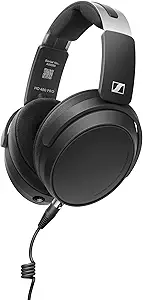 | Best for Accurate Full-Spectrum Monitoring | Drivers: Neodymium | Type: Closed-back | Passive Noise Control: Yes | VIEW LATEST PRICE | See Our Full Breakdown |
| Audio-Technica ATH-M20x Professional Studio Monitor Headphones, Black |  | Best Budget Entry for Tracking and Mixing | Driver Size: 40 mm | Design: Circumaural | Cable Exit: Single side | VIEW LATEST PRICE | See Our Full Breakdown |
| Sony MDR-M1 Studio Closed-Back Headphones, Black |  | Best for High-Resolution Mixing and Detailed Monitoring | Brand: Sony | Model: MDR-M1 | Type: Closed-back, wired studio headphones | VIEW LATEST PRICE | See Our Full Breakdown |
| studio headphones for creator | Design |
|---|---|
| Beats Studio Pro Wireless Over | Over-ear with UltraPlush cushions |
| beyerdynamic DT 990 Pro | Open-back, over-ear |
| TASCAM TH-02 Professional Stud | Foldable |
| Audio-Technica ATH-M40x Profes | Circumaural (over-ear), closed-back |
| Sennheiser HD 280 Pro Headphon | Closed-back, over-ear (circumaural) |
| Sony MDR-7506 Professional Lar | — |
| beyerdynamic DT 770 Pro Studio | Closed-back |
| Audio-Technica ATH-M30x Profes | Circumaural |
| Audio-Technica ATH-M50X Profes | Circumaural |
| Sennheiser HD 480 PRO Professi | — |
| Audio-Technica ATH-M20x Profes | Circumaural |
| Sony MDR-M1 Studio Closed-Back | — |
More Details on Our Top Picks
Beats Studio Pro Wireless Over-Ear Headphones – Navy
This is the pick for creators who split their time between the desk and the outside world, because Bluetooth freedom and active noise cancelling let it double as everyday headphones once the session ends. A 40-hour battery means a week of editing without hunting for a cable, and the 10-minute quick charge buys four more hours when a deadline is close. What earns it a spot here rather than a consumer-only roundup is the USB-C lossless audio mode — plug it into a laptop and it behaves like a wired monitor, something the TASCAM TH-02 or ATH-M40x can’t match for flexibility. The tradeoff is honest: tuning leans consumer-forward, so it flatters rather than reveals, and flagship pricing buys convenience, not reference accuracy.
Pros:- USB-C lossless audio gives a genuinely wired-quality option for editing
- Up to 40 hours battery with 10-minute fast charging
- ANC with Transparency mode makes it usable outside the studio
- One-touch pairing across both Apple and Android
Cons:- Sound signature is consumer-tuned, not flat enough for critical mixing
- Premium price far above dedicated wired studio monitors
Best for: Podcasters, video editors, and mobile creators who want one pair for studio work, travel, and casual listening
Not ideal for: Mixing engineers who need a neutral reference — the consumer-tuned signature colors balance decisions compared with studio monitors
- Battery Life:Up to 40 hours
- Fast Charging:10-minute charge for up to 4 hours of playback
- Noise Cancelling:Active Noise Cancelling with Transparency mode
- Connectivity:Class 1 Bluetooth, USB-C, 3.5 mm audio cable
- Audio Features:USB-C lossless audio, spatial audio with dynamic head tracking
- Design:Over-ear with UltraPlush cushions
Our verdict“Buy this if one versatile wireless pair matters more to your workflow than a strictly neutral mixing reference.”
beyerdynamic DT 990 Pro (250 Ohm), Open-Back Studio Headphones, Black
Where the Sennheiser HD 280 Pro seals the world out, the DT 990 Pro does the opposite — its open-back design opens up a stereo image wide enough to judge placement and depth while mixing, which closed models simply can’t replicate. Its decades-long status as a studio mixing reference is earned: mixes made on it tend to translate to speakers. The catch sits in the impedance. At 250 ohms, it needs a headphone amp or audio interface to reach full volume; plugged straight into a phone or laptop jack, it will sound thin and quiet. Compared with its sibling, the beyerdynamic DT 770 Pro, this is the better mixing tool but the worse choice for tracking, since open backs leak sound into live microphones.
Pros:- Wide, natural open-back soundstage for judging stereo placement
- Trusted mixing reference with mixes that translate well
- Replaceable velour ear pads and spring-steel headband built for years of sessions
- Made in Germany with a 2-year warranty
Cons:- 250-ohm impedance requires an amp or interface — unusable at proper volume from phones
- No isolation and audible leakage make it wrong for tracking
Best for: Home studio owners with an audio interface or headphone amp who mix and master on open-backs
Not ideal for: Anyone recording vocals or acoustic instruments in the same room — open backs leak and bleed into takes
- Impedance:250 ohms
- Design:Open-back, over-ear
- Frequency Response:5 Hz – 35,000 Hz
- Sensitivity:96 dB
- Cable:Fixed 3m coiled with 1/4-inch adapter
- Weight:8.8 ounces
- Warranty:2 years
Our verdict“This model makes the most sense for producers who already own an interface and want an honest, spacious mixing reference — skip it if you track in the same room.”
TASCAM TH-02 Professional Studio Monitor Headphones, Wired, Over Ear
The TH-02 exists for the creator buying their first microphone before their first paycheck. At a fraction of the ATH-M40x price, it still delivers a usable closed-back monitor sound with surprisingly rich bass, a padded headband, and a foldable frame that survives a backpack. It won’t compete with the Audio-Technica on detail retrieval or build heft — the plastics feel every bit as inexpensive as they are, and isolation falls short of the Sennheiser HD 280 Pro‘s 32 dB attenuation in a noisy room. But for podcasters tracking one voice in a quiet bedroom, or DJs needing a backup pair, the value math is hard to argue with. The included 1/4-inch adapter means it plugs into interfaces and controllers without extra purchases.
Pros:- Entry-level price with genuinely usable studio tuning
- Foldable, lightweight design for mobile setups
- Comfortable padded headband and ear pads for long sessions
- Includes 1/4-inch adapter for interfaces and DJ gear
Cons:- Lightweight build quality that shows its price over time
- Sound isolation is weaker than dedicated monitoring headphones
Best for: Beginner podcasters, students, and home recorders who need functional closed-back monitors at entry-level pricing
Not ideal for: Producers working in loud or untreated rooms — weak isolation and modest clarity become limiting fast
- Type:Closed-back, over-ear
- Connectivity:Wired with 1/4-inch (6.3 mm) adapter
- Design:Foldable
- Color:Black
- Weight:0.3 kg
- Warranty:1 year
Our verdict“The right first pair for creators on a tight budget who will upgrade later — anyone past beginner level should stretch for the M40x instead.”
Audio-Technica ATH-M40x Professional Studio Monitor Headphones, Black
This option stands out as the sweet spot in the whole lineup: close to the Sony MDR-7506‘s honesty and reliability, but with detachable cables — the single feature that decides whether headphones die in two years or ten. The circumaural fit delivers strong passive isolation for tracking in loud rooms, and the 90-degree swiveling earcups make one-ear DJ-style monitoring natural. Compared with its bigger sibling, the ATH-M50x, the M40x is flatter — and for studio work that’s a feature, not a compromise, since the M50x’s boosted low end flatters in ways that mislead a mix. The tuning is unapologetically neutral, so anyone hoping for bass-forward consumer sound will find it dry. For creators who want one honest wired tool that lasts, this is the pick that outperforms its price.
Pros:- Flat, neutral tuning suitable for critical mixing decisions
- Detachable cables extend lifespan and are cheap to replace
- 90-degree swiveling earcups for one-ear monitoring
- Strong passive isolation in loud tracking environments
Cons:- Studio-flat tuning may disappoint bass lovers
- Stock earpads can get warm during marathon sessions
Best for: Producers and editors who want a flat, durable daily-driver monitor without paying flagship prices
Not ideal for: Bass-heavy listeners and creators who also want headphones for casual music enjoyment — the flat tuning feels lean off the clock
- Driver Size:40mm
- Driver Type:Rare earth magnets with copper-clad aluminum wire voice coils
- Design:Circumaural (over-ear), closed-back
- Earcup Rotation:90 degrees
- Cables:Detachable
- Color:Black
Our verdict“The best value wired monitor here — buy it if accuracy and longevity matter more than bass excitement.”
Sennheiser HD 280 Pro Headphone, Black
When bleed is the enemy, the HD 280 Pro is the answer. Its up to 32 dB of passive attenuation out-isolates everything else in this batch, meaning a singer hears the click track and the microphone hears only the singer — the opposite job of the open beyerdynamic DT 990 Pro. The sound is warm and natural rather than analytically flat, which makes it gentler for long tracking sessions, though less surgical for final mix decisions. What sells the long-term case is repairability: earpads, headband padding, and the cord are all user-replaceable, a durability argument the budget TASCAM TH-02 can’t make. The coiled cable stretches 3.3 to nearly 10 feet, enough reach for most booths, but the clamping force needed for that isolation grows tiresome during all-day wear.
Pros:- Up to 32 dB passive noise attenuation leads this lineup for tracking
- Warm, natural sound that stays comfortable across long sessions
- Fully replaceable earpads, padding, and cord for a long service life
- Collapsible earpieces and coiled cable for booth and mobile use
Cons:- Firm clamping force becomes uncomfortable over extended wear
- Narrower soundstage than open-backs, limiting its mixing use
Best for: Vocalists, drummers, and engineers tracking live sources who need maximum isolation and click-track clarity
Not ideal for: Long-form mixing sessions or listeners sensitive to clamp pressure — the tight fit and closed soundstage fatigue over hours
- Design:Closed-back, over-ear (circumaural)
- Noise Attenuation:Up to 32 dB
- Cord:Coiled, 3.3–9.8 feet
- Sound Character:Extended frequency response, warm and natural
- Portability:Collapsible earpieces
- Replaceable Parts:Earpads, headband padding, and audio cord
Our verdict“The isolation champion for recording sessions — choose it for tracking days, and pair it with open-backs when it’s time to mix.”
Sony MDR-7506 Professional Large Diaphragm Headphones
The Sony MDR-7506 stands out as an industry-standard choice for professional sound monitoring, especially in broadcast and recording environments. It offers a rugged, foldable design with a long 9.8-foot cord, making it ideal for studio setups where mobility and durability are key. Compared with the more refined sound signature of the beyerdynamic DT 770 Pro, the MDR-7506 emphasizes flat response and reliability, but its non-detachable cord can be less convenient for portable use. The closed-ear design provides effective noise isolation, which is essential in noisy environments. The main tradeoff is its long cord, which can be cumbersome outside the studio setting. Overall, this headphone makes the most sense for creators needing dependable, professional-grade monitoring tools.
Pros:- Industry-standard for professional monitoring and broadcast use
- Rugged, durable construction with foldable portability
- Effective closed-ear noise isolation
- Long 9.8-foot OFC cord with gold-plated connectors
Cons:- Non-detachable cord reduces portability and convenience
- Long cord may be cumbersome for casual or mobile use
Best for: Sound engineers and broadcasters who prioritize durability and consistent performance in studio environments
Not ideal for: Mobile creators and casual users who prefer lightweight, wireless, or detachable-cable headphones
- Driver size:40mm
- Magnet type:Neodymium
- Frequency response:10 Hz – 20 kHz
- Cord length:9.8 feet
- Cord type:OFC (oxygen-free copper), non-detachable
- Connectors:Gold-plated plug with 1/4-inch adapter
Our verdict“This headphone is best suited for creators who need reliable, studio-grade sound monitoring in a fixed or semi-permanent setup.”
beyerdynamic DT 770 Pro Studio Headphones (80 Ohm, Black)
The beyerdynamic DT 770 Pro 80 Ohm offers a balanced, natural sound profile that makes it ideal for critical mixing, mastering, and vocal recording. Its closed-back design minimizes sound leakage, which is perfect for tracking sessions where isolation matters. The breathable velour ear pads provide comfort during long sessions, and the fully serviceable construction means your investment can last for years. Compared to the Sennheiser HD 480 PRO, which emphasizes accuracy but with a more utilitarian build, the DT 770 balances comfort and durability with a slightly more refined sound. Its main tradeoff is the 80 Ohm impedance, which may require a dedicated headphone amplifier, limiting its plug-and-play convenience for mobile use. This pick is best for creators who need detailed, natural sound in a durable, comfortable package.
Pros:- Balanced frequency response ideal for mixing and tracking
- Closed-back design minimizes sound leakage
- Breathable, comfortable velour ear pads
- Fully serviceable with replaceable parts
Cons:- High impedance needs dedicated headphone amplifier
- Cabled design may feel restrictive on the go
Best for: Producers and engineers focused on mixing, mastering, or vocal tracking in studio environments
Not ideal for: Mobile creators or casual listeners relying on smartphones without an amp, due to impedance requirements
- Impedance:80 Ohms
- Design:Closed-back
- Ear Pads:Black velour
- Cable Length:3m (9.8 ft)
- Connectors:3.5mm with gold-plated 1/4″ adapter
- Origin:Handcrafted in Germany
Our verdict“This headphone offers professional-grade detail and comfort, perfect for studio creators who prioritize sound accuracy and durability.”
Audio-Technica ATH-M30x Professional Studio Monitor Headphones
The Audio-Technica ATH-M30x makes a compelling choice for creators who need accurate sound in a portable, foldable package. Its 40mm drivers deliver detailed mid-range and good clarity, making it suitable for tracking and mixing in mobile setups or field environments. Compared with the Audio-Technica ATH-M50X, which offers deeper bass and a more robust build, the M30x provides a more lightweight, less expensive alternative without sacrificing essential accuracy. The circumaural design contours around the ears, providing good sound isolation, though it lacks the detachable cable of higher-end models, which could impact longevity and convenience. This model is ideal for creators who prioritize portability and accurate monitoring on the move.
Pros:- Accurate, detailed audio with strong mid-range focus
- Excellent sound isolation due to contoured ear cups
- Foldable and portable with a compact design
- Durable, professional-grade build
Cons:- No removable cable for easy replacement or upgrades
- Bass response may be less pronounced compared to higher-end models
Best for: Field recordists, mobile producers, and creators needing lightweight, accurate headphones
Not ideal for: Home studio users requiring the deepest bass or detachable cables for extended durability
- Driver Size:40mm
- Design:Circumaural
- Cable Exit:Single-side
- Foldable:Yes
- Included Accessories:Protective case, screw-on adapter
- Warranty:2 years
Our verdict“This headphone is ideal for creators needing portable, accurate monitoring without extra bulk or expense.”
Audio-Technica ATH-M50X Professional Studio Monitor Headphones, Black, Professional Grade, Critically Acclaimed, with Detachable Cable
The Audio-Technica ATH-M50X is revered among professional creators for its critically acclaimed sound profile, especially its extended bass and detailed clarity across the spectrum. Its large 45mm drivers and copper-clad aluminum voice coils deliver a precise, balanced sound that makes it suitable for mixing, mastering, and critical listening. Compared with the Sennheiser HD 480 PRO, which offers full-spectrum accuracy, the M50X emphasizes more impactful bass, appealing for those who want both accuracy and musicality. Its detachable cable enhances durability, and swiveling earcups make one-ear monitoring straightforward. The main drawback is the slightly bulkier build, which could be less comfortable for extended wear, especially during long sessions. It’s best for creators who need a versatile, high-performance headphone for professional-grade work.
Pros:- Critically acclaimed sound with extended bass and clarity
- Detachable cable for durability and easy replacement
- Swiveling earcups facilitate one-ear monitoring
- Highly durable build quality
Cons:- Bulkier design may cause long-term fatigue
- Less suited for casual listening due to emphasis on accuracy
Best for: Audio engineers and music producers seeking a versatile, critically acclaimed monitoring headphone
Not ideal for: Casual listeners or mobile users who prefer wireless or lightweight options
- Driver Size:45mm
- Frequency Response:15 Hz – 28 kHz
- Design:Circumaural
- Cable:Detachable
- Swiveling:Yes
- Included Accessories:Carrying pouch, 1/4″ adapter
Our verdict“This headphone is best for creators who need a reliable, high-fidelity monitor for professional studio work.”
Sennheiser HD 480 PRO Professional Closed-Back Studio Headphones, Black
The Sennheiser HD 480 PRO offers a solid, full-spectrum sound with a focus on accuracy, thanks to its German engineering and neodymium drivers. It’s a versatile choice for mixing, monitoring, and mobile production, with passive noise shielding and a Vibration Attenuation System that reduces distortion. Compared with the beyerdynamic DT 770 Pro, which emphasizes natural response and durability, the HD 480 PRO provides a more affordable, no-frills option for those needing dependable, full-range sound. Its comfortable, ergonomic fit supports long sessions, and the dual L/R jacks and detachable cable add flexibility. The main limitation is its passive-only noise isolation, which isn’t suitable for very noisy environments. Overall, this headphone fits creators who want reliable, full-spectrum sound at a reasonable price, with a focus on accuracy over isolation or wireless convenience.
Pros:- Accurate, full-spectrum sound with German engineering
- Effective passive noise shielding and vibration reduction
- Comfortable fit suitable for long use
- Flexible connectivity with dual L/R jacks
Cons:- Passive noise isolation only, no active cancellation
- Built overseas, which could affect durability or support availability
Best for: Mixers, broadcasters, and mobile producers prioritizing accurate, full-spectrum sound
Not ideal for: Creators needing active noise cancellation or wireless features
- Drivers:Neodymium
- Type:Closed-back
- Passive Noise Control:Yes
- Vibration Attenuation System:Yes
- Cable:Detachable
- Connectivity:Dual L/R jacks
Our verdict“This headphone offers dependable, full-spectrum monitoring ideal for creators focused on accuracy in controlled environments.”
Audio-Technica ATH-M20x Professional Studio Monitor Headphones, Black
The Audio-Technica ATH-M20x stands out as an affordable option for creators new to studio work who need reliable sound isolation and decent low-end response. Compared with the Sennheiser HD 280 Pro, the ATH-M20x offers a more comfortable circumaural fit, but it lacks detailed specs and advanced features like foldability or wireless options. Its 40 mm drivers deliver solid sound for tracking and mixing, especially in loud environments, yet it doesn’t excel in nuanced sound accuracy or portability. This model makes the most sense for beginners or those on a tight budget who prioritize isolation and comfort over extensive feature sets. However, experienced engineers seeking highly detailed sound or multi-feature options might find it limiting.
Pros:- Excellent sound isolation suitable for loud environments
- Tuned for enhanced low-frequency performance
- Comfortable circumaural design for long sessions
Cons:- Lacks detailed technical specifications in the description
- No wireless or portable features available
- Basic build without foldable or collapsible design
Best for: Beginners or budget-conscious creators who need reliable isolation for tracking and mixing
Not ideal for: Advanced professionals requiring detailed sound fidelity or portable design
- Driver Size:40 mm
- Design:Circumaural
- Cable Exit:Single side
Our verdict“A solid choice for newcomers needing dependable tracking and mixing without extra bells and whistles.”
Sony MDR-M1 Studio Closed-Back Headphones, Black
The Sony MDR-M1 is designed for creators who need precise, high-resolution audio playback, making it ideal for detailed mixing and mastering. Its ultra-wideband frequency response of 5Hz to 80kHz surpasses many competitors like the beyerdynamic DT 990 Pro in sound accuracy, especially in the high-frequency range. The lightweight 216g build and thick, replaceable ear pads prioritize comfort during long studio sessions. The wired design, however, limits mobility and may be less appealing for those looking for wireless convenience. Additionally, the closed-back structure provides excellent sound isolation but can reduce the perceived soundstage compared to open-back models, which might matter for some creators seeking a more expansive listening experience. Overall, this pick is best for meticulous sound engineers and creators focused on high-fidelity playback.
Pros:- Ultra-wideband playback (5Hz-80kHz) for high-resolution audio
- High sound isolation from a closed-back design
- Lightweight (216g) with comfortable, replaceable padding
- Includes two detachable cables and a 6.3mm adapter
Cons:- Wired only, limiting mobility
- Closed-back design may restrict soundstage compared to open-back options
- Less suitable for casual listening or portable use
Best for: Sound engineers and creators needing ultra-wideband, high-resolution audio for precise editing
Not ideal for: On-the-go creators or those preferring wireless or open-back headphones for a broader soundstage
- Brand:Sony
- Model:MDR-M1
- Type:Closed-back, wired studio headphones
- Frequency Response:5Hz-80kHz
- Weight:216g
- Connectivity:Wired, φ3.5mm detachable cables (x2)
Our verdict“This headphone excels for creators needing detailed, high-fidelity sound in a studio setting, with limited mobility options.”
How We Picked
I evaluated each pair of headphones against the four factors that actually matter to creators: frequency accuracy (can you trust what you hear while mixing?), isolation (does audio leak into your mic while tracking?), comfort over long sessions (can you wear them for a four-hour edit?), and build durability (do they survive daily studio abuse?). Price-to-performance played a role in every ranking — a $30 headphone that gets 80% of the job done ranks honestly against a $200 one that gets 95%. Where relevant, I also weighed extras like detachable cables, which dramatically extend a headphone’s lifespan, and impedance, which determines whether a pair works straight out of a laptop or needs an audio interface.
The ranking logic favors versatility first: pairs that handle recording, mixing, and editing reasonably well sit higher than specialized options. That’s why the ATH-M50x and DT 770 Pro lead the list while the excellent-but-narrow DT 990 Pro sits mid-pack. Budget picks aren’t graded on a curve — they’re held to the same standard and ranked where their real limitations put them.
Factors to Consider When Choosing Studio Headphones For Creators
Before choosing a pair from the list above, it helps to understand what actually separates studio headphones from each other — and where creators commonly overspend or buy the wrong tool for their workflow.Closed-Back vs. Open-Back: Match the Design to Your Workflow
This is the single biggest decision, and it depends on what you actually do. Closed-back headphones seal your ears, block outside noise, and keep audio from leaking into your microphone — which makes them mandatory for recording vocals, voiceover, or any tracked instrument. Open-back headphones leak sound in both directions but produce a wider, more natural soundstage that makes mixing decisions easier and fatigue slower. A common mistake is buying open-backs for a home studio where you also record: the click track and backing music bleed straight into your takes. The practical answer for most creators is a closed-back pair first, open-back second — or one of each if you mix seriously.
Impedance: Will They Work With Your Gear?
Impedance determines how much power a headphone needs to sound right, and ignoring it is a classic beginner mistake. Low-impedance models (under 40 ohms, like the Sony MDR-7506 or ATH-M50x) run at full volume straight from a laptop, phone, or camera adapter. Higher-impedance models like the 250-ohm beyerdynamic DT 990 Pro need an audio interface or headphone amp to reach proper volume and bass response — plugged into a phone, they sound thin and quiet. The 80-ohm DT 770 Pro splits the difference but still performs noticeably better with an interface. Check what you’ll plug into before buying, not after.
Neutral Sound vs. Fun Sound: Why Bass Boost Ruins Mixes
Consumer headphones boost bass and treble to make music sound exciting; studio headphones aim for a flat response so you hear problems honestly. If you mix on bass-boosted headphones, your track will sound thin on every other system because you’ll compensate for bass that isn’t really there. That’s the main reason a fashion-forward pair like the Beats Studio Pro ranks lower here despite being enjoyable to listen to. Accuracy is a tool, not a preference — but if your headphones are only for editing video or monitoring a podcast rather than mixing music, a slightly warmer signature is forgivable and can even reduce fatigue.
Comfort and Replaceable Parts: The Longevity Factor
Creators wear headphones for hours daily, so comfort is a spec, not a luxury. Look for replaceable ear pads — pads compress and flake within two or three years of daily use, and if they’re not replaceable, the headphones are effectively disposable. Beyerdynamic’s velour pads and Audio-Technica’s user-serviceable designs are why those brands dominate working studios. Detachable cables matter just as much: the cable is the first thing to fail, and a $15 replacement beats a $150 brick. Clamping force is personal — tight clamp improves isolation but causes headaches for some — so if you can, try before buying or buy from a retailer with easy returns.
When to Pay More — and When Not To
The honest price-performance curve in studio headphones flattens hard above $200. The difference between a $30 pair and a $100 pair is substantial: flatter tuning, better imaging, real durability. The difference between $100 and $170 is real but smaller — mostly build refinements and detachable cables. Above $200, you’re paying for incremental gains in soundstage and detail that only matter once your room, monitors, and ears are already trained. If you’re starting out, spend $100 on headphones and put the savings toward an interface or acoustic treatment, which will improve your output more than a premium pair ever could.
One Pair or Two? The Creator’s Realistic Setup
Many working creators eventually own two pairs: a durable closed-back for tracking and field work, and an open-back for critical mixing and editing. If that’s your trajectory, buy them in that order. A second common pattern is keeping a cheap backup pair like the TASCAM TH-02 or ATH-M20x in a bag for travel and client sessions, while the good pair stays in the studio. Cheap headphones also make useful ‘translation checks’ — if your mix sounds decent on a $30 pair, it will survive most listeners’ earbuds. Don’t treat budget models as a compromise; treat them as part of a system.
Frequently Asked Questions
Can I use the beyerdynamic DT 990 Pro (250 Ohm) with my laptop or phone?
You can plug them in, but you shouldn’t expect them to sound their best. At 250 ohms, they need more power than laptops and phones provide, so you’ll get low volume, weak bass, and a thin overall character — which defeats the purpose of buying accurate headphones. An audio interface like a Focusrite Scarlett or a dedicated headphone amp solves this completely and unlocks their full potential. If you don’t own or plan to buy an interface, the 80-ohm DT 770 Pro is the safer closed-back choice, and models like the ATH-M50x or Sony MDR-7506 run perfectly from portable devices as-is.
Are the ATH-M50x really worth almost double the price of the ATH-M40x?
It depends on how you work, not on sound quality alone — the M40x is actually closer to flat, while the M50x has a slightly boosted low end. What you’re really paying for is the detachable cable, foldable design, and slightly better padding. If you use headphones daily, the detachable cable alone justifies the premium because cables fail and replacing a $15 cable beats replacing $100 headphones. If you’re a beginner or only edit occasionally, the M40x gets you 90% of the way there and is the smarter first purchase. Working professionals tend to buy the M50x; hobbyists rarely regret the M40x.
Which pair from this list is best for recording vocals and podcasting?
For tracking, you need closed-back isolation so the microphone doesn’t pick up your backing track. The Sony MDR-7506 has been the podcast and broadcast standard for decades because it’s light, isolates well, and reveals plosives and mouth noise clearly. The HD 280 Pro offers even stronger passive isolation, which helps in untreated rooms with background noise. The DT 770 Pro is the pick if your sessions run long, thanks to velour pads that stay cool. Avoid the open-back DT 990 Pro entirely for this job — it leaks audio both ways and will contaminate your recordings.
Can I mix music properly on headphones instead of studio monitors?
Yes, especially with the right pair and realistic expectations. Mixing on headphones is now common in home studios, and closed-back reference models like the ATH-M50x, DT 770 Pro, and Sony MDR-M1 give you enough detail to make solid decisions. The main weakness of headphones is a compressed sense of space — depth and stereo placement are harder to judge than on monitors in a treated room. Two habits fix most of this: check your mix on multiple systems (car, earbuds, a cheap pair), and learn your headphones’ character by referencing professional tracks in the same genre. Open-back models like the DT 990 Pro reduce the spatiality problem but only work in quiet rooms.
Is the Beats Studio Pro a valid budget-friendly alternative since it sometimes goes on sale?
As everyday headphones, the Beats Studio Pro is genuinely good — comfortable, wireless, great for calls and travel. As a studio tool, it’s the wrong instrument: its tuned-for-consumer bass will fool you into mixing thin low end, and its Bluetooth convenience doesn’t help when you need a wired, latency-free signal for tracking. Even at sale prices, a $150 Beats pair serves a creator worse than a $100 ATH-M40x for actual production work. The one scenario where it makes sense is a video editor who wants one pair for both editing on the go and daily listening, accepting that color-graded sound. If your headphones are primarily production tools, spend the same money on a dedicated studio model.
Conclusion
The right choice here comes down to what you make and where you make it. For best overall, the Audio-Technica ATH-M50x remains the most complete package: accurate enough for mixing, isolated enough for tracking, durable enough for daily abuse, and repairable thanks to the detachable cable. The beyerdynamic DT 770 Pro is my alternative overall pick if comfort during marathon sessions matters more than portability — just make sure you have an interface to drive it.
For best value, the ATH-M40x is the smartest money in this lineup, with the TASCAM TH-02 as the unbeatable ultra-budget entry point for absolute beginners. For best premium, the Sony MDR-M1 and Sennheiser HD 480 PRO bring modern design and refined detail for creators who mix professionally. For best for beginners, start with the M40x or even the ATH-M20x and put the savings toward your mic or interface. For specific needs: podcasters and vocal trackers should grab the Sony MDR-7506 or HD 280 Pro, long-session mixers belong in the DT 770 Pro, dedicated mix engineers with a quiet room will love the open-back DT 990 Pro, and the Beats Studio Pro only makes sense if you want one pair that doubles as everyday headphones. Whatever you pick, buy for the work you actually do today — not the studio you imagine having someday.
Columbus Day / Indigenous Peoples' Day Picks
long weekend sales
As an affiliate, we earn on qualifying purchases.