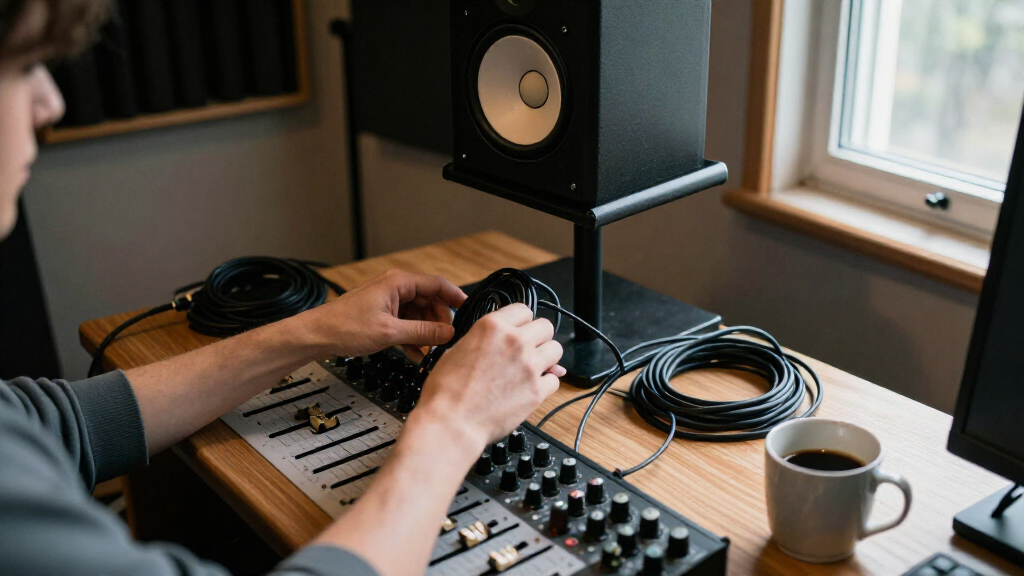
The best studio monitor stands for most desk-based setups are the Gator Frameworks Clamp-On Desktop Stands, which combine desk attachment with adjustable tilt. For a freestanding alternative, the On-Stage SMS6600-P offers adjustable height, while the On-Stage SMS7500B suits listeners who prefer a wood platform. The main choice is between desk clamps that save floor space and freestanding stands that offer more placement flexibility; height, speaker fit, and vibration control matter too. I compare all 13 options by their intended use and tradeoffs below. Read on to match a stand to your monitors, desk, and room.

Get audio and creator gear delivered free with Prime
- Fast, free delivery on millions of items
- Prime Video, Amazon Music and more included
- Member-only deals all year
Complete the kit


Key Takeaways
- Desk-clamp stands dominate for compact workspaces: Gator, Liquid Stands, and Vondynote clamp models free floor area, but depend on a sturdy, clamp-compatible desk.
- Freestanding designs solve a different problem: Pyle, Rockville, On-Stage, and PERLESMITH options can be placed apart from the desk, though they take up more floor space.
- Adjustability is useful only when it fits your setup: Height and tilt can help aim monitors toward seated listening positions, but buyers should check the adjustment range against their desk and speaker dimensions.
- Platform-style stands offer a simpler placement choice: The On-Stage wood models avoid desk-clamp fit questions, while their fixed platform format offers less positioning flexibility than adjustable options.
- Fit and stability separate the more specialized picks: The heavy-duty dual-side-clamp model is built around a broad range of speaker widths and cable routing, while compact desk stands are better suited to lighter, space-conscious setups.


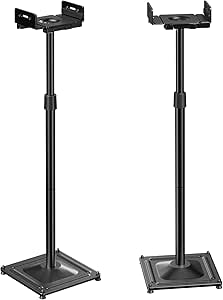
| studio monitor stand | Quantity | Material | Height range | Load capacity |
|---|---|---|---|---|
| Pyle Adjustable Speaker Stand | 2 stands | — | 34–53 in | 90 lb |
| Rockville RVSM1 Adjustable-Hei | Pair | Steel | 33–45 in | — |
| Vondynote Pair of Desk-Clamp S | 2 stands | Alloy steel | — | — |
| Vondynote Set of 2 Adjustable | 2 stands | Alloy steel | 9–14 in | 50 lb |
| Gator Frameworks Clamp-On Desk | 2 stands | Alloy steel | — | 60 lb |
| Vondynote Adjustable Studio Mo | 2 stands | — | 33–51 inches | — |
| Vondynote Pair of Adjustable S | 2 stands | — | 32.6–50.9 inches | 88 pounds per stand |
| On-Stage SMS6600-P Height-Adju | 2 stands | — | 36.5–54 inches | — |
| On-Stage SMS7500B Wood Studio | 2 stands | Wood | — | 90 pounds |
| On-Stage SMS7500RB Wood Studio | Pair | Wood | — | 90 pounds |
| Liquid Stands Clamp-On Studio | 2 | Stainless steel | 9.5–13.5 inches | 65 lbs |
| Heavy Duty Studio Monitor Stan | — | Metal | — | 30 lb per stand |
| PERLESMITH Height-Adjustable U | 1 pair | Alloy steel | 33.3–45 inches | — |
More Details on Our Top Picks
Pyle Adjustable Speaker Stand Pair with Metal Base
The Pyle PSTND32 is the freestanding choice here for buyers who need more height than a desktop clamp stand can provide. Its 34–53-inch range suits listening positions where speakers need to sit well above the desk, while the 90-pound capacity per pair listing accommodates heavier cabinets than the clamp-on options from Vondynote or Gator Frameworks. A safety pin adds a useful backup to the height adjustment, and folding tripod legs make storage easier when the stands are not in use.
The tradeoff is footprint: these legs need floor space, unlike the desk-mounted Vondynote stands, which leave the floor clear. The stated height range also may not reach every preferred speaker position, and the metal platform is less compact to carry than a small mounting plate. Choose this pair for adjustable floor placement, not a minimal desktop.
Pros:- Adjusts from 34 to 53 inches for elevated speaker placement.
- Safety support pin backs up the height adjustment.
- Folding tripod legs simplify storage and transport.
- Rubber pads help keep speakers from sliding on the platforms.
Cons:- Tripod legs take up floor space that desk-clamp stands do not need.
- The 34–53-inch range may not suit every listening position.
- Metal platform bases are less compact to carry than smaller mounting plates.
Best for: Studio owners who need freestanding stands to raise monitors above desk height and want folding legs for storage.
Not ideal for: Desk-focused setups with little floor space, or listeners who need precise placement beyond the 34–53-inch height range.
- Quantity:2 stands
- Height range:34–53 in
- Load capacity:90 lb
- Base dimensions:8.9 × 8.9 in
- Base material:Metal
- Speaker pad material:Rubber
- Item weight:5.1 kg
Our verdict“Pick the Pyle pair if you need tall, freestanding monitor placement and can spare the floor space for tripod legs.”
Rockville RVSM1 Adjustable-Height Studio Monitor Speaker Stands, Pair, Black
The Rockville RVSM1 is the most directly studio-monitor-oriented freestanding option in this group. Its 33–45-inch adjustment range targets ear-level placement, while the EVA foam platform helps isolate monitors from the stand. Compared with the Pyle PSTND32, Rockville gives up some maximum height and load capacity but adds a platform specifically described as vibration-reducing. The nylon clutch and safety pin offer two parts to the height setup, and rubber feet support the wide tripod base.
These stands make more sense for near-field monitors than for buyers seeking a compact desktop solution; Vondynote’s clamp-on models free up floor space, but cannot provide this same freestanding placement. One compatibility wrinkle is that 35 mm pole-mount speakers require removing the tray. If you want a broad tripod base and a cushioned monitor platform, Rockville is a focused pick; skip it if your desk is already crowded with floor stands or you need a very tall setup.
Pros:- 33–45-inch height adjustment supports ear-level monitor placement.
- EVA platform helps reduce vibration at the speaker contact point.
- Wide tripod base has rubber feet and a safety pin.
- Removable tray allows use with compatible 35 mm pole-mount speakers.
Cons:- The maximum height is lower than the Pyle PSTND32’s 53-inch reach.
- The tripod base occupies floor space unlike Vondynote’s desk-clamp stands.
- The tray must be removed for 35 mm pole-mount speakers.
Best for: Home-studio owners using near-field monitors who want freestanding height adjustment and a cushioned platform.
Not ideal for: Buyers with limited floor space, monitors needing placement above 45 inches, or pole-mount users who want to keep the tray installed.
- Quantity:Pair
- Height range:33–45 in
- Capacity:80 lb per stand
- Material:Steel
- Platform dimensions:9.05 × 9.45 in
- Platform material:EVA foam
- Base dimensions:17.7 × 17.7 in
- Adjustment mechanism:Nylon clutch and safety pin
Our verdict“Choose the Rockville pair for freestanding near-field monitors when platform cushioning matters more than maximum height or a small footprint.”
Vondynote Pair of Desk-Clamp Studio Monitor Speaker Stands, Adjustable Tilt and Height
For a desk-based setup, the Vondynote desk-clamp pair offers more positioning control than its simpler sibling, the Vondynote Set of 2 Adjustable Desktop Clamp Speaker Stands. It has four height settings from 10.4 to 15.4 inches and a 0–12° tilt range, so you can angle monitors toward your listening position rather than settling for a fixed, flat platform. Clamping the stands to the desk also frees surface area beneath them, while EVA pads help protect the desktop and soften contact with the speakers.
That flexibility comes with limits: height changes are restricted to four fixed settings, and the clamp only fits desks up to 2.6 inches thick. The larger 9 × 12-inch plates need more room than the 9 × 9-inch plates on the other Vondynote model, but provide a broader support surface. This is the better choice for buyers who value tilt and larger platforms; choose the smaller Vondynote instead if compact plates and a lower profile matter more.
Pros:- Tilt adjusts from 0° to 12° for directing monitors toward the listening position.
- Four height settings raise speakers clear of the desktop.
- Desk clamps preserve floor space and leave room beneath the stands.
- EVA pads help protect the desk and reduce vibration at contact points.
Cons:- Height adjustment is limited to four preset positions.
- The clamps do not fit desktops thicker than 2.6 inches.
- The 9 × 12-inch plates take up more desk-edge space than the other Vondynote pair’s 9 × 9-inch plates.
Best for: Desktop producers who need to angle monitors toward their listening position and have a desk no thicker than 2.6 inches.
Not ideal for: Users who need continuous height adjustment, a small top plate, or a freestanding stand that does not depend on desk-edge access.
- Quantity:2 stands
- Top plate dimensions:9 × 12 in
- Tilt range:0°–12°
- Height settings:10.4, 12, 13.7, and 15.4 in
- Maximum weight capacity:60 lb
- Clamp range:0–2.6 in
- Material:Alloy steel
- Item weight:4.07 kg
Our verdict“Pick this Vondynote pair when desktop monitor tilt and a broad support plate matter more than compact dimensions or continuous height adjustment.”
Vondynote Set of 2 Adjustable Desktop Clamp Speaker Stands
The Vondynote Set of 2 Adjustable Desktop Clamp Speaker Stands is the simpler, lower-profile desktop pick. Its 9–14-inch range lifts monitors off the work surface without taking up floor space, and the 9 × 9-inch padded plates create a smaller footprint than the 9 × 12-inch platforms on Vondynote’s tilt-adjustable pair. Each stand supports up to 50 pounds, which suits many compact studio monitors and other desktop equipment.
Compared with that larger Vondynote model, this set trades adjustable tilt and greater stated capacity for a more compact plate and a lighter overall build. The clamp still needs a desk edge no thicker than 2.6 inches, and the 14-inch maximum may be too low if your listening position calls for taller placement. Choose it for straightforward elevation and a tidy desktop; pick the tilt-adjustable Vondynote if directing the speaker angle is part of your setup.
Pros:- 9–14-inch adjustment raises monitors while keeping the floor clear.
- 9 × 9-inch top plates are more compact than the other Vondynote pair’s 9 × 12-inch plates.
- EVA padding on the clamp and top plate helps protect contact surfaces.
- Includes bolts and an Allen key for installation.
Cons:- Maximum height of 14 inches may not suit higher listening positions.
- The 50-pound capacity is lower than the 60-pound capacity of the tilt-adjustable Vondynote pair.
- No tilt adjustment for aiming speakers toward the listener.
Best for: Desktop producers with compact monitors who want a straightforward lift and a smaller platform without using floor stands.
Not ideal for: Owners of larger or heavier monitors, users who need adjustable tilt, or setups requiring more than 14 inches of elevation.
- Quantity:2 stands
- Height range:9–14 in
- Desk clamp range:0–2.6 in
- Top plate dimensions:9 × 9 in
- Load capacity:50 lb
- Material:Alloy steel
- Pad material:EVA
- Included accessories:Four M8 × 25 bolts and 5 mm Allen key
Our verdict“Choose this pair for compact, basic desktop elevation; step up to Vondynote’s tilt-adjustable model if speaker angling is a priority.”
Gator Frameworks Clamp-On Desktop Studio Monitor and Speaker Stands, Adjustable Tilt, Set of 2
The Gator Frameworks clamp-on pair stands out for listeners who need both height and a wider angle range from a desktop mount. It adjusts from about 10.13 to 14 inches and tilts through 0–15°, giving it more stated tilt than the 0–12° Vondynote desk-clamp model. The EVA-lined surface helps protect monitor cabinets and the desk, while the clamp-on design keeps floor space open. Its stated 60-pound capacity and support for vertical or horizontal monitor orientations add flexibility for small-monitor setups.
There are practical limits. The clamp fits desks up to 2.25 inches thick, less than the 2.6-inch limit on both Vondynote clamp models, and the product is aimed at small monitors rather than larger cabinets. Compared with Vondynote’s compact 9 × 9-inch stand, Gator offers more tilt but asks buyers to check desk thickness more carefully. Pick it for flexible aiming and orientation, not for a thick desk or oversized monitors.
Pros:- 0–15° tilt offers more stated angling range than the Vondynote tilt-adjustable pair.
- Height adjustment supports desktop positioning from roughly 10.13 to 14 inches.
- EVA-lined surfaces help protect equipment and reduce vibration at contact points.
- Supports vertical or horizontal placement for compatible small monitors.
Cons:- The 2.25-inch desk-thickness limit is narrower than the 2.6-inch limit on the Vondynote clamp stands.
- Designed for small monitors, so larger speaker cabinets may not be a suitable fit.
- Its desktop clamp uses desk-edge space rather than offering freestanding placement.
Best for: Small-monitor users who want a clamp-on mount with a broad tilt range and the option to position speakers vertically or horizontally.
Not ideal for: Owners of larger monitors or desks thicker than 2.25 inches; the Vondynote clamp stands accommodate thicker desks.
- Quantity:2 stands
- Height adjustment:10.13–14 in
- Tilt adjustment:0–15°
- Maximum desk thickness:2.25 in
- Load capacity:60 lb
- Surface:EVA foam padded
- Material:Alloy steel
- Warranty:3 years
Our verdict“Choose Gator if your small monitors need flexible tilt and orientation, provided your desk is no thicker than 2.25 inches.”
Vondynote Adjustable Studio Monitor Stands with Cable Management, Pair
The built-in cable-routing holes give this Vondynote pair a practical advantage for floor setups where loose speaker wires would otherwise trail down the stands. Its 33–51-inch height range suits varied listening positions, and the 88-pound capacity per stand covers many monitor sizes. Compared with the On-Stage SMS6600-P, it offers a cable passage and a slightly lower minimum height, while the On-Stage pair specifies a 90-pound capacity and includes carpet spikes. The Vondynote’s 9-by-9-inch platforms are the main constraint: check your speaker footprint before buying, especially if the cabinet has a broad or unusually shaped base. Rubber feet and metal spikes let you match the stand to different floor surfaces, but you’ll need to select the right option for your room.
Pros:- 33–51-inch adjustment range accommodates different listening heights.
- Cable-routing holes help keep wires organized along the stands.
- Supports up to 88 pounds per stand.
- Includes rubber feet and metal spikes for different floor surfaces.
Cons:- The 9-by-9-inch platform can limit compatibility with larger speaker bases.
- Buyers must choose between rubber feet and spikes to suit their flooring.
Best for: Studio owners who want adjustable floor stands with a built-in route for keeping speaker cables tidy.
Not ideal for: Buyers with monitors whose bases exceed the 9-by-9-inch platform, or anyone who wants a larger top plate.
- Quantity:2 stands
- Material and finish:Metal, powder-coated
- Height range:33–51 inches
- Platform dimensions:9 x 9 inches
- Base dimensions:13.5 x 13.5 inches
- Maximum load capacity:88 pounds per stand
- Cable hole dimensions:1.38 inches high x 0.98 inches wide
- Feet:Rubber feet and metal spikes
- Warranty:Lifetime
Our verdict“Choose this pair if cable routing and broad height adjustment matter more than having a larger speaker platform.”
Vondynote Pair of Adjustable Studio Monitor Speaker Stands
This Vondynote pair is a good fit for listeners who want repeatable height settings rather than a continuously variable adjustment: four positions are secured with a locking knob and safety pin. The triangular base has a 17.3-inch width, giving it a broader footprint than the 13.5-by-13.5-inch base on the Vondynote model with cable management. It also has foam padding on each 9-by-9-inch top plate to help protect cabinets and reduce direct contact vibration. Both Vondynote pairs support 88 pounds per stand and include rubber and spike options, but this version does not list cable-routing holes. Its fixed settings and required assembly may be less appealing if you frequently fine-tune speaker height or want a tidier cable path.
Pros:- Four height settings lock in seated or standing listening positions.
- Safety pin and locking knob help secure the selected height.
- Foam-padded top plates protect speaker cabinets from direct contact.
- Interchangeable rubber pads and metal spikes suit different surfaces.
Cons:- The 9-by-9-inch top plate may be too small for some monitors.
- Assembly is required.
- No cable-routing feature is listed, unlike the other Vondynote stand in this roundup.
Best for: Home-studio owners who switch between a few listening positions and prefer height settings secured by a pin.
Not ideal for: People who need fine-grained height changes or built-in cable routing, or whose speakers need a top plate larger than 9 by 9 inches.
- Quantity:2 stands
- Material and color:Metal, black
- Height range:32.6–50.9 inches
- Height settings:4
- Top plate dimensions:9 x 9 inches
- Base width:17.3 inches
- Load capacity:88 pounds per stand
- Top plate padding:2 mm foam
- Feet:Interchangeable rubber pads and metal spikes
Our verdict“Pick this model if you want secure preset heights and a wide triangular base, but skip it if cable routing or continuous adjustment is a priority.”
On-Stage SMS6600-P Height-Adjustable Hex-Base Monitor Stands, Pair
The On-Stage SMS6600-P is the straightforward choice here for buyers who prioritize a sturdy floor base and a little extra stated load capacity. Its 90-pound-per-stand rating edges out the 88-pound Vondynote pairs, while the stamped hexagonal bases, EVA-padded platforms, and included carpet spikes address stability and contact with the floor. The height adjusts from 36.5 to 54 inches, a taller maximum than either Vondynote option, though the higher minimum may not suit lower listening positions. Unlike the cable-routing Vondynote, this pair does not list a wire passage, and its fixed 18-inch footprint needs room around the stand. The carpet spikes are intended for carpet; buyers with hard floors will rely on the rubber feet.
Pros:- Supports up to 90 pounds per stand.
- Height adjustment reaches 54 inches for elevated placement.
- EVA-padded platforms help protect speaker cabinets and absorb vibration.
- Includes rubber feet and six carpet spikes.
Cons:- The 36.5-inch minimum height may be too high for some setups.
- The fixed 18-inch footprint can take up substantial floor space.
- Included spikes are intended for carpet rather than hard flooring.
Best for: Studio owners with heavier monitors, carpeted floors, and enough room for stands with an 18-inch footprint.
Not ideal for: Listeners who need a lower minimum height, built-in cable routing, or a compact base for a tight room.
- Quantity:2 stands
- Height range:36.5–54 inches
- Weight capacity:90 pounds per stand
- Base:Heavy-duty stamped hexagonal base
- Platform padding:EVA rubber
- Feet:Rubber feet
- Floor spikes:Six carpet spikes included
- Color:Black
- Warranty:3-year limited manufacturer warranty
Our verdict“Choose the SMS6600-P for a high-reaching, sturdy stand with carpet support, provided its minimum height and footprint fit your room.”
On-Stage SMS7500B Wood Studio Monitor Stands, Pair, Black
Unlike the metal, fixed-footprint stands from Vondynote and the On-Stage SMS6600-P, the SMS7500B pairs height and angle adjustment with locking casters. That combination suits a studio where monitors need to move for room changes or access, then stay secured in place. Its wood construction and black finish offer a different look from the metal stands, and the listed 90-pound load capacity matches the SMS6600-P. The main buying uncertainty is fit: the product data gives a 56.5-inch maximum height but no minimum height or adjustment range, so it is harder to judge whether the stands will place speakers correctly in a particular room. I would verify the working height and footprint before choosing these over the more fully specified Vondynote options.
Pros:- Height and angle adjustments allow flexible speaker positioning.
- Locking casters make repositioning easier while allowing the stands to be secured.
- Wood construction provides an alternative to the metal stands in this roundup.
- Supports up to 90 pounds.
Cons:- Only the maximum height is listed; no minimum or adjustment range is provided.
- The product information does not specify platform or base dimensions.
- Casters may be less suitable than fixed feet for buyers who want a stationary stand.
Best for: Studio owners who want wood stands with adjustable speaker angle and locking casters for occasional repositioning.
Not ideal for: Buyers who need a confirmed minimum height or adjustment range before planning a precise listening setup.
- Quantity:2 stands
- Material:Wood
- Color:Black
- Finish:Lacquered or painted
- Maximum height:56.5 inches
- Load capacity:90 pounds
- Adjustments:Height and angle
- Casters:Locking
- Warranty:3-year limited warranty
Our verdict“Choose this pair if adjustable angle and locking mobility matter, but confirm its working height and fit before ordering.”
On-Stage SMS7500RB Wood Studio Monitor Stands, Rosewood, Pair
The rosewood finish makes the SMS7500RB the style-led option among these five stands, while its wood construction and 90-pound load capacity retain practical appeal for substantial monitors. Height and angle adjustment provide more positioning flexibility than the fixed-platform metal stands, including the On-Stage SMS6600-P, and locking casters let you move the stands before securing them. The tradeoff is limited fit information: unlike the Vondynote models, which list height ranges, this product does not specify its adjustment range. Its listed dimensions—36 x 20.7 x 2.75 inches—also deserve a careful check against your available space and speaker setup. Choose it for the finish and movable positioning, not when exact height planning or a compact footprint is your priority.
Pros:- Rosewood stained or varnished finish adds a distinct visual option.
- Height and angle adjustments allow flexible monitor placement.
- Locking casters support movement followed by a secured position.
- Supports up to 90 pounds.
Cons:- No height adjustment range is provided in the product data.
- The listed dimensions may require substantial room and should be checked against the studio layout.
- Casters may not suit buyers seeking a fixed-foot stand.
Best for: Studio owners who want wood monitor stands in a rosewood finish and value adjustable angle and locking mobility.
Not ideal for: Buyers who need a confirmed height range or have limited space and cannot verify the listed dimensions against their setup.
- Quantity:Pair
- Material:Wood
- Color and finish:Rosewood, stained/varnished
- Load capacity:90 pounds
- Dimensions:36 x 20.7 x 2.75 inches
- Adjustments:Height and angle
- Casters:Locking
- Warranty:3-year limited warranty
Our verdict“Pick the SMS7500RB if the rosewood look and movable, adjustable placement suit your room, after checking the dimensions and height range.”
Liquid Stands Clamp-On Studio Monitor Stands, Adjustable, 2-Pack
The Liquid Stands pair makes the most sense when you want to lift monitors without giving up floor space. Its desk-clamp design keeps the speakers close to the workstation, while 6 mm isolation padding and adjustable tilt help aim and seat them securely. Compared with the Yibracki Heavy Duty Studio Monitor Stand Pair, this model sits at desk height rather than raising speakers to standing-listening height; its 65 lb stated capacity per product description also exceeds the Yibracki pair’s 30 lb per stand limit. The tradeoff is a narrower fit: the clamp requires a desk 0.5–2 inches thick, and height tops out at 13.5 inches. Choose it for a compact desk setup, not for freeing up the desktop entirely or positioning speakers far above it.
Pros:- Clamp-on mounting keeps the stands off the floor and positions monitors near the workstation.
- Height adjusts from 9.5 to 13.5 inches, with tilt from 0° to 20°.
- Platforms can be set up for horizontal or vertical speaker placement.
- 6 mm anti-slip isolation padding and a stated 65 lb load capacity per stand support a range of monitor setups.
Cons:- The clamp only fits desks from 0.5 to 2 inches thick.
- The 13.5-inch maximum height is limiting for setups that need monitors raised well above the desk.
- Clamping to the desktop may not suit users who want monitors entirely separate from the desk.
Best for: Home-studio owners who want adjustable, tilted monitor platforms clamped to a desk with limited floor space.
Not ideal for: People with desks thinner than 0.5 inches or thicker than 2 inches, or buyers who need speaker platforms higher than 13.5 inches.
- Quantity:2
- Material:Stainless steel
- Load capacity:65 lbs
- Platform dimensions:12.5 × 9 inches
- Height range:9.5–13.5 inches
- Tilt range:0°–20°
- Desk thickness compatibility:0.5–2 inches
- Isolation padding thickness:6 mm
Our verdict“Pick the Liquid Stands pair for desk-mounted monitor positioning and isolation, provided your desk thickness and height needs fit its range.”
Heavy Duty Studio Monitor Stand Pair for Yamaha HS5/HS7/HS8, Edifier MR4/MR5, JBL 305P, Height Extend 29-37.5″, Dual Side Clamp Fit 5″–11″ Speaker Stand, Built-in Cable Management & Anti-Vibration Foam Pads
Unlike the desk-mounted Liquid Stands, the Yibracki pair is built to place monitors on separate supports at a much taller listening height. Its 29–37.5-inch tool-free adjustment suits seated or standing workstations, while side clamps accommodate speakers 5–11 inches wide. Foam pads and integrated cable management help keep the setup tidy and reduce direct contact between speaker and tray. That height and independent placement make it a stronger fit for larger monitor formats than the compact PERLESMITH stands, but its 30 lb limit per stand rules out heavier speakers and subwoofers. Measure the speaker width before buying: a wide compatibility range does not guarantee a fit for every cabinet shape. The metal build is also substantial to move once positioned.
Pros:- Height adjusts tool-free from 29 to 37.5 inches for elevated listening positions.
- Side clamps fit speakers 5–11 inches wide.
- Foam pads help protect speaker cabinets and limit vibration at the tray.
- Built-in cable management keeps power and audio leads organized.
Cons:- The 30 lb capacity per stand excludes heavier monitors and subwoofers.
- Speaker width and fit need to be checked before installation.
- At 7.81 kg for the pair, the metal stands may be cumbersome to move.
Best for: Studio owners who need freestanding monitor supports at seated or standing height and have speakers 5–11 inches wide weighing no more than 30 lb each.
Not ideal for: Owners of heavy monitors or subwoofers above 30 lb per stand, and buyers who want lightweight stands that are easy to reposition.
- Number of stands:2
- Material:Metal
- Load capacity:30 lb per stand
- Compatible speaker width:5–11 inches
- Height adjustment range:29–37.5 inches
- Cable management:Built in
- Anti-vibration pads:Foam
- Item weight:7.81 kg
Our verdict“Choose the Yibracki pair when you need tall, freestanding supports for mid-sized monitors and can work within its width and weight limits.”
PERLESMITH Height-Adjustable Universal Speaker Stands, 1 Pair
The PERLESMITH pair is the light-duty choice here: it raises compatible speakers well above a desk or floor-level surface, with height adjustable from 33.3 to 45 inches. Its 11 lb speaker limit makes it a better match for lightweight bookshelf or satellite speakers than the Yibracki stands, which support up to 30 lb per stand and clamp the speaker sides. Cable routing is handled through both a cable hole and hook-and-loop straps, giving owners options depending on their wiring. The broad base and non-slip feet support stability, but the fit is not universal in practice: round or irregularly shaped speakers are excluded, and the cable opening may not pass larger connectors. Choose this pair for light, regularly shaped cabinets—not heavy studio monitors that need a higher load rating.
Pros:- Height adjusts from 33.3 to 45 inches for elevated speaker placement.
- Fits compatible speakers 4.5–9 inches wide weighing up to 11 lb.
- Cable holes and hook-and-loop straps provide two wire-management options.
- Alloy-steel construction, a wide base, and non-slip foot pads support stability.
Cons:- The 11 lb speaker limit is lower than the Yibracki stands’ 30 lb per-stand capacity.
- Not suitable for round or irregularly shaped speakers.
- Cable holes may not accommodate larger cables or connectors.
Best for: Buyers using lightweight, regularly shaped bookshelf or satellite speakers up to 11 lb who want tall, adjustable supports and flexible cable routing.
Not ideal for: Owners of heavy studio monitors, round or irregularly shaped speakers, or cables with connectors too large for the stand’s cable holes.
- Quantity:1 pair
- Material:Alloy steel
- Speaker weight capacity:11 lb
- Compatible speaker width:4.5–9 inches
- Height range:33.3–45 inches
- Base width:9.72 inches
- Cable hole dimensions:1.18 in H × 0.59 in W
- Warranty:10 years
Our verdict“Choose the PERLESMITH pair for tall placement of light, compatible bookshelf speakers, but skip it for heavier studio monitors.”
How We Picked
I ranked these studio monitor stands by how well their mounting style, adjustability, and stated design suit common studio setups. I weighed whether each option is intended for desk or floor placement, how much flexibility it offers for positioning, and whether its construction and support approach appear suited to keeping monitors stable. I also considered practical details such as cable management, padding, footprint, and the need to match clamp or platform dimensions to a particular desk and speaker.
The order reflects usefulness across typical setups, not a claim that one style is universally superior. Clamp-on models rank well for space-constrained desktop studios, while freestanding options rise for buyers who need independent placement. Specialized features can make a stand a better match for a narrow use case, but they do not automatically make it the strongest choice for everyone. I treat product names and stated features as fit clues, and recommend verifying dimensions and weight limits before buying.
| studio monitor stand | Material |
|---|---|
| Pyle Adjustable Speaker Stand | — |
| Rockville RVSM1 Adjustable-Hei | Steel |
| Vondynote Pair of Desk-Clamp S | Alloy steel |
| Vondynote Set of 2 Adjustable | Alloy steel |
| Gator Frameworks Clamp-On Desk | Alloy steel |
| Vondynote Adjustable Studio Mo | — |
| Vondynote Pair of Adjustable S | — |
| On-Stage SMS6600-P Height-Adju | — |
| On-Stage SMS7500B Wood Studio | Wood |
| On-Stage SMS7500RB Wood Studio | Wood |
| Liquid Stands Clamp-On Studio | Stainless steel |
| Heavy Duty Studio Monitor Stan | Metal |
| PERLESMITH Height-Adjustable U | Alloy steel |
Factors to Consider When Choosing Studio Monitor Stands
Choosing monitor stands is less about collecting adjustments and more about getting the speakers into a stable, repeatable listening position. I would start with the room and desk, then check fit and placement before comparing extras.
Desk Clamp or Freestanding Base?
Start by deciding whether the desk or the floor should carry the stands. Clamp-on designs preserve floor space and can keep speakers close to a desktop setup, but they need a desk edge that the clamp can grip securely. Check the edge shape, thickness, underside clearance, and any cable trays or drawers that could block the clamp. Freestanding stands avoid those desk restrictions and can be moved independently, but they occupy floor area and need a stable surface. A common mistake is buying clamps for a desk with a weak or inaccessible edge, or freestanding stands without checking whether their footprint fits the room. Choose the mounting style around the furniture you already have, not just the stand’s feature list.
Match Height and Tilt to Your Listening Position
The goal is to aim the monitors toward your normal listening position, not to maximize the stand’s adjustment range. Measure from the desk or floor to your ears while seated, then compare that with the speaker’s tweeter position and the stand’s usable height. Tilt adjustment can help compensate when the speakers sit above or below ear level, but it cannot fix a poor listening position or badly placed desk. Check how the stand locks in place and whether the chosen angle leaves the speaker supported securely. Buyers often focus on the stated height range without accounting for the platform, clamp, or speaker’s own dimensions. If you switch between standing and sitting, prioritize a range that accommodates both positions.
Check Speaker Fit and Load Before Buying
Compare the stand’s support surface or clamp range with the monitor’s actual width and depth. A speaker that technically fits can still feel precarious if too much of its base overhangs, so look for a supported footprint that leaves the monitor centered and stable. Weight capacity and clamp compatibility matter just as much as nominal speaker size; check the manufacturer’s specifications for both the stand and your desk. Do not assume a stand made for familiar monitor models will suit every speaker with similar dimensions. Leave room for power and audio connectors, too, since a tight fit can force cables into awkward bends. When product details do not clearly state dimensions or capacity, confirm them before purchase rather than guessing.
Think About Vibration, Padding, and Surface Contact
Stand contact can affect how vibration travels into a desk or floor, but padding is not a substitute for stable support. Look for secure contact points and suitable isolation materials, then consider whether they fit the speaker base without sliding or obstructing placement. A lightweight clamp stand attached to a flexible desk may still transmit vibration through the furniture. Floor stands also need an even, firm surface; a wobble can undermine otherwise useful height adjustment. Avoid stacking improvised pads or shims unless the monitor remains fully supported and cannot shift. For a shared room or a sensitive desktop, assess the whole path from speaker to stand to furniture rather than judging foam alone.
Plan for Cable Routing and Everyday Access
Cable management can keep a workstation tidier, but it should not make routine connections harder. Check where the monitor’s inputs and power socket sit, how much cable slack is needed when adjusting height or tilt, and whether the stand’s routing path pinches or sharply bends wires. Built-in cable routing is most useful when it matches the way your desk is arranged; otherwise, clips or ties may be simpler. Leave enough slack for safe movement and easy disconnection. A common oversight is routing cables before testing the final monitor position, then discovering they pull when the speaker is angled. Think through access to switches and connectors before committing to a tidy but restrictive route.
Pay for Adjustability You Will Actually Use
Extra height settings, tilt, and wider speaker compatibility can be worthwhile when they solve a real fit problem. If your monitors stay in one position and already sit at the right listening height, a simpler platform may be easier to live with. Versatility has a tradeoff: more moving parts and adjustment points can mean more setup decisions, while a fixed support can be less adaptable if your room changes. Before paying more for multiple adjustments, list the positions you expect to use and the monitors you may add later. Buyers who rearrange their workspace often benefit more from flexibility than those with a permanent studio layout. Spend for a clear need—such as a difficult desk edge, changing listening height, or broader speaker fit—not for specifications that will remain unused.
Frequently Asked Questions
Are clamp-on studio monitor stands safe for a heavy pair of monitors?
They can be suitable only when the stand’s stated capacity, clamp range, and the desk’s construction all support the load. Check the combined weight of each monitor and compare it with the manufacturer’s limit for that individual stand. Inspect the desk edge for damage, flex, bevels, or obstructions that could prevent a firm clamp. A solid desk does not automatically make every clamp compatible, especially if its underside has a frame or cable tray. If any specification is missing or the desk flexes under pressure, a freestanding option is the safer direction.
Should I choose desk stands or floor stands for a small studio?
Desk stands usually save floor space and keep monitors near a computer workstation, which can make them a practical fit for a compact room. Their tradeoff is that they transfer the support job to the desk and may be limited by its edge and available surface. Floor stands use more room but allow the speakers to sit independently of the desk, which can help when desk placement is awkward. Measure both the desk edge and the floor footprint before deciding. The best choice depends on which space is less constrained and whether the desk can support clamps reliably.
How do I know whether my monitors will fit a stand?
Measure the speaker’s base width and depth, then compare those figures with the stand’s platform or adjustable clamp range. Check the product’s weight limit as well; physical fit alone does not establish safe support. Leave clearance for connectors and cables, and avoid a setup where the speaker’s center of mass sits outside the supported area. If the stand lists compatibility with specific monitor models, treat that as a useful clue rather than proof that every similarly sized model fits. When dimensions are unclear, ask the manufacturer or select a stand with clearly documented fit limits.
Do I need tilt adjustment if my stands are already the right height?
Not necessarily. Tilt can help aim the speakers toward your ears when the desk or stand puts them above or below your seated listening position, but it adds little if the monitors already point correctly. First check your normal listening posture and where the tweeters sit relative to your ears. Also confirm that the adjustment locks securely and leaves the speaker fully supported at the chosen angle. If you rarely change your setup and alignment is already comfortable, a simpler stand may meet your needs without extra adjustment points.
When is a freestanding stand a better choice than an adjustable desktop model?
A freestanding stand makes more sense when your desk cannot accept a clamp, when you need to place speakers independently of the desk, or when desktop space is already crowded. It can also be a better match for a room where the listening position is not directly at a computer desk. The tradeoff is a larger floor footprint and the need to place each base on a stable, level surface. Check the available floor area and the stand’s height range before choosing. If the desk edge is sturdy and space is tight, a desktop model may be simpler; if desk compatibility is uncertain, freestanding support avoids that dependency.
Conclusion
For the best overall balance for a desktop workspace, I would start with the Gator Frameworks Clamp-On stands because their adjustable tilt and desk-mounted format address common placement needs. The best value direction is a straightforward Vondynote or Liquid Stands clamp pair when your desk fits and you want to conserve floor space; compare dimensions and stated limits before choosing between them. For a best premium-style pick focused on a finished, freestanding look, the On-Stage SMS7500B wood stands are the clearest fit, while the rosewood SMS7500RB offers a different finish in the same line. Beginners who want adjustable freestanding support can start with the On-Stage SMS6600-P, while buyers prioritizing a basic floor-standing option can compare Pyle, Rockville, and PERLESMITH. For specialized needs, the heavy-duty dual-side-clamp model stands out for broader speaker-width fit and cable routing; choose it only if its dimensions suit your monitors and desk. Match your mounting style and fit first, then use extras such as tilt or cable management as tie-breakers.