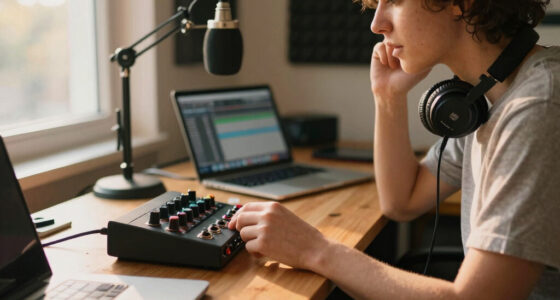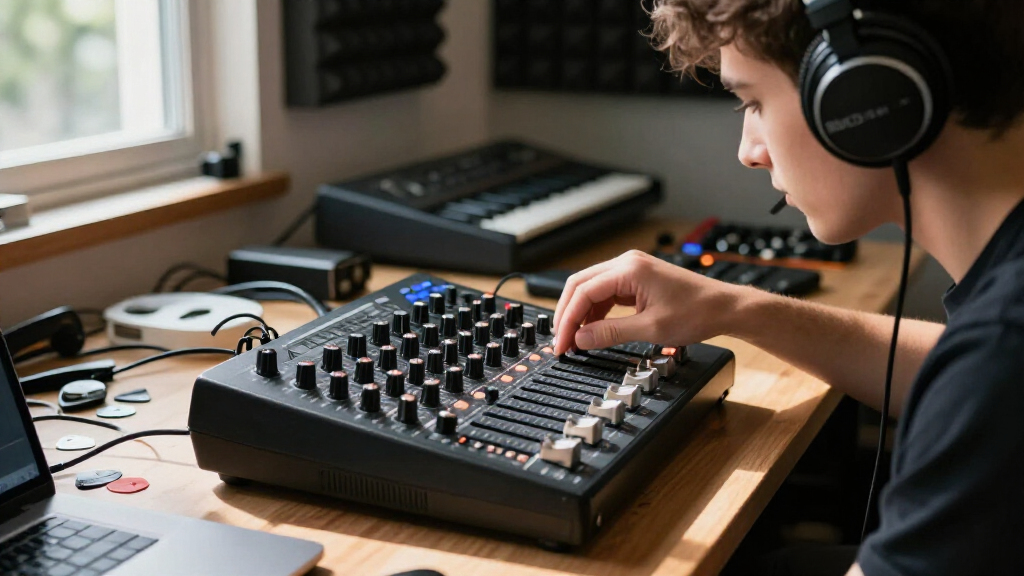

USB audio mixers combine hands-on level controls with a direct connection to a computer, but the right choice depends on whether you need studio-style inputs, simple streaming controls, or room to expand. My best overall pick is the Allen & Heath ZEDi-10, a strong fit for buyers who want a versatile mixer and recording interface in one unit. The Yamaha AG06MK2 stands out for streaming-focused workflows, while the ART USB Mix is a simpler option for small setups. The main tradeoffs are the number of usable inputs, how the USB connection handles separate sources, and whether built-in effects or dedicated controls matter more than straightforward recording. Read on for the full comparison and guidance on matching a mixer to your setup.

Get audio and creator gear delivered free with Prime
- Fast, free delivery on millions of items
- Prime Video, Amazon Music and more included
- Member-only deals all year
Complete the kit


Key Takeaways
- The ZEDi-10 leads for broad recording flexibility: it offers a more capable mixer-and-interface combination than compact two- and four-channel options, though it takes more space and setup.
- The Yamaha AG06MK2 and Mackie ProFX6v3+ target different workflows: the Yamaha is shaped around streaming control, while the Mackie adds a more traditional small-mixer approach with USB-C.
- USB connectivity does not guarantee multitrack recording: buyers should check whether a mixer sends each channel separately to software or only provides a stereo mix.
- Small desktop mixers trade expansion for convenience: the Audio-Technica AT-UMX3, FIFINE SC3, and CAD MXU2 suit focused voice, gaming, or two-source setups better than growing bands or multi-mic podcasts.
- Feature count alone does not make a mixer the best value: the Pyle and Aveek models offer accessible extras, while ART and Behringer options appeal to buyers prioritizing different balances of input count, controls, and recording use.


| USB audio mixer | Channels | Connectivity | Weight | Inputs |
|---|---|---|---|---|
| Allen & Heath ZEDi-10 10-Chann | 10 | — | 7.5 lb | — |
| Pyle 8-Channel DJ Audio Mixer | 8 | Bluetooth, USB/computer | — | XLR and unbalanced 1/4-inch |
| ART USB Mix 3-Channel Mixer wi | 3 | USB | — | XLR/TRS combo; stereo or dual-mono 1/4-inch line inputs |
| Aveek 5-Channel Audio Mixer wi | 5 | USB, Bluetooth, XLR, 1/4-inch, RCA | — | — |
| Behringer XENYX 1204USB 12-Inp | 4 | Auxiliary, USB | 8.4 lb | 12 |
| Behringer XENYX 802S 8-Input A | 8 | USB | 1.6 kg | — |
| Audio-Technica AT-UMX3 USB Des | 2 | USB-C | 334 g | 1 x mic (XLR/1/4 in), 2 x line (1/4 in) |
| FIFINE AmpliGame SC3 Gaming Au | 4 | USB, XLR microphone input | 0.5 kg | Microphone, line in, headset |
| Mackie ProFX6v3+ 6-Channel Ana | 6 | — | 2.6 lb | XLR, 1/4 in, Hi-Z |
| Pyle PMXU43BT.5 4-Channel Audi | 4 | USB, Bluetooth, XLR, 1/4 in | — | — |
| ART USBMix4 4-Channel Mixer an | 4 | USB | 1.05 kg | — |
| CAD Audio MXU2 2-Channel USB A | 2 | USB | 0.31 kg | 2 XLR combo mic/line inputs |
| Yamaha AG06MK2 6-Channel USB-C | 6 | USB-C | — | — |
More Details on Our Top Picks
Allen & Heath ZEDi-10 10-Channel Mixer and USB Audio Interface
The ZEDi-10 is the strongest fit here for buyers who want a mixer that can also send multiple channels to a computer: its 4 x 4 USB interface records and plays back up to four channels at 24-bit/96 kHz. That flexibility separates it from the ART USB Mix, which is a smaller three-channel option, and gives this Allen & Heath more room for a modest band or a multi-mic setup. Four mic/line channels, two switchable Hi-Z inputs, and two stereo channels cover common studio and small-stage sources without a separate interface. The tradeoff is a relatively focused channel layout: there are only two additional stereo channels, so larger collections of line-level gear may outgrow it. It also needs corded power, making it less convenient for mobile setups without an outlet.
Pros:- 4 x 4 USB interface handles multichannel recording and playback
- Records and plays back up to four channels at 24-bit/96 kHz
- Four mic/line channels and two switchable Hi-Z inputs suit varied sources
- Compact format works for small studios and stages
Cons:- Only two additional stereo channels for line-level sources
- Corded electric power limits use away from an outlet
Best for: Home-recording musicians and small live groups who need to record several sources to a computer at once
Not ideal for: Buyers needing many stereo line inputs or a mixer for locations without access to corded power
- Channels:10
- Mic/line channels:4
- USB interface:4 x 4
- USB recording/playback:Up to 4 channels, 24-bit/96 kHz
- Hi-Z inputs:2 switchable
- Stereo channels:2
- EQ:3-band
- Weight:7.5 lb
Our verdict“Choose the ZEDi-10 if recording several sources over USB matters more than having a larger bank of stereo inputs.”
Pyle 8-Channel DJ Audio Mixer with Bluetooth, USB, and DSP Effects
The PMXU83BT is a practical choice when a USB mixer needs to handle playback from more than one kind of source. Bluetooth streaming, USB/computer connectivity, and MP3 playback give it more playback routes than the recording-focused Allen & Heath ZEDi-10, while XLR and unbalanced 1/4-inch inputs cover microphones and line-level gear. Its 3-band EQ on all channels and +48V phantom power add useful control for a small PA or DJ setup. The compromises are less clear-cut than its input list suggests: the supplied details do not identify the DSP effects, and the 20 kHz frequency specification does not state a full range. Unlike the Aveek 5-Channel, it has a steel chassis and sealed rotary controls, but its Bluetooth and USB conveniences do not replace a clearly specified multichannel recording interface.
Pros:- Bluetooth and USB/computer connectivity provide flexible playback options
- XLR and 1/4-inch inputs accommodate different audio sources
- +48V phantom power supports compatible condenser microphones
- Steel chassis and sealed rotary controls help protect the mixer from dust and grime
Cons:- DSP effects are not identified in the supplied product details
- The stated 20 kHz frequency specification does not describe a full frequency range
- USB connectivity is not specified as a multichannel recording interface
Best for: Small-event hosts and DJs who want wired inputs plus Bluetooth or USB playback in one mixer
Not ideal for: Computer-recording musicians who need documented multichannel USB recording or defined DSP effects
- Channels:8
- Inputs:XLR and unbalanced 1/4-inch
- Connectivity:Bluetooth, USB/computer
- Phantom power:+48V
- Equalizer:3-band EQ on all channels
- DSP processor:16-bit
- Outputs:1/4-inch TRS, XLR
- Dimensions:9.3 x 10.8 x 2.6 in
Our verdict“Pick the Pyle when playback flexibility and physical controls matter more than a clearly defined recording workflow.”
ART USB Mix 3-Channel Mixer with USB Audio Interface
The ART USB Mix keeps the setup simple: it combines a three-channel mixer and USB audio interface in a compact steel case, with an XLR/TRS combo input plus stereo or dual-mono 1/4-inch line inputs. That makes it a more focused desktop or travel option than the 10-channel Allen & Heath ZEDi-10, which offers more sources and documented 4 x 4 recording but takes up a broader role in a setup. Here, the appeal is connecting a microphone, instrument, and line source without building around a larger mixer. It works with Mac and PC, and power can come from USB or a corded supply. The limit is capacity: three channels leave little room to grow, and the supplied details do not specify USB recording resolution or multichannel routing.
Pros:- Combines a small mixer and USB audio interface
- XLR/TRS combo input supports microphone and instrument connections
- Stereo or dual-mono 1/4-inch line inputs add source flexibility
- Steel case and Mac/PC compatibility suit desk or portable setups
Cons:- Three-channel capacity leaves limited room for additional sources
- USB recording resolution and channel routing are not specified
- Requires a USB connection or corded power
Best for: Solo musicians and compact desktop recording setups that need a basic mixer and USB connection in one small unit
Not ideal for: Bands or creators who need multiple mic preamps, more than three channels, or specified multichannel USB recording
- Channels:3
- Inputs:XLR/TRS combo; stereo or dual-mono 1/4-inch line inputs
- Connectivity:USB
- Computer compatibility:Mac and PC
- Case material:Steel
- Output connector:TRS
- Power:USB cable or corded electric
Our verdict“Choose the ART USB Mix for a compact, basic USB mixer when a small source count is enough.”
Aveek 5-Channel Audio Mixer with PC Recording Interface
The Aveek combines recording, monitoring, and playback features in a compact mixer, making it a convenient match for a home creator who wants USB PC recording alongside Bluetooth and USB-flash playback. Three XLR inputs and 48V phantom power support microphone setups, while headphone monitoring and echo and delay controls add basic live-production tools. Compared with the ART USB Mix, the Aveek accepts more input types and includes more onboard functions; the ART is the simpler choice if a pared-back USB mixer is the priority. The Aveek’s main catch is shared functionality: Bluetooth, USB, and 4/5-channel functions cannot be used simultaneously. Bluetooth is for playback rather than connecting to an output device, and the listed range is up to 15 feet. Its outputs are intended for active speakers or power amplifiers.
Pros:- USB-B PC recording and USB flash-drive recording and playback
- Three XLR inputs and 48V phantom power support microphone setups
- Bluetooth playback and multiple analog input types offer source flexibility
- Headphone output plus EQ, gain, echo, and delay controls support basic monitoring and shaping
Cons:- Bluetooth, USB, and 4/5-channel functions cannot be used simultaneously
- Bluetooth is for playback, with a stated range of up to 15 ft
- Outputs are intended for active speakers or power amplifiers
Best for: Home streamers and small podcast setups that want several input types, PC recording, and onboard monitoring controls
Not ideal for: Users who need Bluetooth, USB, and all mixer channels available simultaneously, or passive-speaker connections
- Channels:5
- Microphone inputs:3 XLR
- Connectivity:USB, Bluetooth, XLR, 1/4-inch, RCA
- Recording:PC recording via USB-B; USB flash-drive recording
- Phantom power:48V
- Effects:Echo and delay
- Equalizer:2-band
- Headphone output:3.5 mm
- Dimensions:8.27 x 8.27 x 2.56 in
Our verdict“Choose the Aveek for a feature-rich home streaming setup if its shared-function limits fit your workflow.”
Behringer XENYX 1204USB 12-Input Analog Mixer with USB Audio Interface
The XENYX 1204USB is the most suited of these five to a setup built around several analog sources: its 12 inputs, XLR outputs, XENYX mic preamps, and compressors give it a broader mixing role than the compact ART USB Mix. Its USB connection adds computer connectivity, while the neo-classic British-style 3-band EQ offers familiar tone-shaping control. This makes more sense for a small rehearsal room or fixed home studio than for a desk-first creator seeking the simplest USB recording path. The listed channel count is four despite the 12-input description, so buyers should distinguish input capacity from channel count when planning a setup. The supplied specs also do not state USB recording resolution or channel routing. At 8.4 pounds and with corded power, it is less convenient to move than the Aveek.
Pros:- 12-input layout accommodates a wider analog source setup
- XENYX microphone preamps and compressors support mic mixing
- British-style 3-band EQ provides channel tone shaping
- USB connectivity and XLR outputs support computer and external audio routing
Cons:- The listed channel count is four, so input and channel figures require careful interpretation
- USB recording resolution and channel routing are not specified
- Corded power and an 8.4 lb weight make it less portable
Best for: Small studios and rehearsal spaces with multiple analog sources, XLR routing needs, and a permanent power setup
Not ideal for: Portable creators or buyers who need clearly specified USB recording resolution and multichannel routing
- Inputs:12
- Channels:4
- Bus configuration:2-bus
- Microphone preamps:XENYX
- EQ:Neo-classic British-style 3-band
- Connectivity:Auxiliary, USB
- Output connector:XLR
- Weight:8.4 lb
Our verdict“Choose the 1204USB for a larger, mostly analog setup where source capacity and XLR routing matter more than portability.”
Behringer XENYX 802S 8-Input Analog Mixer with USB Streaming Interface
The XENYX 802S suits streamers who want to balance computer or game audio alongside analog sources, rather than rely on a simple USB connection for a microphone. Its stereo USB interface handles computer audio in the mix, while analog controls and EQ give more hands-on adjustment than the compact Audio-Technica AT-UMX3. The eight-channel count also leaves more room for sources than the AT-UMX3’s two-channel layout. The tradeoff is a larger footprint and a listing that identifies it as an unpowered mixer, so check the intended power setup before buying. It is a practical streaming hub, but not the most portable choice here, nor as feature-rich for processing as the Mackie ProFX6v3+.
Pros:- Stereo USB connectivity supports mixing computer audio into a streaming output.
- Eight channels offer more room for sources than the two-channel AT-UMX3.
- Analog mixing and EQ provide hands-on control for streaming, podcasting, and recording.
Cons:- Listed as an unpowered mixer, so its power arrangement may not suit every setup.
- Listed dimensions are relatively large for a desktop mixer.
- Does not list the onboard effects and USB recording modes offered by the Mackie ProFX6v3+.
Best for: Streamers and podcasters who need to blend computer or gaming audio with several analog sources using physical mixer controls.
Not ideal for: Traveling creators with limited desk space, or buyers who need a clearly specified powered setup and advanced onboard effects.
- Channels:8
- Connectivity:USB
- Output connectors:XLR, TRS, RCA
- Audio input:USB
- Power source:Corded electric; listed as unpowered mixer
- Weight:1.6 kg
- Dimensions:19.69 x 19.69 x 11.02 in (D x W x H)
Our verdict“Choose the XENYX 802S if you need an eight-channel analog hub for mixing computer or gaming audio, and skip it if desk space or onboard processing is a priority.”
Audio-Technica AT-UMX3 USB Desktop Audio Mixer, White
The AT-UMX3 is the streamlined choice for a creator who wants computer audio, a microphone, and an instrument in a small desktop setup. Its USB-C plug-and-play connection and loopback feature make routing computer sound into a stream less involved than building a larger setup around the Behringer XENYX 802S. It also supports up to 24-bit/192 kHz audio, a useful capability for recording-focused users. The compact size comes with firm limits: there is one mic input and only two channels, so adding guests or several instruments quickly calls for a larger mixer. Unlike the Mackie ProFX6v3+, it does not list physical faders, extensive EQ, or onboard effects. I’d choose it for a tidy solo desk, not a growing multi-source production rig.
Pros:- Small, lightweight design takes little desktop space.
- Loopback mixes computer audio with microphone and instrument inputs for streaming.
- USB-C plug-and-play connectivity supports computers and mobile devices.
- Supports up to 24-bit/192 kHz audio resolution.
Cons:- Two channels and one microphone input limit multi-person recording.
- Lacks the physical faders and broader processing found on the Mackie ProFX6v3+.
- Its compact format offers less room to expand than the eight-channel XENYX 802S.
Best for: Solo streamers, voice creators, and desktop musicians who need a compact USB-C mixer with loopback and one microphone input.
Not ideal for: Interview hosts recording multiple microphones or musicians needing several simultaneous inputs and hands-on channel processing.
- Channels:2
- Inputs:1 x mic (XLR/1/4 in), 2 x line (1/4 in)
- Connectivity:USB-C
- Audio resolution:Up to 24-bit/192 kHz
- Compatible operating systems:Windows, macOS
- Dimensions:5 x 1.73 x 1.73 in (W x D x H)
- Weight:334 g
- Warranty:2 years
Our verdict“Pick the AT-UMX3 for a compact solo streaming or recording desk, but choose a larger mixer if you expect to add microphones or instruments.”
FIFINE AmpliGame SC3 Gaming Audio Mixer with Individual Faders and Volume Controls
The FIFINE AmpliGame SC3 prioritizes quick gaming and stream controls over recording flexibility. Four independently controlled channels, mute and monitoring buttons, and customizable sound buttons give a streamer direct access to common actions without the broader analog mixing workflow of the Behringer XENYX 802S. Its XLR input with 48V phantom power can work with compatible condenser microphones, while voice effects and RGB lighting lean into gaming setups. The limits matter: it does not support USB microphones, and an XLR cable is not included. Compared with the Audio-Technica AT-UMX3, the SC3 offers more gaming-oriented controls, but the AT-UMX3 lists higher-resolution conversion and a more restrained desktop design. Choose the SC3 for hands-on stream interaction, not for a flexible recording studio.
Pros:- Four independently controlled channels make balancing sources straightforward.
- XLR input supplies 48V phantom power for compatible condenser microphones.
- Mute, monitoring, customizable sound buttons, and voice effects suit live streaming.
- USB-powered connection and Mac and Windows compatibility support a simple desktop setup.
Cons:- Does not support USB microphones.
- XLR cable is not included.
- Gaming effects and controls do not replace the recording and processing options of the Mackie ProFX6v3+.
Best for: PC and Mac gamers who use an XLR microphone and want quick channel, mute, monitoring, and sound-effect controls while streaming.
Not ideal for: People using USB microphones, or musicians and podcasters who need flexible recording inputs and a more production-focused mixer.
- Channels:4
- Connectivity:USB, XLR microphone input
- Power source:USB-C
- Phantom power:48V
- Inputs:Microphone, line in, headset
- Outputs:Headphones, line out, headset
- Compatibility:Mac OS, Windows
- Dimensions:4.44 x 6.45 x 1.6 in
- Weight:0.5 kg
Our verdict“Choose the SC3 for gaming streams built around an XLR mic and quick controls, but skip it if you rely on a USB microphone or need studio-style flexibility.”
Mackie ProFX6v3+ 6-Channel Analog Mixer with USB-C Audio Interface
The Mackie ProFX6v3+ is the most production-oriented option in this group: it pairs an analog mixer with a 2×4 USB-C interface, three USB modes, and onboard effects. Dry-channel recording is useful when you want to capture sources separately for later edits, while loopback supports computer-audio streaming. The Onyx preamps, EQ, compression, and 24 GigFX+ effects give it more shaping tools than the simpler Behringer XENYX 802S. It also adds bidirectional Bluetooth with Mix Minus, a useful fit for bringing remote audio into a show. The cost in complexity is a less immediate setup than the compact AT-UMX3, and this remains an analog mixer without digital scene recall. Buyers who only need basic USB mixing may not need its extra modes and processing.
Pros:- 2×4 USB-C interface offers standard mix, loopback, and dry-channel modes.
- Onyx preamps, EQ, compression, and a low-cut filter support practical input shaping.
- Twenty-four effects and editable presets add onboard processing options.
- Bidirectional Bluetooth with Mix Minus supports remote audio workflows.
Cons:- Analog design does not provide digital mixer scene recall.
- Its routing and processing options may be more involved than a basic streaming mixer.
- The display shows Delay at startup by design, even when other presets are saved.
Best for: Podcasters, streamers, and small recording setups that need multiple USB routing modes, onboard effects, and analog input control.
Not ideal for: Beginners seeking a minimal plug-and-play desktop mixer, or users who need digital scene recall for repeatable saved configurations.
- Channels:6
- USB interface:2×4 USB-C
- Recording resolution:24-bit/192 kHz
- USB modes:Standard mix, loopback with computer audio, dry channels
- Effects:24 GigFX+ effects; 12 editable presets
- Inputs:XLR, 1/4 in, Hi-Z
- Bluetooth:Bidirectional audio; supports Mix Minus
- Dimensions:7.5 x 2.9 x 8.4 in
- Weight:2.6 lb
Our verdict“Choose the ProFX6v3+ if you want flexible USB recording, onboard effects, and Bluetooth in one mixer; skip it if basic audio routing is all you need.”
Pyle PMXU43BT.5 4-Channel Audio Mixer with USB, Bluetooth, and 48V Phantom Power
The Pyle PMXU43BT.5 is a straightforward option for users who want basic source mixing plus playback from USB or Bluetooth. Its 3-band EQ on all channels and LED peak indicators provide useful hands-on adjustment and level feedback, while the steel chassis and sealed rotary controls suit a mixer that may see regular handling. Compared with the gaming-focused FIFINE AmpliGame SC3, Pyle favors conventional inputs and channel EQ over sound buttons and voice effects. It also provides XLR and 1/4-inch inputs with 48V phantom power for compatible microphones. The tradeoff is a four-channel ceiling and a corded power requirement; it does not list the Mackie ProFX6v3+’s multi-mode USB recording or onboard effects. This is better for uncomplicated playback and small setups than production-heavy streaming.
Pros:- USB and Bluetooth playback add convenient ways to bring audio into a mix.
- XLR and 1/4-inch inputs include 48V phantom power.
- Three-band EQ on all channels allows basic tone adjustment.
- Steel chassis and sealed rotary controls are suited to regular handling.
Cons:- Four channels may limit setups with several microphones or instruments.
- Requires a corded power connection.
- Does not list the USB recording modes and onboard effects available on the Mackie ProFX6v3+.
Best for: Small home setups and event users who need basic four-channel mixing, USB or Bluetooth playback, and EQ for connected sources.
Not ideal for: Mobile creators who need battery power, or recording-focused users seeking multichannel USB routing and onboard effects.
- Channels:4
- Connectivity:USB, Bluetooth, XLR, 1/4 in
- Phantom power:+48V
- Equalizer:3-band EQ on all channels
- Audio processing:16-bit DSP
- Power supply:Corded electric; 100V–240V input
- Dimensions:7.5 x 9.3 x 2.6 in (D x W x H)
- Chassis:Steel with sealed rotary controls
Our verdict“Pick the PMXU43BT.5 for simple four-channel mixing with convenient playback and EQ, but choose another model for advanced USB recording or effects.”
ART USBMix4 4-Channel Mixer and USB Audio Interface
The ART USBMix4 suits buyers who want a compact mixer for computer recording without the broader feature set of a streaming-focused board. Its assignable USB record source gives some flexibility over what reaches the computer, while independent main and headphone/monitor level controls make it easier to set listening volume without changing the main output. Compared with the two-channel CAD Audio MXU2, it offers more channels and USB-or-adapter power, but phantom power is limited to channel 1 rather than the CAD’s broader +48V provision. This is a straightforward voiceover or small-project option, not a substitute for a studio mixer with extensive routing or onboard effects. Buyers with several condenser microphones or streaming needs may prefer a more capable model.
Pros:- Low-noise design is suited to voice and small recording projects.
- Assignable USB record source offers flexibility over the signal sent to a computer.
- Independent main and headphone/monitor level controls allow separate listening and output adjustments.
- Can run on USB power or the included 5V DC supply.
Cons:- Switchable +48V phantom power is limited to channel 1.
- Its simple recording focus leaves out the DSP effects and streaming tools found on the Yamaha AG06MK2.
- A 3.5 mm headphone output may not suit setups built around larger headphone connectors.
Best for: Home recordists and voiceover creators who need a few mixer channels, computer connection, and separate headphone and main-output level control.
Not ideal for: Users recording multiple condenser microphones or seeking onboard DSP effects and extensive routing; phantom power is available only on channel 1.
- Channels:4
- Connectivity:USB
- Phantom power:Switchable +48V on channel 1
- USB record source:Assignable
- Output connector:3.5 mm headphone jack
- Power:USB or included 5V DC external power supply
- Weight:1.05 kg
- Warranty:3-year manufacturer’s defect warranty
Our verdict“Choose the USBMix4 for uncomplicated computer recording with more channel capacity than a two-input mixer, but skip it if you need multi-mic phantom power or extensive production controls.”
CAD Audio MXU2 2-Channel USB Audio Mixer with XLR Combo Inputs
For a minimal two-input setup, the CAD Audio MXU2 keeps the signal path and footprint simple: its two XLR combo mic/line inputs accept microphones or instrument signals, and USB connects it to a computer for recording. It is also the lightest and most compact option among these three, at 0.31 kg, with bus power available when connected to a computer. Compared with the four-channel ART USBMix4, the MXU2 gives up channel capacity and adjustable USB source assignment, but its listed +48V phantom power supports condenser microphones without the ART’s channel-one-only limitation. USB recording is specified at 16-bit/48 kHz, so buyers who need a higher stated recording format or more inputs should look elsewhere. It fits a focused podcast or small live setup, not a growing multi-source rig.
Pros:- Two XLR combo inputs accept mic or line-level signals.
- +48V phantom power supports condenser microphones.
- USB interface records to a connected computer.
- Can draw power from a computer over USB and weighs just 0.31 kg.
Cons:- Two channels limit expansion compared with the ART USBMix4 or Yamaha AG06MK2.
- USB recording is specified at 16-bit/48 kHz.
- The listed two-year warranty is shorter than the ART USBMix4’s three-year warranty.
Best for: Solo podcasters, two-person interviewers, or musicians who need two mic/line inputs and a lightweight USB mixer for computer recording.
Not ideal for: Creators adding several microphones or audio sources, or buyers who need a USB recording specification above 16-bit/48 kHz.
- Channels:2
- Inputs:2 XLR combo mic/line inputs
- Connectivity:USB
- USB recording:16-bit/48 kHz
- Phantom power:+48V
- Output connector:TRS
- Power:Corded electric; bus-powered when connected to a computer
- Weight:0.31 kg
- Warranty:2 years
Our verdict“Pick the MXU2 for a portable, two-input computer recording setup; choose a larger mixer if you expect to add more sources.”
Yamaha AG06MK2 6-Channel USB-C Audio Interface and Streaming Mixer, White
The Yamaha AG06MK2 is the most capable choice here for creators who need a USB mixer to handle both microphones and computer-based streaming. Two phantom-powered XLR inputs, onboard DSP effects, loopback, and a mute button give it a wider live-production toolkit than the simpler ART USBMix4 or the two-input CAD MXU2. Loopback is especially useful when combining computer audio with live microphones, while the mute control helps manage a broadcast without changing the rest of the mix. USB-C and compatibility with PC, Mac, and iOS add flexibility, and the included Cubase AI and WaveLab Cast provide software starting points. The tradeoff is a corded power requirement; unlike the USB-powered CAD, it is less convenient for a minimal mobile setup. Its listed frequency is 48 kHz, so buyers should check that specification against their recording needs.
Pros:- Two phantom-powered XLR inputs support condenser microphones.
- DSP effects, loopback, and a mute button suit live streaming and online collaboration.
- USB-C connectivity and PC, Mac, and iOS compatibility support varied setups.
- Cubase AI and WaveLab Cast are included.
Cons:- Requires a corded power source, unlike the bus-powered CAD Audio MXU2.
- The listed frequency is 48 kHz.
- Its extra streaming and production features may be unnecessary for simple voice recording.
Best for: Streamers, podcasters, and online collaborators who need two condenser-mic inputs, loopback, and onboard DSP in a compact computer-connected mixer.
Not ideal for: Mobile creators who need a mixer powered solely over USB, or users whose recording workflow requires a listed frequency above 48 kHz.
- Channels:6
- Connectivity:USB-C
- Microphone inputs:2 phantom-powered XLR inputs
- Audio features:Reverb, compressor, EQ, loopback, mute button
- Additional input:1/8-inch 4-pole TRRS
- Compatible devices:PC, Mac, iOS
- Included software:Cubase AI, WaveLab Cast
- Frequency:48 kHz
- Power:Corded electric
Our verdict“Choose the AG06MK2 if loopback and onboard processing matter to your stream or podcast; for basic, USB-powered recording, the smaller CAD MXU2 is a simpler fit.”
How We Picked
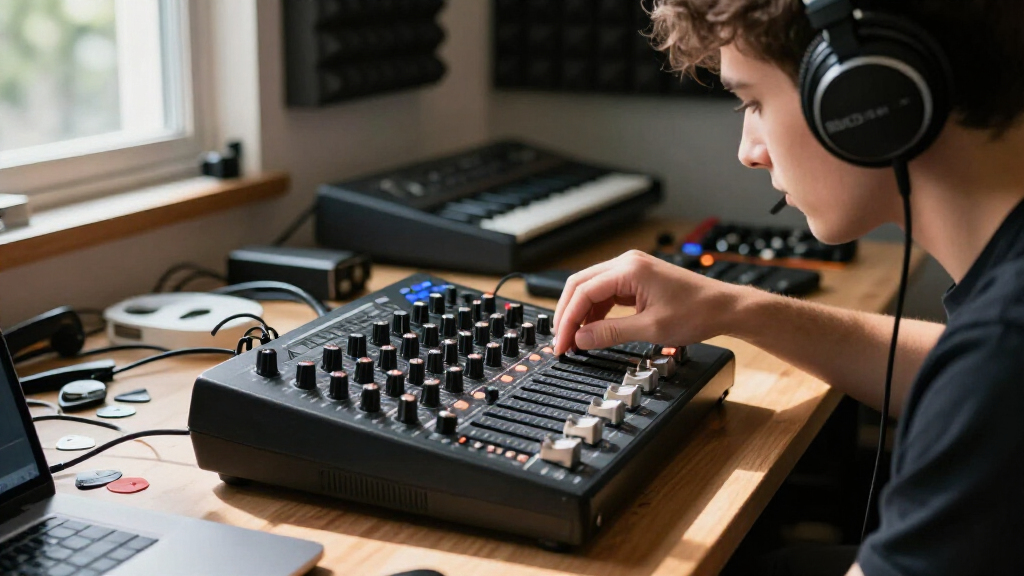
I ranked these USB audio mixers by how well their mixer functions and USB connection serve actual recording and streaming tasks. I weighed input types and counts, computer connectivity, routing flexibility, onboard controls, and how easily a buyer can grow beyond a basic microphone-and-headphones setup. I also considered whether features such as Bluetooth, effects, phantom power, or dedicated gaming controls solve a clear need rather than simply add complexity.
The order reflects useful capability and workflow fit, not the longest feature list. Models that can cover several common jobs earned higher placement, while compact or niche designs remain good choices for buyers with narrower needs. I also accounted for tradeoffs: a larger analog mixer may give more connections but require more desk space, and a desktop streaming mixer can be easier to operate while offering less flexibility for multitrack recording. Buyers should confirm the exact USB routing and operating-system requirements for their intended setup before choosing.
Factors to Consider When Choosing USB Audio Mixers
Before choosing a model, map the mixer to the way you will record or stream. Channel count, USB routing, and controls affect the workflow more than a feature list alone, and a mismatch can leave you with inputs you cannot use or a computer feed that combines sources you wanted separate.
Count Sources You Need at the Same Time
Count microphones, instruments, playback devices, and guest connections that must be active together, not just the number of input jacks shown in a product listing. A stereo input may use two channels, and a combo jack does not automatically let you connect two sources at once. Leave room for one likely addition, such as a second microphone or a phone for call-ins, but avoid buying a larger mixer solely for a hypothetical future setup. More channels can mean a larger footprint and more controls to manage. For a fixed solo stream, a compact desktop mixer can be easier than a full analog board. For a podcast with several people, input availability and independent level control matter more than a small chassis.
Check What the USB Connection Sends to Your Computer
The phrase USB audio interface can describe very different recording workflows. Some mixers send a single stereo mix to a computer, while others provide separate channel feeds or additional playback and loopback paths. If you want to edit each microphone independently after recording, confirm multitrack USB support in the manufacturer’s specifications and software documentation. A stereo feed is often enough for live streaming, where a finished balance is the goal. Buyers sometimes choose a mixer based on channel count and only later discover that the computer receives a combined mix. Match the USB routing to the job before paying for extra analog inputs.
Choose Inputs for Your Microphones and Instruments
Make a list of the connections your sources actually need: XLR microphones, quarter-inch instruments, stereo line devices, or a combination. Condenser microphones may require 48V phantom power, but dynamic microphones generally do not; check how phantom power is applied if you use a mix of microphone types. High-impedance instrument inputs can matter for a guitar or bass plugged in directly, while line inputs suit keyboards and playback devices. Adapters can solve some connection gaps, but they may add clutter and do not replace the right input circuitry. A buyer should prioritize compatible inputs over an advertised total channel count. This is especially useful when comparing compact voice-focused units with conventional mixers.
Decide Whether Physical Controls or Software Features Matter More
Faders and dedicated knobs make changes easy to see and adjust during a live session, while a smaller control surface can leave more desk room. Built-in effects may reduce the need for software processing, but they can also complicate a setup if you prefer to shape audio inside your recording application. Bluetooth playback is handy for backing tracks or remote audio, yet it is not a substitute for a reliable wired connection when timing and stability matter. Gaming and streaming models may add mute or voice controls that solve frequent on-air tasks. Think through the actions you repeat every session, then prioritize direct controls for those tasks. Extra buttons are less useful if they do not match your routine.
Balance Expansion Against Desk Space and Setup Complexity
A larger mixer can support more simultaneous sources, but it also occupies more space and may take longer to configure. Compact USB mixers suit travel, small desks, and repeatable solo setups, while a wider analog board can be easier to manage when several people need separate level controls. Consider cable access as well as the unit’s footprint; rear-mounted connections can be awkward in a crowded workspace. If you expect to add microphones, instruments, or a second computer feed, check the routing limits before settling on the smallest model. Avoid buying channels you cannot place or power sensibly. A good fit is the smallest mixer that covers your current sources and a realistic next step.
Pay for Features That Change Your Workflow
Spending more makes sense when it brings a capability you will use regularly, such as broader routing, more suitable preamps and inputs, or controls that speed up a live show. A premium label alone does not guarantee that a mixer will send separate tracks to your computer. At the other end, inexpensive models may include Bluetooth or effects while offering fewer options for detailed recording and expansion. Compare the required cables, power supply, included software, and compatibility alongside the mixer itself. Buyers who only need a voice mic and headphones may get more from a straightforward compact model than a feature-heavy board. Buyers recording multiple sources should prioritize routing and input suitability before optional effects.
Frequently Asked Questions
Will a USB mixer record each microphone as a separate track?
Not always. Some mixers send a single stereo mix to the computer, while others offer multichannel USB routing that lets recording software capture sources separately. Check the exact model’s USB channel specifications and confirm that your software can select those inputs. If you only stream a finished mix, a stereo feed may be all you need. If you want to adjust each speaker after recording, separate USB tracks are a key requirement.
Can I use a USB audio mixer for live streaming and local recording at the same time?
Many mixers can feed a computer while combining sources, but the available routing determines whether both tasks work as you expect. A stereo USB feed can serve a stream and a basic recording of the same finished mix. Separate recordings, independent playback paths, or loopback audio may require more advanced routing. Check whether the computer connection supports the channels and outputs your stream and recording software need. It is also useful to verify that the mixer works with your operating system and streaming applications.
Do I need phantom power for my microphone?
Phantom power is typically required by condenser microphones, while many dynamic microphones work without it. Check the microphone’s power requirements before connecting it, then confirm that the mixer provides 48V if needed. If you use both condenser and dynamic microphones, look at whether phantom power affects all inputs or only a selected group. Do not assume a mixer has phantom power just because it includes XLR inputs. This check can narrow the field before you compare other features.
Is a gaming or streaming mixer suitable for podcast recording?
It can be a good fit for a solo host or a compact setup if it has the right microphone input, monitoring, and controls. For multiple speakers, check the number of independent mic inputs and whether each source can be captured separately over USB. Gaming-oriented controls may make muting and level changes convenient, but they do not necessarily provide the routing needed for later editing. A traditional mixer may be a better match when several guests need individual channels. Let the number of people and your editing workflow guide the choice.
Should I choose a mixer with more inputs than I currently need?
A modest amount of spare capacity can prevent an early replacement if you expect to add a guest microphone, instrument, or playback source. Still, extra inputs are not useful if the mixer lacks the USB routing or physical space your setup needs. Count sources that must run simultaneously, including stereo devices that may consume two channels. Then compare the cost in desk space and control complexity against the likely benefit of expansion. For a stable one-person setup, a smaller mixer may be easier to use every day.
Conclusion
For a versatile all-around setup, I recommend the Allen & Heath ZEDi-10 as the best overall choice in this group. Buyers seeking a more focused streaming workflow should compare the Yamaha AG06MK2, while the Mackie ProFX6v3+ suits those who want a conventional mixer layout with USB-C. For a compact, straightforward entry point, the ART USB Mix is a practical beginner pick; buyers watching their feature needs rather than seeking a full recording board can also compare the Aveek and Pyle models. The Audio-Technica AT-UMX3 or FIFINE SC3 makes more sense for a desktop-first voice or gaming setup, and the CAD MXU2 fits a basic two-source arrangement. For multichannel recording, choose by verified USB routing and input needs—not channel count alone—and compare the larger Allen & Heath and Behringer options against your software workflow.