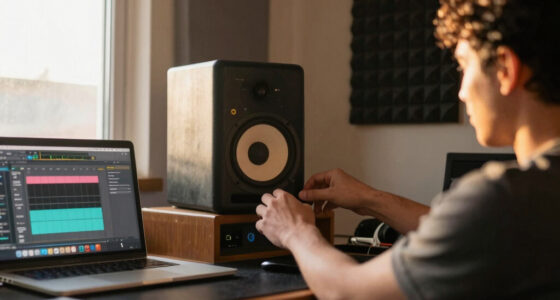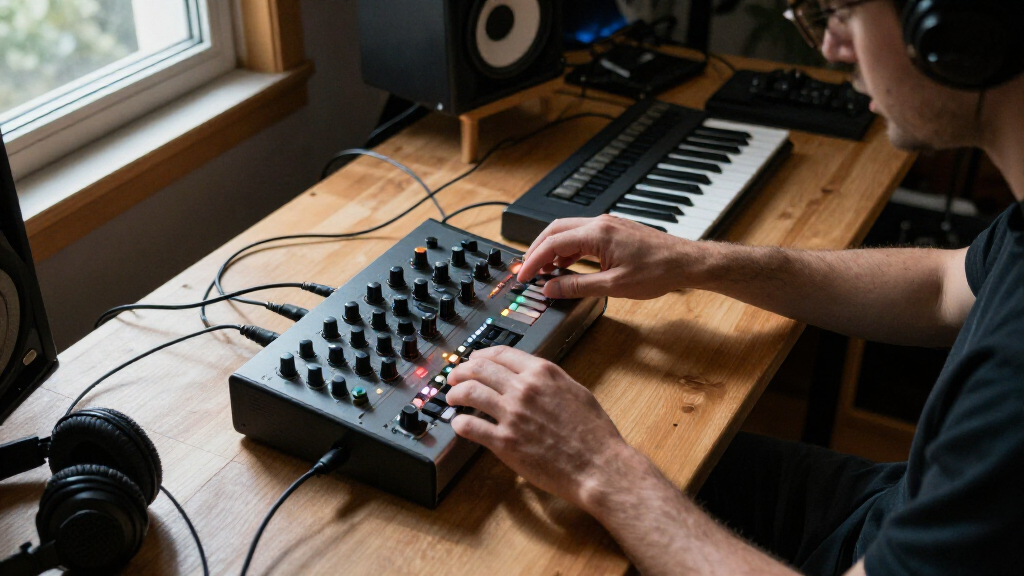
The best digital audio interfaces balance clean input quality, straightforward controls, and enough connections for the way you record. I rank the Focusrite Scarlett 2i2 4th Gen as the best overall for its flexible two-input setup, while the MOTU M2 stands out for clear metering and the Elgato Wave XLR MK.2 for mic-focused streaming and DSP control. The main tradeoff is between a simple interface for one microphone, extra inputs for instruments or guests, and specialized software features. More inputs can add flexibility, but they may also mean a larger unit and a more involved workflow. Read on for how these 15 digital audio interfaces differ and which fits your setup.

Get audio and creator gear delivered free with Prime
- Fast, free delivery on millions of items
- Prime Video, Amazon Music and more included
- Member-only deals all year
Complete the kit


Key Takeaways
- The Scarlett 2i2 4th Gen is the most balanced pick: its two-input layout fits common home recording needs better than single-input models without moving into a larger multi-input setup.
- The MOTU M2 and Audient iD14 MKII serve different upgrade priorities: the M2 emphasizes at-a-glance metering, while the iD14 MKII adds two Class-A mic preamps and more room for an expanding studio.
- Single-mic creators have specialized alternatives: Elgato‘s Wave XLR MK.2 brings DSP mixer features, while the Scarlett Solo 4th Gen keeps the recording setup more conventional.
- Two inputs do not automatically mean the same workflow: models such as the Scarlett 2i2, Volt 2, M-Track Duo, and MAONO P2 differ in their intended mix of music recording, portability, and creator-focused controls.
- Entry-level and compact options make compromises: the M-Track Solo, Synido, PIYONE, and BOMGE can suit simpler setups, but buyers should weigh their control layout, connection needs, and feature transparency against established models.
| Elgato Wave XLR MK.2 USB Audio Interface and DSP Mixer |  | Best for Streamers | Connectivity: USB | Audio input: XLR | Channels: 2 | VIEW LATEST PRICE | See Our Full Breakdown |
| Pyle PMUX9 2-Channel USB Audio Interface with 24 Digital Effects |  | Best for Flexible Connections | Channels: 2 | USB connection: USB 2.0 Type-B | Audio resolution: 24-bit/48 kHz | VIEW LATEST PRICE | See Our Full Breakdown |
| M-Audio M-Track Solo USB Audio Interface |  | Best for First-Time Recording | Audio resolution: Up to 48 kHz | Inputs: 1 combo XLR/line with phantom power; 1 switchable line/instrument | Outputs: 1/8-inch headphone; stereo RCA | VIEW LATEST PRICE | See Our Full Breakdown |
| Focusrite Scarlett Solo 4th Gen USB-C Audio Interface |  | Best Overall for Home Recording | Connectivity: USB-C | Channels: 2 | Inputs: 1 XLR microphone; 1 Hi-Z instrument | VIEW LATEST PRICE | See Our Full Breakdown |
| MAONO P2 Hybrid USB Audio Interface with Dual XLR Inputs |  | Best for Hybrid Streaming Setups | Inputs: Dual XLR | Channels: 2 | Maximum sample rate: 192 kHz | VIEW LATEST PRICE | See Our Full Breakdown |
| Focusrite Scarlett Solo 3rd Gen USB-C Audio Interface |  | Best for Solo Recording | Generation: 3rd Gen | Connectivity: USB | Channels: 2 | VIEW LATEST PRICE | See Our Full Breakdown |
| M-Audio M-Track Duo USB Audio Interface |  | Best Value for Two Inputs | Audio resolution: 48 kHz | Inputs: 2 combo XLR/line/instrument inputs | Preamps: Crystal preamps with phantom power | VIEW LATEST PRICE | See Our Full Breakdown |
| MOTU M2 USB-C Audio Interface |  | Best for High-Resolution Two-Input Recording | Connectivity: USB-C | Channels: 2-in/2-out | Preamps: 2 | VIEW LATEST PRICE | See Our Full Breakdown |
| Audient iD14 MKII USB-C Audio Interface with 2 Class-A Microphone Preamps |  | Best for Studio Monitoring and Two Headphones | Connectivity: USB-C | Microphone preamps: 2 Class-A | Number of channels: 4 | VIEW LATEST PRICE | See Our Full Breakdown |
| Audient iD4 MKII USB-C Audio Interface with Class A Microphone Preamp |  | Best Compact Audient Desktop Interface | Connectivity: USB-C | Channels: 2 | Microphone preamp: Class A | VIEW LATEST PRICE | See Our Full Breakdown |
| Universal Audio Volt 2 USB Audio Interface |  | Best for Vintage-Inspired Recording | Inputs/outputs: 2-in/2-out | Connectivity: USB-C | Maximum sample rate: 192 kHz | VIEW LATEST PRICE | See Our Full Breakdown |
| Synido 2-Channel USB-C Audio Interface for Recording and Streaming |  | Best for Flexible Monitoring on a Compact Setup | Channels: 2 | Inputs: XLR and 6.35 mm; switchable line or instrument input | Audio resolution: 24-bit | VIEW LATEST PRICE | See Our Full Breakdown |
| PIYONE 2×2 USB-C Audio Interface, 24-bit/192 kHz, Alloy Red |  | Best for Driver-Free High-Resolution Recording | Channels: 2 | Inputs: 2 XLR/TRS combo inputs with Hi-Z support | Audio resolution: 24-bit/192 kHz | VIEW LATEST PRICE | See Our Full Breakdown |
| BOMGE 22M Mini 2-Channel USB Audio Interface |  | Best for Simple Podcast and Desktop Setups | Channels: 2-in/2-out | Inputs: 2 combo XLR/MIC/LINE | Maximum sample rate: 48 kHz | VIEW LATEST PRICE | See Our Full Breakdown |
| Focusrite Scarlett 2i2 4th Gen USB-C Audio Interface |  | Best for Hands-Off Level Control | Generation: 4th Gen | Connectivity: USB-C | Channels and inputs: 2 channels; 2 audio inputs | VIEW LATEST PRICE | See Our Full Breakdown |
| digital audio interface | Connectivity | Channels | Maximum sample rate | Inputs |
|---|---|---|---|---|
| Elgato Wave XLR MK.2 USB Audio | USB | 2 | 192 kHz | — |
| Pyle PMUX9 2-Channel USB Audio | — | 2 | — | 2 combo XLR/6.35 mm; 1 6.35 mm; 1 3.5 mm AUX; 1 stereo RCA |
| M-Audio M-Track Solo USB Audio | — | — | — | 1 combo XLR/line with phantom power; 1 switchable line/instrument |
| Focusrite Scarlett Solo 4th Ge | USB-C | 2 | — | 1 XLR microphone; 1 Hi-Z instrument |
| MAONO P2 Hybrid USB Audio Inte | USB | 2 | 192 kHz | Dual XLR |
| Focusrite Scarlett Solo 3rd Ge | USB | 2 | 192 kHz | — |
| M-Audio M-Track Duo USB Audio | — | — | — | 2 combo XLR/line/instrument inputs |
| MOTU M2 USB-C Audio Interface | USB-C | 2-in/2-out | — | — |
| Audient iD14 MKII USB-C Audio | USB-C | — | 96 kHz | — |
| Audient iD4 MKII USB-C Audio I | USB-C | 2 | 96 kHz | — |
| Universal Audio Volt 2 USB Aud | USB-C | — | 192 kHz | — |
| Synido 2-Channel USB-C Audio I | — | 2 | 48 kHz | XLR and 6.35 mm; switchable line or instrument input |
| PIYONE 2×2 USB-C Audio Interfa | — | 2 | — | 2 XLR/TRS combo inputs with Hi-Z support |
| BOMGE 22M Mini 2-Channel USB A | USB | 2-in/2-out | 48 kHz | 2 combo XLR/MIC/LINE |
| Focusrite Scarlett 2i2 4th Gen | USB-C | — | 192 kHz | — |
More Details on Our Top Picks
Elgato Wave XLR MK.2 USB Audio Interface and DSP Mixer
The Wave XLR MK.2 is the most focused streaming tool in this group: it pairs an XLR mic preamp with up to 80 dB of gain, onboard voice processing, and Wave Link routing. That combination suits creators who want to manage a mic and software audio from one desk setup, rather than build a general-purpose recording rig. Compared with the Focusrite Scarlett Solo 4th Gen, it offers more direct streaming controls and software integration, while the Scarlett is the more straightforward fit for recording instruments alongside a microphone. The tradeoff is a narrower role: the Wave XLR has an XLR microphone input, not the listed combo or instrument inputs found on some alternatives. Its software support also calls for newer operating systems, so older computers may be a poor match.
Pros:- Up to 80 dB of gain accommodates a broad range of XLR microphones.
- Built-in voice enhancer, compressor, and EQ add processing without relying only on separate plug-ins.
- Touch mute and LED feedback make mic status easy to manage while streaming.
- Wave Link and Stream Deck integration support hands-on audio routing and control.
Cons:- The listed microphone connection is XLR, with no separate instrument input specified.
- Listed software support requires Windows 11 or later or macOS 14.2 or later.
- Its streaming-focused controls may be unnecessary for simpler recording workflows.
Best for: Live streamers and podcasters using an XLR microphone who want onboard voice processing, quick mute control, and software routing.
Not ideal for: Musicians who need a dedicated instrument input or buyers using operating systems older than Windows 11 or macOS 14.2.
- Connectivity:USB
- Audio input:XLR
- Channels:2
- Maximum sample rate:192 kHz
- Maximum gain:Up to 80 dB
- Supported software:Elgato Wave Link
- Operating system support:Windows 11 or later; macOS 14.2 or later
- Weight:11.36 oz
Our verdict“Choose the Wave XLR MK.2 if streaming controls and integrated voice processing matter more than instrument-input flexibility.”
Pyle PMUX9 2-Channel USB Audio Interface with 24 Digital Effects
The Pyle PMUX9 earns its place through connection variety, not high-resolution recording. Its two combo inputs sit alongside a guitar-sized jack, AUX, and stereo RCA inputs, making it more adaptable to mixed household or small streaming setups than the M-Audio M-Track Solo, which is a simpler mic-and-instrument interface. Multiple headphone and monitor outputs also help when listeners need different connection sizes. The tradeoff is a recording ceiling of 24-bit/48 kHz and only two channels, so its many sockets do not turn it into a multitrack interface. Its 24 preset effects may suit casual voice or stream use, but buyers seeking detailed control over processing may prefer the Wave XLR MK.2’s software-oriented DSP workflow. The listed operating-system support is Windows only.
Pros:- Inputs include combo XLR/quarter-inch jacks, a separate quarter-inch jack, AUX, and stereo RCA.
- Multiple headphone and monitor output formats accommodate varied listening gear.
- Twenty-four preset effects provide quick processing options.
- Metal housing and compact dimensions suit space-conscious desks.
Cons:- Recording is limited to 24-bit/48 kHz.
- The interface is limited to two channels despite its range of connection types.
- The supplied compatibility information lists Windows, with no other operating systems stated.
Best for: Windows users connecting a mix of microphones, instruments, AUX devices, or RCA sources to a compact two-channel setup.
Not ideal for: Mac users, multitrack recording setups, or producers who need sample rates above 48 kHz.
- Channels:2
- USB connection:USB 2.0 Type-B
- Audio resolution:24-bit/48 kHz
- Inputs:2 combo XLR/6.35 mm; 1 6.35 mm; 1 3.5 mm AUX; 1 stereo RCA
- Outputs:6.35 mm and 3.5 mm headphone; 3.5 mm stereo; L/R monitor
- Digital effects:24 presets
- Phantom power:+48V DC
- Operating system support:Windows
- Housing:Metal
Our verdict“Pick the PMUX9 when varied physical inputs and outputs matter more than higher sample rates or broad operating-system support.”
M-Audio M-Track Solo USB Audio Interface
The M-Track Solo keeps the first recording setup simple: USB power, one combo mic/line input, a switchable instrument input, and zero-latency direct monitoring. That makes it a practical starting point for a singer-songwriter recording a vocal and guitar in separate passes, or a new podcaster who wants to hear a mic without distracting delay. The Focusrite Scarlett Solo 4th Gen offers a higher 192 kHz ceiling and broader software bundle, so it is a stronger fit for buyers prioritizing recording specifications and included tools. The M-Track Solo answers with a compact, uncomplicated layout and MPC Beats included. Its limits are clear: it tops out at 48 kHz, has only two inputs, and uses a 1/8-inch headphone output that may call for an adapter with common studio headphones.
Pros:- USB-powered design avoids a separate power supply.
- Combo XLR/line input with phantom power supports microphones, while the second input handles line or instrument sources.
- Direct monitoring lets users hear input without USB monitoring delay.
- MPC Beats is included to help new users begin making recordings.
Cons:- Maximum audio resolution is 48 kHz.
- Two inputs limit simultaneous recording options.
- The 1/8-inch headphone output may require an adapter for common studio headphones.
Best for: Beginner musicians or podcasters recording one microphone and one instrument at a time who want USB-powered monitoring.
Not ideal for: Producers needing higher than 48 kHz recording, more simultaneous inputs, or a full-size headphone jack.
- Audio resolution:Up to 48 kHz
- Inputs:1 combo XLR/line with phantom power; 1 switchable line/instrument
- Outputs:1/8-inch headphone; stereo RCA
- Monitoring:Zero-latency direct monitoring with USB/Direct switch
- Power:USB-powered
- Included software:MPC Beats
- Operating systems:Windows 7–10; macOS High Sierra–Big Sur; iOS with Apple Lightning to USB 3 Camera Adapter
Our verdict“Choose the M-Track Solo for a low-complexity, USB-powered first setup, but step up to the Scarlett Solo 4th Gen for higher-resolution recording.”
Focusrite Scarlett Solo 4th Gen USB-C Audio Interface
The Scarlett Solo 4th Gen is the strongest all-round recording choice here for a compact setup built around one microphone and one instrument. Its 120 dB dynamic range, 24-bit recording up to 192 kHz, and Air modes give it a more recording-focused feature set than the M-Track Solo, whose sample-rate ceiling is 48 kHz. The Solo also separates its XLR mic and Hi-Z instrument inputs, a useful arrangement for capturing a vocal and guitar without swapping connections. Compared with the Elgato Wave XLR MK.2, it is less oriented around streaming controls and onboard voice processing, but more directly suited to instrument recording and conventional studio software. The compromise is capacity: one mic input and one instrument input do not support larger ensembles, and buyers who only need basic voice capture may not use its bundled production tools.
Pros:- 120 dB dynamic range and 24-bit, up-to-192 kHz recording support detailed home-studio capture.
- Air modes add presence and harmonic character to recordings.
- Separate XLR microphone and Hi-Z instrument inputs suit common solo recording sessions.
- Bundled software includes Pro Tools Intro+, Ableton Live Lite, Cubase LE, and Hitmaker Expansion.
Cons:- The two-channel layout provides only one XLR microphone input and one instrument input.
- Its recording features may exceed the needs of users seeking only a basic streaming mic connection.
Best for: Home-recording musicians who need a quality microphone path and a separate instrument input, plus software to start producing.
Not ideal for: Bands recording several microphones at once or streamers who want dedicated onboard routing and mute controls.
- Connectivity:USB-C
- Channels:2
- Inputs:1 XLR microphone; 1 Hi-Z instrument
- Sample rate:Up to 192 kHz
- Bit depth:24-bit
- Dynamic range:120 dB
- Supported operating systems:Mac OS, Windows OS, iOS
- Dimensions:3.78 × 5.63 × 1.83 in
Our verdict“Choose the Scarlett Solo 4th Gen for a capable one-mic, one-instrument recording hub; look to a larger interface for multi-mic sessions.”
MAONO P2 Hybrid USB Audio Interface with Dual XLR Inputs
The MAONO P2 is aimed at creators who move between computer-based recording and phone or tablet streaming. Its dual XLR inputs, loopback, direct monitoring, and independent mute controls make it better suited to a two-mic conversation or a workflow that mixes a live device with computer audio than the Focusrite Scarlett Solo 4th Gen, which has one XLR mic input and a separate instrument input. The stated 24-bit/192 kHz recording support is also a higher ceiling than the Pyle PMUX9’s 48 kHz limit. But the P2’s listed microphone gain is 56 dB, below the Wave XLR MK.2’s 80 dB, and the supplied dimensions make it worth checking desk space before buying. It is a flexible creator interface, not the smallest choice in this set.
Pros:- Dual XLR inputs support two-microphone recording and conversation setups.
- Loopback and direct monitoring support streaming and recording workflows.
- Independent mute and monitoring controls make live operation more manageable.
- USB compatibility spans Android, ChromeOS, Windows, iOS, and macOS.
Cons:- Listed microphone gain is 56 dB, less than the Wave XLR MK.2’s stated 80 dB.
- Its listed dimensions may be bulky for a small desk or mobile kit.
- The 20 kHz frequency-response specification is limited to the stated range.
Best for: Podcasters and streamers using two XLR microphones who want loopback and connections for a computer plus a phone or tablet.
Not ideal for: Users with very limited desk space or those needing especially high microphone gain for low-output XLR microphones.
- Inputs:Dual XLR
- Channels:2
- Maximum sample rate:192 kHz
- Audio quality:24-bit
- Microphone gain:56 dB
- Connectivity:USB
- Supported operating systems:Android, ChromeOS, Windows, iOS, macOS
- Dimensions:6.42 × 8.27 × 3.23 in (D × W × H)
- Housing:Aluminum alloy
Our verdict“Choose the MAONO P2 for a two-mic creator setup that needs loopback and mobile-device flexibility, provided its size suits your workspace.”
Focusrite Scarlett Solo 3rd Gen USB-C Audio Interface
The Scarlett Solo 3rd Gen is a focused choice for recording one microphone and one instrument at a time. Its single mic preamp suits a vocalist who also plays guitar, while the dedicated high-headroom instrument input accommodates guitar or bass without making this a larger multi-input setup. Compared with the M-Audio M-Track Duo, the Solo offers recording up to 192 kHz rather than 48 kHz and adds switchable Air mode; the M-Track Duo, however, gives you two combo inputs for more flexible source connections. Gain Halo metering provides a clear visual cue for setting levels, and balanced outputs support monitor connections. The tradeoff is straightforward: one mic preamp limits simultaneous recording, and the bundled software requires registration and download. Its USB connection works without external power, making it a tidy desktop option.
Pros:- Switchable Air mode can add clarity to vocal and acoustic recordings
- High-headroom instrument input accommodates guitar and bass signals
- Gain Halo metering helps users set input levels
- 24-bit/192 kHz recording, balanced outputs, and USB bus power
Cons:- Only one microphone preamp is available
- Included recording software requires registration and download
Best for: Solo singer-songwriters who record vocals with guitar or bass on a Mac or PC
Not ideal for: Two-person podcast teams or bands that need multiple microphone preamps for simultaneous recording
- Generation:3rd Gen
- Connectivity:USB
- Channels:2
- Maximum sample rate:192 kHz
- Bit depth:24-bit
- Audio inputs:XLR and instrument
- Included software:Ableton Live Lite, Avid Pro Tools Intro+, Hitmaker Expansion
- Dimensions:1.71 × 5.65 × 3.77 in (D × W × H)
Our verdict“Choose the Scarlett Solo if you mainly record one voice and one instrument and want higher-resolution support than the M-Track Duo offers.”
M-Audio M-Track Duo USB Audio Interface
For a simple two-source setup, the M-Track Duo prioritizes practical connections over high-resolution recording. Its two combo XLR/line/instrument inputs let a podcaster connect two microphones or a musician pair a mic with an instrument, a flexibility the Scarlett Solo 3rd Gen lacks with its single mic preamp. Phantom power supports compatible condenser microphones, while the USB/Direct balance control lets you hear live inputs alongside computer playback with zero-latency monitoring. Its 48 kHz audio resolution is a clear step below the MOTU M2 and Scarlett Solo’s 192 kHz support, so it is less suited to buyers who specifically want higher sample-rate recording. The compact, USB-powered design keeps a basic recording station portable. Check your accessories before buying: iOS use requires a separately sold Lightning camera adapter, and the headphone connection may need a 1/4-inch adapter.
Pros:- Two combo inputs accept XLR, line-level, and instrument sources
- Crystal preamps provide phantom power for compatible microphones
- USB/Direct balance switch supports zero-latency input monitoring
- USB-powered portable design includes MPC Beats software
Cons:- 48 kHz audio resolution is lower than the MOTU M2 and Scarlett Solo’s stated maximums
- iOS connection requires a separately specified Apple Lightning to USB 3 Camera Adapter
- Headphone output may require a 1/4-inch adapter
Best for: First-time podcasters, streamers, and musicians who need two mic or instrument inputs and direct monitoring
Not ideal for: Recordists who need 96 kHz or 192 kHz capture, or iOS users who do not want to source a separate camera adapter
- Audio resolution:48 kHz
- Inputs:2 combo XLR/line/instrument inputs
- Preamps:Crystal preamps with phantom power
- Outputs:Stereo 1/4-inch outputs
- Monitoring:Zero-latency monitoring with USB/Direct balance switch
- Power:USB-powered
- Computer compatibility:Windows 7–10; macOS High Sierra–Big Sur
- iOS connection:Requires Apple Lightning to USB 3 Camera Adapter
Our verdict“Pick the M-Track Duo for an uncomplicated, portable two-input setup if 48 kHz recording meets your needs.”
MOTU M2 USB-C Audio Interface
The MOTU M2 is a strong fit for a small studio that needs two preamps and high-resolution recording without adding more I/O than its setup requires. Its 24-bit/192 kHz support matches the Scarlett Solo’s stated maximum, but the M2 supplies two preamps, making it the more suitable choice when two microphone inputs matter. Hardware monitoring provides a way to monitor input directly, while USB-C gives it a modern connection for compatible computers. Compared with the Audient iD14 MKII, the M2 supports a higher maximum sample rate; the iD14 MKII counters with four listed channels, two headphone outputs, and monitor mix and panning features. The M2’s own tradeoff is its fixed 2-in/2-out format: it handles a compact recording rig well, but leaves little room for expanding the number of connected sources. The supplied system information also lists Windows specifically, despite broader compatibility claims in the description.
Pros:- Two preamps support two-input recording
- 24-bit/192 kHz audio resolution
- Hardware monitoring supports direct input monitoring
- USB-C connectivity and stated compatibility with macOS, Windows, and iOS
Cons:- Limited to 2-in/2-out channels
- Does not offer the Audient iD14 MKII’s listed two headphone outputs and monitor mix and panning features
- The supplied operating-system spec lists Windows, leaving other OS support less clearly documented there
Best for: Home recordists who need two preamps, USB-C connectivity, and 24-bit/192 kHz recording in a compact interface
Not ideal for: Musicians planning to record more than two channels at once or buyers who need multiple headphone outputs and richer monitor controls
- Connectivity:USB-C
- Channels:2-in/2-out
- Preamps:2
- Audio resolution:24-bit/192 kHz
- Monitoring:Hardware monitoring
- Compatible systems:macOS, Windows, and iOS stated in description
- Dimensions:7.5 × 4.25 × 1.75 in
- Weight:612 g
Our verdict“Choose the MOTU M2 if two preamps and 192 kHz recording matter more than extra inputs or expanded monitor controls.”
Audient iD14 MKII USB-C Audio Interface with 2 Class-A Microphone Preamps
The Audient iD14 MKII makes more sense for a desktop studio that values monitoring options and two headphone connections over the highest sample-rate ceiling. Its two Class-A mic preamps are based on Audient’s ASP8024 HE console design, and the monitor mix and panning controls give users more control over what they hear than the simpler direct-monitoring approach on the M-Audio M-Track Duo. Two headphone outputs are useful when a recording partner and engineer need to listen at the same time. The tradeoff is a maximum sample rate of 96 kHz, below the MOTU M2’s 192 kHz support, and the listed channel count is four rather than the basic two-channel format of the Audient iD4 MKII. The all-metal housing suits a permanent desk setup, though the supplied product details give two different weights, so the exact carrying weight is unclear.
Pros:- Two Class-A microphone preamps based on Audient’s ASP8024 HE console design
- Two headphone outputs support shared monitoring
- Monitor mix and panning controls add listening flexibility
- Durable all-metal desktop housing with USB-C connectivity
Cons:- 96 kHz maximum sample rate is below the MOTU M2’s 192 kHz maximum
- Product details list conflicting weights of 1250 g and 907 g
Best for: Home-studio owners who record with two microphones and need separate headphone connections plus monitor mix and panning controls
Not ideal for: Mobile recordists prioritizing a clearly stated low carry weight or users who specifically require 192 kHz recording
- Connectivity:USB-C
- Microphone preamps:2 Class-A
- Number of channels:4
- Maximum sample rate:96 kHz
- Headphone outputs:2
- Monitor features:Monitor mix and monitor panning
- Housing:All-metal
- Dimensions:173 × 120 × 62 mm
- Listed weights:1250 g and 907 g
Our verdict“Choose the iD14 MKII if two mic preamps, two headphone outputs, and hands-on monitor controls matter more than a 192 kHz ceiling.”
Audient iD4 MKII USB-C Audio Interface with Class A Microphone Preamp
The Audient iD4 MKII brings some of the iD14 MKII’s studio-oriented monitoring features to a smaller two-channel setup. Its Class A microphone preamp and monitor mix and panning controls make it a more control-focused choice than the Focusrite Scarlett Solo 3rd Gen, while its two headphone outputs are useful for shared listening. The iD4’s 96 kHz maximum sample rate falls short of the Scarlett Solo’s 192 kHz ceiling, so buyers who place sample-rate headroom first may prefer the Focusrite or MOTU M2. In return, this model offers an all-metal housing in a compact desktop footprint, with USB-C connectivity and Mac, PC, and iOS compatibility listed. It stays limited to two channels, and its included USB-C cable is only one metre long, which may restrict placement if the computer is farther away.
Pros:- Class A microphone preamp based on Audient’s ASP8024 HE console design
- Two headphone outputs support shared monitoring
- Monitor mix and panning controls add flexibility
- Compact all-metal housing with USB-C connectivity
Cons:- Limited to two channels
- 96 kHz maximum sample rate is below the Scarlett Solo 3rd Gen and MOTU M2’s stated 192 kHz maximum
- Included USB-C cable is 1 m long
Best for: Solo musicians and voice creators who want an all-metal compact interface, a Class A preamp, and two headphone outputs
Not ideal for: Users who need more than two channels, a 192 kHz maximum sample rate, or a longer included USB-C cable
- Connectivity:USB-C
- Channels:2
- Microphone preamp:Class A
- Maximum sample rate:96 kHz
- Monitor controls:Monitor mix and panning
- Headphone outputs:2
- Compatible devices:Mac, PC, iOS
- Dimensions:133 × 120 × 40.7 mm
- Housing:All-metal
Our verdict“Pick the iD4 MKII for a compact, two-channel desktop setup where monitor controls and dual headphone outputs matter more than a 192 kHz ceiling.”
Universal Audio Volt 2 USB Audio Interface
The Volt 2 suits two-person recording setups that want a choice of input character without adding outboard gear. Its Vintage mic preamp mode, inspired by UA’s 610, offers a distinct alternative to the Scarlett 2i2 4th Gen’s Air modes, while both provide two inputs and recording up to 24-bit/192 kHz. LUNA and the included UAD plug-ins also give new users a ready-made software starting point. The compact interface can connect to compatible Apple mobile devices as well as computers, which adds flexibility for portable sessions. Its tradeoff is the fixed 2-in/2-out layout: it won’t accommodate a larger ensemble, and iPhone or Lightning-iPad setups need extra power and an Apple adapter. Choose it for UA-flavored recording, not for expanding input capacity.
Pros:- Vintage mic preamp mode adds a UA 610-inspired tonal option.
- Records up to 24-bit/192 kHz.
- Portable 2-in/2-out design supports computers and compatible Apple mobile devices.
- Includes LUNA DAW and UAD plug-ins and instruments.
Cons:- Two inputs limit simultaneous recording for larger groups.
- iPhone and Lightning-iPad use requires an external Volt power supply and Apple Lightning to USB Camera Adapter.
Best for: Singer-songwriters and small podcast teams who want two inputs, a vintage-inspired preamp option, and bundled recording software.
Not ideal for: Bands recording several performers at once, or iPhone and Lightning-iPad users who want a setup without extra power and adapter requirements.
- Inputs/outputs:2-in/2-out
- Connectivity:USB-C
- Maximum sample rate:192 kHz
- Audio resolution:Up to 24-bit
- Preamp mode:Vintage mode inspired by UA 610
- Compatible systems:Windows, macOS, iOS
- Included software:LUNA DAW and UAD plug-ins and instruments
- Dimensions and weight:5.12 x 6.85 x 2.09 in; 650 g
Our verdict“Pick the Volt 2 if you want a portable two-input interface with UA-inspired preamp color and bundled software, but skip it if you need more channels.”
Synido 2-Channel USB-C Audio Interface for Recording and Streaming
The Synido’s main distinction is its three monitoring modes: Stereo, Mix, and USB let users adapt how they hear input and playback across recording, streaming, and editing. That flexibility is more central here than high-resolution capture; the interface tops out at 24-bit/48 kHz, while the Volt 2 and Scarlett 2i2 4th Gen reach 192 kHz. XLR and 6.35 mm connections, switchable line or instrument input, and 48V phantom power cover common mic and instrument tasks, and color-coded indicators help track levels at a glance. At 300 g, it’s easy to carry, with connection cables included. The tradeoff is a more modest sample-rate ceiling, and the listing recommends a third-party ASIO driver for improved DAW compatibility on Windows.
Pros:- Stereo, Mix, and USB monitoring modes suit different recording and streaming workflows.
- XLR and 6.35 mm inputs support microphones and line or instrument sources.
- 48V phantom power supports compatible condenser microphones.
- Compact 300 g design includes USB-C-to-USB-A and 3.5 mm-to-6.35 mm cables.
Cons:- Maximum sample rate is 48 kHz, below the Volt 2 and Scarlett 2i2 4th Gen.
- The listing recommends a third-party ASIO driver for improved DAW compatibility.
Best for: Mobile streamers and beginner home recordists who value flexible monitoring, included cables, and a light interface over high sample rates.
Not ideal for: Producers who need 24-bit/96 kHz or higher recording, or Windows DAW users who want to avoid configuring a third-party ASIO driver.
- Channels:2
- Inputs:XLR and 6.35 mm; switchable line or instrument input
- Audio resolution:24-bit
- Maximum sample rate:48 kHz
- Monitoring modes:Stereo, Mix, USB
- Phantom power:48V
- Compatible systems:Windows 7 and above, Mac OS X 10.11 and above, Android, iOS 10.0 and above
- Dimensions and weight:4.53 x 5.51 x 1.77 in; 300 g
Our verdict“Choose the Synido for portable recording and streaming with multiple monitoring choices, but look to a higher-sample-rate interface for demanding production work.”
PIYONE 2×2 USB-C Audio Interface, 24-bit/192 kHz, Alloy Red
The PIYONE Q2 combines two XLR/TRS combo inputs with Hi-Z support, giving a small recording setup room for microphones, line sources, and instruments. Its 24-bit/192 kHz recording specification matches the Volt 2 and Scarlett 2i2 4th Gen, while bus-powered USB-C operation avoids a separate power supply. Direct monitoring helps keep input listening immediate, and loopback adds a practical route for capturing computer audio during streaming or tutorials. The illuminated gain controls also make adjustments easier to see in a low-lit workspace. Compared with the Synido, it offers a higher listed sample rate and loopback, but the Synido specifies broader mobile operating-system compatibility. PIYONE lists Windows and Mac support only, so mobile-first buyers should check compatibility before choosing it.
Pros:- Records up to 24-bit/192 kHz.
- Two XLR/TRS combo inputs include Hi-Z support and 48V phantom power.
- USB bus power supports portable setups without an external supply.
- Direct monitoring, loopback, and a 3.5 mm headphone output add useful routing options.
Cons:- Listed operating-system compatibility covers Windows and Mac, with no iOS support specified.
- Two channels limit recording larger ensembles at once.
Best for: Mac and Windows musicians who want two combo inputs, Hi-Z instrument support, loopback, and high-resolution recording in a bus-powered unit.
Not ideal for: iOS-focused creators or anyone needing more than two simultaneous inputs; the listing does not specify iOS support and the interface is 2-channel.
- Channels:2
- Inputs:2 XLR/TRS combo inputs with Hi-Z support
- Audio resolution:24-bit/192 kHz
- Phantom power:48V
- Monitoring:Direct monitoring and loopback
- Connectivity and power:USB-C; USB bus-powered
- Headphone output:3.5 mm
- Compatibility:Windows and Mac
- Weight:0.74 kg
Our verdict“The PIYONE Q2 fits Mac and Windows users seeking a bus-powered 2×2 interface with high-resolution capture and loopback, provided two inputs are enough.”
BOMGE 22M Mini 2-Channel USB Audio Interface
The BOMGE 22M is aimed at straightforward recording and streaming rather than high-resolution production. Its two combo XLR/MIC/LINE inputs and 48V phantom power cover common microphone and instrument connections, while RCA stereo connections offer a convenient fit for compatible desktop audio equipment. A USB/direct monitoring switch lets users hear input without relying on a computer round trip, a useful feature for podcasting and basic tracking. By comparison, the Volt 2 and Scarlett 2i2 4th Gen support recording up to 192 kHz; the BOMGE is limited to 48 kHz. It also uses USB rather than USB-C and lists a relatively broad but older Windows compatibility range. I’d choose it for a simple computer-based setup, not for advanced routing or a growing multichannel studio.
Pros:- Two combo inputs accept microphone and line-level sources.
- 48V phantom power supports compatible condenser microphones.
- USB/direct switching enables zero-latency input monitoring.
- Compact design supports portable computer-based recording.
Cons:- Maximum sample rate is 48 kHz, below the Volt 2 and Scarlett 2i2 4th Gen.
- Two input channels limit simultaneous recording as a setup grows.
- Uses USB connectivity, and the listed compatibility does not specify newer iOS workflows.
Best for: Podcasters and home recordists who need two mic-capable inputs, direct monitoring, and RCA stereo connections for a basic Mac or Windows setup.
Not ideal for: Producers seeking high sample rates, USB-C connectivity, or a platform-specific compatibility listing for newer mobile workflows.
- Channels:2-in/2-out
- Inputs:2 combo XLR/MIC/LINE
- Maximum sample rate:48 kHz
- Phantom power:48V
- Outputs:RCA stereo, 1/4-inch headphone, stereo 1/4-inch
- Monitoring:USB/direct switch for zero-latency monitoring
- Connectivity:USB
- Compatible systems:Mac OS X and Windows XP or later
- Weight:0.32 kg
Our verdict“Choose the BOMGE 22M for simple two-input podcasting with direct monitoring and RCA connections, but not for high-resolution or expandable recording.”
Focusrite Scarlett 2i2 4th Gen USB-C Audio Interface
The Scarlett 2i2 4th Gen makes a strong fit for two-person recording when input control matters as much as sound capture. Its Auto Gain helps set recording levels, while Clip Safe can help prevent peaks from spoiling a take—useful safeguards for new users and fast-moving sessions. Two mic preamps and two Hi-Z inputs accommodate vocals and instruments, and its 24-bit/192 kHz recording matches the Volt 2. The Scarlett adds a stated 120 dB dynamic range and Air modes, while the Volt 2 offers its own UA 610-inspired Vintage preamp character. The choice is partly about workflow and tonal options. This model’s main limit is still two inputs; Auto Gain and Clip Safe can help manage levels, but they do not replace a larger interface when recording more sources at once.
Pros:- Auto Gain helps set input levels for recording.
- Clip Safe helps reduce the risk of clipped takes.
- Two microphone preamps and two Hi-Z inputs support vocals and instruments.
- Includes Air modes and a software bundle for recording and production.
Cons:- Two audio inputs limit simultaneous recording to a small setup.
- Requires compatible recording software and a connected device to record.
Best for: Solo producers, singer-songwriters, and small podcast teams who want two mic/instrument inputs with automatic level-setting and clipping safeguards.
Not ideal for: Bands recording more than two sources simultaneously, or buyers who want more input channels rather than recording aids and bundled software.
- Generation:4th Gen
- Connectivity:USB-C
- Channels and inputs:2 channels; 2 audio inputs
- Preamps and instrument inputs:2 microphone preamps; 2 Hi-Z inputs
- Maximum sample rate:192 kHz
- Dynamic range:120 dB
- Recording features:Auto Gain, Clip Safe, Air modes
- Compatible systems:Mac OS, Windows OS, iOS
- Included software:Pro Tools Intro+, Ableton Live Lite, Cubase LE, Hitmaker Expansion
Our verdict“Pick the Scarlett 2i2 4th Gen if automatic level help and clipping safeguards matter for your two-input workflow; choose a larger interface for more sources.”
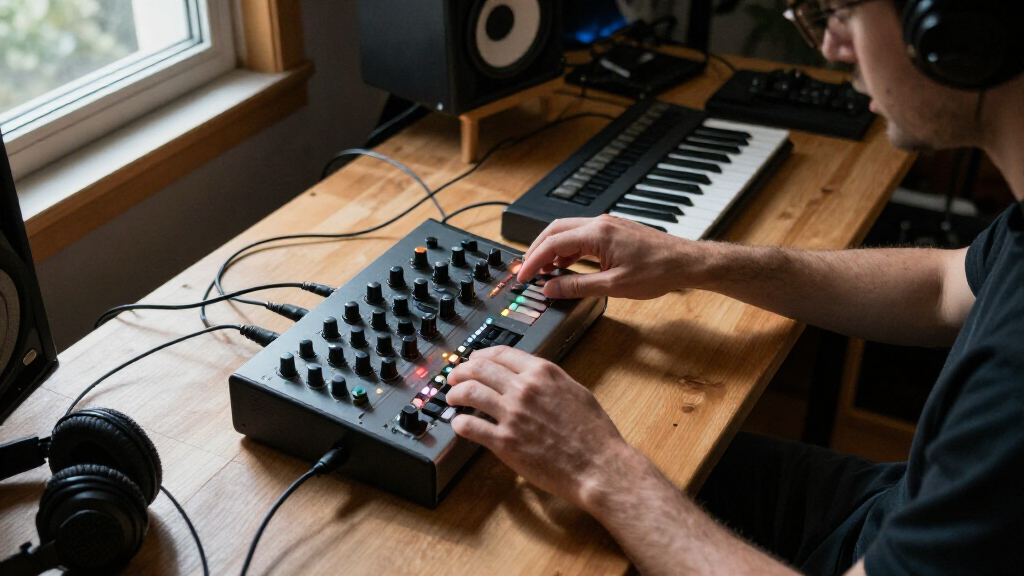
How We Picked
I ranked these digital audio interfaces by how well their connections, controls, and workflow match common recording and streaming tasks. I gave more weight to useful input and output options, clear monitoring, practical controls, and a feature set that makes sense for the intended buyer than to headline specifications alone. Build and portability also matter: an interface should suit a desk, mobile rig, or growing home studio without adding needless complexity.
The order reflects versatility and fit across typical setups, not a claim that one model is best for every creator. The Scarlett 2i2 4th Gen leads as a flexible two-input choice; the MOTU M2 and Audient models earn attention for distinct recording priorities; and specialized or compact units rank lower for buyers who need a general-purpose interface. I also weighed tradeoffs such as limited inputs, creator-specific processing, older generations, and less established product positioning, so lower-ranked picks can still make sense for a narrower use.
Factors to Consider When Choosing Digital Audio Interfaces
Start with the recording workflow you need, rather than choosing by sample-rate claims or input count alone. These broader checks can help you avoid paying for connections you will not use—or buying an interface that cannot handle your next recording task.
Match input count to the source you record at once
Count simultaneous sources, not every instrument or microphone you own. A solo singer who records one mic at a time may be well served by a one-mic interface, while recording voice and guitar together calls for two usable inputs. A podcast with multiple guests can outgrow a basic two-input box quickly, even if each person has a microphone. Also check whether the advertised inputs accept the source types you need, such as microphones, line-level gear, or instruments. Buying extra inputs can leave room to grow, but it may add cost, desk space, and controls you will rarely touch. If your setup is likely to change, prioritize a connection layout that supports the next likely step rather than an imagined studio.
Separate input count from input type
Two inputs do not always provide the same recording options. Some interfaces are designed around microphone and instrument recording, while others give creators a more specialized path for a single mic, streaming, or portable use. Check whether both inputs can be used at the same time and whether they have independent gain and monitoring controls. If you use a condenser microphone, confirm that the unit supports the microphone’s power requirements; if you use a guitar, look for an instrument-ready input. A common mistake is to count combo jacks without checking how they function in practice. The right interface is the one that accepts your sources without adapters or workflow workarounds.
Choose monitoring features for the way you work
Monitoring determines how comfortably you can hear yourself while recording. Direct monitoring can reduce distracting delay, while a software mixer or DSP tools can shape a stream or microphone signal before it reaches an audience. Those features are most useful when you need effects, routing, or repeatable live settings; they add little for a simple voice-and-guitar recording that will be edited later. Check for a headphone output and the controls needed to balance input and playback. Do not assume that a feature-rich mixer replaces a dedicated recording workflow: routing options may take time to configure. For uncomplicated recording, clear controls can matter more than a long list of processing features.
Plan for your computer, mobile device, and software
USB-C on an interface describes its connector, not a guarantee that it will work seamlessly with every phone, tablet, or computer. Verify operating-system support, power needs, included cables, and whether the recording software you plan to use recognizes the device. Mobile recording may require an adapter or a separate power arrangement, particularly when the interface and microphone draw power. Bundled software can be useful, but check whether it suits your workflow before treating it as a deciding factor. If you rely on DSP or a companion mixer app, confirm that the relevant features work on your platform. Compatibility checks prevent a capable interface from becoming a frustrating fit for your actual setup.
Treat specifications as a baseline, not the decision
Resolution and sample-rate figures can tell you whether an interface meets your recording requirements, but they do not explain how easy it is to set levels or monitor a performance. Most buyers benefit more from dependable gain control, useful meters, and suitable connections than from chasing the largest number on a specification sheet. Consider how you will set levels when the room is dim or when you cannot keep a software window open. Physical meters, simple indicators, and accessible knobs can make sessions smoother. Also check the outputs you need for headphones, speakers, or other monitoring gear. Choose the specification that meets your work, then compare the practical details.
Pay for room to grow only when it fits your plans
A more advanced interface can offer extra preamps, routing, or expansion options, but those features only help if your recording plans call for them. Paying for additional channels makes sense when you expect to record several performers or add hardware; it is less useful for a fixed single-mic stream. At the same time, a very basic interface can become a poor fit if you soon need separate microphone and instrument inputs. Map out your likely sources over the next few years and distinguish real plans from vague possibilities. Established product lines may also offer a clearer path to matching models as a setup expands. The sensible choice is enough flexibility for your next step, not the largest interface you can accommodate.
Frequently Asked Questions
Is a two-input interface enough for recording vocals and guitar at the same time?
Usually, yes, if the interface provides two independently usable inputs and each accepts the signal you plan to record. A common setup uses one microphone input for vocals and one instrument input for guitar, recording each source separately. Check that the controls let you set their levels independently and that your computer or recording app can capture both channels at once. Some compact interfaces have two sockets but may not support every source combination at the same time. If you expect to record a second microphone or another performer, confirm the input types before choosing.
Should I choose an interface with DSP for streaming?
DSP is useful when you want processing or routing managed through an interface’s mixer, especially for a live stream where you want a controlled microphone sound. A mic-focused model such as the Elgato Wave XLR MK.2 is aimed more directly at that kind of creator workflow than a conventional recording interface. If you already process audio in streaming software, DSP may duplicate tools you have and add another setup layer. Compare the available controls and software support with the way you actually stream. For recording that will be edited afterward, a straightforward interface may be the simpler fit.
Can I use a USB-C interface with a phone or tablet?
Possibly, but the USB-C connector alone does not confirm compatibility. Check the device’s operating-system support, power requirements, and whether the interface can receive enough power from your phone or tablet. You may need a suitable adapter, cable, or powered hub, particularly when using microphones that require phantom power. Also confirm that your recording or streaming app can select the interface as its audio input and output. For a mobile-first setup, favor a model whose documentation clearly supports your device combination.
Is the newer Scarlett Solo worth choosing over the Scarlett Solo 3rd Gen?
The Scarlett Solo 4th Gen is the more current option in this lineup, while the Scarlett Solo 3rd Gen may suit a buyer who has verified that its features and compatibility meet the same basic recording needs. Both are single-user choices, so neither replaces a two-input interface when you want to record two sources at once. Compare the specific controls, software support, and connection requirements rather than assuming a generation change matters equally to every setup. If you are buying new and want the newer feature set, the 4th Gen is the clearer choice here. If the older model already matches your workflow, its age alone does not make it unsuitable.
When should I move from a basic two-input interface to a model with more studio features?
Move up when your recording tasks call for capabilities the basic setup cannot provide, such as additional microphone preamps, more involved routing, or expansion for other hardware. The Audient iD14 MKII is more aligned with a growing studio than a simple starter interface, while the iD4 MKII keeps the focus narrower. A larger or more feature-rich model can help when you regularly record multiple sources, but it will not improve a workflow that only uses one microphone. List the sources you record at the same time and the monitoring connections you rely on before upgrading. That list makes it easier to tell whether you need more hardware or just a better-matched two-input unit.
Conclusion
For most home musicians and creators who want room for two sources, I recommend the Focusrite Scarlett 2i2 4th Gen as best overall; it offers a balanced starting point without the narrower focus of a single-mic unit. The M-Audio M-Track Solo is my best value-style pick for a basic setup, while beginners who want a familiar, straightforward path can look to the Focusrite Scarlett Solo 4th Gen. For a more capable studio setup, the Audient iD14 MKII is my best premium choice; the MOTU M2 is a strong alternative if visible metering is a priority. Streamers focused on a single microphone should compare the Elgato Wave XLR MK.2, and anyone choosing a compact or less established option should verify compatibility and input needs before committing.