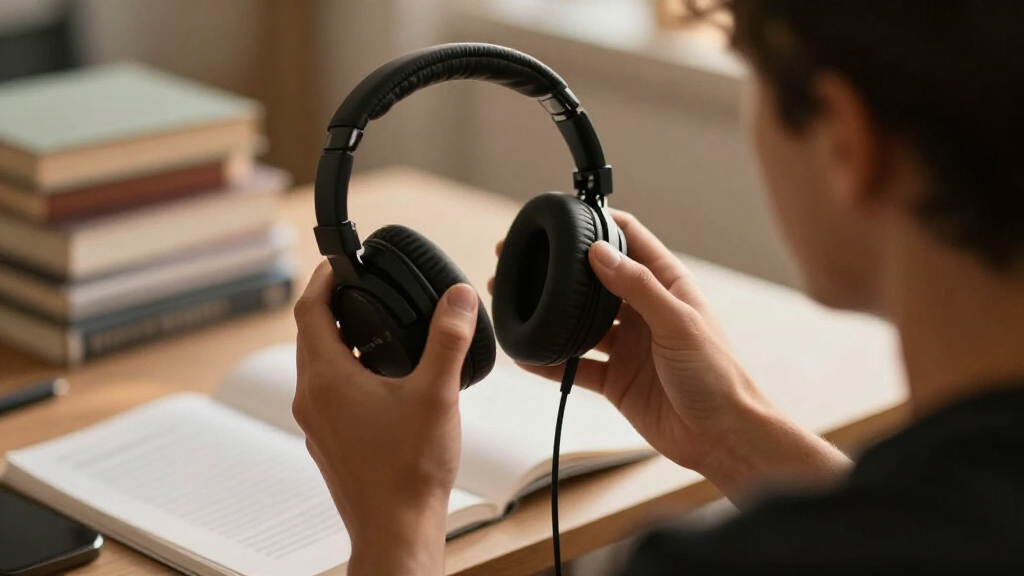
The Audio-Technica ATH-M50x takes the top spot as the best studio headphones for most buyers, thanks to its balanced, punchy sound signature, collapsible build, and detachable cable. Close behind, the beyerdynamic DT 770 Pro (80 Ohm) wins on comfort for long mixing sessions, while the Sennheiser HD 600 remains the reference pick for critical mixing thanks to its famously neutral midrange. The main tradeoff you’ll face in this category is closed-back isolation versus open-back accuracy: closed models suit tracking in noisy rooms, open models reveal more detail but leak sound. Budget matters too — capable monitors like the Sony MDR7506 cost a fraction of premium options. Read on for the full breakdown of all 15 models and which one fits your workflow.

Get audio and creator gear delivered free — and shop member deals
- Fast, free delivery on millions of items
- Access to Prime Big Deal Days deals on October 6–7
- Prime Video, Amazon Music and more included
Complete the kit


Key Takeaways
- Closed-back models dominated the tracking-friendly picks (ATH-M50x, DT 770 Pro, HD 280 Pro), while open-back Sennheiser and beyerdynamic models earned the top mixing spots — confirming that back type, not price, is the first decision to make.
- The Audio-Technica lineup (M20x through M50x) showed the clearest value ladder in the roundup: each step up buys noticeably better clarity, but the M40x came closest to the M50x for less, making it the smartest value pick.
- Impedance was a real divider: the 250-ohm DT 990 Pro and HD 600 demand an audio interface or headphone amp, while 48-ohm and lower models like the DT 770 Pro X and MDR7506 run fine from laptops and phones.
- Detachable cables separated long-term winners from losers — the ATH-M50x, HD 490 PRO, and DT 900 PRO X let you replace a broken cable, whereas fixed-cable models like the MDR7506 and AKG K240 are effectively disposable when the cable fails.
- The Sony MDR7506 and AKG K240 Studio proved that decades-old designs still outperform many newer budget headphones, making them the safest entry-level choices for beginners who shouldn’t overspend before knowing their needs.
| Sennheiser HD 490 PRO Open-Back Professional Studio Headphones |  | Best Overall | Design: Open-back over-ear | Frequency Response: 5 – 36,000 Hz | Ear Pads: Two washable, replaceable sets (mixing and producing) | VIEW LATEST PRICE | See Our Full Breakdown |
| beyerdynamic DT 770 Pro X (48 Ohm) Closed-Back Studio Headphones, Black |  | Best for Recording and Tracking | Impedance: 48 Ohm | Driver: STELLAR.45 dynamic driver | Design: Closed-back, over-ear | VIEW LATEST PRICE | See Our Full Breakdown |
| Sony MDR7506 Professional Large Diaphragm Headphones | 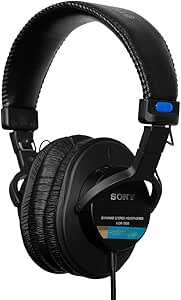 | Best Value Workhorse | Driver Size: 40 mm | Magnet Type: Neodymium | Frequency Response: 10 Hz – 20 kHz | VIEW LATEST PRICE | See Our Full Breakdown |
| Sennheiser HD 600 Audiophile Open-Back Wired Headphones |  | Best for Critical Listening | Impedance: 300 Ω | Frequency Response: 12 – 39,000 Hz | Total Harmonic Distortion: 0.1% | VIEW LATEST PRICE | See Our Full Breakdown |
| Sennheiser HD 280 Pro Over-Ear Headphones, Black |  | Best Passive Isolation | Design: Wired, closed-back over-ear | Sound Attenuation: Up to 32 dB | Cord Length: 3.3 – 9.8 ft (coiled) | VIEW LATEST PRICE | See Our Full Breakdown |
| Audio-Technica ATH-M20x Professional Studio Monitor Headphones, Black |  | Best Budget Entry Point | Driver Size: 40 mm | Driver Type: Rare earth magnets with copper-clad aluminum wire voice coils | Design: Circumaural (over-ear), closed-back | VIEW LATEST PRICE | See Our Full Breakdown |
| Audio-Technica ATH-M40x Professional Studio Monitor Headphones, Black |  | Best Value for Serious Mixing | Driver Size: 40mm | Driver Type: Rare earth magnets with copper-clad aluminum wire voice coils | Design: Circumaural (around-ear), closed-back | VIEW LATEST PRICE | See Our Full Breakdown |
| Audio-Technica ATH-M30x Professional Studio Monitor Headphones, Black |  | Best for Tracking on the Move | Driver Size: 40mm | Driver Type: Rare earth magnets with copper-clad aluminum wire voice coils | Design: Circumaural (over-ear), closed-back | VIEW LATEST PRICE | See Our Full Breakdown |
| Shure SRH440A Over-Ear Wired Studio Headphones for Recording |  | Best Beginner Studio Headphone | Type: Over-ear, closed-back, wired | Intended Use: Recording, monitoring, mixing, critical listening | Headband: Adjustable | VIEW LATEST PRICE | See Our Full Breakdown |
| beyerdynamic DT 990 Pro (250 Ohm) Open-Back Studio Headphones, Black |  | Best Open-Back for Mixing and Mastering | Impedance: 250 Ohms | Frequency Response: 5 – 35,000 Hz | Design: Open-back, over-ear | VIEW LATEST PRICE | See Our Full Breakdown |
| beyerdynamic DT 900 PRO X Open-Back Studio Headphones |  | Best Open-Back for Modern Workflows | Impedance: 48 ohms | Driver: STELLAR.45 | Type: Open-back studio headphones | VIEW LATEST PRICE | See Our Full Breakdown |
| Audio-Technica ATH-M50x Professional Studio Monitor Headphones, Black | 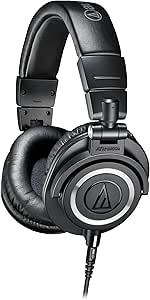 | Best Closed-Back All-Rounder | Driver Size: 45mm | Earcup Design: Circumaural, 90-degree swiveling | Cable: Detachable | VIEW LATEST PRICE | See Our Full Breakdown |
| beyerdynamic DT 770 Pro (80 Ohm) Closed-Back Studio Headphones, Black |  | Best for Tracking and Vocal Booths | Impedance: 80 ohms | Type: Closed-back, over-ear studio headphones | Ear Pads: Replaceable grey velour | VIEW LATEST PRICE | See Our Full Breakdown |
| AKG K240 Studio Semi-Open Studio Headphones | 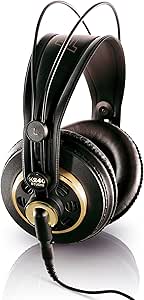 | Best Value for Home Studios | Type: Semi-open, over-ear, wired | Transducers: 30mm XXL with Varimotion diaphragms | Cable Length: 3 meters (9.9 feet) | VIEW LATEST PRICE | See Our Full Breakdown |
| Sennheiser HD 560S Open-Back Over-Ear Wired Headphones |  | Best for Neutral Reference Listening | Type: Open-back over-ear headphones | Connectivity: Wired | Connector: 1/4-inch | VIEW LATEST PRICE | See Our Full Breakdown |
| studio headphone | Design | Cable | Warranty |
|---|---|---|---|
| Sennheiser HD 490 PRO Open-Bac | Open-back over-ear | 1.8 m detachable | 2 years |
| beyerdynamic DT 770 Pro X | Closed-back, over-ear | Detachable mini-XLR, 3 m | 2 years |
| Sony MDR7506 Professional Larg | Closed-ear, foldable | — | — |
| Sennheiser HD 600 Audiophile O | Open-back, circumaural | Detachable Kevlar-reinforced OFC copper | — |
| Sennheiser HD 280 Pro Over-Ear | Wired, closed-back over-ear | — | 2 years |
| Audio-Technica ATH-M20x Profes | Circumaural (over-ear), closed-back | — | — |
| Audio-Technica ATH-M40x Profes | Circumaural (around-ear), closed-back | — | — |
| Audio-Technica ATH-M30x Profes | Circumaural (over-ear), closed-back | — | 2 years parts and labor |
| Shure SRH440A Over-Ear Wired S | Collapsible | Detachable locking cable | — |
| beyerdynamic DT 990 Pro | Open-back, over-ear | Fixed 3m coiled cable with 1/4-inch adapter | 2 years |
| beyerdynamic DT 900 PRO X Open | — | Detachable mini-XLR | 2 years |
| Audio-Technica ATH-M50x Profes | — | Detachable | 2 years on parts and labor |
| beyerdynamic DT 770 Pro | — | Fixed 3m straight cable | — |
| AKG K240 Studio Semi-Open Stud | — | — | — |
| Sennheiser HD 560S Open-Back O | — | — | 2 years |
More Details on Our Top Picks
Sennheiser HD 490 PRO Open-Back Professional Studio Headphones
The HD 490 PRO earns the top spot because it solves the problem most studio headphones ignore: one pair for both producing and mixing. The two swappable ear pad sets genuinely change the sound signature, so you get a punchier, more engaging response for writing and a flatter, more honest one for final balance decisions. Compared with the Sennheiser HD 600, the 490 PRO offers a wider, more dimensional soundstage and far better localization, which matters when you’re placing elements in a mix. The included dearVR MIX-SE plugin adds virtual monitoring on top. The tradeoff is real, though: open-back leakage and near-zero isolation mean you can’t track vocals or record acoustic instruments while wearing them, and the price sits firmly in professional-gear territory.
Pros:- Two switchable ear pad sets with distinct producing and mixing signatures
- Extremely wide soundstage with precise localization
- Uncolored frequency response for trustworthy mix decisions
- Washable, replaceable ear pads and a durable, sustainable build
Cons:- Open-back design leaks sound and isolates almost nothing
- Premium price point typical of professional studio gear
Best for: Producers and mixing engineers who want one accurate open-back pair for full production workflows in a treated room
Not ideal for: Anyone recording vocals or working in a noisy or shared space — the open-back design leaks sound both ways
- Design:Open-back over-ear
- Frequency Response:5 – 36,000 Hz
- Ear Pads:Two washable, replaceable sets (mixing and producing)
- Cable:1.8 m detachable
- Included Software:dearVR MIX-SE plugin
- Warranty:2 years
Our verdict“If you mix in a quiet room and want the most versatile and revealing headphones here, this is the pair to buy.”
beyerdynamic DT 770 Pro X (48 Ohm) Closed-Back Studio Headphones, Black
Where the HD 490 PRO fails — isolation — the DT 770 Pro X excels. Its closed-back design prevents headphone bleed into microphones, making it the clear pick for tracking vocals and drums. The 48-ohm impedance is the headline: unlike the beyerdynamic DT 990 Pro (250 Ohm), which demands a headphone amp, this version runs comfortably straight from a laptop, phone, or audio interface. The STELLAR.45 driver delivers detailed, high-resolution sound, and beyerdynamic’s velour pads keep long sessions comfortable. What holds it back from the top spot is accuracy: closed backs color the low end slightly compared with open models, and the non-folding frame makes it a poor travel companion. It also forgoes wireless entirely, which will bother anyone wanting crossover use.
Pros:- 48-ohm impedance means no headphone amp is required
- Strong closed-back isolation prevents mic bleed while recording
- Detachable mini-XLR cable and replaceable velour pads extend lifespan
- Handmade in Germany with the flagship STELLAR.45 driver
Cons:- Wired only, with no wireless option
- Non-folding design limits portability
- Slightly colored low end compared with open-back competitors
Best for: Home studio owners who track vocals or instruments and plug directly into an interface or laptop without an amp
Not ideal for: Mixing engineers who need a perfectly neutral reference — the closed-back low end is less honest than open-back rivals
- Impedance:48 Ohm
- Driver:STELLAR.45 dynamic driver
- Design:Closed-back, over-ear
- Cable:Detachable mini-XLR, 3 m
- Ear Pads:Replaceable velour
- Warranty:2 years
- Origin:Handmade in Germany
Our verdict“This is the tracking workhorse to buy if you record into microphones and don’t own a dedicated headphone amp.”
Sony MDR7506 Professional Large Diaphragm Headphones
The MDR7506 remains the headphone you see hanging in nearly every commercial studio, and for good reason: it delivers dependable, slightly forward monitoring at a price well below the HD 490 PRO or HD 600. Its 40 mm neodymium drivers and closed-ear design make it a practical all-rounder — you can track, edit, and rough-mix without swapping pairs. Compared with the Sennheiser HD 280 Pro, the Sony is lighter and folds down smaller, though its isolation is a step behind. The tradeoff is longevity of the design rather than the build: the non-detachable cord means a cable failure ends the headphone’s life, and the 9.8-foot cord is awkward anywhere outside a studio. Its frequency emphasis isn’t reference-flat either, so final mixes deserve a second opinion.
Pros:- Industry-standard monitoring trusted across recording, film, and radio
- Rugged folding construction with a soft carrying case
- Effective closed-ear design reduces external noise
- Gold-plated plug with included 1/4-inch adapter
Cons:- Non-detachable cord — damage means replacing the headphones
- 9.8-foot cord is cumbersome for portable or desktop use
- Not perfectly flat response for final mixing decisions
Best for: Budget-conscious producers, podcasters, and video editors who need one proven studio pair for daily work
Not ideal for: Buyers who want a maintenance-friendly design — the fixed cord can’t be replaced if it fails
- Driver Size:40 mm
- Magnet Type:Neodymium
- Frequency Response:10 Hz – 20 kHz
- Design:Closed-ear, foldable
- Cord:9.8 ft oxygen-free copper, non-detachable
- Plug:Gold-plated 1/8 inch with 1/4 inch adapter
- Included:Soft case and 1/4 inch adapter
Our verdict“For dependable everyday studio monitoring at an accessible price, this is the smartest entry point in the lineup.”
Sennheiser HD 600 Audiophile Open-Back Wired Headphones
The HD 600 sits here as a reference for ears, not for workflows. Its low 0.1% distortion and famously natural midrange make it a benchmark for judging mixes and enjoying finished records, and its plush circumaural pads suit marathon sessions. Against the HD 490 PRO, it’s the more relaxed, classic Sennheiser voicing — less spatially expansive, but smoother and time-tested over decades. The Kevlar-reinforced detachable cable is a quiet advantage over the Sony MDR7506’s fixed cord. The catch is the 300 Ω impedance: plugged into a phone or laptop it will sound thin and quiet, so a proper headphone amplifier is effectively mandatory. Like all open backs, it leaks sound both ways, so it belongs in quiet rooms only.
Pros:- Audiophile-grade clarity with very low 0.1% THD
- Wide 12–39,000 Hz frequency response
- Lightweight, comfortable design for extended sessions
- Durable detachable Kevlar-reinforced OFC copper cable
Cons:- 300 Ω impedance requires a dedicated headphone amplifier
- Open-back design leaks sound with no isolation
- No microphone or wireless functionality
Best for: Mixing engineers and audiophiles who already own a headphone amp and prioritize midrange accuracy and long-session comfort
Not ideal for: Anyone plugging straight into a phone, laptop, or unpowered interface — the 300 Ω impedance demands amplification
- Impedance:300 Ω
- Frequency Response:12 – 39,000 Hz
- Total Harmonic Distortion:0.1%
- Weight:260 g
- Cable:Detachable Kevlar-reinforced OFC copper
- Connector:1/4″ / 1/8″ jack
- Design:Open-back, circumaural
Our verdict“Buy this if you have the amplification to feed it and want a legendary, uncolored listening reference — skip it if you’re mobile or amp-less.”
Sennheiser HD 280 Pro Over-Ear Headphones, Black
When blocking outside noise is the priority, nothing else in this batch matches the HD 280 Pro’s up to 32 dB of passive attenuation — noticeably more isolation than the Sony MDR7506 or the DT 770 Pro X. That makes it a strong choice for tracking in untreated rooms, loud drum rooms, or broadcast booths. The warm, natural tuning is forgiving rather than forensic, positioning it below the HD 490 PRO for critical mixing but above most budget closed-backs for sheer practicality. Its standout long-term advantage is serviceability: earpads, headband padding, and the cord are all replaceable, unlike the Sony’s fixed cable. On the downside, the clamping force needed for that isolation gets fatiguing over long sessions, and the coiled cord, while stretchy, can drag on desktops.
Pros:- Up to 32 dB of passive noise attenuation, best in this lineup
- Warm, natural sound reproduction
- Collapsible earpieces for compact transport
- Earpads, headband padding, and cord are all user-replaceable
Cons:- Firm clamping force becomes uncomfortable over long sessions
- Coiled cord can tangle and drag during desktop work
- Tuning is warmer and less neutral than open-back reference rivals
Best for: Engineers and musicians tracking in loud rooms who need maximum noise rejection without active electronics
Not ideal for: Long mixing sessions or critical referencing — the warm tuning and firm clamp favor short tracking use
- Design:Wired, closed-back over-ear
- Sound Attenuation:Up to 32 dB
- Cord Length:3.3 – 9.8 ft (coiled)
- Earpieces:Collapsible
- Replaceable Parts:Earpads, headband padding, audio cord
- Included:Screw-type 1/4-inch adapter
- Warranty:2 years
Our verdict“This is the pick when silencing a loud room matters more than absolute fidelity — ideal as a dedicated tracking pair.”
Audio-Technica ATH-M20x Professional Studio Monitor Headphones, Black
The ATH-M20x is the most affordable way into real studio monitoring, and it earns that place by doing the basics honestly. Its tuned low-frequency response gives tracking sessions some weight, and the circumaural cups deliver the same isolation philosophy as its pricier siblings. Compared with the ATH-M30x, this model skips the collapsible design and protective case, so it is strictly a leave-it-in-the-studio tool. The single-side cable exit keeps the cord out of the way when reaching for a mic or fader, which matters more at this level than audiophile refinement. This pick makes the most sense for a first home studio or a spare pair for guests.
Pros:- Tuned for enhanced low-frequency performance
- Circumaural design provides strong sound isolation in loud tracking rooms
- Convenient single-side cable exit keeps cords out of the way
- Solid build quality for the price bracket
Cons:- No collapsible design or protective case for transport
- Sonically a step behind the M30x and M40x in mid-range detail
Best for: Beginners building a first home studio who need honest monitoring without spending much
Not ideal for: Anyone who travels or records in the field — the fixed, non-collapsible build has no case and is awkward to pack
- Driver Size:40 mm
- Driver Type:Rare earth magnets with copper-clad aluminum wire voice coils
- Design:Circumaural (over-ear), closed-back
- Cable Exit:Single side
- Intended Use:Studio tracking and mixing
- Color:Black
Our verdict“Buy this if you need dependable closed-back monitoring for the least money; step up to the M30x if you’ll ever leave the studio with them.”
Audio-Technica ATH-M40x Professional Studio Monitor Headphones, Black
The ATH-M40x occupies the sweet spot in Audio-Technica’s lineup: flatter and more honest than the bass-forward M20x, yet far cheaper than the M50x while covering the features that actually matter for mixing. The 90-degree swiveling earcups are the standout practical feature — DJs and tracking engineers will appreciate how naturally one-ear monitoring works compared with the fixed cups on cheaper models. Detachable cables mean a snapped cord is a ten-dollar fix rather than a dead headphone, a longevity advantage over the fixed-cable M20x and M30x. The tradeoff is comfort: the pro-grade earpads and headband run firm until broken in, so long mastering sessions take some patience.
Pros:- Neutral, accurate tuning suited to mixing decisions
- 90-degree swiveling earcups for easy one-ear monitoring
- Detachable cables make damage cheap to repair
- Professional-grade earpads and headband built for daily use
Cons:- Firm earpads and headband need a break-in period before long sessions are comfortable
- No protective case or collapsible hinges like some rivals at this level
Best for: Home producers and project studios who want accurate, neutral mixing without paying flagship prices
Not ideal for: Listeners wanting a fun, bass-boosted signature for casual music — the flat tuning is deliberately unglamorous
- Driver Size:40mm
- Driver Type:Rare earth magnets with copper-clad aluminum wire voice coils
- Design:Circumaural (around-ear), closed-back
- Earcup Rotation:90 degrees
- Cables:Detachable, included
- Color:Black
Our verdict“The most sensible balance of accuracy, durability, and price in this lineup — buy it before you buy anything more expensive.”
Audio-Technica ATH-M30x Professional Studio Monitor Headphones, Black
The ATH-M30x splits the difference between the M20x and M40x, but its real identity is portability: it is the only model in this trio that collapses flat and ships with a protective case, which is why it stands out for field recording and location work. Compared with the M20x, the tuning shifts toward mid-range detail, making it easier to hear vocal and guitar placement while tracking. Against the Shure SRH440A, it matches the collapsible concept but keeps its cable attached — one less thing to lose on location, but also one less thing you can replace if it fails. Pro-grade materials hold up to bag life better than most at this price.
Pros:- Tuned for enhanced detail with strong mid-range definition
- Collapsible design with included protective case
- Durable pro-grade materials suitable for long sessions
- Strong sound isolation from contoured circumaural earcups
Cons:- Fixed cable cannot be replaced if damaged, unlike the M40x or SRH440A
- Monitoring-focused tuning may not satisfy casual listening
Best for: Field recordists and mobile producers who need isolation and a protective case in a bag-friendly form
Not ideal for: Mixing engineers chasing maximum neutrality — the M40x’s flatter response is the better tool for critical decisions
- Driver Size:40mm
- Driver Type:Rare earth magnets with copper-clad aluminum wire voice coils
- Design:Circumaural (over-ear), closed-back
- Cable Exit:Single-sided
- Portability:Collapsible
- Included Accessories:Cable, protective case, screw-on 1/4-inch adapter, user manual
- Warranty:2 years parts and labor
Our verdict“The pick for anyone whose studio travels with them — collapsible, cased, and isolation-focused.”
Shure SRH440A Over-Ear Wired Studio Headphones for Recording
The Shure SRH440A is the model I would hand someone setting up their first audio interface, because it solves the two problems beginners actually hit: gear that breaks and sound that misleads. The detachable locking cable is the headline — compared with the ATH-M40x, which also offers detachable cables, the locking mechanism adds security when you stand up and forget you’re tethered. Its accurate, transparent signature is close to the M40x in character, while the optimized impedance plays nicely with laptops and portable devices straight out of the box. The honest tradeoff: there is no active noise cancellation, only passive isolation, so loud rooms will still bleed through.
Pros:- Accurate, balanced studio-grade sound signature
- Comfortable for long sessions with adjustable headband and cushioned earcups
- Detachable locking cable adds reliability and easy replacement
- Collapsible design for portability and storage
Cons:- Passive isolation only — no active noise cancellation
- Wired design limits mobility around a desk or small room
Best for: First-time home recordists working from laptops or entry interfaces who want forgiving, reliable monitoring
Not ideal for: Podcasters or engineers in very noisy environments — passive isolation alone won’t mask loud surroundings
- Type:Over-ear, closed-back, wired
- Intended Use:Recording, monitoring, mixing, critical listening
- Headband:Adjustable
- Design:Collapsible
- Cable:Detachable locking cable
- Compatibility:Audio interfaces, mixers, laptops, portable devices
Our verdict“The safest first studio headphone here: honest sound, comfortable fit, and a cable that survives beginners’ mistakes.”
beyerdynamic DT 990 Pro (250 Ohm) Open-Back Studio Headphones, Black
The DT 990 Pro earns its slot by doing what closed-backs in this lineup cannot: its open-back design creates a wide, natural stereo image that makes placement and reverb decisions far easier — the ATH-M40x and SRH440A simply cannot match that sense of space. The velour ear pads and spring-steel headband make it the most comfortable option here for marathon sessions. But the requirements are real: at 250 ohms, it demands a headphone amp or interface and will sound thin straight from a phone, and the open-back construction leaks sound both ways, ruling out tracking vocalists. The fixed coiled cable also forgoes the replaceability the M40x offers. This pick makes the most sense as a dedicated mixing and mastering tool.
Pros:- Trusted reference sound with mixes that translate across playback systems
- Open-back design delivers a wide, natural stereo image with good depth
- Comfortable replaceable velour ear pads and durable spring-steel headband
- High build quality, made in Germany
Cons:- 250-ohm impedance requires a headphone amp or audio interface
- Open-back design leaks sound and offers almost no isolation
- Fixed coiled cable cannot be replaced if damaged
Best for: Producers and mastering engineers with an audio interface or headphone amp who mix primarily at a desk
Not ideal for: Mobile users and tracking sessions — the high impedance and sound leakage make it unusable on the go or while recording vocals
- Impedance:250 Ohms
- Frequency Response:5 – 35,000 Hz
- Design:Open-back, over-ear
- Cable:Fixed 3m coiled cable with 1/4-inch adapter
- Ear Pads:Replaceable grey velour
- Headband:Spring steel
- Warranty:2 years
- Country of Origin:Germany
Our verdict“A dedicated mixing and mastering headphone for amped desktop setups — pair it with a closed-back like the M40x for tracking.”
beyerdynamic DT 900 PRO X Open-Back Studio Headphones
What sets the DT 900 PRO X apart from the classic beyerdynamic DT 990 Pro is its 48-ohm STELLAR.45 driver, which reaches full performance straight from a laptop or phone. The DT 990 Pro’s 250-ohm impedance demands a headphone amp; this model does not, and that removes an entire purchase from the equation for home mixers. The open-back soundstage is wide and natural, making placement decisions in a mix far easier to judge than on closed-back options like the DT 770 Pro. The tradeoff is inherent to the design: sound leaks both ways, so tracking vocals or working in a shared room is off the table. Compared with the Sennheiser HD 560S, the DT 900 PRO X leans toward a more analytical presentation, which suits critical work more than casual listening.
Pros:- Runs at full quality from laptops, phones, and interfaces without a dedicated amp
- Wide, natural soundstage that makes mixing decisions easier to trust
- Detachable mini-XLR cable with case and 1/4-inch adapter included
- German-made build quality with a 2-year warranty
Cons:- Open-back design leaks sound in and out, ruling out tracking use
- Wired only, with no wireless alternative
Best for: Home studio mixers and mastering engineers who want open-back detail without buying a headphone amp
Not ideal for: Podcasters or vocalists tracking in the same room as a microphone — the open-back design leaks badly
- Impedance:48 ohms
- Driver:STELLAR.45
- Type:Open-back studio headphones
- Connectivity:Wired, 3.5 mm jack
- Weight:12.2 ounces
- Cable:Detachable mini-XLR
- Warranty:2 years
- Made In:Germany
Our verdict“The strongest pick for producers who want reference-grade open-back sound without an amp sitting between their laptop and headphones.”
Audio-Technica ATH-M50x Professional Studio Monitor Headphones, Black
The ATH-M50x earns its place as the do-everything closed-back pick because it refuses to specialize. Where the DT 770 Pro is a tracking headphone first and a mixing tool second, the M50x handles tracking, editing, and even mobile listening with the same confident, bass-forward signature. The circumaural isolation is strong enough for vocal booths, and the 90-degree swiveling earcups make one-ear DJ-style monitoring genuinely practical — something the fixed-earcup Sony MDR7506 doesn’t offer. Detachable cables also mean a damaged cord is a cheap fix rather than a repair job. The honest tradeoff: the clamp force runs tight on larger heads during marathon sessions, and the slightly boosted low end flatters rather than reveals, so engineers chasing a strictly neutral reference may prefer the ATH-M40x down the lineup.
Pros:- Excellent sound isolation for tracking and loud rooms
- Swiveling earcups enable easy one-ear monitoring
- Detachable cable extends the headphone’s lifespan
- Rugged, professional-grade build with comfortable earpads
Cons:- Clamp force becomes uncomfortable for larger heads over long sessions
- Bass-leaning tuning is less neutral than dedicated mixing references
Best for: Producers and content creators who want one durable closed-back pair for tracking, editing, and everyday listening
Not ideal for: Listeners with larger heads or those wanting a strictly neutral reference — the clamp is tight and the bass is elevated
- Driver Size:45mm
- Earcup Design:Circumaural, 90-degree swiveling
- Cable:Detachable
- Color:Black
- Warranty:2 years on parts and labor
- Brand:Audio-Technica
Our verdict“The safest single-purchase choice for anyone who needs isolation, durability, and versatility in one closed-back package.”
beyerdynamic DT 770 Pro (80 Ohm) Closed-Back Studio Headphones, Black
If the ATH-M50x is the all-rounder, the DT 770 Pro (80 Ohm) is the specialist. Its passive isolation is the reason it still anchors vocal booths decades after launch — it keeps click tracks and backing cues out of your microphone far more reliably than semi-open options like the AKG K240 Studio, which isolate almost nothing. The velour ear pads are replaceable, and the spring-steel headband survives abuse that would crack plastic competitors. The 80-ohm version is the sweet spot in the range: loud enough from most laptops, unlike the harder-to-drive 250-ohm variant, while still scaling up with a proper interface. The compromises are real, though — the fixed 3m cable is a nuisance away from the desk, and like most closed-backs, its soundstage is narrower than the open DT 900 PRO X, so final mixing judgments are better made elsewhere.
Pros:- Best-in-class passive isolation for tracking and vocal recording
- Replaceable velour pads and a spring-steel headband built for abuse
- 80-ohm design is loud from laptops yet scales well with an amp
Cons:- Fixed, non-detachable 3m cable is cumbersome for portable use
- Needs an interface or amp to sound its best
- Narrower soundstage than open-back mixing alternatives
Best for: Vocalists, podcasters, and engineers tracking in booths or loud rooms who need serious isolation
Not ideal for: Mobile or on-the-go producers — the fixed 3-meter cable and amp-friendly impedance make it a desk-bound tool
- Impedance:80 ohms
- Type:Closed-back, over-ear studio headphones
- Ear Pads:Replaceable grey velour
- Headband:Spring steel
- Cable:Fixed 3m straight cable
- Adapter:1/4-inch (6.35mm)
- Made In:Germany
Our verdict“The tracking workhorse to buy when keeping sound out of the mic matters more than having the last word in mixing accuracy.”
AKG K240 Studio Semi-Open Studio Headphones
The K240 Studio occupies a middle ground that neither fully closed nor fully open designs can: its semi-open architecture gives a more airy, spacious presentation than the DT 770 Pro while retaining a touch more bass weight than the fully open Sennheiser HD 560S. That balance, combined with its long-running reputation, makes it a smart entry point for home studio owners building a first serious setup. The self-adjusting headband is a genuine comfort win during long editing sessions — no fiddling with sliders — and the included screw-on 1/4-inch adapter means it plugs into interfaces and consumer gear alike. The catch is that semi-open isolates almost nothing and leaks audibly in both directions, so it cannot double as a tracking headphone. Anyone recording vocals in the same room should step up to a closed-back model instead.
Pros:- Wide dynamic range with solid bass and clear highs
- Self-adjusting headband stays comfortable through long sessions
- Includes both 1/8-inch and 1/4-inch connectivity
- Durable build with decades of professional trust
Cons:- Semi-open design leaks sound and provides little isolation
- Wired only, with no wireless option
- Resolution trails newer open-back competitors
Best for: Home studio owners and beginners who want a comfortable, spacious-sounding first headphone for mixing and editing
Not ideal for: Anyone recording with a microphone in the room — semi-open design offers almost no isolation
- Type:Semi-open, over-ear, wired
- Transducers:30mm XXL with Varimotion diaphragms
- Cable Length:3 meters (9.9 feet)
- Connectors:1/8″ plug with screw-on 1/4″ adapter
- Intended Use:Studio mixing, mastering, podcasting, Hi-Fi listening
- Brand:AKG
Our verdict“A sensible, comfortable entry into open-ish studio sound for mixers who never track in the same room as their mic.”
Sennheiser HD 560S Open-Back Over-Ear Wired Headphones
The HD 560S is the most tonally honest headphone in this group — more forgiving and natural than the analytical DT 900 PRO X, and warmer-voiced than the venerated Sennheiser HD 600, while sitting well below both in the pricing hierarchy. Its angled drivers and controlled transducer membrane produce a spacious, lifelike image that makes it a strong choice for checking how a mix translates on a neutral, wide system. Bass reaches low without the bloom of the ATH-M50x, which helps reveal problems rather than mask them. But the open-back caveats apply in full: audio leaks in and out freely, making it useless for tracking, and the wired-only design with a 1/4-inch connector assumes you’re working at a desk with an interface or amp. For a dedicated mixing and listening seat, those limits are easy to accept.
Pros:- Natural, accurate reference tuning with clear, extended bass
- Angled drivers create a wide, lifelike soundstage
- Lightweight and comfortable for long listening sessions
- 2-year warranty
Cons:- Open-back design leaks sound and blocks none from outside
- Wired-only with a 1/4-inch connector, limiting mobility and portable use
Best for: Mixing engineers and critical listeners who prioritize a neutral, uncolored reference at a desk setup
Not ideal for: Anyone in shared or noisy spaces — open-back cups leak sound in both directions
- Type:Open-back over-ear headphones
- Connectivity:Wired
- Connector:1/4-inch
- Weight:600 g
- Warranty:2 years
- Included:Headphones, cable, user manual
Our verdict“The pick for engineers who want Sennheiser’s neutral open-back character for mixing and reference listening without stepping into audiophile pricing.”

How We Picked
I judged every model against what actually matters in a studio: frequency accuracy (does the headphone tell you the truth about your mix?), isolation and bleed (can you track with live mics nearby?), comfort over long sessions, and practical durability including cable design and part availability. I also weighed impedance and drivability, because a technically superb 250-ohm headphone that sounds thin from a laptop is the wrong purchase for many home setups.
The ranking logic follows use case first, then value. Models that serve the widest range of studio tasks — mixing and tracking alike — ranked higher than one-trick specialists. That’s why the versatile ATH-M50x outranks the arguably more neutral HD 600, which is exceptional for mixing but poorly suited to recording. Within similar performance tiers, cheaper and better-built options placed ahead, which is why the M40x edges out pricier rivals with comparable sound.
Factors to Consider When Choosing Best Studio Headphones
Before committing to a pair, it helps to understand the bigger decisions that shape every studio headphone purchase. These are the factors I weighed across all 15 models — and the mistakes buyers most often make.Closed-Back vs. Open-Back: Decide This First
This single choice determines what your headphones can and cannot do, and it’s the mistake I see most often from first-time buyers. Closed-back headphones seal the ear cup, which blocks room noise and prevents your backing track from bleeding into a live microphone — the only real option for recording vocals or acoustic instruments. The cost is a slightly boxier, less natural soundstage. Open-back headphones trade all isolation for a wider, more honest stereo image, which is exactly what you want when judging reverb, panning, and low-end balance in a mix. Some buyers try to skip the decision with semi-open models like the AKG K240 Studio, but these compromise both ways and still leak sound into mics. If you can only own one pair and you record anything yourself, go closed. If you only mix and work in a quiet room, open-back will make you a better mixer.
Impedance and What Drives Your Headphones
Impedance, measured in ohms, decides how much power a headphone needs to reach proper volume — and it’s where a surprising number of purchases go wrong. Low-impedance models (roughly under 60 ohms) like the ATH-M50x or MDR7506 run at full potential from a phone, laptop, or basic interface. High-impedance models such as the 250-ohm DT 990 Pro or the HD 600 will technically make sound from a laptop jack, but they’ll sound thin, quiet, and dynamically flat — leading buyers to wrongly blame the headphone. If you already own an audio interface with a dedicated headphone amp or a standalone amp, high-impedance models reward you with tighter bass and better control. If you don’t, either buy a low-impedance version (beyerdynamic’s 48-ohm and 80-ohm variants exist for this reason) or budget for amplification. Matching impedance to your existing gear costs nothing and prevents the most common disappointment in this category.
Neutrality Versus Flattery
Studio headphones are supposed to be honest, but ‘honest’ exists on a spectrum, and understanding where you sit on it changes which model you should buy. Some models in this roundup — the HD 600 and DT 900 PRO X especially — aim for a flat, reference tuning that exposes every flaw in a mix. Others, like the ATH-M50x, carry a mild bass and treble lift that sounds more exciting and forgiving. There’s a real argument for a slightly lifted tuning early in your development: mixes made on brutally honest headphones can be discouraging, and a modest V-shape can keep you working. The trap is buying a heavily bass-boosted consumer headphone and calling it a studio monitor — your mixes will end up thin on every other system. A reasonable compromise: start with a mildly warm monitor like the M40x or SRH440A, then add a neutral open-back later as your reference pair.
Cables, Parts, and the True Cost of Ownership
The cable is the most fragile part of any wired headphone, and its design determines whether your purchase lasts three years or a decade. Models with detachable cables — the ATH-M50x, HD 490 PRO, DT 900 PRO X, and Shure SRH440A — turn a broken cable into a cheap replacement instead of a dead headphone. Fixed-cable models like the MDR7506 and AKG K240 often outlive their cables anyway, and repairing them requires soldering. Beyond the cable, check whether the manufacturer sells replacement ear pads and headband parts; beyerdynamic and Sennheiser are strong here, which is part of why their models hold value so well. Velour pads (common on open-backs) breathe better in long sessions but wear faster than leatherette. Factoring a pad replacement or two into your total budget gives you a much more realistic picture of cost over five years than the sticker price alone.
Comfort Is a Workflow Feature, Not a Luxury
In mixing, fatigue changes your judgment: a clamping headphone makes you finish sessions early and reach for compression to compensate for physical discomfort. Clamp force, pad material, and weight matter more than most spec sheets suggest. The DT 770 Pro’s soft velour pads and gentle clamp are a big part of why it remains a studio standard — engineers wear it for eight-hour stretches. Heavier models with stiff leatherette pads, like the HD 280 Pro, prioritize isolation over long-session comfort, which is fine for tracking but tiring for mixing. If you wear glasses, velour pads are almost always the better choice because they seal around the temples without pressing frames into your head. My advice: if you can, buy from a retailer with easy returns and do a two-hour listening block before committing — thirty seconds on a store display tells you almost nothing.
When to Pay More — and When Not To
The jump from budget to mid-range studio headphones buys real, audible improvements: tighter bass, cleaner treble, better detail retrieval. The jump from mid-range to premium buys smaller, subtler gains — mostly in soundstage realism and long-term refinement. That curve means the mid-range tier is where most buyers should land, and it’s why the ATH-M40x and DT 770 Pro rank so highly here. Paying more makes sense in three situations: you mix professionally and need a trustworthy reference, you need better build for daily commercial use, or you specifically want the open-back soundstage that only premium models deliver. Beginners should resist premium temptation — you’ll make better mixes from learning your tools than from owning a HD 600 on day one. A cheaper, well-chosen pair plus money saved toward room treatment or an interface will improve your results far more than an extra two hundred dollars on headphones.
Frequently Asked Questions
Do I need open-back or closed-back headphones if I’m just starting a home studio?
If you record vocals, guitar, or any acoustic instrument, start with closed-back headphones — open-backs leak your backing track into the microphone, which ruins takes and can’t be fixed in the mix. If you only produce with samples, synths, or MIDI and your room is reasonably quiet, an open-back pair like the HD 560S will actually help you learn mixing faster because it presents a more realistic stereo image. Many home studio owners eventually own one of each: a closed pair for tracking and an open pair for mixing. If one pair is all your budget allows, closed-back is the safer all-rounder. The ATH-M40x or SRH440A cover both jobs respectably without breaking the bank.
Can I use the 250-ohm beyerdynamic DT 990 Pro with my laptop or phone?
You’ll get sound, but not the sound you paid for. A 250-ohm headphone needs more voltage than laptop and phone jacks deliver, so you’ll hear reduced volume, weak bass, and compressed dynamics — and you may wrongly conclude the headphone is disappointing. If you already own an audio interface with a decent headphone output, check its specs; many can drive 250 ohms acceptably. If your only source is a laptop, buy the lower-impedance alternative instead: beyerdynamic’s DT 770 Pro X at 48 ohms was designed precisely for this situation. Adding a dedicated headphone amp later is always an option, but budget for it upfront rather than discovering the problem after purchase. Matching the headphone to the gear you actually own beats chasing a spec sheet.
Is the ATH-M50x really worth more than the ATH-M40x for studio work?
Honestly, for pure studio monitoring, the gap is smaller than the price difference suggests. The M40x has a flatter, more neutral tuning, which some engineers actually prefer for mixing, while the M50x adds a bass and treble lift that makes it more versatile for casual listening and checking how music sounds on consumer gear. The M50x also wins on practicality: a detachable cable and collapsible, swiveling ear cups that make it far better for field work and travel. If you mix at a desk and never leave, the M40x is arguably the better studio tool. If you want one headphone that doubles as your daily listener, the M50x justifies its premium. This is why I ranked the M50x highest overall but named the M40x the value pick — the right answer depends on how you’ll use it.
How long do studio headphones last, and what breaks first?
The cable is almost always the first failure point, followed by ear pads that flatten and crack within two to four years of regular use. This is why detachable-cable models dominate the top of this roundup: a replacement cable costs a few dollars and takes seconds to swap, while a fixed cable can turn a perfectly good headphone into e-waste. Beyerdynamic and Sennheiser both sell replacement pads, headband cushions, and even driver parts for most models, which is why decades-old DT 770s and HD 600s are still in daily studio use. With occasional pad replacements, a well-built pair from this list should serve five to ten years. Treat pads as a consumable, like strings on a guitar, and your real cost of ownership stays low. Buying from a brand with a parts catalog is a genuine long-term advantage over cheaper no-name alternatives.
Can I mix professionally on headphones instead of studio monitors?
Yes, and a lot of modern music is mixed entirely on headphones — but you need to work around their known weaknesses. Headphones exaggerate stereo width and low-end clarity compared to speakers: bass that feels tight on headphones can be muddy in a room, and hard-panned elements sound more separated than they really are. Two habits fix most of this: reference your mix against commercial tracks in the same genre on the same headphones, and check it on a phone speaker or car stereo before finalizing. Open-back models like the HD 600 or DT 900 PRO X translate more reliably than bass-boosted closed pairs because their tuning stays closer to neutral. If headphone mixing becomes your main workflow, investing in one accurate reference pair and learning it deeply matters more than owning three mediocre ones. Translation improves with familiarity, not with gear churn.
Conclusion
The right choice here depends less on budget and more on what you actually do in the studio. For most buyers mixing and tracking at a desk, the Audio-Technica ATH-M50x is the best overall pick — versatile, durable, and honest enough for serious work. The ATH-M40x is the best value in the entire lineup, delivering near-flagship monitoring for entry money. Buyers who want a premium reference experience should split by back type: the beyerdynamic DT 900 PRO X for open-back mixing, the Sennheiser HD 600 if midrange accuracy is the priority.
For beginners, the Sony MDR7506 or AKG K240 Studio are low-risk starting points that teach you the sound of a real studio standard without a big spend. Specific needs round out the list: the DT 770 Pro (80 Ohm) for long, comfortable closed-back sessions, the HD 280 Pro for maximum isolation on a budget, the HD 560S as the best-value open-back, and the DT 770 Pro X for high-end sound without needing an amp. Pick the pair that matches your workflow, learn how it translates, and you’ll get better results than any upgrade could buy.
Fall Picks
fall essentials
As an affiliate, we earn on qualifying purchases.

![Amazing Graze [Stan Kelly]](https://artzartz.com/wp-content/uploads/2026/10/amazing-graze-stan-kelly-featured-260x140.jpg)