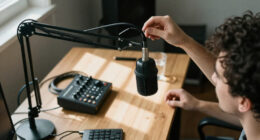
The best overall wireless lavalier microphone system in this lineup is the DJI Mic 3, a strong fit for two-person recording with a compact receiver and charging case. The RØDE Wireless PRO stands out for creators who need timecode and a more production-focused feature set, while the Hollyland Lark M2 offers a flexible receiver bundle for different recording setups. The main tradeoffs are portability versus multi-mic capacity, plug-and-play simplicity versus more control, and compact creator kits versus UHF systems built for presentations and events. Compatibility also matters: a kit that connects neatly to a phone may not suit a camera or venue sound system. Read on for the full breakdown and help matching a system to your recording needs.

Get audio and creator gear delivered free with Prime
- Fast, free delivery on millions of items
- Prime Video, Amazon Music and more included
- Member-only deals all year
Complete the kit

Key Takeaways
- The DJI Mic 3 is the strongest all-round choice for a compact two-person creator setup, while the RØDE Wireless PRO is the more production-oriented pick for workflows that use timecode.
- Receiver choice can matter as much as the transmitters. The Hollyland Lark M2 bundle lists three receiver types, while the DJI Mic Mini mobile-receiver kit is aimed at phone recording.
- These 15 options serve two different jobs: compact camera-and-phone kits for creators, and UHF systems with bodypacks, headset mics, or several channels for presentations and events.
- Two-person kits are not interchangeable with multi-speaker systems. Several compact kits include two transmitters, but the MELONARE MWM-41-4B is the lineup’s four-channel option.
- Bundle contents change the buying decision. Some RØDE Wireless PRO listings include lavalier microphones, while the standard kit centers on its transmitters, receiver, charging case, and timecode features.
| MELONARE MWM-41-4B 4-Channel UHF Wireless Microphone System |  | Best for Four-Person Presentations | Channels: 4 | Wireless connection: UHF digital | Audio sampling: 24-bit/48 kHz | VIEW LATEST PRICE | See Our Full Breakdown |
| Phenyx Pro PTU-71-2B Dual UHF Wireless Microphone System with Headset and Lavalier Mics |  | Best for Flexible Two-Person UHF Setups | Channels: 2 | Wireless connection: UHF | Frequency range: Channel 1: 536.57–561.32 MHz; Channel 2: 562.37–587.12 MHz | VIEW LATEST PRICE | See Our Full Breakdown |
| RØDE Wireless PRO Wireless Microphone System with 2 Transmitters, 1 Receiver, Charging Case, and Timecode |  | Best for Production Workflows and Audio Backup | Channels: 2 | Wireless range: 260 m line of sight | Onboard recording: 32-bit float | VIEW LATEST PRICE | See Our Full Breakdown |
| Mini Mic Pro Wireless Lavalier Microphone for iPhone and Android | 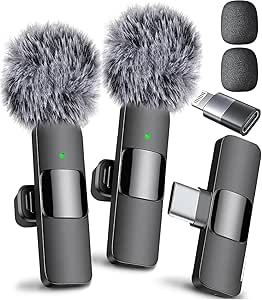 | Best for Simple Phone Recording | Channels: 1 | Microphone type: Mini lavalier | Polar pattern: Omnidirectional | VIEW LATEST PRICE | See Our Full Breakdown |
| DJI Mic Mini Wireless Microphone Kit (2 Transmitters, Receiver, Charging Case) | 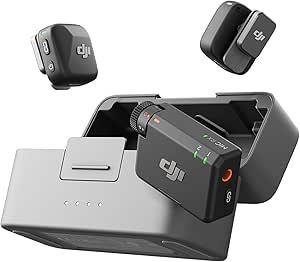 | Best Compact Kit for Long Recording Days | Included system: 2 transmitters, 1 receiver, and charging case | Transmitter weight: 10 g | Sampling rate: 48 kHz | VIEW LATEST PRICE | See Our Full Breakdown |
| Phenyx Pro PDP-1-1B Digital Wireless Headset and Lavalier Microphone System |  | Best for Presenters and Small Venues | Frequency range: 902–928 MHz | Selectable frequencies: 15 | Frequency response: 110 Hz–18 kHz | VIEW LATEST PRICE | See Our Full Breakdown |
| DJI Mic 3 Wireless Microphone Kit (2 Transmitters, 1 Receiver, Charging Case) |  | Best for Flexible Two-Person Recording | Transmitters and receiver: 2 transmitters, 1 receiver | Maximum audio channels: 4 | Internal recording: Dual-file 32-bit float | VIEW LATEST PRICE | See Our Full Breakdown |
| RØDE Wireless PRO 2-Person Wireless Microphone System with Lavalier Microphones and Cleaner |  | Best for Production Workflows | Wireless frequency: 2.4 GHz | Channels: 2 | Backup recording: 32-bit float | VIEW LATEST PRICE | See Our Full Breakdown |
| TONOR UHF Wireless Microphone System with Bodypack, Lavalier, and Headset Mics |  | Best for PA-System Value | Wireless type: UHF | Range: Up to 200 ft line of sight | Frequency options: 15 per bodypack | VIEW LATEST PRICE | See Our Full Breakdown |
| Hollyland Lark M2 Wireless Lavalier Microphone System (2 Transmitters, 3 Receivers, Charging Case) |  | Best Compact Multi-Device Kit | Connectivity: 2.4 GHz | Audio format: 48 kHz / 24-bit | Transmission range: Up to 300 m (1,000 ft) line of sight | VIEW LATEST PRICE | See Our Full Breakdown |
| DJI Mic Mini Wireless Microphone Kit (2 Transmitters + Mobile Receiver) |  | Best Compact Phone Kit | Included components: Two transmitters, one mobile receiver, and accessories | Transmitter weight: 10 g | Maximum transmission range: Up to 300 m | VIEW LATEST PRICE | See Our Full Breakdown |
| TONOR Wireless Microphone System with Handheld, Headset, and Lavalier Mics |  | Best Multi-Format PA Kit | Model: TW362 (model number TW360) | Connectivity: UHF wireless | Operating range: Up to 200 ft (60 m) | VIEW LATEST PRICE | See Our Full Breakdown |
| Hollyland LARK A2 Wireless Microphone System (2 Transmitters, 1 Receiver, Charging Case) |  | Best for Long Shoot Days | System configuration: Two transmitters, one receiver, and charging case | Connectivity: 2.4 GHz wireless | Audio resolution: 48 kHz/24-bit | VIEW LATEST PRICE | See Our Full Breakdown |
| Phenyx Pro PTU-52-2B Dual-Channel UHF Wireless Microphone System with Headset and Lapel Mics |  | Best for Installed Audio Setups | Channels: 2 | Frequency range: 500–590 MHz | Tunable frequency groups: 30 | VIEW LATEST PRICE | See Our Full Breakdown |
| DJI Mic 2 Wireless Microphone Kit (2 Transmitters, 1 Receiver, Charging Case) |  | Best for Recording Safety | Included components: Two transmitters, one receiver, and charging case | Internal storage: 8 GB per transmitter | Internal recording: Up to 14 hours per transmitter | VIEW LATEST PRICE | See Our Full Breakdown |
More Details on Our Top Picks
MELONARE MWM-41-4B 4-Channel UHF Wireless Microphone System
For a panel, class, or event with several speakers, the MELONARE MWM-41-4B supplies four bodypacks and matching headset/lavalier combos in one system. That four-channel capacity is the key distinction from the Phenyx Pro PTU-71-2B, which covers two speakers but offers longer stated line-of-sight range and setup aids such as Auto Scan. MELONARE instead provides frequency hopping and four groups of selectable frequencies to help manage interference, while color-coded packs make it easier to keep speakers on the right channel. Its compact receiver and included batteries help simplify event setup, but four bodypacks also mean more batteries to track. The 6.35 mm output may need an adapter for other gear, so check your mixer or speaker inputs before choosing it.
Pros:- Four bodypack transmitters support up to four speakers at once.
- Each bodypack has headset and lavalier microphone options for different wearing preferences.
- Frequency hopping and multiple frequency groups offer tools for managing interference.
- Color-coded bodypacks make channel assignment easier during group events.
Cons:- Four transmitters require eight AA batteries, adding battery tracking and replacement needs.
- The receiver uses a 6.35 mm jack, which may require an adapter for some equipment.
- Its stated range is shorter than the Phenyx Pro PTU-71-2B’s line-of-sight range.
Best for: Event organizers, teachers, and panel hosts who need four people to speak hands-free through one receiver.
Not ideal for: Solo creators or two-person interviewers who want a smaller kit, and buyers whose audio equipment lacks a compatible 6.35 mm input.
- Channels:4
- Wireless connection:UHF digital
- Audio sampling:24-bit/48 kHz
- Stated range:Up to 200 ft
- Frequency groups:4 groups of 10 frequencies
- Microphone types:Headset and lavalier
- Receiver connector:6.35 mm jack
- Included transmitter batteries:8 AA batteries
Our verdict“Choose the MELONARE when four hands-free speaker channels matter more than long-range coverage or a streamlined two-person kit.”
Phenyx Pro PTU-71-2B Dual UHF Wireless Microphone System with Headset and Lavalier Mics
The Phenyx Pro PTU-71-2B suits two-person speaking setups where dependable channel selection matters as much as microphone choice. Its receiver’s Auto Scan, IR synchronization, and frequency lock reduce setup friction and help prevent settings from changing accidentally; the MELONARE MWM-41-4B serves more speakers, but its four-channel design is a larger fit for a simple interview. This Phenyx kit includes both headset and lavalier mics for each bodypack, making it easier to adapt between a presentation and a less visible mic placement. Its stated 290–328 ft line-of-sight range is a strong fit for larger rooms, though real obstacles can reduce usable distance. The system still needs close mic placement for clear pickup, and four AA batteries power the two transmitters.
Pros:- Auto Scan, IR synchronization, and frequency lock make setup and channel management more straightforward.
- Includes both headset and lavalier microphones for each of the two bodypacks.
- Stated line-of-sight range reaches up to 328 ft.
- Supports up to 16 transmitters operating simultaneously.
Cons:- Microphones need close placement, about 1–2 inches from the mouth, for the recommended sound capture.
- Two bodypacks require four AA batteries.
- Its two-channel capacity is less suited to larger panels than the four-channel MELONARE MWM-41-4B.
Best for: Presenters, instructors, and two-person event teams who want UHF bodypacks with both headset and lavalier options.
Not ideal for: Mobile creators seeking a compact phone-first kit, or groups needing more than two wireless microphone channels.
- Channels:2
- Wireless connection:UHF
- Frequency range:Channel 1: 536.57–561.32 MHz; Channel 2: 562.37–587.12 MHz
- Stated operating range:290–328 ft line of sight
- Microphone types:Lavalier and headset
- Signal-to-noise ratio:98 dB
- Transmitter connector:3-pin mini XLR
- Included transmitter batteries:4 AA batteries
Our verdict“Pick this Phenyx system for two speakers who want guided UHF setup and a choice between headset and lavalier mics.”
RØDE Wireless PRO Wireless Microphone System with 2 Transmitters, 1 Receiver, Charging Case, and Timecode
The RØDE Wireless PRO is the production-focused choice in this group: its two transmitters record 32-bit float audio on board, giving creators a backup track that can help recover recordings with uneven levels. Built-in timecode also supports synchronization across multi-camera work, features the simpler Mini Mic Pro does not target. The package adds two Lavalier II microphones, a charging case, windshields, and connection options for cameras, phones, and computers, so it can serve a more involved recording setup without relying on a single device connection. That flexibility comes with a more technical workflow than a plug-in phone mic, and its long stated range applies to line of sight. The receiver and transmitters use different 3.5 mm connector types, so check cable compatibility when planning a camera rig.
Pros:- 32-bit float onboard recording provides a separate audio backup on the transmitters.
- Timecode supports synchronization for multi-camera production workflows.
- Includes two Lavalier II microphones, a charging case, cables, and furry windshields.
- Supports connections with cameras, USB-C phones, and computers.
Cons:- The stated 260 m wireless range is line of sight and may be reduced by obstacles.
- The receiver and transmitters use different 3.5 mm connector types.
- Its production features bring more setup complexity than the phone-focused Mini Mic Pro.
Best for: Video professionals and serious creators recording interviews or multi-camera shoots who need onboard backup audio and timecode.
Not ideal for: Casual phone users seeking the simplest clip-on setup, or buyers who do not need timecode and onboard recording features.
- Channels:2
- Wireless range:260 m line of sight
- Onboard recording:32-bit float
- Microphone polar pattern:Omnidirectional
- Frequency response:20 Hz–20 kHz
- Connections:USB-C, 3.5 mm TRS transmitter, 3.5 mm TRRS receiver
- Included microphones:2 Lavalier II microphones
- Included power case:Charging case
Our verdict“Choose the RØDE Wireless PRO when timecode and recoverable onboard recordings are more valuable than a minimal phone-mic workflow.”
Mini Mic Pro Wireless Lavalier Microphone for iPhone and Android
The Mini Mic Pro is the most direct option here for recording straight to a phone or tablet: its included USB-C and Lightning adapters avoid the receiver-to-camera cabling typical of the RØDE Wireless PRO. There is no app or Bluetooth setup, which makes it a practical pick for quick interviews, social clips, and lightweight field recording. The kit includes two lavalier microphones and foam and deadcat covers, giving users useful mic and wind-protection options without adding much bulk. Compared with the DJI Mic Mini, however, the listed battery life is shorter at up to six hours, and this kit is oriented around compatible mobile devices rather than a more flexible camera receiver setup. Check connector compatibility before buying; its simple workflow is the strength, but it is not a multi-channel UHF system for larger events.
Pros:- USB-C and Lightning adapters support compatible Android and Apple devices.
- No app or Bluetooth setup is required.
- Includes two lavalier microphones with foam and deadcat wind covers.
- The connected device can be charged while recording.
Cons:- Battery life is listed at up to six hours per charge.
- Its phone-oriented connection approach is less suited to multi-channel event sound than the MELONARE MWM-41-4B.
- Compatibility depends on having a supported device and connector.
Best for: Phone-first creators, students, and interviewers who want a lightweight lavalier kit with both USB-C and Lightning connections.
Not ideal for: Event sound operators needing multiple UHF channels, or creators who record beyond six hours without access to charging.
- Channels:1
- Microphone type:Mini lavalier
- Polar pattern:Omnidirectional
- Connectors:Lightning and USB Type-C
- Battery life:Up to 6 hours per charge
- Included microphones:2 lavalier microphones
- Included wind protection:Foam tips and deadcat tips
- Compatible devices:Android, iPhone, iPad, smartphone, tablet, and laptop
Our verdict“Choose the Mini Mic Pro for straightforward phone recording, but pick a UHF system or the DJI Mic Mini for different workflows and longer stated battery support.”
DJI Mic Mini Wireless Microphone Kit (2 Transmitters, Receiver, Charging Case)
For creators who want a small two-person wireless kit without stepping up to the production controls of the RØDE Wireless PRO, the DJI Mic Mini keeps the setup focused on everyday interviews, livestreams, and content creation. Its 10 g transmitters are designed to stay discreet, while the charging case supports up to 48 hours of battery life across use and recharging. Two noise-cancellation levels and automatic limiting offer practical help in changing environments: one setting can suit quieter rooms, while the stronger mode targets noisier surroundings, and limiting helps guard against sudden peaks. The stated 400 m range is a line-of-sight maximum, not a guarantee in obstructed spaces. Unlike the Mini Mic Pro, this kit includes a receiver and charging case, but it is not waterproof, and direct OsmoAudio use is limited to compatible devices.
Pros:- Lightweight 10 g transmitters are designed for discreet wear.
- Charging case supports up to 48 hours of battery life.
- Two noise-cancellation levels suit different recording environments.
- Automatic audio limiting helps reduce clipping from sudden loud sounds.
Cons:- The kit is not waterproof.
- The 400 m maximum transmission range is a stated maximum, not a promise for obstructed locations.
- OsmoAudio connection without a receiver is limited to compatible devices.
Best for: Mobile creators and interviewers who want discreet transmitters, a receiver-and-case kit, and extended battery support for long recording days.
Not ideal for: Outdoor users who need waterproof equipment, or buyers who need RØDE Wireless PRO-style timecode and 32-bit float onboard backup.
- Included system:2 transmitters, 1 receiver, and charging case
- Transmitter weight:10 g
- Sampling rate:48 kHz
- Maximum transmission range:400 m
- Battery life with case:Up to 48 hours
- Noise cancellation:Basic and Strong levels
- Maximum sound pressure level:120 dB SPL
- Water resistance:Not waterproof
Our verdict“Pick the DJI Mic Mini for a compact two-person kit with substantial case-supported battery life, not for waterproof use or advanced production safeguards.”
Phenyx Pro PDP-1-1B Digital Wireless Headset and Lavalier Microphone System
The PDP-1-1B is the practical choice when a presenter needs to switch between a headset and a lavalier without changing wireless systems. Its UHF link and 15 selectable frequencies offer a straightforward way to adjust if a channel is occupied, while USB-C charging keeps the receiver and bodypack convenient to recharge. Compared with the TONOR UHF system, this Phenyx Pro charges both pieces by USB-C rather than relying on AA batteries for its bodypack. It is better suited to a PA, mixer, or other compatible audio input than to direct phone or camera recording: the receiver uses a 6.35 mm TS connector, so some setups need an adapter. The stated 160–200-foot range is line of sight, not a promise through walls or crowded rooms.
Pros:- Includes both headset and lavalier microphones for different speaking situations.
- 15 selectable frequencies and one-touch tuning support channel changes.
- USB-C charging for both receiver and bodypack transmitter.
- Metal construction and compact receiver suit portable PA setups.
Cons:- The 6.35 mm TS receiver output may require an adapter for some equipment.
- The stated range depends on line of sight and can be reduced by obstacles or nearby metal and glass.
Best for: Presenters, officiants, and small-venue speakers who want headset and lavalier options with rechargeable UHF gear.
Not ideal for: Phone-first creators or camera operators who need a direct USB connection and do not want to manage a 6.35 mm output adapter.
- Frequency range:902–928 MHz
- Selectable frequencies:15
- Frequency response:110 Hz–18 kHz
- Signal-to-noise ratio:96 dB
- Stated range:160–200 ft line of sight
- Charging:USB-C
- Receiver battery:1500 mAh
- Included microphones:Headset and lavalier
Our verdict“Choose this Phenyx Pro when you need rechargeable UHF headset-and-lavalier flexibility for a compatible PA or mixer.”
DJI Mic 3 Wireless Microphone Kit (2 Transmitters, 1 Receiver, Charging Case)
The DJI Mic 3 suits creators who want two-person recording with room to expand. Its kit includes two transmitters, and the system supports up to four transmitters and four-channel output, giving it more growth potential than the two-channel Hollyland Lark M2. 32-bit float internal recording can preserve a backup when a speaker suddenly gets louder or quieter, while adaptive gain control and adjustable noise cancellation help manage changing recording conditions. The charging case supports an advertised up to 28 hours of use across the kit. That flexibility comes with some setup boundaries: compatibility is listed for cameras, smartphones, and supported OsmoAudio devices, and connecting to Osmo Mobile series products requires the first-generation DJI OM Multifunctional Module. Solo creators may also carry a second transmitter they rarely need.
Pros:- Two transmitters support recording two speakers at once.
- System supports up to four transmitters and four-channel output.
- 32-bit float internal recording provides a backup against level changes.
- Adaptive gain control, adjustable noise cancellation, and charging case support mobile workflows.
Cons:- The two-transmitter kit may be more equipment than solo recording requires.
- Osmo Mobile series connection requires the first-generation DJI OM Multifunctional Module.
Best for: Interviewers, small podcast teams, and mobile creators who record two people now and may add transmitters later.
Not ideal for: Solo creators seeking the smallest, simplest kit, or Osmo Mobile users without the required first-generation Multifunctional Module.
- Transmitters and receiver:2 transmitters, 1 receiver
- Maximum audio channels:4
- Internal recording:Dual-file 32-bit float
- Battery life:Up to 28 hours
- Connectors:3.5 mm jack, USB Type-C
- Connectivity:Bluetooth, Wi-Fi
- Compatible devices:Cameras, smartphones, supported OsmoAudio devices
- Weight:221.2 g
Our verdict“Pick the DJI Mic 3 if you need two-person capture, onboard safety recordings, and a path to a larger wireless setup.”
RØDE Wireless PRO 2-Person Wireless Microphone System with Lavalier Microphones and Cleaner
The RØDE Wireless PRO is aimed at two-person shoots where reliable post-production matters as much as the wireless link. Each transmitter has 32 GB of storage for 32-bit float backup recording, and timecode support plus GainAssist can reduce syncing and input-level work later. Unlike the DJI Mic 3, this kit includes two Lavalier II microphones, making it ready for discreet mic placement without buying lavs separately. The tradeoff is a more involved setup: each lav connects to its transmitter through a locking 3.5 mm jack, so the transmitters still need to be placed and managed on the speakers. Its 2.4 GHz transmission can also face interference in busy wireless environments. I’d choose it over the simpler TONOR UHF system for camera, smartphone, or computer production—not for a basic PA presentation.
Pros:- Two Lavalier II microphones are included for discreet placement.
- 32-bit float backup recording with 32 GB of internal storage per transmitter.
- Timecode support and GainAssist can streamline syncing and level management.
- Works with cameras, smartphones, and computers, with charging case and mounting accessories included.
Cons:- The 2.4 GHz link may encounter interference in congested wireless environments.
- Lavalier microphones connect to the transmitters by cable, adding setup and placement considerations.
Best for: Video crews, interview producers, and podcasters who record two speakers and value timecode and onboard backup files.
Not ideal for: Speakers who need a plug-and-play PA microphone system or buyers who want to avoid managing separate transmitters and lav cables.
- Wireless frequency:2.4 GHz
- Channels:2
- Backup recording:32-bit float
- Internal storage:32 GB per transmitter
- Backup recording time:Up to 40 hours
- Transmission encryption:128-bit
- Included microphones:2 Lavalier II microphones
- Compatible devices:Cameras, smartphones, and computers
Our verdict“Choose the RØDE Wireless PRO for two-person production where lavalier accessories, timecode, and onboard backups justify a more involved setup.”
TONOR UHF Wireless Microphone System with Bodypack, Lavalier, and Headset Mics
The TONOR is a straightforward fit for a speaker, mixer, or amplifier setup that needs both headset and lavalier options. Its UHF system offers five channels and 15 frequency options per bodypack, while the stated 200-foot range applies only with a clear line of sight. Compared with the Phenyx Pro PDP-1-1B, the TONOR’s receiver is rechargeable but its bodypack uses two AA batteries, which are not included; the Phenyx instead charges both by USB-C. The TONOR’s main limitation is compatibility: its 6.35 mm output is intended for suitable audio equipment, not direct Bluetooth, TV, or soundbar use, and it cannot operate as a standalone speaker. That makes it a sensible presentation-oriented choice, but a poor match for creators recording straight to a phone or camera.
Pros:- Includes both lavalier and headset microphones.
- 15 frequency options per bodypack allow channel changes.
- Rechargeable receiver provides a stated 6–8 hours of use.
- Metal enclosure and up to 200-foot line-of-sight range suit portable PA use.
Cons:- Bodypack requires two AA batteries, which are not included.
- Requires a compatible speaker, mixer, or amplifier and does not support Bluetooth.
- The 6.35 mm output may need an adapter for other input types.
Best for: Teachers, presenters, and event hosts who already have a compatible PA, mixer, or amplifier and want two mic styles.
Not ideal for: Phone and camera creators, or buyers without an audio system that accepts a 6.35 mm microphone input.
- Wireless type:UHF
- Range:Up to 200 ft line of sight
- Frequency options:15 per bodypack
- Number of channels:5
- Receiver battery life:6–8 hours
- Bodypack power:2 AA batteries, not included
- Connector:6.35 mm (1/4-inch) jack
- Compatible devices:Amplifier, speaker, PA system, mixer
Our verdict“Choose the TONOR for a PA-based presentation setup if you are comfortable supplying AA batteries for the bodypack.”
Hollyland Lark M2 Wireless Lavalier Microphone System (2 Transmitters, 3 Receivers, Charging Case)
The Hollyland Lark M2 stands out for creators who move between a camera, phone, and computer and want a lightweight two-person kit. Each microphone weighs just 9 g, and the package includes three receiver types to suit different connections, making it more adaptable across devices than the PA-focused TONOR. Its 48 kHz/24-bit audio, one-touch noise cancellation, and charging case support quick recording on the go; total battery life is stated at up to 40 hours with the case. The long transmission figure—up to 300 m—is a line-of-sight maximum, not a guarantee in obstructed locations. There is also a connection-specific limitation: mono and stereo switching is supported only when the camera receiver uses the 3.5 mm jack. Compared with the RØDE Wireless PRO, it prioritizes low weight and simple mobile compatibility over onboard 32-bit float backup recording and timecode.
Pros:- Very light 9 g microphones suit discreet, on-the-go recording.
- Package includes two transmitters and three receiver options.
- 48 kHz/24-bit audio and one-touch noise cancellation support mobile capture.
- Charging case provides up to 40 hours of stated total battery life.
Cons:- The 300 m range is a line-of-sight maximum and may be reduced by obstacles.
- Mono and stereo switching is supported only with the camera receiver connected through 3.5 mm.
- Does not list the internal 32-bit float backup recording and timecode features offered by the RØDE Wireless PRO.
Best for: Traveling interviewers and mobile video creators who want tiny transmitters and receiver options for cameras, phones, and computers.
Not ideal for: Production teams that need timecode or onboard 32-bit float safety recordings, or users who rely on mono/stereo switching through a phone receiver.
- Connectivity:2.4 GHz
- Audio format:48 kHz / 24-bit
- Transmission range:Up to 300 m (1,000 ft) line of sight
- Microphone weight:9 g per microphone
- Battery life:Up to 10 hours per charge; up to 40 hours with charging case
- Package configuration:2 transmitters, 3 receivers, charging case
- Frequency response:20 Hz–20 kHz
- Compatible devices:Camera, PC, Mac, tablet, iPad, iPhone, Android smartphones
Our verdict“Pick the Lark M2 for a compact, multi-device two-person kit when portability matters more than timecode or onboard backup recording.”
DJI Mic Mini Wireless Microphone Kit (2 Transmitters + Mobile Receiver)
For creators who want two-person recording without bulky transmitters, the DJI Mic Mini pairs 10 g transmitters with a mobile receiver, making it a more discreet wear option than the DJI Mic 2 kit. Its 300 m stated range and up to 11.5 hours of operation suit interviews, livestreams, and longer shoots where a phone is the main recorder. Two noise-cancellation levels let you choose between lighter processing in quiet rooms and stronger suppression in noisier surroundings; automatic limiting can help tame sudden peaks. The tradeoff is a leaner recording feature set than the Mic 2’s 32-bit float internal recording. It also is not waterproof, and connection to Osmo Mobile series devices requires the first-generation DJI OM Multifunctional Module.
Pros:- Two 10 g transmitters are designed for discreet, comfortable wear.
- Two noise-cancellation levels suit different recording environments.
- Automatic limiting helps reduce clipping from sudden loud sounds.
- Works with phones, computers, tablets, and supported OsmoAudio devices.
Cons:- Not waterproof, limiting use in wet or splash-prone settings.
- Osmo Mobile series connection requires the first-generation DJI OM Multifunctional Module.
- Does not offer the 32-bit float internal recording listed for the DJI Mic 2.
Best for: Phone-first creators recording interviews or livestreams who want two very lightweight transmitters and a mobile receiver.
Not ideal for: Creators who need onboard backup recording, waterproofing, or a direct connection to Osmo Mobile devices without the specified multifunctional module.
- Included components:Two transmitters, one mobile receiver, and accessories
- Transmitter weight:10 g
- Maximum transmission range:Up to 300 m
- Maximum operating time:Up to 11.5 hours
- Noise cancellation:Basic and Strong levels
- Audio format with supported OsmoAudio devices:48 kHz, 24-bit
- Microphone type and pattern:Lavalier; omnidirectional
- Water resistance:Not waterproof
Our verdict“Choose this kit for lightweight, two-person mobile recording, but pick the DJI Mic 2 if onboard backup recording matters more than compact wear.”
TONOR Wireless Microphone System with Handheld, Headset, and Lavalier Mics
The TONOR TW362 is the lineup’s flexible choice for venues that need more than clip-on lavaliers: it supplies two handheld mics alongside bodypacks, headsets, and lavalier microphones. That makes it more adaptable for karaoke, presentations, or events with speakers who prefer different mic styles than the Phenyx Pro PTU-52-2B, which focuses on two bodypack channels with headset and lapel options. TONOR’s automatic pairing and stated 200 ft range simplify setup for compatible mixers, amplifiers, powered speakers, and karaoke machines. The compromise is that each handheld or bodypack needs two AA batteries, which are not included. Its included cable terminates in 6.35 mm, so buyers connecting to other inputs may need an adapter or different cable.
Pros:- Includes two handheld microphones plus headset and lavalier options.
- Automatic pairing helps make setup more straightforward.
- Stated operating range reaches up to 200 ft (60 m).
- Compatible with mixers, karaoke machines, amplifiers, and powered speakers.
Cons:- AA batteries are required for microphones and bodypacks, and are not included.
- The included audio cable uses a 6.35 mm connector, which may not fit a buyer’s intended input.
- Its PA-oriented receiver is less suited to direct mobile-device recording than compact camera or phone kits.
Best for: Karaoke hosts, community venues, and presenters who want to switch between handheld, headset, and lavalier microphones on a compatible sound system.
Not ideal for: Phone-first video creators or buyers seeking a compact camera-ready lavalier kit; this receiver is aimed at PA equipment and uses a 6.35 mm audio cable.
- Model:TW362 (model number TW360)
- Connectivity:UHF wireless
- Operating range:Up to 200 ft (60 m)
- Channels:20
- Microphone types:Handheld, headset, and lavalier
- Signal-to-noise ratio:60 dB
- Battery requirement:Two AA batteries per microphone or bodypack; not included
- Compatible devices:Mixer, karaoke machine, amplifier, and powered speaker
Our verdict“Pick TONOR when a PA setup needs handheld and wearable mic choices, but skip it for a streamlined phone-recording workflow.”
Hollyland LARK A2 Wireless Microphone System (2 Transmitters, 1 Receiver, Charging Case)
The LARK A2 suits creators who want a compact two-transmitter setup with a charging case that stretches total use to up to 42 hours. Its transmitters weigh 8.5 g, lighter than the 10 g units in the DJI Mic Mini, while the 48 kHz/24-bit recording, adjustable AI noise cancellation, and auto-limit safety track offer more control over difficult voices and sudden loud sounds. The case is the practical advantage for multi-session days: each transmitter is rated for up to seven hours on its own, or up to nine with AI Power Saving. That standalone limit is shorter than the DJI Mic Mini’s stated 11.5 hours, so extended recording depends on returning transmitters to the case. Its 2.4 GHz wireless link also makes range dependent on the recording environment.
Pros:- 8.5 g transmitters are exceptionally light for discreet wear.
- Charging case supports up to 42 hours of total battery life.
- Adjustable AI noise cancellation offers three levels.
- Auto-Limit and a -6 dB safety track help manage sudden loud sounds.
Cons:- Each transmitter is rated for up to seven hours without AI Power Saving.
- The wireless link uses 2.4 GHz connectivity.
- Long total runtime depends on recharging transmitters in the case between sessions.
Best for: Mobile journalists and video creators who record in multiple sessions and can recharge transmitters between takes.
Not ideal for: People recording continuously beyond a transmitter’s stated battery life without access to the charging case, or buyers who need a different wireless band.
- System configuration:Two transmitters, one receiver, and charging case
- Connectivity:2.4 GHz wireless
- Audio resolution:48 kHz/24-bit
- Wireless range:Up to 200 m (650 ft)
- Transmitter weight:8.5 g
- Transmitter battery life:Up to 7 hours; up to 9 hours with AI Power Saving
- Total battery life with case:Up to 42 hours
- Maximum SPL:120 dB
Our verdict“Choose the LARK A2 for lightweight, stop-and-start shoots where its charging case and audio safeguards matter more than uninterrupted transmitter runtime.”
Phenyx Pro PTU-52-2B Dual-Channel UHF Wireless Microphone System with Headset and Lapel Mics
For two speakers working with a mixer or venue sound system, the PTU-52-2B brings dual XLR outputs and a mixed 1/4-inch output—connections the phone-focused Hollyland LARK A2 does not target. Each of its two bodypacks can be used with either a headset or lapel microphone, giving presenters a choice between hands-free speech and a less visible clip-on mic. The 30 tunable frequency groups, frequency hopping, and automatic pairing give it more tools for managing wireless coordination than a basic fixed-channel setup. Its stated 200-foot range applies to open line of sight, not every room or venue. This is also a comparatively substantial receiver-based system, and its 500–590 MHz operating range may not suit every location or use case.
Pros:- Two bodypacks each support headset and lapel microphones.
- Thirty tunable frequency groups and frequency hopping offer channel-management options.
- Receiver provides two XLR outputs and one mixed 1/4-inch output.
- Automatic pairing and bodypack mute buttons support practical event operation.
Cons:- The stated 200-foot range is for open line-of-sight conditions.
- Operation is within the 500–590 MHz frequency range, which may not suit every location.
- The receiver-based setup is less portable and less direct for phone recording than the Hollyland LARK A2.
Best for: Presenters, houses of worship, and small venues that need two wearable mic channels with direct XLR or 1/4-inch connections to audio equipment.
Not ideal for: Creators recording straight to a phone or camera who want a pocket-sized receiver, or buyers who cannot use the stated 500–590 MHz band in their location.
- Channels:2
- Frequency range:500–590 MHz
- Tunable frequency groups:30
- Operating range:Up to 200 ft in open line of sight
- Outputs:Two XLR outputs; one mixed 1/4-inch output
- Signal-to-noise ratio:90 dB
- Frequency response:40 Hz–15 kHz
- Power source:Four AA batteries, included
Our verdict“Choose the PTU-52-2B for two-person speech through venue audio equipment, not for a compact mobile-content setup.”
DJI Mic 2 Wireless Microphone Kit (2 Transmitters, 1 Receiver, Charging Case)
The DJI Mic 2 is the strongest fit here for creators who want a backup beyond the wireless link: each transmitter has 8 GB of internal storage and can record for up to 14 hours, while 32-bit float recording helps preserve usable audio when levels vary sharply. That makes it a more safety-focused choice than the DJI Mic Mini, whose listed strengths center on lightweight transmitters, noise-cancellation levels, and automatic limiting. Two transmitters support interviews, and the charging case helps keep the kit together for travel. The stated range reaches up to 250 m under FCC conditions, but real environments can reduce it. There is also a notable phone-use limitation: noise cancellation and internal recording are unavailable when a transmitter is connected to a smartphone via Bluetooth.
Pros:- 32-bit float internal recording helps preserve audio across changing levels.
- Each transmitter includes 8 GB of internal storage.
- Two transmitters support recording multiple speakers.
- Intelligent noise cancellation can help clarify vocals.
Cons:- Noise cancellation and internal recording are unavailable when a transmitter is connected to a smartphone via Bluetooth.
- The maximum wireless range is measured under unobstructed conditions and can vary by environment.
- The extra backup-recording features may be unnecessary for simple mobile recording compared with the DJI Mic Mini.
Best for: Interviewers and video creators who want two-speaker capture with onboard backup recording to protect against wireless dropouts or recording-level surprises.
Not ideal for: Phone users who plan to connect transmitters via Bluetooth while relying on noise cancellation or internal recording, or buyers who do not need onboard backup features.
- Included components:Two transmitters, one receiver, and charging case
- Internal storage:8 GB per transmitter
- Internal recording:Up to 14 hours per transmitter
- Audio recording:32-bit float internal recording
- Wireless range:Up to 250 m under FCC conditions; 160 m under CE conditions
- Operating time:Up to 18 hours
- Connector:USB Type-C
- Compatibility:USB-C and Lightning adapters; direct OsmoAudio connection to select DJI devices
Our verdict“Pick the DJI Mic 2 when onboard recording and level protection are priorities, but check the Bluetooth limitations before planning a phone-based workflow.”
How We Picked
I compared these wireless lavalier microphone systems by the problems buyers need them to solve: how many people they can record, which devices and audio workflows they support, how much setup they demand, and whether their included accessories fit the intended use. I also separated compact creator kits from UHF bodypack systems, since a phone-friendly receiver and a multi-channel event setup answer different needs. Product names and bundle contents were treated as part of the comparison, not as proof that every package includes the same cables or microphones.
The ranking favors systems with a clear role, useful recording flexibility, and a reasonable balance of capability and day-to-day simplicity. The DJI Mic 3 leads as a broadly capable two-person kit; RØDE Wireless PRO ranks higher for advanced production needs; and compact options such as the DJI Mic Mini and Hollyland Lark M2 make more sense when portability and straightforward setup matter most. UHF models earn their place for headset, lavalier, and multi-channel use, but they rank lower for general creator use because they are less directly aimed at pocketable phone-and-camera recording. Buyers should verify exact connector, receiver, and accessory compatibility before choosing.
Factors to Consider When Choosing Wireless Lavalier Microphone Systems
Before picking a model, I would match the system to the recording environment and the device that will capture the sound. A lavalier kit for a solo phone video has different priorities from a two-person camera interview or a presentation feeding a venue sound system. These factors help distinguish options that can look similar by name but behave differently in a real setup.
Match the receiver to your recording device
Start with the device that will record, then check how the receiver connects to it. A phone-oriented receiver can make mobile recording simpler, while a camera setup may need a receiver connection suited to the camera’s audio input. Do not assume a kit’s charging case or included adapters cover every phone, tablet, or camera generation. Check whether your device needs a particular connector, adapter, or app, and whether the kit can monitor or route audio as you expect. A system with more connection options can be useful across devices, but only if those options fit your gear. If you record on both a phone and a camera, compare the exact receiver bundle rather than relying on the product family name.
Choose the right number and type of microphones
Count the people you need to record at the same time, not just the transmitters included in a package. Two transmitters suit many interviews, but they do not replace a multi-channel system when several presenters need separate microphones. A bodypack paired with a lavalier or headset can keep hands free during a talk, while a clip-on transmitter is often simpler for casual creator videos. For group discussions, think about how each voice will be captured and mixed, not only the maximum channel count. A larger system may add setup and coordination work that a solo creator does not need. Choose extra channels only when your actual recording plan can use them.
Decide how much control your workflow needs
Some buyers want a quick connection and minimal setup; others need production tools that fit a more involved recording process. Features such as timecode can help coordinate audio and video in workflows that already rely on synchronized recording, but they may add little value to a simple social video. Consider who will configure the system and whether they will use its advanced controls regularly. A less feature-heavy kit can be easier to hand to a new user or set up on location. Advanced functions are most useful when they solve a recurring production problem, rather than when they merely appear on a specification list. Match the control level to the work you actually make.
Account for the recording environment
A small creator kit and a UHF presentation system are designed around different recording conditions. For a camera interview or mobile video, compact transmitters and a portable receiver may be the simpler fit. For a venue, classroom, or speaking event, bodypacks, headset microphones, and channel planning can be more relevant than a pocketable charging case. Think about nearby wireless equipment, the distance between speakers and receiver, and whether the receiver will connect to a camera or an audio system. A system’s listed channel count does not remove the need to plan for the room and other wireless devices. If the setup is shared or used by multiple speakers, favor a system whose controls and microphone types fit that routine.
Compare the full bundle, not just the model name
Product families often have several packages that differ in receivers, cables, microphones, and charging accessories. The DJI Mic Mini listings here illustrate why the exact kit matters: one package is described with a receiver and case, while another specifies a mobile receiver. The two RØDE Wireless PRO listings also differ in whether lavalier microphones are included. A bundle with the right accessories can reduce extra setup purchases, while an expanded package may include items your workflow never uses. Check the listing for the exact transmitter count, receiver type, and included microphone style. Verify those details before assuming two similarly named kits are equivalent.
Frequently Asked Questions
Can I use one of these systems with both a phone and a camera?
Possibly, but compatibility depends on the receiver and the connectors included in the exact kit. Some bundles are framed around mobile recording, while others are more suited to camera workflows or include a different receiver configuration. Check your phone’s connector, your camera’s audio input, and whether any needed adapter is part of the package. If you switch devices often, choose based on the receiver options rather than transmitter appearance. Test the complete connection path before an important recording, including the recording app or camera input settings.
Is a two-transmitter kit enough for a panel or group interview?
A two-transmitter kit is a natural match for a host and one guest, but it may not capture a larger group cleanly. You could pass one microphone between speakers, though that changes the pace and sound level of a discussion. For several people speaking at once, look at channel capacity and how each microphone will reach the recording device or mixer. The MELONARE four-channel system and the UHF options in this roundup address a different scale of use than compact two-person creator kits. Choose around the number of simultaneous voices, not the total number of people attending.
Should I choose a UHF bodypack system or a compact creator kit?
Choose based on where the audio needs to go and how the microphone will be worn. UHF bodypack systems with headset and lavalier options suit presentations and other hands-free speaking situations, particularly when the setup is built around a venue or sound system. Compact creator kits are more directly aimed at recording to phones or cameras with less gear to carry. Neither form is automatically better for every room or device. Check the connection path, number of speakers, and microphone style you need before comparing features across these categories.
Do I need timecode for interviews or online videos?
Most simple interviews and online videos do not require timecode; a straightforward audio connection may be enough. Timecode becomes more useful when audio and video are recorded separately and later synchronized as part of a larger production workflow. The RØDE Wireless PRO is the standout option in this roundup for buyers who need that kind of production feature. If you record directly into a phone or camera and edit a small number of clips, timecode may not change your process. Decide whether synchronization is a real recurring task before making it a deciding factor.
What should I verify when two kits share the same product name?
Compare the complete package contents, especially receiver type, cable or adapter choices, included lavalier microphones, transmitter count, and charging case. This matters here because the DJI Mic Mini appears in two receiver configurations, and the RØDE Wireless PRO listings differ in whether lavalier microphones are included. A shared model name does not guarantee identical suitability for a phone, camera, or presentation setup. Confirm the exact listing and match its contents to your devices before ordering. That check can prevent a system from arriving without a connection or microphone accessory you expected.
Conclusion
For most two-person creator setups, I recommend the DJI Mic 3 as the best overall because it pairs a compact kit format with a receiver and charging case. For a production workflow that benefits from timecode, choose the RØDE Wireless PRO; compare the two listings carefully if you also need included lavalier microphones. For beginners focused on mobile recording, the DJI Mic Mini mobile-receiver kit is the clearest starting point, while the Hollyland Lark M2 is a flexible compact option when its listed receiver bundle suits your devices. For hands-free presentations, look to the Phenyx Pro or TONOR UHF systems; for a larger multi-mic setup, the MELONARE four-channel system has the most distinct role. My final advice is to pick by recording device, speaker count, and included receiver—not by model name alone.
Black Friday Picks

De'Longhi Rivelia Fully Automatic Espresso Machine with Milk Frother, Black
As an affiliate, we earn on qualifying purchases.