
TL;DR
A subwoofer can help you hear sub-bass in a small room, but only if your room is well treated and you set it up correctly. Without measurement and proper placement, it might make your bass problems worse and hurt your mixes. Think carefully, measure first, then decide.
Imagine working on a new track, frustrated because your monitors roll off at 50 Hz. You’re tempted to add a subwoofer. But in a tiny room, that decision isn’t as simple as it sounds. Low frequencies behave wildly in small spaces, bouncing, ringing, and creating peaks and nulls that distort your perception.
Knowing whether a sub helps or hurts depends on many factors: your room’s treatment, your monitoring, your genre, and your setup skills. This guide walks you through the real questions — should you add a sub in a small room? How to do it right? And when to hold off.
Measure your room’s bass response before buying a sub—don’t guess.
Proper placement and calibration are critical for a sub to improve, not worsen, your low end.
Room treatment comes first. Bass traps and acoustic panels reduce modal chaos, making sub integration easier.
A DSP-enabled, calibrated subwoofer extends bass and improves translation—worth the investment.
Multiple small subs can tame modal peaks, but for most small rooms, a single well-placed sub is enough.
Why Small Rooms Make Subwoofers a Double-Edged Sword
Small rooms are notorious for low-frequency chaos. When you add a sub, you’re pumping energy into an already tricky environment. Frequencies below 100 Hz bounce around, creating peaks and nulls that can reach ±15 dB. A 40 Hz wave, with a wavelength longer than your room, just amplifies the modal mess.
If your room isn’t treated, this means a sub could make things worse. Instead of smooth bass, you get exaggerated booms or dead spots. Think of it like shouting in a small, tiled bathroom — the sound’s magnified and uneven.
For example, a studio with 8-foot ceilings and a 10×12 foot footprint often traps bass in certain corners, making it nearly impossible to hear the true low end. The room’s natural resonance can turn a sub into a chaotic amplifier of modal problems.

KRK S10.4 S10 Generation 4 10" 160 Watt Powered Studio Subwoofer
10" glass aramid composite woofer
As an affiliate, we earn on qualifying purchases.
As an affiliate, we earn on qualifying purchases.
When a Sub Can Actually Help Your Small Studio
Despite the chaos, a well-integrated sub can give you the low-end detail you need. If your monitors roll off around 50 Hz, you’re missing the deep bass that adds body and power to your mixes. A calibrated sub can extend your bass response, helping you hear and balance frequencies between 20–40 Hz.
For example, a producer working on EDM found that her 5-inch monitors sounded thin below 60 Hz. Adding a DSP-controlled sub, after proper measurement and calibration, allowed her to hear the sub-bass clearly, making her mixes translate better on club systems and in cars.
In this case, the sub relieved her monitors from reproducing the deepest bass, reducing distortion and improving midrange clarity. When set up correctly, a sub becomes a tool, not a problem.

miniDSP UMIK-1 USB Measurement Calibrated Microphone
Unique calibration file for each product with sensitivity (SPL monitoring), Frequency
As an affiliate, we earn on qualifying purchases.
As an affiliate, we earn on qualifying purchases.
The Risks of Adding a Sub Without Proper Setup
Adding a sub without measurement and calibration risks turning your room into a bass nightmare. If the sub is not aligned in phase or crossover, it can cause cancellations or booms. Poor placement, like shoving it into a corner without testing, may boost modal issues instead of smoothing them.
For example, a home studio owner placed his sub in the corner and turned up the volume. Instead of clearer bass, he heard a booming mess that made his mixes sound muddy elsewhere. Without tools like an SPL meter or measurement software, it’s easy to go wrong.
And in apartments, sub frequencies travel through walls, disturbing neighbors. Sometimes, the best move is to focus on room treatment and headphone checks before considering a sub.

8 Pack – Bass Traps Acoustic Foam Corner, 8''x8''x12'' Black Bass Traps Corner Studio Foam, High Density and Fire-Proof Acoustic Panels Recording Studio Acoustical Treatments
Acoustic Principle- Bass Trap is a kind of sound absorbing structure specially used to absorb specific low-frequency standing…
As an affiliate, we earn on qualifying purchases.
As an affiliate, we earn on qualifying purchases.
How to Make a Sub Work in Your Small Room — Step-by-Step
- Measure your room with a UMIK microphone and REW or similar software to identify modal peaks and nulls.
- Choose a DSP-enabled subwoofer that can be calibrated to your monitors and room.
- Place the sub in a strategic spot — start with the “sub crawl”: move it around, listening for the smoothest bass response, then settle in an area that minimizes peaks and nulls.
- Set the crossover around 80 Hz—align it with your monitors’ roll-off.
- Calibrate the level, phase, and delay using your measurement software or calibration ecosystem.
- Test with familiar reference tracks and check translation on other systems.
This process transforms guesswork into precision. For example, a small studio with untreated walls achieved a balanced bass response after following these steps, dramatically improving mix clarity.
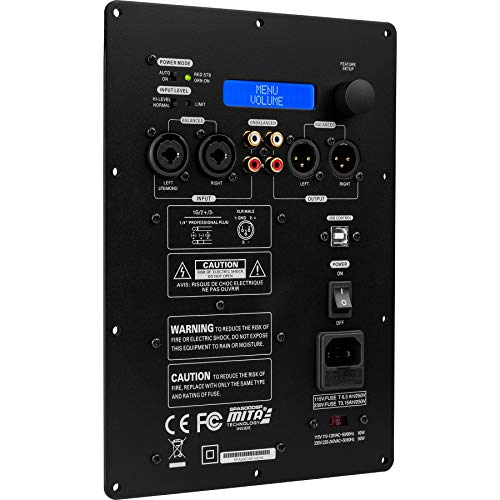
Dayton Audio SPA500DSP 500W Subwoofer Plate Amplifier with DSP
DSP functions include: 7 PEQ bands, LPF, phase, subsonic filter, limiter, mains delay, and HPF
As an affiliate, we earn on qualifying purchases.
As an affiliate, we earn on qualifying purchases.
Are Multiple Small Subs Better Than One Big One?
Multiple small subs can deliver smoother bass than a single large one. When strategically placed, they minimize modal peaks across the room, creating a more even response. This technique, used in large theaters, is gaining ground in small studios, too.
For example, two 8-inch subs placed at opposite ends of the room, calibrated together, can reduce peaks and nulls more effectively than one 10-inch sub in a corner. The goal: even bass that translates reliably.
However, this setup requires more measurement, calibration, and expense. For most small studios, a single DSP-controlled sub, placed carefully, is enough.
Should You Use a Home Theater Sub or a Studio Sub? What’s the Difference?
Many hobbyists consider using a home theater subwoofer, but studio subs are designed with different priorities. Studio subs focus on flat response, precise phase, and balanced output, while home theater subs often prioritize high power and ported bass for movies.
For example, a studio owner might choose a Neumann KH 750 DSP because it offers calibrated, flat response suitable for mixing, whereas a ported home theater sub like the SVS SB-2000 might sound boomy or uneven in a small room.
The key: look for subs with DSP calibration, a flat frequency response, and high-quality crossover control. These features make a big difference in a small, treated room.
Room Treatment and Measurement Are Your Best Friends
Before adding a sub, treat your room. Bass traps, wall panels, and strategic positioning reduce modal chaos. Measurement tools like REW reveal your room’s peaks and nulls, guiding where and how to place your sub.
For example, a small project studio used REW to identify a null at 42 Hz. Moving the sub to a different spot shifted the null, and adding bass traps smoothed response. The result: clearer, more consistent bass.
Remember: a sub is a tool, not a magic fix. It works best when your room’s modal problems are under control.
Frequently Asked Questions
Do I really need a subwoofer to mix bass-heavy genres like hip-hop or EDM in a small room?
Not necessarily. If your monitors roll off below 50 Hz, adding a sub can help. But without proper room treatment and calibration, it might just amplify modal problems. Use measurement tools first, then decide.Will adding a subwoofer make my room’s bass problems worse?
It can if you don’t calibrate and place it carefully. Without proper setup, a sub can excite room modes, leading to boomy or null-filled bass zones. Measure, then position, then calibrate.Should I prioritize bass trapping or a subwoofer first?
Treat your room first. Bass traps and acoustic treatment reduce modal chaos. Once your room is more controlled, adding a calibrated sub is more likely to improve your low-end accuracy.What size subwoofer is best for a small studio?
Smaller subs (8–10 inches) with DSP calibration are usually enough for small rooms. Larger subs aren’t necessarily better—they can be harder to control and more prone to exciting modal issues.Where is the best spot to place a sub in a small room?
Start with the ‘sub crawl’ method: move the sub around, listening for the smoothest bass, then settle in that spot. Corners boost output but can also excite modes—balance is key.Conclusion
Adding a sub in a small room isn’t a simple yes or no. It’s about measurement, placement, and control. When done right, a sub can give you the deep bass detail you need for better mixes. But rushed or uncalibrated, it can turn your room into a bass nightmare.
Think of a sub as a tool, not a fix-all. Prioritize room treatment, measure carefully, and calibrate. The best low end in small spaces comes from smart choices, not just extra gear.