TL;DR

Get audio and creator gear delivered free with Prime
- Fast, free delivery on millions of items
- Prime Video, Amazon Music and more included
- Member-only deals all year
Paper gives you a smooth, matte background that you can refresh by trimming worn sections, while fabric is reusable and portable but may show folds or texture. Vinyl is easy to wipe clean and resists ordinary creasing, but it is heavier and can reflect light or retain pressure marks. Choose by the kind of shoot, cleanup, lighting, and storage you can manage.
A backdrop can look spotless on the roll and show a crease the moment your key light hits it. That surprise costs time: you shift the lights, retouch the frame, or stop the shoot to fix the setup.
Paper, fabric, and vinyl each solve a different studio problem. Paper gives you a clean matte sweep, fabric packs down for travel and repeated use, and vinyl wipes clean after messier shoots. Their weak spots differ just as much: floor wear, folds, glare, and awkward storage can turn a cheap backdrop into a frustrating one.
This guide helps you pick for the pictures you actually make. You’ll see how each material handles wrinkles, cleaning, light, and storage, plus a simple way to keep a backdrop in usable shape. Think of the choice like footwear: the best pair depends on where you’re going, not which one looks toughest on the shelf.
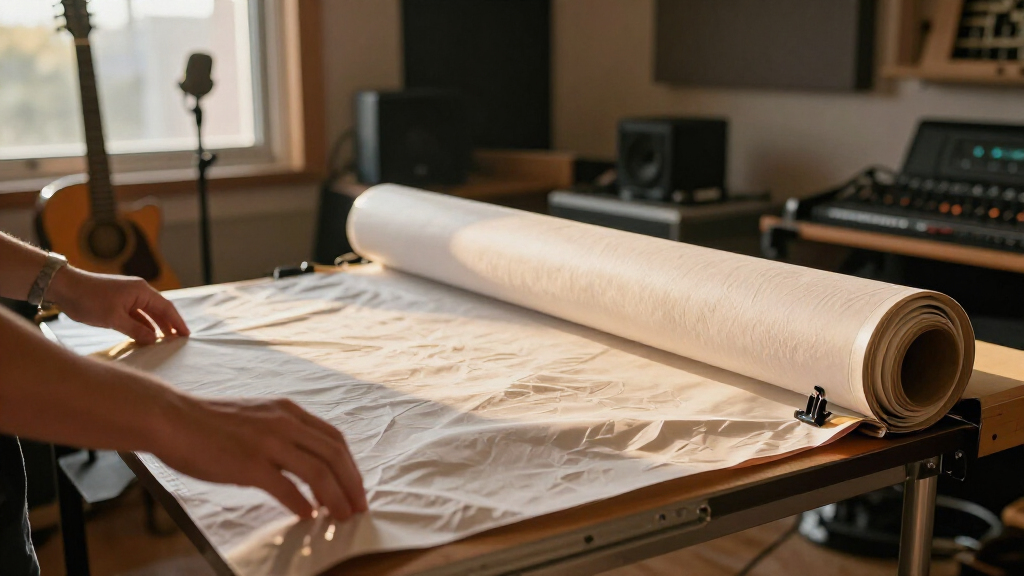
Paper gives a smooth, matte look; trim dirty or torn floor sections when possible instead of folding the roll.
Fabric is portable and reusable, but folds and weave can show under side light; follow the care label before applying heat or washing.
Vinyl cleans up quickly with an approved soft-cloth method, but some finishes reflect light and tight bends can leave pressure marks.
Roll paper and vinyl around a core, and keep all materials clean, dry, cool, and free of heavy pressure.
Choose based on your repeated shoots, lighting, cleanup, transport, and storage space—not the material name alone.
Studio field guide · Materials / care / storage
Paper vs Fabric vs Vinyl Backdrops
Wrinkles, cleanup, lighting, and storage all shape how a backdrop performs. Choose the surface that fits the pictures you make and the work you repeat.
At a glance / pick your surface
Three materials, three studio jobs
Start with your most common shoot. What slows it down: floor wear, visible folds, messy cleanup, hauling gear, or reflected light? Match the surface to that recurring problem before comparing price tags.
01 / clean sweep
Paper
Smooth and usually matte for an even field behind the subject. The floor takes the wear; unroll fresh stock and trim dirty or torn sections when possible.
Best for Clean portraits, product photography, seamless backgrounds.02 / portable reuse
Fabric
Reusable and easy to carry. Weave, drape, and storage folds can show on camera, especially when side light skims the surface.
Best for Repeated shoots, travel, video calls, flexible setups.03 / quick cleanup
Vinyl
Usually smooth and easy to wipe clean. Some finishes reflect light; tight bends and pressure can leave marks, and the roll is heavier to handle.
Best for Food, messy products, frequent cleaning.Wrinkles are only part of the story
Know the mark before you try to fix it
A pale line under a key light can cost a setup its clean look. Each material fails differently, so identify the issue before reaching for heat, a cleaner, or a replacement roll.
Paper
No cloth weave to wrinkle, but sharp creases, tears, or a dirty floor edge can become obvious under side light. Keep it dry and avoid folding.
Fabric
Folds, weave, or drape may read on camera. Hang it early to let minor creases relax. Steam or iron only when the care label allows it.
Vinyl
Ordinary handling may leave it smooth, but a tight bend or weight left across it can create lingering pressure marks. Some finishes also glare.
Side-by-side / practical response
Care and storage at a glance
| Material | Common issue | Care on set | Storage habit |
|---|---|---|---|
| Paper | Creases, tears, or a scuffed floor edge | ✓ Trim worn sections when possible; keep dry and avoid folding. | Roll onto its core; protect from moisture and crushing. |
| Fabric | Folds, visible weave, or uneven drape | ~ Follow maker instructions; test a hidden spot before heat or washing. | Fold carefully or roll; store dry and protect from dust. |
| Vinyl | Pressure marks, tight bends, or reflected highlights | ✓ Use a soft damp cloth and mild cleaner only if approved. | Roll loosely around a wide core; avoid weight and high heat. |
Product construction and coatings vary. “Washable,” “matte,” and “wrinkle-resistant” describe individual products, not guarantees for every backdrop. Check the instructions for the exact one you own.
Choose by repeated work
What matters most in your frame?
These are practical tendencies, not universal product ratings. Surface finish, construction, lighting angle, and care instructions can change the result.
A simple storage routine
Set up tomorrow’s shoot today
Good storage protects every material from moisture, heat, sunlight, dust, and crushing. A few consistent habits keep the next setup clean and ready.
Let the backdrop dry and clear away dirt before packing it.
Roll paper and vinyl onto a core; avoid folding sheet materials.
Keep fabric dry; follow its label for washing and heat.
Store cool and out of direct sun, with no heavy items on top.
Traceability / from shoot to storage
Protect the surface you chose
Match
Pick for the regular job: clean sweep, travel, or messy set.
Light
Check for texture and glare from the angle you actually use.
Care
Trim paper, label-check fabric, or wipe approved vinyl gently.
Store
Keep it dry, cool, clean, rolled or folded appropriately, and uncrushed.
Choose a backdrop by matching it to your shoot
The right backdrop depends on how you shoot, clean, and store your setup. Paper gives a smooth, matte surface and is easy to refresh by trimming dirty sections; fabric is reusable and portable but may show folds or texture; vinyl wipes clean yet can reflect light and weighs more. Match those traits to your regular jobs before comparing price tags.
For instance, a portrait photographer who wants a spotless floor-to-wall sweep may get more from paper than from a washable cloth. A creator who records weekly cooking videos may prefer vinyl, because a damp wipe is easier than laundering a large panel. Someone who shoots headshots at client offices might accept a little fabric texture in exchange for a backdrop that folds into a bag.
Start with the most common scene, then ask what usually slows you down: visible creases, messy cleanup, hauling gear, or replacing worn material. A backdrop is like a workbench surface: the finish matters, but the maintenance has to fit the work. There is no universal winner; frequency of use, lighting angle, desired texture, and replacement cost all change the answer.
- Clean studio look: start with matte paper.
- Frequent travel or reuse: look at fabric.
- Messy products or quick cleanup: consider vinyl.
Names such as “washable,” “matte,” and “wrinkle-resistant” describe products, not guarantees across every material. Construction and coatings vary. Check the care instructions for the exact backdrop you own before using heat or cleaning products.
Popular right now

KitchenAid Classic Series 4.5-Quart Tilt-Head Stand Mixer, Onyx Black

Apple AirPods Max 2 Wireless Over-Ear Headphones – Midnight

Samsung 75-Inch M80H Series Mini LED 4K Smart TV (2026)
As an affiliate, we earn on qualifying purchases.
See which material handles wrinkles—and which handles damage
Paper vs fabric vs vinyl backdrops behave differently under pressure: fabric is most likely to show folds, while paper and vinyl resist ordinary cloth-like wrinkles but can still crease or kink. The word “wrinkle-free” describes only one kind of mark. It does not mean a backdrop can take a hard fold, a dropped stand, or a heavy case pressed against it.
Fabric creases often come from being folded damp or packed tightly in a case. Those lines may soften with careful steaming or ironing if the care label allows it. Paper has no cloth weave to wrinkle, but a sharp crease can catch light like a pale scar. Vinyl stays smooth in normal handling, yet a tight bend or weight left across it can create a pressure mark that lingers.
Imagine setting up a product shot at 9 a.m. You unroll paper and spot a dent near the edge, pull vinyl from under a storage box and find a pale ridge, then hang fabric that still remembers yesterday’s folds. Each problem needs a different fix; treating all three as “wrinkles” wastes time.
| Material | Typical surface issue | Practical response |
|---|---|---|
| Paper | Creases, tears, or a dirty floor edge | Trim worn sections when possible; avoid folding |
| Fabric | Folds, weave, or drape showing on camera | Follow the care label; test heat on a hidden area |
| Vinyl | Bends, pressure marks, or reflected highlights | Unroll carefully; keep it free of tight bends and weight |
For a plain white headshot, stray lines may be more distracting than a deliberate fabric weave. For a textured food scene, a little surface character may suit the image. Decide whether the mark is damage or part of the look before spending time trying to remove it.
Keep a paper sweep clean without replacing the whole roll
Paper backdrops stay smooth and usually matte when you keep them dry, uncreased, and clear of dirt. Their most common wear point is the floor, where shoes, stands, and product props scuff the sweep. If a dirty section extends from the background onto the floor, you can often unroll fresh paper and cut away the damaged length rather than discard the whole roll.
That makes paper useful for portrait sessions and tabletop product work where you want an even field behind the subject. Picture a pair of muddy boots in an e-commerce shoot: the paper underfoot takes the grime, but the clean section above the subject can remain usable. You pay for the material you consume, so the trick is to treat the floor as a replaceable working surface.
Paper does not tolerate careless handling. Avoid folding it, keep drinks and wet props away, and don’t let a stand clamp crush the edge. A crease or tear can become an obvious bright or dark line under side light. After a shoot, roll the sheet back onto its core and store it where humidity, crushing, and direct sunlight won’t reach it.
- Keep the roll on its core while setting it up.
- Unroll only enough to cover the background and floor area you need.
- Mark the dirty or torn edge, then trim it cleanly when the roll allows.
- Roll the remaining paper back without folding or forcing a tight bend.
If your work involves repeated messy floor scenes, calculate how much paper you’ll use over several shoots. A low purchase price does not make paper reusable forever, but replacing a short damaged section can cost less than losing an entire setup to a single scuff.
Make fabric portable without bringing every fold to the shoot
Fabric backdrops are reusable and easy to carry, but their appearance depends on the fabric, its weave, and the way you pack it. Some are meant to hang with visible texture; others aim for a flatter surface. Folds from storage can show in a portrait or video frame, especially when light skims across the material from the side.
For example, if you fold a cloth backdrop into a small square for a client visit, the sharp storage lines may stand out behind a tightly framed headshot. Rolling it can reduce hard folds, though it takes more space. When you arrive, hang the cloth early so gravity has time to relax minor creases before you bring in the subject or start recording.
Cleaning and heat need more care than a quick assumption suggests. Follow the maker’s washing instructions; not every fabric can go in a washing machine, and coatings or synthetic fibers can react badly to high heat. If the label allows steaming or ironing, test an inconspicuous spot first and use the recommended setting. A hidden test matters more than a confident guess when the fabric is expensive or coated.
- Store it clean and completely dry to keep dust and damp from settling into the folds.
- Fold loosely or roll it based on the material and manufacturer guidance.
- Hang it before a shoot so minor creases have time to ease.
- Test a hidden patch before washing, steaming, or ironing.
Fabric suits recurring shoots, video calls, and travel when portability matters more than a perfectly uniform sweep. Texture can also help: a soft drape behind a seated portrait may feel warmer than a hard, flat surface. If you need a spotless product background, though, weave and folds may mean extra lighting adjustments or retouching.
Keep vinyl clean and smooth without damaging the finish
Vinyl backdrops are easy to wipe clean and generally resist ordinary creasing, which makes them handy for food, cosmetics, and other shoots with spills or fingerprints. A soft damp cloth is often enough, and a mild cleaner may be suitable if the maker permits it. Abrasive pads and harsh solvents can damage a finish, so check the product’s care guidance before cleaning.
Vinyl has tradeoffs you can see and feel. It is heavier to carry than many fabric options, and some smooth finishes reflect direct light. Imagine photographing a glossy bottle on a vinyl sweep: the background might clean up quickly after a drip, but a bright reflection can form behind the label if a light points straight at it. A matte finish or a changed light angle may help, depending on the exact product.
Store vinyl rolled loosely around a wide core. Tight bends, heavy objects, or high heat can create marks or deform the material, and heating it to chase a wave is not a safe default. If minor waves appear after unrolling, let the sheet lie flat and follow the manufacturer’s advice. The surface is durable in regular use, but it is not immune to pressure.
Vinyl often makes sense when cleanup happens after most shoots. A cake smash session or a set of skincare bottles can leave sticky residue that would stain fabric and soil paper. Just remember that easy cleaning doesn’t mean zero maintenance: wipe gently, dry as directed, and store the roll where cases or stands cannot press into it.
Store each backdrop so the next setup starts clean
Good storage protects backdrops from moisture, heat, sunlight, dust, and crushing. Paper and vinyl should be rolled rather than folded; fabric can be folded carefully or rolled depending on its construction and instructions. Keep every material dry before putting it away, because a damp surface packed into a case can come back musty or marked.
Think about the storage corner in a small home studio. Leaning a paper roll between a wall and a light stand may seem efficient, but pressure can flatten one edge and the stand can slide into the paper. A labeled wall rack or a clear floor spot keeps the roll supported and makes it easier to grab the right color without pulling everything down.
For vinyl, use a wide core and avoid tight turns. For paper, protect the ends from crushing and keep it away from leaks or damp floors. For fabric, shake off dust, let it dry after a shoot, then store it in a breathable, clean place according to its care guidance. None of these materials benefits from being buried under a stack of heavy cases.
- Clean the backdrop using the method allowed for its material.
- Let it dry fully before storage.
- Roll paper and vinyl around a suitable core; fold or roll fabric carefully.
- Keep the stored material away from high heat, sunlight, moisture, and heavy objects.
These habits take minutes and can prevent the classic Monday surprise: a clean client shoot, a roll with a crushed edge, and no time to fix it. If you shoot outdoors, also secure the support and watch for wind, dirt, and moisture; a lightweight backdrop can become difficult to control in a gust.
Pick the material that saves you time across a month of shoots
The most cost-effective backdrop depends on how often you use it, what gets dirty, and how much time you spend maintaining it. Paper may be affordable at first and easy to trim, but you consume it as the floor wears. Fabric can serve repeated sessions and pack down for travel, but washing, steaming, or smoothing it takes time. Vinyl can survive frequent wipe-downs, though its weight and finish may complicate setup.
Suppose you shoot portraits twice a month in a small home studio. Paper may be a sensible choice if a matte, seamless look matters and you can store the roll safely. If you travel to clients every week, fabric might save hauling trouble, even if you budget a few minutes to hang it before each shoot. If you photograph food or products daily, vinyl’s wipe-clean surface may pay back the extra handling weight.
Make the decision from the whole workflow, not the sticker price. Count how often you clean, how much material gets discarded, whether a helper is available to manage a heavy roll, and whether reflections create retouching work. A cheap backdrop that costs ten minutes at every setup can become the expensive option by the end of a busy month.
- Choose paper when a smooth matte sweep and easy replacement matter most.
- Choose fabric when portability, reuse, or visible drape fits the work.
- Choose vinyl when quick wipe-downs matter and you can manage weight and light reflections.
Before buying, measure your storage space and test how your existing lights behave on the material. A quick phone photo of a sample under your actual key light can reveal glare or texture that a product description won’t. The right choice is the one that makes your usual shoot easier from setup through cleanup.
Frequently Asked Questions
Which backdrop is least likely to wrinkle?
Paper and vinyl do not wrinkle like cloth, while fabric is more likely to show folds after storage. Paper can still crease or tear, and vinyl can kink or hold pressure marks, so neither is damage-proof.
Can I iron or steam a fabric backdrop?
Sometimes, but check the maker’s instructions first. If heat is allowed, use the recommended setting and test a hidden area, since coatings and synthetic fibers can be damaged.
Can I remove waves or wrinkles from vinyl with heat?
Do not assume heat is safe: it can deform some vinyl. For minor waves, let the material lie flat after unrolling and follow the manufacturer’s guidance.
How should I store paper, fabric, and vinyl backdrops?
Roll paper and vinyl around a core, and fold or roll fabric according to its material and care instructions. Store everything clean and fully dry, away from moisture, prolonged heat, direct sunlight, and heavy objects.
Which backdrop works best for product photography?
Paper suits a smooth matte background, vinyl is handy when spills or fingerprints need quick cleanup, and fabric works when its texture or drape fits the product. Check how the surface responds to your lights, especially with smooth vinyl.
Is vinyl reflective?
It can be, depending on its finish and the angle of your lights. A matte finish or a changed light position may reduce glare, but check the exact product before buying.
Conclusion
Choose the backdrop that removes the most friction from your regular work. Paper gives you a clean matte sweep, fabric travels and gets reused, and vinyl takes quick wipe-downs; each asks for a different kind of care.
Before your next shoot, check the surface under your actual lights and make room to store it properly. A backdrop should be the quiet stage behind the subject—not the reason you start the day chasing creases, glare, or a crushed roll.