![Sex Pistols Berate Dude For Infiltrating Women-Only Mosh Pit [Updated]](https://artzartz.com/wp-content/uploads/2026/10/sex-pistols-berate-dude-for-infiltrating-women-only-mosh-pit-updated-featured-200x110.jpg)
TL;DR

Get audio and creator gear delivered free with Prime
- Fast, free delivery on millions of items
- Prime Video, Amazon Music and more included
- Member-only deals all year
An audio developer writing for Linux documented a method for studying a commercial spatial audio effect by recording its responses to carefully designed test signals. The report describes impulse-response and sine-sweep measurements, but does not identify the commercial program or establish that the resulting implementation matches it.
An audio developer has described how they measured a commercial spatial audio effect to guide an attempted version for Linux, recording its output to test signals instead of trying to guess its internal design. The account details a measurement-based approach using impulse responses and sine sweeps, but does not name the commercial program or report a verified match.
The developer said the project began with a listening goal: recreate an effect they had used on another operating system, which made playback seem farther from the ears and less blocked. Their planned Linux implementation used PipeWire. With little prior audio experience, they initially experimented with standard filters and psychoacoustic techniques, including head-related transfer functions (HRTFs), which describe how sound from different directions reaches the ears.
They first tried the MIT KEMAR database, but said its anechoic recordings lacked room reflections they wanted in the effect. The developer later found the SADIE II database, which included room responses, and judged it closer to the sound they remembered. They eventually paused the project after exploratory advice did not give them practical ways to identify what sounded wrong.
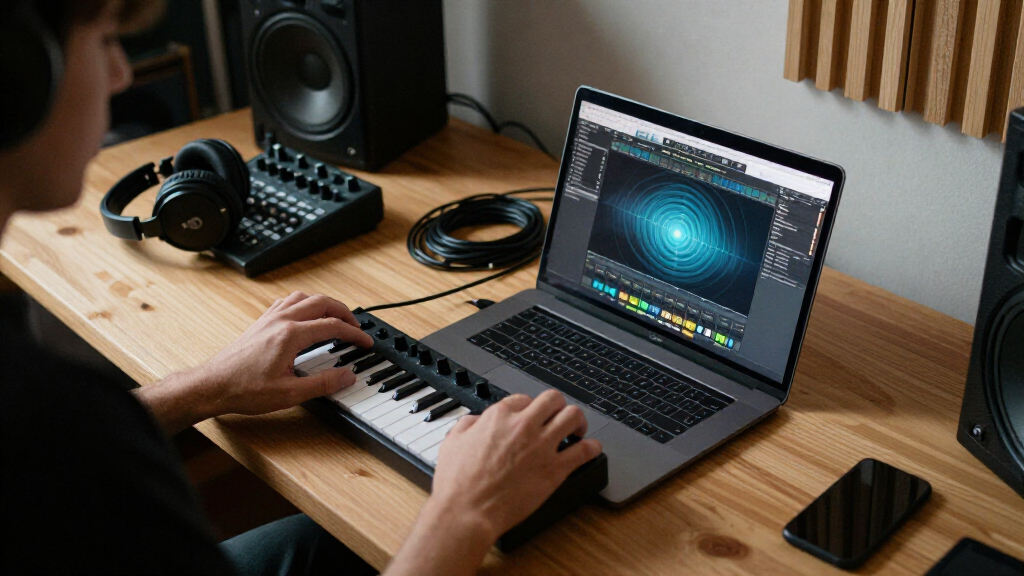
The later approach was to test the reference program’s behavior directly. Because the developer could access it only on a friend’s laptop, they generated test audio on Linux, played it through the effect, and recorded the output. Impulses at different levels and in different stereo configurations could reveal decay, phase delay, channel cross-talk and whether output changed with signal level. Those tests also checked whether the effect behaved like a linear time-invariant filter: scaling an input should scale its output, and combined inputs should produce the sum of their separate outputs.
A Measurable Route to Audio Replication
The account offers a practical lesson for audio developers: a reference effect can be studied through its observable input-output behavior, even when its internal algorithms are unknown or inaccessible. For someone building a Linux alternative, the measurements can narrow the gap between subjective listening and concrete implementation choices.
That distinction matters because a spatial effect is not defined only by its broad label. Its timing, frequency response, stereo interaction and room-like decay all shape what listeners hear. Measuring those properties gives developers a basis for comparison and iteration, while avoiding unsupported assumptions about how the commercial product was built.
The report describes a technique, not a finished product evaluation. It does not establish that the Linux implementation reproduces the commercial effect, or that listeners would prefer one over the other. Its value is in documenting how to turn a listening impression into testable questions.
As an affiliate, we earn on qualifying purchases.
From HRTF Experiments to Test Signals
The developer’s first experiments focused on psychoacoustic techniques and HRTF data. They said the KEMAR recordings sounded too inward and inexpensive for their purpose, while SADIE II’s room responses seemed closer to the desired effect. These are the author’s listening judgments, not controlled comparisons or independently verified findings.
Instead of continuing to search for the exact parameters or algorithms inside the commercial software, the developer shifted to characterizing what it did. An impulse can reveal a filter’s response over time, while a sine sweep provides more energy across frequencies and can make measurements easier to distinguish from recording noise. The report also describes regularizing frequency-domain division to reduce the effect of noise where the input sweep has little energy.
For stereo, the developer treated the effect as four impulse responses: left input to left output, left to right, right to left, and right to right. Testing isolated and combined channel inputs could then show whether the outputs followed the expected sums and differences. This model applies only if the effect is sufficiently linear and time-invariant under the test conditions.
“I tried the MIT KEMAR database first and thought it sounded awful”
— The developer, describing the first HRTF attempt
impulse response recording software
As an affiliate, we earn on qualifying purchases.
As an affiliate, we earn on qualifying purchases.
What the Measurements Cannot Prove
The supplied report does not identify the commercial program, provide its name, or include enough detail to verify the measurements independently. It also does not establish whether the effect is linear and time-invariant across all input levels, playback conditions or operating modes; the described tests are ways to check those assumptions, not proof that they hold.
The account ends while discussing the sine-sweep measurement, so the supplied material does not give the final analysis, resulting filter design, or a completed Linux release. It is also unclear how closely any implementation matched the commercial reference in controlled listening tests. The reported judgments about KEMAR, SADIE II and perceived sound quality remain the developer’s own.
As an affiliate, we earn on qualifying purchases.
Further Testing and Linux Implementation
The next step implied by the report is to analyze the recorded impulse and sweep responses, compare measurements, and use them to inform an implementation on the developer’s Linux audio stack. More testing would be needed to check behavior across modes and levels and to determine whether the effect can be modeled with the assumed filter structure.
The source material does not state a release date or confirm that a finished alternative is available. A later account or project release could clarify the final measurements, the implementation’s performance and whether listeners consider it a close match.
As an affiliate, we earn on qualifying purchases.
Key Questions
What did the developer reverse engineer?
The developer studied the observable behavior of an unnamed commercial spatial audio effect as a guide for an attempted Linux version. The supplied account does not identify the product.
How were the effect’s responses measured?
The developer played generated test files through the reference software and recorded the output. Tests included impulses at different levels and stereo arrangements, as well as sine sweeps for measuring frequency response.
Why use both impulses and sine sweeps?
An impulse can reveal a filter’s response over time, including decay and phase behavior. A sine sweep supplies more energy across frequencies, which the report says can help separate the response from recording noise.
Did the developer finish a Linux replacement?
The supplied report describes the measurement approach but does not confirm a completed release or demonstrate that an implementation matches the commercial effect.
Source: hn
Halloween Picks
halloween
As an affiliate, we earn on qualifying purchases.



![Sex Pistols Berate Dude For Infiltrating Women-Only Mosh Pit [Updated]](https://artzartz.com/wp-content/uploads/2026/10/sex-pistols-berate-dude-for-infiltrating-women-only-mosh-pit-updated-featured-260x140.jpg)