TL;DR

Get audio and creator gear delivered free with Prime
- Fast, free delivery on millions of items
- Prime Video, Amazon Music and more included
- Member-only deals all year
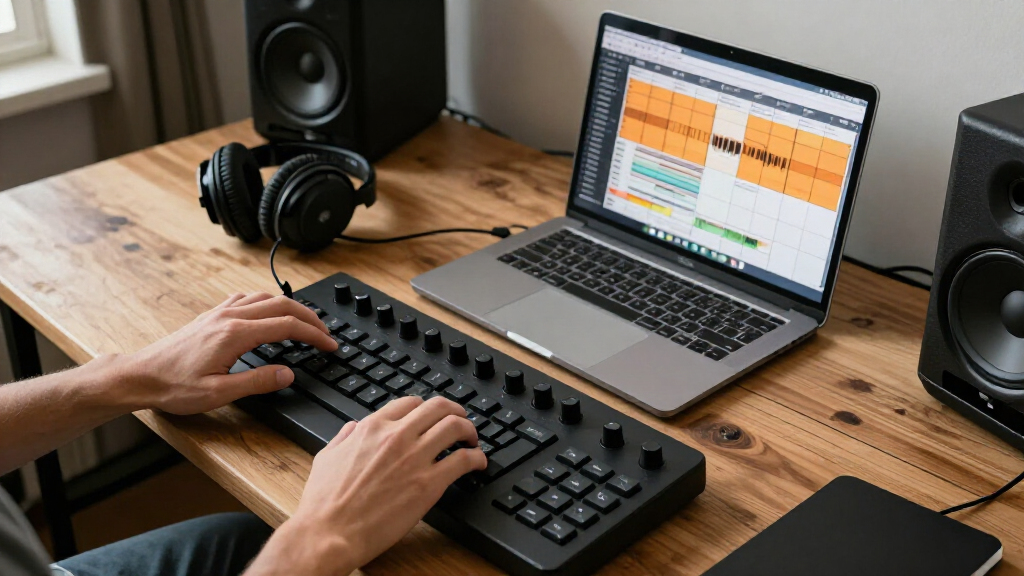
Blokkily, introduced in a Show HN post and documented on GitHub, is an experimental digital audio workstation built around patterns and multiple synchronized editing views. It supports an MCP bridge for agents to control the running application, alongside CLAP and VST3 plugins, audio recording and arrangement. The project describes itself as experimental and lists several limitations.
Blokkily, an experimental digital audio workstation introduced in a Show HN post, combines pattern-based composition with an MCP bridge that lets software agents control the running application. The project’s GitHub page describes a workflow for editing patterns in a tracker, piano roll or step grid, then arranging them across tracks; a demonstration video shows an agent building a chiptune composition through MCP.
The project presents itself as a pattern-first DAW, with three synchronized ways to edit notes and chords: a tracker, piano roll and step grid. Users can arrange named patterns and audio clips on a multi-track timeline, including tempo changes and ramps. The same project also describes live performance through a scene launcher, with performances recordable into the arrangement.
Blokkily supports CLAP and VST3 plugins, SoundFont instruments, built-in samplers, MIDI recording and audio recording. Its listed production features include effects, automation, audio warping and export to WAVE files. The developer says edits can be heard during playback without stopping it. A composition assistant can propose phrases for review before application; the page says each generation is one undo step.
The GitHub report includes a short video with sound showing an agent creating a “funky chiptune” using the MCP bridge and the YANES and FUZZBOI CLAP synthesizers. It also describes continuous-integration packages for Linux, Windows and macOS. Linux is identified as the primary platform. The release documentation notes that macOS builds are signed ad hoc rather than notarized, so the first launch may be blocked by macOS security controls.
Agent Control Meets Pattern Editing
The project puts an agent-control interface inside a desktop music-production workflow. Instead of limiting an agent to generating a standalone musical idea, the MCP bridge is described as a way to control an application that also has sequencers, instruments and an arrangement timeline. The demonstration offers an example of that interaction, though it does not establish how reliably the workflow performs across different sessions or setups.
For musicians and developers, the combination may be useful as an experiment in human-reviewed music creation: Blokkily also includes a phrase assistant whose proposals are reviewed before being applied. The reported undo behavior gives users a way to reverse each generated proposal. The project does not provide comparative testing or evidence of production readiness, so its significance at this stage is primarily as an open development project to evaluate, not as a proven replacement for established DAWs.
pattern-based digital audio workstation
As an affiliate, we earn on qualifying purchases.
As an affiliate, we earn on qualifying purchases.
One Session, Three Note Editors
Blokkily’s core design is that a musical pattern can be edited through three synchronized views. The project describes pattern features such as chord inversions, strumming, microtiming, probability, ratchets, loop conditions and parameter locks. Patterns can then be placed on a multi-track timeline with audio clips, tempo steps, ramps and meter changes.
The project also documents a broad set of workstation functions, including plugin windows, mixing, audio recording, MIDI controller input and arrangement export. Those feature descriptions come from the project’s own documentation; they do not amount to independent testing. Build instructions list dependencies including Qt 6, FluidSynth and Rubber Band. The developer also notes that the Rubber Band Library is GPL-licensed unless used under a commercial license, with consequences for binaries built with it.
“Blokkily is an experimental pattern-based DAW.”
— Blokkily project description on GitHub
As an affiliate, we earn on qualifying purchases.
Reliability and Limits Still Need Testing
The available project material does not establish how mature or reliable the MCP controls are in extended use, which agents or MCP clients have been tested, or whether the demonstration represents a typical session. No independent benchmark or comparison with other music applications is provided. The source describes a video demonstration but does not report measured results.
The developer explicitly labels Blokkily experimental and lists limitations. Comping and MIDI clock input are not implemented, and per-note expression has no editor. MPE support varies by plugin format. Warped audio clips and sampler samples load into memory, while some large unwarped clips can stream from disk. The documentation also flags platform-specific plugin-window requirements on Linux and says export renders the arrangement, so live scene-launcher performances must be recorded into it first.
As an affiliate, we earn on qualifying purchases.
Try Releases and Follow Development
The project page offers CI-built packages for Linux, Windows and macOS, along with checksums and source-build instructions. Prospective users can consult the usage guide for setup and controls and the MCP documentation for agent configuration. The source material does not announce a release date, roadmap milestone or planned feature schedule.
Further evaluation will depend on hands-on testing of the application, its MCP bridge and its plugin behavior across supported systems. The project’s documentation identifies known restrictions; whether those change, and how the agent workflow develops, remains a matter for future releases.
As an affiliate, we earn on qualifying purchases.
Key Questions
What is Blokkily?
Blokkily is an experimental pattern-based digital audio workstation. It lets users edit patterns in a tracker, piano roll or step grid and arrange them across tracks.
What does MCP support do?
The project says its MCP bridge lets agents control the running application. A video on the project page shows an agent building a chiptune, but the documentation does not establish performance across all agents or workflows.
Which plugins and instruments does it support?
The project lists CLAP and VST3 plugins, SoundFont instruments and built-in samplers. It also documents plugin editors embedded in Blokkily windows on Linux, macOS and Windows, with some platform-specific requirements.
Is Blokkily ready for production use?
The developer calls it experimental and documents missing features and technical restrictions. The project materials do not provide independent testing or establish that it is ready for production use.
How can users try it?
The GitHub project lists downloadable packages for Linux, Windows and macOS, as well as instructions for building from source. macOS packages are not notarized, and the project page describes steps users may need to take to open them.
Source: hn
Halloween Picks
halloween
As an affiliate, we earn on qualifying purchases.