
TL;DR
Open a free Amazon Business account
Business pricing, bulk buying and tax-exempt orders.
Create a free accountAs an affiliate, we earn on qualifying purchases.
Phantom power supplies 48V DC through a microphone cable to power condenser mics and active devices. It’s essential for most condensers but unnecessary or even harmful for dynamic or ribbon mics. Always check your gear before turning it on.
Imagine plugging in your microphone for a quick recording session, only to hear a pop or see smoke. That’s often a sign you’ve applied phantom power to the wrong mic. Phantom power isn’t just a mystery; it’s a tool that, when used correctly, can make your recordings clearer and more professional. But misuse can damage your gear or ruin a take.
This guide clears up when 48V phantom power matters—like for your condenser mic—and when it doesn’t, such as for dynamic mics or vintage ribbons. Whether you’re setting up a home studio or doing a live podcast, knowing the ins and outs can save you time, trouble, and equipment costs.
What Is Phantom Power & How Does It Work?
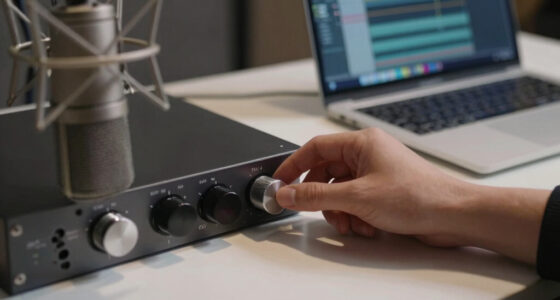
Phantom power is a method to deliver 48V DC electricity through your microphone cable, without messing up your audio signal. It’s like powering a tiny device inside your mic using the same cable that carries sound. This is especially true for condenser mics, which need that extra juice to function.
Imagine a balanced XLR cable: it carries the audio signal on two wires. Phantom power adds a third wire—carrying the voltage—on both lines equally. Because it’s balanced, any noise cancels out, leaving just your voice or instrument sound.
Most professional microphones and interfaces use 48V because it’s a sweet spot—powerful enough for clear audio, but safe when used correctly.

Neewer 1-Channel 48V Phantom Power Supply with Adapter, BONUS+XLR 3 Pin Microphone Cable for Any Condenser Microphone Music Recording Equipment (8 feet)
- Power Supply Type: 48V phantom power for microphones
- Housing Material: Compact, durable plastic
- Compatibility: Universal XLR input/output
As an affiliate, we earn on qualifying purchases.
As an affiliate, we earn on qualifying purchases.
Why Do Condenser Mics Need 48V? The Real Deal
Condenser microphones rely on phantom power to energize their internal electronics—think of it as the fuel that makes their tiny capsules and preamps come alive. Without that 48V, they won’t work at all.
For example, a popular vocal condenser like the Audio-Technica AT4040 needs 48V to deliver its crisp, detailed sound. Without it, the mic just sits silent or sounds dull. If you’re recording vocals or acoustic guitar, that’s the gear you want—so phantom power becomes essential.
In professional studios or podcast setups, phantom power ensures your condenser mic gets consistent power, delivering studio-grade clarity every time.
Neewer 1-Channel 48V Phantom Power Supply with Adapter, BONUS+XLR 3 Pin Microphone Cable for Any Condenser Microphone Music Recording Equipment (8 feet)
- Power Supply Type: 48V phantom power for microphones
- Housing Material: Compact, durable plastic
- Compatibility: Universal XLR input/output
As an affiliate, we earn on qualifying purchases.
As an affiliate, we earn on qualifying purchases.
When You Should Never Use Phantom Power — Avoid Microphone Damage
Not all microphones can handle 48V. Dynamic mics like the Shure SM58 or SM57 are built to run without power and can be damaged if phantom power is applied. Same goes for vintage ribbon mics, which can have their fragile ribbons torn or damaged.
Imagine plugging a vintage ribbon mic into a powered mixer—sizzle, pop, and you might be replacing a costly mic. Many modern ribbon mics have built-in protections, but always check before applying phantom power.
To keep your gear safe, turn off phantom power before disconnecting or connecting mics that don’t need it. It’s like unplugging your phone before removing the charger—simple but important.
Neewer 1-Channel 48V Phantom Power Supply with Adapter, BONUS+XLR 3 Pin Microphone Cable for Any Condenser Microphone Music Recording Equipment (8 feet)
- Power Supply Type: 48V phantom power for microphones
- Housing Material: Compact, durable plastic
- Compatibility: Universal XLR input/output
As an affiliate, we earn on qualifying purchases.
As an affiliate, we earn on qualifying purchases.
The Lowdown on Voltage: Is 48V Always Necessary?
While 48V is the standard, some equipment runs on lower voltages like 12V or 24V. Many budget interfaces or portable mixers supply lower phantom power—still enough for most modern condensers.
For example, a compact audio interface might offer 24V phantom power, which is fine for many small diaphragm condensers. But check your mic’s specs—some need the full 48V to perform optimally.
Modern gear also includes protections that prevent damage if you accidentally apply 48V to a device needing less, but always read the manual first.

MXL R144 HE Heritage Edition Classic Ribbon Microphone
- Enhances audio with character and depth: Adds character and dimensions to sources
- Polar pattern and frequency range: Figure-8 pattern, 20Hz-17kHz response
- Included accessories: Shock-mount, carrying case, cleaning cloth
As an affiliate, we earn on qualifying purchases.
As an affiliate, we earn on qualifying purchases.
How to Safely Use Phantom Power in Your Setup
- Identify your microphone type—check the manual or specs.
- Turn off phantom power before plugging or unplugging mics that don’t need it.
- Turn on phantom power only when using a condenser mic or active device requiring it.
- Verify your equipment supports the voltage supplied—most do, but check.
- When in doubt, test with a low-voltage setting or consult a professional.
Think of it like turning on your house’s main circuit: flick it on only when needed, and turn it off when working on wiring.
Compare: When Phantom Power Is Needed vs. When It’s Not
| Needs Phantom Power | Does Not Need Phantom Power | ||||
|---|---|---|---|---|---|
| Condenser microphones (e.g., Audio-Technica AT4040) | Dynamic microphones (e.g., Shure SM58) | Vintage ribbon mics (check specs) | Passive microphones | Active mics with their own power source | Most modern ribbon mics (verify first) |
Key Takeaways for Your Microphone Setup
- Always verify if your mic needs phantom power before turning it on.
- Most condensers require 48V to perform at their best.
- Never apply phantom power to dynamic or ribbon mics unless specified safe by the manufacturer.
- Lower voltages (12V, 24V) are common and often sufficient for budget or portable gear.
- Turn phantom power on and off deliberately—think of it as a switch for safety and sound quality.
Frequently Asked Questions
Can I accidentally damage my microphone by leaving phantom power on?
If your microphone is dynamic or vintage ribbon, yes—phantom power can cause damage. For most modern condenser mics, leaving phantom power on is safe, but it’s best practice to turn it off when not in use.
How do I know if my microphone needs phantom power?
Check the microphone’s manual or specs. Condenser mics typically need 48V phantom power; dynamic and ribbon mics usually do not. When in doubt, contact the manufacturer or consult a professional.
Is 48V phantom power always the standard?
While 48V is most common, some equipment runs on 12V or 24V. Many modern interfaces support these lower voltages, which are often sufficient for budget condensers and portable setups.
Can I use phantom power with a ribbon microphone?
Vintage ribbons are generally damaged by phantom power. Modern ribbons might handle it, but always check the specs. When in doubt, turn off phantom power or avoid using it with ribbons.
Conclusion
Phantom power is a powerful tool—when used right. It’s not just a switch labeled 48V; it’s a safeguard and a signal to your gear that it’s time to come alive.
Always check your microphone’s needs before flipping that switch. A little caution now saves a lot of trouble later—and keeps your sessions smooth and your gear intact. Remember, power isn’t always the answer, but when it is, it makes all the difference.
Back to school Picks
back to school
As an affiliate, we earn on qualifying purchases.