
TL;DR

Get audio and creator gear delivered free — and shop member deals
- Fast, free delivery on millions of items
- Access to Prime Big Deal Days deals on October 6–7
- Prime Video, Amazon Music and more included
Acoustic panels mainly absorb mid and high frequencies to reduce echoes, while bass traps target low-frequency buildup like boomy bass. Using both in combination creates a balanced, clear sound environment.
Acoustic panels mainly absorb mid and high frequencies, reducing echoes and harshness.
Bass traps target low-frequency buildup, controlling boominess and standing waves.
Place bass traps in corners and acoustic panels at reflection points for maximum effect.
Using both treatments together creates a balanced, natural sound environment.
Room analysis tools can help you identify the exact issues before investing.
What Acoustic Panels Fix — The Mid and High Frequencies
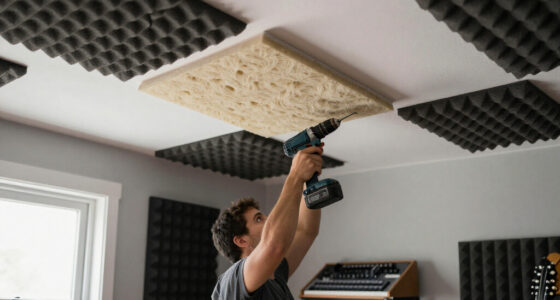
Acoustic panels are like the room’s noise-canceling headphones for your ears. They absorb the sounds in the mid and high ranges—think voices, guitar strings, cymbals. If your room sounds bright, harsh, or echoes, panels can soften those reflections.
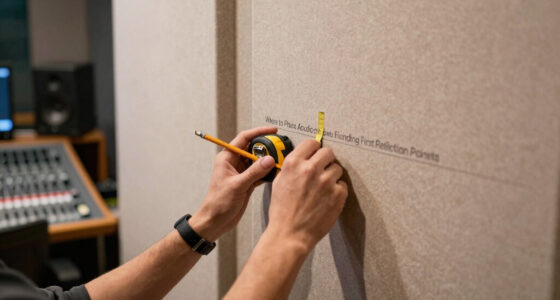
For example, if you record vocals and they sound like they’re bouncing around a box, adding panels at the first reflection points can clear up the muddiness. They’re usually mounted at ear level, right where sound waves bounce off the walls.
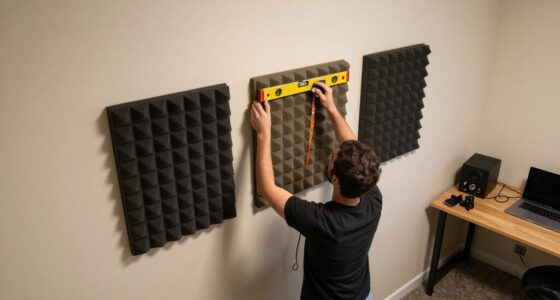
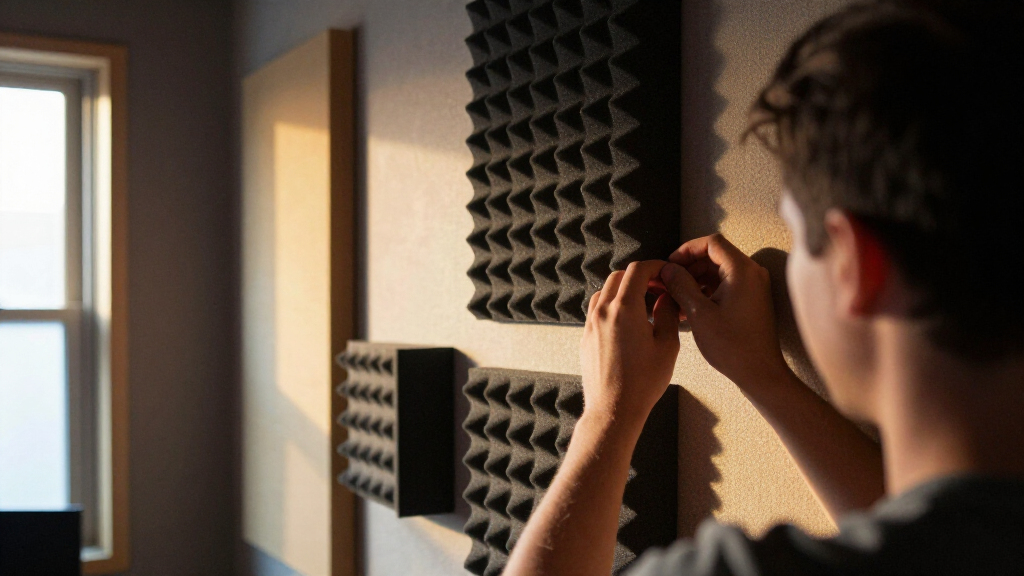
Materials matter. Foam, mineral wool, or fiberglass panels are common. They soak up the sound waves before they scatter and reflect, making your room sound more natural and less ‘live’ than a gymnasium.
acoustic panels for studio soundproofing
As an affiliate, we earn on qualifying purchases.
As an affiliate, we earn on qualifying purchases.
Bass Traps: The Low-Frequency Fixers
Bass traps are the room’s low-end whisperers. They handle the deep, rumbling sounds that cause trouble in your mixes—like that annoying boomy bass or uneven low end. If your room has a ‘hole’ at 60 Hz or a ‘muddy’ feel, bass traps are the fix.
They’re tucked into corners, where low frequencies naturally pile up. Think of a bass trap as a sponge for the deepest sounds—dense, heavy, and designed to soak up energy below 200 Hz.
Materials like dense foam or mineral wool in a rigid frame are common. These materials trap low-frequency waves before they bounce around and cause resonances that make your mix muddy or uneven.
By placing bass traps strategically, you’re effectively controlling the low-end energy that tends to accumulate in corners, which can otherwise cause resonance issues. This not only clears up muddiness but also enhances the punch and clarity of your bass, making your mixes sound more accurate and balanced across the spectrum. The tradeoff, however, is that bass traps are less effective at higher frequencies, so they need to be complemented with other treatments for full-spectrum control.
bass traps for low frequency control
As an affiliate, we earn on qualifying purchases.
As an affiliate, we earn on qualifying purchases.
Compare Acoustic Panels and Bass Traps — Who Does What Better?
| Feature | Acoustic Panels | Bass Traps |
|---|---|---|
| Primary Frequency Range | 300 Hz – 10 kHz | Below 200 Hz |
| What They Fix | Echoes, harshness, reflection muddiness | Boomy bass, low-frequency resonances |
| Placement | On walls at ear level, reflection points | In room corners, junctions |
| Materials | Foam, mineral wool, fiberglass | Dense foam, mineral wool, fiberglass |
soundproofing acoustic treatment panels
As an affiliate, we earn on qualifying purchases.
As an affiliate, we earn on qualifying purchases.
How to Tell If Your Room Needs Bass Traps — Signs You Should Add Them
If your low end sounds uneven or boomy, and you notice standing waves or visual signs of low-frequency buildup in corners, it’s time for bass traps. A simple test is to clap loudly in the room and listen for lingering echoes or boominess that sticks around.
Another tip: if your mixes sound great outside the room but lose punch or clarity inside, low-frequency issues are likely the culprit. Bass traps can smooth out these resonances and give you a more balanced sound.
Placement matters. Tucking dense traps into the corners where walls meet helps absorb those stubborn low frequencies. Proper placement ensures that you’re targeting the problem areas directly, which is crucial because placing traps elsewhere might not effectively address the low-end resonance issues.
As an affiliate, we earn on qualifying purchases.
Can You Mix and Match? Using Both for a Perfect Sound
The best approach is combining both acoustic panels and bass traps. Think of it as fixing a house: you need insulation (bass traps) in the walls’ lowest parts, and soundproofing (panels) on the surface to tame echoes.
For example, in a home studio, placing panels at reflection points and installing bass traps in corners ensures clarity across the spectrum. This combo reduces muddiness at the low end and harshness at the top, giving you a more natural sound.
Remember, a room isn’t one-size-fits-all. Use room analysis tools or even a simple clap test to identify your real issues before buying treatments. Combining treatments allows you to tailor your approach, addressing multiple issues simultaneously for a more balanced and professional sound.
Frequently Asked Questions
Do I need both acoustic panels and bass traps?
Most rooms benefit from both. Acoustic panels tame echoes and reflections, while bass traps handle low-frequency issues. Using both creates a balanced, clearer sound.How can I tell if my room needs bass traps?
If your bass sounds boomy, uneven, or if you notice standing waves in the corners, bass traps are likely needed. Visual signs and simple tests like clapping help identify these issues.Can I DIY acoustic treatments effectively?
Absolutely. With the right materials—like mineral wool or dense foam—and proper placement, DIY panels and traps can be both cost-effective and efficient.Where should I place bass traps?
In the room’s corners, especially where walls meet ceilings or floors. This is where low-frequency energy tends to pile up and cause resonance problems.Will acoustic panels fix my bass issues?
No, acoustic panels mainly absorb mid and high frequencies. Bass problems require specialized bass traps designed for low-frequency absorption.Conclusion
Understanding the distinct roles of acoustic panels and bass traps turns guesswork into real results. When you treat the right problem areas, your mixes become clearer, your recordings warmer, and your listening experience more satisfying. Remember, a balanced room isn’t about fancy gear — it’s about strategic placement of what you already have. Your perfect sound environment is just a few well-placed treatments away.Fall Picks
fall essentials
As an affiliate, we earn on qualifying purchases.