TL;DR

Get audio and creator gear delivered free with Prime
- Fast, free delivery on millions of items
- Prime Video, Amazon Music and more included
- Member-only deals all year
Crossfeed blends a controlled amount of each stereo channel into the opposite, mimicking natural ear interactions. It helps headphone mixes sound more like speakers, making translation easier and less tiring. Properly set, it enhances your monitoring without sacrificing detail.
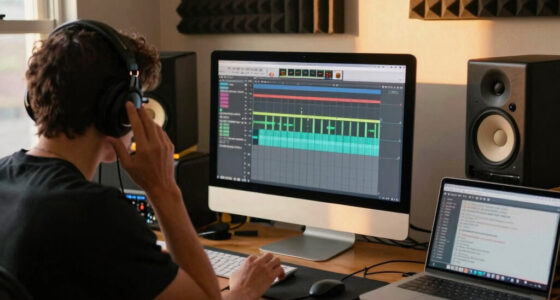
Ever put on headphones and feel like your mix is trapped inside your head? Or notice that panned vocals sit squarely in your skull, not in the room? That’s because headphones cut off the natural interaural crosstalk your ears would get in a real room. Crossfeed solves this. It’s a simple process that blends a tiny, filtered, and delayed slice of each channel into the other. The result? Your headphones mimic the way sounds interact in a space, making your mixes more natural and easier to translate to speakers.
If you’ve ever struggled to get a balanced mix on headphones that sounds good on speakers, you’re not alone. This guide reveals how crossfeed works, how to set it up, and why it’s a secret weapon for better monitoring—whether you’re mixing, mastering, or just trying to make your headphone listening less fatiguing.
Crossfeed blends a filtered, delayed version of the opposite channel into each ear, mimicking natural ear interactions.
Proper settings—mild level, around 700 Hz cutoff, and 200–400 microsecond delay—make headphones sound more like speakers.
Use crossfeed as a translation tool or fatigue reducer, not as a permanent fix; check mixes on actual speakers regularly.
Avoid overdoing it—too much crossfeed narrows the stereo image and dulls transients.
Pair crossfeed with other room/emulation tools for the best headphone-to-speaker translation.
Crossfeed Explained: Making Headphone Mixes Translate to Speakers
Headphones cut off the natural interaural crosstalk your ears rely on in a real room — so hard-panned sounds sit inside your skull and mix decisions fall apart on speakers. Crossfeed fixes it by blending a tiny, filtered, delayed slice of each channel into the opposite ear.
No Acoustic Event in Nature Sounds Like Headphones
In a room, your left ear hears the right speaker — slightly delayed, with highs shadowed by your head. On headphones, each ear hears only its own channel. Your brain reads that as artificial, and your mix decisions pay the price.
The Center Sits Inside Your Skull
Phantom-center vocals and hard-panned elements feel trapped in your head, not in front of you. Width feels exaggerated; depth cues vanish.
Extreme Separation Wears You Down
Total channel isolation is a known driver of headphone listening fatigue — ear strain builds over long sessions and quietly degrades your judgment.
Decisions Don’t Survive Speakers
Panning, reverb amount, vocal level and overall width dialed in on ‘phones often collapse on loudspeakers — the mix falls apart outside your head.
A Gentle Handshake Between Your Ears
Crossfeed taps each stereo channel, filters and delays it, then mixes a controlled amount into the opposite side — recreating what a head and a room do for free.
Source L / R
Each stereo channel feeds its own ear directly — untouched, full detail.
Tap & Attenuate
A slice of the opposite channel is taken, typically −3 to −10 dB down.
Low-Pass Filter
Highs are rolled off (~700 Hz+) to simulate the head’s acoustic shadow.
Micro-Delay
200–400 µs of delay mimics the natural time gap between your two ears.
Opposite Ear
The shaped signal blends in — stereo now behaves like speakers in a room.
Dial In the Sweet Spot
Every crossfeed implementation comes down to level, cutoff and delay. The orange band marks the usable range; the marker is a proven starting preset. Personal calibration is essential — every headphone and head is different.
Crossfeed Level
Start −6 dBHow much of the opposite channel sneaks in. Too high blends the image and smears transients; too low leaves the unnatural separation intact.
Sweet spot: −3 to −10 dB. Good settings are the ones you only notice when bypassed.
Cutoff Frequency
Start 700 HzThe crossed signal is low-pass filtered to simulate head shadowing. Too high sounds phasey; too low dulls detail and smears clarity.
Sweet spot: 700 Hz – 2 kHz. Preserves critical high-frequency information in the direct path.
Interaural Delay
Start 250 µsA tiny time offset makes the blend feel external instead of comb-filtered. Too short causes phase artifacts; too long echoes and smears.
Sweet spot: 200–400 µs — the natural ear-to-ear time difference for sounds in space.
Crossfeed vs. Binaural vs. Raw Headphones
Crossfeed is not full spatial rendering — it blends channels, while HRTF-based binaural processing (Apple Spatial Audio, Waves Nx, Dolby Atmos binaural) convolves sound with head-related transfer functions to fake an entire room. They solve different problems.
| Capability | Raw Headphones | Crossfeed | Binaural / HRTF | Real Speakers |
|---|---|---|---|---|
| Natural channel bleed | ✗ NoneTotal L/R isolation | ✓ SimulatedFiltered + delayed crosstalk | ✓ SimulatedVia HRTF convolution | ✓ RealPhysical room acoustics |
| Front-of-head externalization | ✗ In-head image | ~ PartialMore cohesive, still near-field | ✓ YesVirtual speakers in a room | ✓ Yes |
| Room acoustics simulation | ✗ None | ✗ NoneNot what it’s for | ✓ ModeledReverb, directivity, reflections | ✓ Real |
| Reduces listening fatigue | ✗ No | ✓ YesMild settings, long sessions | ~ VariesHeavy processing can color tone | ✓ Yes |
| Mix translation aid | ✗ Unreliable | ✓ StrongWidth & balance correlate better | ✓ StrongClosest to a control room | ✓ Reference |
| CPU / setup cost | ✓ Zero | ✓ NegligibleFree plugins exist | ~ ModerateConvolution is heavier | ✗ Room + treatment |
Software & Hardware That Does the Job
No special gear required — free plugins are perfectly fine for most users. Dedicated hardware simply makes switching strengths effortless.
Plugins & Software
Insert on your monitor path onlyGoodhertz CanOpener Studio Paid
Polished crossfeed + speaker angle simulation; a modern studio favorite.
TB Isone Freeware
ToneBoosters’ binaural monitor tool — now free, highly adjustable.
112dB Redline Monitor Paid
Speaker simulation with level, frequency and dimension controls.
bs2b library Open Source
Bauer stereophonic-to-binaural — ships in Rockbox, foobar2000, EasyEffects.
Hardware with Built-In Crossfeed
Analog matrices & DSP presetsSPL Phonitor Series Flagship
The adjustable analog “Phonitor matrix” made crossfeed its signature feature.
RME ADI-2 DAC / Pro DSP
Multiple crossfeed strength presets built into a reference-grade DAC/amp.
Chord Mojo 2 Portable
Crossfeed modes in a battery-powered DAC/amp for listening anywhere.
Jan Meier Natural Crossfeed DIY Classic
The well-known analog circuit that predates the plugin era entirely.
Headphone Mix
Exaggerated width, in-head center
Crossfeed On
Filtered, delayed L⇄R blend
Natural Cues
Brain reads speaker-like space
Better Decisions
Panning, reverb, vocal level
Translates
Balanced on real speakers
Use It Like a Scalpel, Not a Sledgehammer
Crossfeed is a translation tool and fatigue reducer — not a permanent fix, and definitely not a replacement for checking your mix on actual loudspeakers.
Do
- Start mild — around −6 dB, 700 Hz, 250 µs, then tune by ear.
- A/B constantly — listen with and without to hear what it changes.
- Use it as a reference check or at low settings while mixing long hours.
- Pair it with room-emulation tools for the closest headphone-to-speaker match.
- Verify on real speakers — crossfeed narrows the gap, it doesn’t close it.
Don’t
- Don’t max it out — heavy crossfeed narrows the image and dulls transients.
- Don’t expect a control room — it’s not binaural HRTF or room simulation.
- Don’t print it — it belongs on your monitor path only, never the mix bus.
- Don’t skip calibration — settings that suit one headphone may not suit another.
- Don’t mix on it blindly — phase smear is real when delay and filter are overdone.
Properly set crossfeed is the cheapest upgrade in monitoring: it gives your ears the environment they crave, so mixes translate better and sessions last longer. You don’t hear it working — you hear it when it’s gone.
The Engineer’s Consensus · Translation Aid, Not ReplacementWhat Exactly Is Crossfeed and Why Should You Care?
Crossfeed is a processing trick that mixes a small, filtered, and delayed slice of the opposite stereo channel into each ear. Think of it like a gentle handshake between your ears—mimicking what happens when sound comes from speakers in a room. Without it, headphones produce a stereo image that’s unnaturally separated, with elements panned hard left or right sitting only in one ear. This can distort how you perceive width, center, and depth.
Why does this matter? Because our brains interpret spatial cues based on natural interaural interactions—how sound waves arrive at each ear, their timing, and intensity differences. When headphones eliminate this crosstalk, the brain perceives the stereo image as more artificial, often leading to a sense of disconnection or fatigue over time. Crossfeed restores a semblance of these cues, making the stereo image more cohesive and less fatiguing. This is especially important during long sessions, where unnatural separation can cause ear strain and listening fatigue, impairing your ability to judge your mix accurately. In essence, crossfeed helps your brain interpret stereo information as it would in a real environment, leading to more reliable translation and less listening fatigue.
Beyond comfort, the correct application of crossfeed can influence how well your mix translates across different listening environments. When your headphones sound more natural, you’re less likely to make mix decisions based on exaggerated stereo width or artificial spatial cues. This alignment with real-world listening conditions ensures your mixes will sound balanced and professional on speakers and other playback systems.
As an affiliate, we earn on qualifying purchases.
How Crossfeed Mimics Natural Hearing — The 3 Key Parameters
To understand crossfeed, think of three adjustable knobs: level, frequency, and delay. These control how much of the opposite channel sneaks into each ear, how dull or bright that sound is, and how it’s timed relative to the direct sound. Adjusting these parameters influences how natural or artificial the resulting stereo image feels, impacting both translation and fatigue.
- Crossfeed level: Usually between -3 dB and -10 dB. This controls how much of the opposite channel is mixed in. Too high, and the stereo image becomes overly blended, reducing perceived width and potentially smearing transients; too low, and the unnatural separation persists. Finding the right balance is crucial—enough to reduce fatigue and improve spatial cues without compromising clarity.
- Cutoff frequency: Typically around 700 Hz to 2 kHz. The crossfed signal is low-pass filtered to simulate head shadowing—high frequencies are shadowed more in real life, giving a natural roll-off. If set too high, the effect sounds artificial; too low, it can dull the sound excessively, reducing detail and causing a phase smear that affects clarity. Proper filtering ensures the blend feels natural and preserves critical high-frequency information.
- Delay: Usually 200–400 microseconds. This tiny delay makes the blend sound more like an external sound source rather than a phasey mess. It mimics the natural time difference between ears when hearing a sound in space, which is vital for perceiving width and localization cues. Too short a delay may cause comb-filtering effects, while too long can produce unnatural echoes or smearing. Fine-tuning delay enhances the sense of space without compromising transient detail.
Understanding these parameters and how they interact is key. For example, increasing the delay can enhance spatial realism but may also introduce comb-filtering if overdone. Similarly, a higher level of crossfeed can make the sound more diffuse but might reduce clarity if set too high. The goal is to find a sweet spot that balances naturalness with precision, tailored to your headphones and listening environment.
Experimentation is essential. Start with moderate settings—say, around -6 dB level, 700 Hz cutoff, and 250 microseconds delay—and then tweak based on your ears and the specific mix. Listening critically during adjustments will help you understand how each parameter influences the perceived space, clarity, and fatigue. Remember, what works for one headphone model or room may not suit another, so personalized calibration is often necessary for optimal results.
As an affiliate, we earn on qualifying purchases.
Frequently Asked Questions
Will crossfeed make my headphones sound exactly like speakers?
Not exactly. Crossfeed reduces unnatural separation and adds a sense of space, but it doesn’t replicate the acoustics of a room or externalize sounds like binaural processing. Think of it as a helpful step toward more natural headphone listening.
Can I use crossfeed all the time while mixing?
Many engineers use it as a reference or fatigue reduction tool rather than a constant. It’s best to listen with and without, and check your mix on actual speakers to ensure translation.
What are good starting settings for crossfeed?
Start with a mild preset—around -6 dB level, 700 Hz cutoff, and 250 microseconds delay. Adjust based on how natural it sounds and how well it helps your mix translate.
Do I need special hardware or plugins?
No. Free plugins like TB Isone or open-source options like bs2b can do the job. Hardware options like SPL Phonitor amps or RME ADI-2 DACs provide built-in controls, but software is perfectly fine for most users.
Will crossfeed cause phase issues or ruin my mix?
It only affects your monitor path, not the final mix. When used correctly, it won’t phase-cancel or smear your transients. Moderation and critical listening are key to avoid overprocessing.
As an affiliate, we earn on qualifying purchases.
Conclusion
Crossfeed is a simple tweak with a big impact. When set right, it transforms your headphone monitor into a more natural, fatigue-free experience—closer to listening on speakers. Think of it as giving your ears the environment they crave, so your mixes translate better and your sessions last longer.
Next time you’re stuck in headphone mode, try a touch of crossfeed. Your ears—and your mixes—will thank you for it.
As an affiliate, we earn on qualifying purchases.
Halloween Picks
halloween
As an affiliate, we earn on qualifying purchases.