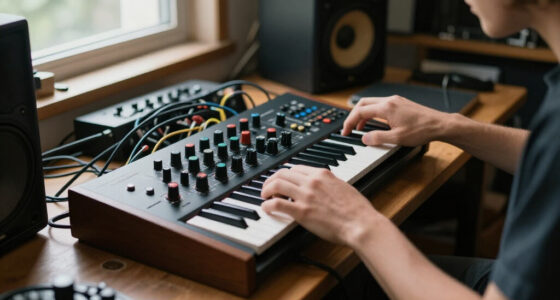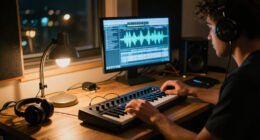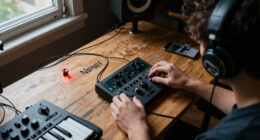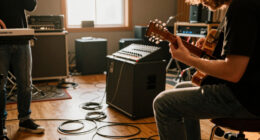
TL;DR

Get audio and creator gear delivered free with Prime
- Fast, free delivery on millions of items
- Prime Video, Amazon Music and more included
- Member-only deals all year
Weighted keys mimic real pianos with heavy resistance, semi-weighted strike a balance for versatility, and synth action keys are super light for fast electronic playing. Your choice depends on your style and goals, with recent models blending these actions for better flexibility.
Ever pick up a keyboard and feel like the keys are a breeze or a chore? That’s because the **action** behind the keys makes all the difference. Choosing the right type isn’t just about comfort — it shapes how you play, record, and express yourself.
In this guide, you’ll learn what sets weighted, semi-weighted, and synth action keys apart. Plus, I’ll share practical tips and recent trends to help you match your gear to your musical style — whether you’re a classical pianist or an electronic music producer.
Weighted keys replicate the feel of an acoustic piano, ideal for classical practice and expressive playing.
Semi-weighted keys offer a middle ground, perfect for versatile studio work and genre-hopping.
Synth action keys prioritize speed and responsiveness, suited for electronic music and stage performance.
Recent innovations allow hybrid actions, combining the best of both worlds for more expressive, customizable play.
Test your options in person if possible — feel is the most important factor in selecting your perfect keyboard action.
Weighted vs Semi-Weighted vs Synth Action Keys
Key action shapes resistance, speed, fatigue and expression. Weighted keys recreate acoustic-piano feedback, semi-weighted keys balance control with agility, and synth action puts rapid response first.
The right action is the one that supports how you actually play.
Core buying principleOne keyboard layout, three very different playing experiences
The mechanism beneath each key determines how much force you use, how quickly the key returns and how naturally your dynamics translate into sound.
Weighted
Hammer-like resistanceDesigned to imitate an acoustic piano. Graded hammer systems can feel heavier in the bass and lighter in the treble, supporting nuanced dynamics and traditional technique.
Semi-Weighted
Control meets agilityA lighter mechanism combines modest resistance with spring-assisted return. It gives piano parts some substance while staying quick enough for pads, organs and synth lines.
Synth Action
Minimal resistanceLight, springy keys return almost instantly. The low-effort feel favors quick runs, repeated notes, sample triggering and long electronic performances with less fatigue.
Relative resistance profile
Compare feel, speed and musical fit at a glance
No action is universally superior. Each design prioritizes a different relationship between physical feedback and playing speed.
| Aspect | Weighted keys | Semi-weighted keys | Synth action keys |
|---|---|---|---|
| Feel | Authentic, substantial and piano-like | Moderate, balanced and adaptable | Light, springy and immediate |
| Resistance | High | Moderate | Low |
| Speed | Measured; requires more finger effort | Quick without losing all feedback | Fastest response for rapid passages |
| Best for | Classical, jazz and technique building | Studio players and mixed genres | Electronic music and stage performance |
| Typical use | Digital piano and acoustic simulation | Workstations and flexible controllers | Synthesizers, organs and sample control |
| Trade-off | More realistic, but potentially tiring | Versatile, but less piano-authentic | Effortless, but offers less resistance |
New designs are blurring the old boundaries
Modern instruments increasingly combine mechanical refinement with digital control, creating more personalized responses across the keyboard.
Graded hammers
Heavier bass keys and lighter treble keys better mirror an acoustic piano.
Progressive feel
Resistance changes across the keybed instead of remaining mechanically uniform.
Digital response
Velocity curves and sensitivity settings tailor how touch becomes sound.
Hybrid action
Piano-like control and faster response converge in one adaptable instrument.
Key insight: adjustable resistance and response settings can expand one keyboard across multiple styles. Most instruments still use a fixed physical action, so check the specifications before assuming the feel can change.
Start with your primary musical goal
Beginners do not all need the same action. Classical learners benefit from realistic resistance, while producers may progress faster on a lighter, more flexible keybed.
Your playing priority
Quick answers
Usually no. The physical mechanism is commonly fixed, though some premium or hybrid models offer adjustable response and resistance features.
Only when realistic piano practice is central. Electronic production and fast triggering may be more comfortable on synth action.
It preserves some expressive resistance while remaining agile enough for varied instruments, genres and studio tasks.
Play each option in person if possible. Specifications describe the mechanism; your hands reveal whether it fits.
What Are Weighted Keys and Why Do They Feel Like a Real Piano?
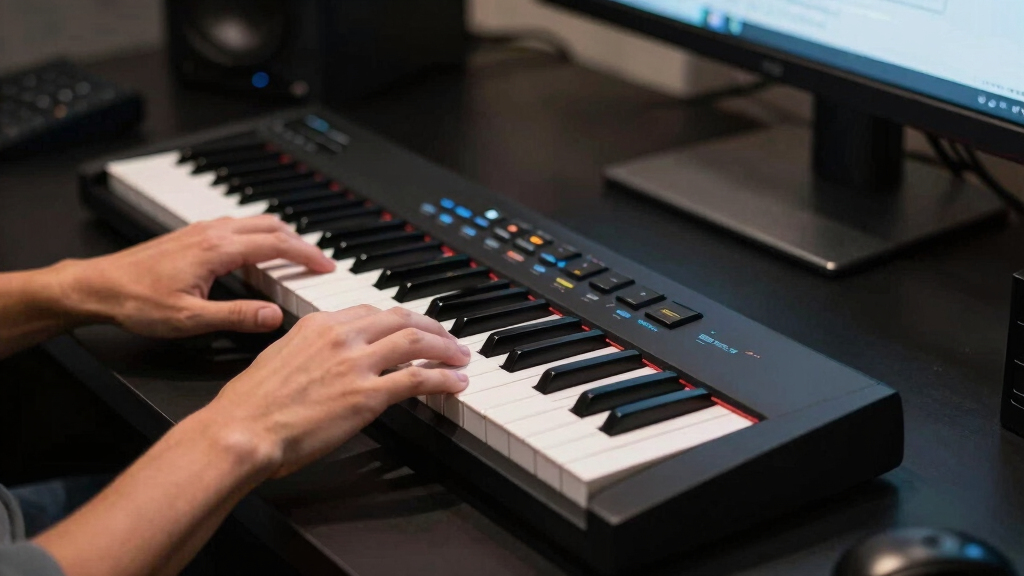
Weighted keys are designed to mimic the feel of an acoustic piano. They use internal mechanisms, like graded hammer action, to add resistance — making the keys heavier in the lower register and lighter as you go up. Think of it as pressing down on a tiny, mechanical piano inside your controller.
For example, if you’re practicing Bach or Chopin, weighted keys help you develop proper finger strength and touch. A digital piano with full weighted keys can recreate the rich, dark aroma of a grand piano’s hammers and strings — that tactile connection makes all the difference.
Many beginners start with weighted keys because they feel most natural for classical practice. It’s like playing an acoustic, which helps build a solid foundation.
As an affiliate, we earn on qualifying purchases.
Semi-Weighted Keys: The Versatile Middle Ground
Semi-weighted keys strike a balance between the heavy, realistic feel of weighted keys and the lightness of synth action. They incorporate a spring or a lighter mechanical system to give some resistance, but not enough to tire your fingers.
Imagine playing a versatile keyboard that responds quickly, but still offers some feedback. That’s semi-weighted. They’re perfect for general use, from pop to R&B, where you want expressive control without the heaviness of a real piano.
Say you’re recording a track and need to switch between piano parts and synth pads. Semi-weighted keys give you enough resistance for expressive playing and quick transitions, making them a favorite among studio musicians.
As an affiliate, we earn on qualifying purchases.
Synth Action Keys Are Light, Fast, and Built for Electronic Music
Synth action keys are the lightest of the bunch — almost springy. They use simple mechanisms that respond instantly to your touch, with minimal resistance. Think of pressing a tiny trampoline instead of a piano hammer.
Electronic musicians love synth action because it lets them play lightning-fast runs, trigger sounds quickly, and perform with minimal fatigue. DJs and stage performers often prefer them because they respond to rapid, precise keystrokes.
Picture yourself on stage, hammering out a rapid bass line or triggering multiple samples in a live set. Light keys let you do that without the drag of heavier action.
As an affiliate, we earn on qualifying purchases.
How Recent Innovations Are Blurring the Lines
Manufacturers are now blending these actions into hybrid models. Thanks to advances in mechanical design, newer keyboards can combine weighted feel with quick response. For instance, some digital pianos feature graded hammer action with adjustable resistance, mimicking real pianos more closely than ever.
Other models let you customize the key response via software, giving you control over resistance, velocity sensitivity, and even the weight distribution across the keyboard. These innovations mean you can get a tailored feel without breaking the bank.
Recently, the trend toward progressive resistance — where keys feel heavier in the lower registers and lighter in the higher — more accurately replicates full-sized acoustic pianos, making digital models more expressive than ever before.
As an affiliate, we earn on qualifying purchases.
Comparison Table: Weighted, Semi-Weighted, and Synth Action Keys
| Aspect | Weighted Keys | Semi-Weighted Keys | Synth Action Keys |
|---|---|---|---|
| Feel | Authentic, heavy, piano-like | Moderate, balanced, versatile | Light, springy, responsive |
| Resistance | High | Moderate | Low |
| Best For | Classical, jazz, serious practice | Versatile, studio work, general use | Electronic music, fast passages, stage |
| Typical Use | Realistic piano simulation | Hybrid playing styles | Speed, triggering, electronic genres |
Which Key Action Fits Your Style? Practical Tips
Choosing the right action is about your playing style and goals. Here’s a quick guide:
- Are you after authentic piano practice? Go weighted.
- Need versatility for studio work or genre-hopping? Try semi-weighted.
- Focus on electronic music, DJing, or stage performance? Synth action is your friend.
Remember, many digital controllers don’t offer changing actions, so pick carefully based on your main use. If you can, test them out in person — feel is everything.
For example, a classical pianist might prefer weighted keys, while a producer doing rapid synth lines might opt for synth action to keep up with tempo.
Frequently Asked Questions
Can I switch between different key actions on a single keyboard?
Most digital pianos and controllers have fixed key actions. However, some high-end models offer adjustable or hybrid options, allowing you to customize resistance or switch modes. Check your gear’s specs before buying if flexibility matters.Are weighted keys necessary for digital pianos?
Not always. If you’re practicing classical piano or want authentic feel, weighted keys are best. For electronic music or quick trigger work, synth action can be more suitable and comfortable.How do semi-weighted keys compare to fully weighted keys?
Semi-weighted keys strike a middle ground, offering some resistance for expressiveness without the heaviness of full-weighted keys. They’re great for musicians who want versatility without sacrificing control.What are the main benefits of synth action keys?
They’re light, fast, and highly responsive, making them perfect for rapid passages, triggering samples, and live electronic performances. Less fatigue is another bonus for long sessions.Are hybrid key actions worth considering?
Absolutely. Hybrid models combine weighted and synth actions, giving you a customizable, expressive experience. They’re especially useful if you switch between genres or playing styles often.Conclusion
Picking the right key action isn’t just about what feels best — it shapes your entire playing experience. Whether you need the authentic resistance of weighted keys or the quick response of synth action, choose what matches your musical journey.
Remember, the best gear is the one that makes you want to play more. So, get your hands on a few options and feel the difference — your music will thank you.
Halloween Picks
halloween
As an affiliate, we earn on qualifying purchases.