
TL;DR

Get audio and creator gear delivered free with Prime
- Fast, free delivery on millions of items
- Prime Video, Amazon Music and more included
- Member-only deals all year
Pressure sensitivity levels indicate how finely a tablet detects pressure. Though 8192 levels sound advanced, most artists find 4096 sufficient. Higher levels offer diminishing returns unless you need maximum control.
Ever wondered if that new tablet with 8192 pressure sensitivity levels is actually worth it? Many artists get caught up in the numbers, thinking more is automatically better. But the truth is, whether you need 8192 depends on how you work, not just what the specs say.
This guide breaks down what pressure sensitivity really means, whether higher levels matter in practical terms, and how to decide if your budget should stretch for the top-tier tech. Let’s cut through the hype and find out what really makes a difference in your digital art.
Most users find 4096 pressure levels sufficient for professional and hobbyist work.
The jump from 1024 to 4096 levels provides a noticeable control upgrade; beyond that, the benefits diminish.
High sensitivity levels like 8192 are more about hardware finesse—if your workflow doesn’t leverage subtlety, they may be overkill.
Other features like responsiveness, latency, tilt support, and build quality often matter more than raw pressure levels.
Test devices in hand if possible—personal feel and software compatibility outweigh pure numbers.
Digital art hardware · Field guide
Pressure Sensitivity Levels Explained: Does 8192 Matter?
Pressure levels describe how finely a tablet detects changes in stylus force. More levels create more potential nuance—but after 4096, the practical gains often become subtle. Your technique, software, latency and pressure curve decide whether that extra resolution ever reaches the canvas.
01 · The mechanism
A dimmer switch for every brush stroke
A pressure level is one discrete point between the lightest detectable touch and your maximum force. The tablet maps those points to brush properties such as size, opacity, flow or texture. More levels make the theoretical transition finer—but they do not automatically enlarge the usable pressure range.
Your hand applies force
The stylus sensor registers how softly or firmly you press. A responsive initial activation force is especially important for delicate lines.
Hardware quantizes it
The tablet converts continuous physical pressure into discrete values—1024, 2048, 4096 or 8192 possible steps.
Software shapes the mark
Your app and brush engine interpret the signal. Pressure curves determine whether those levels feel natural, stiff or overly sensitive.
02 · Diminishing returns
The numbers rise faster than the benefit
The jump from 1024 to 4096 can make subtle shading and tapered lines feel smoother. Doubling again to 8192 offers more measurement precision, but many hands, brushes and applications cannot expose a dramatic difference during ordinary work.
Key insight
Twice the levels does not mean twice the control.
Beyond 4096, improvements are commonly about refinement rather than transformation. The advantage is most visible in feather-light shading, long tonal blends, intricate textures and pressure-driven retouching.
03 · Side-by-side
Which level fits your work?
Choose for the marks you make—not the largest number on the box. A responsive 4096-level stylus with a strong driver can outperform a poorly calibrated 8192-level device in real use.
| Levels | Best for | Control | Main advantage | Trade-off |
|---|---|---|---|---|
| 1024 | Beginners, notes, casual sketching | ✗ Limited nuance | Affordable and straightforward | Shading transitions may feel abrupt |
| 2048 | Sketching, line art, general creativity | ~ Capable | Useful control without premium pricing | Fine tonal shifts can remain subtle |
| 4096 | Serious hobbyists and professionals | ✓ Excellent balance | Smooth strokes with broad compatibility | Few meaningful limitations for most work |
| 8192 | Detailed painting, texture and retouching | ✓ Maximum finesse | Finest available pressure detection | Higher cost and diminishing returns |
Reality check: The difference between 1024 and 4096 is generally easier to feel than the difference between 4096 and 8192.
04 · Real-world impact
Your art style sets the value
High sensitivity matters when pressure variations are central to the visual result. It matters less when the workflow deliberately simplifies strokes into flat, graphic shapes.
Bold lines & flat colour
Comics, icons, cel shading and graphic fills rarely expose the smallest pressure increments. Brush stability and latency are usually more noticeable.
2048–4096 works wellGeneral digital painting
Blending, tapered strokes and textured brushes benefit from good sensitivity, but a calibrated 4096-level device usually delivers professional control.
4096 sweet spotHyper-detailed rendering
Botanical studies, fur, feathers, realistic retouching and subtle tonal work can benefit from the extra finesse of 8192 levels.
8192 can earn its keepHow pressure becomes a visible stroke
05 · Buying priorities
Look beyond the headline specification
Modern professional tablets commonly advertise 8192 levels, often alongside improved tilt sensing, response times and customizable pressure curves. Those supporting features determine whether high-resolution pressure feels expressive or merely impressive on paper.
Bottom line
8192 matters—but only at the edge.
For most artists, 4096 levels provide enough precision for polished professional work. Choose 8192 when your style depends on exceptionally subtle pressure changes and the rest of the hardware is equally refined. Otherwise, put the budget toward lower latency, better ergonomics, tilt support, build quality and dependable software compatibility.
What Are Pressure Sensitivity Levels and Why Do They Matter?
Pressure sensitivity levels are how many discrete points your stylus or tablet can detect when you press down. Think of it like a dimmer switch for your brush. The more levels, the more nuanced your control over line weight, opacity, and shading.
But why does this matter? Higher levels allow for finer gradations in your strokes, which can translate into more realistic shading, subtle texture, and expressive line work. For artists aiming for hyper-realistic or highly detailed work, this nuance can be crucial. However, it’s important to recognize that simply having more levels doesn’t guarantee better art; your software’s ability to interpret pressure data and your technique are equally important. The tradeoff is that increasing levels often comes with higher costs and sometimes more complex calibration, which might not be necessary for all workflows. Essentially, more levels give you more potential control, but only if your workflow and skills are designed to utilize that level of nuance.
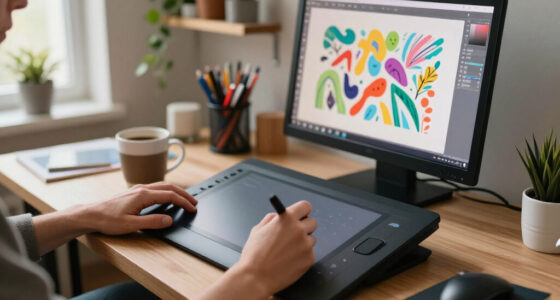
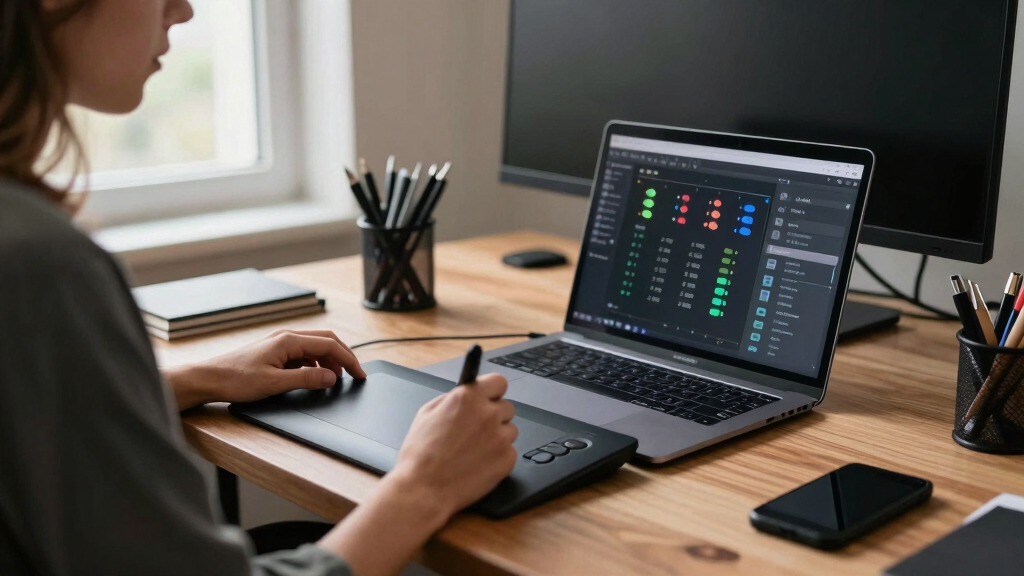
digital art drawing tablet with pressure sensitivity
As an affiliate, we earn on qualifying purchases.
As an affiliate, we earn on qualifying purchases.
How Do Pressure Levels Impact Your Art? Real-World Examples
Imagine you’re creating a detailed botanical illustration. With 1024 levels, you can achieve basic shading, but the transitions might feel a bit abrupt, making your work look less natural. Upgrading to 8192 levels allows you to push the stylus just a little harder or softer to create extremely smooth gradations, mimicking traditional media like charcoal or watercolor. This subtlety can make the difference between a flat digital painting and one with convincing depth and realism.
For a digital painter working on textures such as fur or feathers, these pressure variations enable more expressive strokes that can closely resemble the softness and complexity of real-world materials. Conversely, if your style relies on bold, flat lines or simple fills, the extra nuance in pressure sensitivity may be less impactful. The real-world implication is that higher sensitivity levels are most beneficial when your work demands fine control over subtle variations, but they might be less noticeable for more straightforward styles. The key is understanding how much control you need and whether your software can leverage that extra detail effectively.
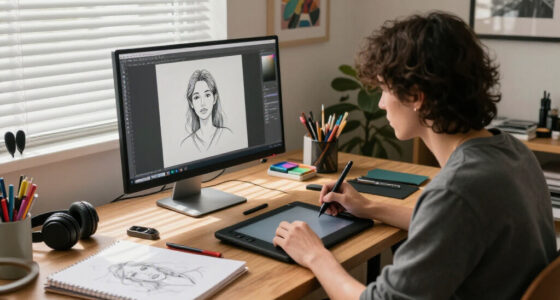
professional stylus for digital art
As an affiliate, we earn on qualifying purchases.
As an affiliate, we earn on qualifying purchases.
Compare Pressure Sensitivity Levels: 1024, 4096, 8192
| Levels | Best For | Pros | Cons |
|---|---|---|---|
| 1024 | Casual artists, beginners | Affordable, simple to use | Limited nuance, less control |
| 2048–4096 | Serious hobbyists, semi-professionals | Good balance of control and price | Some nuances might still be subtle |
| 8192 | Professionals, artists demanding maximum control | Very fine detail, smooth transitions | Higher cost, hardware demands |
The jump from 1024 to 4096 levels significantly enhances your ability to create smoother, more natural strokes, especially in subtle shading and delicate details. This upgrade can be seen as a practical step for most artists seeking better control. Moving to 8192 levels, however, offers diminishing returns for many users—it’s about capturing nearly every tiny pressure variation, which can matter immensely in hyper-realistic painting or detailed illustration. But it also means investing in more expensive hardware and potentially more complex calibration. So, weigh whether your style and workflow truly require this level of nuance, or if the incremental benefits are worth the investment.
graphics tablet 4096 pressure levels
As an affiliate, we earn on qualifying purchases.
As an affiliate, we earn on qualifying purchases.
Does More Pressure Levels Really Make a Difference in Your Workflow?
In practice, the difference between 4096 and 8192 levels often feels subtle. Many professional artists report that once you reach around 4096 levels, the improvements are more about hardware finesse rather than a fundamental leap in control. For instance, a seasoned digital painter might notice that shading appears smoother and transitions more seamless with 8192, especially in highly detailed work. However, for many hobbyists or casual artists, this extra nuance remains imperceptible during regular use.
Think of it like upgrading from a good car to a luxury model—while the differences are real, they may not translate into a dramatically better experience unless your work demands it. The crucial factor is whether your software can interpret those tiny pressure variations and if your technique can leverage that level of sensitivity. If not, the higher levels might be more of a marketing feature than a practical necessity.
Ultimately, consider your specific workflow and artistic goals. If your work involves detailed shading, fine line work, or hyper-realistic rendering, the extra sensitivity could be beneficial. Otherwise, a well-calibrated 4096-level tablet might serve you just as well, with less investment and complexity.
high sensitivity drawing tablet 8192 levels
As an affiliate, we earn on qualifying purchases.
As an affiliate, we earn on qualifying purchases.
What’s New? The Latest in Stylus and Tablet Tech
Advances in stylus technology are making higher sensitivity levels more practical and beneficial. Modern devices now feature faster response times, improved tilt and angle detection, and more customizable pressure curves. For example, the Wacom Pro series and Huion Kamvas series now offer 8192 levels with ultra-low latency, which translates to less lag and more natural control. These improvements mean that the subtle pressure variations become more responsive and easier to utilize effectively, especially when paired with compatible software.
Furthermore, recent developments include multi-input capabilities—such as combining pressure, tilt, and grip sensors—to emulate more natural drawing gestures. This integration enhances the overall experience, making high sensitivity levels more than just a number—they become part of a broader suite of expressive tools. However, it’s important to note that hardware advancements alone aren’t enough; the software must also be optimized to interpret and respond to these inputs accurately. The trend is toward creating more intuitive, responsive tools that allow artists to work more naturally and precisely.
Should You Spend Extra for 8192 Levels? What Factors Matter Most
Deciding whether 8192 levels are worth the extra cost hinges on your specific needs and workflow. If your art involves hyper-realistic rendering, intricate textures, or detailed retouching, the finer pressure control can help you achieve more subtle shading and more natural strokes—potentially justifying the investment. However, for hobbyists or those who mainly do bold lines and flat colors, the difference is often negligible, and the extra expense may not deliver proportional benefits.
Beyond pressure levels, consider responsiveness, tilt support, build quality, and software compatibility. A device with 8192 levels but poor responsiveness or lag might hinder your workflow more than a device with fewer levels but smoother performance. The tradeoff is that higher-end hardware typically costs more and may require more calibration and setup. Ultimately, reflect on your artistic style and whether your work demands that level of nuance. If you’re unsure, testing the device in person or reading reviews can help determine if the extra investment aligns with your goals.
What Really Matters Besides Pressure Levels?
While pressure sensitivity is an important feature, it’s only one piece of a complex puzzle. Factors like responsiveness, latency, tilt detection, ergonomics, and build quality often have a more immediate impact on your drawing experience. For instance, a stylus with 4096 levels but excellent responsiveness and low latency can outperform a device with 8192 levels that feels sluggish or unresponsive. Similarly, tilt support allows for more natural shading and brush control, which can be more valuable than just raw pressure data.
Consider how the device feels in your hand—its weight, grip, and overall ergonomics—since comfort directly affects your ability to work for extended periods. Also, evaluate how well the device integrates with your preferred software; some programs interpret pressure and tilt more effectively than others. In essence, a balanced approach that considers multiple features will yield better results than focusing solely on pressure levels.
Your Best Bet: Picking the Right Balance for Your Style and Budget
Choosing the ideal tablet isn’t just about chasing the highest specs. It’s about aligning your artistic needs, budget, and preferred workflow. If your style involves detailed painting, hyper-realistic work, or delicate shading, investing in a device with 8192 levels could give you the control and subtlety you need. Conversely, if your work is more straightforward—such as bold comic lines or flat coloring—then a tablet with 2048 or 4096 levels might be perfectly adequate and more cost-effective.
Remember, the quality of the stylus, the responsiveness of the device, and how well your software interprets pressure are often more impactful than raw numbers. Trying out devices in person or reading user reviews can help you gauge how they feel and perform in real-world scenarios. The goal is to find a balance where control, comfort, and price meet—ensuring you get a tool that enhances your creativity without unnecessary expense.
Frequently Asked Questions
Does having more pressure sensitivity levels improve my artwork?
Yes, especially for detailed, nuanced work. But the difference between 4096 and 8192 levels can be subtle, and your technique plays a bigger role.Is 8192 levels worth the extra cost?
If you work professionally in hyper-realistic or detailed illustration, it might be. For casual or hobby use, 4096 levels are usually enough.Can I upgrade my stylus or tablet to get higher sensitivity?
Typically, sensitivity levels are tied to specific hardware. Upgrading usually means replacing your device with a newer model.Are there diminishing returns with very high sensitivity levels?
Yes. Beyond 4096, the practical benefits often become harder to notice unless your work demands extreme detail and control.What else should I consider besides pressure sensitivity levels?
Responsiveness, latency, tilt detection, build quality, and software compatibility are equally important for a great drawing experience.Conclusion
In the end, more pressure levels mean more potential for nuance. But don’t chase numbers just for the sake of it. Focus on how your device feels—how naturally it responds to your hand. Sometimes, a well-balanced tablet with 4096 levels and good responsiveness beats the flashiest specs.
Remember, your art depends more on your technique and workflow than the raw count of pressure sensitivity levels. So pick what feels right in your hand and fits your budget. After all, the best tool is the one you actually use.
Halloween Picks
halloween
As an affiliate, we earn on qualifying purchases.