
TL;DR

Get audio and creator gear delivered free with Prime
- Fast, free delivery on millions of items
- Prime Video, Amazon Music and more included
- Member-only deals all year
Your recording bag should be a balance of essential gear, redundancy, and weather protection. Focus on quality, organization, and prepping for unexpected issues to keep your shoot smooth and your sound clean.
Prioritize wind protection—budget for it as much as your mic; outdoors, wind noise is the biggest enemy.
Organize your gear in modular, weatherproof bags—quick access saves time and stress in the field.
Carry at least double the power and media needed—cold weather and unpredictable shoots demand redundancy.
Use safety tracks and metadata logging—these small steps prevent major headaches after the shoot.
Stay updated on tech—32-bit float and USB-C power are game changers for flexible, reliable recording.
Field Audio · Packing Guide
Field Recording Bag Setup: What to Pack for a Shoot
A great field kit is a balance of essential gear, redundancy, and weather protection. It’s not just what you own — it’s how you pack it. The right tools at your fingertips, shielded from the elements, ready for any scenario — that’s what keeps a shoot smooth and the sound clean.
#1
Wind noise is the biggest outdoor enemy — and it’s nearly unfixable in post
2×
The redundancy rule — carry double the power & media you think you need
1:1
Budget ratio — spend as much on wind protection as on the microphone itself
2–4+
Tracks — 2 for most, 4+ for multi-mic & safety
64GB
Typical media for a 2-hour nature session
32-bit
Float recording now in budget recorders
3
Layers of wind defense: foam / furry / blimp
2×
Batteries & cards vs. your estimate — always
Section 01 · The Core Kit
Three pillars of every field bag
Everything starts with a dedicated recorder, flexible microphones, and proper mounting. Handling noise ruins more takes than bad mics — and clean preamps matter more than spec-sheet numbers when the source is a quiet dawn ambience.
Pillar 01 · Recorder
The heart of the kit
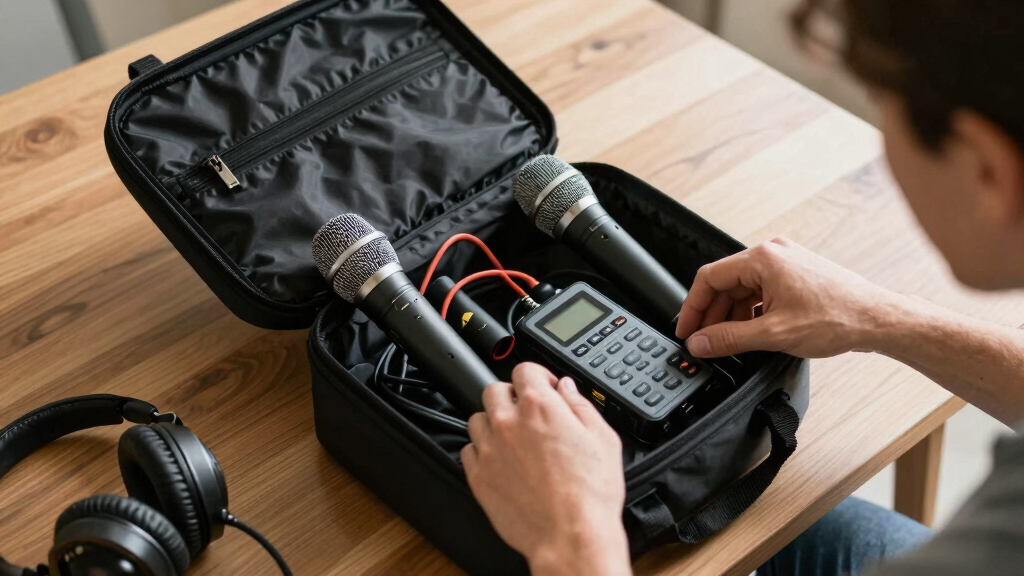
Dedicated field recorders (Zoom F-series, Sound Devices MixPre, Tascam Portacapture) deliver clean preamps and multiple tracks. Low self-noise is what separates crystal ambience from mud.
- 2 tracks for most shoots
- 4+ tracks for multi-mic & safety layers
- 32-bit float now in budget handhelds (Zoom F3, H-essential, Tascam FR-AV2)
- USB-C power banks replace AA anxiety
Pillar 02 · Microphones
Choose for the scenario
Stereo pairs (XY, ORTF, spaced omni) and mid-side rigs give post flexibility. Shotguns isolate distant sources but demand precise aim. Lavs excel at dialogue — but suffer outdoors in wind.
- XY / ORTF / spaced omni stereo pairs
- M/S rigs for adjustable stereo width
- Shotgun for focused, distant sources
- Contact mics & hydrophones as creative add-ons
Pillar 03 · Mounting
Accessories that save sound
Shock mounts and boompoles aren’t optional extras — they isolate the mic from handling vibration and enable correct placement, especially in unstable or windy conditions.
- Shock mount on every outdoor mic
- Boompole or pistol grip for reach
- Spare thread & shoe adapters
- Handling noise ruins more takes than bad mics
Section 02 · Wind Protection
Don’t leave wind to chance
Wind noise is largely unfixable in post — prevention is the entire game. Budget roughly as much for wind protection as for the microphone itself.
| Solution | Conditions | Blocks Turbulence | Relative Cost | Field Verdict |
|---|---|---|---|---|
| Foam Cover | Calm air, indoors, light breeze | ✗ No — useless in gusts | $ | ✗ Never rely on it outdoors |
| Furry Windjammer | Moderate to strong outdoor wind | ✓ Yes — diffuses airflow | $$ | ✓ The everyday standard |
| Blimp + Furry | Severe wind, coastal & exposed locations | ✓✓ Maximum protection | $$$ | ~ Overkill indoors, essential in storms |
I once forgot the furry cover on a coastal shoot and spent hours trying to salvage wind-ruined recordings. Prevention is cheaper than fixing it later — every single time.
Field lesson · the cost of skimpingSection 03 · Power, Media & Budget
Pack double — then monitor everything
Cold drains batteries and shoots run long. Carry twice the power and media you estimate, keep spares warm in an inner pocket, and format every card in-device before rolling. Where should the money go? Wind protection earns parity with the mic.
Section 04 · The Working Chain
From soundscape to safe files
Every link in the chain either protects the signal or protects the session. Skip one, and the shoot inherits the risk.
Source
Quiet ambience demands low self-noise mics & clean preamp gain
Protect
Shock mount + furry windjammer or blimp before anything else
Record
32-bit float + safety tracks kill clipping & gain anxiety
Monitor
Closed-back isolation catches rustle, RF & traffic in real time
Back Up
Dual media, field offload & metadata logging before you leave
Section 05 · The Bag Itself
Organization is a feature
A well-organized bag saved a mountain shoot from a sudden downpour — windjammer and recorder in hand in seconds, no fumbling. Access speed and weatherproofing beat capacity.
Option A · Working On-Location
Sling / Shoulder Bag
K-Tek, Orca, or Porta Brace style — wear it while you record, mixer at your fingertips.
- Instant access to recorder & controls
- Ideal for run-and-gun and dialogue work
- Modular pouches for cables & batteries
Option B · Hike-In Shoots
Sturdy Backpack
Distributes weight evenly over long approaches and shields gear from trail abuse.
- Rain cover + dry bags + silica gel packs
- Weatherproofing for sudden weather swings
- Keep all-day carry weight manageable
Small Essentials · The Lifesavers
Your recorder is the heart of your kit — pick the right one
The core of any outdoor recording kit is a dedicated field recorder. These devices—like the Zoom F-series or Sound Devices MixPre series—offer clean preamps and multiple tracks. A good preamp makes the difference between a muddy recording and crystal-clear ambience. For most shoots, 2 tracks are enough, but if you’re multi-mic’ing or want safety layers, aim for 4+ tracks. Budget options like the Zoom H4n can work for quick, casual shoots, but for serious work, investing in a recorder with low self-noise and robust preamps pays off.
outdoor field recording wind protection
As an affiliate, we earn on qualifying purchases.
As an affiliate, we earn on qualifying purchases.
Microphones and mounting gear — your tools for capturing sound
Choosing the right mics is essential. Stereo pairs in XY, ORTF, or spaced omni setups give you flexibility. Mid-side rigs allow for easy post-mono adjustments, which is crucial when you need to adapt your stereo image after recording. Shotgun mics focus on distant sounds, but they require precise aiming to avoid capturing unwanted noise. Lavalier mics are ideal for capturing dialogue in controlled environments but less so outdoors due to wind susceptibility. Specialty mics—like contact mics or hydrophones—add creative options but come with tradeoffs, such as increased sensitivity to handling noise or water. Remember, shock mounts and boompoles are not just accessories; they directly impact sound quality by reducing handling noise and ensuring proper mic placement. Using a shock mount on a shotgun mic attached to a boompole, for example, isolates the mic from handling vibrations that can ruin recordings, especially in windy or unstable environments. Investing in quality mounting gear can mean the difference between usable sound and unusable noise, especially when conditions are less than ideal.
portable weatherproof recording bag
As an affiliate, we earn on qualifying purchases.
As an affiliate, we earn on qualifying purchases.
Wind protection — don’t leave it to chance outdoors
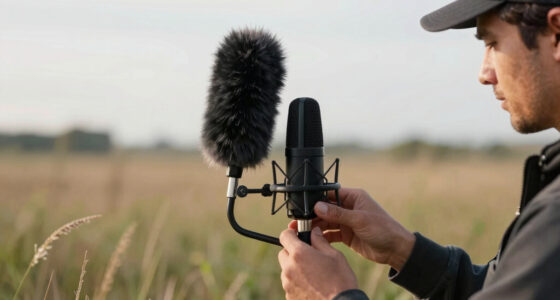
Wind noise is the number one enemy outside. Foam covers are useless in strong gusts because they don’t block the turbulent airflow that causes noise. Instead, use furry windjammers—like Rycote’s dead cats—or even blimps designed for shotgun mics. These are engineered to diffuse and block wind, preserving the clarity of your recordings. A quick story: I once forgot the furry cover during a coastal shoot, and I spent hours trying to salvage wind-ruined recordings. Prevention is cheaper than fixing it later, and the cost of wind protection is minimal compared to the time and effort needed to repair or re-record. Budget roughly as much for wind protection as for your mic—these are your shield against chaos. Skimping on wind protection might save a few dollars upfront, but it can cost you hours of post-production work or unusable recordings, especially in unpredictable outdoor conditions where wind can change suddenly and dramatically.
professional field recorder with multiple inputs
As an affiliate, we earn on qualifying purchases.
As an affiliate, we earn on qualifying purchases.
Monitoring — hear what you’re capturing in real time
Closed-back headphones like Sony MDR-7506 are standard because they provide accurate, flat monitoring, allowing you to hear exactly what your mic picks up without ambient distractions. This real-time feedback is crucial for catching issues immediately—clothing rustle, RF interference, or distant traffic—that could ruin a take. During a recent forest recording, I noticed a faint buzzing caused by my phone’s Bluetooth, which I would have otherwise not detected until post-production. Catching such problems early means you can adjust or re-record on the spot, saving time and ensuring quality. Earbuds or open-back headphones are insufficient for field monitoring because they leak sound and don’t isolate ambient noise, making it harder to detect subtle problems. Reliable monitoring is non-negotiable for professional results, especially in dynamic outdoor environments where conditions can change rapidly. Investing in good headphones and understanding how to interpret the sounds they relay is essential for successful field recording.
As an affiliate, we earn on qualifying purchases.
Power and storage — keep your session running smoothly
Carry extra AA batteries—at least twice what you think you need—because cold weather drains power faster and backup is essential. Cold environments can reduce battery life significantly, so keeping spares warm in an inner pocket ensures they last longer. Modern recorders with USB-C ports can run off portable power banks, which are more convenient and environmentally friendly than constantly replacing batteries. For storage, pack multiple SD cards from reputable brands like SanDisk or Lexar, and always format them in your recorder before use. Keep spares in a waterproof case to prevent damage. For example, a typical 2-hour nature ambush might require 64GB of space, but it’s wise to have extra cards on hand in case of accidental corruption or the need for multiple takes. Having redundant power and media ensures your session can continue uninterrupted, especially in remote locations where re-supplying isn’t an option. Planning for power and storage isn’t just about convenience—it’s about safeguarding your entire recording session against unforeseen issues that could compromise your work.
The bag itself — organization makes a difference
Choose a sling or shoulder bag if you need quick access—think K-Tek or Orca models. For hike-ins, a sturdy backpack protects your gear and distributes weight evenly, reducing fatigue during long walks. Use modular pouches for cables, batteries, and small accessories to keep everything organized and easily accessible. Proper organization minimizes the time spent searching for gear and reduces the risk of forgetting important items. Keep weatherproofing in mind—rain covers, silica gel packs, and dry bags prevent moisture damage, which is vital in outdoor environments where sudden weather changes are common. During a mountain hike, a well-organized bag saved me from digging through clutter during a sudden downpour, allowing me to quickly access my windjammer and recorder without fumbling. An organized setup not only saves time but also protects your gear, ensuring that everything is ready when you need it most.
Small essentials that make a big difference
Always pack gaffer tape, spare cables, adapters, a small multi-tool, and a headlamp. These items may seem minor, but they can be lifesavers when unexpected issues arise. Gaffer tape is versatile—used to seal loose connections, secure cables to prevent tripping hazards, or temporarily fix gear. Spare cables and adapters prevent downtime if your primary ones fail or get damaged. A small multi-tool can handle minor repairs or adjustments on the fly, saving you from a trip back to base. A headlamp is invaluable in low-light conditions, ensuring you can see your gear and make adjustments safely. A notebook or logging app helps you tag recordings with scene info—this metadata simplifies post-production. Carry a lens cloth to wipe dust or fingerprints off mics and gear—keeping equipment clean optimizes performance. These tiny items, when carried proactively, can prevent significant delays, improve your efficiency, and ensure your recordings are as pristine as possible. I once used gaffer tape to seal a loose mic connector, which instantly saved my shoot from failure—small tools, big impact.
Redundancy and workflow — never rely on a single setup
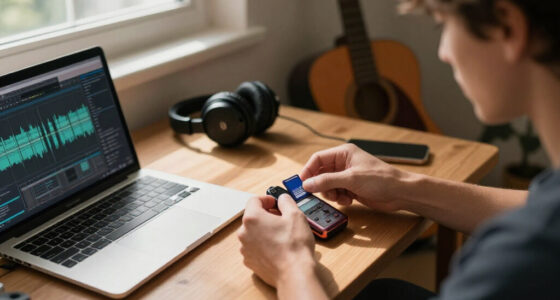
Use a backup recorder for critical moments—like a safety track or dual recordings—because equipment failure can happen unexpectedly. Always back up files in the field, either on your laptop or phone with a card reader, to prevent data loss if a card corrupts or gets damaged. Logging metadata immediately—scene, location, time—prevents headaches later by making post-production easier. For instance, during a documentary shoot, I recorded an extra safety track that saved my project after a file corruption on the main card. Redundancy isn’t just about backup gear; it’s about creating a workflow that minimizes risk and maximizes the chances of capturing every important sound. Having multiple copies and a clear logging system ensures that even if something goes wrong, your project can still succeed. This approach might seem time-consuming initially, but it’s an investment in reliability and peace of mind during critical recording sessions.
Recent tech trends that change your setup
32-bit float recording is now mainstream, making gain staging less stressful because it prevents clipping even when levels are unexpectedly high. Devices like the Zoom F6 or Sound Devices MixPre II allow recording without clipping—crucial in unpredictable environments where levels can change rapidly. USB-C power delivery extends recording time off cheap power banks, reducing the need for carrying multiple batteries and allowing more flexibility in remote locations. Wireless timecode syncs with compact units like Tentacle Sync are increasingly affordable, simplifying multi-camera or multi-microphone setups and ensuring synchronization accuracy. Specialty mics—like ambisonic or hydrophones—are more accessible and versatile than ever, opening creative doors for immersive soundscapes. These technological advancements mean your kit can be lighter, smarter, and more reliable, giving you more confidence in challenging environments. Staying updated on these trends allows you to optimize your gear, reduce weight, and enhance your creative possibilities, ultimately making your field recording process more efficient and professional.
Frequently Asked Questions
What recorder should I buy for under $500?
For a tight budget, look at the Zoom H4n or the Tascam DR-40X. They offer decent preamps and recording quality for casual projects. But if you want reliability for professional work, investing in a recorder with low self-noise and more tracks pays off long-term.
How many SD cards and batteries should I pack?
As a rule of thumb, carry at least twice what you think you’ll need. For a 2-hour shoot, 64GB cards are common, but pack 2-3 for safety. Batteries—especially in cold weather—should be doubled; keep spares warm in an inner pocket to extend their life.
How do I prevent wind noise outdoors?
The best fix is a furry windjammer and a blimp for your mic. Position the mic behind natural windbreaks—like rocks or bushes—and avoid using foam covers alone. Proper wind protection makes the difference between usable sound and unusable noise.
Should I use a sling bag or backpack?
If you’re moving between locations, a sling or shoulder bag lets you access gear quickly. For hike-ins or longer walks, a backpack distributes weight and keeps everything protected. Match your choice to your workflow and environment.
Are built-in mics good enough for field work?
Built-in mics are fine for quick notes or rough sketches, but external mics offer better placement, less self-noise, and more creative options. External mics also handle wind and handling noise more effectively, critical for professional results.
Conclusion
A well-packed field recording bag isn’t just about gear—it’s about how you prepare for the unexpected. Every piece, from wind protection to backup batteries, plays a role in capturing pristine sound. When you organize smartly and think ahead, you turn chaos into clarity—making every shoot a success.Halloween Picks
halloween
As an affiliate, we earn on qualifying purchases.