
TL;DR

Get audio and creator gear delivered free with Prime
- Fast, free delivery on millions of items
- Prime Video, Amazon Music and more included
- Member-only deals all year
Lavalier mics are discreet and great for close, controlled conditions, while shotgun mics excel at isolating sound from a distance in noisy outdoor settings. Recent tech developments like windshields and wireless systems make outdoor recording easier and more reliable.
Ever tried capturing an interview outdoors? It’s a mess of unexpected sounds—car horns, rustling leaves, gusts of wind. Your microphone choices can make or break the final audio. This guide cuts through the jargon to show you which mic works best in different outdoor scenarios, with real-world tips from the field.
Whether you’re on a busy street or in a quiet park, understanding the strengths and limits of lavalier and shotgun mics helps you get clear, professional sound. No fluff, just straightforward advice from someone who’s built studios on a shoestring budget but still cares about quality.
Choose a lavalier for close, controlled outdoor interviews; pick a shotgun for distant, noisy environments.
Wind protection—like high-quality windshields—is essential for both mic types outdoors.
Position your mic carefully: clip close to the mouth for lavs, aim directly at the subject for shotguns.
Recent tech, like wireless systems and advanced windshields, make outdoor recording more reliable and higher quality.
Always test your setup before recording, monitor audio live, and adapt to environmental changes on the fly.
How to Mic an Outdoor Interview: Lav vs Shotgun
Wind, traffic, crowds and changing distance can ruin an otherwise strong interview. The right microphone—and disciplined placement—turns an unpredictable location into clear, professional dialogue.
Two routes to cleaner dialogue
A lav wins through proximity: it stays close to the voice and moves with the subject. A shotgun wins through directionality: it concentrates on the source it is aimed toward while rejecting much of the sound arriving off-axis.
Closeness creates intimacy
A small clip-on mic placed on clothing near the mouth. It is discreet, fast to deploy and ideal when the interviewee needs freedom to move.
Direction creates separation
A highly directional mic mounted on a boom, stand or camera and aimed toward the subject’s mouth from outside the frame.
Where each microphone wins
Neither microphone is universally better. Evaluate distance, ambient noise, movement, framing and how much control you have over the subject and location.
| Feature | Lavalier | Shotgun |
|---|---|---|
| Placement | ✓Clipped close to the mouth | ~Boom or camera, aimed at the mouth |
| Quiet location | ✓Fast, discreet and intimate | ~Excellent if close enough and well aimed |
| Noisy location | ~Proximity helps, but omnidirectional lavs still hear ambience | ✓Directional rejection helps isolate the voice |
| Mobility | ✓Moves naturally with the subject | ~Requires an operator or stable position |
| Hidden setup | ✓Small and easy to conceal | ✗Must remain outside the frame |
| Primary risk | ✗Rustle, wireless interference and battery failure | ✗Missed aim, excessive distance and wind exposure |
| Multiple people | ~Usually one mic and channel per person | ✓A boom can follow different speakers |
Let the scene choose the microphone
Start with the environment, not the gear bag. The quieter and more controlled the scene, the easier it is to favor convenience. As noise, distance and framing demands rise, directionality becomes more valuable.
Choose a lav
Clip close, fit a small windscreen and keep fabric clear of the capsule. The subject can walk and turn naturally.
Choose a shotgun
Get the boom as close as framing allows, point toward the mouth and use substantial wind protection.
Record both
Use the lav as a consistent close source and the shotgun as a focused backup. Keep each on a separate channel.
Field priority index
Relative importanceEditorial field index: relative decision weight, not laboratory performance. Wind protection and placement matter for both microphone types.
Clean sound is a chain
A premium microphone cannot rescue poor positioning or an unchecked signal. Follow the same sequence every time so problems reveal themselves before the interview begins.
Listen for wind channels, traffic cycles, crowds and reflective surfaces.
Fit the correct foam, furry windshield or dead cat before levels are set.
Keep the lav clear of fabric or aim the shotgun directly toward the mouth.
Record speech, movement and a few seconds of location ambience.
Wear headphones and adapt as wind, distance or RF conditions change.
Before pressing record
- Check the actual interview position, not only the general location.
- Secure lav cables and isolate the capsule from clothing and jewelry.
- Move the shotgun closer before increasing recorder gain.
- Confirm wireless range, battery life and a clean radio-frequency channel.
- Record separate safety channels when using a hybrid setup.
- Capture room tone—or location tone—for smoother edits.
Technology that helps
Layered windshields reduce destructive air movement around the capsule.
Improved stability, range and battery reporting simplify mobile setups.
Real-time noise reduction can improve monitoring and usable clarity.
Independent lav and shotgun tracks provide options when conditions shift.
From environment to usable interview
Choose for the scene, then work the mic.
Use a lavalier when proximity, discretion and mobility matter in a controlled location. Use a shotgun when distance, framing or noisy surroundings demand focused pickup. Whichever you choose, effective wind protection, accurate placement, a proper sound check and continuous headphone monitoring will influence the result more than the label on the microphone.
What is a lavalier mic and why it’s perfect for close-up outdoor interviews
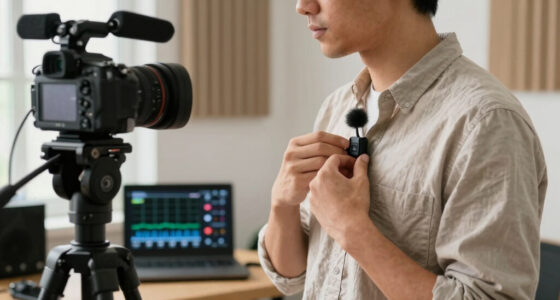
A lavalier mic, often called a lav mic, is a tiny, clip-on microphone that attaches directly to your subject’s clothing. When positioned correctly—just a few inches from the mouth—it captures speech with crisp clarity. Imagine a reporter standing in a park, with a small mic clipped to their lapel—sounds close and intimate, even when the background is noisy.
Plus, lavaliers are discreet, making them ideal for interviews where you want to stay out of sight or avoid distracting the audience. They’re especially handy in controlled outdoor settings, like a quiet street or a garden, where wind and ambient noise are minimal.
Understanding why they work well in these settings involves recognizing that their proximity to the mouth minimizes the pickup of ambient sounds. However, this close placement also means that clothing rustle, jewelry, or breathing can sometimes interfere, requiring careful placement and sometimes post-processing. The tradeoff is that lavaliers excel in environments where background noise is manageable and mobility is essential, but they require careful handling to avoid distracting noises from clothing or hair.
outdoor interview lavalier microphone
As an affiliate, we earn on qualifying purchases.
As an affiliate, we earn on qualifying purchases.
Why shotgun mics are your best friend for capturing distant voices outdoors
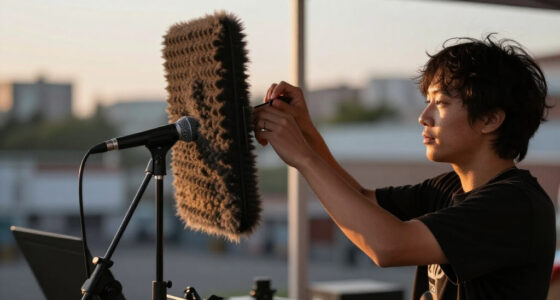
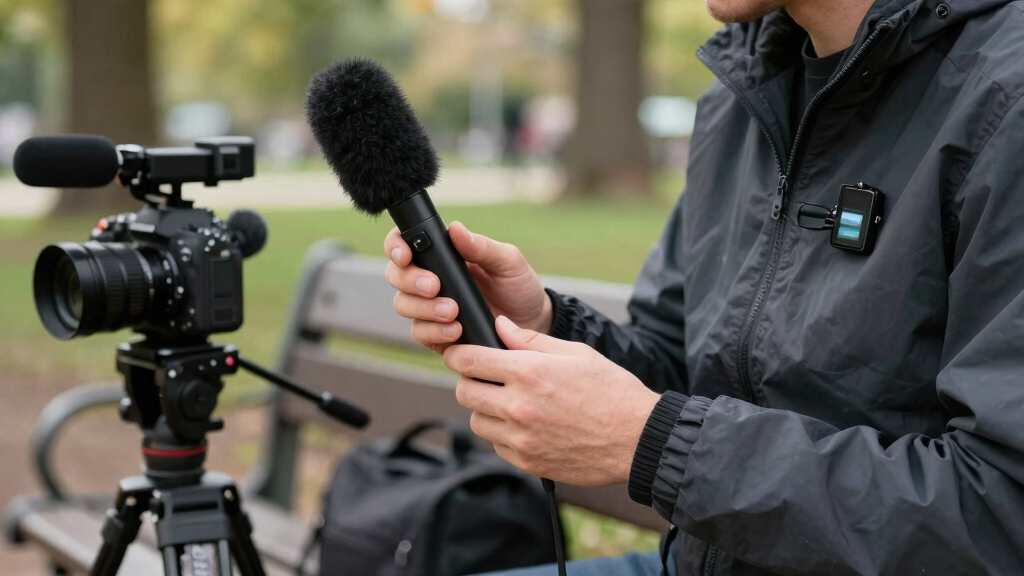
Shotgun microphones are super directional. They pick up sound mainly from the direction they’re pointed, rejecting most noise from the sides and behind. Think of a sniper rifle—focused and precise. When you’re filming an outdoor interview from a distance, a shotgun mounted on a boom pole or camera effectively isolates your subject’s voice from the hustle around them.
In noisy outdoor settings—say, a crowded street or a festival—a shotgun with a good windscreen can reduce wind noise by up to 80%. That’s a significant reduction, but it’s important to understand that this effectiveness depends heavily on proper positioning and the quality of the wind protection. The tradeoff here is that shotgun mics are more sensitive to aiming errors; if not pointed accurately at the subject’s mouth, the audio can become distant or muffled. This makes them less forgiving in dynamic environments, but when used correctly, they provide a clean, focused sound that’s hard to match with other mics.
Implications for outdoor recording are profound: they allow you to maintain a respectful distance from your subject, reducing the intrusion and making the interview look more natural. However, this also means that setup takes more time, and windy conditions can still pose challenges if windshields aren’t used properly. The key is understanding that shotgun mics excel at isolating sound from a distance but require careful aiming and environmental awareness to maximize their benefits.
shotgun microphone for outdoor recording
As an affiliate, we earn on qualifying purchases.
As an affiliate, we earn on qualifying purchases.
Compare lavalier and shotgun microphones side by side
| Feature | Lavalier Microphones | Shotgun Microphones |
|---|---|---|
| Placement | Clipped on clothing, close to mouth | Mounted on boom or camera, aimed at subject |
| Best for | Close-up, discreet interviews in controlled outdoor settings | Distant interviews, noisy environments, multiple subjects |
| Sound quality | Clear, intimate, but can pick up clothing rustle and breathing | Focused, isolates voice, less ambient noise, but sensitive to aiming |
| Wind noise handling | Requires windscreen, limited effectiveness in high wind | Needs high-quality windshields; very effective with proper wind protection, but wind can still be an issue if not managed |
| Mobility | Very portable, minimal setup, easy to hide | Requires positioning and aiming, but offers flexibility for different outdoor setups |
As an affiliate, we earn on qualifying purchases.
How to choose the right mic based on your outdoor scene
Pick a lavalier if your interview is in a quiet park or garden. It’s quick to set up and keeps the focus tight on your subject. Just clip it on, run a quick sound check, and you’re good to go.
Opt for a shotgun if you’re in a bustling street, a crowded event, or you want to stay at a distance. It’s more setup but offers better control over background noise. Position it carefully—aimed directly at your subject’s mouth, ideally with a windscreen.
If your environment shifts—say, from a quiet park to a windy alley—you might even consider hybrid setups. Use a lavalier for close-up shots and switch to a shotgun when background noise ramps up. Understanding these differences helps you make informed decisions that can save you time and improve audio quality in unpredictable outdoor conditions.
wireless microphone system for outdoor interviews
As an affiliate, we earn on qualifying purchases.
As an affiliate, we earn on qualifying purchases.
Practical tips for outdoor mic setup and getting clean audio
- Always test audio levels before starting. Walk around the location, listen for wind or background noise, and adjust placement accordingly. This prevents surprises during recording and ensures you’re capturing the best possible sound from the start.
- Use windshields or dead cats—especially for shotgun mics—to cut down wind noise. Proper placement of these accessories can dramatically improve clarity, as wind can cause muffled or distorted audio that’s hard to fix later.
- Place lavalier mics about an inch from the mouth, unobstructed by clothing, jewelry, or hair. This proximity reduces ambient noise pickup but requires careful placement to avoid clothing rustle or breathing sounds, which can be distracting if not managed.
- Mount shotgun mics on a boom pole or tripod, aiming steadily at the subject’s mouth. This setup allows for precise aiming and minimizes handling noise, but it requires practice to get right in dynamic outdoor environments.
- Monitor audio with headphones during the interview to catch issues immediately. Listening in real-time helps you detect wind, interference, or equipment problems, enabling quick adjustments.
- Be aware of environmental factors—try to position your gear to minimize wind and traffic sounds. Sometimes, simple changes like angling the mic differently or choosing a different location can significantly improve audio quality.
Recent tech advances making outdoor interviews easier and better
Recent innovations have significantly improved outdoor audio. Wireless systems with digital signal processing reduce interference and improve range. Advanced windshields and dead cats now block wind noise more effectively than ever—sometimes by up to 80%. These improvements mean your recordings are less likely to be marred by environmental noise, allowing for cleaner, more professional results even in challenging conditions.
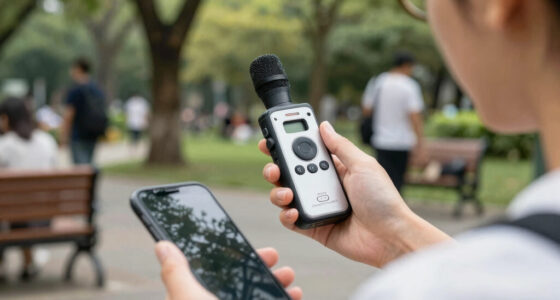
Plus, hybrid systems combine lavalier and shotgun mics, giving you flexibility depending on changing conditions. For example, you might start with a lavalier for close-up interviews and switch to a shotgun when background noise or distance increases. New portable recorders with built-in noise reduction are also turning outdoor setups into professional-grade operations without heavy gear, making it easier for content creators to produce high-quality audio on the go.
These tech leaps not only improve sound quality but also broaden the scenarios where outdoor recording is feasible, empowering creators to capture compelling stories in more diverse environments. The tradeoff is that these systems often come with increased complexity and cost, so understanding their capabilities and limitations is crucial for effective use.
Frequently Asked Questions
Which microphone is better for outdoor interviews: lavalier or shotgun?
It depends on your environment and setup. Lavalier mics are perfect for close-up, controlled conditions, while shotgun mics excel at capturing sound from a distance in noisy or dynamic outdoor scenes.
How can I reduce wind noise with my outdoor microphone?
Use high-quality windshields or dead cats designed for your mic type. Position the mic away from direct wind, and aim it carefully at the speaker’s mouth for minimal wind interference.
Can I use a wireless lavalier outdoors?
Yes, but choose a system with good RF resistance, sufficient range, and long battery life. Test in your environment to avoid interference, especially in crowded areas.
What’s the best way to test audio before recording outdoors?
Walk around with your mic, listen through headphones, and check levels. Pay attention to wind, traffic, and other noises, adjusting your placement or gear as needed.
Are there new miking technologies suited for outdoor interviews?
Yes, digital wireless systems with adaptive noise cancellation and high-tech wind filtering are now available, making outdoor recording more reliable and clearer than ever.
Conclusion
Matching the right microphone to your outdoor scene isn’t just about gear. It’s about understanding how each tool behaves in real-world conditions. A simple choice—lav or shotgun—can mean the difference between muddy, unusable audio and crisp, professional sound.
Remember, technology keeps evolving, making outdoor recording easier than ever. Your job is to pick what fits your environment, set it up carefully, and listen. That’s how you turn outdoor chaos into clear, compelling stories.
Evergreen bestsellers Picks
bestsellers
As an affiliate, we earn on qualifying purchases.