TL;DR

Get audio and creator gear delivered free with Prime
- Fast, free delivery on millions of items
- Prime Video, Amazon Music and more included
- Member-only deals all year
Smartphones are convenient, but they often fall short in audio quality for professional recordings. Dedicated handheld recorders provide better sound, more control, and longer battery life, especially in challenging environments.
Imagine capturing a crucial interview in a noisy park or recording a live performance with crystal clarity. Your phone might seem like the easiest option, but in many real-world scenarios, it’s just not enough. You need something more dependable, with better sound, more control, and longer-lasting battery life. That’s where dedicated handheld recorders shine.
This guide breaks down when your phone falls short and why a handheld recorder can be a game-changer. Whether you’re a podcaster, journalist, or field recorder, understanding these differences can save you from a lot of frustration and subpar audio.
Handheld Recorder vs Phone: When Your Phone Isn’t Enough
A smartphone wins on convenience. But when the interview cannot be repeated, the room is noisy, or the performance peaks without warning, a dedicated recorder delivers the fidelity, control and endurance that professional audio demands.
Five features that earn their place in your bag
A recorder is more than a better microphone. It is a purpose-built signal path: adaptable inputs, tactile controls, removable media and dependable power—all designed around getting the take.
Multiple channels
Record two speakers separately or blend a close voice with room ambience for a richer, more editable result.
Manual gain
React to changing volume before it clips or disappears. Physical controls beat hunting through an app under pressure.
External inputs
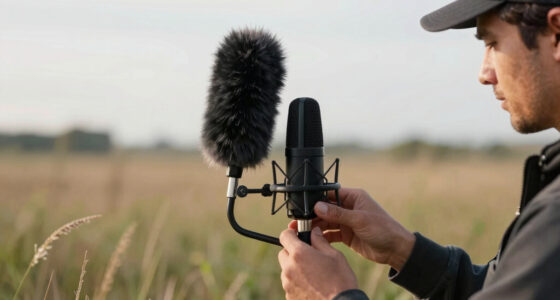
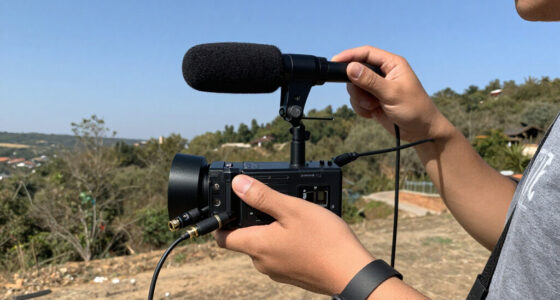
Choose a shotgun, lavalier or stereo microphone to match the subject, distance and acoustic environment.
Dedicated power
Keep recording without calls, screens and background apps draining the same battery your audio depends on.
Rugged build
Purpose-built controls, protected media and tougher bodies are better suited to dust, drops and demanding locations.
Convenience versus control
Phones remain excellent for voice notes, references and spontaneous clips. Dedicated recorders pull ahead when audio quality, repeatability and risk management matter.
| Decision factor | Smartphone | Phone + external mic | Handheld recorder |
|---|---|---|---|
| Fast casual capture | ✓Always available | ~Adapter setup | ~Extra device |
| Noisy environments | ✕Broad noise pickup | ~Mic dependent | ✓Directional control |
| Manual gain | ✕Often app based | ~Limited hardware | ✓Direct physical access |
| Multiple inputs | ✕Restricted | ~Interface required | ✓Built for channel mixing |
| Long-form reliability | ✕Shared battery | ~More connections | ✓Dedicated power and SD |
| Professional fidelity | ~Typically 16/48 | ~Accessory dependent | ✓Often 24/96 |
✓ Strong fit ~ Conditional fit ✕ Significant limitation
Where dedicated audio gains ground
The relative scores below visualize practical field capability, based on the feature differences described in this guide. They are directional rather than laboratory benchmarks.
Relative capability index / 100 — intended as a decision aid, not a device-specific test
Let the location choose the tool
Wind, traffic, crowds, echo and subject distance change the recording problem. The harder the environment, the more valuable directional microphones, monitoring and manual controls become.
Quiet room
For notes, rehearsals or a close single voice, a phone can be perfectly adequate—especially with a compatible external mic.
Phone can workStreet interview
Traffic, wind and changing speech levels reward a directional mic, wind protection, headphone monitoring and manual gain.
Recorder preferredLive performance
Loud peaks, stereo space and crowd noise make robust preamps and higher-resolution recording far safer than a built-in phone mic.
Recorder essentialFrom location to a usable final take
Assess
Identify wind, echo, crowds, distance and expected volume peaks.
Match
Select directional, lavalier or stereo microphones for the scene.
Set
Choose inputs, engage wind protection and leave safe gain headroom.
Monitor
Listen for clipping, handling noise, interference and weak connections.
Protect
Confirm the file, label the take and preserve power and storage backups.
Get it right before pressing record
Technical specifications matter, but disciplined setup matters more. A brief test and a few backups prevent the most common causes of unusable audio.
Before you buy—or decide to travel light
Can a phone produce professional sound?
It can produce strong results in controlled settings with a good external microphone and recording app. In noisy, complex or unrepeatable situations, a dedicated recorder remains more dependable.
Is a portable recorder worth the cost?
Yes, if you regularly capture interviews, podcasts, performances or field sound. Better source audio reduces repair work and saves time in post-production.
What should I prioritize when buying?
Look first at microphone and preamp quality, input options, battery life and storage. Then consider manual gain, low-cut filters, weather resistance and ease of operation.
Can I combine a recorder and phone?
Yes. Many recorders can feed or transfer audio to a smartphone through compatible adapters, giving you dedicated capture with mobile editing and publishing convenience.
Why Your Phone Can’t Match a Handheld Recorder for Audio Quality
Your phone’s built-in microphone is convenient but limited. It captures a narrow frequency range and picks up a lot of background noise. A handheld recorder, on the other hand, sports professional-grade microphones, with better preamps and higher bit-depth options. For example, while most smartphones record at 16-bit/48kHz, a high-quality handheld recorder can go up to 24-bit/96kHz, capturing more detail and nuance.
Understanding why this matters is crucial. Higher bit-depth and sample rates allow for capturing more subtle audio details, which can be the difference between a podcast that sounds professional and one that feels flat or muffled. Moreover, the quality of microphones in handheld recorders can be tailored to specific environments—directional mics for interviews, stereo mics for ambient sound—offering more flexibility. The tradeoff, of course, is that these devices require some learning curve and investment, but the payoff is significant clarity and control.
Imagine recording a live concert. Your phone might pick up the crowd noise, muffling the music. A handheld recorder with a directional microphone can focus on the stage, delivering clear, crisp sound—saving you from replaying the audio multiple times. This is especially important when post-production time is limited, and you need to get it right in the field.
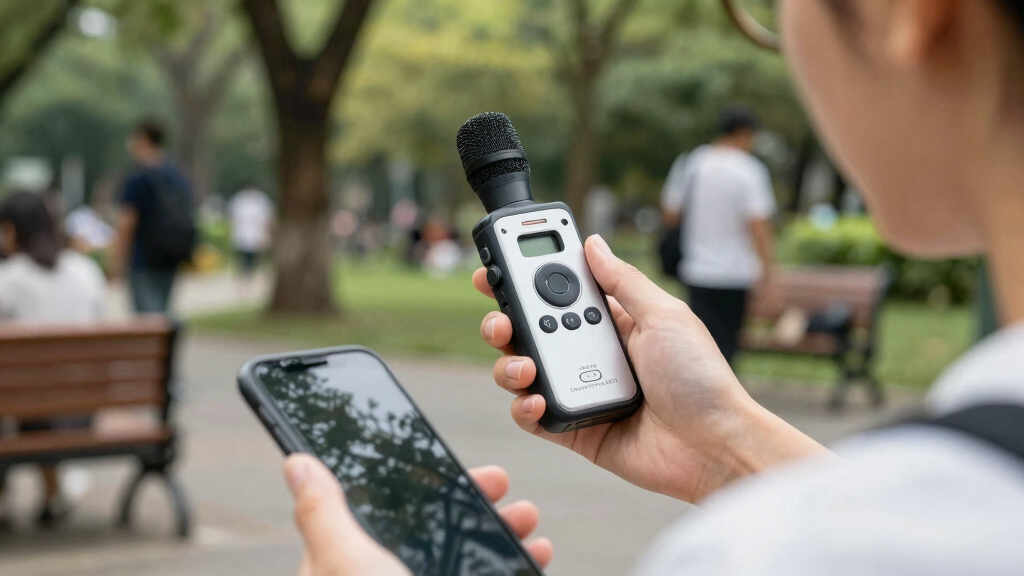
professional handheld audio recorder
As an affiliate, we earn on qualifying purchases.
As an affiliate, we earn on qualifying purchases.
Top 5 Features That Make a Handheld Recorder Worth It
- Multiple input channels: Record interviews with two mics or blend ambient sounds and voices. This flexibility allows for richer, more immersive recordings, but it also requires understanding how to balance these inputs for natural sound. For instance, in a documentary, you might want to record ambient background while capturing a speaker, which means managing levels carefully to avoid distortion or imbalance.
- Manual gain control: Adjust volume levels on the fly without relying on app settings. This is critical because automatic gain can either clip or under-record in unpredictable environments. Learning to set proper gain prevents distortion and ensures consistent audio quality, especially when environmental conditions change rapidly.
- External microphone input: Connect shotgun mics, lavaliers, or stereo mics for professional sound. This feature allows you to tailor your setup based on the environment—using a shotgun mic for distant subjects or a lavalier for interviews—giving you control over the audio’s directionality and clarity. The tradeoff is that managing multiple mics and connections requires some technical know-how but results in superior sound.
- Longer battery life: Record for hours without scrambling for a charger or worrying about power. This is essential during fieldwork where power outlets are unavailable. Knowing your device’s battery capacity and carrying spare batteries or power banks can prevent lost recordings. For instance, a 10-hour battery life can be the difference between capturing an entire event or missing critical moments due to power loss.
- Rugged build: Withstand harsh environments—rain, dust, or drops—where your phone might flinch. This durability ensures your gear survives the rigors of outdoor or demanding environments, saving you money and frustration. Understanding the tradeoff, sometimes rugged models are bulkier or more expensive, but they protect your investment and ensure consistent performance when it matters most.
For instance, if you’re recording a documentary in the wilderness, these features keep your audio crisp and your gear intact, enabling you to focus on capturing the scene rather than worrying about equipment failure.
As an affiliate, we earn on qualifying purchases.
Understanding the Recording Environment and Its Impact
Before choosing your equipment, it’s essential to assess where you’ll be recording. Indoor environments tend to be controlled, with less background noise, so a smartphone with a good external mic might suffice. However, outdoor or noisy settings demand more robust solutions.
Wind, traffic, crowds, or echo can all affect recording quality. Handheld recorders equipped with windshields and directional microphones excel in these situations by focusing on the desired sound source and minimizing unwanted noise. Recognizing these environmental factors helps you select the right device and accessories, ensuring your audio remains clear regardless of conditions.
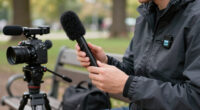
For example, recording an interview outdoors on a windy day calls for a handheld recorder with a windscreen and a directional microphone, rather than relying solely on your phone’s built-in mic, which would likely pick up all the ambient noise and wind interference.
As an affiliate, we earn on qualifying purchases.
Applying Your Knowledge: Practical Tips for Field Recording
Knowing the technical features is just the first step. Applying them effectively in real-world scenarios makes all the difference. Here are some tips:
- Always test your equipment before the actual recording to set levels correctly and familiarize yourself with controls.
- Use external microphones where possible to improve sound quality, especially in challenging environments.
- Monitor your audio with headphones during recording to catch issues early.
- Keep spare batteries and memory cards handy to avoid interruptions.
- Choose the appropriate settings—manual gain, stereo or mono input, and wind protection—to match your environment.
For example, during a live outdoor interview, adjusting gain manually and using a windscreen can dramatically improve clarity, making post-production editing easier and more efficient.
As an affiliate, we earn on qualifying purchases.
Frequently Asked Questions
Can I get professional sound quality with a smartphone?
While smartphones have advanced, they still can’t match the fidelity of dedicated recorders, especially in noisy or complex environments. External mics and apps help, but for true professional sound, a handheld recorder is the better choice.
Are portable recorders worth the extra cost?
Absolutely, if you regularly record interviews, performances, or field sounds. They provide richer audio, more control, and durability that a phone simply can’t match—saving time and frustration in post-production.
What should I look for when buying a handheld recorder?
Prioritize microphone quality, input options for external mics, battery life, and storage capacity. Features like manual gain control and weather resistance can make a big difference depending on your use case.
Can I use my smartphone with external mics for better sound?
Yes, external mics can dramatically improve your smartphone recordings. Directional and lavalier mics are affordable options that focus on your subject and cut background noise, making your phone sound much more professional.
Is it better to record indoors or outdoors?
It depends. Indoors, your phone might suffice, but outside, especially in windy or noisy environments, a handheld recorder with a windscreen and external mics will give you cleaner, more focused audio.
Conclusion
Your phone is the ultimate convenience tool, but it’s not built for every recording challenge. When clarity, control, and durability matter—especially in complex environments—a dedicated handheld recorder becomes your best ally. Think of it as upgrading from a sketch to a masterpiece.
If capturing pristine audio is your goal, don’t settle for second best. Invest in the right gear, and your recordings will speak louder than words.
Halloween Picks
halloween
As an affiliate, we earn on qualifying purchases.