
TL;DR
Open a free Amazon Business account
Business pricing, bulk buying and tax-exempt orders.
Create a free accountAs an affiliate, we earn on qualifying purchases.
Wind noise occurs when moving air creates turbulence around your mic. Foam, furry windshields, and blimps each offer different levels of protection. The best choice depends on wind strength, recording location, and sound quality needs.
Picture yourself on a windy day, trying to capture clear dialogue or ambient sounds. The wind whips past, rattling your microphone, turning your carefully planned recording into a muffled mess. Wind protection isn’t just a nice-to-have—it’s essential for outdoor recording.
In this guide, you’ll learn about the three main types of wind protection layers: foam, furry windshields, and blimps. We’ll explore how each works, their strengths and weaknesses, and how to combine them for the best results—saving you time, money, and frustration in the field.
Foam windshields are good for indoors or light wind but fail in heavy outdoor gusts.
Furry windshields offer a significant boost in outdoor wind resistance, especially when dry and loose.
A blimp or basket system provides the best protection in unpredictable, high-wind environments but adds weight and setup time.
Layering—using baskets, fur, foam, and suspension—maximizes wind noise reduction without sacrificing too much sound quality.
Proper placement, securing cables, and monitoring are just as vital as the protection layers themselves.
Wind Protection Layers: Foam, Furry Windshield and Blimp
Wind noise occurs when moving air creates turbulence around your mic. Foam, furry windshields, and blimps each offer different levels of protection—and the best choice depends on wind strength, recording location, and sound quality needs.
A properly layered wind protection system can reduce wind noise by over 90%—but the ideal setup must match the environment and microphone type for best results.
Three Layers, Three Levels of Defense
Each layer slows and diffuses airflow before it reaches the microphone capsule—ideally without noticeably reducing sound quality. Foam is a starting point, not a comprehensive solution.
Foam Windshield
A thin, spongy slip-on cover that disperses airflow—much like a coffee filter slows pouring water. Controls plosives, breath blasts, and minor drafts without bulk.
- Indoor dialogue & voice recording
- Handheld interviews
- Air-conditioned rooms
- Fails in outdoor gusts—turbulence vibrates the foam
- Poor fit can muffle or add handling noise
Furry Windshield
The “dead cat” uses loose synthetic fibers that swirl and slow gusts before they strike the capsule—a fluffy cloud breaking up turbulent airflow. Works over foam, the mic, or a basket.
- Light-to-moderate outdoor wind
- Portable, run-and-gun setups
- Lavaliers (mini windjammers)
- Slight high-frequency loss in clarity
- Matted, wet, or compressed fur loses effectiveness
Blimp / Basket System
A rigid, acoustically transparent cage surrounds the mic with a pocket of still air—like a car’s cabin shielding passengers. Combined with suspension, it blocks both wind and handling rumble.
- Strong, unpredictable wind
- Outdoor broadcast & documentary work
- Includes shock isolation
- Bulky, costly, slower to deploy
- Added weight on long boom sessions
How the Layers Work Together
Outdoor wind protection isn’t about a single layer—it’s about stacking the right layers for your environment. Each layer compensates for the limitations of the others.
Basket / Blimp
Creates distance and a calm, still-air chamber around the microphone, preventing turbulence from reaching the capsule directly.
Outer Fur
Slows and disperses fast-moving air—especially effective in gusty conditions, significantly reducing residual wind noise.
Suspension
Isolates the microphone from vibration caused by handling, boom movement, or the wind’s impact on the rig.
Cable Management
Secures cables so mechanical noise doesn’t bypass the suspension and reach the capsule as low-frequency rumble.
Field example: A wildlife sound recordist uses a full blimp with an outer furry cover, plus shock mounts. Caution: foam is not always used inside a blimp—unnecessary material can increase high-frequency attenuation, and professional baskets are normally designed to work without it unless the manufacturer recommends otherwise.
Protection Comparison Matrix
| Criterion | Foam | Furry Windshield | Blimp + Fur (Layered) |
|---|---|---|---|
| Indoor / Breath Noise | ✓ Excellent | ~ Overkill | ✗ Unnecessary bulk |
| Light Outdoor Breeze | ~ Marginal | ✓ Excellent | ~ Works, heavy |
| Moderate Wind | ✗ Fails | ✓ Good (if dry & loose) | ✓ Excellent |
| Strong / Gusty Wind | ✗ Fails | ~ Limited | ✓ Best available |
| High-Frequency Fidelity | ~ Dense foam attenuates | ~ Slight HF loss | ✓ Minimal loss |
| Handling Noise Isolation | ✗ None | ✗ None | ✓ Built-in suspension |
| Portability & Speed | ✓ Slip-on, instant | ✓ Lightweight | ✗ Bulky, slower setup |
Match the Shield to the Environment
Choosing the right protection depends on your gear, environment, and how portable your setup needs to be. Avoid over- or under-protecting—both impact portability and sound quality.
Foam Only
Wind isn’t a factor indoors—foam handles breath and plosives while you avoid unnecessary bulk. Ideal for air-conditioned rooms and studio dialogue.
Slip-On Furry
A good balance—lightweight and effective against mild gusts, enabling quick deployment without sacrificing too much sound quality. Keep the fur dry and loose.
Blimp + Outer Fur
Comprehensive protection that requires more setup time and weight—suitable when wind is a persistent challenge. A short shotgun on a boom needs a larger basket and fur.
Full Layered System
Invest in a full blimp with suspension and multiple layers for maximum wind protection and fidelity—critical for high-stakes recordings where wind can ruin a shoot.
Relative Wind Noise Reduction by Setup
What a Foam Windshield Does and Why It Matters
Foam windshields are your first line of defense against breath, plosives, and very light wind. They’re the small, spongy covers that slip directly over your microphone. Think of them as a thin, porous barrier that disperses airflow, much like a coffee filter slows pouring water.
But why does this matter? Foam’s primary advantage is its ability to reduce minor wind and breath sounds without adding much weight or bulk, making it ideal for quick setups or indoor use. However, the tradeoff is that foam isn’t very effective against stronger outdoor gusts; turbulence can cause the foam to vibrate or allow wind to pass through, resulting in muffled or distorted audio. This limitation underscores the importance of understanding your environment: foam is a starting point, not a comprehensive solution. Proper fit is crucial—if the foam doesn’t fully cover the mic’s openings or presses on the capsule, it can cause muffling or handling noise, which might be more distracting than the wind itself. Recognizing these nuances helps prevent ineffective use and ensures better sound quality in varied conditions.
As an affiliate, we earn on qualifying purchases.
How a Furry Windshield Boosts Wind Resistance Without Killing Sound
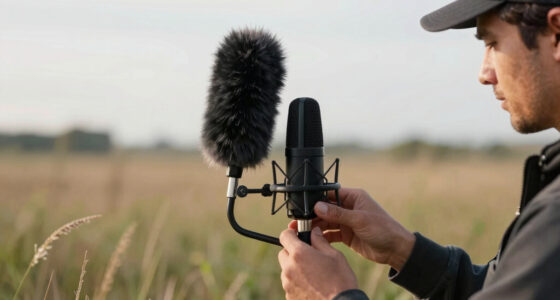
A furry windshield—often called a “dead cat”—uses loose synthetic fibers to break up turbulent airflow before it hits your mic. Imagine a fluffy cloud encasing your microphone, where the fibers swirl and slow gusts, reducing wind noise. This layer works best in light to moderate outdoor wind.
Why does this matter? The furry layer acts as a turbulence diffuser, which is especially valuable in unpredictable wind conditions where foam alone fails. The loose fibers absorb and scatter the gusts, preventing them from directly hitting the capsule and causing noise. However, this added layer introduces a subtle tradeoff: the fur can slightly reduce the microphone’s high-frequency response, leading to a marginal loss in clarity. Using a well-maintained, dry, and loose fur maximizes wind dispersal, but matted or wet fur becomes less effective, potentially causing residual noise or muffled sound. This highlights the importance of choosing quality, clean fur and maintaining it in good condition. When used correctly, furry windshields allow for much better outdoor recordings without sacrificing too much fidelity, making them a preferred choice for many field recordists dealing with moderate wind.
As an affiliate, we earn on qualifying purchases.
Why a Blimp or Basket System Is the Heavy-Duty Wind Guard
A blimp, or basket system, surrounds your microphone with a rigid or semi-rigid cage, creating a pocket of still air that buffers against strong gusts. Why is this important? In high-wind environments, turbulence can cause severe noise and even damage to sensitive capsules. The blimp acts as a physical barrier, slowing gusts and dispersing their energy before reaching the mic.
Understanding this setup’s significance involves recognizing its impact on audio integrity. The enclosed air space inside the blimp isolates the microphone from direct wind forces, much like a car’s cabin shields passengers from the elements. Components like suspension mounts further reduce mechanical vibrations, which could otherwise be mistaken for wind noise. The added weight and bulk are tradeoffs—these systems are less portable but invaluable in unpredictable, harsh conditions such as outdoor broadcasting or documentary work. Their robustness ensures consistent sound quality despite challenging weather, making them indispensable for professional outdoor recording where wind noise can otherwise ruin a shoot.
As an affiliate, we earn on qualifying purchases.
Layering Wind Protection: How to Build the Perfect Shield System
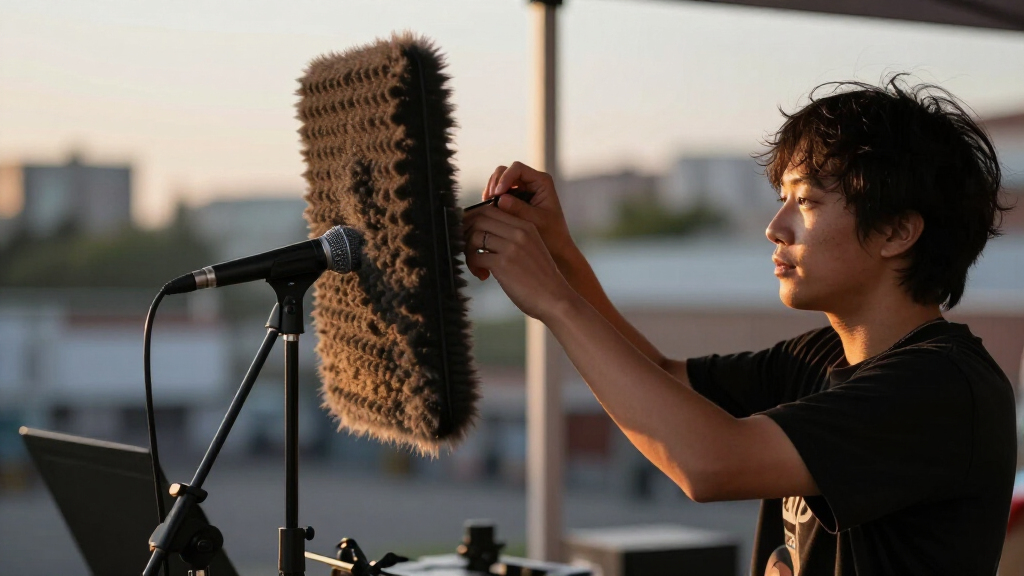
Outdoor wind protection isn’t about a single layer—it’s about stacking the right layers for your environment. Usually, you start with the basket or blimp for maximum protection. Inside or over that, you can add fur for extra wind dispersal. Foam might be used inside a blimp for specific needs or not at all.
Why is layering so crucial? Because each layer addresses different aspects of wind and handling noise. The basket creates a calm, still air volume, preventing turbulence from reaching the capsule directly. The furry outer layer acts as a turbulence diffuser, especially effective in gusty conditions, significantly reducing wind noise. Suspension mounts help isolate vibrations from handling or cable movement, which can otherwise be amplified by the wind’s impact. Proper cable management ensures mechanical noise doesn’t bypass the protective layers. Combining these elements creates a comprehensive shield—each layer compensates for the limitations of others. For example, a wildlife sound recordist might use a full blimp with an outer furry cover, plus shock mounts. This layered approach minimizes wind noise while maintaining sound fidelity, which is critical for high-quality outdoor recordings. Understanding how each component interacts allows you to tailor your setup precisely to your environment and needs.
As an affiliate, we earn on qualifying purchases.
Picking the Right Windshield for Your Setup
Choosing the right protection depends on your gear, environment, and how portable you need your setup to be. Here’s what to consider:
- Indoor or very sheltered outdoor: Foam is usually enough because wind isn’t a factor, and you avoid unnecessary bulk.
- Light outdoor breezes, on the move: Slip-on furry windshields offer a good balance—lightweight and effective against mild gusts, enabling quick deployment without sacrificing too much sound quality.
- Strong gusts, unpredictable weather: Use a blimp with an outer fur cover. This combination provides comprehensive protection but requires more setup time and weight, suitable for situations where wind is a persistent challenge.
- Long-term outdoor shoots or professional broadcasts: Invest in a full blimp system with suspension and multiple layers. This setup ensures maximum wind protection and sound fidelity, crucial for high-stakes recordings.
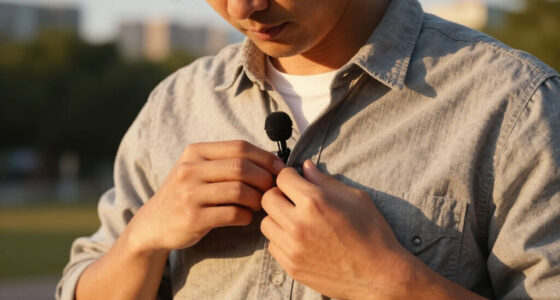
Matching the protection to your mic’s size, shape, and environment is essential. For example, a short shotgun on a boom in a windy field needs a larger basket and fur, while a lavalier clipped under clothing might only need a small furry cover. Understanding these tradeoffs helps you choose wisely, avoiding over- or under-protecting your gear, which can impact both portability and sound quality.
Best Practices for Using Wind Protection Effectively
No wind protection can fix poor placement. Good technique makes all the difference. Here are tips:
- Position the mic outside the direct airflow whenever possible, as this minimizes turbulence reaching the capsule.
- Use natural barriers—buildings, trees, or vehicles—to shield the mic, leveraging the environment to reduce wind impact.
- Point directional mics away from the wind source, but be aware that side and rear ports can still pick up turbulence, so adjust positioning accordingly.
- Secure loose cables, clothing, and fur to prevent vibrations and handling noise from bypassing the wind shield.
- Brush or shake out fur before recording—loose fibers move better and stay dry, maintaining their wind-dispersing properties.
- Monitor with headphones to catch residual noise or distortion, allowing real-time adjustments.
- Use a high-pass filter to reduce low-frequency rumble, but don’t rely solely on it—combine with physical protection for best results.
Why does this matter? Proper placement and handling techniques directly influence the effectiveness of your wind protection. Even the best gear can falter if misused. For example, a documentary shooter who positions a blimped mic behind natural cover and secures all cables minimizes wind noise and handling artifacts. Technical awareness and environmental adaptation are key to maximizing your gear’s potential and ensuring clear, professional-quality audio in challenging outdoor conditions.
Sound Quality and Wind Protection: Finding the Right Balance
Every wind shield inherently alters your microphone’s sound. Dense fur or large blimps can introduce resonances or dampen high frequencies, which might affect the clarity and naturalness of your recording. Recognizing these tradeoffs is vital because sacrificing too much fidelity can negate the benefits of wind protection, especially in critical recordings.
Why does this matter? For example, a furry windshield might slightly dull the high-end detail, but if it allows you to record outdoors without wind noise, it’s often a worthwhile compromise. Well-designed protection balances the attenuation of turbulence with minimal impact on sound quality. Modern materials and construction techniques aim to optimize this balance—lighter, more acoustically transparent fur, or modular systems that can be adjusted for different conditions—helping you preserve as much of the original sound as possible.
The key takeaway? Understand the specific sound tradeoffs of your gear and environment. Sometimes, a slight loss in high-frequency detail is acceptable if it means capturing usable audio in wind-prone settings. The goal is to maintain clarity while effectively reducing disruptive noise, ensuring your recordings are both clean and natural.
Latest Trends in Wind Protection Gear
Designers are pushing lighter, faster-to-deploy systems that adapt to the evolving needs of outdoor recording. Expect modular baskets that snap together without tools, synthetic fur that’s softer, more effective, and easier to clean, and compact foam designed for quick setup. These innovations aim to reduce bulk while improving performance, making outdoor recording more practical and less cumbersome.
Manufacturers now offer low-profile furry covers for small mics, improved suspension materials that better isolate vibrations, and replaceable parts to extend the lifespan of windshields. Additionally, the rise of miniature wireless mics and smartphone-compatible protection means you can now shield a variety of devices with tailored solutions. Despite these technological advances, physical wind shields remain the most reliable method—no software or post-processing can fully replace a well-designed, correctly used barrier in severe conditions. Staying current with these trends ensures you can choose gear that offers the best protection without sacrificing mobility or convenience, ultimately enhancing your outdoor recording capabilities.
Frequently Asked Questions
Is a foam cover enough for outdoor recording?
Only in very light or sheltered conditions. For regular outdoor wind, a furry windshield or blimp system provides much better protection. Foam alone can’t handle gusts or strong breezes effectively.
Should fur go over foam?
It depends on your setup. Many professional systems use fur over foam or directly on the mic. Generally, fur over foam offers better wind dispersal, but a full blimp usually doesn’t need foam inside. Follow your system’s instructions for best results.
What’s the difference between a furry windshield and a blimp?
A furry windshield is a flexible cover that slips over the mic to block wind. A blimp encloses the mic inside a rigid or semi-rigid cage, creating a protected air space and often including shock isolation. Blimps are more effective but bulkier and suited for professional outdoor use.
Why do I still hear rumble even with a windshield?
Residual noise can come from handling, cable vibrations, or the wind exceeding the shield’s capacity. Proper placement, securing cables, and using suspension help, but sometimes wind conditions are just too strong for the gear used.
Does a furry windshield reduce sound quality?
It can slightly dull high frequencies, especially if the fur is dense or wet. Quality furry windshields balance wind reduction with maintaining clarity, but some tonal loss is inevitable in strong outdoor conditions.
Conclusion
In outdoor recording, wind protection isn’t just about adding layers—it’s about choosing the right combination for the environment and your gear. When wind hits, a layered approach keeps your sound clear and your workflow smooth. Remember, the best protection is the one matched precisely to your needs.
Next time you head out, visualize your wind shield as a fortress around your microphone—built with purpose, not just size. That’s the secret to capturing pristine audio, even when the weather doesn’t cooperate.
Flea & tick season Picks
flea and tick prevention
As an affiliate, we earn on qualifying purchases.