TL;DR

Get audio and creator gear delivered free — and shop member deals
- Fast, free delivery on millions of items
- Access to Prime Big Deal Days deals on October 6–7
- Prime Video, Amazon Music and more included
Sensor size influences image sharpness, low-light performance, and background blur, but at a desk, quality depends more on lighting, lens, and setup. Smaller sensors can still produce professional results with the right adjustments.
Picture yourself at your desk, eyeing that shiny new camera. You wonder: does a bigger sensor really mean better video for streaming? The truth is, sensor size impacts image quality, but how much it matters depends on your setup and goals.
Many streamers assume bigger sensors are a must. But often, lighting, lenses, and camera settings make a bigger difference. This guide cuts through the hype, showing what really improves your video quality right at your desk.
Sensor size affects image sharpness, noise, and background blur, but lighting and lens quality often matter more at a desk.
A high-quality webcam with a 1/2.3-inch sensor, paired with good lighting, can rival larger-sensor cameras in many situations.
Bigger sensors excel in low-light conditions and creating a shallow depth of field, especially for cinematic or polished looks.
Practical upgrades—like better lighting and focus—often yield more noticeable improvements than just choosing a larger sensor.
Balance your goals, space, and budget; a mid-sized sensor with proper setup is usually enough for most streamers.
Camera sensor size: does it matter at a desk?
Yes—but less than the spec sheet suggests. Sensor size influences noise, sharpness and background blur, while lighting, lens quality, focus and exposure usually determine whether a desk stream actually looks professional.
A well-lit 1/2.3-inch webcam can rival a larger-sensor camera in a typical desk environment.
Large sensors earn their keep in dim rooms, demanding scenes and deliberate shallow-focus looks.
Common in webcams and capable of polished results with controlled light.
Compact size, stronger image quality and practical desk-friendly bodies.
Strong low-light ability and depth control without full-frame bulk.
Full-frame performance with the highest cost and setup complexity.
The sensor is one part of a system.
Think of a sensor as a bucket catching light: a larger bucket gathers more, but the result still depends on how much light reaches it, the quality of the glass in front of it and whether the camera is configured correctly.
Soft lighting
Even, directional light reduces noise, improves skin tone and gives any camera more usable image information.
Lens & framing
A bright, sharp lens and a flattering camera position can improve clarity and separation immediately.
Focus & exposure
Manual control prevents focus hunting, blown highlights and muddy shadows during a live session.
Sensor size
Larger sensors provide extra low-light headroom and blur control, but cannot rescue a poor setup alone.
What each format gives—and costs.
Moving up in sensor size typically improves low-light performance and depth-of-field control. It also adds cost, bulk and, in many cases, capture hardware, lenses and power requirements.
| Sensor format | Typical gear | Low light | Background blur | Desk practicality |
|---|---|---|---|---|
| Full-frame 35mm | DSLRs and premium mirrorless cameras | ✓ Excellent | ✓ Maximum control | ~ Bulky and costly |
| APS-C | Sony Alpha and Canon mirrorless systems | ✓ Very good | ✓ Strong control | ✓ Versatile |
| 1-inch | Sony RX100, Canon G7 X and premium compact cameras | ~ Good with light | ~ Moderate | ✓ Compact balance |
| 1/2.3-inch | Many webcams, compact devices and smartphones | ✗ More noise | ✗ Limited control | ✓ Simple and affordable |
Best-value principle: buy enough sensor for the conditions you cannot control—then invest in the conditions you can.
Bigger sensors buy creative headroom.
These blocks are a conceptual size comparison, not a physical scale drawing. The practical pattern is what matters: increasing area improves light gathering and makes shallow depth of field easier to achieve.
1/2.3-inch
Best with ample soft light, careful exposure and a clean background.
1-inch
A useful middle ground for compact cameras and premium desk setups.
APS-C
Strong image quality, lens flexibility and convincing subject separation.
Full-frame
Cleanest dim-room results and the most blur control—with more equipment.
When small works beautifully
Controlled light + fixed desk position + simple workflow. A quality webcam can be sharp, flattering and dependable without a capture card, interchangeable lens or dummy battery.
When large earns its space
Dim rooms + cinematic separation + premium production goals. A larger sensor offers cleaner shadows, richer tonal detail and a naturally softer background.
Improve the signal before replacing the camera.
Follow this order to get the biggest visible improvement per dollar. Each step strengthens the next, so a later camera upgrade enters a setup already capable of showing its advantages.
Shape the light
Place a soft key light above eye level and slightly to one side.
Lock exposure
Protect skin highlights and avoid automatic brightness shifts.
Set focus
Use reliable face detection or manual focus at your seated position.
Refine the scene
Separate yourself from a tidy, softly illuminated background.
Upgrade sensor
Move up only if noise, blur control or dynamic range still limits you.
Match the sensor to the problem—not the prestige.
For most streamers, a high-quality webcam or mid-sized sensor is enough. Full-frame becomes worthwhile when your creative brief requires exceptional dim-room quality, optical background blur or maximum lens flexibility.
You value simplicity, have good lighting and want dependable plug-and-play operation.
You want a visible quality step-up, better low-light performance and some natural background separation.
You need a cinematic aesthetic and accept extra lenses, power, mounting, capture hardware and cost.
Desk-streaming FAQ
Is a larger sensor always better?
No. It offers technical advantages, especially in low light, but those gains can be hidden by poor lighting, missed focus or weak exposure choices.
Can software improve a webcam?
Yes. Noise reduction, color tuning and background effects can reduce small-sensor limitations, although software cannot recreate every optical advantage.
Are mirrorless cameras worth it?
They are valuable when you want lens choice, strong low-light results and a polished look—and are comfortable managing capture and power accessories.
How does sensor size affect blur?
Larger formats make shallow depth of field easier at comparable framing, helping your face stand out against a softer background.
What is the best budget choice?
Start with a reputable webcam around the 1/2.3-inch class, add a soft key light and tune focus and exposure. Consider 1-inch or APS-C only when you can identify a specific limitation the webcam cannot solve.
Sensor size matters, but at a desk it is rarely the first bottleneck. Light your face well, lock focus, control exposure and shape the background. Smart setup choices can make modest gear look professional—and ensure that any future sensor upgrade is genuinely visible.
What are camera sensor sizes and why do they matter?
Camera sensors come in various sizes, from tiny 1/2.3-inch sensors to full-frame 35mm giants. Sensor size affects how much light the camera captures, which in turn influences image clarity, noise, and depth of field. For example, a full-frame sensor gathers more light, making it superior in dim rooms. But at a desk, that difference can be subtle if your lighting isn’t optimized.
Think of sensor size as the size of the bucket catching light. Bigger buckets (larger sensors) fill faster and with more detail, resulting in crisper images. Smaller sensors are like tiny cups—more prone to noise and less depth control, but still capable if you play your cards right.
As an affiliate, we earn on qualifying purchases.
How sensor size impacts your video quality at a desk
In real terms, a larger sensor can produce sharper images with richer colors and less grain, especially in low light. It also allows for a shallower depth of field, letting your face pop against a nicely blurred background. At a desk, this means your video looks more professional, as if you’re in a studio.
But here’s the catch: a bigger sensor often means bigger, pricier cameras. And if your room isn’t well-lit, the advantage shrinks. For example, a $500 webcam with a 1/2.3-inch sensor can outperform a tiny, cheap sensor in dim lighting if you add a few soft lights.
So, it’s not just about sensor size but how you use what you have. Proper lighting and focus can turn a mid-sized sensor into your best friend.
desk streaming camera lighting kit
As an affiliate, we earn on qualifying purchases.
As an affiliate, we earn on qualifying purchases.
Common sensor sizes in desk streaming gear — what’s really available?
| Sensor Size | Examples | Pros | Cons |
|---|---|---|---|
| Full-Frame (35mm) | DSLRs, mirrorless cameras | Best low-light, shallow depth of field | Expensive, bulky, needs additional equipment |
| APS-C | Sony Alpha, Canon EOS M | Great quality, smaller size | More expensive than compact cams |
| 1-Inch | Sony RX100, Canon G7 X | Compact, good image quality | Limited low-light performance |
| 1/2.3-Inch | Most webcams, smartphones | Affordable, small | Less detail, more noise in low light |
Today, many webcams hover around the 1/2.3-inch mark, while some high-end compact cameras pack larger sensors. The choice depends on your budget, space, and how demanding your visual standards are.
high quality camera lens for streaming
As an affiliate, we earn on qualifying purchases.
As an affiliate, we earn on qualifying purchases.
Does bigger sensor mean better for your desk setup?
In most cases, yes—bigger sensors generally produce cleaner, sharper images with better low-light performance. But that doesn’t mean you need to splurge on a full-frame mirrorless camera. A quality webcam with a decent-sized sensor, combined with good lighting, can deliver a professional look.
For example, a streamer using a Sony RX100 with a bright lens and soft box lighting can look just as polished as someone with a pricey DSLR—sometimes more so because of ease of setup. It’s about balancing what’s possible with what’s practical.
So, ask yourself: what’s more important—sharper images in low light or a simple, compact system? The answer guides your choice.
As an affiliate, we earn on qualifying purchases.
Practical tips to maximize your camera quality without breaking the bank
- Use ample, soft lighting—think ring lights or softboxes—to brighten your face evenly.
- Apply manual focus and tweak exposure settings for sharp, clear video.
- Invest in a good lens or lens attachment if possible—this can make a big difference.
- Keep your background tidy and well-lit for added professional appeal.
- Use software like OBS or native camera apps to fine-tune color and sharpness.
For example, a streamer who upgraded from a built-in webcam to a mirrorless camera with decent lighting saw their viewer engagement jump. It’s surprising how much a small investment in lighting and settings improves quality more than sensor size alone.
When bigger sensors really make a difference
If your setup involves dim rooms, or you want a blurred background that makes your face stand out, bigger sensors do matter. They produce images with less noise and more depth, giving your stream a polished, professional vibe.
For instance, if you’re streaming late at night or in a cluttered space, a mirrorless camera with a 24mm f/1.4 lens and a large sensor can transform your video. It creates a cinematic quality that smaller sensors struggle to match in low light.
But remember: bigger sensors often mean more gear, more expense, and more setup time. Weigh if that extra quality aligns with your streaming goals.
Frequently Asked Questions
Is a larger sensor always better for streaming?
Not always. Larger sensors can produce better images, especially in low light and with a shallow depth of field. But a high-quality webcam with a mid-sized sensor and good lighting can often deliver just as professional results without the extra cost and complexity.
Can I improve my webcam’s quality without changing the sensor?
Absolutely. Improving your lighting, adjusting camera settings, and using software enhancements often have a bigger impact than sensor size alone. Good lighting alone can turn a basic webcam into a studio-quality shot.
Are mirrorless cameras worth it for desk streaming?
If your budget allows and you’re willing to set up additional gear like a capture card, yes. They offer superior image quality and flexibility, especially in tricky lighting. But for most, a high-quality webcam with decent sensors and good lighting suffices.
How does sensor size influence background blur?
Larger sensors can produce a shallower depth of field, making your face stand out against a softly blurred background. This effect adds a professional, cinematic touch to your stream.
What’s the best sensor size for streaming on a budget?
A high-quality webcam with a 1/2.3-inch sensor or a compact mirrorless camera with a decent-sized sensor, combined with good lighting, offers excellent value without breaking the bank.
Conclusion
Sensor size does influence your video quality, but at a desk, it’s rarely the biggest factor. Light, lenses, and setup habits often make the real difference. Focus on those first—your image will thank you.
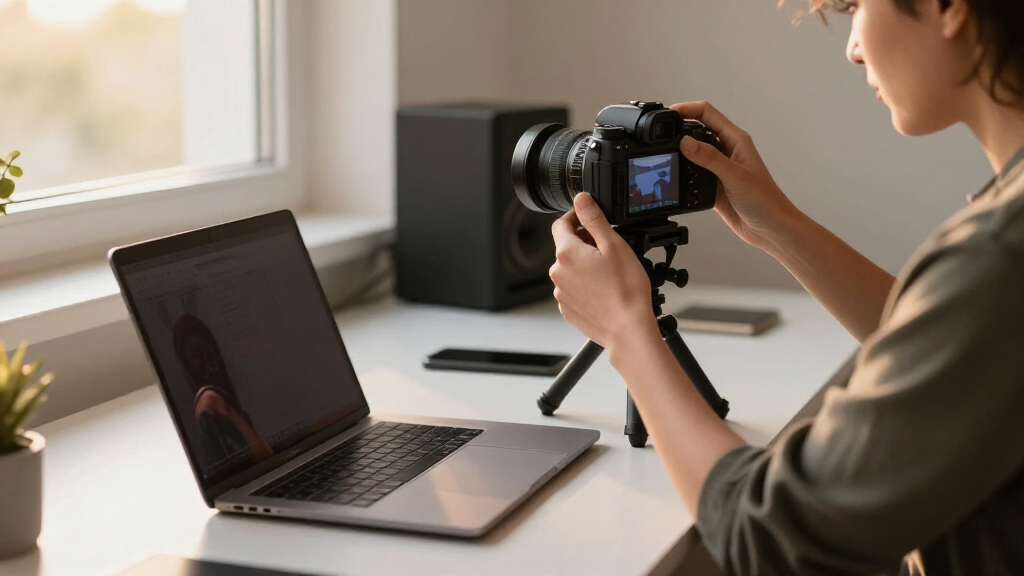
Imagine a simple, well-lit desk with a modest camera that looks professional. That’s the power of smart choices over big gear. Your stream’s quality isn’t just about gear—it’s about how you use what you’ve got.
Fall Picks
fall essentials
As an affiliate, we earn on qualifying purchases.