
TL;DR

Get audio and creator gear delivered free with Prime
- Fast, free delivery on millions of items
- Prime Video, Amazon Music and more included
- Member-only deals all year
Acoustic treatment improves how sound lives inside a room, making it clearer and more balanced. Soundproofing stops sound from escaping or entering, blocking noise from outside. Both serve different goals but are often confused, leading to costly mistakes.
Ever spent hundreds on foam panels, only to find your loud neighbor still blares through the walls? Or wondered why your recordings sound great inside but your walls seem to shake from outside noise? The problem is, most folks mix up acoustic treatment with soundproofing—and that mistake can cost a lot. Here’s what you need to know to get it right.
Understanding the real difference can save you money, time, and frustration. Whether you want better sound inside your studio or to keep outside noise out, knowing which approach to take makes all the difference.
Acoustic treatment improves how sound behaves inside your room, making recordings clearer and reducing echoes.
Soundproofing aims to block sound transmission, often requiring heavy, costly materials and professional installation.
Most DIY projects succeed better when you focus on the main goal—either internal clarity or external noise blocking—rather than trying to do both cheaply.
Hybrid solutions—adding acoustic panels plus soundproof barriers—give the best bang for your buck.
Investing in proper materials for soundproofing can be worth it if your main goal is silence, not just better sound inside.
Acoustic Treatment vs Soundproofing: The Difference That Costs You
Treatment improves how sound lives inside a room. Soundproofing stops sound from entering or escaping. Confusing the two can turn a useful upgrade into an expensive disappointment.
Are you tuning the room—or isolating it?
A room can sound beautifully controlled while still leaking noise. It can also be well isolated yet echo badly inside. The first decision is where the unwanted sound problem exists.
Acoustic Treatment
Controls reflections, flutter echo, reverberation and low-frequency buildup. Choose it when vocals sound muddy, speech lacks definition or mixes do not translate accurately.
Soundproofing
Reduces sound transmission through walls, floors, ceilings, doors and windows. Choose it when traffic, neighbors or your own loud sources cross the room boundary.
Two different jobs. Two different toolkits.
The right materials follow the physical problem: reflections are controlled with absorption and diffusion; transmission is reduced with mass, damping, airtightness and structural separation.
| Aspect | Acoustic Treatment | Soundproofing |
|---|---|---|
| Primary purpose | ✓Improve sound within the room | ✓Block sound entering or leaving |
| Typical materials | Panels, diffusers, bass traps, foam | Mass-loaded vinyl, drywall, damping compounds |
| Basic cost | ✓Usually under $200 | ~$500 and up; often thousands |
| Installation | ✓Relatively easy and DIY-friendly | ~Construction skills may be needed |
| Stops outside noise? | ✗Not significantly | ✓Yes, when correctly installed |
| Improves room clarity? | ✓Directly | ✗Not necessarily |
| Best for | Studios, podcasts, theaters, listening rooms | Apartments, shared walls, traffic and isolation |
Cheap foam solves echoes—not noisy neighbors.
These directional scores illustrate each approach’s relative strength. They are a decision aid, not laboratory transmission ratings.
Acoustic treatment
Strongest where reflections and room balance are the problem.
Soundproofing
Strongest where noise must be contained across boundaries.
A smarter hybrid plan
You can combine both approaches without treating every surface. Start with the dominant problem, tackle the weakest paths and add the second system only where it earns its keep.
Name the problem
Echo and muddy sound, or noise crossing the boundary?
Find weak paths
Check doors, windows, gaps, shared walls and ceilings.
Fix the big issue
Spend first where the improvement will be most audible.
Add the hybrid layer
Combine targeted barriers with well-placed treatment.
Five rules that protect your budget
Better results come from matching the intervention to the actual sound path—not buying the most visible product.
Treat reflections
Use absorption and diffusion to make recordings, speech and playback clearer.
Block transmission
Use mass, damping, airtight sealing and decoupling to reduce noise transfer.
Choose one lead goal
Trying to do both cheaply often spreads the budget too thin to solve either problem.
Target critical areas
Shared walls, doors, windows and first-reflection points usually deserve attention first.
Hybridize wisely
A focused barrier plus correctly placed panels can deliver the best value.
Do not confuse quiet
Less echo can feel quieter, but it does not mean less sound is crossing the wall.
Spend where physics pays you back.
Affordable treatment can be highly effective for internal quality. Serious isolation costs more because the room boundary itself must change.
What are you buying?
Clarity or silence? If the answer is clarity, start with strategic treatment. If it is silence, reserve funds for real mass, damping and construction.Quick savings checklist
- Prioritize the main issue before shopping for materials.
- Seal gaps around doors and windows before adding expensive layers.
- Treat critical reflection points instead of covering every wall.
- Focus isolation work on shared walls, ceilings and obvious weak paths.
- Combine bass traps, weatherstripping and targeted barriers gradually.
What’s the real goal? Improving sound inside or blocking noise outside
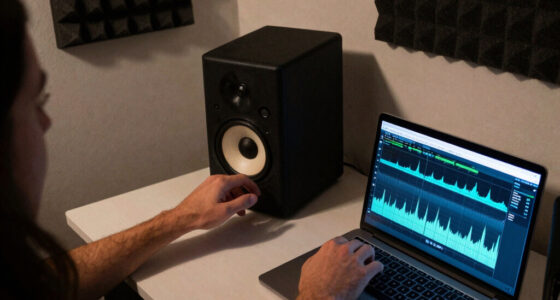
Acoustic treatment and soundproofing target different goals. Acoustic treatment is like giving your room a better voice—making music, speech, or audio clearer and more natural. Think of it as tuning the sound inside.
Soundproofing, on the other hand, acts like a barrier—preventing sound from sneaking in or escaping. It’s about sealing your space from the chaos outside.
For example, if you record vocals at home and want your voice to sound better, acoustic treatment is your go-to. But if your neighbor’s dog barking ruins your recording, soundproofing is what you need.
acoustic treatment panels for studio
As an affiliate, we earn on qualifying purchases.
As an affiliate, we earn on qualifying purchases.
How Acoustic Treatment Improves Your Room’s Sound Quality
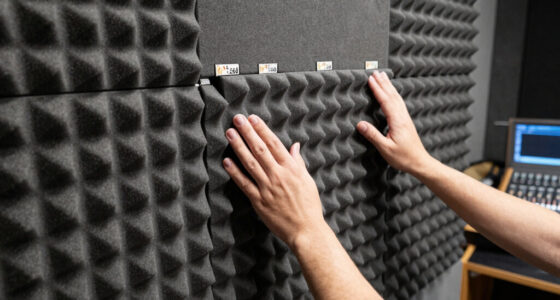
Acoustic treatment involves adding materials that control how sound waves behave inside your space. Think of thick foam panels, bass traps, diffusers—things that absorb or scatter sound.
Imagine a small home studio where echoes bounce off bare walls. Installing foam panels transforms the space, reducing flutter echoes and making vocals and instruments sound crisp. That’s acoustic treatment at work—focusing on internal clarity.
It’s a budget-friendly way to get studio-quality sound, often costing less than $200 for basic panels. But it won’t stop your neighbor’s noise from seeping through the walls.
Deeply, acoustic treatment matters because it directly influences the accuracy of your sound perception. Without it, recordings can sound muddy or overly reverberant, leading to misjudged mixes. The tradeoff is that while it improves clarity, it doesn’t address external noise, so your environment still influences the sound quality. Proper placement and selection of materials are crucial; poorly installed or mismatched treatments can create uneven sound fields, which might require more precise tuning or additional panels for optimal results.
As an affiliate, we earn on qualifying purchases.
Why Soundproofing Costs More—And Why It’s Worth It
Soundproofing is about adding mass, damping vibrations, and decoupling surfaces. The goal? Stop sound from traveling through walls, floors, and ceilings.
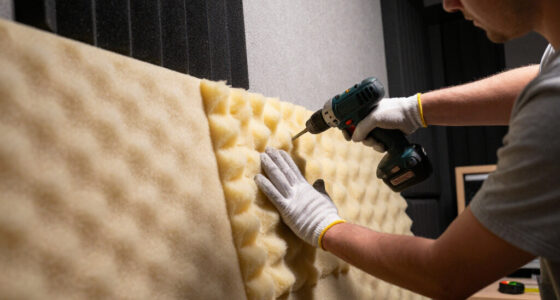
Imagine installing a new, heavy drywall with damping compound, sealing gaps, and adding soundproof doors. It’s more involved—and pricier—than slapping foam on the walls.
Cost-wise, a basic DIY soundproofing setup might start at around $500, but high-end solutions with decoupled walls and specialized materials can reach into the thousands. You’re paying for the extra layers and professional-grade materials that block sound effectively.
Deeply, soundproofing matters because it directly impacts your ability to contain noise or prevent external sounds from disrupting your environment. The tradeoff is that it often requires extensive construction work, which can be disruptive and costly. The choice depends on how much external noise is an issue and how critical sound isolation is for your space. In some cases, the added expense is justified by the significant reduction in noise transfer, especially in shared living or professional environments where external noise can ruin recordings or concentration.
As an affiliate, we earn on qualifying purchases.
Comparison table: Acoustic Treatment vs Soundproofing — What’s the difference?
| Aspect | Acoustic Treatment | Soundproofing |
|---|---|---|
| Purpose | Improve sound inside the room | Block sound from entering or leaving |
| Materials | Foam panels, diffusers, bass traps | Mass-loaded vinyl, heavy drywall, damping compounds |
| Cost | Usually under $200 for basic setups | $500 and up, often much more for professional work |
| Installation Ease | Relatively easy, DIY-friendly | More complex; may need professional help |
| Best For | Improving internal sound clarity | Blocking external noise, sound isolation |
As an affiliate, we earn on qualifying purchases.
Can you really do both? Combining treatment and soundproofing without breaking the bank
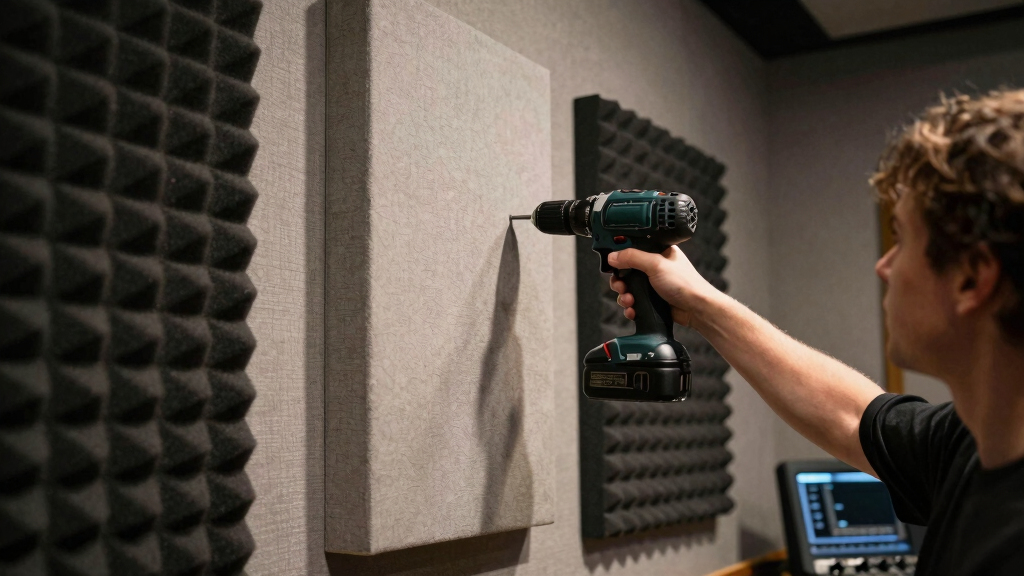
Absolutely. In fact, many studio owners find that a hybrid approach works best. You can add acoustic panels inside to shape the sound, then reinforce the walls with soundproofing materials for noise isolation.
For example, a musician in an apartment might put foam panels on the ceiling and walls for clarity, then add a layer of mass-loaded vinyl on the shared wall to block out neighbors’ noise. It’s about balancing cost with performance.
Start with your biggest problem—internal sound or external noise—and build from there. Often, a simple combo can achieve surprisingly good results without draining your wallet.
Deeply, combining both strategies allows you to tailor your space to your specific needs, addressing internal acoustic issues and external noise leaks simultaneously. This approach maximizes the effectiveness of your investment by focusing resources where they’re most needed, often leading to a more balanced and functional environment.
Quick tips for saving money on both projects
- Prioritize your main issue: clarity or noise blocking?
- Use DIY-friendly materials like foam tiles or door seals first.
- Seal gaps around windows and doors before adding new layers.
- Focus on critical areas—like shared walls or ceilings—rather than the entire room.
- Mix affordable options—like bass traps and weatherstripping—to get better results without huge costs.
What really works? The truth about cheap vs expensive solutions
Cheap foam panels can improve internal sound quality, but they won’t stop noise from outside. For serious soundproofing, you need heavy materials and proper construction.
Research shows that adding mass and decoupling surfaces dramatically boosts noise blocking—something cheap foam can’t do alone. Think of it like a thick, sealed wall versus a thin curtain.
Invest wisely: if you’re serious about blocking sound, don’t skimp on the core materials. But for improving how your room sounds, affordable foam can be enough.
Deeply, the choice between cheap and expensive solutions hinges on your primary goal. If you seek silence, investing in heavy, decoupled structures offers significant returns. Conversely, if internal sound quality is your main concern, affordable options can be surprisingly effective. Recognizing this tradeoff helps you allocate your budget wisely, ensuring you get the most benefit for your money.
Frequently Asked Questions
Can I use foam panels to block outside noise?
Not really. Foam panels are designed to absorb sound inside a room. They don’t add enough mass to block external noise effectively. To block outside noise, you need heavier materials like drywall, mass-loaded vinyl, or decoupled walls.
How much does good soundproofing cost?
Basic DIY soundproofing can start around $500, but professional setups with multiple layers and decoupling can run into thousands. It depends on the size of the space and how much noise you want to block.
Can I combine both in a small home studio?
Yes. Focus on treating the interior for clarity first. Then reinforce key noise leak points—like shared walls or windows—with soundproofing materials. This hybrid approach helps you get the most out of your budget.
Will sealing gaps help with soundproofing?
Absolutely. Gaps around doors, windows, and electrical outlets are major leaks. Sealing them with weatherstripping or acoustic caulk is a quick, cheap way to improve your soundproofing efforts.
Conclusion
Knowing what each approach does saves you money and headaches. If your goal is crisp, clear recordings, focus on acoustic treatment. If outside noise ruins your workflow, spend on proper soundproofing. Usually, a mix of both offers the best results.
Remember, it’s about matching your needs with your budget. No one-size-fits-all. Be smart, start small, and build from there. Your perfect sound environment is within reach—just choose the right tools.
Fall Picks
fall essentials
As an affiliate, we earn on qualifying purchases.