
TL;DR

Get audio and creator gear delivered free with Prime
- Fast, free delivery on millions of items
- Prime Video, Amazon Music and more included
- Member-only deals all year
Bass traps placed in room corners are the most effective way to absorb low frequencies. Corners concentrate bass energy, reducing muddiness and creating clearer, balanced sound in any space.
Imagine trying to hear a song, but the bass sounds boomy, muddy, and overwhelming. That’s what happens when low frequencies pile up in your room’s corners. Bass traps are your secret weapon to tame this chaos. But why do corners come first? Because physics makes them the low-frequency magnet of any space. If you want your music, vocals, or mixes to sound tight and clear, understanding this simple principle changes everything.
This guide breaks down why corners are the top priority, what makes a good bass trap, and how you can use this knowledge to turn your room into a true listening space. No jargon, just real-world tips based on how sound behaves in a typical room.
Corners are the primary spots where low-frequency sound waves gather and cause muddiness.
Installing thick, dense bass traps in these corners can reduce bass buildup by up to 80%.
Use measurement tools to identify the worst corners before installing traps.
Materials like mineral wool and fiberglass are best for effective low-frequency absorption.
Start with corner trapping, then add other treatments for a balanced room sound.
Bass Traps Explained: Why Corners Come First
Boomy, muddy bass is rarely a speaker problem alone. Low frequencies reflect, overlap, and concentrate where room surfaces meet. Treat those pressure zones first and music, vocals, and mixes become tighter, clearer, and far more trustworthy.
Why bass gathers where surfaces meet
Bass wavelengths are long. As they reflect between rigid boundaries, matching waves can reinforce one another into room modes—creating powerful peaks in some places and deep nulls in others.
Long waves hit the boundaries
Low-frequency energy travels across the room, meets walls, floors, and ceilings, then reflects instead of disappearing.
Reflections stack together
Incoming and reflected waves overlap. At certain frequencies they reinforce, producing resonant bass that rings longer than it should.
Corners combine boundaries
Where two or three surfaces meet, bass pressure is especially strong. A trap placed there interacts with more accumulated energy.
How a clean signal becomes muddy—and clear again
The room adds its own low-frequency signature after sound leaves the speaker. Corner absorption shortens that uncontrolled cycle.
Target the strongest zones first
Start behind the monitors and in rear vertical corners. Then assess wall-to-ceiling junctions. Mid-wall treatment remains valuable, but it solves a different part of the acoustic problem.
Corner-first room plan
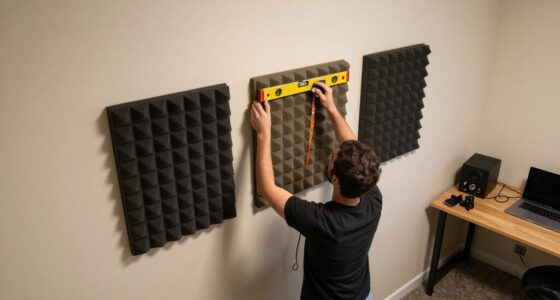
Measure before you mount
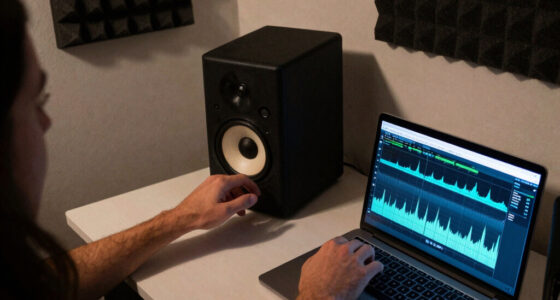
A quick listening walk can reveal obvious boom, but a measurement microphone and room-analysis software provide a repeatable view of peaks, nulls, and bass decay.
Play a bass sweep
Use familiar low-end music, pink noise, or a controlled frequency sweep.
Check every corner
Listen at front, rear, floor, and ceiling junctions for obvious pressure changes.
Capture a measurement
Use a measurement mic and software such as Room EQ Wizard for precision.
Treat, test, refine
Install the first traps, repeat the test, and expand only where evidence points.
Different positions solve different problems
Bass traps, broadband absorbers, and diffusers are complementary tools. Their value depends on whether the goal is bass control, reflection control, or a greater sense of spaciousness.
| Location | Bass control | Mid/high control | Best use | Priority |
|---|---|---|---|---|
| Vertical corners | ✓ Strong | ~ Moderate | Room modes and low-end decay | ✓ First |
| Wall–ceiling edges | ✓ Strong | ~ Moderate | Additional perimeter coverage | ✓ High |
| Sidewall reflection points | ✗ Limited | ✓ Strong | Imaging and early reflections | ~ Second |
| Ceiling cloud | ~ Moderate | ✓ Strong | Desk and ceiling reflections | ~ Second |
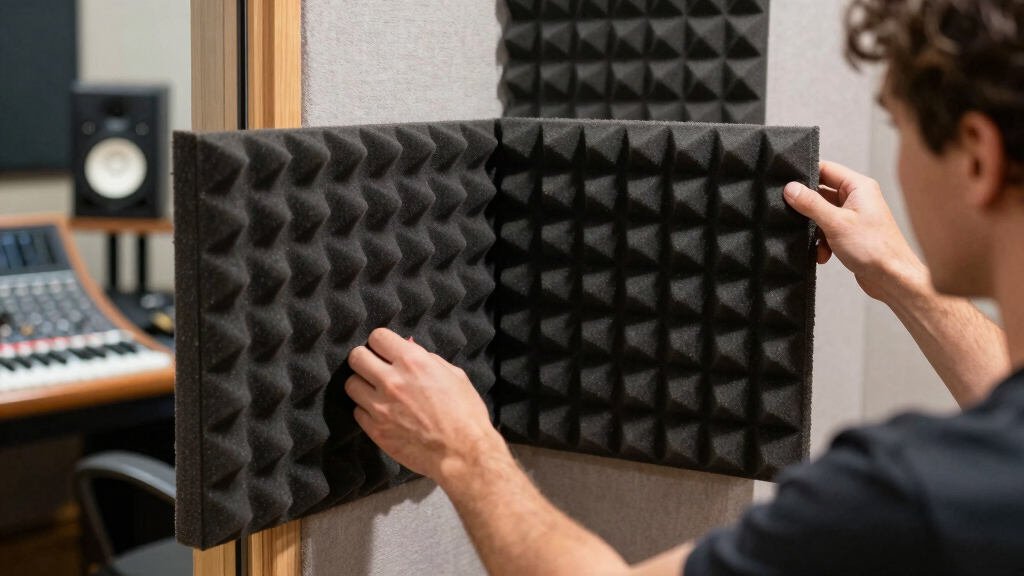
| Thin foam at mid-wall | ✗ Weak | ✓ Useful | Flutter echo and brightness | ✗ Not for bass |
What makes a good bass trap?
Porous traps need depth and density. Four to six inches is a practical starting range, while an air gap or a trap spanning the corner can improve effective low-frequency performance.
Choose dense, porous cores
The objective is controlled airflow resistance—not simply a soft-looking surface. Safe construction and suitable fabric are essential.
Trap the corners. Then tune the room.
Corner treatment creates the low-frequency foundation. Once bass decay is better controlled, add sidewall absorption, a ceiling cloud, or diffusion according to measurements and listening goals.
Why Do Corners Collect More Bass Than Other Spots?
Bass frequencies are long, wave-like sounds. When these waves hit a corner—where two walls, or a wall and ceiling meet—they bounce back and forth, stacking on top of each other. This stacking creates a boost in low frequencies, much like how a canyon amplifies echoes. Think of it as a natural bass magnet, pulling in and trapping those deep sounds.
For example, if you’ve noticed your room sounds boomy or hollow at certain spots, chances are those are your corners. Installing bass traps there pulls down that excess energy, leaving your space clearer and more controlled.
Understanding this is crucial because it highlights why untreated corners often lead to muddiness and an uneven bass response. When low frequencies build up unchecked, they can mask clarity and punch in your music, making mixes sound boomy or muffled. By targeting these spots, you’re not just reducing bass; you’re creating a more balanced and accurate listening environment. This approach emphasizes the importance of strategic placement rather than random treatment, which can save you time and money while dramatically improving sound quality.
As an affiliate, we earn on qualifying purchases.
How to Identify the Worst Corners for Bass Buildup
- Stand in your room and clap your hands or make a loud noise.
- Use a simple measurement microphone or even your smartphone app to analyze the sound.
- Notice where the bass seems loudest or muddier—those are your trouble spots.
- Check the vertical corners (where walls meet floor or ceiling) and horizontal corners (where two walls meet).
For example, in a typical home studio, the corners behind your monitors and along the back wall are prime targets. These are often overlooked, but they tend to be the most problematic because they naturally attract and amplify bass energy. Identifying these key spots is vital because it prevents unnecessary or ineffective treatments elsewhere, saving you resources and ensuring your efforts are focused where they matter most. This process also reveals whether certain corners are particularly problematic due to room shape or furnishings, allowing for tailored solutions that address specific acoustic challenges rather than generic fixes.
As an affiliate, we earn on qualifying purchases.
What Makes a Good Bass Trap? Materials, Size, and Placement
A good bass trap absorbs low frequencies effectively. Look for dense materials like mineral wool or high-quality fiberglass—think of it as acoustic sponge that’s heavy and thick.
Size matters. Traps that are 4 to 6 inches thick capture more bass than thinner panels. For example, a 4-inch trap can absorb a significant chunk of 50-150 Hz frequencies. Thicker traps provide a broader absorption range, which is essential because bass frequencies span a wide spectrum and often overlap. However, thicker traps require more space and proper installation to prevent gaps that reduce their effectiveness. The tradeoff is between space and performance; thicker traps are more effective but may be less practical in small rooms. Proper placement is also critical; installing traps in the identified corners from your analysis ensures maximum benefit. Covering entire corners from floor to ceiling helps create a seamless low-frequency response, avoiding untreated gaps that can act as acoustic blind spots.
Visualize a cozy, thick blanket draped over a corner—this is how your bass trap should feel, dense enough to soak up sound. Remember, the goal is to dampen excessive bass buildup without overly deadening the room, so balancing density and placement is key to achieving natural, clear sound.
As an affiliate, we earn on qualifying purchases.
Why Installing in Corners Is More Effective Than Other Spots
Think of your room as a bathtub. Water (sound energy) naturally collects at the lowest point or where two surfaces meet. Corners are that lowest point for bass. Placing traps there is like draining the excess water before it overflows. This is because low-frequency energy inherently seeks out these points, where it can accumulate and cause muddiness or resonances.
Other spots—like mid-wall or ceiling—don’t gather bass as efficiently. They can help with mid and high frequencies, but for bass, corners are the best first step. Treating non-corner areas without addressing corners often results in limited improvements because the root cause—the low-frequency buildup—is left unmitigated. Understanding this tradeoff helps avoid wasting money on treatments that don’t target the main problem. Prioritizing corner traps provides a solid foundation for any further acoustic treatment, ensuring that subsequent efforts for mid and high frequencies are more effective and balanced. This strategic approach maximizes your investment and leads to a more accurate sound environment.
For instance, a DIYer placed foam panels along the sidewalls but left the corners untreated. The result? Persistent boomy bass in the center, while corners still echoed with excess low-end energy. Moving bass traps into those corners cleaned up that muddiness dramatically. This example underscores why treating corners first is not just a recommendation but a practical necessity for effective bass management.
As an affiliate, we earn on qualifying purchases.
What’s New in Bass Trapping? Fresh Materials and DIY Options
New materials like eco-friendly composites and high-density foam are making bass trapping more effective and sustainable. These innovations help you get better low-frequency absorption without breaking the bank.
DIY bass traps are more popular than ever, using common materials like mineral wool wrapped in fabric. For example, a hobbyist built a 4-inch trap for under $50 and achieved noticeable bass tightness in their home studio. The key advantage is customization—DIY traps can be tailored to fit specific room geometries and aesthetic preferences, which is often difficult with commercial products. However, DIY projects require careful attention to material density, thickness, and installation to ensure optimal performance. Hybrid treatments combine bass traps with diffusers and absorbers for a balanced sound, addressing not just bass but overall room acoustics. Modern tools like Room EQ Wizard help measure room response, guiding precise placement for maximum impact. Staying updated with these innovations allows you to craft a more effective and eco-conscious acoustic environment.
Choosing the right materials and methods can significantly influence how well your traps perform. Thicker, denser materials tend to absorb more bass, but they also require proper installation to prevent gaps that can reduce effectiveness. DIY options allow customization and cost savings but need careful construction to ensure optimal performance.
The Bottom Line: How to Make Your Room Sound Better Fast
Start by placing bass traps in your room’s corners, both vertical and horizontal. Use dense materials, and make them thick enough to absorb the low end effectively. Measure your room before and after to see real improvements.
Remember: corners are where bass gathers, so they’re the best first stop. From there, you can fine-tune with additional treatments to smooth out mid and high frequencies. This simple step makes a huge difference in clarity and punch.
Frequently Asked Questions
Why do bass frequencies tend to ‘muddy’ the sound in my room?
Because low frequencies naturally pile up in corners and along walls, creating boomy, overwhelming sounds. Bass traps in corners absorb this excess energy, reducing muddiness and clarifying your sound.
How do I know if I need bass traps?
If your room sounds uneven, with boomy spots or resonances, adding bass traps can help level those low-frequency peaks and valleys. Use measurement tools or listen for muddiness to decide.
Where should I place bass traps for best results?
Primarily in vertical and horizontal corners where low-frequency energy concentrates. Cover as much of these corners as possible for maximum absorption.
Can I make my own bass traps?
Absolutely. Using high-density mineral wool or fiberglass panels wrapped in fabric, you can build effective traps at a fraction of commercial costs. Just ensure they’re thick enough and properly installed.
How can I measure if my bass trapping works?
Use a measurement microphone and software like Room EQ Wizard to analyze your room’s frequency response before and after treatment. Look for a reduction in peaks and a more balanced bass profile.
Conclusion
Thinking of your room like a bass magnet helps make the treatment decision clear. Corners aren’t just spots to hide clutter—they’re the key to cleaner, tighter sound.
Remember, a simple step—placing traps in corners—can transform your listening or mixing experience. So grab some dense insulation, and give your room the bass control it deserves.
Fall Picks
fall essentials
As an affiliate, we earn on qualifying purchases.