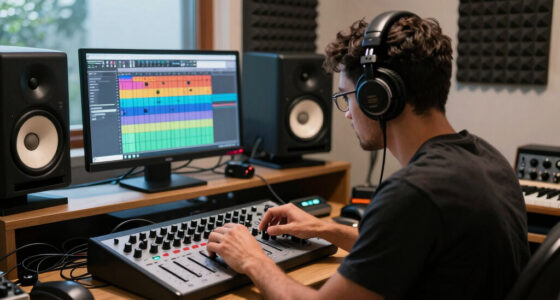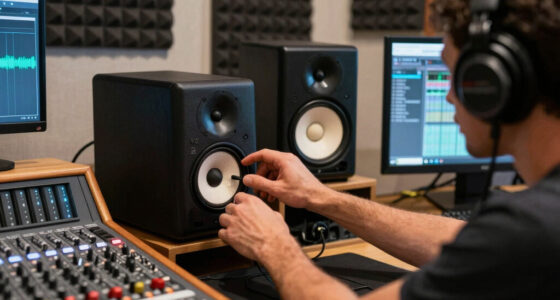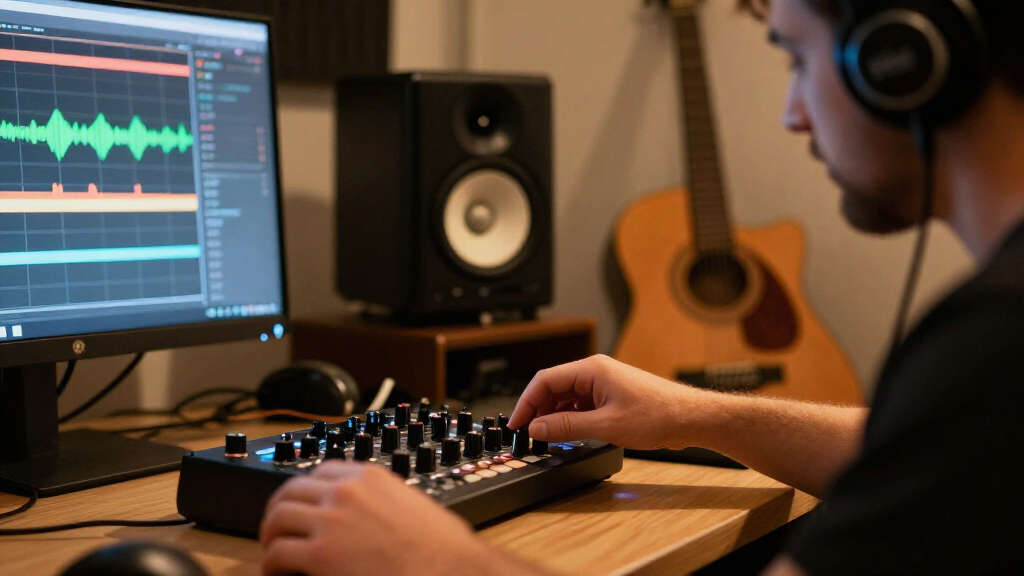

The Sony MDR-7506 and Beyerdynamic DT 770 Pro 80 Ohm are both closed-back headphones used in studios, but they serve different priorities. The Sony is a long-running, relatively affordable workhorse with a bright, direct sound that can expose hiss, edits, and sharp vocal details. The Beyerdynamic costs more and feels more substantial, with plush replaceable ear pads and a more spacious presentation, though its pronounced treble and bass can color decisions too.

Get audio and creator gear delivered free with Prime
- Fast, free delivery on millions of items
- Prime Video, Amazon Music and more included
- Member-only deals all year

Sennheiser HD 490 PRO Open-Back Professional Headphone
- ✔ Design: Open-back
- ✔ Model: HD 490 PRO
- ✔ Model number: 700286

Sony MDR7506 Professional Over-Ear Headphones
- ✔ Design: Closed-ear, over-ear
- ✔ Driver size: 40 mm
- ✔ Frequency response: 10 Hz–20 kHz

Audio-Technica ATH-M20x Professional Studio Monitor Headphones, Black
- ✔ Design: Circumaural, closed-back
- ✔ Driver size: 40 mm
- ✔ Driver type: Dynamic
The practical choice is between portability and a revealing, compact reference on one side, and comfort and a broader-feeling sound on the other. Neither is a perfectly neutral mixing monitor, and both benefit from checking important decisions on speakers or another familiar reference. Choose the Sony if you need a dependable, easy-to-drive headphone for tracking, editing, and occasional mix checks. Choose the DT 770 Pro if long sessions, isolation, and a fuller presentation matter enough to justify the extra cost.
At a Glance
| Criteria | Sony MDR-7506 | Beyerdynamic DT 770 Pro 80 Ohm | Winner |
|---|---|---|---|
| Sound for mix decisions | Direct and compact; useful for checking balances, but limited spatial impression | Roomier presentation, but bass and treble emphasis can skew tonal judgments | Depends |
| Treble and detail | Bright upper range makes hiss, edits, and sibilance easy to notice | Detailed but energetic; bright mixes may sound more acceptable than they are | A |
| Bass presentation | Tight, relatively lean low end can prompt bass boosts if not cross-checked | Fuller and more extended low end; useful for checking sub and kick, yet easy to over-trust | B |
| Comfort for long sessions | Lightweight, though the smaller pads and firmer fit may bother some listeners | Large velour pads and gentle fit tend to suit longer sessions | B |
| Isolation and leakage | Closed-back design works well for tracking and shared rooms | Good isolation for recording; some sound may escape at high listening levels | Tie |
| Portability and handling | Folds and packs easily; fixed coiled cable can be inconvenient | Bulkier, with a long fixed cable that suits a desk better than travel | A |
| Repairability and ownership | Replacement parts are available, though the cable is not detachable | Replaceable pads and serviceable parts support longer ownership | B |
| Value | Lower-cost all-rounder with strong utility for tracking and editing | Higher upfront cost pays off mainly for comfort and sustained studio use | Depends |
Sennheiser HD 490 PRO Open-Back Professional Headphone
The HD 490 PRO takes our top spot because its open-back design is specifically suited to reference work where hearing a broad stereo field matters. Its wide, dimensional presentation and low harmonic distortion are aimed at precise production decisions, and the included DearVR MIX-SE plugin adds a virtual acoustic environment to the package. Compared with the closed-back MDR7506 and ATH-M20x, this Sennheiser is the clearest choice when we want an expansive sense of placement rather than isolation from the room.That advantage comes with a firm boundary: sound leaks through the open cups. We would avoid using it while recording vocals with a live microphone nearby or in a noisy space, where leakage and outside sound can interfere with monitoring. The supplied details highlight interchangeable washable ear pads, which support upkeep and comfort over extended sessions, but cable length and driver size are not specified here. Choose it for quiet mix sessions; choose Sony or Audio-Technica when containment is more important than an open image.
Pros:
- Open-back presentation is described as wide and dimensional for spatial mix decisions.
- Low harmonic distortion is intended to support precise production work.
- Interchangeable washable ear pads can be refreshed and maintained.
- DearVR MIX-SE virtual acoustic simulation plugin is included.
Cons:
- Open cups leak sound and provide limited isolation for tracking.
- The supplied specifications do not state driver size or frequency response.
- Its 1.8 m cable may not suit every desk or studio layout.
Best for: Mixers working in a quiet room who prioritize stereo placement and a spacious reference presentation.
Not ideal for: Recording performers beside live microphones or mixing in noisy shared spaces where sound leakage is a problem.
Bottom line: For quiet-room mixing where stereo space is the priority, the HD 490 PRO is the most purpose-built option in this group, provided its sound leakage fits your workflow.
“For quiet-room mixing where stereo space is the priority, the HD 490 PRO is the most purpose-built option in this group, provided its sound leakage fits your workflow.”
Sony MDR7506 Professional Over-Ear Headphones
The Sony MDR7506 is our closed-back pick for studios that need one wired pair to move between monitoring and mix checks. Its closed-ear construction offers isolation, while the fold-flat design and soft case make it easier to store or carry than the open-back HD 490 PRO. A 40 mm driver and stated 10 Hz–20 kHz response provide useful reference points, though those numbers alone cannot establish how a mix will translate. The included 1/4-inch and 1/8-inch connections make it a flexible match for common studio and portable sources.Against the ATH-M20x, Sony’s listed accessories and foldable build make the package more travel-ready; against the Sennheiser, it gives up the open presentation that can help with spatial judgments. Its main practical limitation is the non-detachable 9.8-foot cable, which cannot be swapped if damaged and may not reach comfortably in a larger room. The product information also lists a 90-day warranty. We would choose this model for tracking, cue mixes, and general studio monitoring, while treating open-back headphones or speakers as a useful complement for final spatial decisions.
Pros:
- Closed-ear construction provides isolation for monitoring near recording activity.
- Fold-flat design and soft case make storage and transport convenient.
- Includes 1/4-inch and 1/8-inch connector options.
- 40 mm drivers and a stated 10 Hz–20 kHz frequency range.
Cons:
- The cable is fixed and cannot be replaced independently.
- The 9.8-foot cable may not suit every larger setup.
- The listed warranty is 90 days.
Best for: Home and project studio owners who need a closed-back pair for tracking, monitoring, and occasional mix checks.
Not ideal for: Mixers who want an open, speaker-like soundstage or need a replaceable cable for demanding daily use.
Bottom line: The MDR7506 is our most versatile closed-back choice for monitoring and tracking, though its fixed cable and less spacious presentation make it a different tool from the HD 490 PRO.
“The MDR7506 is our most versatile closed-back choice for monitoring and tracking, though its fixed cable and less spacious presentation make it a different tool from the HD 490 PRO.”
Audio-Technica ATH-M20x Professional Studio Monitor Headphones, Black
The ATH-M20x is the entry-level choice for someone building a first studio setup and looking for circumaural, wired monitoring. Its closed design offers isolation, so it is more practical for tracking beside a microphone than the open-back HD 490 PRO. Compared with the MDR7506, it is presented as the simpler starting point in Audio-Technica’s M Series rather than a foldable option with a carrying case and multiple included adapter details. The 40 mm dynamic drivers and 47-ohm impedance are concrete basics for matching it to a home-studio source.Its stated frequency response is 15 Hz–20 kHz, narrower at the low end than the Sony’s listed range. That is a specification difference, not proof on its own of poorer bass accuracy; we should still check low-frequency decisions on other playback systems. The product details describe clear mids and highs, but provide fewer specific fit and accessory details than the Sony listing. For a newcomer, that straightforward setup may be enough. Mixers who need a more spacious reference, a broader set of supplied accessories, or more detailed published specifications may prefer the Sennheiser or Sony instead.
Pros:
- Circumaural closed design helps with isolation during tracking.
- 40 mm dynamic drivers provide a familiar studio-monitoring format.
- 47-ohm impedance is specified for source-matching decisions.
- Positioned as an entry-level model in Audio-Technica’s M Series.
Cons:
- The stated 15 Hz–20 kHz range has less low-end extension on paper than the Sony’s.
- No carrying case or adapter is listed in the supplied product details.
- It does not offer the open-back spatial presentation of the HD 490 PRO.
Best for: New home-studio users who want a basic closed-back wired headphone for tracking and early mix work.
Not ideal for: Experienced mixers seeking an open spatial presentation, or buyers who want a foldable design and clearly listed travel accessories.
Bottom line: The ATH-M20x is a sensible first closed-back studio headphone, but buyers ready to prioritize spatial reference or a more travel-ready package should compare it with the other two.
“The ATH-M20x is a sensible first closed-back studio headphone, but buyers ready to prioritize spatial reference or a more travel-ready package should compare it with the other two.”
As an Amazon Associate we earn from qualifying purchases.
Key Differences
The Sony’s strongest mixing advantage is how plainly it presents upper-mid and high-frequency detail. That can make it easier to catch vocal sibilance, background noise, and editing clicks. Its compact sound and leaner bass are less helpful for judging depth or low-end weight, so a mix that seems balanced on the MDR-7506 may still need checking on speakers. The DT 770 Pro sounds more spacious and delivers more low-frequency weight, which can make long listening less fatiguing for some users. But its bass and lively treble are part of its character, not proof of neutrality.
Comfort and ownership also separate them. The Beyerdynamic’s large velour pads and replaceable components make it a more attractive desk headphone for repeated, extended sessions. The Sony is lighter and easier to pack, and its lower cost makes it easier to keep a pair around for tracking or editing. Both isolate well enough for recording, and both use fixed cables, so neither is a perfect choice if cable replacement or a compact removable lead is a priority. The best pick depends on which limitation is easier to manage in your setup.
For mixing, treat either model as one reference among several. The DT 770 Pro’s fuller bass can help reveal low-frequency material, but can also lead to bass-light mixes if you compensate too aggressively. The MDR-7506’s brighter balance can reveal harshness, but may lead you to soften a mix that is not actually harsh elsewhere. If you already know one of these headphones well and regularly cross-check on speakers, familiarity may matter more than switching models.
Detailed Comparison
Sound for mix decisions (moderate difference)
The MDR-7506 gives a more compact, direct presentation, which is practical for checking edits and balance but offers less sense of space. The DT 770 Pro feels roomier and can make panning and ambience easier to inspect, although its tonal profile is less even. This is a moderate advantage for the Beyerdynamic if you value spaciousness, while neither is a reliable sole reference for final mix translation.
Treble and detail (Sony MDR-7506 wins — moderate)
The Sony’s prominent upper range helps expose hiss, clicks, and vocal sibilance. The DT 770 Pro is also detailed, but its energetic treble can make bright material sound exciting rather than problematic. The Sony wins by a moderate margin for diagnostic listening; listeners sensitive to treble may find it tiring, and both require checks against a more neutral reference.
Bass presentation (Beyerdynamic DT 770 Pro 80 Ohm wins — moderate)
The Beyerdynamic gives kick drums and low-frequency effects more weight and extension than the comparatively lean Sony. That helps when inspecting bass content, but the DT 770 Pro can make bass seem more prominent than it will on speakers. This is a moderate win for B for low-end inspection, not an automatic win for accurate bass balance. Use a second reference before making large EQ or level changes.
Comfort for long sessions (Beyerdynamic DT 770 Pro 80 Ohm wins — major)
The MDR-7506 is light, but its smaller pads and firmer fit may create pressure for some users. The DT 770 Pro has larger velour pads and a more accommodating over-ear fit, making it the better bet for long editing or mixing blocks. This is a major practical advantage for listeners who wear headphones for hours; head shape and heat sensitivity still affect personal comfort.
Isolation and leakage (minor difference)
Both closed-back models are suitable for tracking near a microphone and for work in rooms where speakers are not practical. Isolation and leakage vary with fit and listening level, but neither has a decisive general advantage here. This is a minor difference: try them with the intended microphone if bleed is a recurring issue, and keep monitoring volume sensible.
Portability and handling (Sony MDR-7506 wins — moderate)
The Sony folds into a smaller package and weighs less, making it easier to carry between a home setup, rehearsal room, and studio. The DT 770 Pro is bulkier and its long cable is better suited to a fixed desk. This is a moderate Sony win for mobile work; for a permanent mixing position, the extra size matters less.
Repairability and ownership (Beyerdynamic DT 770 Pro 80 Ohm wins — moderate)
The DT 770 Pro has replaceable ear pads and a reputation for serviceable parts, which can extend useful life when the headphone sees heavy studio use. The MDR-7506 also has replaceable pads, but its cable is fixed; the DT 770 Pro cable is fixed as well. B has a moderate advantage for long-term maintenance, though availability and repair costs depend on location.
Value (moderate difference)
The MDR-7506 delivers a useful tracking and editing tool at a lower entry cost. The DT 770 Pro asks more, with comfort and replaceable parts as the clearest returns. For occasional mix checks or a second pair, Sony is better value. For daily long sessions, paying extra for the Beyerdynamic can be worthwhile if its fit suits you.
Sony MDR-7506: Pros and Cons
Pros:
- Lightweight and easy to carry between workspaces
- Bright presentation helps reveal edits, hiss, and sibilance
- Lower cost makes it a practical tracking and editing headphone
- Straightforward to drive from common interfaces and portable devices
Cons:
- Lean bass can mislead low-end balance decisions
- Smaller pads and firmer fit may become uncomfortable over long sessions
- Compact presentation gives less spatial impression
- Fixed cable limits repair and cable-management options
Beyerdynamic DT 770 Pro 80 Ohm: Pros and Cons
Pros:
- Large velour pads are often more comfortable for extended sessions
- Fuller bass helps inspect kick and sub content
- Roomier-feeling presentation can help with spatial checks
- Replaceable pads and serviceable parts support long-term use
Cons:
- Costs more, with the benefit most apparent for frequent users
- Bass and treble emphasis can bias mix decisions
- Bulkier build and long cable suit a desk better than travel
- Fixed cable remains a limitation despite the serviceable design
Who Should Choose What
Choose Sony MDR-7506 if:
- You need a lower-cost headphone for tracking, editing, and occasional mix checks.
- You travel between rooms or studios and want a lighter, foldable pair.
- You prioritize hearing clicks, noise, and vocal sibilance.
- You already check bass and tonal balance on speakers or another trusted reference.
Choose Beyerdynamic DT 770 Pro 80 Ohm if:
- You spend long stretches wearing headphones and prefer large velour pads.
- You want a fuller low end and roomier presentation for inspection.
- You work mainly at a desk and can accommodate a larger headphone and long cable.
- You expect to replace pads or maintain the headphone over years of studio use.
Skip both if: You need one headphone to provide a neutral, final mix reference without speaker or alternate-headphone checks. Compare open-back mixing models as well, or use whichever closed-back fits your recording needs alongside a trusted second reference.
Value for Money
The MDR-7506 is the better value for a new studio user who needs one affordable pair for recording, editing, and occasional mix work. Its low entry cost leaves room in the budget for a microphone, interface, or monitor speakers, and its light build makes it useful beyond the mixing desk. Its weaknesses matter most when you treat its bass or bright top end as a final tonal authority.
The DT 770 Pro 80 Ohm is worth paying more for when comfort is a daily need, not a rare treat. The larger pads and replaceable parts can make the additional cost sensible for someone working long sessions or keeping headphones in regular rotation. The price premium does not buy a universally more accurate mix; it buys a different presentation and a more comfortable, serviceable studio tool. If you mix only occasionally, the Sony is usually the more economical purchase.
Final Verdict
For most budget-conscious home studios, choose the Sony MDR-7506 if you need a versatile pair for tracking, editing, and checking mixes, and plan to verify tonal balance elsewhere. It is compact, easy to drive, and particularly useful for finding upper-frequency problems. Choose the Beyerdynamic DT 770 Pro 80 Ohm if you spend hours in headphones, prefer a larger fit, and will benefit from its fuller low end and more spacious presentation. Its higher price is justified by comfort and sustained use, not by a claim of flat accuracy. The biggest deciding factor is how long you wear them: occasional use favors Sony’s value, while frequent extended sessions make the DT 770 Pro the stronger buy.
Frequently Asked Questions
Which is more accurate for mixing, the MDR-7506 or DT 770 Pro?
Neither is a fully neutral reference. The Sony emphasizes upper detail and presents leaner bass; the Beyerdynamic has stronger bass and lively treble. Learn the model you use and check important balance decisions on speakers or another familiar reference.
Is the DT 770 Pro 80 Ohm worth the extra cost?
It can be if you mix or edit for long stretches and its large pads suit your head. Its comfort and replaceable parts offer more practical value for frequent use. For occasional recording and editing, the less expensive MDR-7506 is usually sufficient.
Can I use either headphone to mix bass?
Yes, as one reference. The DT 770 Pro provides more bass weight, while the Sony sounds leaner. Both can skew your decisions in opposite directions, so cross-check kick and sub levels on speakers, another headphone, or familiar reference tracks.
Which is better for recording vocals?
Both are closed-back and commonly used for tracking. Fit and microphone bleed depend on the session and listening level, so test the headphone with the microphone you plan to use. The Sony is easier to pack; the Beyerdynamic may be more comfortable for longer takes.
Evergreen bestsellers Picks

Shark PowerDetect Robot Vacuum and Mop Combo with 60-Day Self-Emptying Base (AV2800ZE)

Vitamix VX1 Professional-Grade Blender, 64 oz, Black

Roborock Qrevo S Pro Robot Vacuum and Mop with 18,500 Pa Suction
As an affiliate, we earn on qualifying purchases.