
TL;DR

Get audio and creator gear delivered free with Prime
- Fast, free delivery on millions of items
- Prime Video, Amazon Music and more included
- Member-only deals all year
Pop filters are more effective than windscreens at reducing plosives in studio settings, while windscreens excel outdoors. Using both offers maximum protection. Proper placement and tool choice are key to clean recordings.
Ever had a recording where a sudden burst of ‘P’ or ‘B’ ruins the whole take? That’s a plosive, and it’s a common enemy in voice recordings. You might have seen people use pop filters or windscreens, but what actually works best? Knowing the difference can save your recordings from distortion and give your voice the clarity it deserves.
This guide breaks down how each tool functions, their strengths, and when to use them. Whether you’re recording in a studio or on the go, understanding these options helps you choose the right gear for pristine sound quality.
Pop filters are significantly more effective than windscreens at reducing plosive pops in controlled environments.
Using both a pop filter and windscreen together provides maximum protection, especially outdoors or in variable environments.
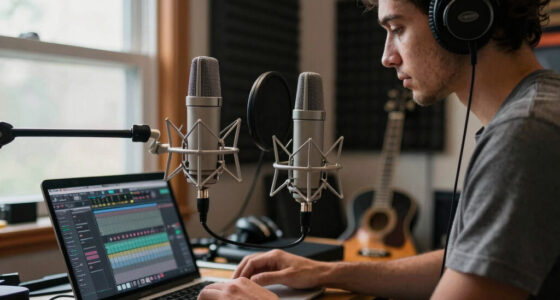
Proper placement—about 2 inches from the mic—is key to balancing sound quality and plosive reduction.
High-quality mesh pop filters can cut plosive noise by up to 90%, making budget mics sound professional.
Adjust your setup through testing; every voice and mic combo needs fine-tuning for best results.
What Are Plosives and Why Do They Ruin Your Recordings?
Plosives are sudden bursts of air that hit the microphone directly when pronouncing words like ‘P,’ ‘B,’ or ‘T.’ Imagine blowing across a soda bottle—those sharp blasts create a pop in the sound wave. In recordings, this results in a harsh, distorted noise that distracts from your voice’s clarity.
If you’ve ever listened to a podcast or voiceover and heard a loud pop right at the start of a sentence, you’ve experienced a plosive. They’re especially problematic with sensitive condenser mics, which pick up everything in detail.
Reducing plosives isn’t just about sound quality—it’s about professionalism. A clean, clear voice track makes your content more engaging and easier to listen to.
professional pop filter for microphones
As an affiliate, we earn on qualifying purchases.
As an affiliate, we earn on qualifying purchases.
How Pop Filters and Windscreens Diffuse Air to Stop Popping Sounds
Pop filters are mesh screens placed a few inches in front of your microphone. They diffuse the airflow from your mouth, breaking up the force before it hits the capsule. This diffusion reduces the velocity of the air hitting the microphone, which prevents the sharp transient peaks that cause pops. The tradeoff here is that a poorly designed or incorrectly positioned pop filter can slightly alter the sound, potentially dulling high frequencies or creating reflections if not properly maintained.
Windscreens are foam covers that slip over the microphone. They act like a buffer, blocking wind, breath, and some plosive sounds. While they’re great for outdoor use, they’re generally less effective than pop filters for indoor voice recordings. The foam can absorb some high frequencies, which might slightly muffle the voice, especially if the foam density is too high or if it’s placed too close to the mic capsule. Choosing the right foam density and positioning is a balancing act: too dense or too close, and your sound can become dull; too loose or too far, and wind noise or plosives might still slip through.
For example, a podcaster might use a pop filter to capture crisp, clear speech in a studio, while a field reporter might rely on a windscreen to prevent wind noise and breath pops outdoors. Understanding these tradeoffs helps you decide which tool offers the best compromise between noise reduction and sound fidelity in your specific environment.
As an affiliate, we earn on qualifying purchases.
Recent Tech and What’s New in Pop Filters and Windscreens
Designers now craft pop filters with dual-layer mesh, boosting diffusion without muffling the voice. Some models use fine stainless steel or nylon to maximize airflow and durability. Windscreens have evolved too, with denser foam that better absorbs high frequencies and breath noise.
Plus, many microphones now incorporate built-in internal pop filters or shock mounts designed to cut down plosives at the source. Digital tools, like de-essers and noise gates, also help clean up plosive artifacts after recording.
For instance, an upgraded pop filter might reduce plosive pops by up to 90%, making even budget mics sound professional.
As an affiliate, we earn on qualifying purchases.
Pop Filters vs Windscreens: Which Stops Plosives Better?
| Feature | Pop Filters | Windscreens |
|---|---|---|
| Effectiveness against plosives | Very high | Moderate |
| Placement | In front of microphone, 2-6 inches away | Over the microphone capsule |
| Sound impact | Minimal, transparent | Can slightly muffle high frequencies |
| Best use case | Studio vocals, voiceovers | Outdoor, mobile recording |
As an affiliate, we earn on qualifying purchases.
Your Practical Guide: When and How to Use Each Tool
- Set up your microphone on a stable stand.
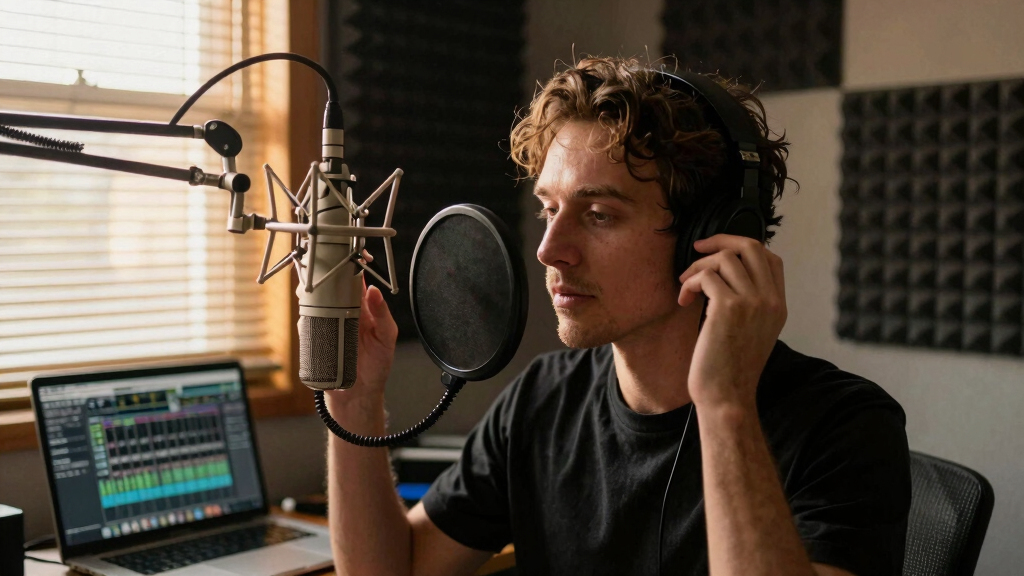
- Position your pop filter 2-3 inches from the microphone grille. Keep it slightly off-axis to avoid muffling your voice.
- If recording outdoors or in a windy space, slide a foam windscreen over the mic first. For indoor studio work, a pop filter alone usually suffices.
- Adjust your distance based on your voice. The closer you are, the more effective the pop filter, but stay balanced to avoid proximity effect boosting bass frequencies.
- Test and listen. Make small adjustments until plosive pops are minimized and sound remains natural.
For example, a voice actor might keep their pop filter close to prevent pops during intense ‘P’ sounds, while a reporter outdoors uses both a windscreen and a pop filter for maximum clarity.
Should You Use Both or Just One? When to Combine Pop Filters and Windscreens
Using both can give you the best of both worlds—maximum plosive reduction and wind protection. If you record in a noisy or outdoor environment, layering a foam windscreen over a pop filter creates a barrier against wind gusts and breath pops. This layered approach is especially important when recording in environments with unpredictable airflow or background noise, as each tool compensates for the other’s limitations.
For instance, a field journalist might use a foam windscreen over their microphone, with a pop filter in front for close-up voice work. This combo minimizes unwanted noise and keeps your voice clear. However, this setup can sometimes introduce reflections or slight muffling, so proper positioning and quality gear are critical to avoid degrading audio clarity.
However, in a quiet studio, a single high-quality pop filter usually does the job. Overdoing it with multiple layers can sometimes cause subtle sound dulling or unwanted reverberations, which may require additional post-processing to correct. The key is balancing protection with maintaining natural sound.
Final Tips for Perfect Recordings Without Popping Noises
- Position your pop filter properly—about 2 inches from the mic, slightly off to the side.
- Experiment with distance. Moving closer boosts bass but may cause proximity effects; farther reduces pops but risks muffling sound.
- Choose the right gear based on environment—pop filter for studio, windscreen for outdoors.
- Clean your gear regularly to prevent dust and debris from affecting sound quality.
- Test, listen, tweak. Every voice and mic is different.
Frequently Asked Questions
Can I use a pop filter and windscreen on the same microphone?
Absolutely. Using both can provide maximum plosive and wind noise reduction. A foam windscreen over the mic, with a pop filter in front, works great in outdoor or noisy environments.How close should I place the pop filter to my microphone?
Typically between 2 and 3 inches away from the microphone grille. Adjust based on your voice and mic to prevent pops without muffling your sound.Will a foam windscreen muffle my voice?
It can slightly reduce high frequencies, but high-quality foam minimizes muffling. Choosing a dense foam and positioning it correctly helps keep your sound natural.Are pop filters worth the extra cost?
Yes. They’re a small investment for a huge improvement in vocal clarity and professionalism, especially if you record frequently or want studio-level quality.What’s the best way to test if my setup works?
Record a few lines, listen carefully for pops or muffling, then tweak the distance and positioning of your pop filter or windscreen. Repeat until your sound is clean and natural.Conclusion
Choosing the right tool isn’t just about stopping pops—it’s about clarity, professionalism, and making your voice shine. A pop filter is your go-to in the studio, while windscreens serve best outdoors. Combining both offers unbeatable protection in tough environments.
Remember, the secret isn’t just gear—it’s placement, setup, and a little trial and error. Your recordings will thank you for it, sounding cleaner, sharper, and more engaging. So grab your gear, test a few positions, and let your voice be heard without the pops.
Halloween Picks
halloween
As an affiliate, we earn on qualifying purchases.