
TL;DR

Get audio and creator gear delivered free with Prime
- Fast, free delivery on millions of items
- Prime Video, Amazon Music and more included
- Member-only deals all year
Room correction software can smooth out frequency response issues and improve clarity, but it can’t change room size, fix speaker quality, or replace proper acoustic treatment. Use it as part of a broader approach for best results.
Ever turned on your room correction software and thought, “Wow, this sounds way better!”? It’s a powerful tool that can fix a lot of acoustic quirks. But it’s not a magic wand. Knowing what it can fix—and what it can’t—prevents disappointment and helps you get the most from your gear.
In this guide, we’ll break down the real strengths of room correction software, show you its limits, and give practical tips for making your space sound as good as possible.
Room correction software can dramatically improve frequency response and clarity, especially in untreated rooms.
It cannot fix fundamental room issues like size, shape, or low-frequency resonances that require physical treatment.
Proper speaker placement and acoustic treatments are essential—correction software is just a tool, not a fix-all.
Overcorrecting with EQ can cause phase problems and unnatural sound; moderation is key.
Use correction software as part of a broader strategy, combining physical fixes and careful calibration for the best sound.
Room Correction Software: What It Can and Cannot Fix
Room correction software can smooth frequency response issues, tighten bass, and improve clarity. It cannot change room size, fix weak speakers, or replace acoustic treatment. Treat it as precision tuning, not a magic wand.
Digital correction works best after the room, speaker placement, and listening position are already doing their share.
Key insight: software reduces symptoms, physics sets the ceiling.What It Actually Improves
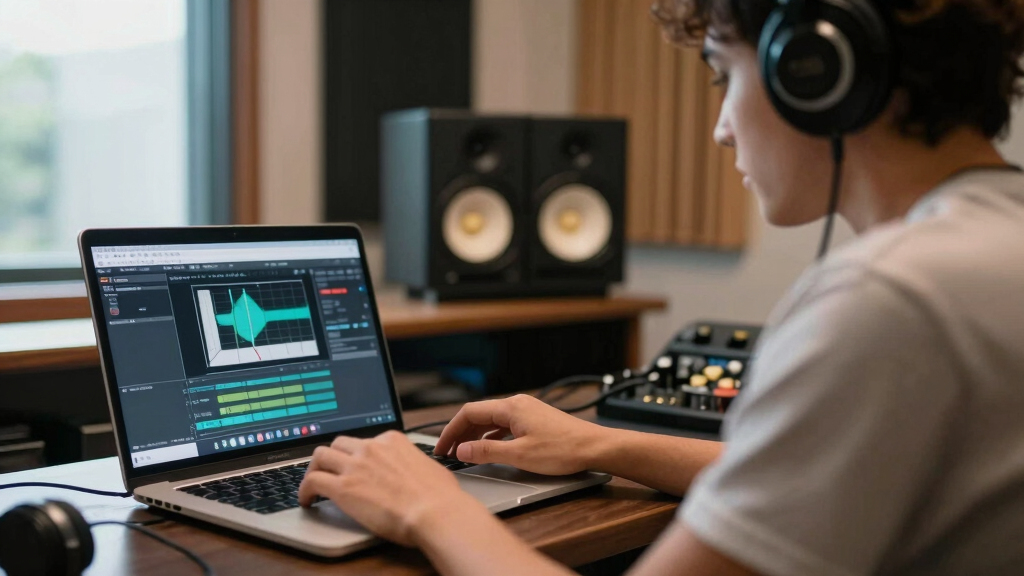
Measurement microphones capture how your speakers behave in the room. The software then applies digital filters to reduce peaks, balance tonal shifts, improve timing, and make the listening position more consistent.
Smoother tone
Reduces boomy bass peaks, harsh treble bumps, and uneven midrange balance.
Fewer hotspots
Can soften modal buildup, especially at mid and upper bass frequencies.
Clearer detail
Some time-domain tools reduce smear from early reflections and echoes.
Sharper stage
Phase and timing alignment can make voices and instruments feel more focused.
Can It Fix This?
The useful question is not whether correction changes the sound. It does. The real question is whether the problem is digital, physical, or a mix of both.
| Problem | Software impact | Best physical partner | Verdict |
|---|---|---|---|
| 50Hz bass peak from corner loading | EQ can reduce the bump and make bass feel tighter. | Move speakers or subwoofer away from boundaries. | ✓Strong candidate |
| Deep cancellation null at the listening seat | Boosting a null wastes headroom and can stress speakers. | Shift listening position, sub placement, or add multiple subs. | ~Limited help |
| Huge flutter echo from bare walls | May reduce perceived smear, but cannot absorb reflections. | Absorbers, rugs, curtains, diffusers, and layout changes. | ~Supplement only |
| Damaged speaker driver or poor speaker quality | Cannot repair distortion, rattles, or limited driver performance. | Repair, replace, or upgrade the loudspeaker. | ✗Not fixable |
| Room size, shape, and construction materials | Cannot rewrite the physical acoustics of the space. | Bass traps, placement strategy, room design, isolation work. | ✗Physics wins |
The Smarter Workflow
Correction performs best when it cleans up what remains after placement and treatment. This sequence keeps the software from fighting avoidable room problems.
Place
Set speakers at ear height, balanced left to right, and away from obvious boundary problems.
Treat
Use bass traps, absorbers, diffusers, rugs, and curtains to handle reflections and resonances.
Measure
Take multiple microphone readings around the listening area instead of trusting one point.
Fine-tune
Apply moderate filters, compare before and after, and trust your ears when graphs look too perfect.
Where The Limit Lives
Room correction is excellent at reducing excess energy. It is much weaker at filling missing energy, changing decay time, or compensating for a bad physical setup.
Fix physically first
- Speaker placement: symmetry, height, toe-in, and distance from walls.
- Low-frequency control: bass traps, subwoofer placement, and listening-seat position.
- Reflection control: absorption or diffusion at first-reflection points.
- Noise control: door seals, window plugs, rugs, and mechanical isolation.
Then let software polish
Use tools such as REW, Dirac Live, Audyssey MultEQ, Anthem Room Correction, or receiver-based calibration to smooth the remaining response. The goal is balanced, natural playback, not a ruler-flat graph at any cost.
Overcorrection can introduce phase issues, reduce headroom, and make music sound hollow or processed. Moderate correction usually sounds more convincing than aggressive EQ.
Correction confidence scale
Traceability Chain
Great room sound comes from connected decisions. Each step shapes what the next tool can realistically accomplish.
Common Questions
Beginners can get real benefits from guided calibration, but the strongest results still come from combining setup discipline with careful listening.
Does it make a noticeable difference?
Yes. In small or untreated rooms, it can improve clarity, tighten bass, and make stereo imaging more stable.
Can it fix the whole room?
No. It cannot change room dimensions, materials, structural noise, or severe low-frequency resonances.
Is it suitable for most systems?
Most modern systems can benefit, especially when the software is calibrated with multiple measurements.
Can it degrade sound?
Yes, if correction is too aggressive. Excess EQ can create phase problems and an unnatural tonal balance.
How does room correction software actually improve your sound?
Room correction software works by analyzing your room’s acoustics through a measurement microphone. It detects issues like peaks, dips, and echoes and then applies digital filters to smooth out those irregularities. Think of it as a noise-canceling headphone for your room’s sound—balancing frequencies for clearer, more balanced audio.
For example, if a corner boom causes a bass peak at 50Hz, correction software can reduce that bump, making your bass tighter and less boomy. It’s especially noticeable in smaller rooms where standing waves create uneven response.
It can also improve stereo imaging and reduce reverb, giving your soundstage more depth and clarity. But it’s not a cure-all—its effectiveness depends on how severe the issues are and what you’re trying to fix.
room correction software for speakers
As an affiliate, we earn on qualifying purchases.
As an affiliate, we earn on qualifying purchases.
What room correction software can fix—and how much difference it makes
| What it can fix | How it improves your sound |
|---|---|
| Frequency response irregularities | Smoother bass, clearer mids, balanced treble—less boomy or hollow sound. |
| Room modes at mid/high frequencies | More even sound across the listening area, reducing dead spots and hotspots. |
| Reverberation and echoes | Clarity and definition improve, especially in rooms with lots of hard surfaces. |
| Stereo imaging | Better soundstage coherence, making instruments and voices seem more focused and lifelike. |
In a typical setup, a small, untreated room with uneven bass response can see noticeable improvements—tightening bass by 10-15%, gaining more clarity and depth. It’s like giving your room a quick tune-up without remodeling.
acoustic treatment panels for listening room
As an affiliate, we earn on qualifying purchases.
As an affiliate, we earn on qualifying purchases.
Why room correction software can’t fix your room’s fundamental flaws
Despite its power, room correction software hits a wall when it comes to physical limitations. It cannot change the room’s size, shape, or materials. If your room has massive bass resonances at 30Hz caused by its dimensions, software can’t make those frequencies go away—only soften or reduce their impact.
It also can’t compensate for poor speaker placement, like speakers placed too close to walls or in corners. No amount of digital correction will fix the sound of a speaker that’s physically obstructed or damaged. And it can’t replace proper acoustic treatment like bass traps or diffusers.
For example, if your room has a huge echo because of bare walls and a vaulted ceiling, software might reduce some reverb, but it won’t turn your space into a cozy listening cavern. You still need physical fixes for the best results.
As an affiliate, we earn on qualifying purchases.
The limits of correction: what you should fix physically instead
If you want your room to sound better, don’t rely solely on digital fixes. Here are concrete steps:
- Start with proper speaker placement. Keep speakers at ear level, away from walls, and symmetrical in the room.
- Add acoustic treatment. Bass traps, diffusers, and absorbers target specific issues that software can’t fully address.
- Control external noise. Use door seals, window plugs, or rugs to minimize outside sound interference.
- Use correction software as a supplement. It’s a tool to fine-tune what physical setup can’t fix alone, not a substitute.
For instance, a professional studio might combine strategic placement, bass trapping, and software calibration. That synergy creates balanced, natural sound much more effectively than relying on corrections alone.
As an affiliate, we earn on qualifying purchases.
How to maximize room correction software’s benefits without overdoing it
Use room correction software smartly, not blindly. Here’s how:
- Calibrate carefully. Follow the software’s instructions, measure multiple spots, and aim for consistency.
- Avoid over-correction. Too much EQ can cause phase issues or make your sound unnatural.
- Listen critically. Trust your ears. If correction makes music sound hollow or exaggerated, dial it back.
- Combine with physical fixes. Use correction to address what’s left after your physical setup is optimized.
In real-world scenarios, this means running multiple measurements, comparing before and after, and trusting your ears over the software’s visual graph when needed.
Frequently Asked Questions
Does room correction software really make a noticeable difference?
Absolutely. In rooms with significant acoustic issues, correction software can improve clarity, tighten bass, and enhance imaging. The difference is especially noticeable in smaller or untreated rooms.
Can room correction fix my room entirely?
No. It can help mitigate many issues, but it can’t change the room’s size, shape, or materials. Physical improvements like acoustic treatment are still necessary for best results.
Is room correction software suitable for all audio systems?
Most modern systems benefit, but effectiveness depends on the room’s specific problems and how well you calibrate. It works best when combined with good physical setup.
Will correction software cause latency or degrade sound quality?
Good-quality software minimizes latency. However, overly aggressive EQ can introduce phase issues or make the sound unnatural. Use corrections moderately.
Is calibration easy for beginners?
Yes, most tools now include guided setups and real-time feedback. But taking multiple measurements and trusting your ears lead to better results.
Conclusion
Room correction software can be a game-changer when used correctly. It’s a powerful tool, but never a substitute for good physical setup and acoustic treatment. Think of it as fine-tuning rather than fixing the core problem.
Remember, the best sound comes from a mix of smart placement, physical tweaks, and digital calibration. When you respect each tool’s limits, your room becomes a true ally in your listening journey.
Evergreen bestsellers Picks
bestsellers
As an affiliate, we earn on qualifying purchases.