
TL;DR

Get audio and creator gear delivered free with Prime
- Fast, free delivery on millions of items
- Prime Video, Amazon Music and more included
- Member-only deals all year
Flat frequency response means a device reproduces sound evenly across all frequencies, ensuring accurate and transparent audio. While ideal for mixing and mastering, minor deviations are common and influenced by environment and design choices.
Ever wonder what it really means when an audio device is labeled as having a flat frequency response? It’s more than just a marketing buzzword. Think of it as a faithful mirror, reflecting sound without bias or coloration. For anyone serious about mixing, mastering, or just enjoying high-fidelity sound, understanding this concept is key. You’ll see it pop up when choosing studio monitors, headphones, or microphones, but what does it actually tell you about the gear? And how does it influence what you hear? In this guide, you’ll learn what flat response means, why it matters, and how recent tech trends are shaping the way we measure and achieve it.
Flat frequency response means the device reproduces sound evenly across 20 Hz to 20 kHz, with minimal deviations.
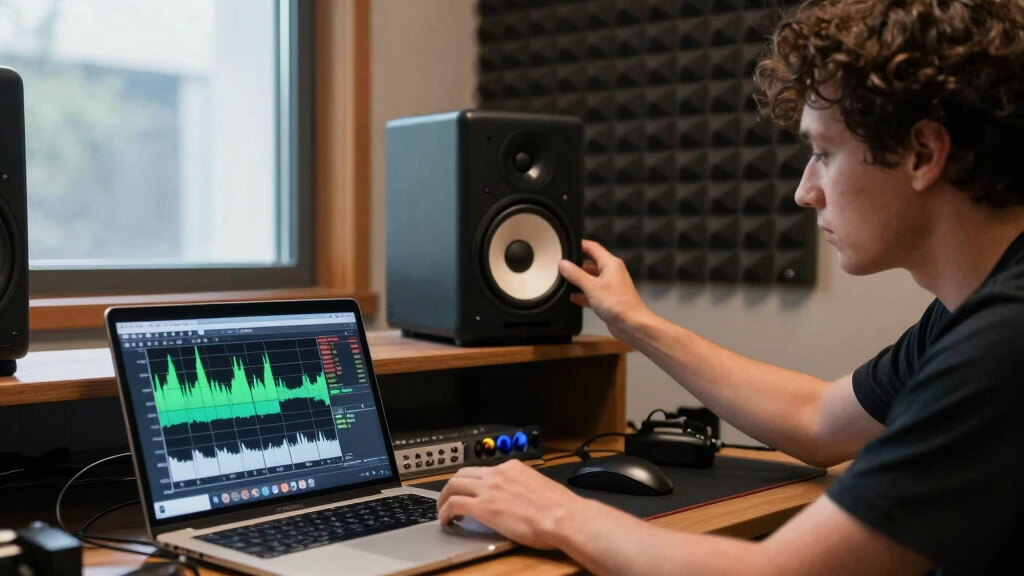
Accurate measurement with a microphone and software is key to verifying true flatness.
Minor response bumps or dips are normal; the goal is consistency, not perfection.
Room acoustics and placement heavily influence perceived flatness, even if gear has a flat response in ideal conditions.
While flat response is essential for professional work, slight coloration can make music more engaging for casual listening.
What Exactly Is Flat Frequency Response? Think of It as a Perfect Sound Mirror
Flat frequency response is a clear, uncolored way of saying the device reproduces sound evenly across the entire audible spectrum, from deep bass at 20 Hz to shimmering treble at 20 kHz. Imagine a speaker that doesn’t favor any particular range—no boosted bass, no muted highs—that’s flat response. For example, a studio monitor with a flat response accurately shows you what a track really sounds like, without adding or subtracting anything. It’s like tuning a guitar string perfectly—what you hear is what’s really there, not a version shaped by the gear.
studio monitor with flat frequency response
As an affiliate, we earn on qualifying purchases.
As an affiliate, we earn on qualifying purchases.
Why Does Flat Response Matter So Much in Studio Gear? The Power of Honest Sound
In the studio, accuracy isn’t just nice-to-have; it’s everything. Flat response ensures you’re hearing true representations of your recordings. If your headphones boost bass or cut treble, you might think your mix is perfect when it’s actually skewed. Think of it like a chef tasting a dish—if the tasting spoon adds extra salt, you won’t know what’s really there. A flat response acts as that honest tasting spoon, revealing the real flavors—no tricks, no surprises.
high fidelity headphones flat response
As an affiliate, we earn on qualifying purchases.
As an affiliate, we earn on qualifying purchases.
How Do You Measure Flat Frequency Response? The Simple Steps to Check Your Gear
Measuring flat response involves a few straightforward steps. Here’s how to do it:
- Use a high-quality measurement microphone placed at ear level, in your typical listening spot.
- Connect it to a computer with measurement software like REW (Room EQ Wizard) or similar tools.
- Play a test tone that sweeps across the entire spectrum—from 20 Hz up to 20 kHz.
- Record the response, then analyze the graph. A flat response appears as a straight line at 0 dB, with minor bumps or dips.
Understanding how to interpret these measurements is crucial. Small deviations, such as a +2 dB bump in the bass or a -1 dB dip in the high frequencies, are normal and often unavoidable due to manufacturing tolerances and room acoustics. Recognizing these nuances is important because they influence your perception of sound in real listening environments. For example, a slight boost in bass might make your music sound fuller, but if the measurement shows it’s a +4 dB bump, it could be coloring your sound more than intended. Knowing these details helps you decide whether your gear is suitable for critical tasks or if adjustments are needed. This process also highlights how your environment’s acoustics impact what you hear, guiding you to optimize placement, calibration, or room treatment for the most accurate listening experience.
microphone with flat frequency response
As an affiliate, we earn on qualifying purchases.
As an affiliate, we earn on qualifying purchases.
Comparison: Flat Response vs. Colored Sound — What’s the Real Difference?
| Feature | Flat Response | Colored Sound |
|---|---|---|
| Frequency curve | Straight, at 0 dB across spectrum | Uneven, with peaks and dips |
| Purpose | Accurate, transparent sound | Enhanced or diminished frequencies for effect or preference |
| Example | Studio monitors used for mixing | Consumer headphones emphasizing bass |
| Pros | Reliable, true-to-source | Colorful, engaging sound for casual listening |
| Cons | Can sound dull or neutral for enjoyment | Can mislead mixing or critical listening |
audio measurement software for flat response
As an affiliate, we earn on qualifying purchases.
As an affiliate, we earn on qualifying purchases.
How Close Can You Get to Perfect Flatness? Real-World Limits and Tips
Perfect flat response is a goal, but real-world constraints make it tough. Minor bumps or dips—within ±3 dB—are common and acceptable. For example, a typical pair of studio monitors might show a response that’s flat enough for professional work, even if it’s not perfectly straight. But what does this mean for your listening? Slight deviations can influence how you perceive your mix, especially if certain frequencies are over- or under-represented. Achieving near-perfect flatness involves understanding the tradeoffs: striving for minimal deviations while accepting that some imperfections are inevitable due to design, room acoustics, and manufacturing tolerances. To improve the flatness of your system, calibration and room treatment are essential, but understanding the limits helps you set realistic expectations and avoid chasing perfection that’s impractical outside controlled environments.
- Calibrate your gear regularly with measurement tools.
- Place your speakers or headphones in a stable environment, away from walls or reflective surfaces.
- Use room treatment like bass traps or diffusers to minimize acoustic interference.
While striving for the flattest response possible is worthwhile, it’s important to recognize the practical limits. The real-world implications of deviations mean that even the best systems have some coloration. The key is understanding how these deviations affect your perception and making adjustments accordingly. For example, if your measurements show a consistent +2 dB bump in the bass, you might compensate with EQ or placement tweaks. Ultimately, the goal is consistent, predictable response rather than absolute perfection—this ensures your mixes translate well across different listening environments.
Are All Flat Responses the Same? How Different Designs Affect Sound Transparency
Not all flat responses are created equal. Some are intentionally tailored to compensate for room acoustics or personal taste, which can impact perceived transparency. For instance, high-end studio monitors often incorporate digital EQ or specialized design features to achieve a flatter response in their typical environment, but this may involve tradeoffs like slight phase shifts or reduced efficiency. Budget models may have minor deviations due to manufacturing constraints, but these can still be within acceptable ranges for accurate playback. Additionally, some headphones are tuned with subtle coloration—adding warmth or clarity—despite claiming flat response. This is often designed to enhance listening comfort or perceived detail, but it can introduce biases that influence critical listening. Recognizing that the goal is to find gear with minimal coloration and predictable response helps ensure your equipment accurately reflects your source material. Always look for independent measurements and reviews to understand how different designs impact sound transparency, especially in your specific environment.
Frequently Asked Questions
Why is flat frequency response important in audio equipment?
Because it ensures the sound you hear is true to the original recording, which is vital for mixing, mastering, and critical listening. It helps prevent subtle biases in tone that can mislead your ears.Can I trust a headphone or speaker claiming to have a flat response?
Check independent measurements and reviews. Marketing claims can sometimes be exaggerated, so verifying with real-world data is wise.Is a perfectly flat response always the best for casual listening?
Not necessarily. Some listeners prefer a slight boost in bass or treble for enjoyment. Flat response prioritizes accuracy, but personal preference plays a role.How do room acoustics affect flat response?
Room reflections, furniture, and placement can cause deviations from flatness. Proper room treatment and placement help maintain the intended response.What tools do I need to measure flat frequency response?
A measurement microphone and software like REW (Room EQ Wizard) are standard tools for analyzing your gear’s response accurately.Conclusion
Understanding what flat frequency response really means helps you choose gear that delivers honest sound. It’s the foundation of accurate mixing and mastering, but remember—perfection is a moving target. Focus on consistency and knowing how your gear interacts with your space. That’s the real secret to trustworthy audio.
Next time you pick up your headphones or look at studio monitors, ask yourself: does this gear truly reflect what’s in the track? Trust that, and your ears will thank you for it.
Fall Picks
fall essentials
As an affiliate, we earn on qualifying purchases.