TL;DR

Get audio and creator gear delivered free with Prime
- Fast, free delivery on millions of items
- Prime Video, Amazon Music and more included
- Member-only deals all year
Room modes are standing wave patterns caused by your room’s size, leading to bass nulls at specific spots like your desk. Using measurement tools, acoustic treatments, and placement tricks can dramatically improve your sound. Managing these resonances is key for accurate, full-range audio in any room.
Room dimensions define the frequencies at which standing waves form, often creating bass nulls at your desk.
Using measurement tools like REW helps identify the specific frequencies and locations of nulls.
Small adjustments in speaker and listener placement can significantly reduce nulls and peaks.
Acoustic treatments like bass traps and diffusers are effective for managing low-frequency resonances.
Combining physical fixes with digital room correction yields the most balanced sound.
Room Modes Explained: Why Your Bass Disappears at the Desk
Your subwoofer may be working perfectly. The missing bass is often a standing-wave null created by the dimensions of your room—and the exact position of your chair inside it.
Your room sets the notes
Sound reflecting between parallel boundaries can reinforce itself or cancel itself. Room length, width and height each create their own families of resonances, so changing dimensions changes the frequencies involved.
Front to back
Often the dominant source of low-frequency peaks and nulls. Your desk position along this axis can place your ears directly in a cancellation zone.
Side to side
Side-wall reflections create another mode series. Perfectly centred placement improves symmetry, but it does not guarantee smooth bass.
Floor to ceiling
Ceiling height sets vertical resonances. Speaker stands, desk height and ear height all affect how strongly you encounter them.
f is frequency, c is the speed of sound and d is one room dimension in metres.
A null is a location, not a broken speaker
At a null, direct and reflected waves arrive out of phase. Their pressure variations oppose one another, reducing the energy you hear at that specific frequency and location.
Reflections return out of phase
The reflected waveform reaches your ears at the wrong point in its cycle and opposes the direct sound.
Your chair occupies the cancellation zone
Moving forward or backward can change bass dramatically because the pressure pattern changes across the room.
Turning up the sub does not solve it
More output feeds the same cancellation and makes peaks elsewhere louder, often creating a worse overall balance.
Map the bass around your desk
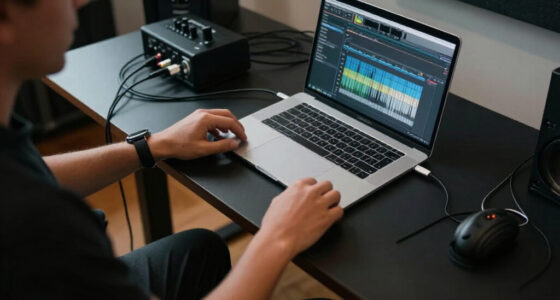
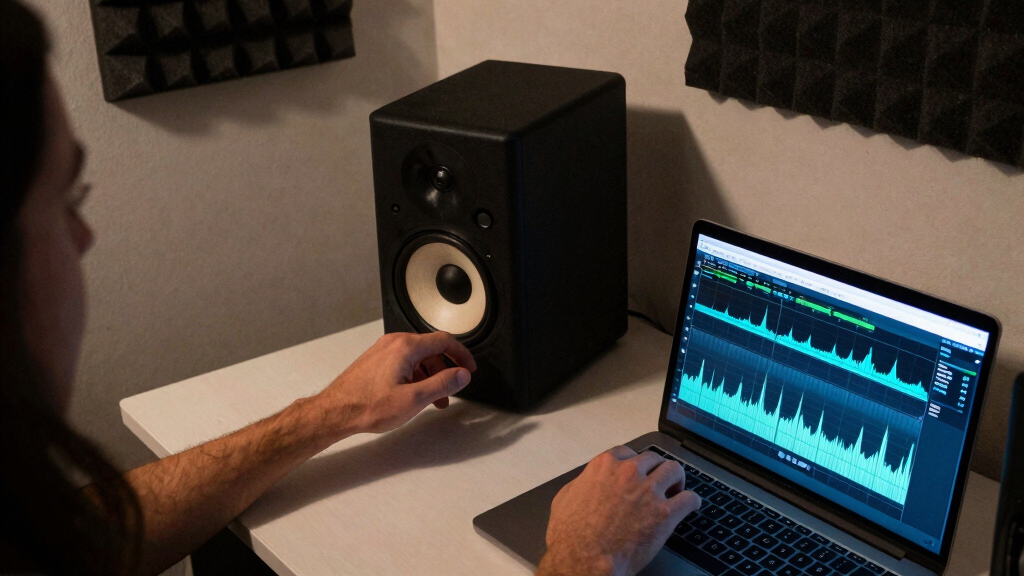
A measurement microphone and free software such as REW reveal the frequencies and locations of peaks and dips. Measure multiple nearby points because some nulls are tightly localized.
Place the microphone
Start at ear height in your normal listening position.
Run a frequency sweep
Capture the response from deep bass through the lower midrange.
Move and repeat
Measure several points around the chair to expose spatial variation.
Match dips to modes
Compare measured nulls with frequencies predicted by room dimensions.
Read the pattern, not one measurement. If a deep dip changes significantly when the microphone moves 20–30 cm, room interaction is a likely cause.
Work from physical to digital
You rarely need reconstruction. Start with free placement experiments, add targeted low-frequency treatment, then use correction software for restrained final refinement.
Change placement
Move speakers and the listening position in small increments. Even 30–60 cm can shift your ears away from a severe null.
Add bass control
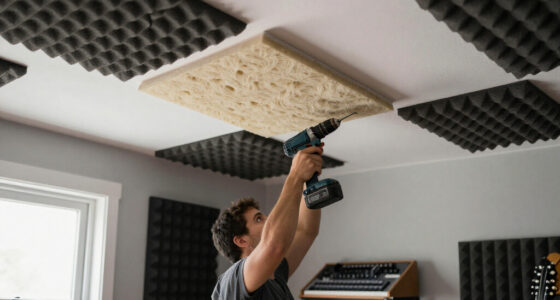
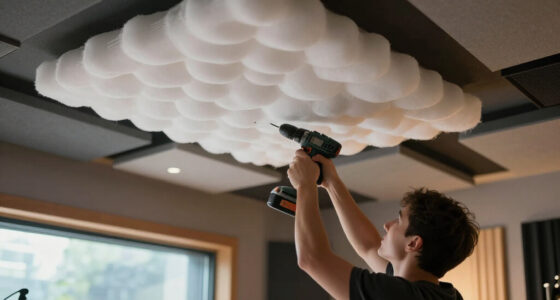
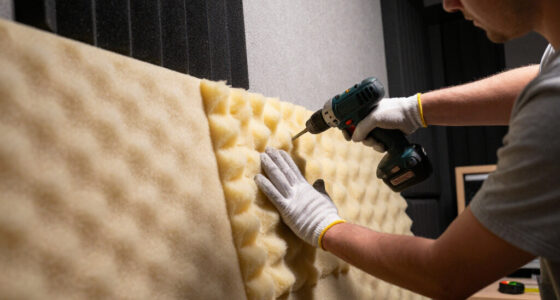
Use substantial bass traps in corners and boundary junctions. Low frequencies require depth and volume—not thin decorative foam.
Apply correction
Use measured EQ for smaller residual peaks and broad imbalances. Avoid extreme boosts into deep nulls, where cancellation remains dominant.
| Approach | What it changes | Best use | Important limitation |
|---|---|---|---|
| ✓Placement | Speaker and listener relationship to modal pressure zones | First-line reduction of strong peaks and nulls | May conflict with furniture, screens or room geometry |
| ✓Bass traps | Low-frequency decay and energy stored at boundaries | Smoothing response across a wider listening area | Effective designs require physical size and good placement |
| ~Diffusion | Direction and distribution of reflected energy | Reducing focused reflections in sufficiently large rooms | Usually not the primary cure for deep bass nulls |
| ✓Room correction | Signal level by frequency at measured positions | Fine-tuning broad response and controlling peaks | Cannot fully repair time-domain problems or deep cancellation |
The winning combination: physical changes reduce the room’s inherent problems; digital correction then makes smaller, safer adjustments. This preserves headroom and creates a result that translates beyond one exact chair position.
From room dimensions to reliable bass
Every useful fix follows the same chain: understand the geometry, locate the pressure pattern, change the physical interaction and verify the result.
Do not mix around a hole in the room.
If your desk sits in a null, boosting bass encourages overcompensation and creates mixes that sound heavy elsewhere. Move, measure, treat, then correct. The goal is not mathematically perfect response—it is stable, predictable bass that supports confident decisions.
What Are Room Modes and Why Do They Matter?
Room modes are *standing wave patterns* that form when sound waves bounce between parallel surfaces, such as walls, ceiling, and floor. These waves interfere constructively or destructively at specific points, creating areas of exaggerated bass (peaks) or diminished bass (nulls). The significance of understanding these patterns lies in their direct impact on how you perceive sound. For example, a null at your desk can make a powerful subwoofer seem weak, which might lead you to incorrectly compensate with more volume or EQ, ultimately distorting your mix. Recognizing where these nulls occur allows you to make informed placement and treatment decisions, leading to a more accurate and balanced listening environment. Ignoring them can result in misjudging your mix’s bass response, causing problems when your music is played in other spaces or on different systems. Therefore, understanding room modes isn’t just academic—it’s essential for achieving consistency and clarity in your audio work.
room acoustic treatment bass traps
As an affiliate, we earn on qualifying purchases.
As an affiliate, we earn on qualifying purchases.
How Your Room’s Size Sets the Frequency of Nulls
Room dimensions determine where standing waves form because they set the fundamental frequencies at which these waves resonate. The basic formula: f = c / 2d. Here, c is the speed of sound (~343 m/s), and d is the length of the room dimension in meters. For example, a 4-meter wall produces a null around 43 Hz. Longer rooms push these null frequencies lower, creating more pronounced bass issues at subwoofer and bass guitar ranges. Conversely, smaller rooms push these nulls higher, often into the mid-bass region. The location of your listening position relative to these modes determines whether you experience a null or a peak. Sitting directly at a null point can make bass feel weak or absent, while standing at a peak can cause exaggerated, boomy bass. Recognizing this relationship helps you anticipate problem frequencies based on your room size and plan adjustments accordingly. It also highlights the tradeoff: larger rooms tend to have lower, more manageable nulls but may require more space and treatment, while smaller rooms are more compact but prone to higher-frequency resonances that can be just as disruptive.
sound level meter for room measurement
As an affiliate, we earn on qualifying purchases.
As an affiliate, we earn on qualifying purchases.
Simple Tricks to Spot and Measure Room Nulls
Knowing where your bass drops out is crucial for diagnosing room issues, but visual intuition isn’t enough. Using a measurement microphone paired with free software like REW (Room EQ Wizard) allows you to obtain precise frequency response data at different locations. When you place the mic at your typical listening position and play test tones or pink noise, the software generates a graph showing dips (nulls) and peaks. These dips indicate frequencies where destructive interference reduces bass levels, often aligning with specific room modes. Moving the mic slightly around your position helps you understand how response varies within your space—some nulls are highly localized, while others are more pervasive. Measuring at your desk and other key spots reveals the extent of the problem, guiding targeted fixes. For example, if you see a consistent dip around 50 Hz, that’s a strong indicator of a room mode null. This data-driven approach allows you to prioritize treatments and placement adjustments, reducing guesswork and improving overall sound quality. It’s a critical step for anyone serious about accurate monitoring, as it provides objective insight into the room’s acoustic landscape and helps you avoid the pitfalls of relying solely on subjective listening.
subwoofer placement for bass nulls
As an affiliate, we earn on qualifying purchases.
As an affiliate, we earn on qualifying purchases.
How to Fix Room Modes Without Breaking the Bank
Fixing nulls isn’t about tearing down walls or expensive renovations; it’s about smart, strategic adjustments that can significantly improve your bass response. Small placement changes—like shifting your speakers or listening position by a foot or two—can alter how sound waves interact with room boundaries, reducing the severity of nulls. Acoustic treatments such as bass traps absorb standing waves, especially in corners where bass tends to accumulate, smoothing out the frequency response. Digital room correction software like Sonarworks or ARC analyzes your room’s response and applies EQ adjustments to compensate for dips and peaks, providing a more balanced sound without physical modifications. Experimenting with diffusers and absorbers helps scatter sound energy, reducing destructive interference and resonances. Using tools like REW to simulate how different adjustments will influence your room allows you to make informed decisions before physically implementing changes. For example, moving your chair three feet away from a wall might halve a null at 50 Hz, and adding a bass trap in that corner further mitigates it. Combining these strategies offers a cost-effective way to improve sound quality without extensive remodeling, making your space more forgiving and your mixes more accurate.
As an affiliate, we earn on qualifying purchases.
Comparison: Physical Fixes vs. Digital Corrections
| Physical Fixes | Digital Corrections |
|---|---|
| Move speakers or your listening position | Use room correction software to EQ out nulls |
| Add acoustic treatments like bass traps and diffusers | Apply real-time EQ adjustments via software |
| Rearrange furniture and room layout | Use measurement tools to identify problem frequencies |
| Rebuild or modify room dimensions | Use software modeling to plan changes |
Both approaches work best when used together. Physical fixes improve the room’s inherent response, reducing the severity of nulls and peaks, while digital corrections fine-tune the response at your listening position. For example, physical placement might reduce a null’s amplitude, making digital correction more effective and less drastic. Combining both strategies ensures a more natural, balanced sound that’s less dependent on complex EQ adjustments, preserving audio fidelity and reducing listener fatigue.
Why Ignoring Room Modes Will Keep You Frustrated
If you skip addressing room modes, you’ll continue to experience inconsistent bass response—sometimes boomy, sometimes weak—depending on your position in the room. This variability makes mixing and critical listening nearly impossible, as your ears can’t reliably judge bass levels. Your mixes might sound excellent in your room but fall apart when played elsewhere, because the nulls and peaks aren’t accounted for. Listening at your desk could give a false impression of bass performance, leading you to overcompensate or under-equalize. The key is understanding that room resonances are real, measurable, and manageable. By actively measuring and implementing fixes, you can create a more predictable and accurate listening environment. This consistency is crucial for mixing, mastering, and enjoying music as intended. The tradeoff is that neglecting these issues will always leave you guessing, forcing you to rely on trial and error rather than scientific insight, ultimately compromising your sound quality and creative confidence.
Frequently Asked Questions
Why does my bass disappear only at my desk but sounds fine elsewhere?
Because your desk sits at a null point of a room mode, causing destructive interference at certain bass frequencies. Moving slightly or adding bass traps can fix this.How can I tell if room modes are affecting my sound?
Use a measurement microphone and software like REW to analyze frequency response at different spots. Look for dips or peaks around the same low frequencies—those are your nulls.Can I fix room modes without expensive acoustic panels?
Yes. Small changes like repositioning speakers, adding DIY bass traps, or using software EQ can dramatically improve bass response without a big budget.Is it possible to completely eliminate room modes?
Complete elimination is tough, but their effects can be minimized. Focus on reducing nulls and peaks for a more balanced, natural sound.Should I sit in the middle of the room or near the walls?
Sitting away from boundaries helps reduce boundary-induced resonances, but the best spot depends on your room’s specific modes. Measure to find your sweet spot.Conclusion
Understanding that room modes are a natural part of any space is the first step. The real game-changer is actively measuring and applying targeted fixes. Don’t settle for weak bass—tweak your room, and your sound will thank you. Your perfect mix or listening session is just a few strategic adjustments away.Fall Picks
fall essentials
As an affiliate, we earn on qualifying purchases.